
Adam Smith vs Karl Marx Adam Smith The
- Slides: 15
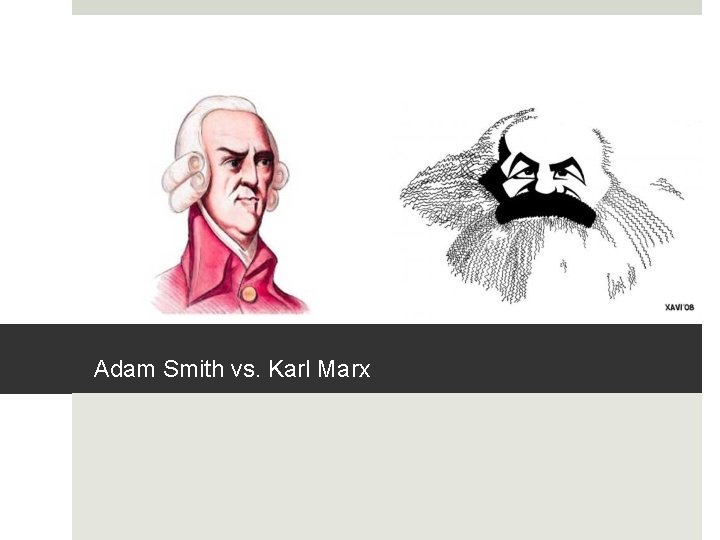
Adam Smith vs. Karl Marx
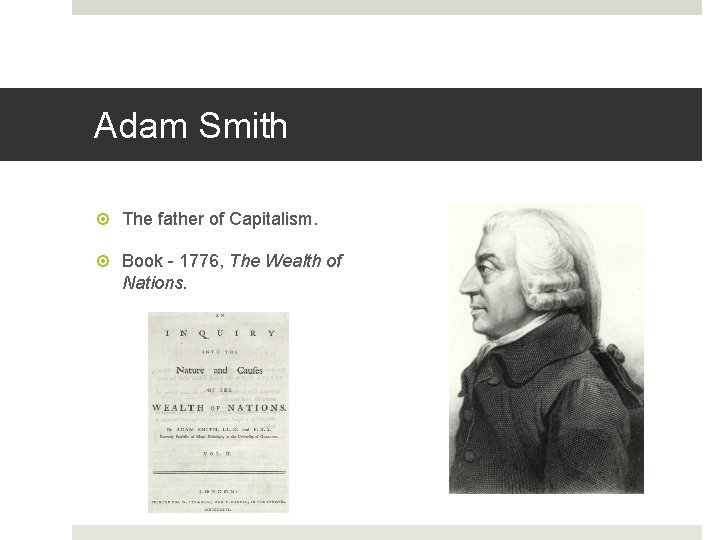
Adam Smith The father of Capitalism. Book - 1776, The Wealth of Nations.
What is Capitalism? An economic theory where individuals control the means of production and the markets set the prices.
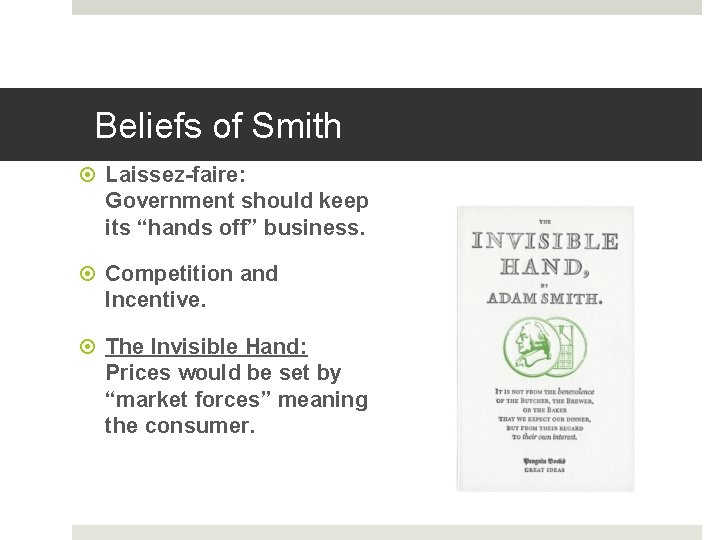
Beliefs of Smith Laissez-faire: Government should keep its “hands off” business. Competition and Incentive. The Invisible Hand: Prices would be set by “market forces” meaning the consumer.
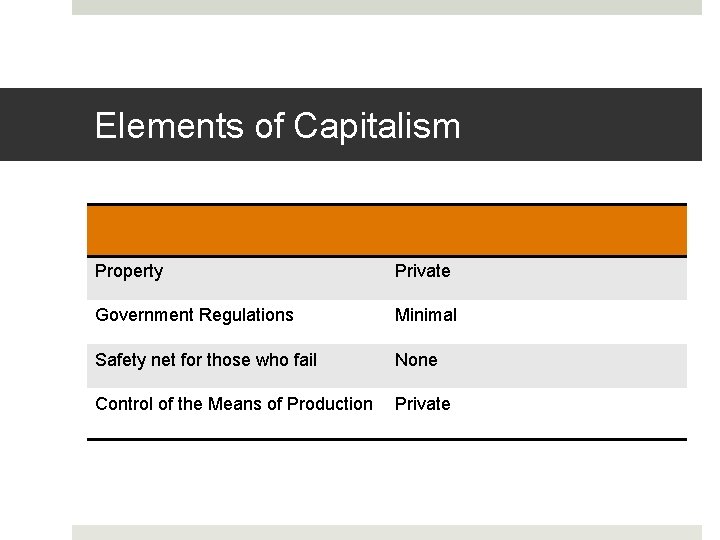
Elements of Capitalism Property Private Government Regulations Minimal Safety net for those who fail None Control of the Means of Production Private
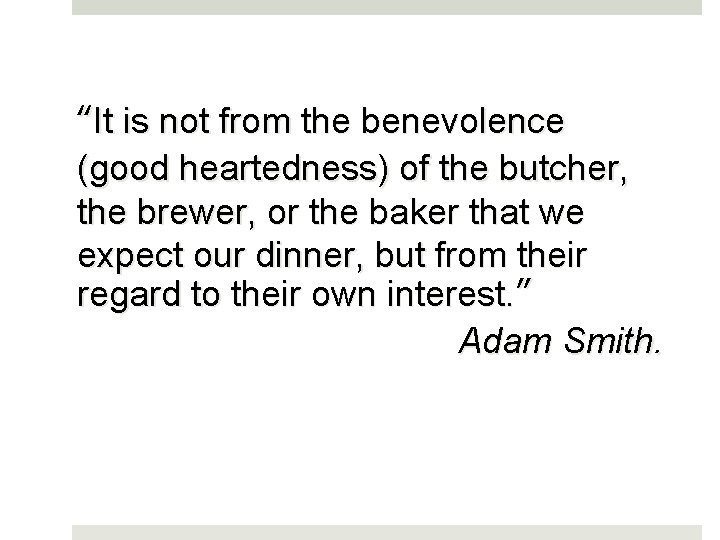
“It is not from the benevolence (good heartedness) of the butcher, the brewer, or the baker that we expect our dinner, but from their regard to their own interest. ” Adam Smith.
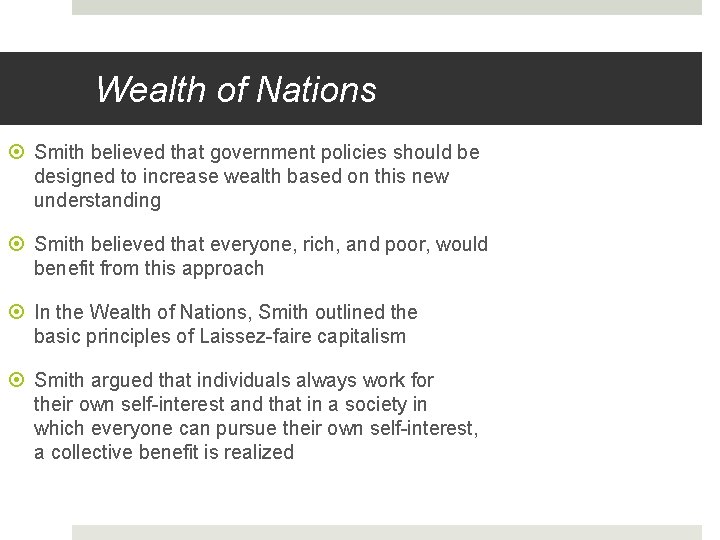
Wealth of Nations Smith believed that government policies should be designed to increase wealth based on this new understanding Smith believed that everyone, rich, and poor, would benefit from this approach In the Wealth of Nations, Smith outlined the basic principles of Laissez-faire capitalism Smith argued that individuals always work for their own self-interest and that in a society in which everyone can pursue their own self-interest, a collective benefit is realized
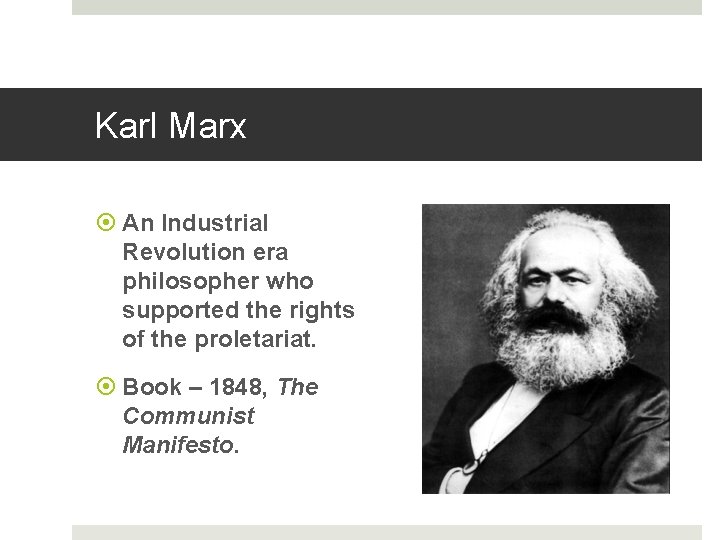
Karl Marx An Industrial Revolution era philosopher who supported the rights of the proletariat. Book – 1848, The Communist Manifesto.
What is Communism? It is characterized by state control of the economy, and restriction on personal freedoms.
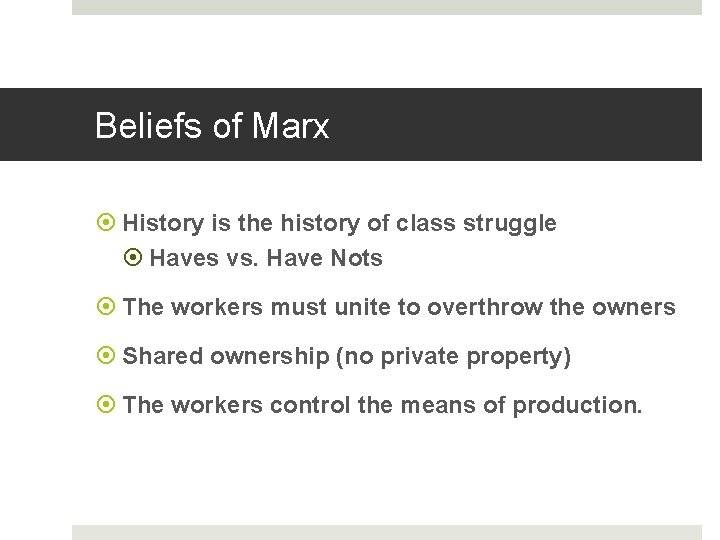
Beliefs of Marx History is the history of class struggle Haves vs. Have Nots The workers must unite to overthrow the owners Shared ownership (no private property) The workers control the means of production.
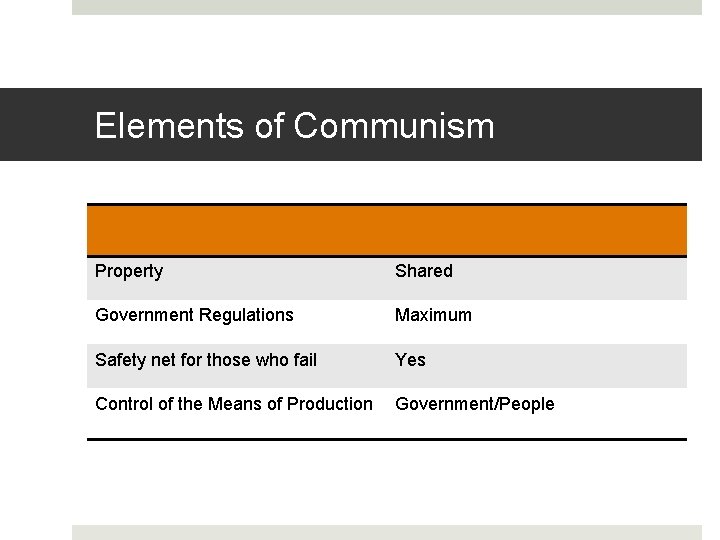
Elements of Communism Property Shared Government Regulations Maximum Safety net for those who fail Yes Control of the Means of Production Government/People
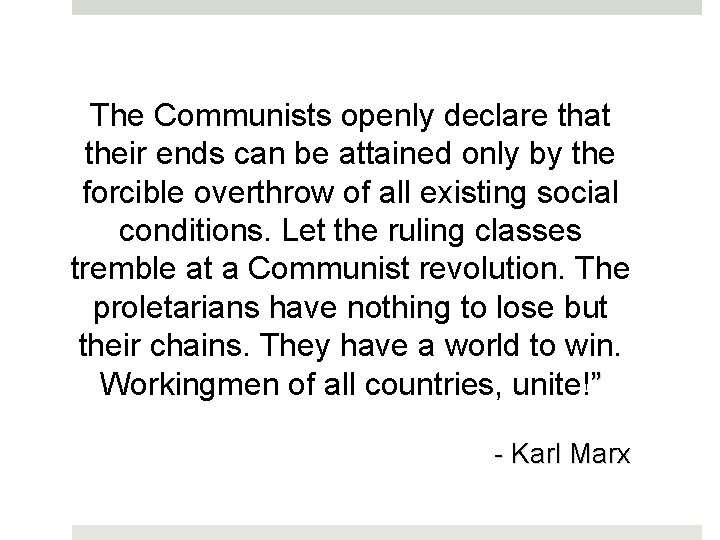
The Communists openly declare that their ends can be attained only by the forcible overthrow of all existing social conditions. Let the ruling classes tremble at a Communist revolution. The proletarians have nothing to lose but their chains. They have a world to win. Workingmen of all countries, unite!” - Karl Marx
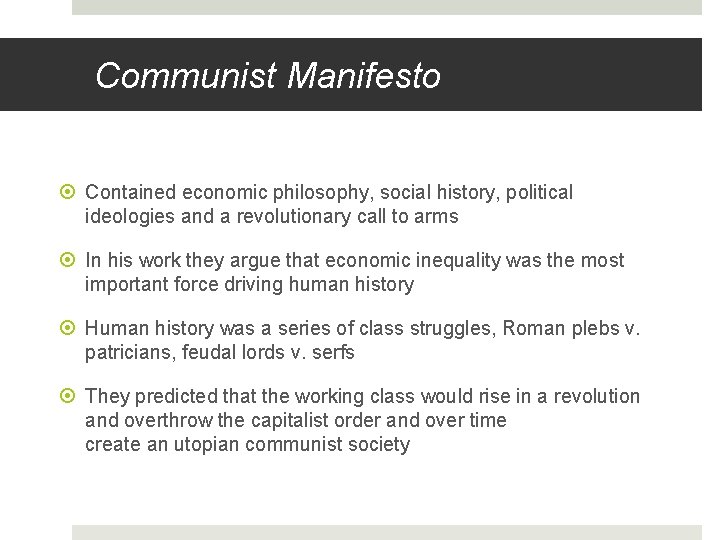
Communist Manifesto Contained economic philosophy, social history, political ideologies and a revolutionary call to arms In his work they argue that economic inequality was the most important force driving human history Human history was a series of class struggles, Roman plebs v. patricians, feudal lords v. serfs They predicted that the working class would rise in a revolution and overthrow the capitalist order and over time create an utopian communist society
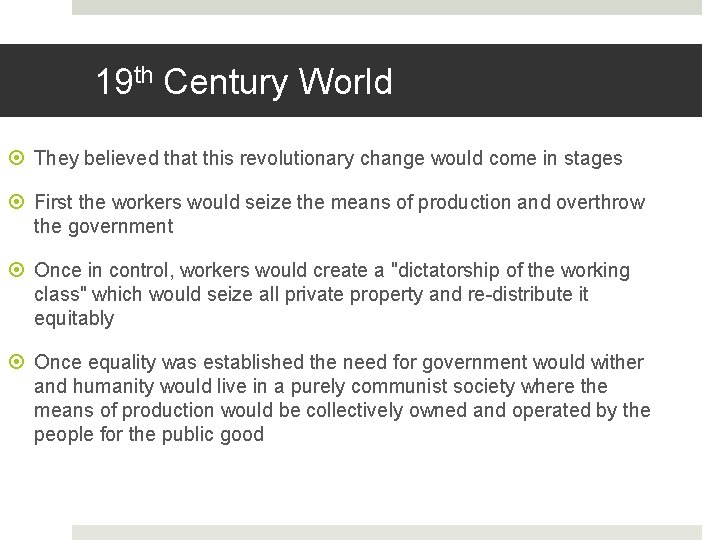
19 th Century World They believed that this revolutionary change would come in stages First the workers would seize the means of production and overthrow the government Once in control, workers would create a "dictatorship of the working class" which would seize all private property and re-distribute it equitably Once equality was established the need for government would wither and humanity would live in a purely communist society where the means of production would be collectively owned and operated by the people for the public good
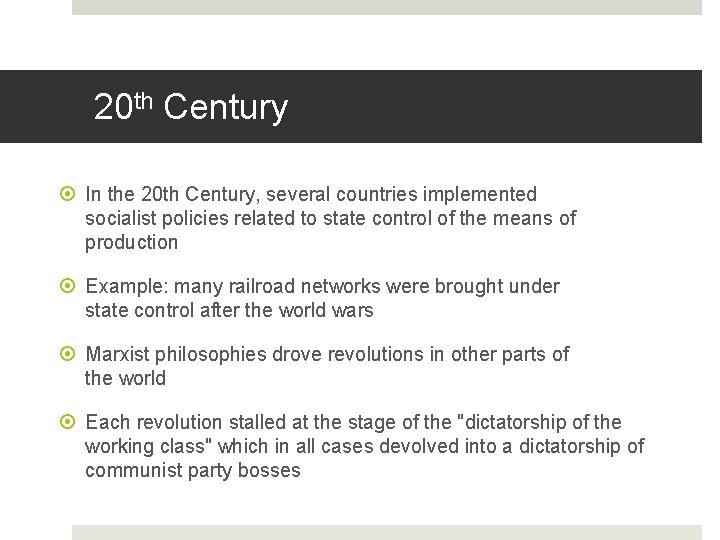
20 th Century In the 20 th Century, several countries implemented socialist policies related to state control of the means of production Example: many railroad networks were brought under state control after the world wars Marxist philosophies drove revolutions in other parts of the world Each revolution stalled at the stage of the "dictatorship of the working class" which in all cases devolved into a dictatorship of communist party bosses