
ADA Regulations Standard Measurements Within buildings the safety

ADA Regulations
Standard Measurements Within buildings, the safety and security of components are determined by the codes within ADA regulations. These code will affect components such as: RAMPS CORRIDORS DOORS
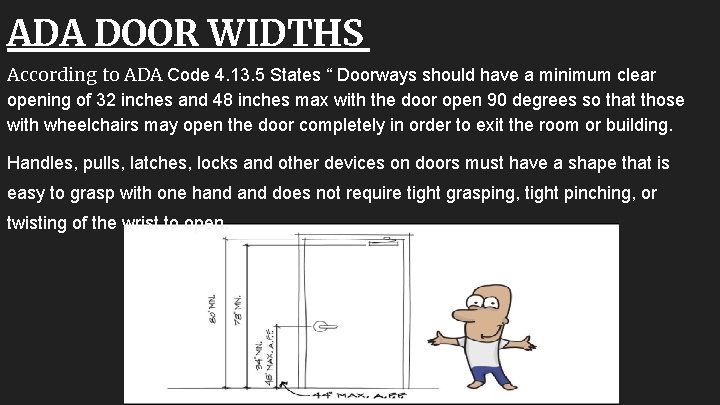
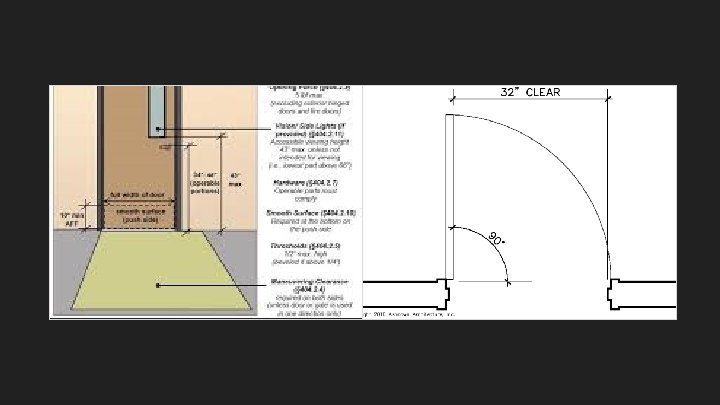
ADA DOOR WIDTHS According to ADA Code 4. 13. 5 States “ Doorways should have a minimum clear opening of 32 inches and 48 inches max with the door open 90 degrees so that those with wheelchairs may open the door completely in order to exit the room or building. Handles, pulls, latches, locks and other devices on doors must have a shape that is easy to grasp with one hand does not require tight grasping, tight pinching, or twisting of the wrist to open.
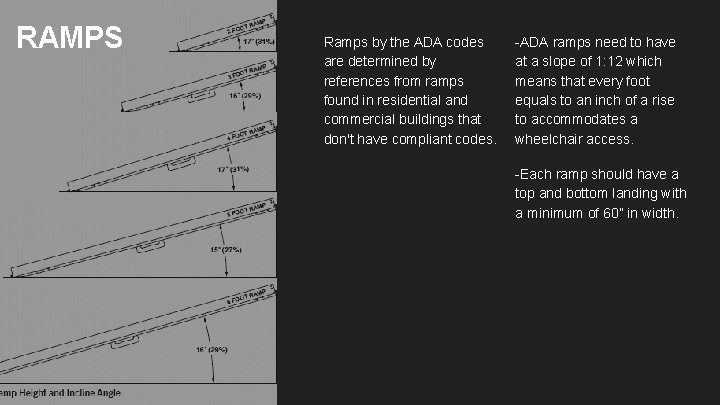
RAMPS Ramps by the ADA codes are determined by references from ramps found in residential and commercial buildings that don't have compliant codes. -ADA ramps need to have at a slope of 1: 12 which means that every foot equals to an inch of a rise to accommodates a wheelchair access. -Each ramp should have a top and bottom landing with a minimum of 60” in width.

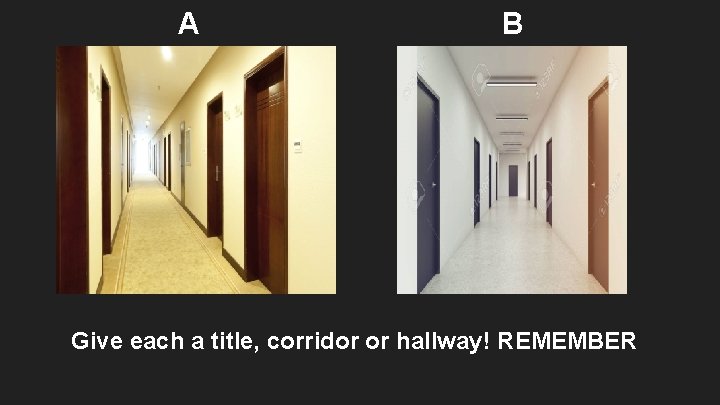
A B Give each a title, corridor or hallway! REMEMBER
CORRIDORS Hallways vs corridors: corridors lead to a door at the end usually while hallways tend to lead towards other rooms, these words are commonly interchanged All hallways must have a width of 36” must have a width of clear 60” any less than 60” must provide spaces called passing zones which allow people with wheelchair to pass, the passing zone must be put at intervals of 200’ The passing zones must be 60” X 60” a passing zone accepted by the ADA must be T intersection of two corridors or walkway Some of the reason why corridors are ADA compliant is because public hallways need to make a safe environment for people with disabilities like enough space so they can pass others

- Slides: 9