
Acute Stridor By Yehia Abo Arida Ward 7

Acute Stridor By Yehia Abo Arida Ward 7
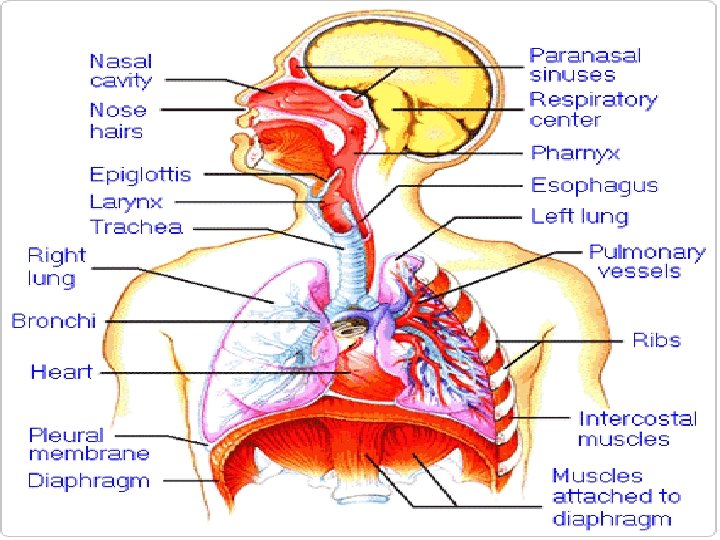
Stridor § It is a harsh, high-pitched respiratory sound, which is usually inspiratory but it can be biphasic and is produced by turbulent airflow; it is not a diagnosis but a sign of upper airway obstruction.
Causes of acute stridor § § § § Laryngotracheobronchitis ( croup). Epiglottitis. Bacterial tracheitis. Foreig body Angioedema. Hypocalcemic tetany. Edema after endotracheal intubation.
Assessment of severity of stridor § Timing : – The prominent phase of respiratory noise should be inspiratory – Expiratory stridor ----- more severe , or intrathoracic obstruction. § Work of breathing : – Increased RR. – Sternal ( supra – sub ) recession. § How effective is the breathing : – Chest expansion. – Breath sounds for air entery. § Is there adequate oxygenation : – – Is HR increased. Pallor , cyanosis. O 2 saturation. Activity level.
Worrying signs in children with stridor § § § § High fever or signs of toxicity Rapid onset. Drooling & dysphagia. Muffled voice & quiet stridor. Angioedema. Age less than 4 mths. Skin cavernous hemangioma. Previous ventilation as a neonate.
Croup Is derived from an old scottish word , roup , which means to cry out in a hoarse voice.
Viral croup ( ALTB ) § Viral croup is the most common cause of acute stridor in children. § Most patients with croup are between ages of 3 mths and 5 yrs , with the peak around 1 -2 yrs. § Common pathogens include parainfluenza viruses ( 1, 2 & 3 ) account for 75% of cases; others include influenza ( A&B ) , RSV & measles V. § Mycoplasma pneumoniae has rarely been isolated from children with croup. §
§ The term laryngotracheobronchitis refers to viral infection of the glottic and subglottic regions. Some clinicians use the term laryngotracheitis for the most common & most typical form of croup and reserve the term LTB for more severe form. § Inflammation & partial obstruction of the upper airways result in a barkelike or brassy cough& inspiratory stridor & may be associated with hoarseness & RD. § Small children are at higher risk because of the relative small size of their upper airways. . .
§ Unlike relatively rare conditions as epiglottitis & bacterial tracheitis , croup has : – a more insidious onset over a few days. – systemic toxicity & fever are considerably less. – have typical barking cough , often associated with hoarse voice , stridor & low grade fever. § As in many respiratory conditions , symptoms are often worse at night.
Assessment & evaluation § Mild: – well , active child. – barking cough. – stridor with agitation – minimal sings of increased WOB.
§ MODERATE : – stridor at rest. – some signs of increased WOB. § SEVERE : – stridor at rest + expiratory component. – marked increased WOB. – increased RR & HR – agitation & pallor. – as AW obstruction became very serious stridor became quieter. – agitation turn to exhaustion.
Acute spasmodic croup § Some children develop recurrent short lived episodes of croup without preceding coryzal prodrome that is seen in classical viral croup. § children are afebrile & awake suddenly with acute stridor during night. § recurrence occurs on subsequent 2 -3 nights. § it occurs in children of the same age group , during same season & sometimes same virus can isolated. § children with recurrent spasmodic croup often have a strong atopic or asthmatic family background.
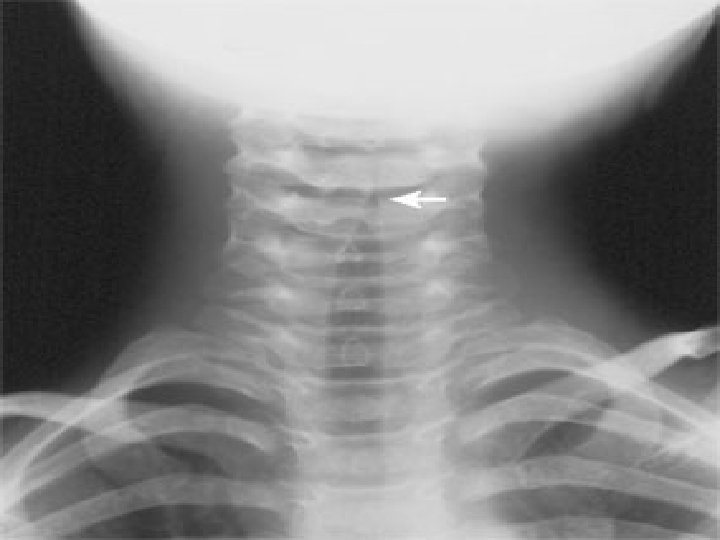
Radiographs § Croup is a clinical diagnosis and does not require a radiograph of the neck. § It may show the typical subglottic narrowing or ( steeple sign ) on AP view , which may be present as a normal variation or in epiglottitis & may be absent in patient with croup. § Should be considered in patient with atypical presentation. § May be helpful to distinguish severe LTB & epiglottitis , but airway management should always take priority.
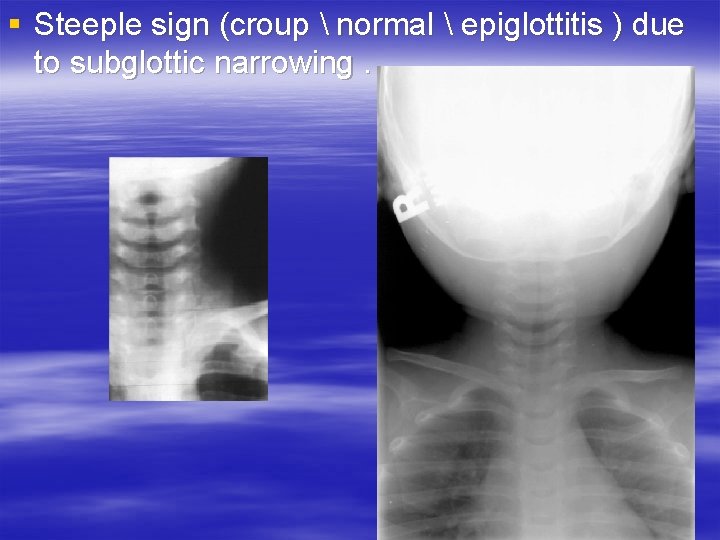
§ Steeple sign (croup normal epiglottitis ) due to subglottic narrowing.
Treatment § Majority of cases will have a mild illness that can be managed at home. § Those with significant RD and stridor at rest will require treatment & reassessment. § Those showed significant improvement following treatment may be considered for discharge home.
§ There should be a low threshold for admission in : – children under age of 12 mths. – all children with marked RD. – those with oxygen requirement on presentation. – those with parents remain anxious about discharge.

§ Parents of children not requiring admission should receive clear instructions when to return : – chest wall recession. – tachypnoea. – color changes. – inability to feed. – decreased level of consciousness.
Therapies may be effective § Simple measures : – in all cases it is very important to keep the child and parents calm. – direct inspection of the throat can be dangerous and result in complete obstruction of the airway. – neck x ray is no longer useful and carry the risk of further upset and deterioration.

§ Humidification : – steam inhalation for croup is widely used but of little proven benefits. – the percieved benefits ( placebo effect ) may be due to presence in a warm calming environment. – a steamy bathroom with hot water tap running and plug opened is accepted , but use of kettle and boilers should discouraged , because it carry the risk of scalding.
§ Adrenaline ( epinephrine ) : – nebulized adrenaline is very effective in severe croup. – duration of action between 20 minutes and 3 hours. – it is used in most cases when intubation is considered. – weaning effect of adrenaline result in return to pretreatment baseline rather than a true rebound. – for children with severe croup , the period of improvement on adrenaline is long enough to allow the steroid to start working.
§ Steroids : – Corticosteroids improve clinical parametrs. – Decrease the admission rate. – decrease duration of hospital stay. – Decrease the need for repeated nebulized adrenaline in children with croup. – nebulized budesonide or oral dexamethazone showed equal effect in treating children with croup. – approximately 1 -5 % of croup cases require ETT before introduction of steroid therapy.
§ Intubation : – a small numbers of children will still require ET for severe croup. – The decision to intubate should be based on worsening airway obstruction , signs of exhaustion or impending respiratory failure. – Children with epiglottitis and bacterial tracheitis require specialist care , with input from senior ENT & anethetic stuff. – IV antibiotics & intubation are often required. – steroid & adrenaline have minimal effect on these condition.
Mild croup § § § Reassurance. May worse by night ( advice to return ). Dexamethazone PO (0. 3 - 0. 6 mgkg dose).
Moderate croup § Cardio respiratory monitor § Dexamethazone PO&or nebulized budesonide (pulmicort) 2 mg stat. § Reassess in 2 hours – If improved ------- discharge. – If no improvement : § Consider nebulized adrenaline 1: 1000 – 2. 5 ml for those younger than 1 year. – 2. 5 - 5 ml for older than 1 year. – If improved -----observe for 4 hrs & discharge.
Severe croup § § § § Cardio respiratory monitor. Oxygen to maintain O 2 sat ( 92% or more ). Nebulized adrenaline ( 11000) Q 1 -4 hrs. IV dexamethazone ( 0. 3 -0. 6 mgkgdose ). Or Nebulized budesonide ( pulmicort ) 2 mg. IF no improvement consider BGA , ICU. Intubation & ventillation may be required.
Bacterial traheitis § Bacterial infection of upper airway , does not involve the epiglottis but, like epiglottitis and croup , is capable of causing life-threatening airway obstruction. § Staph aureus is the most commonly isolated organism. § Most patients were below 3 yrs , but in recent case series the mean age has been between 5 -7 yrs. § I t may be considered as bacterial complication of disease , rather than a primary bacterial illness.
Clinical manifestations § Typically child has a brassy cough , apparently as a part of LTB. § High fever and toxicity with RD immediately or after few days of apparent improvement. § Patient can lie flat , does not drool , and does not have dysphagia associated with epiglottitis. § the usual treatment for croup is ineffective , intubation or tracheostomy may be necessary. § The major pathologic feature is mucosal swelling at level of ciricoid cartilage , complicated by copious thick purulent secretions sometimes causing pseudomembrane.
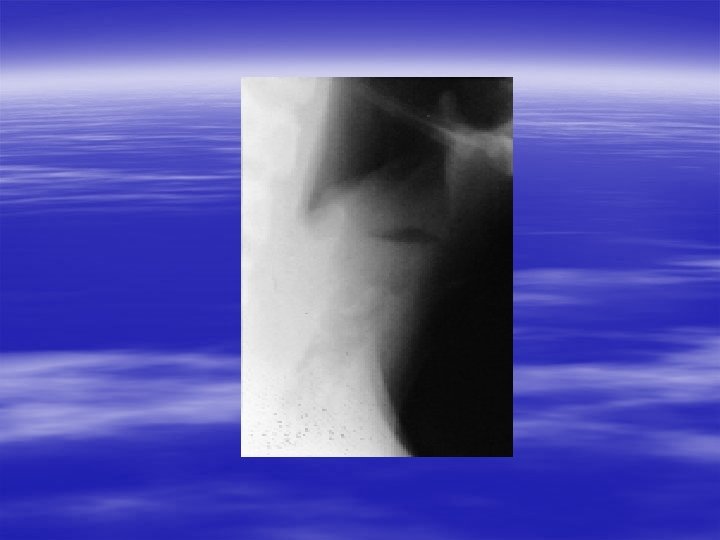
Diagnosis § Diagnosis is based on evidence of bacterial upper airway disease (high fever – purulent airway secretions & absent classic finding of epiglottitis ). § XR not needed , but may show classic findings (pseudomembrane detachment in the trachea ). § Purulent material is noted below the cords during ET intubation.
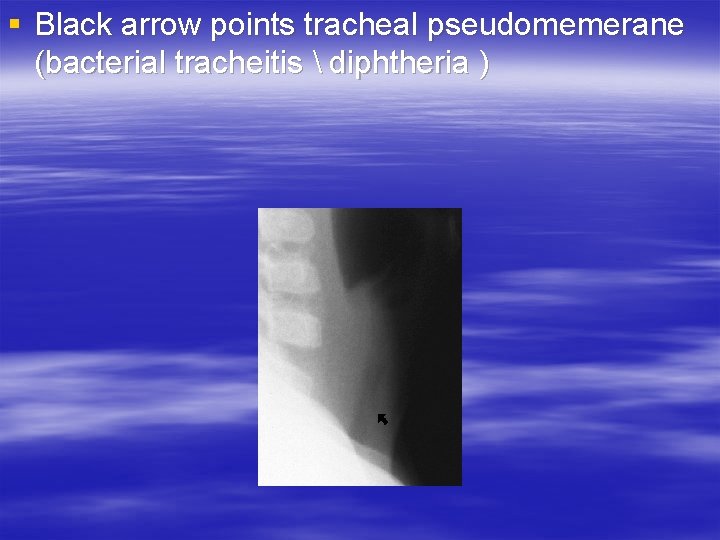
§ Black arrow points tracheal pseudomemerane (bacterial tracheitis diphtheria )

Treatment § Antimicrobial therapy , which usually includes antistaph agents , should be instituted in any patient whose course suggest bacterial traheitis. § When diagnosed by direct laryngoscopy , or suspected on clinical background , an artificial airway should be strongly considered. § Supplemental oxygen may be necessary.
Complications § CXR showed : – Patchy infiltrates & show focal densities. – Subglottic narrowing. § Cardio respiratory arrest can occur if airway management is not optimal. § Toxic shock syndrome has been associated with staph tracheitis.

Prognosis § oxygen therapy continued. For most of patients is excellent. § Patient become afebrile within 2 -3 days of institution of antimicrobial therapy , but prolonged hospitalization may be necessary. § After extubation the patient should be observed carefully while antibiotics and O 2 continued.
Epiglottitis § Dramatic potentially lethal condition characterized by an acute , potentially fulminating course of high fever , sore throat , dyspnea & rapidly progressing respiratory obstruction. § Degree of RD at presentation is variable. § Often the otherwise healthy child develops sore throat and fever within a matter of 4 -6 hrs. Child appear toxic , swallowing is difficult and saliva drooling. § He sitting upright and assume tripod position( leaning forward , chin up, bracing on the arm ). § A brief period of air hunger with restlessness may be followed by cyanosis and coma. § Stridor is a late and suggest near complete airway obstruction. § If no treatment provided complete obstruction of airway and death. § barking cough typical of croup is rare.
Diagnosis § laryngoscopy : – Showed large( cherry red) , swollen epiglottis – Other supraglottic structures especially aryepiglottic fold , occasionally more involved. – It should be performed in a controlled environment as OR or ICU. § Lateral radiograph of upper airway : – Showed the classical ( thumb sign ).
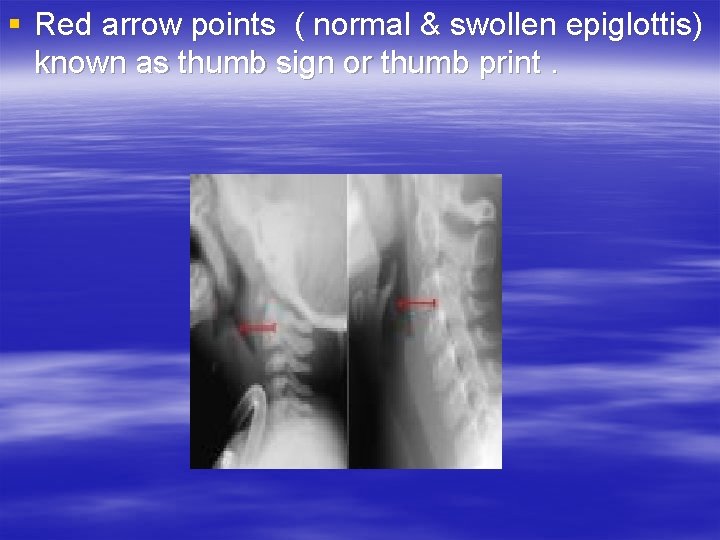
§ Red arrow points ( normal & swollen epiglottis) known as thumb sign or thumb print.
Intial management of suspected epiglottitis § Do not : – Examine throat. – Put the child flat. – Order a lateral XR of the neck. – Upset the child by trying to gain iv access or place an O 2 mask.
§ Do : – Call airway team. – Stay with the child and parents. – Allow the child to sit on knee of his mother. – Measure O 2 sat if possible. – Give O 2 therapy if absolutely needed and well tolerated.
Treatment § Immediate treatment with artificial airway placed in OT or ICU. § All cases should receive oxygen unless the mask causes excessive agitation. § Racemic epinephrine & corticosteroids are ineffective. § Blood & epiglottic surface C&S and in selected cases CSF should be collected after stabilization of airway. § Cefotriaxone, cefotaxime , or combination of ampicillin and salbactum should be given parenterally, pending C&S reports. § Antibiotics should be continued for 7 -10 days.
Chemoprophylaxis § Not routine for household , child-care or nursery contacts of patient with invasive HIb infection , but observation & medical evaluation is mandatory when exposed child develop febrile illness. § Indication for rifampin prophylaxis : – Any contact less than 1 y & incompletely immunized. – Any contacts less than 2 yrs of age who has not received the primary vaccination series. – An immunocompromised child in the household. – Dose : (20 mg kg d ) once , for 4 days , maximum dose is 600 mg day.
Prognosis § Length of hospitalization and mortality rate increase as infection spread to involve a greater portion of respiratory tract , except in epiglottitis in which local infection may prove to be fatal. § Causes of death in croup are : – – – Laryngeal obstruction. Complications of tracheostomy. rarely , fatal out-of-hospital arrest due to viral LTB have been reported. § Untreated epiglottitis has mortality rate of 6% but if treatment initiated the prognosis is excellent. § The outcome of LTB , and spasmodic croup is also excellent.


- Slides: 46