
Acute Responses to exercise What are acute responses


- Slides: 25
Acute Responses to exercise
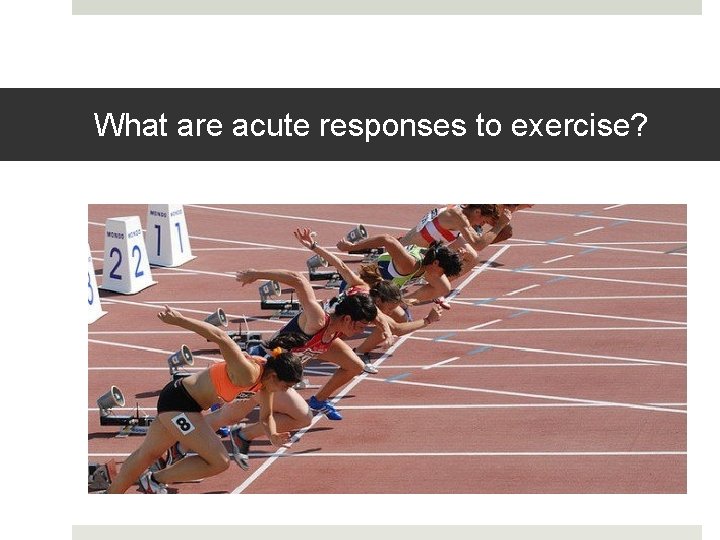
What are acute responses to exercise?
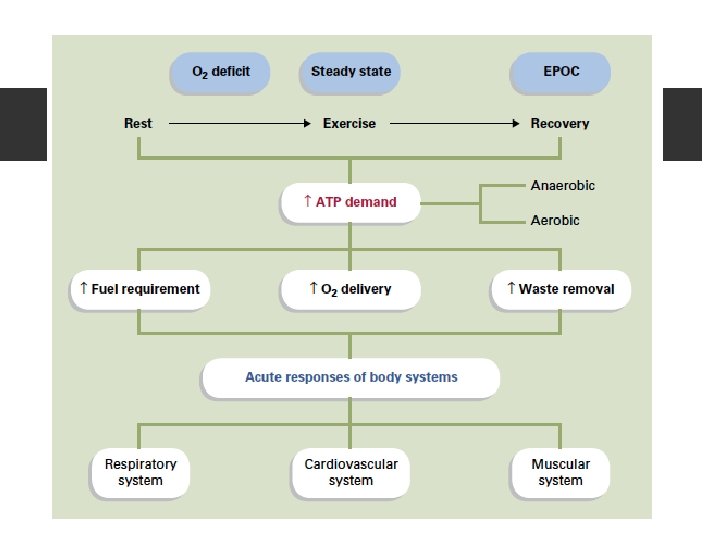
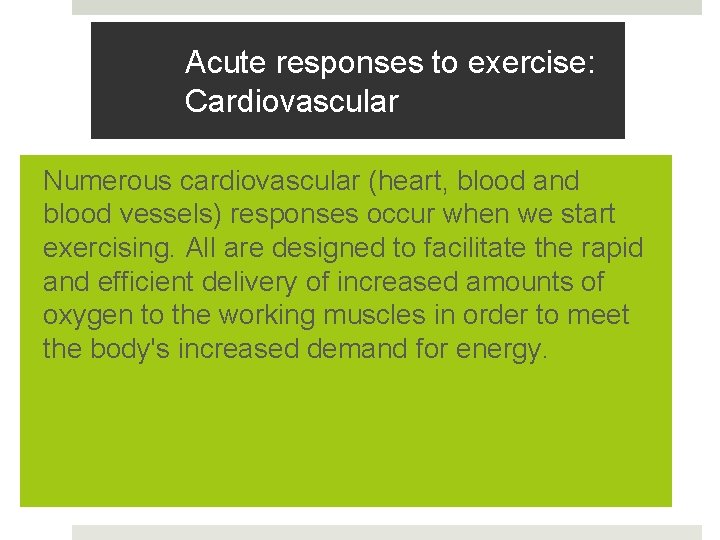
Acute responses to exercise: Cardiovascular Numerous cardiovascular (heart, blood and blood vessels) responses occur when we start exercising. All are designed to facilitate the rapid and efficient delivery of increased amounts of oxygen to the working muscles in order to meet the body's increased demand for energy.
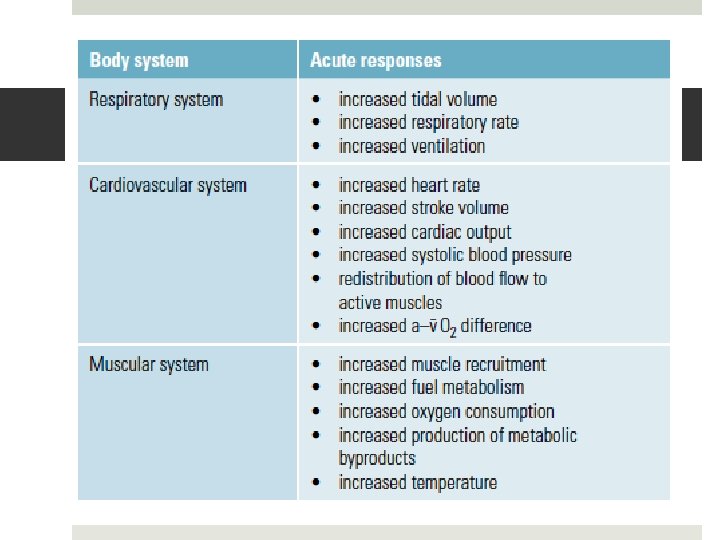
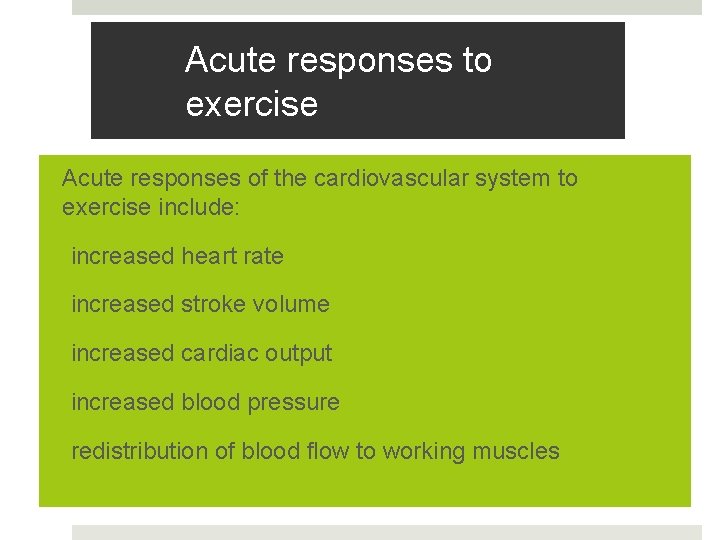
Acute responses to exercise Acute responses of the cardiovascular system to exercise include: • increased heart rate • increased stroke volume • increased cardiac output • increased blood pressure • redistribution of blood flow to working muscles
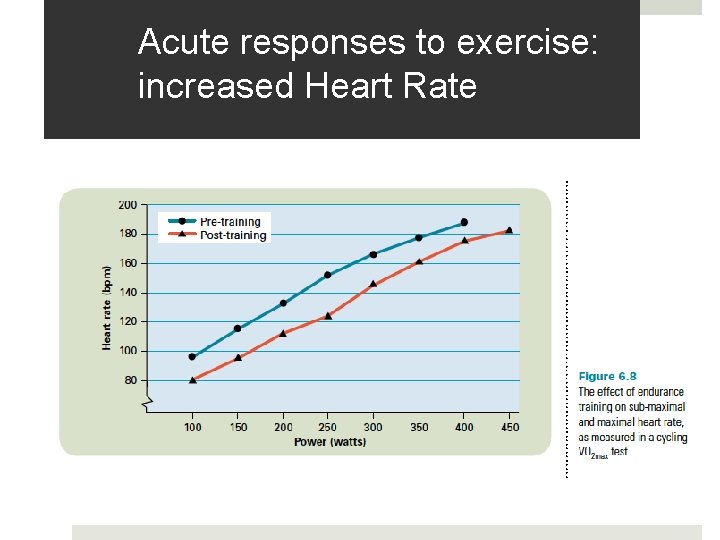
Acute responses to exercise: increased Heart Rate HR max = 220 - age
Acute responses to exercise: increased Heart Rate
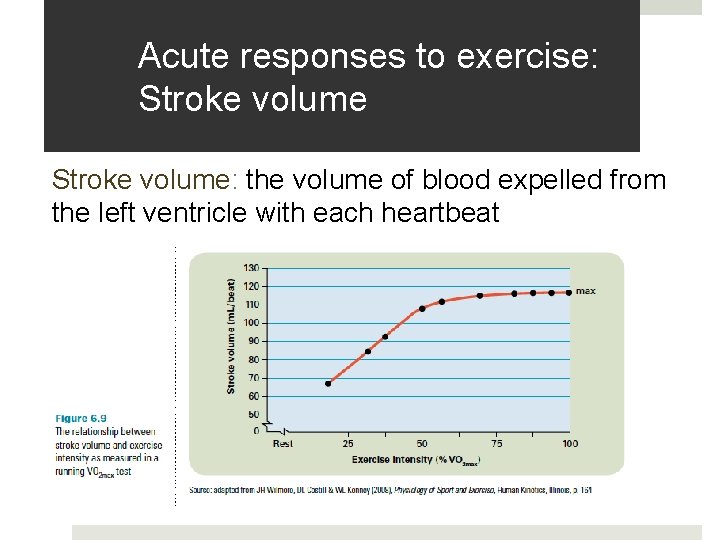
Acute responses to exercise: Stroke volume: the volume of blood expelled from the left ventricle with each heartbeat
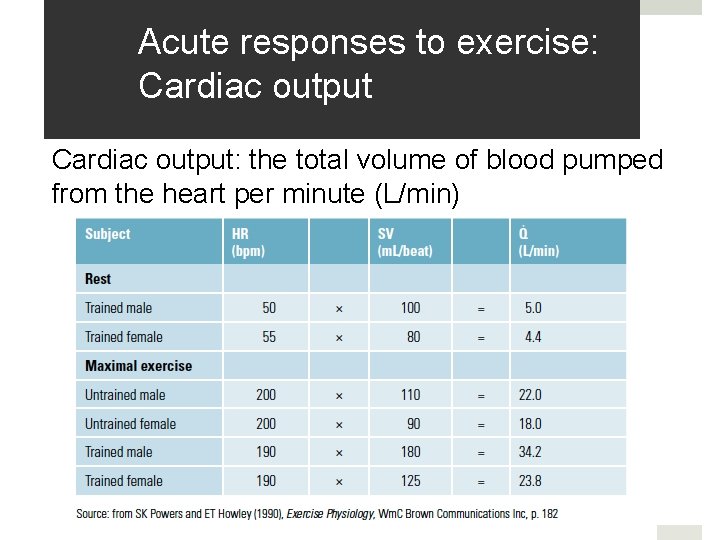
Cardiac output: the total volume of blood pumped from the heart per minute (L/min) The following formula represents this relationship: Q˙(L/min) = HR (bpm) X SV (m. L/beat)
Acute responses to exercise: Cardiac output: the total volume of blood pumped from the heart per minute (L/min)
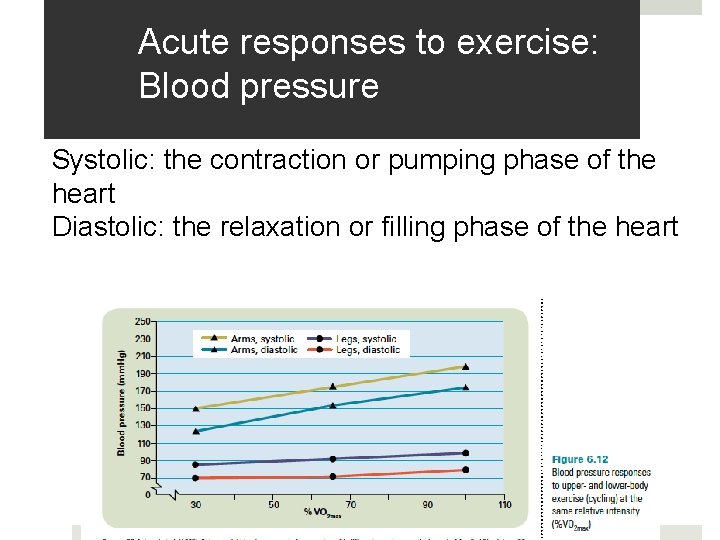
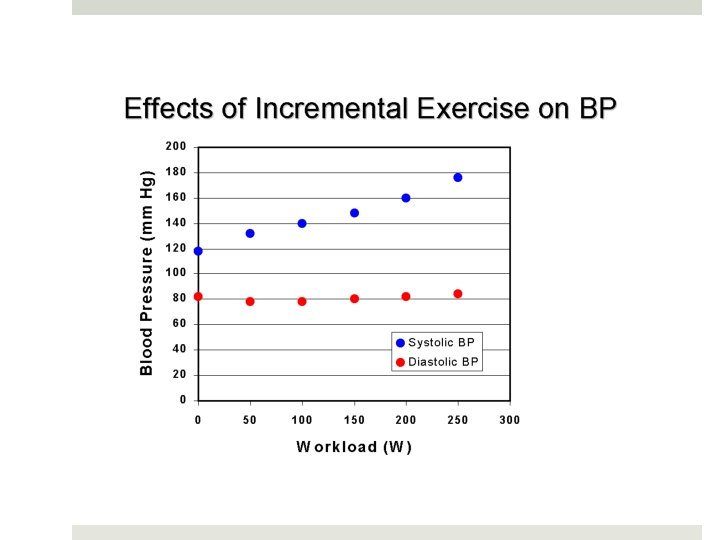
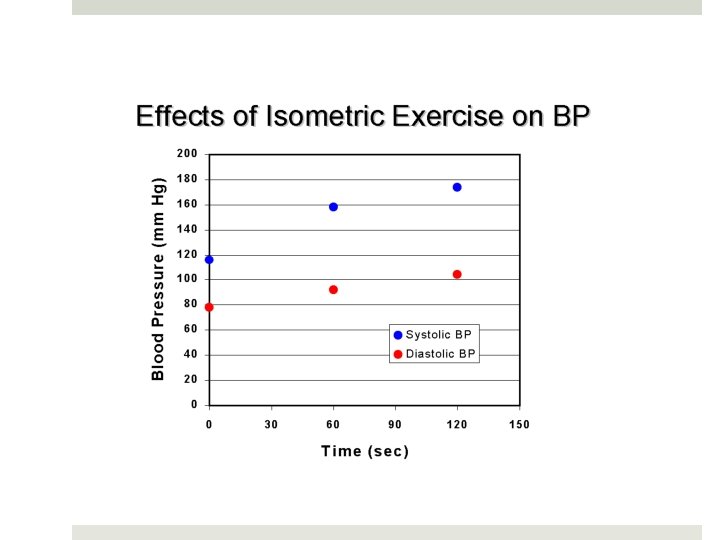
Acute responses to exercise: Blood pressure Systolic: the contraction or pumping phase of the heart Diastolic: the relaxation or filling phase of the heart
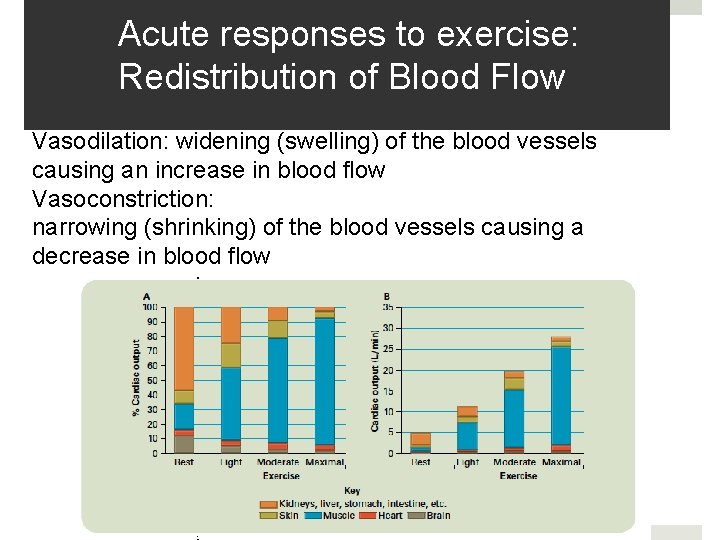
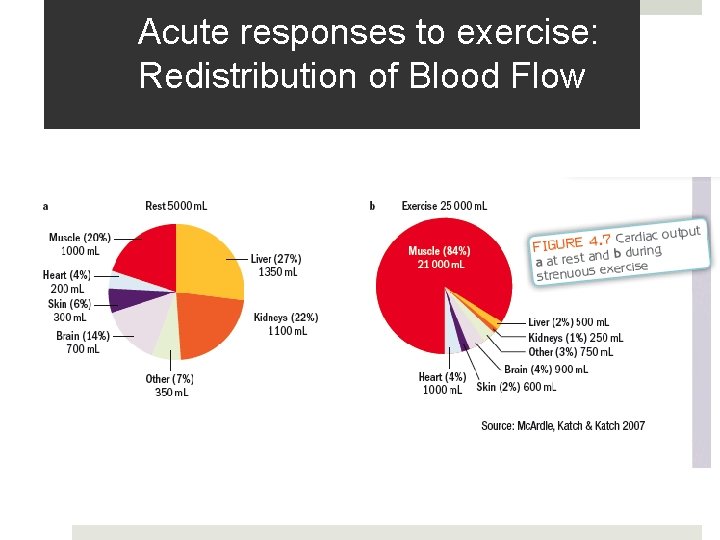
Acute responses to exercise: Redistribution of Blood Flow Vasodilation: widening (swelling) of the blood vessels causing an increase in blood flow Vasoconstriction: narrowing (shrinking) of the blood vessels causing a decrease in blood flow
Acute responses to exercise: Redistribution of Blood Flow
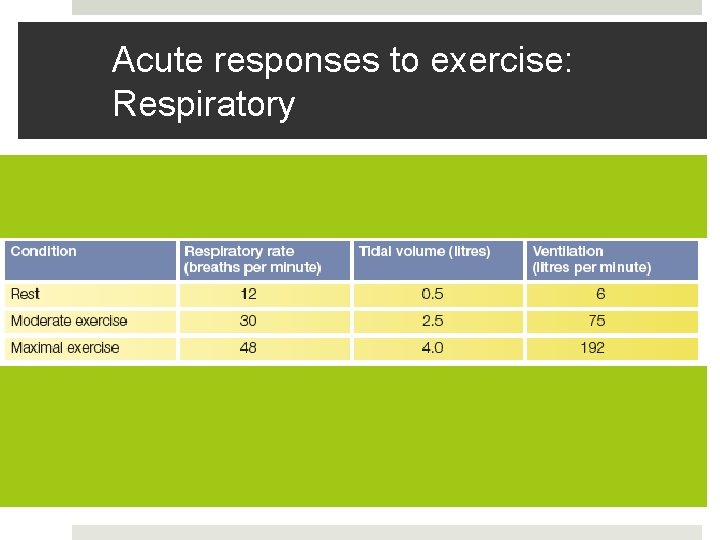
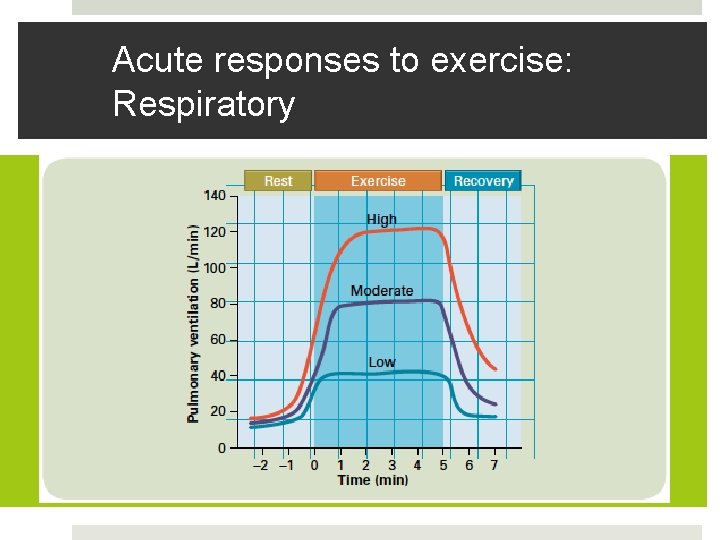
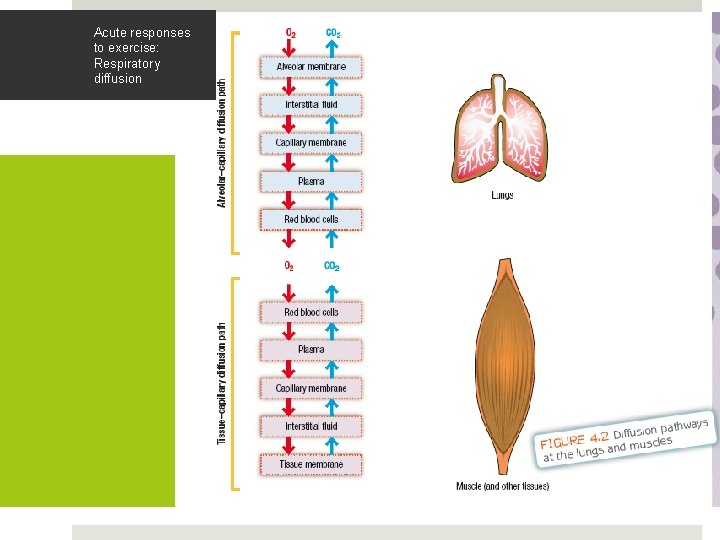
Acute responses to exercise: Respiratory Acute responses of the respiratory system to exercise are designed to facilitate an increase in the availability of oxygen and the removal of carbon dioxide. These responses include: • increased respiratory frequency (breathing rate) • increased tidal volume • Increased ventilation • increased oxygen uptake • increased diffusion – gas exchange alveoli-blood
Acute responses to exercise: Respiratory Ventilation: the exchange of air between the lungs and the environment to allow oxygen to be exchanged for carbon dioxide in the alveoli. How much air is breathed in or out in one minute. V (litres per minute) = TV (litres) × RR (breaths per minute) Tidal volume: the total volume of air moved in and out of the lungs during inspiration and expiration. How much air is inspired or expired in one breath Respiratory Rate (RR) the number of breaths taken in one minute
Acute responses to exercise: Respiratory
Acute responses to exercise: Respiratory
Acute responses to exercise: Respiratory diffusion
Acute responses to exercise: Muscular Acute muscular system responses to exercise are those that occur in the working muscles themselves. These responses vary according to the type, intensity and duration of the exercise performed, and may differ according to the type of muscle fibre recruited (fast-twitch as opposed to slow-twitch fibres).
Acute responses to exercise: Muscular However, basically these responses include: • increased motor unit and muscle fibre recruitment • increased blood flow to the muscles • increased arterio-venous oxygen difference. • increased muscle temperature • increased muscle enzyme activity • increased oxygen supply and use • depleted muscle energy stores (ATP, creatine phosphate, glycogen and triglycerides).
Motor unit recruitment A motor unit is the means by which the central nervous system ‘talks’ to the muscles to control muscular contractions. During exercise, the amount of force developed in a working muscle increases. To do this, the brain can increase the number of motor units recruited, or it can increase the frequency of messages sent to activate the motor unit. Depending on the required strength and speed of the contraction, the number of motor units recruited, and the rate at which they are recruited, can be adjusted. A motor unit will contract maximally or not at all, depending on the strength of the stimulus. (This is the all-or-nothing principle. ) Movements that require maximal force will recruit as many motor units as possible. Increasing the frequency of the messages will also increase the force produced in the muscle.
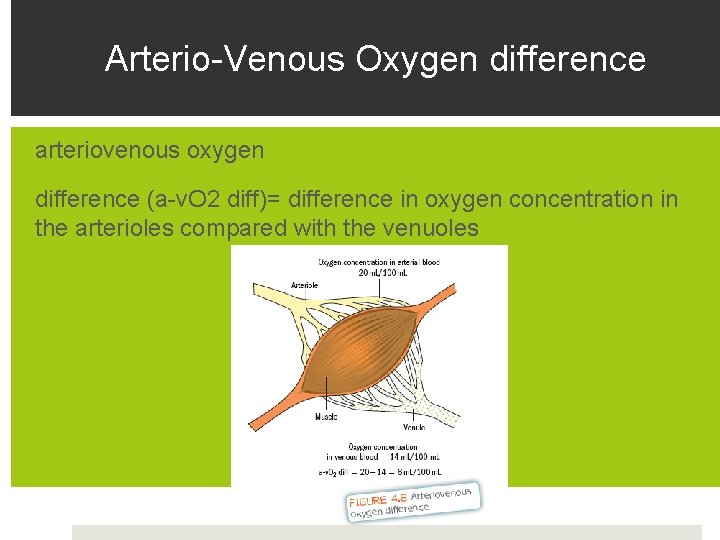
Arterio-Venous Oxygen difference arteriovenous oxygen difference (a-v. O 2 diff)= difference in oxygen concentration in the arterioles compared with the venuoles