
Acute Meningitis BY MBBSPPT COM Acute meningitis is
Acute Meningitis BY MBBSPPT. COM
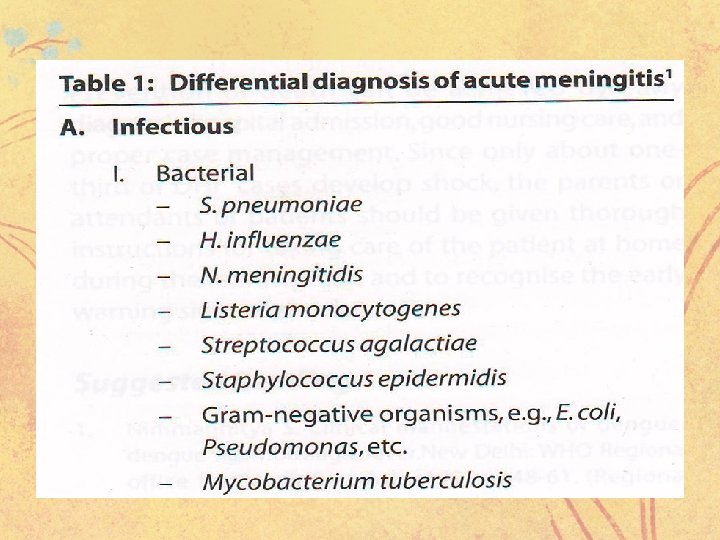
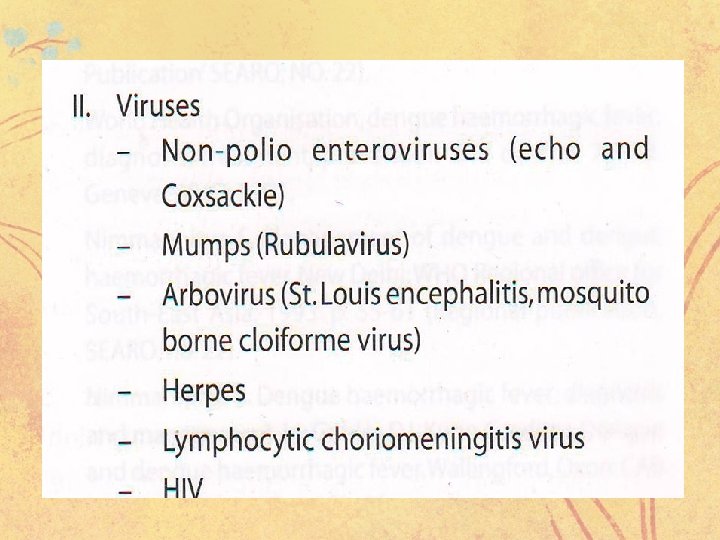
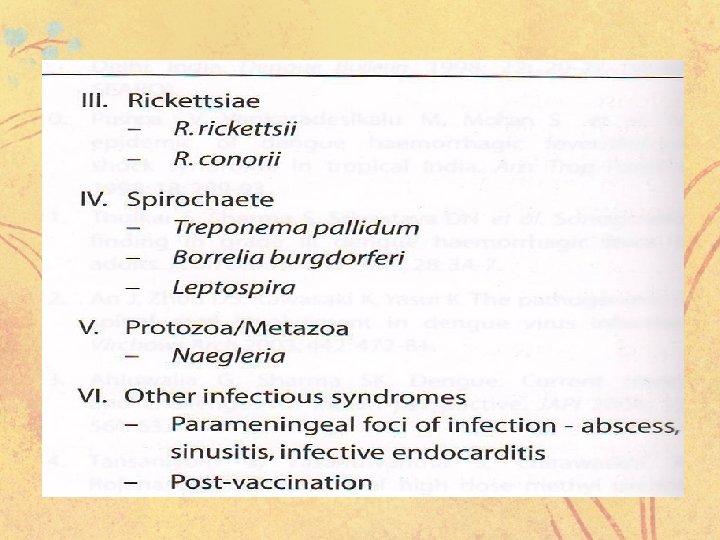
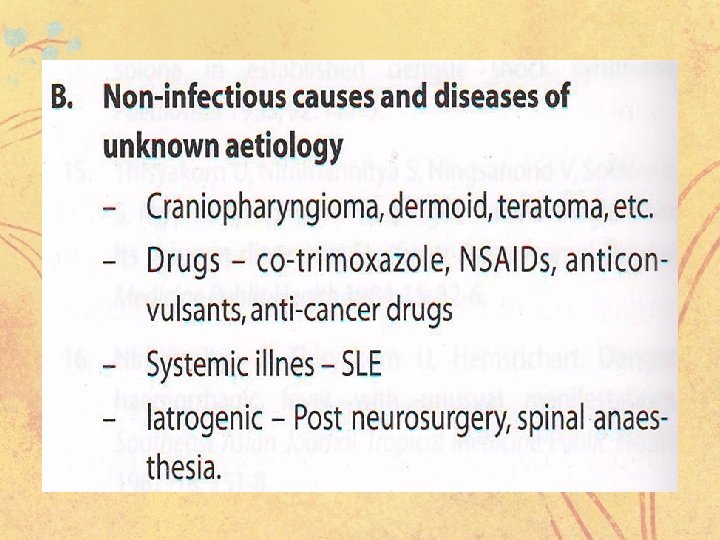
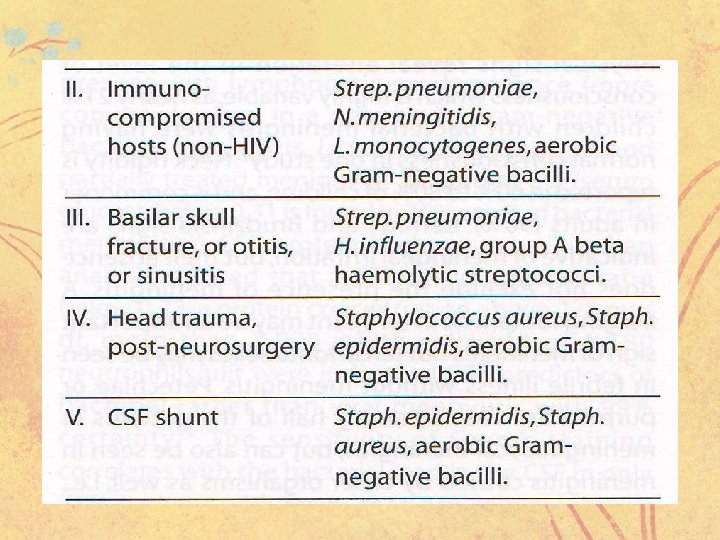
� Acute meningitis is a serious illness and may be caused by a variety of infection agentsbacterial, viral and fungal. � Certain non-infective conditions like maligancy (carcinoma, lymphoma, leukaemia) or sarcoidosis may sometimes present as acute meningitis � Of greatest concern is bacterial meningitis, which can be fatal, if
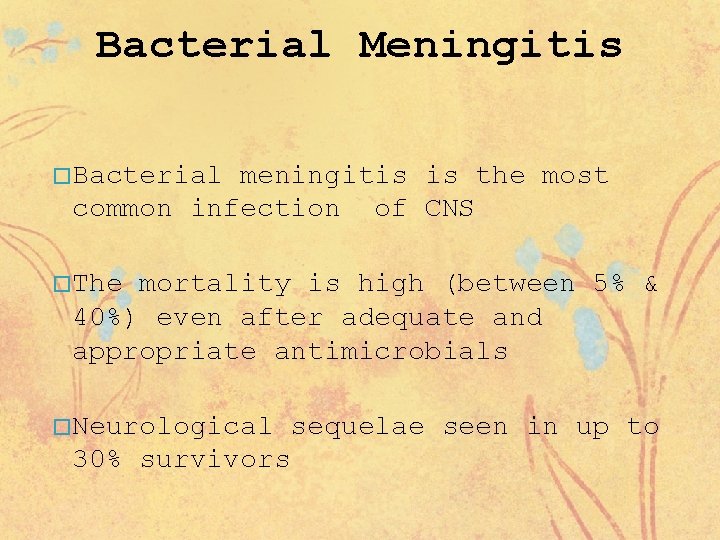
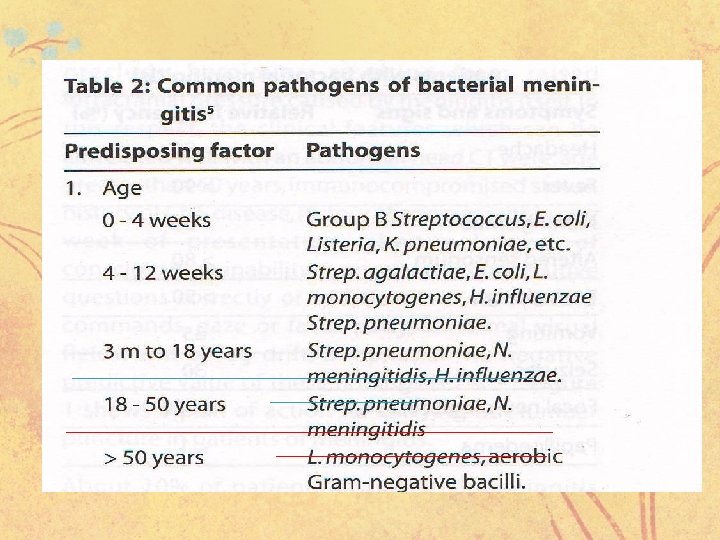
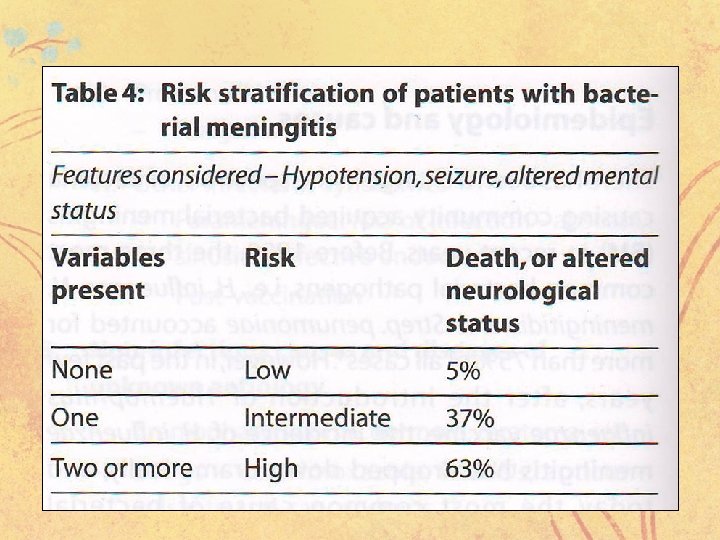
Bacterial Meningitis � Bacterial meningitis is the most common infection of CNS � The mortality is high (between 5% & 40%) even after adequate and appropriate antimicrobials � Neurological 30% survivors sequelae seen in up to
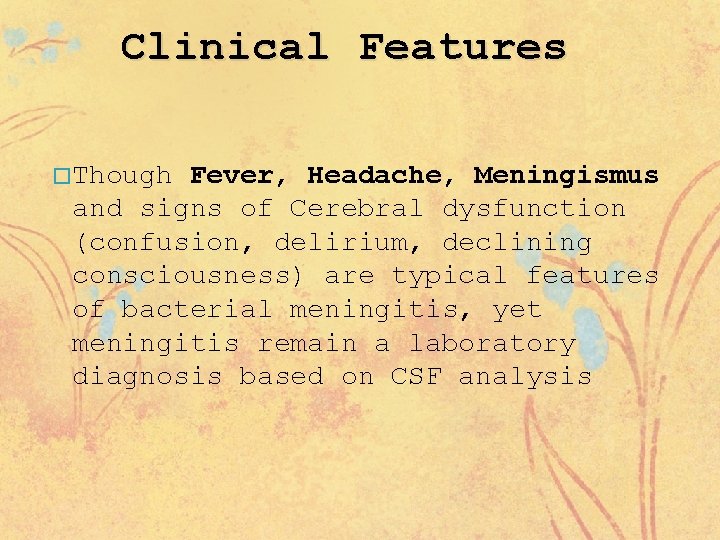
Clinical Features � Though Fever, Headache, Meningismus and signs of Cerebral dysfunction (confusion, delirium, declining consciousness) are typical features of bacterial meningitis, yet meningitis remain a laboratory diagnosis based on CSF analysis
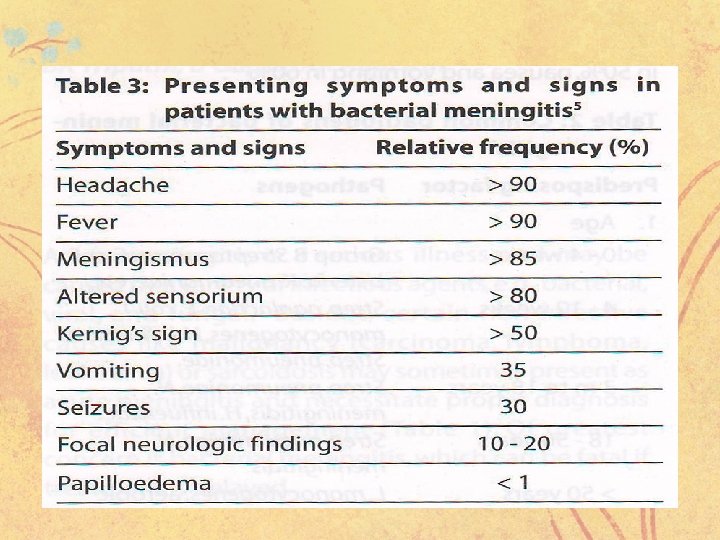
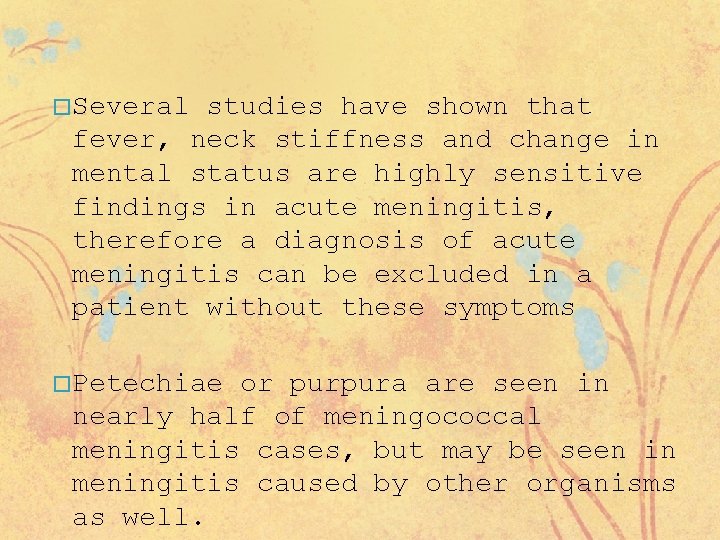
� Several studies have shown that fever, neck stiffness and change in mental status are highly sensitive findings in acute meningitis, therefore a diagnosis of acute meningitis can be excluded in a patient without these symptoms � Petechiae or purpura are seen in nearly half of meningococcal meningitis cases, but may be seen in meningitis caused by other organisms as well.
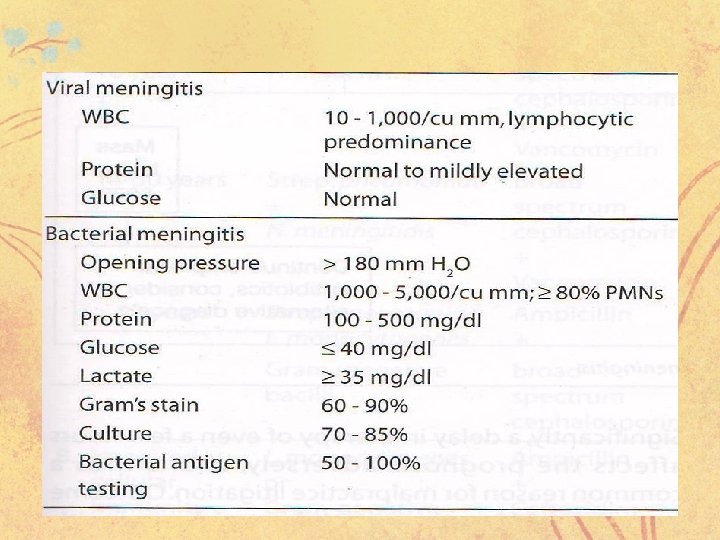
Diagnosis � The laboratory diagnosis of untreated bacterial meningitis is straight forward once the CSF sample has been obtained � Gram’s staining, a rapid and useful technique for initial laboratory assessment of CSF in suspected case of bacterial meningitis
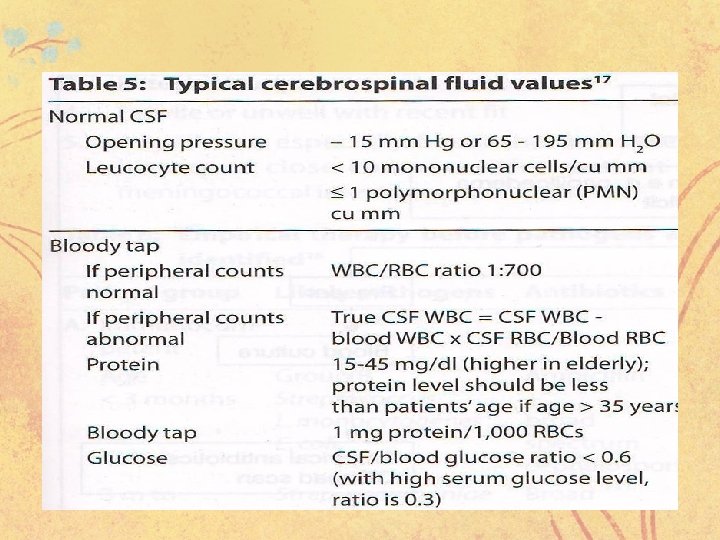
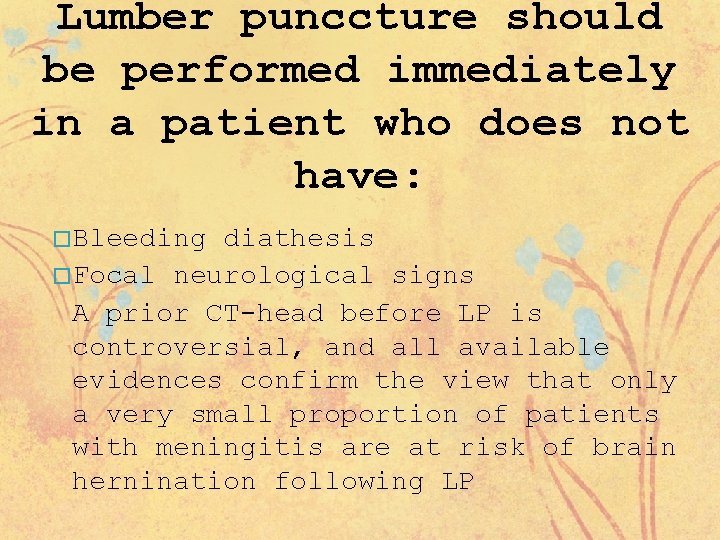
Lumber punccture should be performed immediately in a patient who does not have: � Bleeding diathesis � Focal neurological signs A prior CT-head before LP is controversial, and all available evidences confirm the view that only a very small proportion of patients with meningitis are at risk of brain hernination following LP
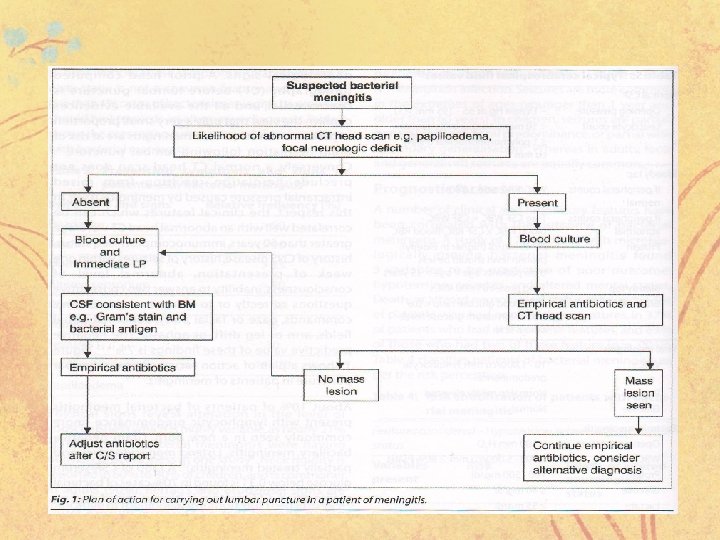
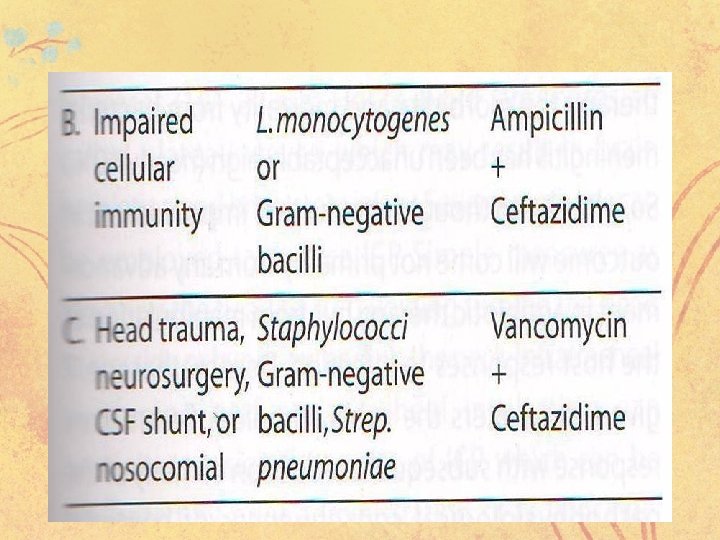
Management � While the diagnosis of meningitis is straight forward, the problem arises while differentiating a life threating illness (BM) from selflimiting viral infection � Urgent hospital admission in mandatory if there is strong suspicion of meningitis (signs of meninged irritation, impaired consciousness level, petechial rash, febrile or unwell
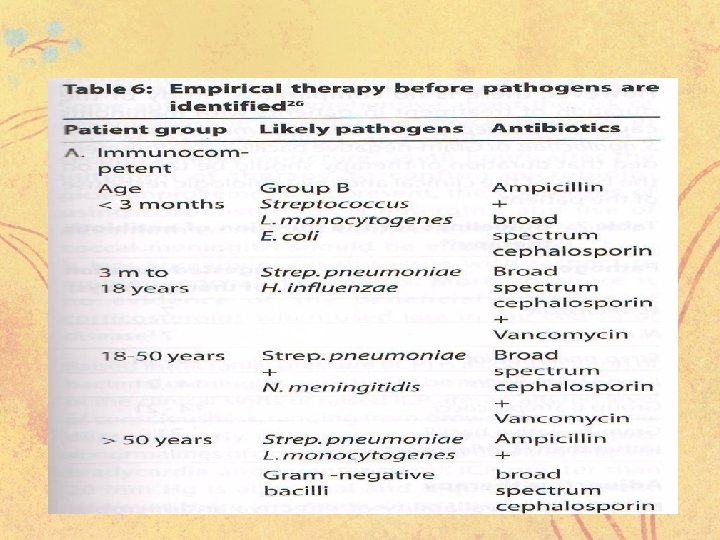
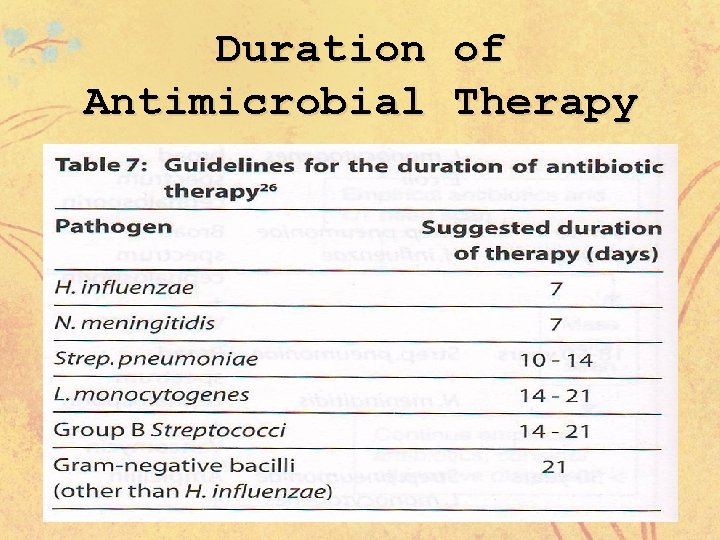
Duration of Antimicrobial Therapy
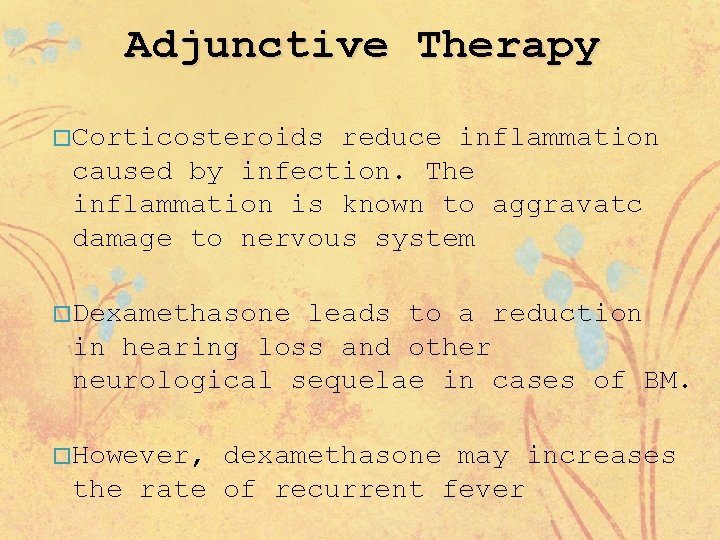
Adjunctive Therapy � Corticosteroids reduce inflammation caused by infection. The inflammation is known to aggravatc damage to nervous system � Dexamethasone leads to a reduction in hearing loss and other neurological sequelae in cases of BM. � However, dexamethasone may increases the rate of recurrent fever
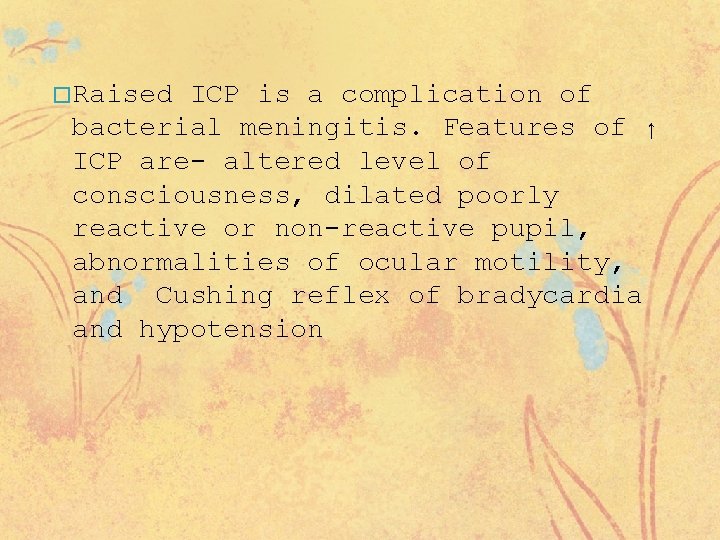
� Raised ICP is a complication of bacterial meningitis. Features of ↑ ICP are- altered level of consciousness, dilated poorly reactive or non-reactive pupil, abnormalities of ocular motility, and Cushing reflex of bradycardia and hypotension
� I/V � Oral Mannitol Glycerol � Parenteral � High Dexamethasone dose Barbiturates
Tuberculous Meningitis � Tuberculous meningitis, usually a subacute or chronic meningitis. At times, particularly in children and adolescents, the presentation may be acute or hyperacute.
Viral Meningitis � Viral infection is the most common cause of aseptic meningitis. � The syndrome of viral meningitis consists of fever, headache, and meningeal irritation along with inflammatory CSF profile. � The mental status derangement is seen to range from lethargy to drowsiness. � Seizures, cranial nerve palsies, focal neurological deficits are not encountered in uncomplicated viral
� Enteroviruses account for 75 to 90% of all viral meningitis cases � Using CSF polymerase chain reaction, culture, serology, a specific viral cause can be established in 75 -90% of cases � Nevertheless, CSF examination (cell count, biochemical) is the most important tool � Treatment is largely symptomatic � Acyclovir is recommended in HSV-1 or 2 and cases of severe EBV or

Thank You
- Slides: 29