
Acute Kidney Injury Prof Dr Glin Kantarc Yeditepe



- Slides: 49
Acute Kidney Injury Prof. Dr. Gülçin Kantarcı Yeditepe University Nephrology Department
Aims & objectives • State the definition, pathophysiology, clinical findings and prevention methods of acute kidney injury
Reference 1. Current Medical Diagnosis and Treatment, Maxine A. Papadakis, Stephen J. Mc. Phee, Eds. Michael W. Rabow, Associate Ed. http: //accessmedicine. com/resource. TOC. aspx? resource. ID=1 Chapter 22. Kidney Disease (ACUTE RENAL FAILURE: GENERAL) 2. Bates' Guide to Physical Examination & History Taking 11 th edition, Bickleys LS, Szilagyi PG; Lippincott Williams and Wilkins¸ 3. Kumar and Clark's Clinical Medicine, 8 th edition; Kumar & Clark, Elsevier 4. Andreoli and Carpenter's Cecil Essentials of Medicine 8 th edition, Andreoli and Carpenter, Elsevier PART 11: RENAL AND GENITOURINARY DISEASES 122: Acute Kidney Injury , Bruce Molitoris Editor: Goldman, Lee 5. CURRENT Diagnosis & Treatment: Nephrology & Hypertension Edgar V. Lerma, Jeffrey S. Berns, Allen R. Nissenson (ACUTE RENAL FAILURE Chapter 9 -11 -14)
PRESENTATION TOPICS • • Essentials of Diagnosis General Considerations Clinical Findings Classification & Etiology
ACUTE KIDNEY INJURY ( Acute renal failure) • also known as acute renal failure, is defined as a sudden decrease in kidney function, resulting in an inability to maintain acid-base, fluid and electrolyte balance and to excrete nitrogenous wastes • It often results from major trauma, illness, or surgery but is sometimes caused by a rapidly progressive, intrinsic renal disease.
Kidney Disease: Improving Global Outcomes. Clinical practice guideline on acute kidney injury. 2011. www. kdigo. org • Serum creatinine rises ≥ 1. 5 fold from the reference value, which is known or presumed to have occurred within one week or • urine output is < 0. 5 ml/kg/hr for >6 consecutive hours • If a reference serum creatinine value is not available within 3 months (acceptable up to one year) and AKI is suspected • repeat serum creatinine within 24 hours • a reference serum creatinine value can be estimated from the nadir serum creatinine value if patient recovers from AKI
Symptoms of Acute Kidney Injury anorexia, nausea, vomiting. Seizures and coma may occur if the condition is untreated. Fluid, electrolyte, and acid-base disorders develop quickly. Hypovolemia can cause states of low blood flow to the kidneys, sometimes termed prerenal states, whereas hypervolemia can result from intrinsic or postrenal disease. • Pericardial effusions can occur with uremia, and a pericardial friction rub can be present • •
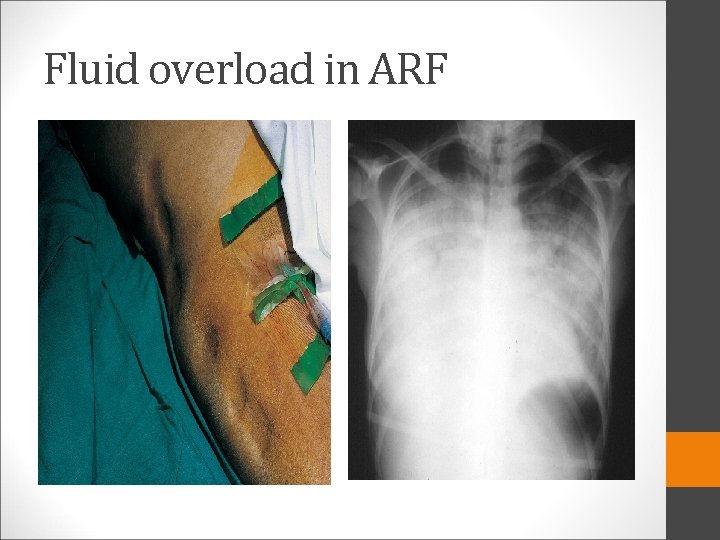
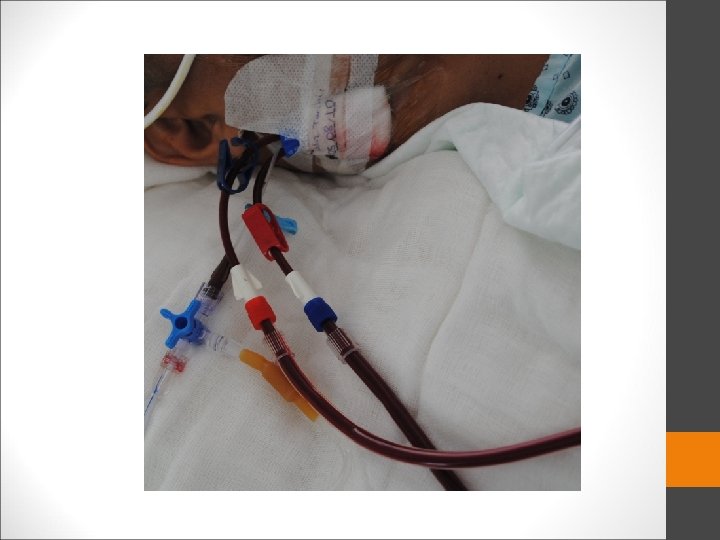
Fluid overload in ARF
Diagnosis • based on laboratory tests of renal function, including serum creatinine. • urinary sediment, and imaging are needed to determine the cause.
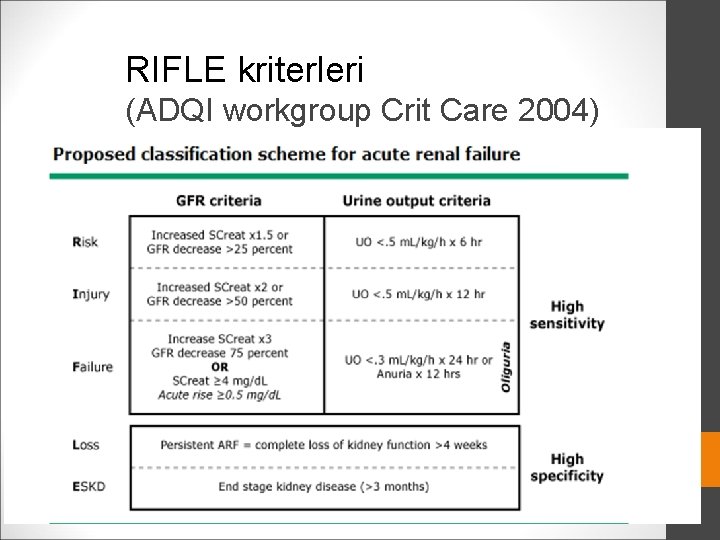
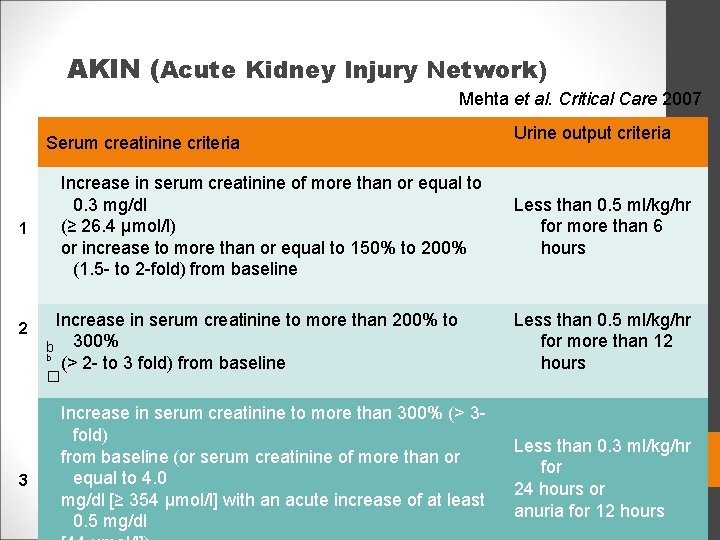
CLINICAL CRITERIA l RIFLE criteria (ADQI workgroup Crit Care 2004) l AKIN (Acute Kidney Injury Network) (Mehta et al. Acute Kidney Injury Network Crit Care 2007)
RIFLE kriterleri (ADQI workgroup Crit Care 2004)
AKIN (Acute Kidney Injury Network) Mehta et al. Critical Care 2007 Serum creatinine criteria 1 2 Increase in serum creatinine of more than or equal to 0. 3 mg/dl (≥ 26. 4 μmol/l) or increase to more than or equal to 150% to 200% (1. 5 - to 2 -fold) from baseline Increase in serum creatinine to more than 200% to b 300% b (> 2 - to 3 fold) from baseline � 3 Increase in serum creatinine to more than 300% (> 3 fold) from baseline (or serum creatinine of more than or equal to 4. 0 mg/dl [≥ 354 μmol/l] with an acute increase of at least 0. 5 mg/dl Urine output criteria Less than 0. 5 ml/kg/hr for more than 6 hours Less than 0. 5 ml/kg/hr for more than 12 hours Less than 0. 3 ml/kg/hr for 24 hours or anuria for 12 hours
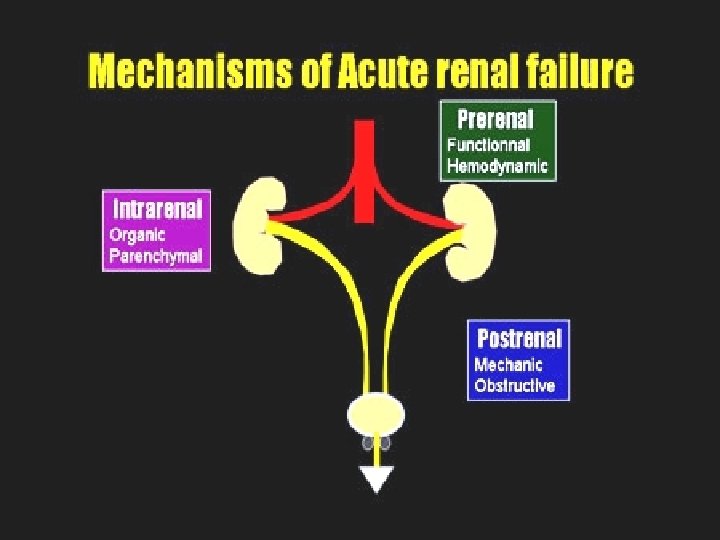
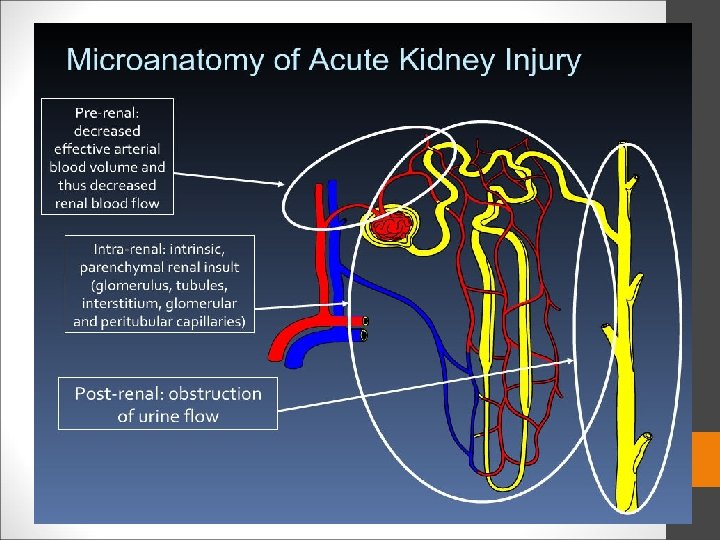
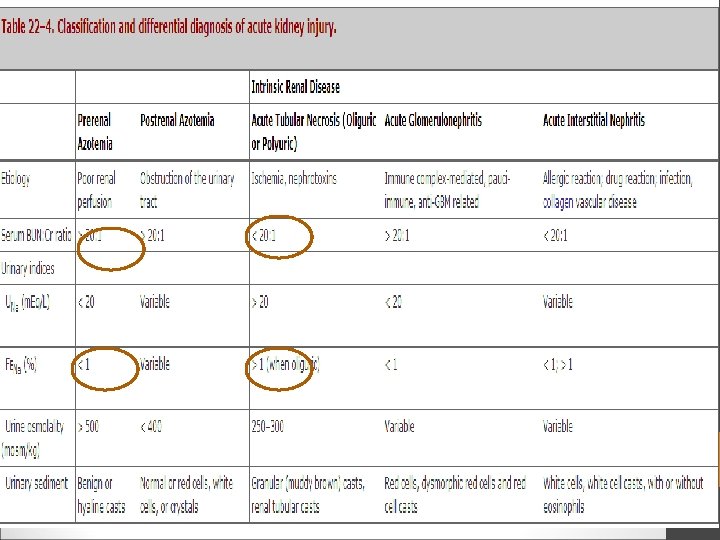
Prerenal azotemia • inadequate renal perfusion. ü causes ECF volume depletion ü cardiovascular disease. Main cause of AKI
• • • PRE-RENAL (%55 -60) Intravascular volume depletion -Hemorrhage -GI losses -Renal losses -Skin and mucous membrane losses -Third space losses Renal vasodilation Systemic vasodilaton Decreased cardiac output Pharmocologic agent that acutely impair autoregulation & GFR
symptoms of prerenal AKI (ARF) symptoms related to hypovolemia, including thirst, decreased urine output, dizziness, and orthostatic hypotension. How can we distinguish Prerenal AKI? • Ask about volume loss from vomiting, diarrhea, sweating, polyuria, or hemorrhage. • Patients with advanced cardiac failure leading to depressed renal perfusion may present with orthopnea and paroxysmal nocturnal dyspnea. • Insensible fluid losses can result in severe hypovolemia in patients with restricted fluid access and should be suspected in elderly patients and in comatose or sedated patients.
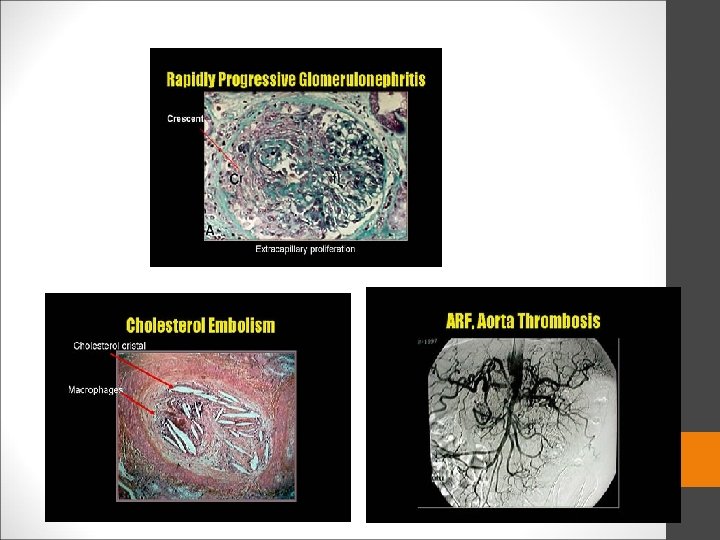
Renal causes of AKI ( 35 -40 %) intrinsic renal disease or damage • most common causes: - prolonged renal ischemia (post ischemic ATN) -nephrotoxins. • RPGN Wegener / PAN/ Goodpasture • Nephrotoc. Vanco. /aminogli. /NSAID/ Amphoterisin-B, Radiocontrast • Acute pyelonephritis • Acute tubulointertisisel nephrithis (ATIN) • Cholesterol crystal embolism • Contrast nephropathy
Renal ARF Glomerular diseases: Nephritic syndrome of hematuria, edema, and HTN indicates a glomerular etiology of AKI. Query about prior throat or skin infections. Tubular diseases: ATN should be suspected in any patient presenting after a period of hypotension secondary to cardiac arrest, hemorrhage, sepsis, drug overdose, or surgery. • A careful search for exposure to nephrotoxins (Vanco. /aminogli. /NSAID/ Amphoterisin-B, Radiocontrast) should include a detailed list of all current medications and any recent radiologic and angiographic examinations • Pigment-induced AKI should be suspected in patients with possible rhabdomyolysis (muscular pain, recent coma, seizure, intoxication, excessive exercise, limb ischemia) or hemolysis (recent blood transfusion). • Allergic interstitial nephritis should be suspected with fevers, rash, arthralgias, and exposure to certain medications including NSAIDs and antibiotics.
Postischemic acute tubular necrosis (ATN) • Postischemic acute tubular necrosis (ATN) can result from prolonged hypotension due most commonly to: • Major surgery (particularly cardiac surgery, abdominal aortic aneurysm surgery, and surgery to correct obstructive jaundice) • Sepsis • Marked hypovolemia • Severe pancreatitis
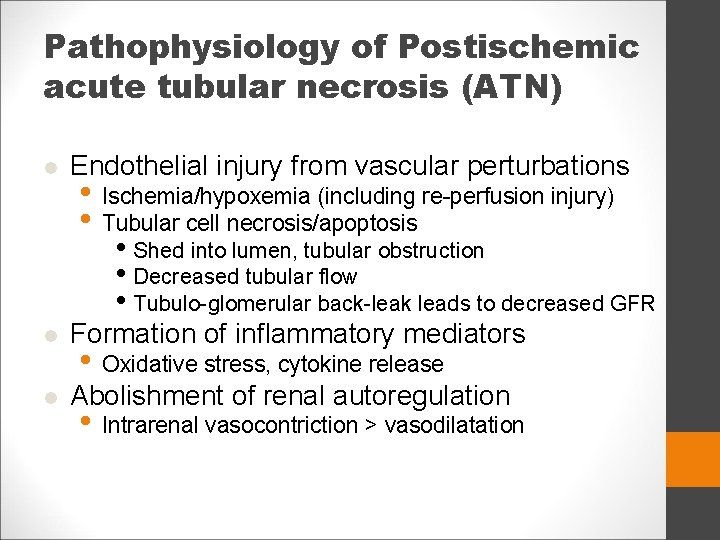
Pathophysiology of Postischemic acute tubular necrosis (ATN) l Endothelial injury from vascular perturbations l Formation of inflammatory mediators l Abolishment of renal autoregulation • Ischemia/hypoxemia (including re-perfusion injury) • Tubular cell necrosis/apoptosis • Shed into lumen, tubular obstruction • Decreased tubular flow • Tubulo-glomerular back-leak leads to decreased GFR • Oxidative stress, cytokine release • Intrarenal vasocontriction > vasodilatation
Pathophysiology 2 l l AKI involves both vascular and tubular effects AKI that secondary to sepsis; sympathetic system and renin-angiotensin-aldosterone system are stimulated and cause renal vasoconstriction
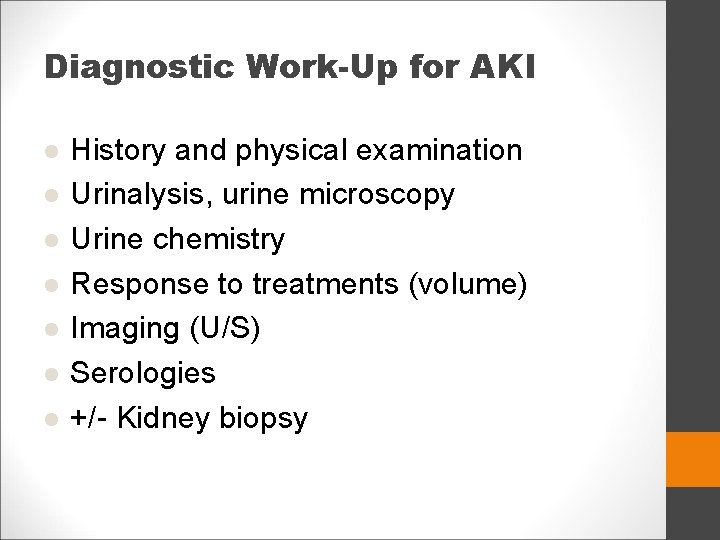
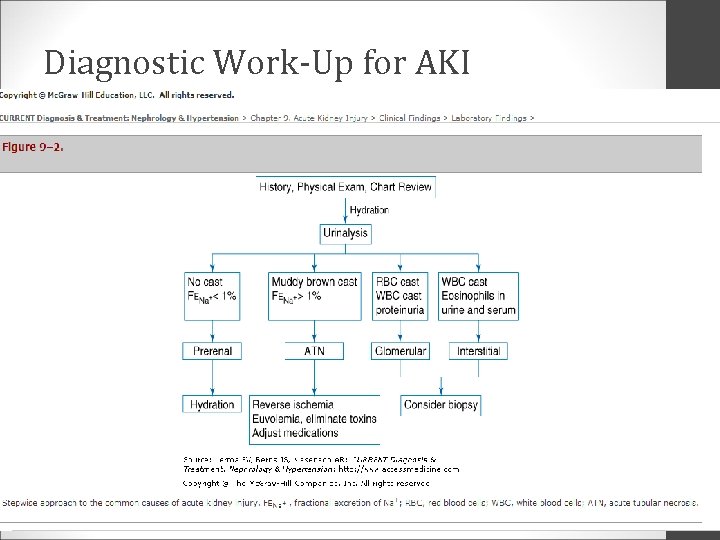
Diagnostic Work-Up for AKI l l l l History and physical examination Urinalysis, urine microscopy Urine chemistry Response to treatments (volume) Imaging (U/S) Serologies +/- Kidney biopsy
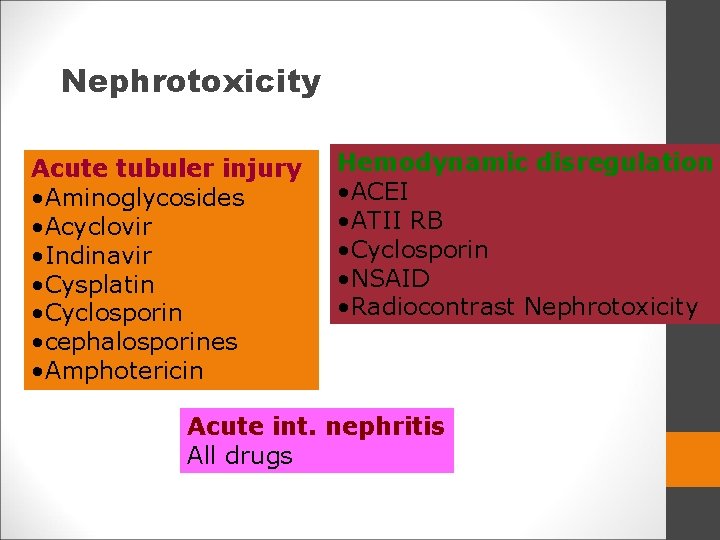
Nephrotoxicity Acute tubuler injury • Aminoglycosides • Acyclovir • Indinavir • Cysplatin • Cyclosporin • cephalosporines • Amphotericin Hemodynamic disregulation • ACEI • ATII RB • Cyclosporin • NSAID • Radiocontrast Nephrotoxicity Acute int. nephritis All drugs
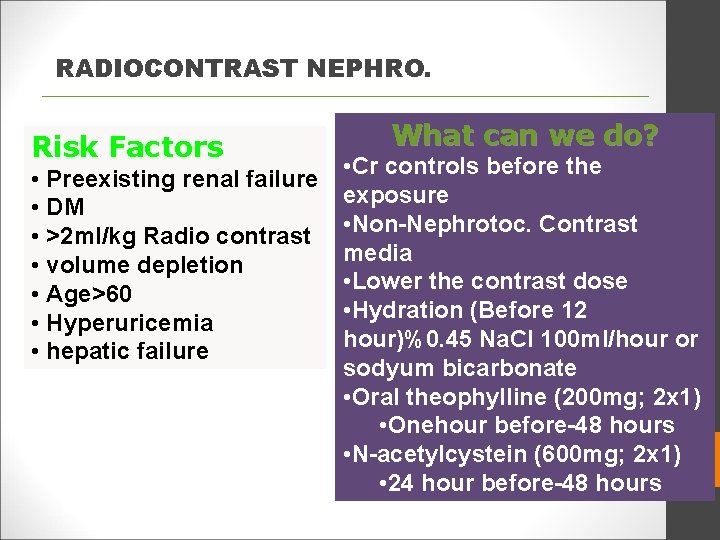
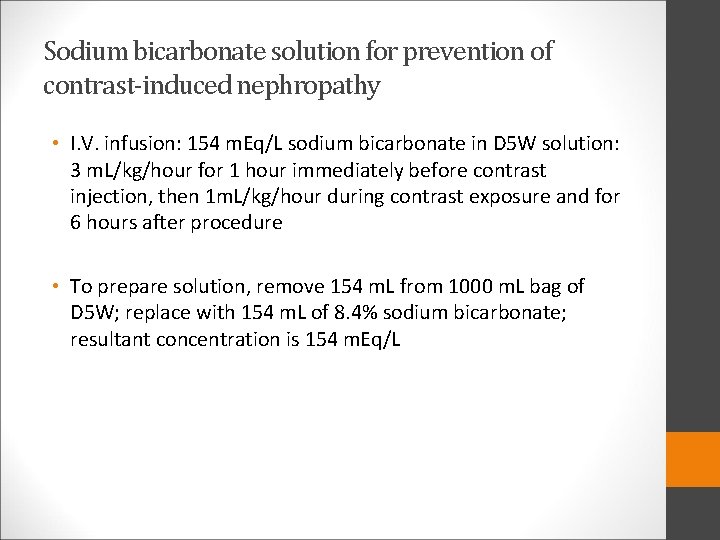
RADIOCONTRAST NEPHRO. Risk Factors • Preexisting renal failure • DM • >2 ml/kg Radio contrast • volume depletion • Age>60 • Hyperuricemia • hepatic failure What can we do? • Cr controls before the exposure • Non-Nephrotoc. Contrast media • Lower the contrast dose • Hydration (Before 12 hour)%0. 45 Na. Cl 100 ml/hour or sodyum bicarbonate • Oral theophylline (200 mg; 2 x 1) • Onehour before-48 hours • N-acetylcystein (600 mg; 2 x 1) • 24 hour before-48 hours
Sodium bicarbonate solution for prevention of contrast-induced nephropathy • I. V. infusion: 154 m. Eq/L sodium bicarbonate in D 5 W solution: 3 m. L/kg/hour for 1 hour immediately before contrast injection, then 1 m. L/kg/hour during contrast exposure and for 6 hours after procedure • To prepare solution, remove 154 m. L from 1000 m. L bag of D 5 W; replace with 154 m. L of 8. 4% sodium bicarbonate; resultant concentration is 154 m. Eq/L
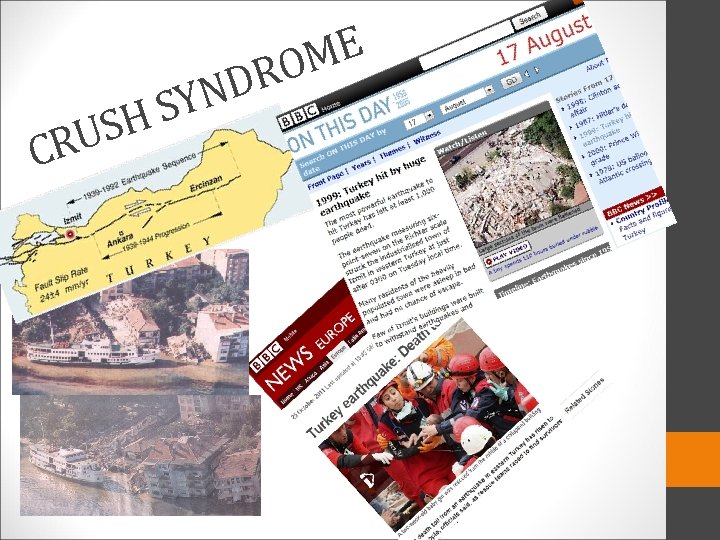
E M O R D N Y S H S U R C
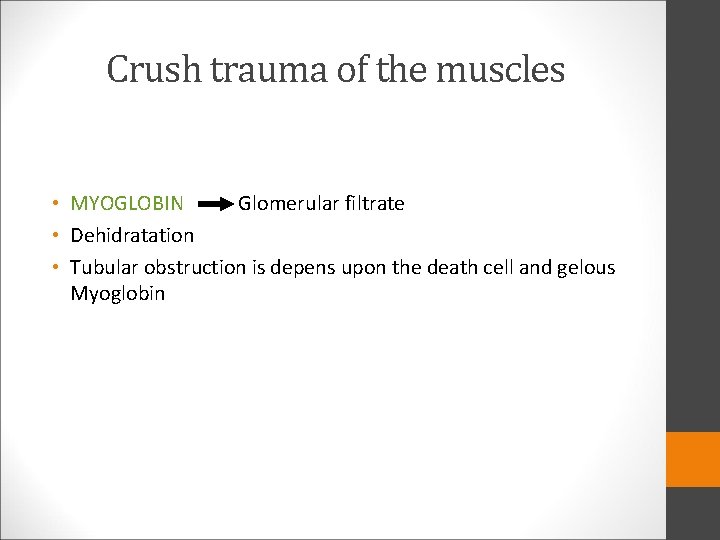
Crush trauma of the muscles • MYOGLOBIN Glomerular filtrate • Dehidratation • Tubular obstruction is depens upon the death cell and gelous Myoglobin
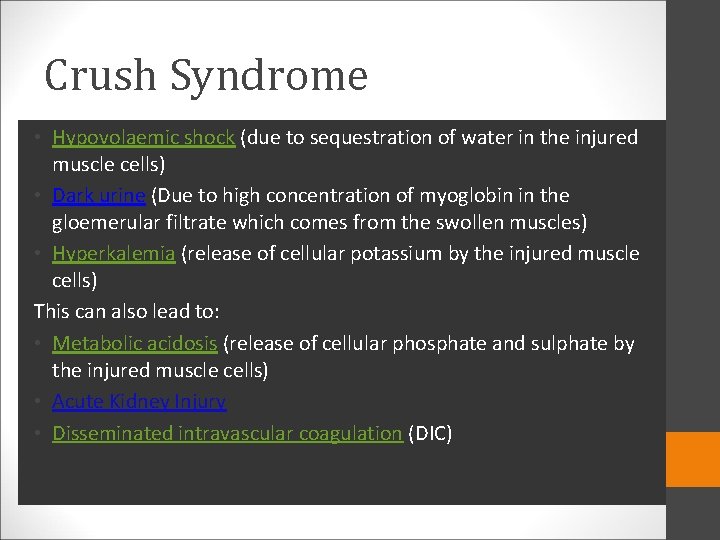
Crush Syndrome • Hypovolaemic shock (due to sequestration of water in the injured muscle cells) • Dark urine (Due to high concentration of myoglobin in the gloemerular filtrate which comes from the swollen muscles) • Hyperkalemia (release of cellular potassium by the injured muscle cells) This can also lead to: • Metabolic acidosis (release of cellular phosphate and sulphate by the injured muscle cells) • Acute Kidney Injury • Disseminated intravascular coagulation (DIC)
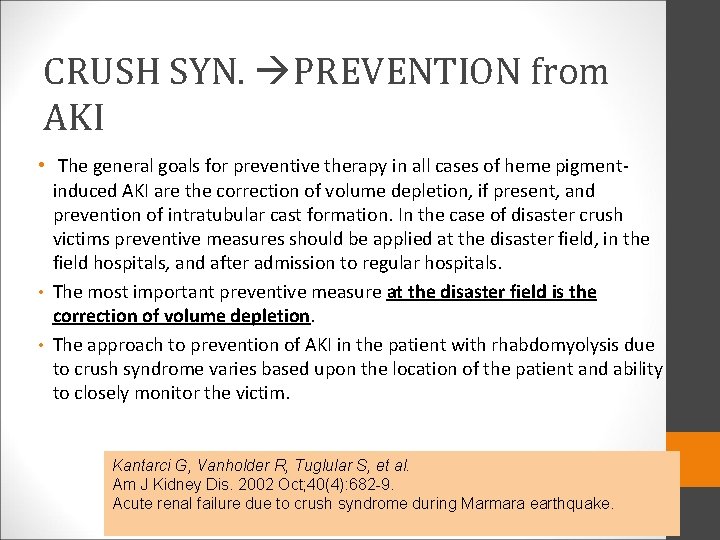
CRUSH SYN. PREVENTION from AKI • The general goals for preventive therapy in all cases of heme pigmentinduced AKI are the correction of volume depletion, if present, and prevention of intratubular cast formation. In the case of disaster crush victims preventive measures should be applied at the disaster field, in the field hospitals, and after admission to regular hospitals. • The most important preventive measure at the disaster field is the correction of volume depletion. • The approach to prevention of AKI in the patient with rhabdomyolysis due to crush syndrome varies based upon the location of the patient and ability to closely monitor the victim. Kantarci G, Vanholder R, Tuglular S, et al. Am J Kidney Dis. 2002 Oct; 40(4): 682 -9. Acute renal failure due to crush syndrome during Marmara earthquake.
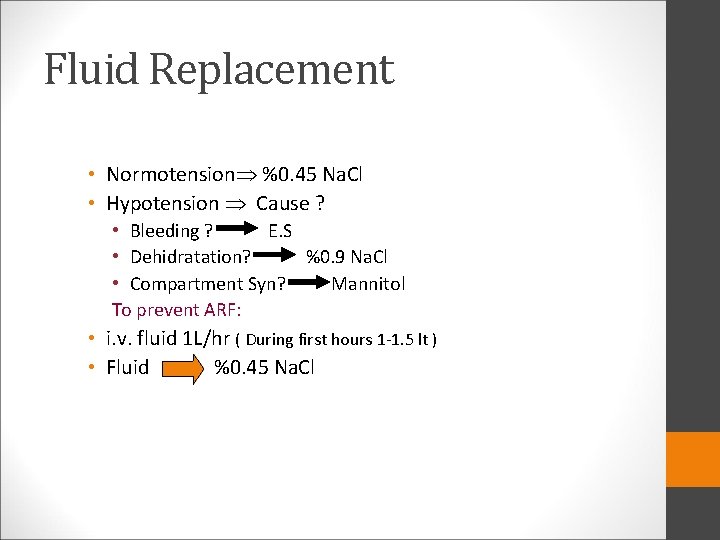
Fluid Replacement • Normotension %0. 45 Na. Cl • Hypotension Cause ? • Bleeding ? E. S • Dehidratation? %0. 9 Na. Cl • Compartment Syn? Mannitol To prevent ARF: • i. v. fluid 1 L/hr ( During first hours 1 -1. 5 lt ) • Fluid %0. 45 Na. Cl
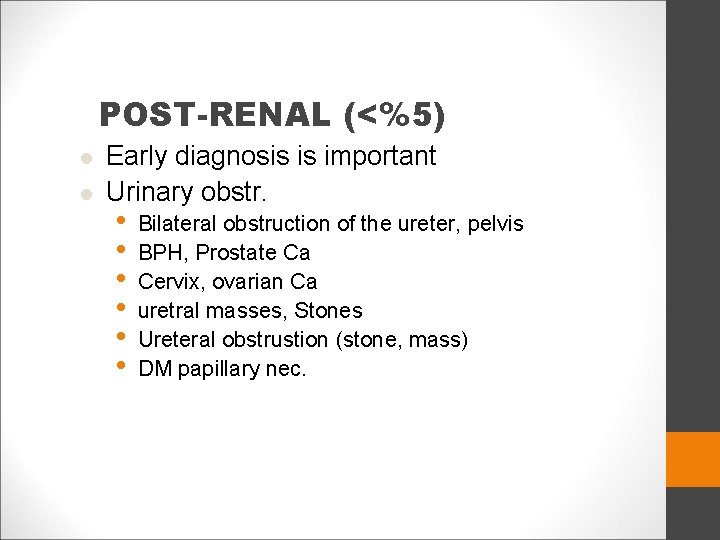
Postrenal azotemia • obstructive nephropathy is due to various types of obstruction in the voiding and collecting parts of the urinary system
POST-RENAL (<%5) l l Early diagnosis is important Urinary obstr. • • • Bilateral obstruction of the ureter, pelvis BPH, Prostate Ca Cervix, ovarian Ca uretral masses, Stones Ureteral obstrustion (stone, mass) DM papillary nec.
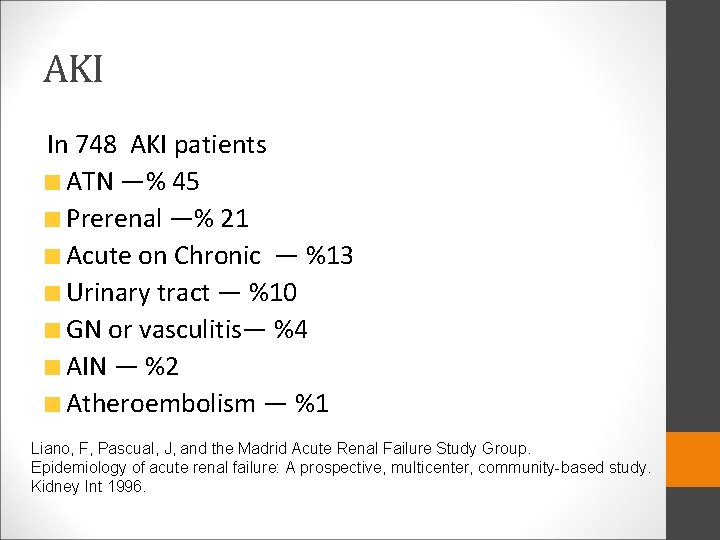
AKI In 748 AKI patients ATN —% 45 Prerenal —% 21 Acute on Chronic — %13 Urinary tract — %10 GN or vasculitis— %4 AIN — %2 Atheroembolism — %1 Liano, F, Pascual, J, and the Madrid Acute Renal Failure Study Group. Epidemiology of acute renal failure: A prospective, multicenter, community-based study. Kidney Int 1996.
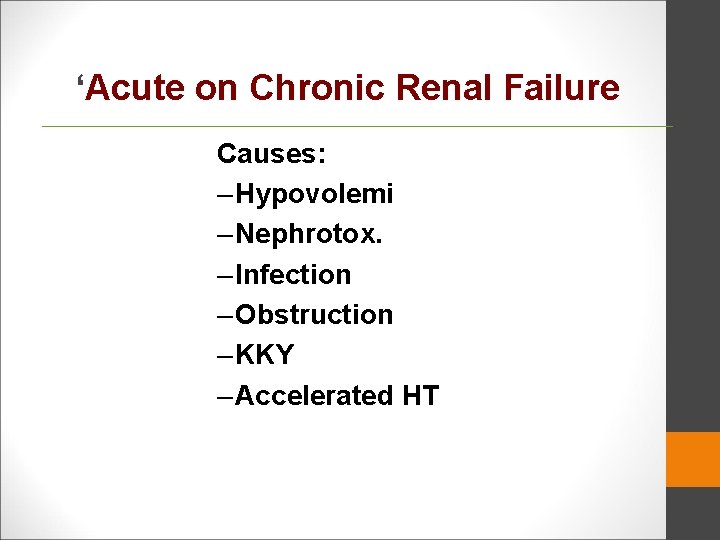
‘Acute on Chronic Renal Failure Causes: – Hypovolemi – Nephrotox. – Infection – Obstruction – KKY – Accelerated HT
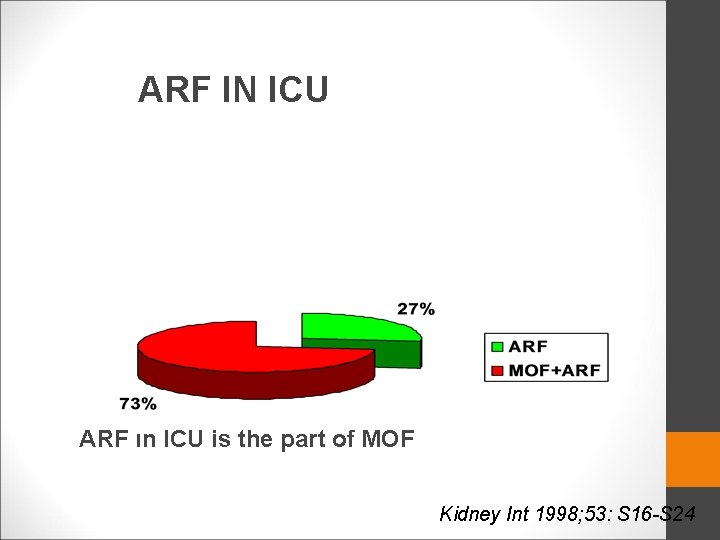
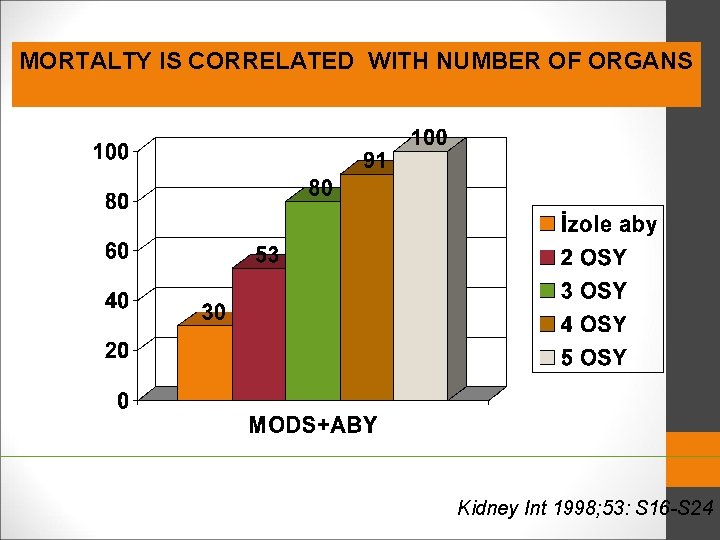
ARF IN ICU ARF ın ICU is the part of MOF Kidney Int 1998; 53: S 16 -S 24
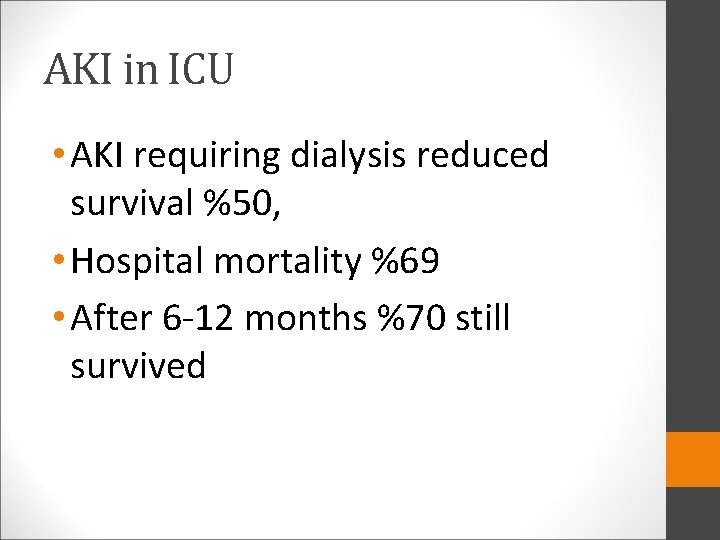
AKI in ICU • AKI requiring dialysis reduced survival %50, • Hospital mortality %69 • After 6 -12 months %70 still survived
MORTALTY IS CORRELATED WITH NUMBER OF ORGANS Kidney Int 1998; 53: S 16 -S 24
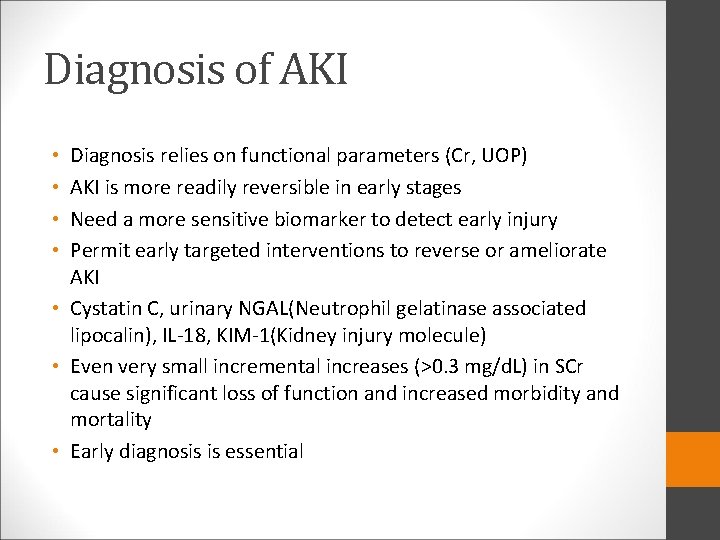
Diagnosis of AKI Diagnosis relies on functional parameters (Cr, UOP) AKI is more readily reversible in early stages Need a more sensitive biomarker to detect early injury Permit early targeted interventions to reverse or ameliorate AKI • Cystatin C, urinary NGAL(Neutrophil gelatinase associated lipocalin), IL-18, KIM-1(Kidney injury molecule) • Even very small incremental increases (>0. 3 mg/d. L) in SCr cause significant loss of function and increased morbidity and mortality • Early diagnosis is essential • •
Diagnostic Work-Up for AKI
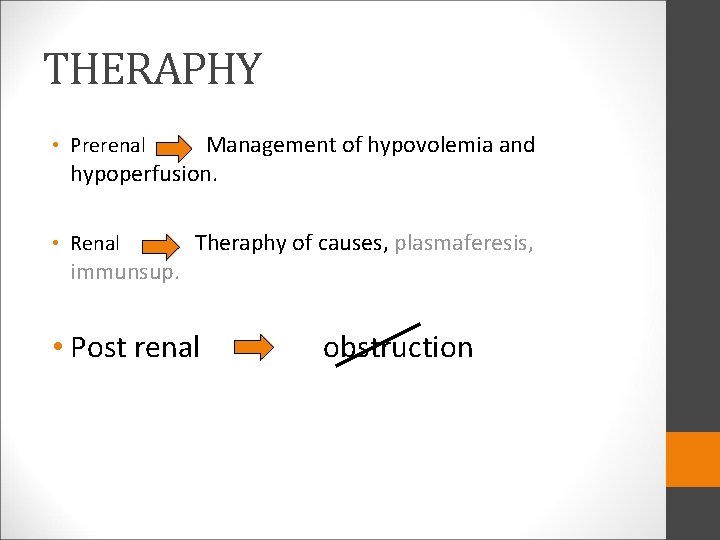
THERAPHY Management of hypovolemia and hypoperfusion. • Prerenal • Renal immunsup. Theraphy of causes, plasmaferesis, • Post renal obstruction
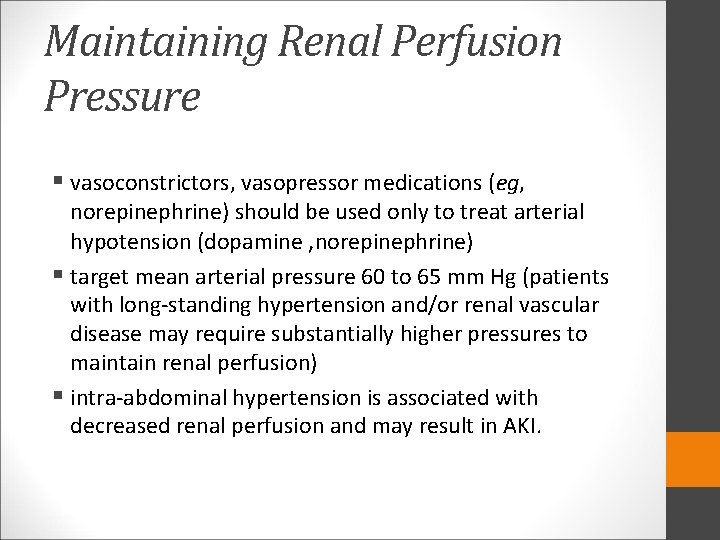
Maintaining Renal Perfusion Pressure § vasoconstrictors, vasopressor medications (eg, norepinephrine) should be used only to treat arterial hypotension (dopamine , norepinephrine) § target mean arterial pressure 60 to 65 mm Hg (patients with long-standing hypertension and/or renal vascular disease may require substantially higher pressures to maintain renal perfusion) § intra-abdominal hypertension is associated with decreased renal perfusion and may result in AKI.
Mortality/Morbidity • AKI is not a benign disease. In a recent study, a 31% mortality rate was noted in patients with AKI not requiring dialysis, ICU mortality 50 -69 % • Mortality rates are generally lower for nonoliguric AKI (>400 m. L/d) than for oliguric (<400 m. L/d) AKI, reflecting the fact that nonoliguric AKI is usually caused by drug-induced nephrotoxicity and interstitial nephritis
SUGGESTED READING Goldman's Cecile Medicine 24 th edition Elsevier Goldman L, Schafer AI The Cleveland Clinic Intensive Review of Internal Medicine 5 th edition Lippincott Williams and Wilkins Stoller JK, Michota FA, Mandell BF CURRENT Diagnosis & Treatment: Nephrology & Hypertension Edgar V. Lerma, Jeffrey S. Berns, Allen R. Nissenson (ACUTE RENAL FAILURE Chapter 9 -11 -14)