
Acute Gastrointestinal Bleeding how one thing leads to
Acute Gastrointestinal Bleeding… how one thing leads to another Rose Panton (ST 2 Radiology Registrar) rose. panton@porthosp. nhs. uk
Clinical information: 56 year old male admitted with abdominal pain, distension and right flank ‘fullness’. Background: Non-smoker, moderate alcohol intake, nil past history of note.
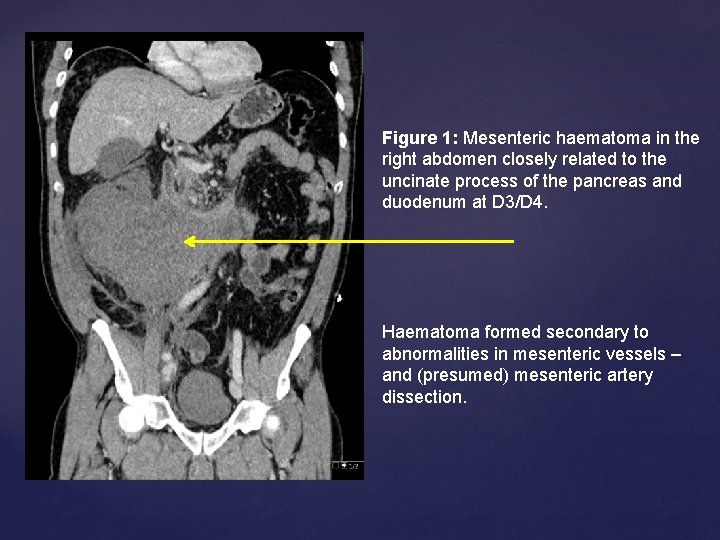
Figure 1: Mesenteric haematoma in the right abdomen closely related to the uncinate process of the pancreas and duodenum at D 3/D 4. { Haematoma formed secondary to abnormalities in mesenteric vessels – and (presumed) mesenteric artery dissection.
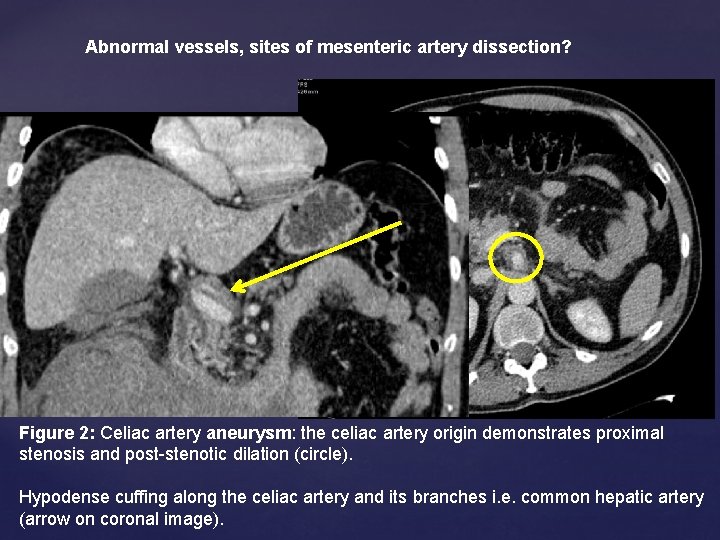
Abnormal vessels, sites of mesenteric artery dissection? Figure 2: Celiac artery aneurysm: the celiac artery origin demonstrates proximal stenosis and post-stenotic dilation (circle). Hypodense cuffing along the celiac artery and its branches i. e. common hepatic artery (arrow on coronal image).
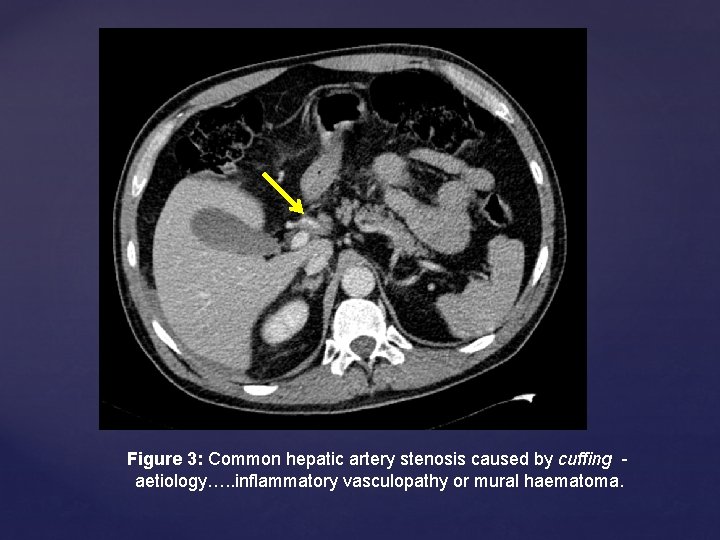
Figure 3: Common hepatic artery stenosis caused by cuffing aetiology…. . inflammatory vasculopathy or mural haematoma.
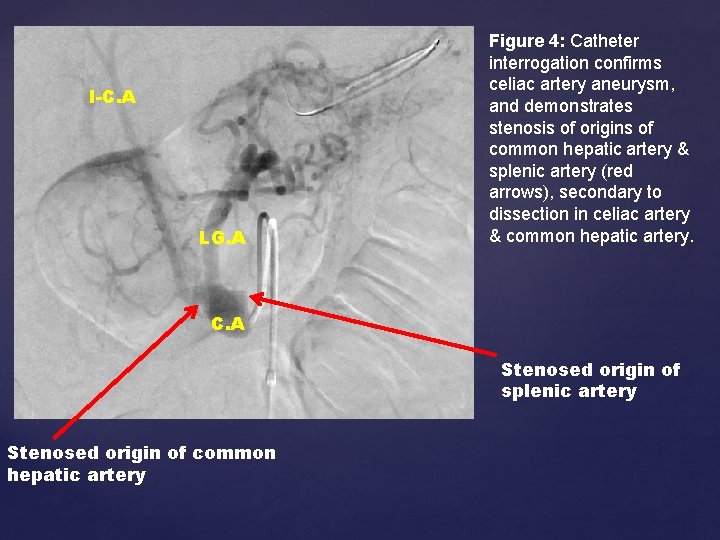
I-C. A LG. A Figure 4: Catheter interrogation confirms celiac artery aneurysm, and demonstrates stenosis of origins of common hepatic artery & splenic artery (red arrows), secondary to dissection in celiac artery & common hepatic artery. C. A Stenosed origin of splenic artery Stenosed origin of common hepatic artery
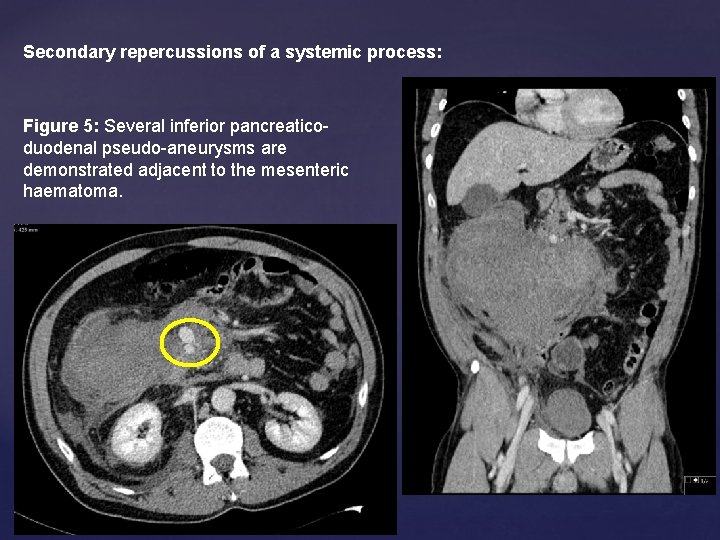
Secondary repercussions of a systemic process: Figure 5: Several inferior pancreaticoduodenal pseudo-aneurysms are demonstrated adjacent to the mesenteric haematoma.
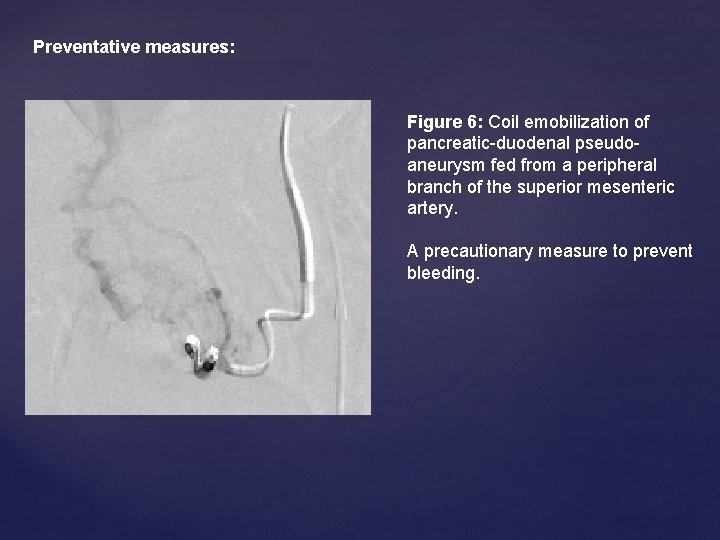
Preventative measures: Figure 6: Coil emobilization of pancreatic-duodenal pseudoaneurysm fed from a peripheral branch of the superior mesenteric artery. A precautionary measure to prevent bleeding.
Other related imaging findings: -Bilateral calf DVTs. -Multiple pulmonary emboli. -Splenic vein thrombus -> subsequent hypoperfusion of the right lobe of the liver & the spleen.
Diagnosis? Systemic vasculitis - Polyarteritis Nodosum (PAN)
Pathophysiology: - Systemic vasculitis characterized by necrotizing inflammatory lesions that typically affect medium-sized muscular arteries and occur mainly at bifurcations /branch points. - Inflammation starts in the vessel intima and progresses to involve the entire thickness of the artery wall. Destructive process involving the internal and external elastic lamina results in fibrinoid necrosis. - Lesions result in micro-aneurysm formation, aneurysmal rupture with haemorrhage, thrombosis, and, consequently, organ ischemia or infarction. - As lesions progress, proliferation of the vessel intima or media may result in obstruction of affected vessels and subsequent tissue ischaemia or infarction.
Key learning points: Challenge of concurrent opposing pathologies in vasculitis (hyper-coagulopathy and haemorrhage). Risk-benefit decisions involved with managing the case from an interventional radiology perspective (embolization of the pancreatico-duodenal pseudoaneurysms was associated with risk of foregut ischaemia). Appreciation of the multisystem nature and devastating consequences of connective tissue diseases. Can affect seemingly healthy individuals.

Thank you for listening
- Slides: 13