
Acute Coronary Syndrome Acute Coronary Syndrome ACS Definition


![For The Patient Experiencing Chest Pain [CHESTPAIN] Protocol 1. 2. 3. 4. 5. 6.](https://slidetodoc.com/presentation_image_h2/8c8f203b4c94951a988c739739a43f8e/image-16.jpg "For The Patient Experiencing Chest Pain [CHESTPAIN] Protocol 1. 2. 3. 4. 5. 6.")

- Slides: 17
Acute Coronary Syndrome
Acute Coronary Syndrome (ACS) • • • Definition of ACS Signs and symptoms of ACS Gender and age related difference in ACS Pathophysiology of ACS Treatment of ACS Protocol “For the Patient Experiencing Chest Pain”
Worldwide Statistics Each year: • > 4 million patients are admitted with unstable angina and acute MI • > 900, 000 patients undergo PTCA with or without stent • From 1 to 4 percent of patients ultimately proven to have acute coronary syndrome are sent home from the emergency department. • Only about 2 percent of patients with cocaineassociated chest pain have acute coronary syndrome.
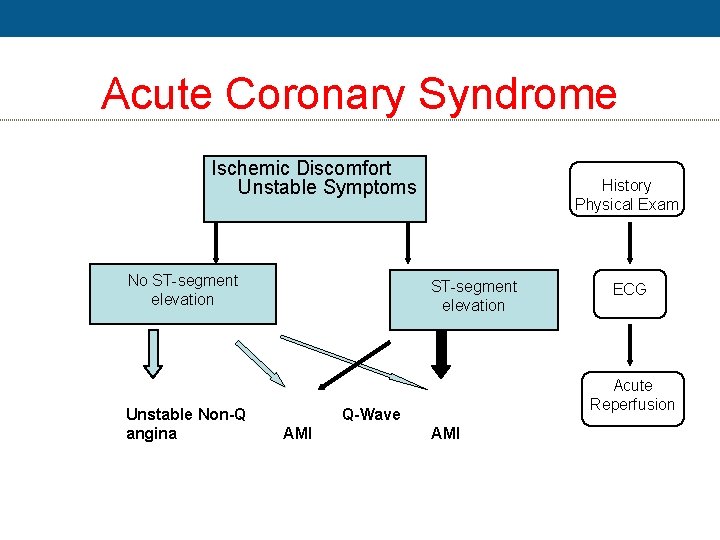
What is Acute Coronary Syndrome (ACS) ? Umbrella term used to cover a group of clinical symptoms compatible with acute myocardial ischemia • Stable Angina (chest pain with activity) • Unstable Angina (Chest pain with activity or rest) • Myocardial Infarction with positive EKG (ST elevation MI – STEMI) • Myocardial Infarction with normal EKG (Non-ST segment elevation MI – non-STEMI)
Acute Coronary Syndrome Ischemic Discomfort Unstable Symptoms No ST-segment elevation Unstable Non-Q angina History Physical Exam ST-segment elevation Acute Reperfusion Q-Wave AMI ECG AMI
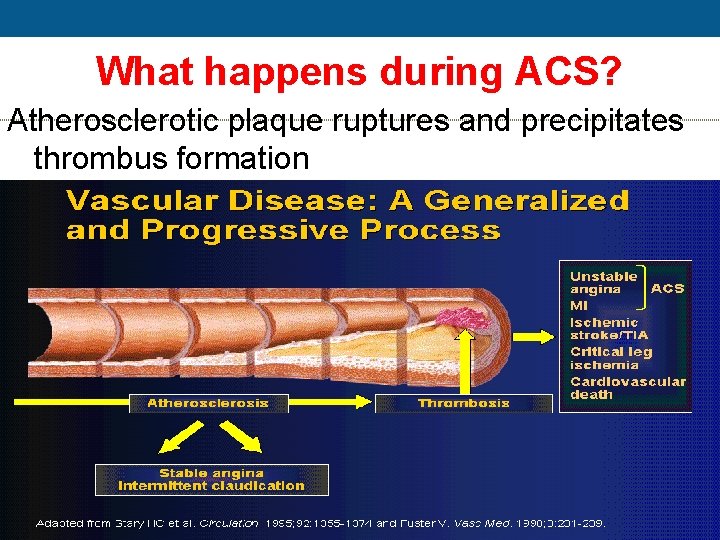
What happens during ACS? Atherosclerotic plaque ruptures and precipitates thrombus formation
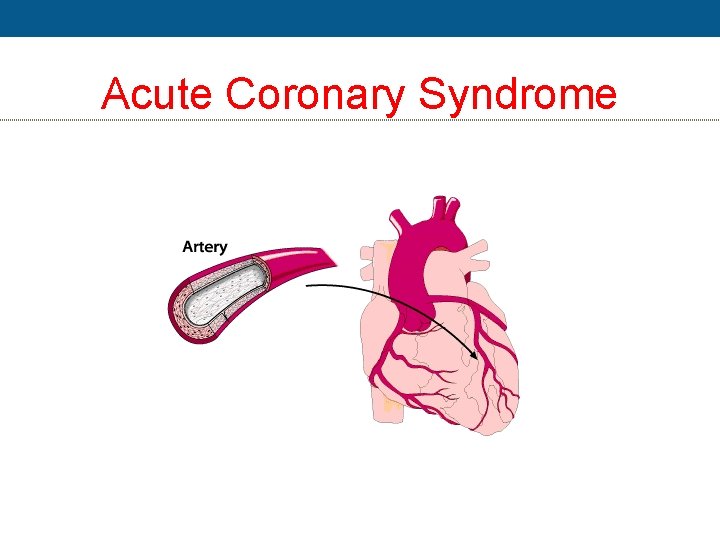
Acute Coronary Syndrome
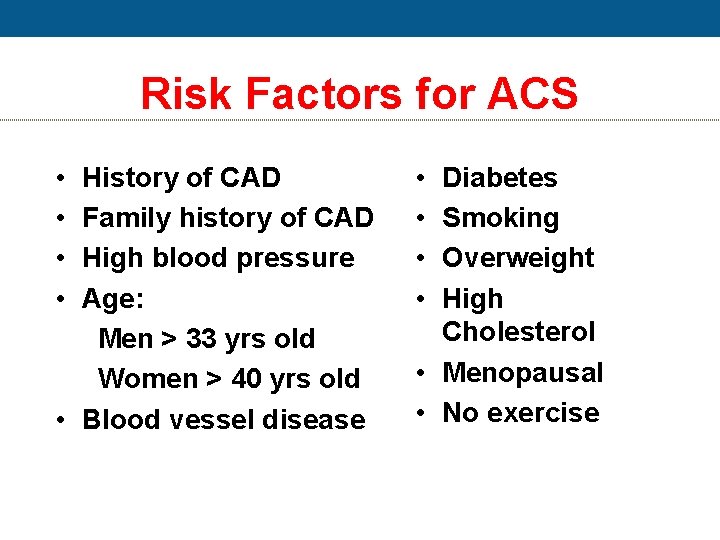
Risk Factors for ACS • • History of CAD Family history of CAD High blood pressure Age: Men > 33 yrs old Women > 40 yrs old • Blood vessel disease • • Diabetes Smoking Overweight High Cholesterol • Menopausal • No exercise
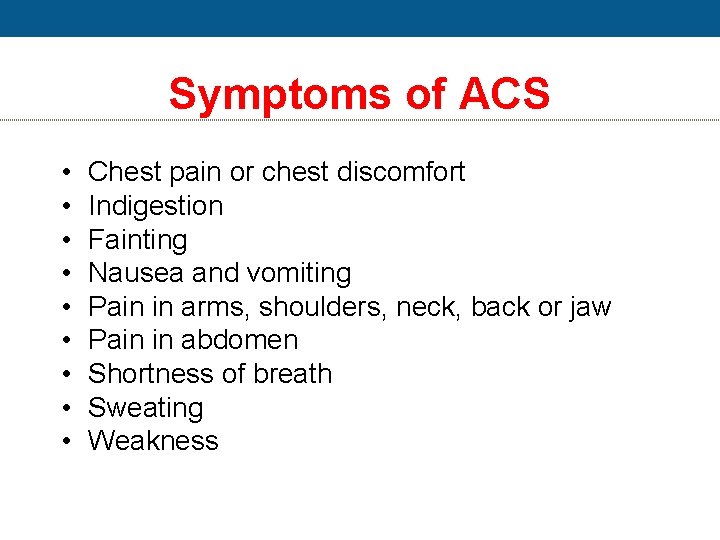
Symptoms of ACS • • • Chest pain or chest discomfort Indigestion Fainting Nausea and vomiting Pain in arms, shoulders, neck, back or jaw Pain in abdomen Shortness of breath Sweating Weakness
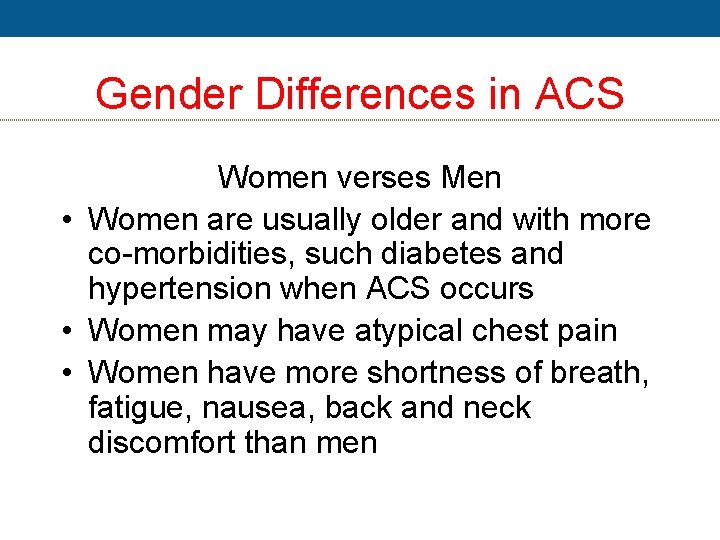
Gender Differences in ACS Women verses Men • Women are usually older and with more co-morbidities, such diabetes and hypertension when ACS occurs • Women may have atypical chest pain • Women have more shortness of breath, fatigue, nausea, back and neck discomfort than men
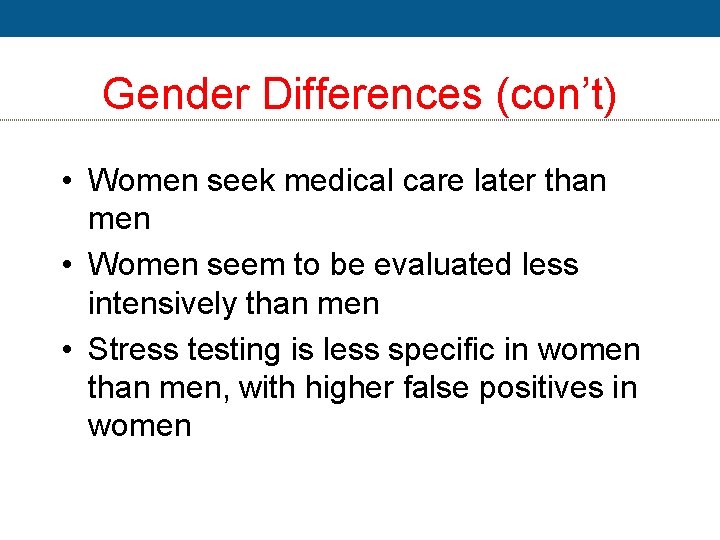
Gender Differences (con’t) • Women seek medical care later than men • Women seem to be evaluated less intensively than men • Stress testing is less specific in women than men, with higher false positives in women
Diabetes and ACS • Patients are older, more often women • Patients are at increased risk for heart / renal failure, cardiogenic shock and death • Pain perception may be altered due to neuropathy
Treatment of ACS
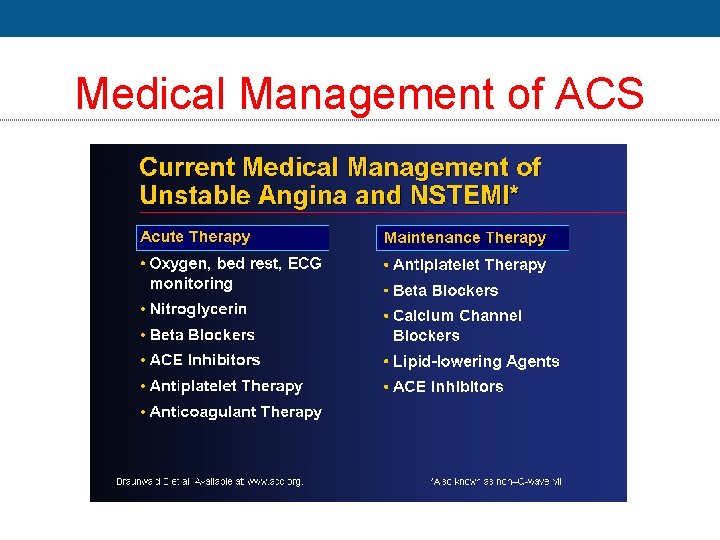
Medical Management of ACS
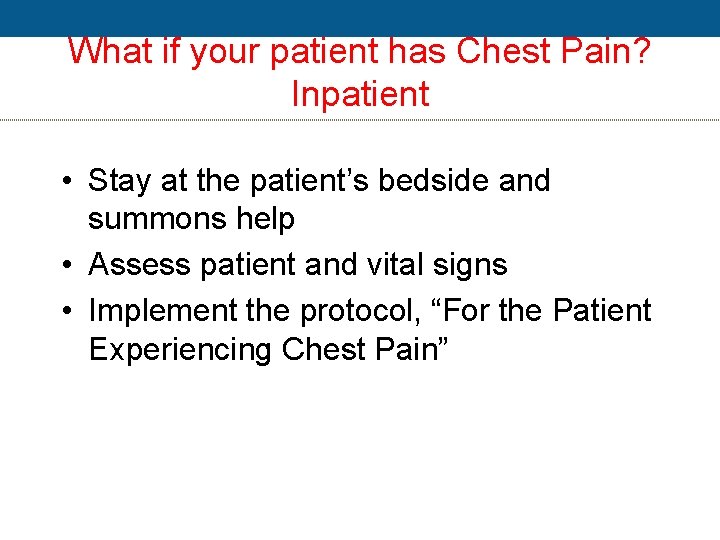
What if your patient has Chest Pain? Inpatient • Stay at the patient’s bedside and summons help • Assess patient and vital signs • Implement the protocol, “For the Patient Experiencing Chest Pain”
For The Patient Experiencing Chest Pain [CHESTPAIN] Protocol 1. 2. 3. 4. 5. 6. 7. Notify Rapid Response team by calling 8263. STAT EKG, CK Total, CKMB, Troponin 1. Saline lock if no IV access. After EKG obtained, NTG 0. 4 mg SL q 5 minutes up to 3 tabs prn for chest pain. Hold if systolic B/P <100. Nasal O 2 at 2 LPM, titrate to keep O 2 saturation 90% or greater. Notify physician of current assessment, vital signs and above actions taken. Have patient chart, current medication list and labs available when calling physician. Nurse should not delay calling the attending physician because of waiting on lab results.
Any questions? www. somc. org Safety Quality Service Relationships Performance