
Activitydependent Development Nature vs Nurture Development of ocular
- Slides: 15
Activity-dependent Development Nature vs. Nurture Development of ocular dominance in mammalian visual cortex Critical period 1
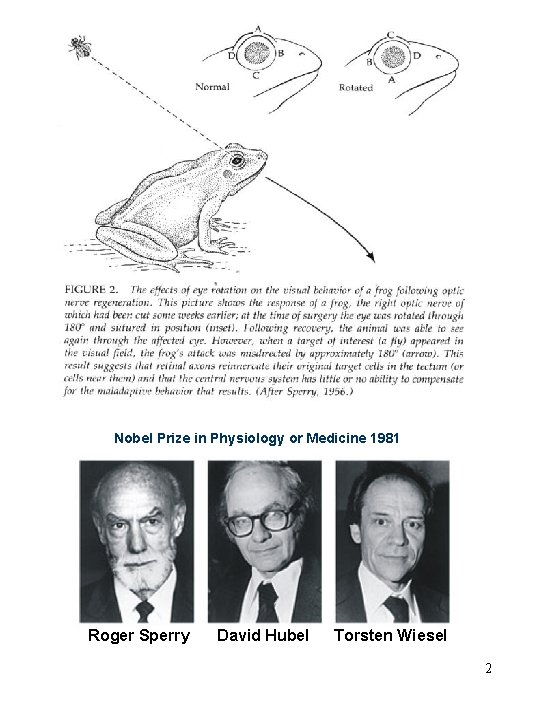
Nobel Prize in Physiology or Medicine 1981 Roger Sperry David Hubel Torsten Wiesel 2
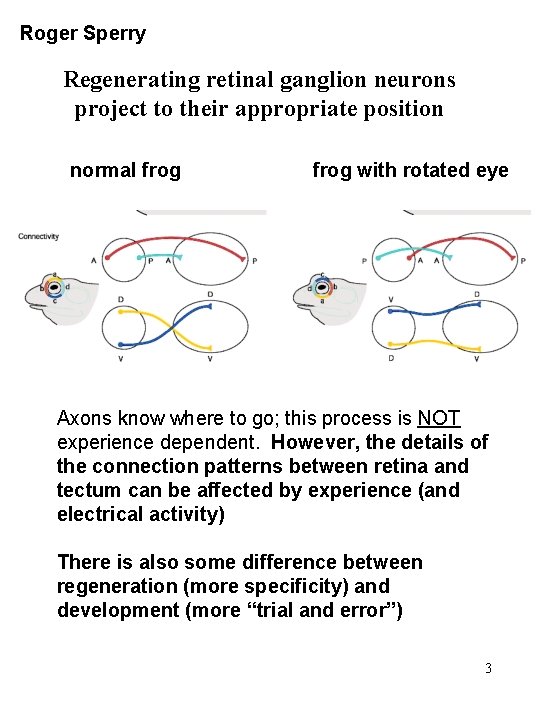
Roger Sperry Regenerating retinal ganglion neurons project to their appropriate position normal frog with rotated eye Axons know where to go; this process is NOT experience dependent. However, the details of the connection patterns between retina and tectum can be affected by experience (and electrical activity) There is also some difference between regeneration (more specificity) and development (more “trial and error”) 3
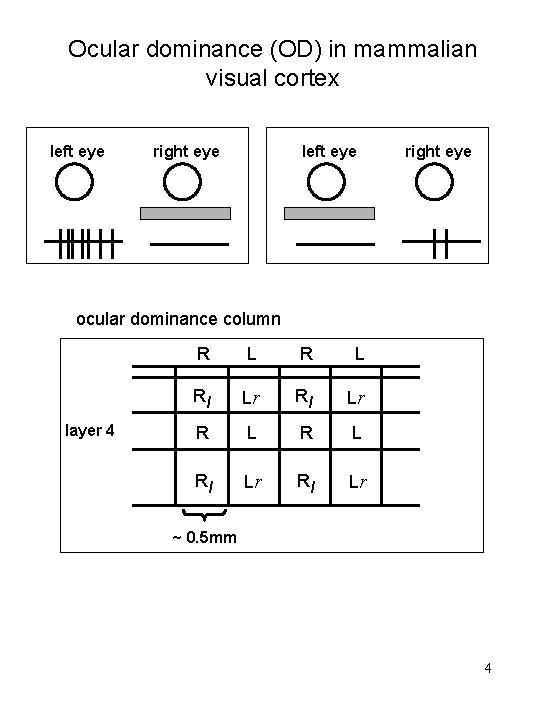
Ocular dominance (OD) in mammalian visual cortex left eye right eye ocular dominance column layer 4 R L R L Rl Lr ~ 0. 5 mm 4
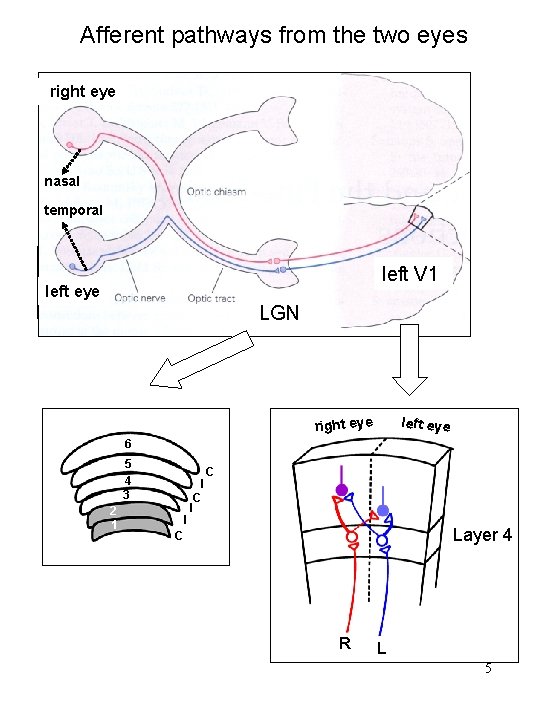
Afferent pathways from the two eyes right eye nasal temporal left V 1 left eye LGN right eye left eye 6 5 4 3 2 1 I C I C Layer 4 R L 5
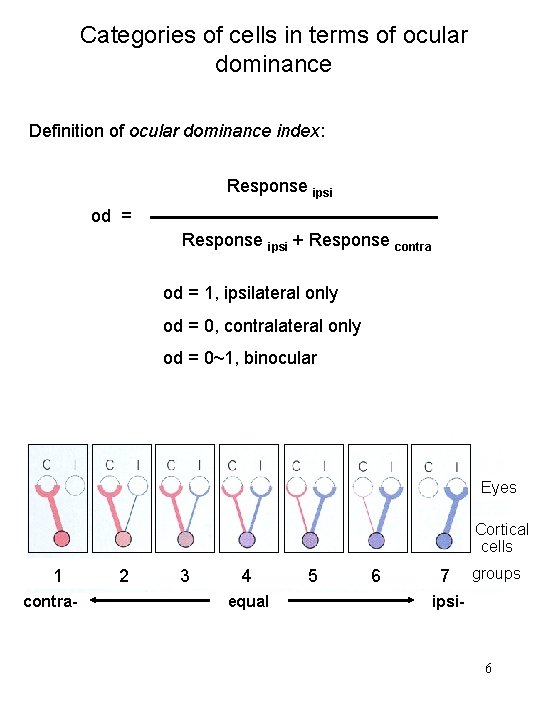
Categories of cells in terms of ocular dominance Definition of ocular dominance index: Response ipsi od = Response ipsi + Response contra od = 1, ipsilateral only od = 0, contralateral only od = 0~1, binocular Eyes Cortical cells 1 contra- 2 3 4 equal 5 6 7 groups ipsi- 6
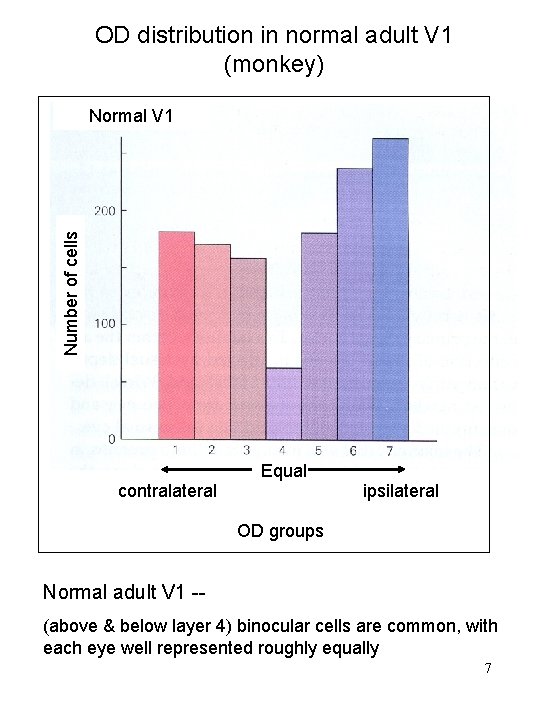
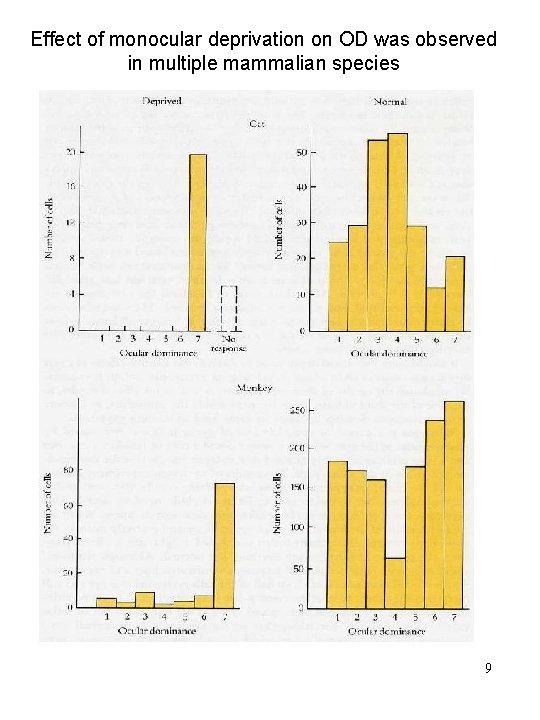
OD distribution in normal adult V 1 (monkey) Number of cells Normal V 1 contralateral Equal ipsilateral OD groups Normal adult V 1 -(above & below layer 4) binocular cells are common, with each eye well represented roughly equally 7
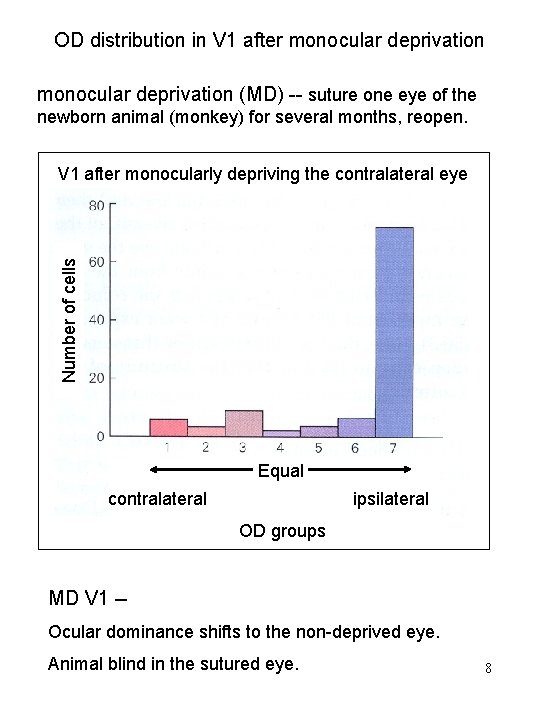
OD distribution in V 1 after monocular deprivation (MD) -- suture one eye of the newborn animal (monkey) for several months, reopen. Number of cells V 1 after monocularly depriving the contralateral eye Equal contralateral ipsilateral OD groups MD V 1 -Ocular dominance shifts to the non-deprived eye. Animal blind in the sutured eye. 8
Effect of monocular deprivation on OD was observed in multiple mammalian species 9
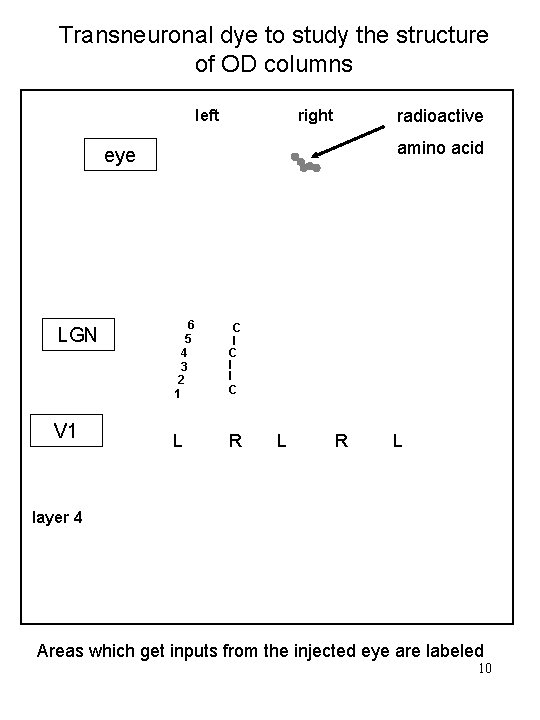
Transneuronal dye to study the structure of OD columns left radioactive right amino acid eye LGN V 1 6 5 4 3 2 1 C I I C L R 2 L R L layer 4 Areas which get inputs from the injected eye are labeled 10
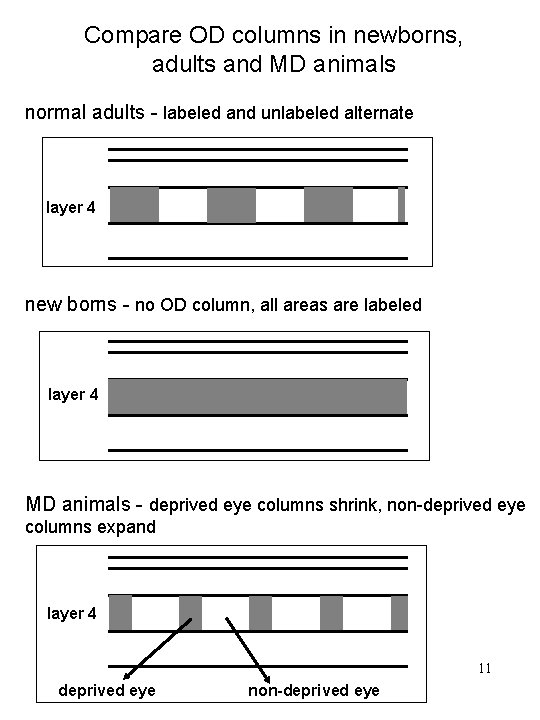
Compare OD columns in newborns, adults and MD animals normal adults - labeled and unlabeled alternate layer 4 new borns - no OD column, all areas are labeled layer 4 MD animals - deprived eye columns shrink, non-deprived eye columns expand layer 4 11 deprived eye non-deprived eye
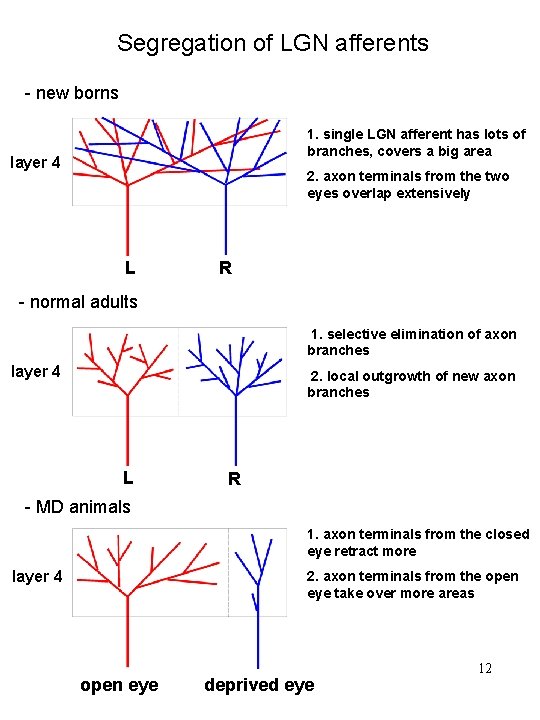
Segregation of LGN afferents - new borns 1. single LGN afferent has lots of branches, covers a big area layer 4 2. axon terminals from the two eyes overlap extensively L R - normal adults 1. selective elimination of axon branches layer 4 2. local outgrowth of new axon branches L R - MD animals 1. axon terminals from the closed eye retract more layer 4 2. axon terminals from the open eye take over more areas open eye deprived eye 12
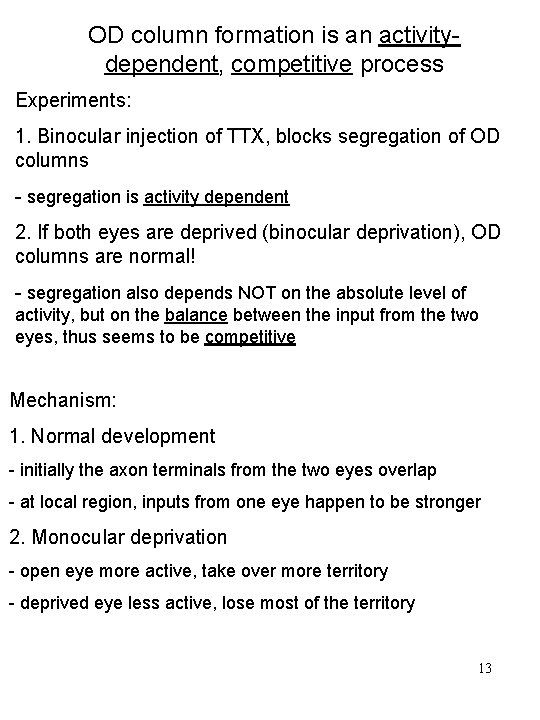
OD column formation is an activitydependent, competitive process Experiments: 1. Binocular injection of TTX, blocks segregation of OD columns - segregation is activity dependent 2. If both eyes are deprived (binocular deprivation), OD columns are normal! - segregation also depends NOT on the absolute level of activity, but on the balance between the input from the two eyes, thus seems to be competitive Mechanism: 1. Normal development - initially the axon terminals from the two eyes overlap - at local region, inputs from one eye happen to be stronger 2. Monocular deprivation - open eye more active, take over more territory - deprived eye less active, lose most of the territory 13
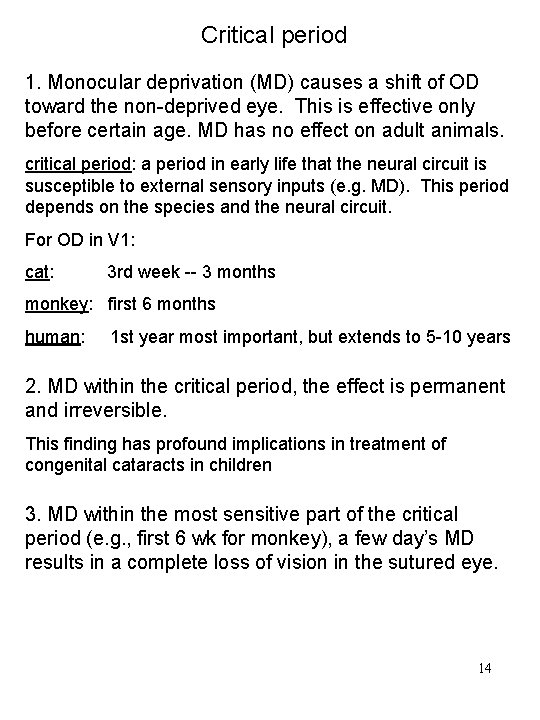
Critical period 1. Monocular deprivation (MD) causes a shift of OD toward the non-deprived eye. This is effective only before certain age. MD has no effect on adult animals. critical period: a period in early life that the neural circuit is susceptible to external sensory inputs (e. g. MD). This period depends on the species and the neural circuit. For OD in V 1: cat: 3 rd week -- 3 months monkey: first 6 months human: 1 st year most important, but extends to 5 -10 years 2. MD within the critical period, the effect is permanent and irreversible. This finding has profound implications in treatment of congenital cataracts in children 3. MD within the most sensitive part of the critical period (e. g. , first 6 wk for monkey), a few day’s MD results in a complete loss of vision in the sutured eye. 14
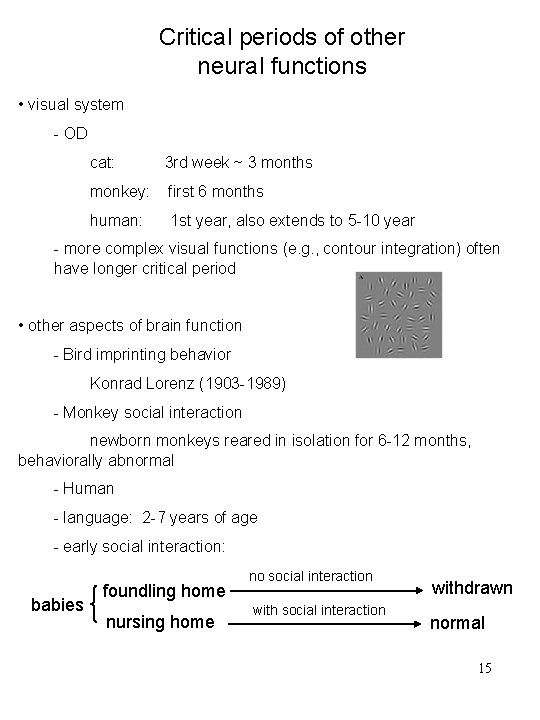
Critical periods of other neural functions • visual system - OD cat: 3 rd week ~ 3 months monkey: first 6 months human: 1 st year, also extends to 5 -10 year - more complex visual functions (e. g. , contour integration) often have longer critical period • other aspects of brain function - Bird imprinting behavior Konrad Lorenz (1903 -1989) - Monkey social interaction newborn monkeys reared in isolation for 6 -12 months, behaviorally abnormal - Human - language: 2 -7 years of age - early social interaction: babies foundling home nursing home no social interaction withdrawn normal 15