
Activitybased Learning Designed And Created By RITU DAR
Activity-based Learning Designed And Created By RITU DAR City International School
Challenges A Teacher Faces The biggest challenge for any teacher is to capture the students attention and put across ideas in such a way that it stays with them for long even after they have left the classroom.

Activity-based learning • is the solution which can be adopted by teachers to involve the students both mentally and physically. • aids in students all round development • enhances creativity
Hypothesis Activity based learning influences students achievement
OBJECTIVES • Strengthening thinking and reasoning skills. • Building self esteem. • Encouraging students to take responsibility for their own learning. • Making independent and self correcting learners. • Tapping children’s natural curiosity and sense of wonder.
Procedure Topic: FLOAT AND SINK • Students were given names of a few objects. • They were asked to make their predictions in a worksheet. • The worksheets were scored. • Later, students performed the activity using actual objects. • They were asked to fill a mirror worksheet. • The worksheets were scored. • Pre & Post test scores were analysed.
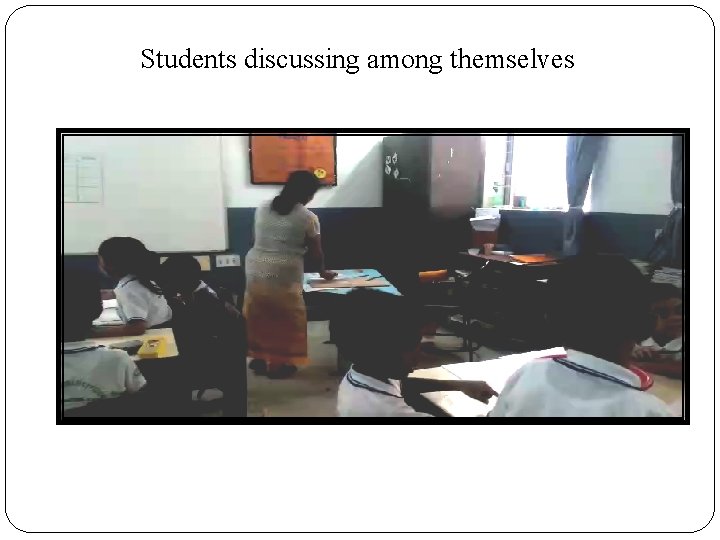
Students discussing among themselves
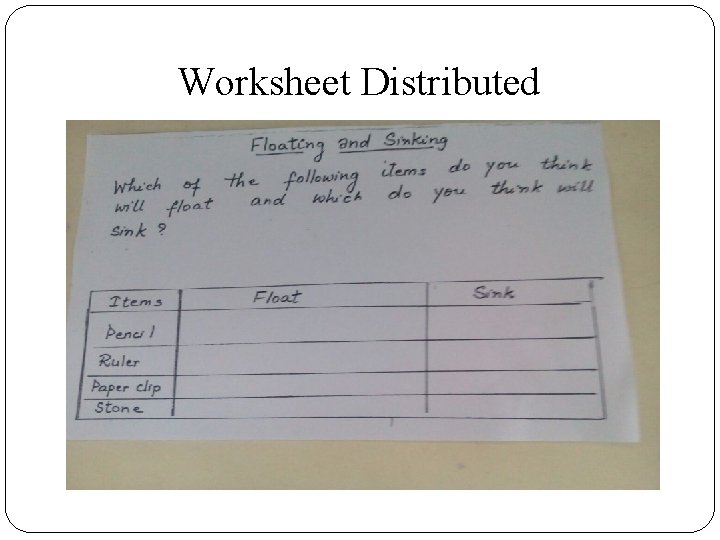
Worksheet Distributed
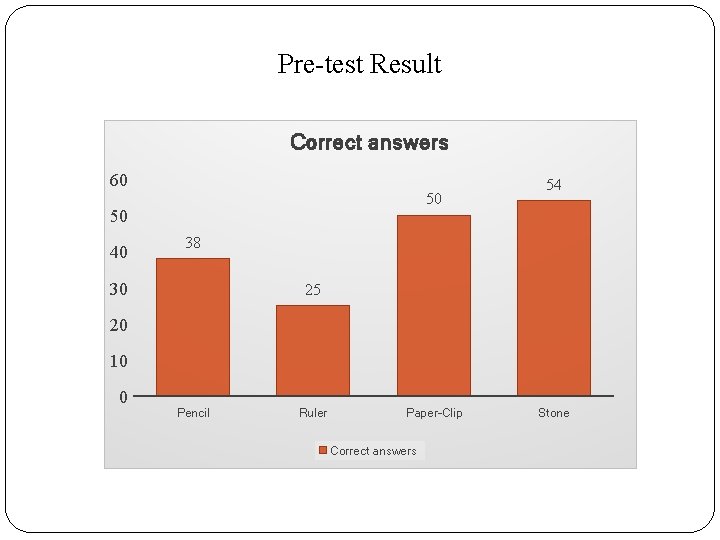
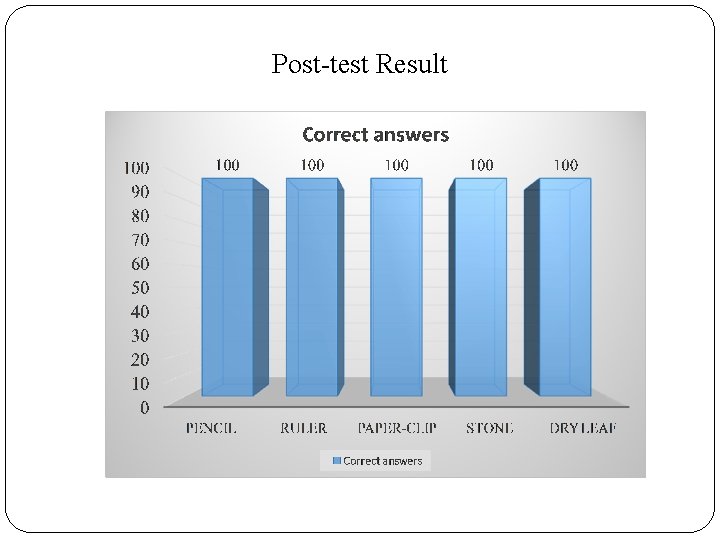
Pre-test Result Correct answers 60 50 50 40 54 38 30 25 20 10 0 Pencil Ruler Paper-Clip Correct answers Stone
Intervention Hands-on Activity to understand the topic ‘Float & Sink’.
Hands-on Activity Students were asked to go around the garden and collect some items to perform the ‘Float & Sink’ activity. • A container filled with water was provided to the groups. • Students chose one object at a time and checked whether it floats or sinks. • Record the result on the recording sheet. • Repeat this for all the objects.

Searching items in garden area

Students performing the activity
Post-test Result
Findings • Activity based learning leads to students achievement and it is fun and exciting. • Thus the hypothesis has been proved.
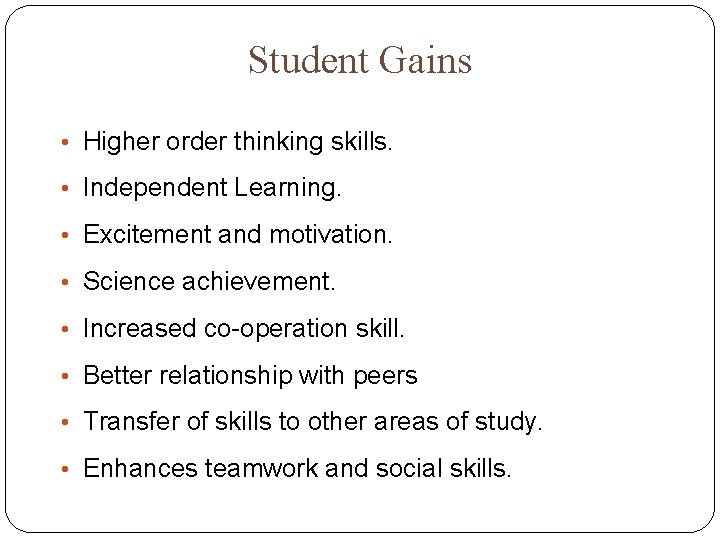
Student Gains • Higher order thinking skills. • Independent Learning. • Excitement and motivation. • Science achievement. • Increased co-operation skill. • Better relationship with peers • Transfer of skills to other areas of study. • Enhances teamwork and social skills.

Thank You
- Slides: 17