
ActivityBased Costing Chapter 8 Learning Objectives 1 Understand
Activity-Based Costing Chapter 8
Learning Objectives 1. Understand the potential effects of using reported product costs for decision making. 2. Explain how a two-stage product costing system works. 3. Compare and contrast plantwide and department allocation methods. 4. Explain how activity-based costing and a two-stage product system are related. 5. Compute product costs using activity-based costing. 6. Compare activity-based product costing to traditional department product costing methods. 7. Demonstrate the flow of costs through accounts using activitybased costing. 8. Apply activity-based costing to marketing and administrative services.
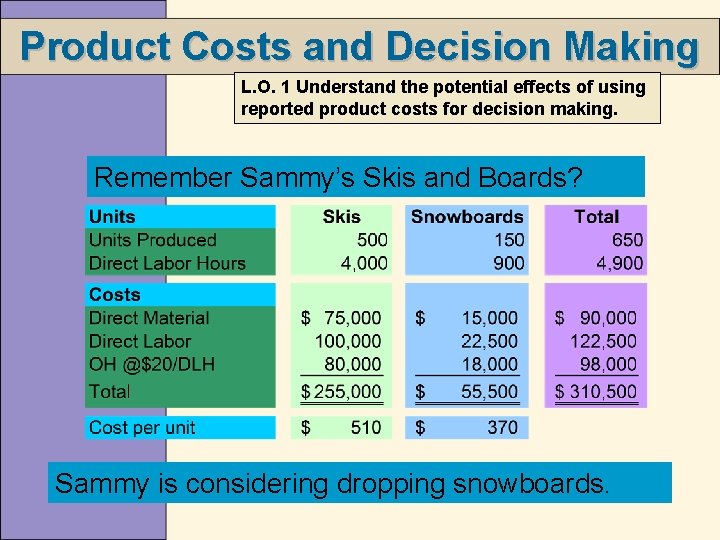
Product Costs and Decision Making L. O. 1 Understand the potential effects of using reported product costs for decision making. Remember Sammy’s Skis and Boards? Sammy is considering dropping snowboards.
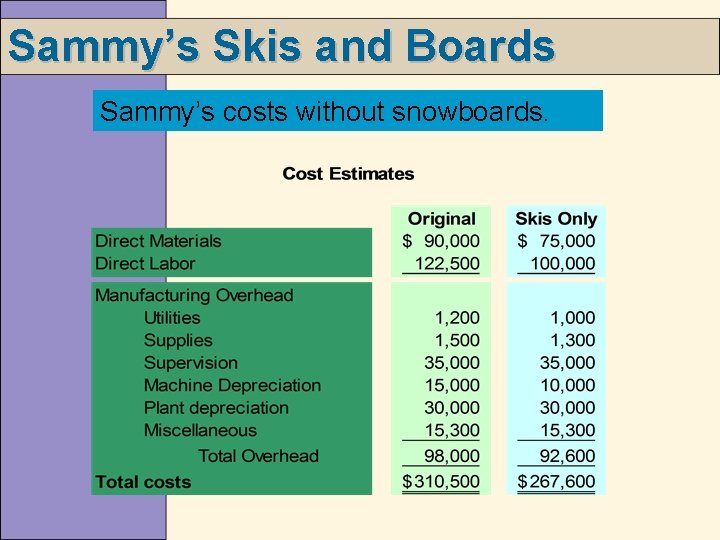
Sammy’s Skis and Boards Sammy’s costs without snowboards.
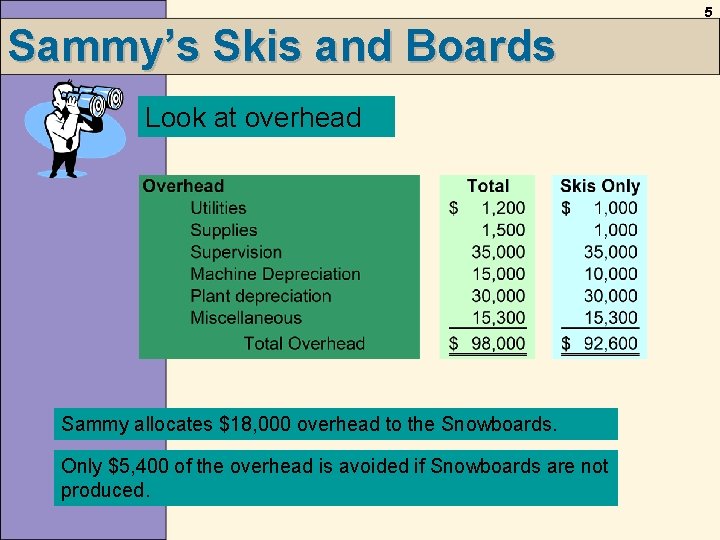
5 Sammy’s Skis and Boards Look at overhead Sammy allocates $18, 000 overhead to the Snowboards. Only $5, 400 of the overhead is avoided if Snowboards are not produced.
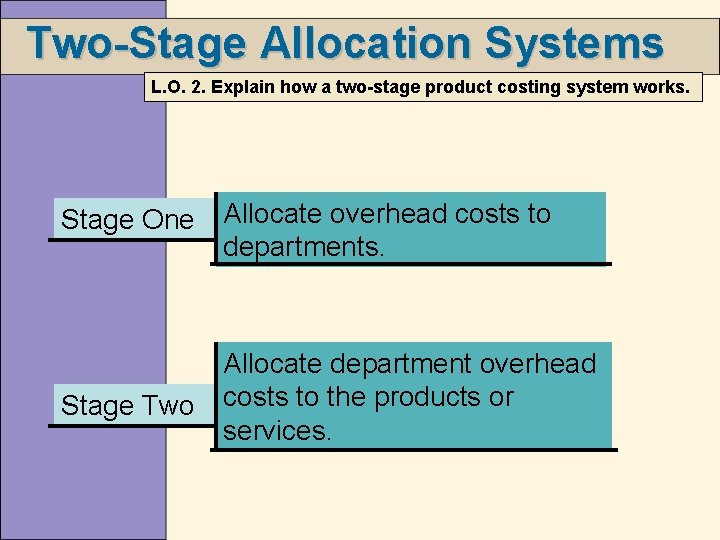
Two-Stage Allocation Systems L. O. 2. Explain how a two-stage product costing system works. Stage One Allocate overhead costs to departments. Stage Two Allocate department overhead costs to the products or services.
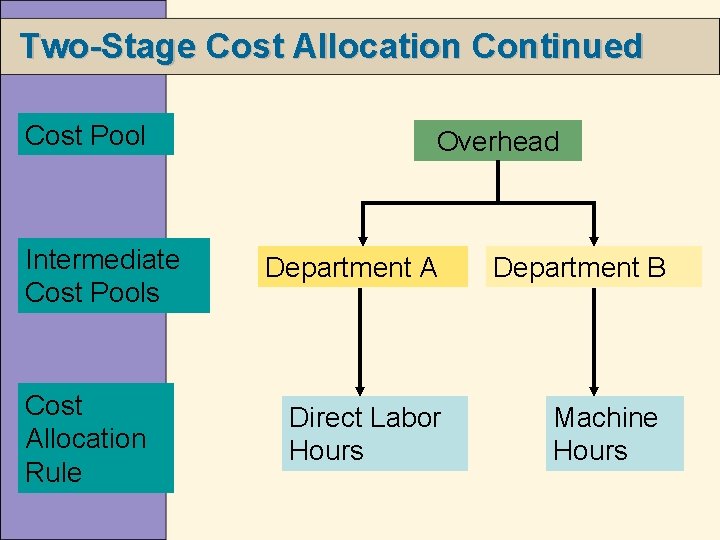
Two-Stage Cost Allocation Continued Cost Pool Intermediate Cost Pools Cost Allocation Rule Overhead Department A Department B Direct Labor Hours Machine Hours
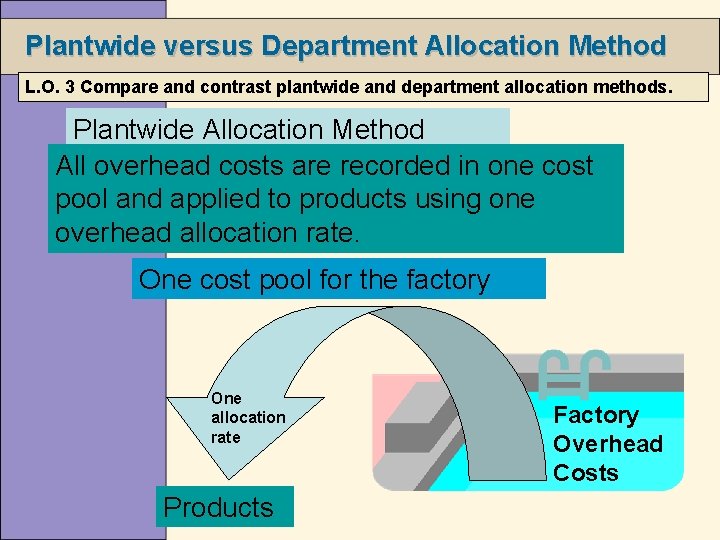
Plantwide versus Department Allocation Method L. O. 3 Compare and contrast plantwide and department allocation methods. Plantwide Allocation Method All overhead costs are recorded in one cost pool and applied to products using one overhead allocation rate. One cost pool for the factory One allocation rate Products Factory Overhead Costs
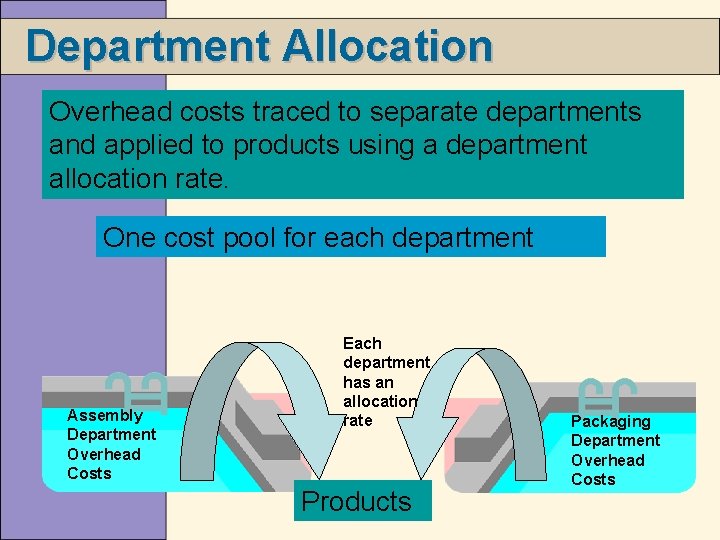
Department Allocation Overhead costs traced to separate departments and applied to products using a department allocation rate. One cost pool for each department Assembly Department Overhead Costs Each department has an allocation rate Products Packaging Department Overhead Costs
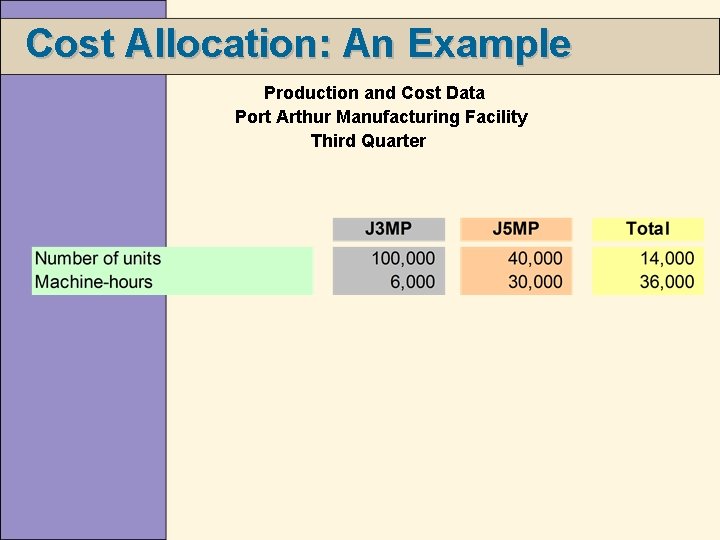
Cost Allocation: An Example Production and Cost Data Port Arthur Manufacturing Facility Third Quarter
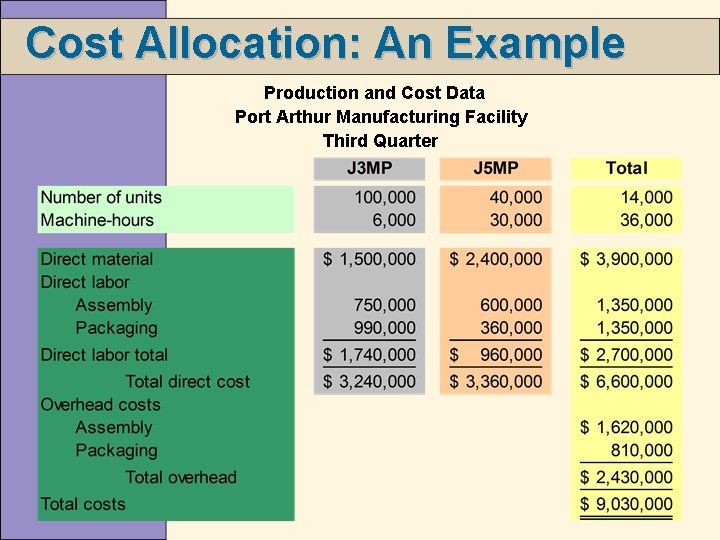
Cost Allocation: An Example Production and Cost Data Port Arthur Manufacturing Facility Third Quarter
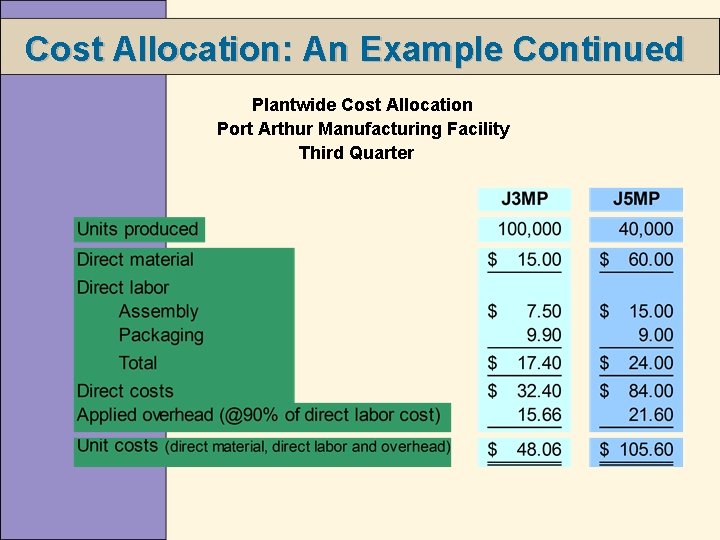
Cost Allocation: An Example Continued Plantwide Cost Allocation Port Arthur Manufacturing Facility Third Quarter
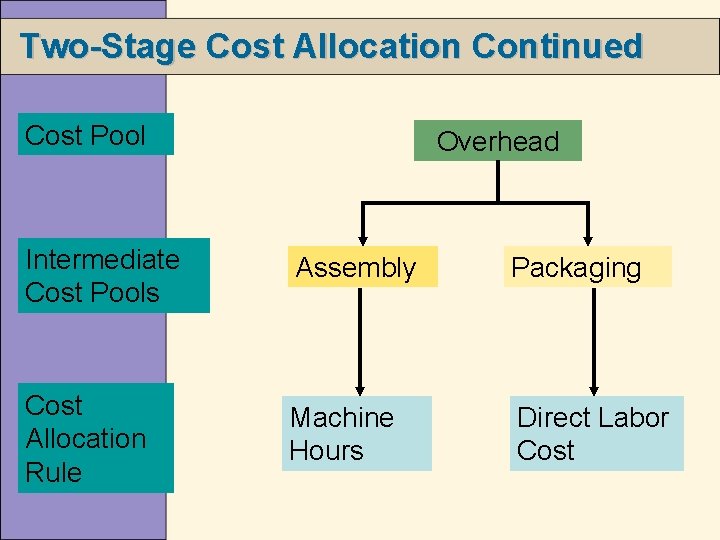
Two-Stage Cost Allocation Continued Cost Pool Overhead Intermediate Cost Pools Assembly Packaging Cost Allocation Rule Machine Hours Direct Labor Cost
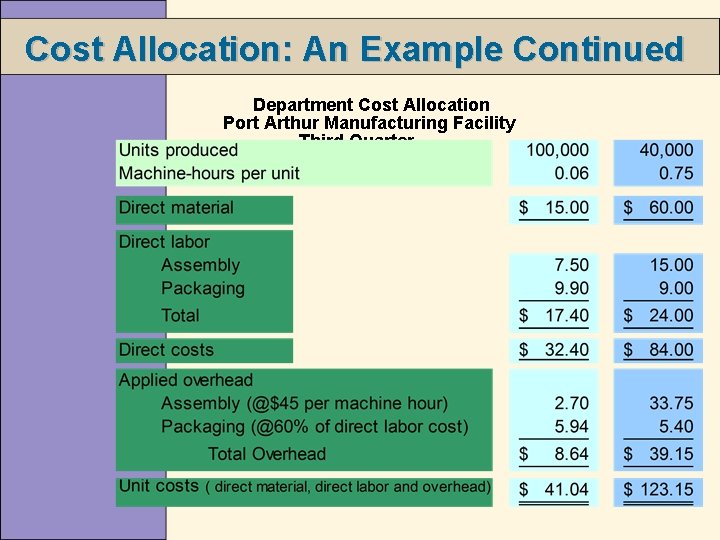
Cost Allocation: An Example Continued Department Cost Allocation Port Arthur Manufacturing Facility Third Quarter
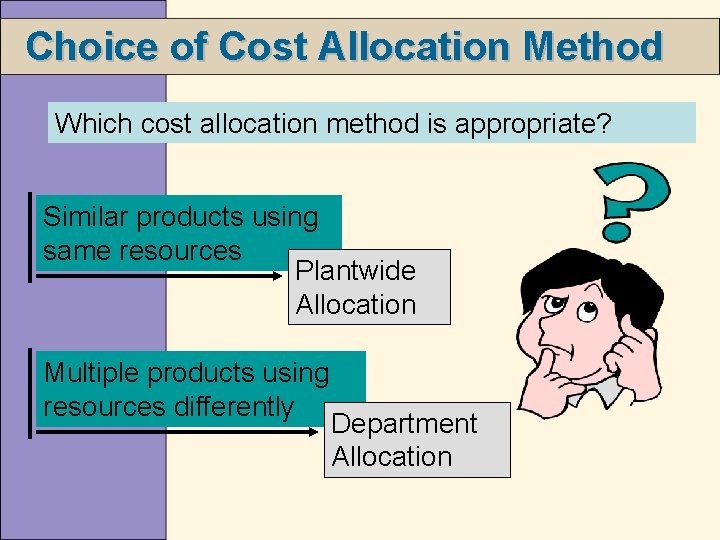
Choice of Cost Allocation Method Which cost allocation method is appropriate? Similar products using same resources Plantwide Allocation Multiple products using resources differently Department Allocation
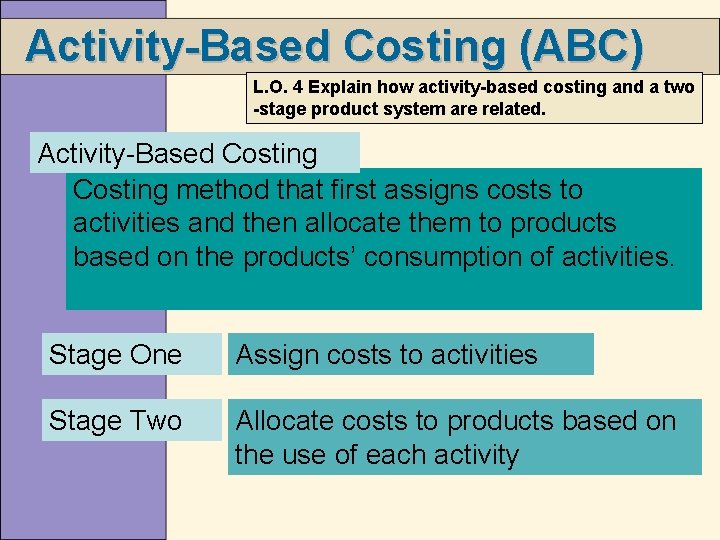
Activity-Based Costing (ABC) L. O. 4 Explain how activity-based costing and a two -stage product system are related. Activity-Based Costing method that first assigns costs to activities and then allocate them to products based on the products’ consumption of activities. Stage One Assign costs to activities Stage Two Allocate costs to products based on the use of each activity
ABC Continued Activities consume resources Products consume activities
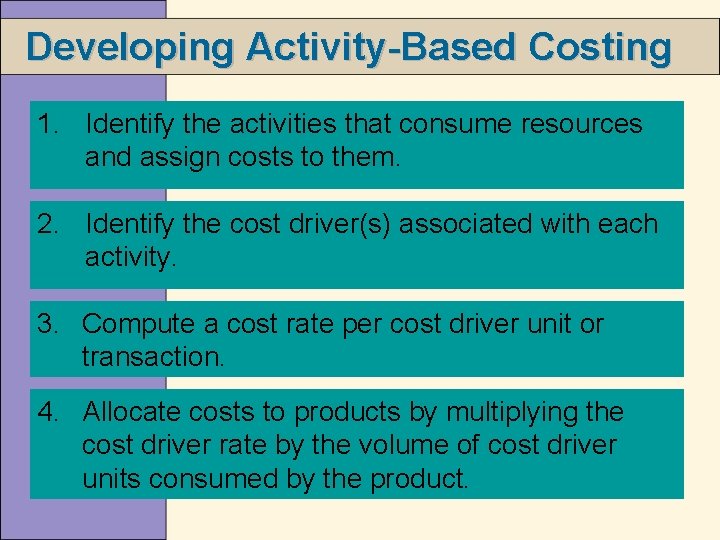
Developing Activity-Based Costing 1. Identify the activities that consume resources and assign costs to them. 2. Identify the cost driver(s) associated with each activity. 3. Compute a cost rate per cost driver unit or transaction. 4. Allocate costs to products by multiplying the cost driver rate by the volume of cost driver units consumed by the product.
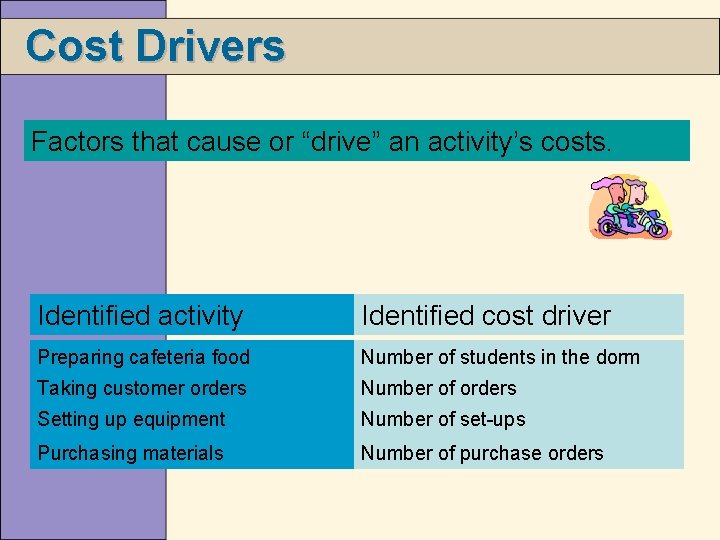
Cost Drivers Factors that cause or “drive” an activity’s costs. Identified activity Identified cost driver Preparing cafeteria food Number of students in the dorm Taking customer orders Number of orders Setting up equipment Number of set-ups Purchasing materials Number of purchase orders
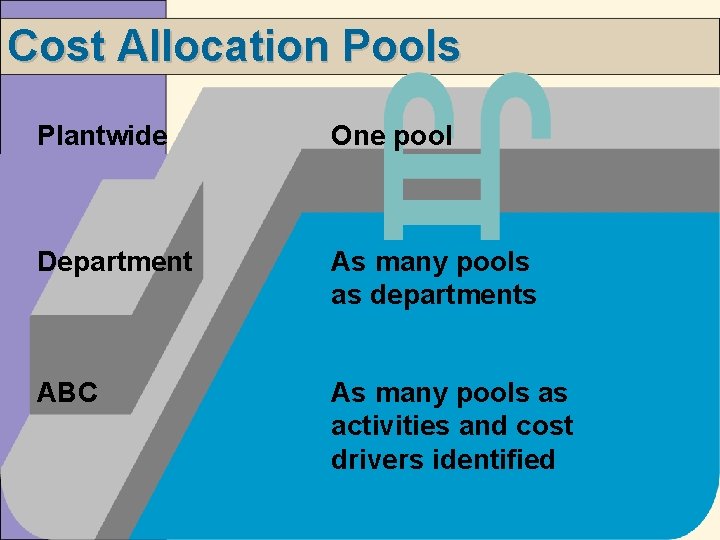
Cost Allocation Pools Plantwide One pool Department As many pools as departments ABC As many pools as activities and cost drivers identified
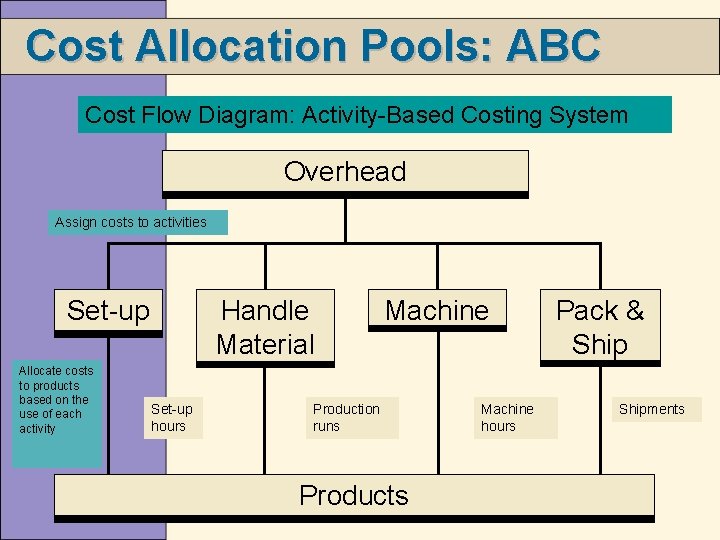
Cost Allocation Pools: ABC Cost Flow Diagram: Activity-Based Costing System Overhead Assign costs to activities Set-up Allocate costs to products based on the use of each activity Handle Material Set-up hours Machine Production runs Products Machine hours Pack & Shipments
Cost Hierarchy Classification of cost drivers into general levels of activity; volume, batch, product and so on.
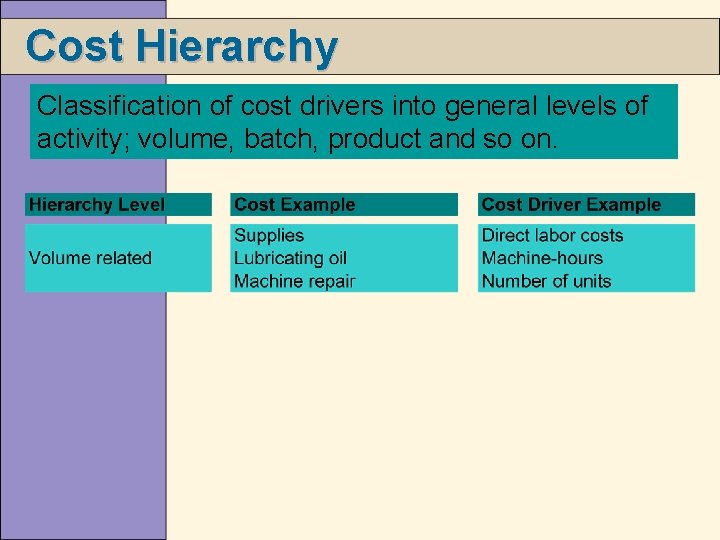
Cost Hierarchy Classification of cost drivers into general levels of activity; volume, batch, product and so on.
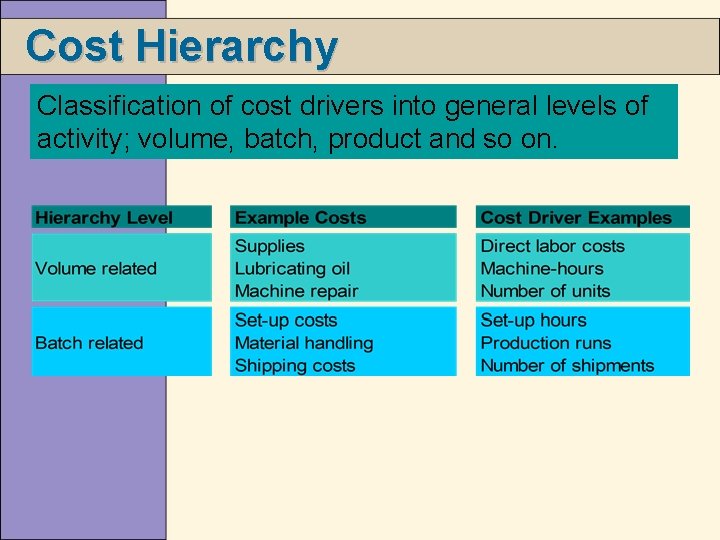
Cost Hierarchy Classification of cost drivers into general levels of activity; volume, batch, product and so on.
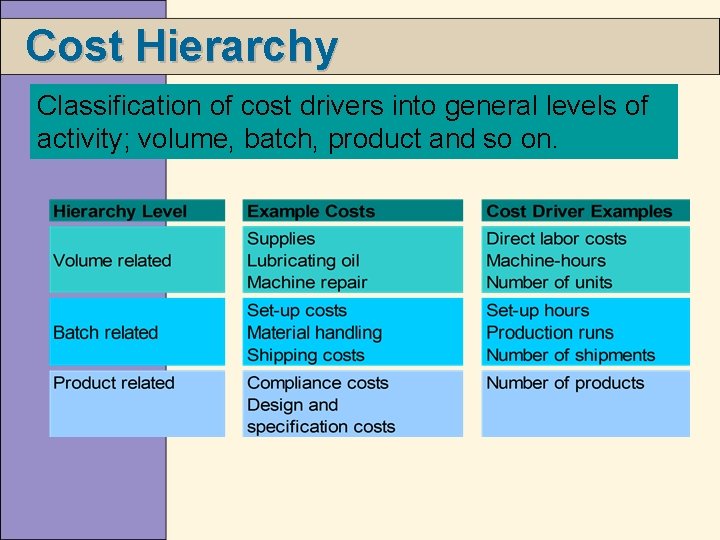
Cost Hierarchy Classification of cost drivers into general levels of activity; volume, batch, product and so on.
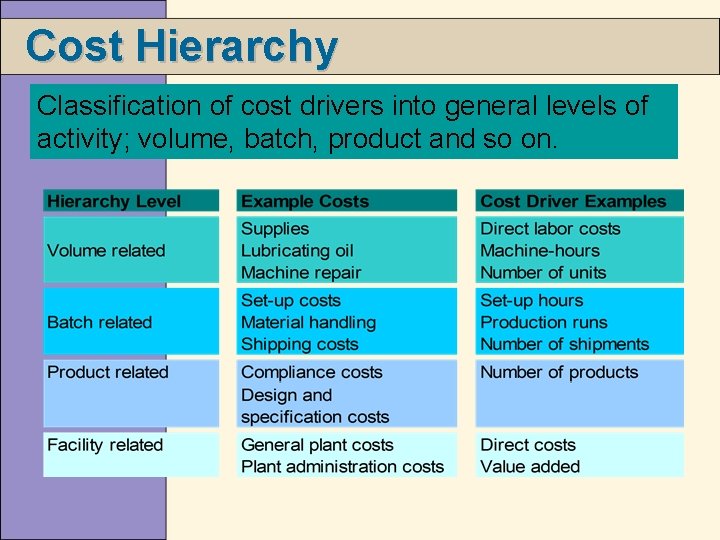
Cost Hierarchy Classification of cost drivers into general levels of activity; volume, batch, product and so on.
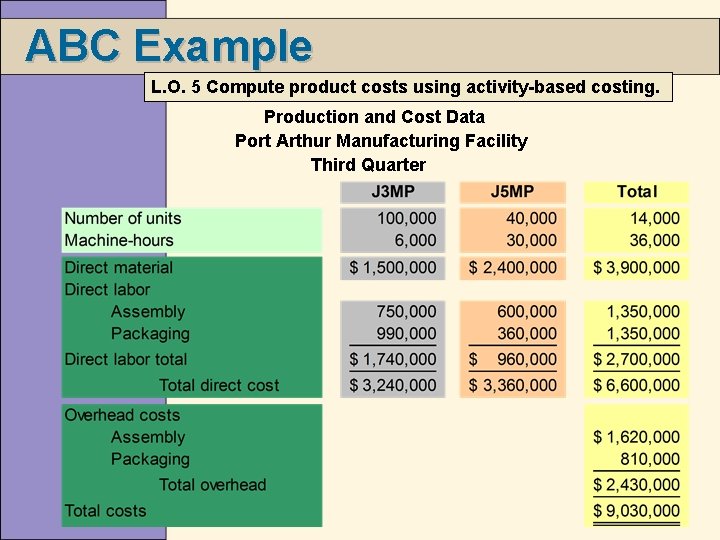
ABC Example L. O. 5 Compute product costs using activity-based costing. Production and Cost Data Port Arthur Manufacturing Facility Third Quarter
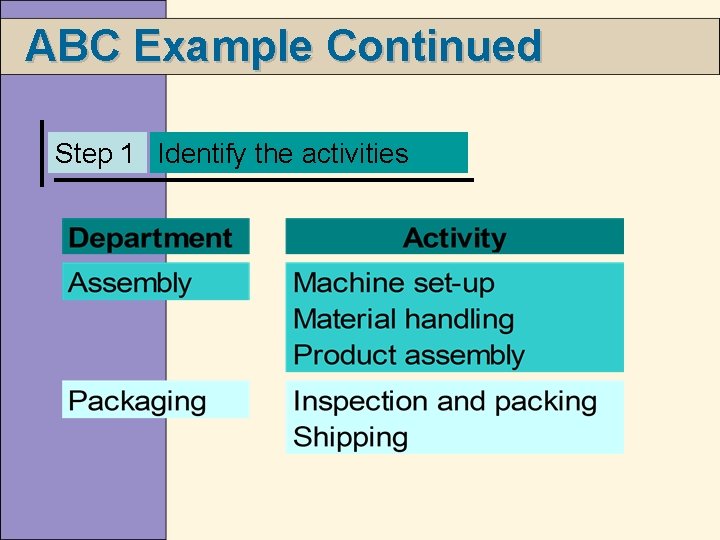
ABC Example Continued Step 1 Identify the activities
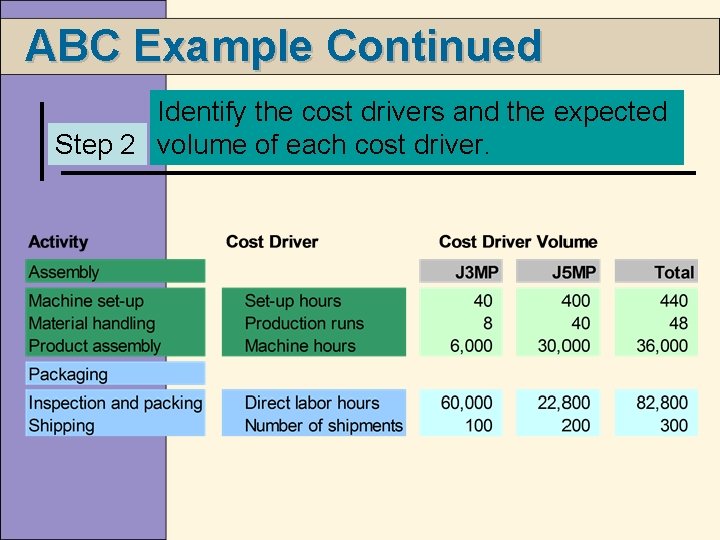
ABC Example Continued Identify the cost drivers and the expected Step 2 volume of each cost driver.
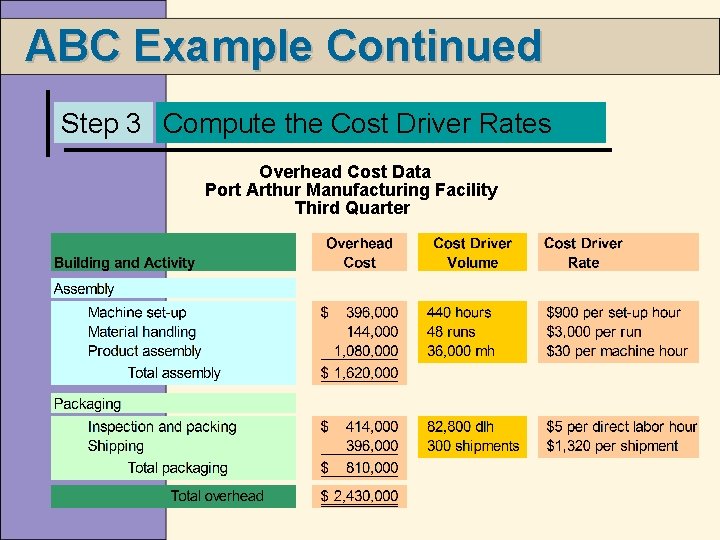
ABC Example Continued Step 3 Compute the Cost Driver Rates Overhead Cost Data Port Arthur Manufacturing Facility Third Quarter
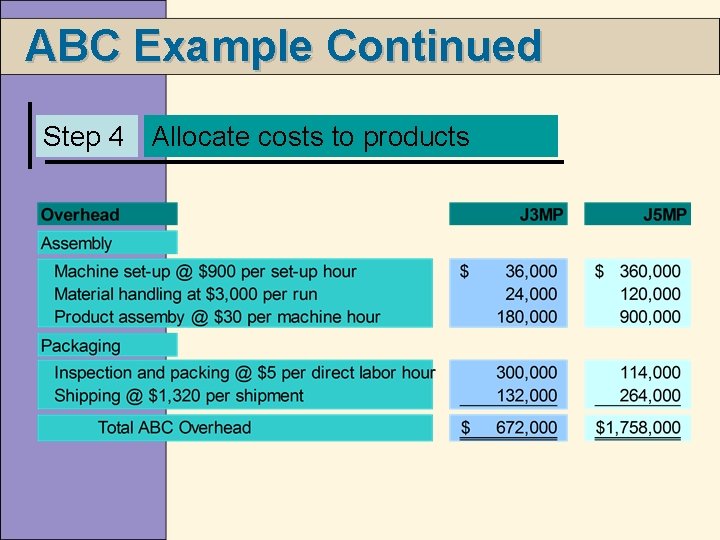
ABC Example Continued Step 4 Allocate costs to products
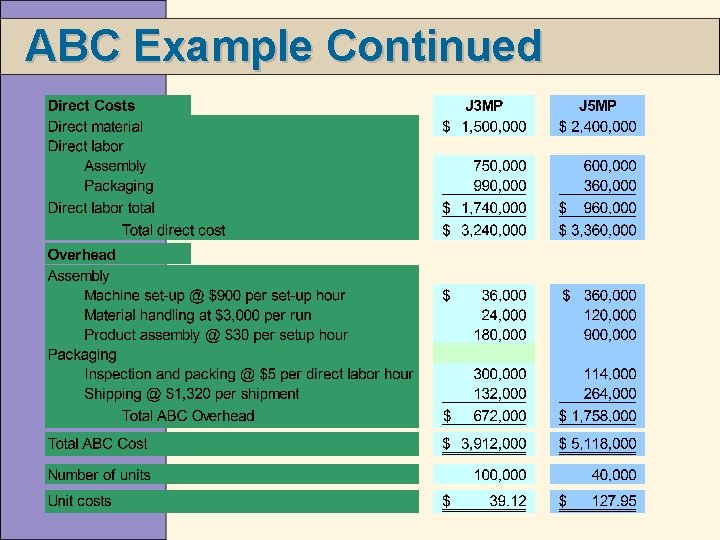
ABC Example Continued
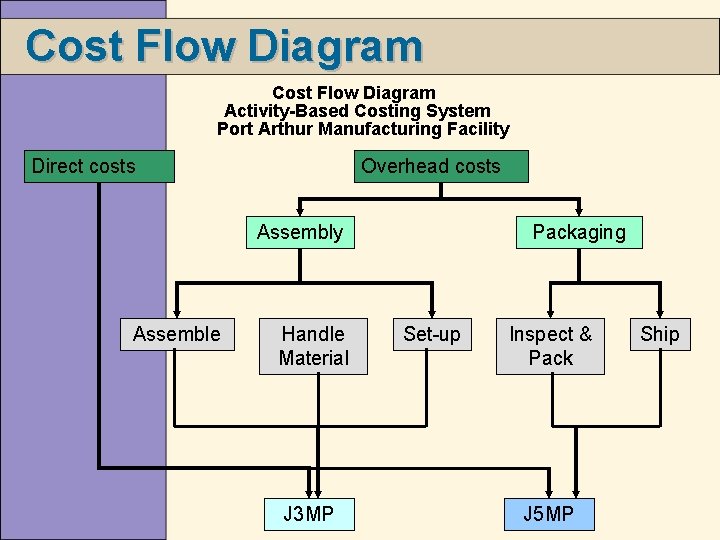
Cost Flow Diagram Activity-Based Costing System Port Arthur Manufacturing Facility Direct costs Overhead costs Assembly Assemble Handle Material J 3 MP Packaging Set-up Inspect & Pack J 5 MP Ship
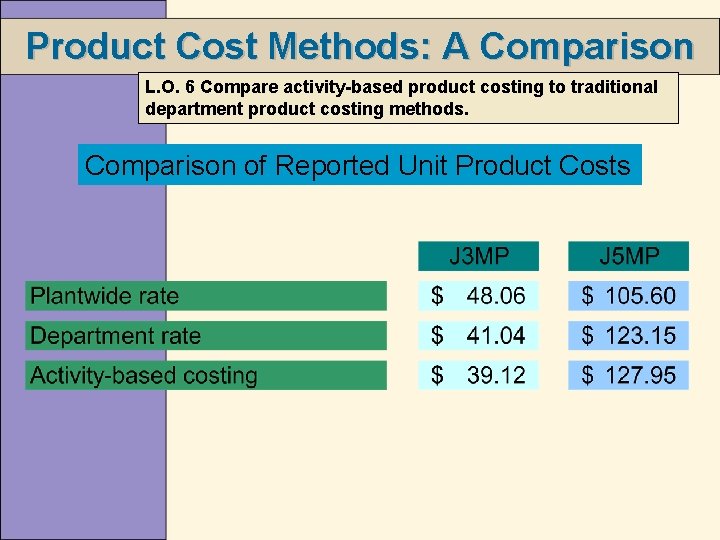
Product Cost Methods: A Comparison L. O. 6 Compare activity-based product costing to traditional department product costing methods. Comparison of Reported Unit Product Costs
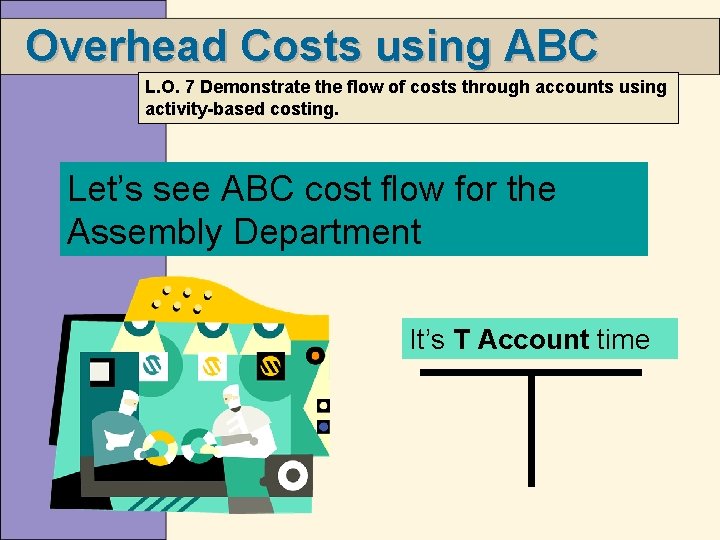
Overhead Costs using ABC L. O. 7 Demonstrate the flow of costs through accounts using activity-based costing. Let’s see ABC cost flow for the Assembly Department It’s T Account time
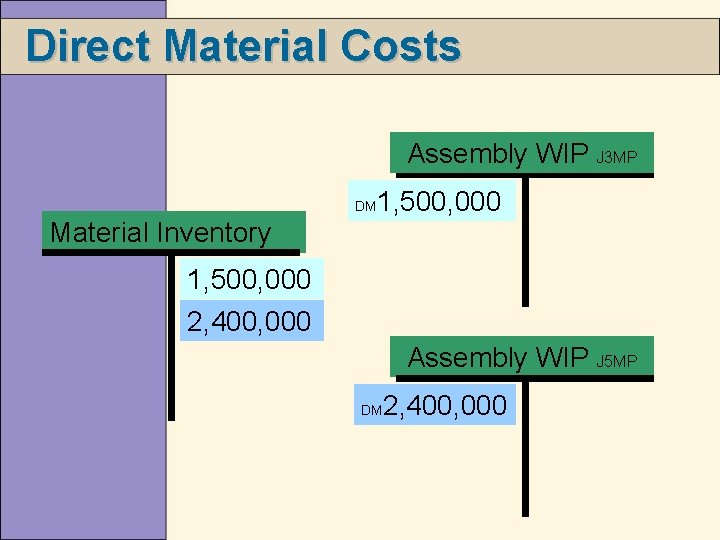
Direct Material Costs Assembly WIP J 3 MP DM Material Inventory 1, 500, 000 2, 400, 000 Assembly WIP J 5 MP DM 2, 400, 000
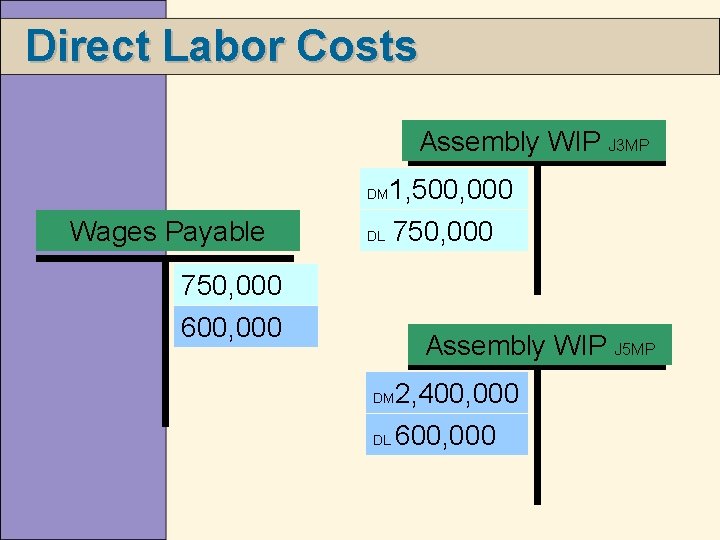
Direct Labor Costs Assembly WIP J 3 MP 1, 500, 000 DL 750, 000 DM Wages Payable 750, 000 600, 000 Assembly WIP J 5 MP 2, 400, 000 DL 600, 000 DM
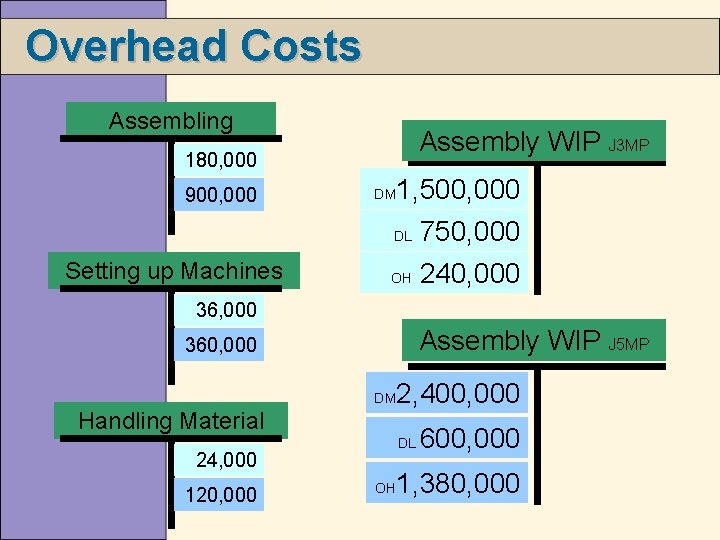
Overhead Costs Assembling Assembly WIP J 3 MP 180, 000 900, 000 Setting up Machines 1, 500, 000 DL 750, 000 OH 240, 000 DM 36, 000 Assembly WIP J 5 MP 360, 000 DM Handling Material DL 24, 000 120, 000 2, 400, 000 OH 600, 000 1, 380, 000
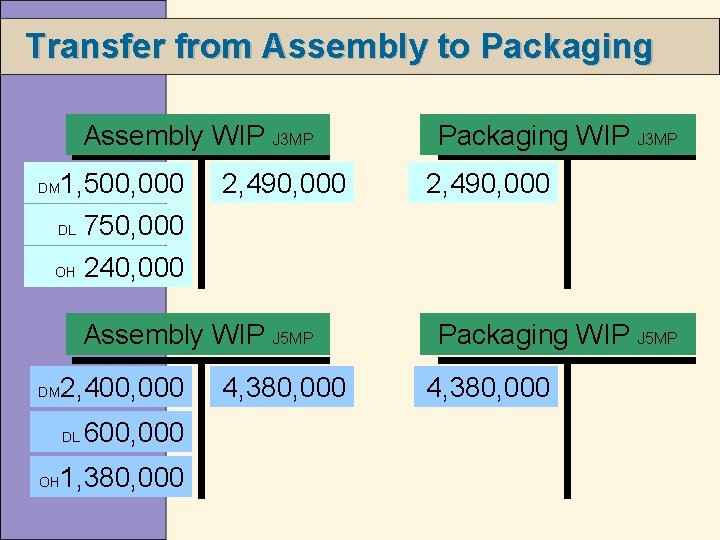
Transfer from Assembly to Packaging Assembly WIP J 3 MP 1, 500, 000 DL 750, 000 OH 240, 000 DM 2, 490, 000 Assembly WIP J 5 MP DM 2, 400, 000 DL OH 600, 000 1, 380, 000 4, 380, 000 Packaging WIP J 3 MP 2, 490, 000 Packaging WIP J 5 MP 4, 380, 000
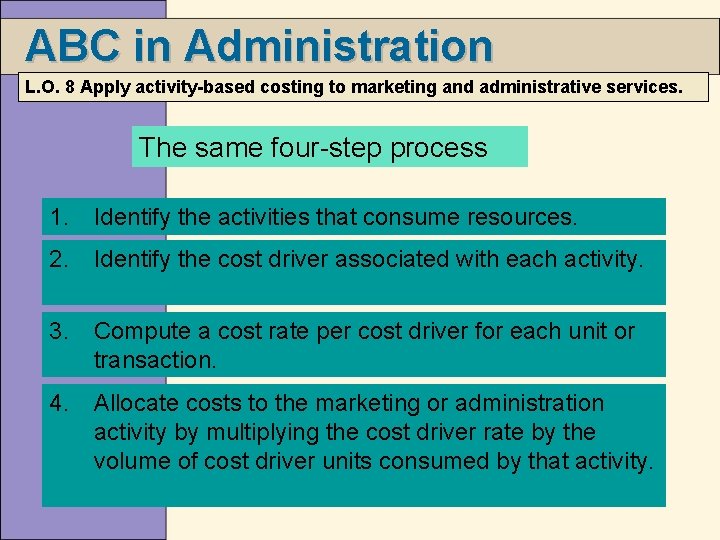
ABC in Administration L. O. 8 Apply activity-based costing to marketing and administrative services. The same four-step process 1. Identify the activities that consume resources. 2. Identify the cost driver associated with each activity. 3. Compute a cost rate per cost driver for each unit or transaction. 4. Allocate costs to the marketing or administration activity by multiplying the cost driver rate by the volume of cost driver units consumed by that activity.
Chapter 8
- Slides: 41