
Activity Welcome and icebreaker Timing Classroom Inyard Driving

Activity Welcome and icebreaker
Timing Classroom: In-yard: Driving: 2 hours, 30 minutes 7 hours N/A
Housekeeping • Break schedule: • 15 -minute breaks throughout the day • 1 -hour lunch break • Location of smoking areas • Location of lunchroom and microwave facilities (if any) • Location of washrooms • Class end time • Emergency exits or procedures
General expectations • Carry your driver’s licence with you; it will be required for the in-vehicle components of the course. • Attend every in-class and practical portion of this course. • Turn your cellphones off or to vibrate. If you need to take a call, step outside of the room to do so. • Participate, ask questions, join the conversation. • Respect the privacy of your classmates and what is discussed in this room. • Be respectful; disrespectful behaviour will not be tolerated.
Purpose • To outline the process of vehicle inspections • To be able to conduct pre- and post-trip inspections • To know which Class 1 vehicle components, controls, gauges and instruments that must be inspected • To be knowledgeable in the basic operational functions of Class 1 vehicle components to properly conduct inspections
Terms • Commercial vehicle • Major defect • Minor defect • Schedule 1

Introduction A daily vehicle inspection ensures problems and defects are detected before operating the vehicle
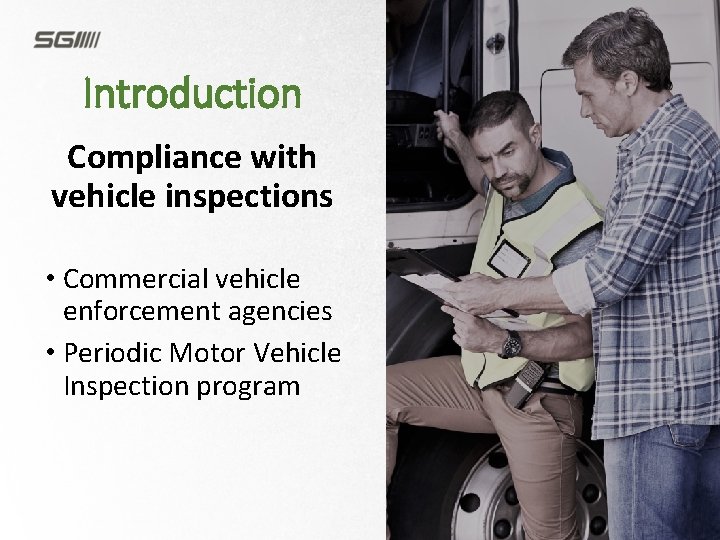
Introduction Compliance with vehicle inspections • Commercial vehicle enforcement agencies • Periodic Motor Vehicle Inspection program
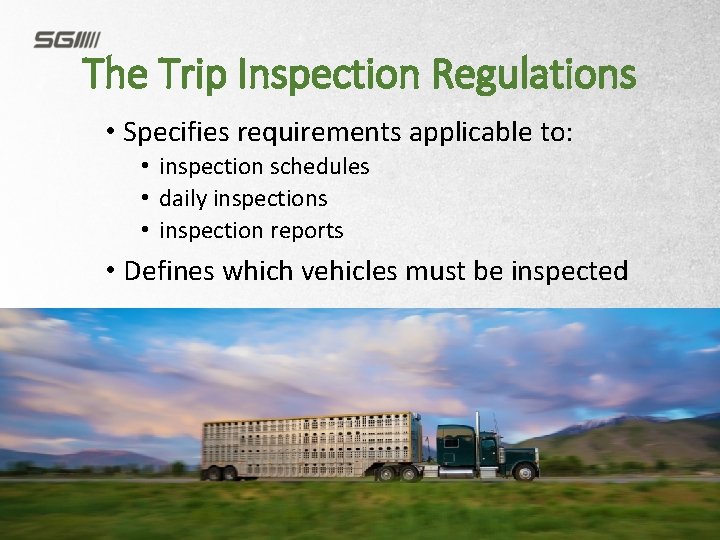
The Trip Inspection Regulations • Specifies requirements applicable to: • inspection schedules • daily inspections • inspection reports • Defines which vehicles must be inspected

The Trip Inspection Regulations Vehicle defects Minor defects Major defects
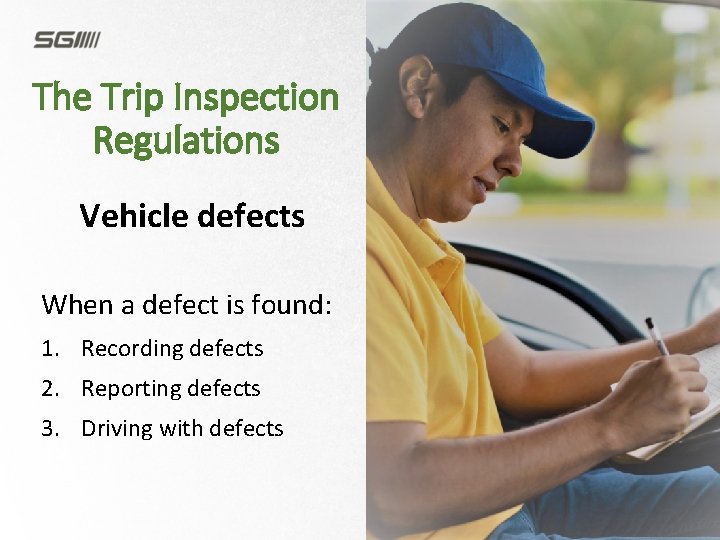
The Trip Inspection Regulations Vehicle defects When a defect is found: 1. Recording defects 2. Reporting defects 3. Driving with defects
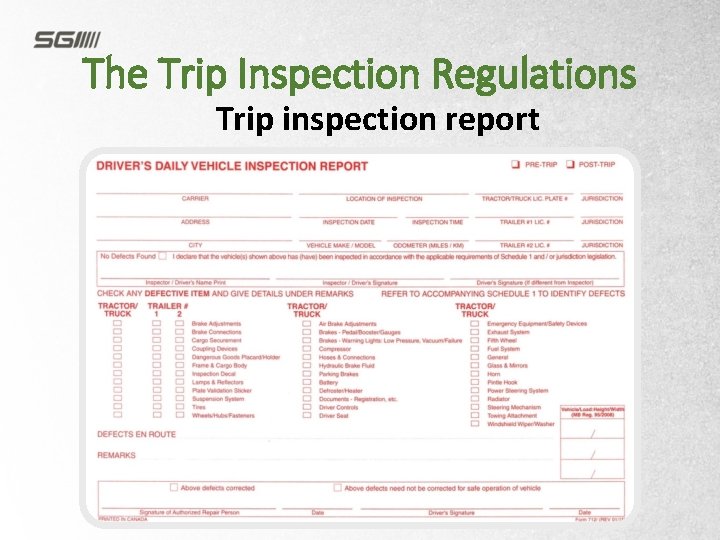
The Trip Inspection Regulations Trip inspection report

The Trip Inspection Regulations Trip inspection report • Inspection valid for 24 hrs • Monitor for defects while en route • Must be produced when requested by peace officer
Activity Requirements and defects

The Trip Inspection Regulations Inspection schedule Contains a list of components that must be inspected during a trip inspection
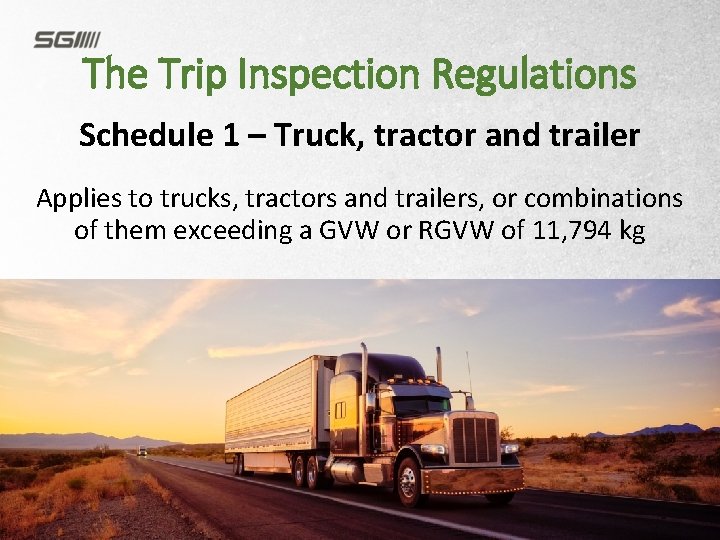
The Trip Inspection Regulations Schedule 1 – Truck, tractor and trailer Applies to trucks, tractors and trailers, or combinations of them exceeding a GVW or RGVW of 11, 794 kg
Activity Defects and inspection report
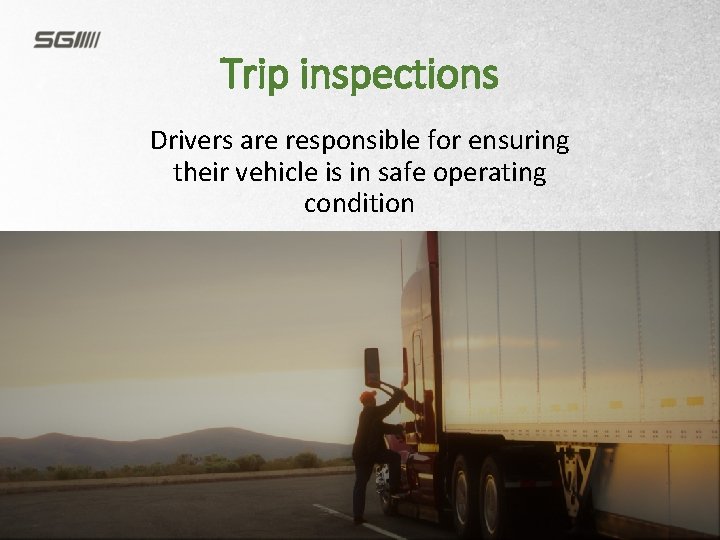
Trip inspections Drivers are responsible for ensuring their vehicle is in safe operating condition

Trip inspections Pre-trip inspection 1. 2. 3. 4. Engine compartment Exterior of vehicle Interior of vehicle Brake response tests
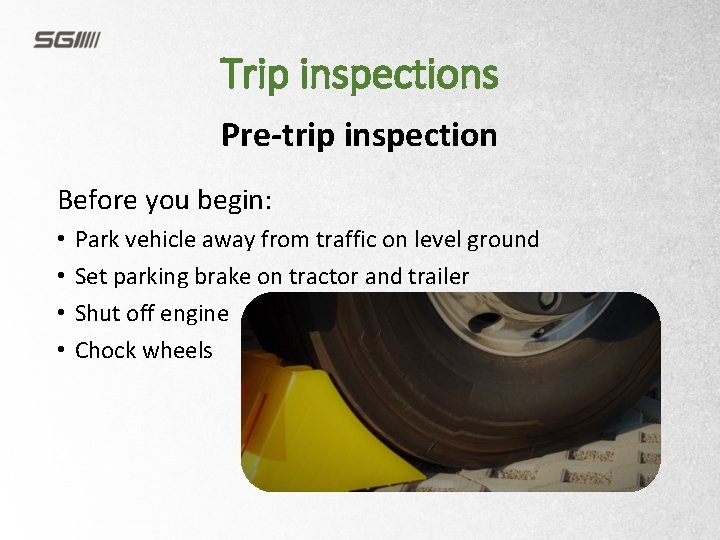
Trip inspections Pre-trip inspection Before you begin: • • Park vehicle away from traffic on level ground Set parking brake on tractor and trailer Shut off engine Chock wheels

Trip inspections Engine compartment • Fluid levels • Belts • Hoses • Electrical wiring and connections • Steering components
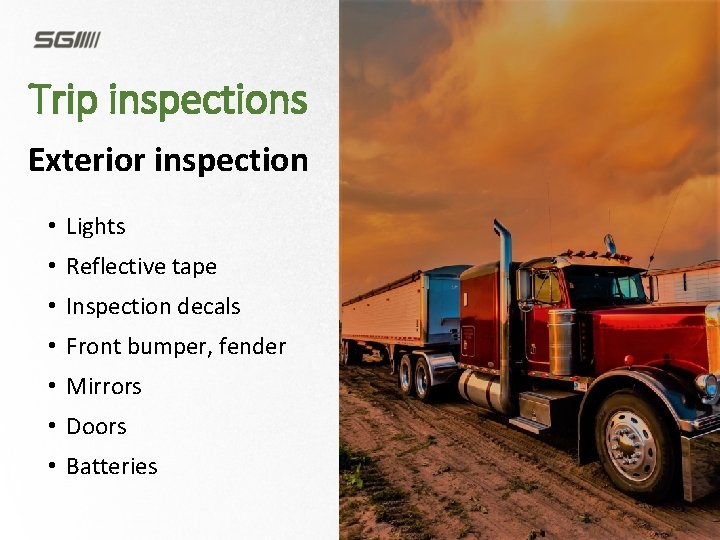
Trip inspections Exterior inspection • Lights • Reflective tape • Inspection decals • Front bumper, fender • Mirrors • Doors • Batteries
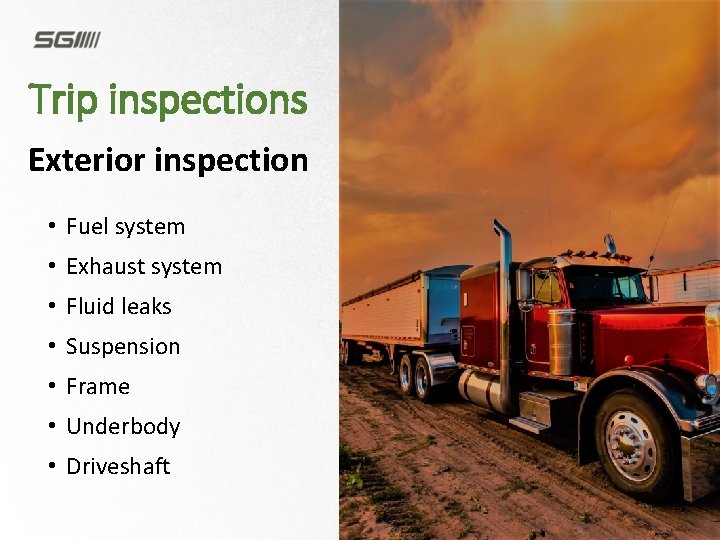
Trip inspections Exterior inspection • Fuel system • Exhaust system • Fluid leaks • Suspension • Frame • Underbody • Driveshaft
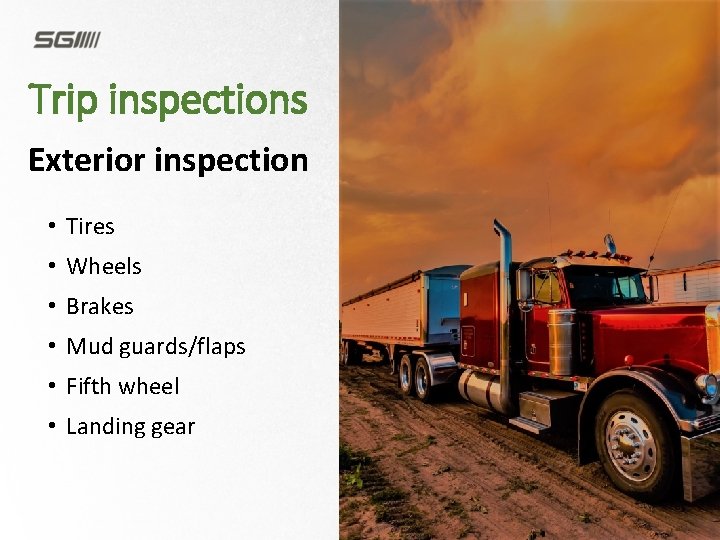
Trip inspections Exterior inspection • Tires • Wheels • Brakes • Mud guards/flaps • Fifth wheel • Landing gear
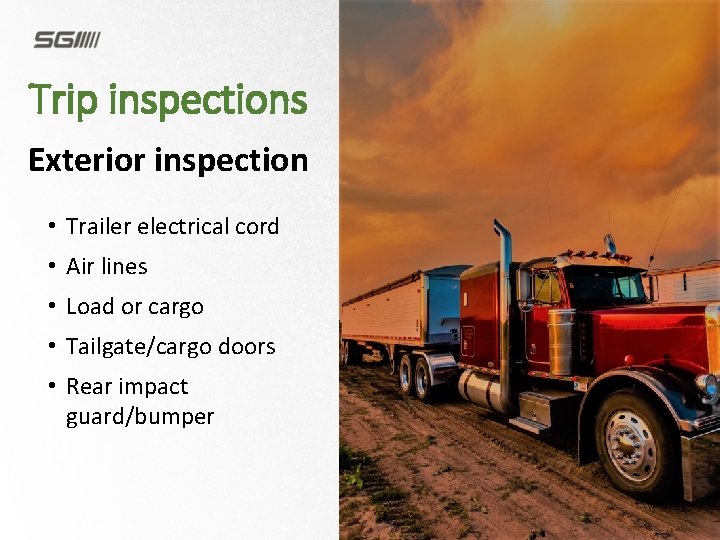
Trip inspections Exterior inspection • Trailer electrical cord • Air lines • Load or cargo • Tailgate/cargo doors • Rear impact guard/bumper
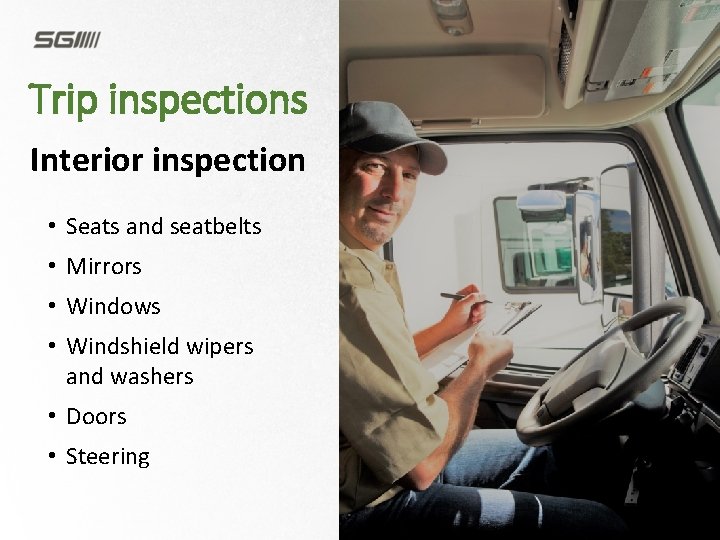
Trip inspections Interior inspection • Seats and seatbelts • Mirrors • Windows • Windshield wipers and washers • Doors • Steering
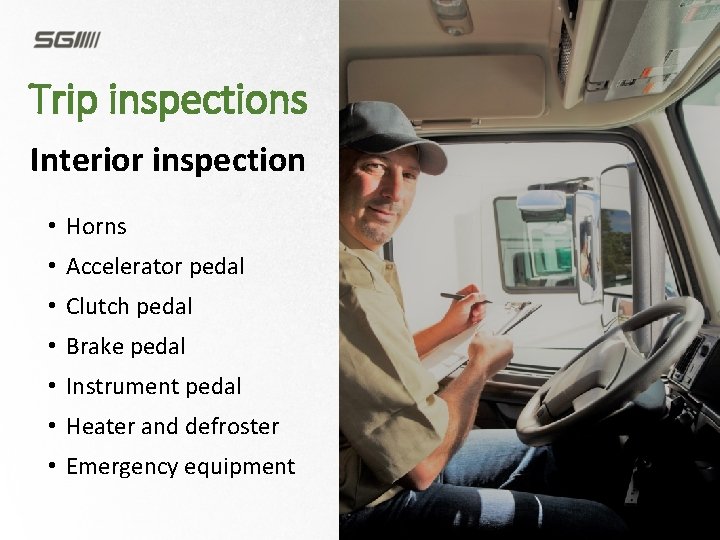
Trip inspections Interior inspection • Horns • Accelerator pedal • Clutch pedal • Brake pedal • Instrument pedal • Heater and defroster • Emergency equipment

Trip inspections Brake response tests • Trailer park brake • Tractor park brake • Trailer service brakes • Tractor service brakes
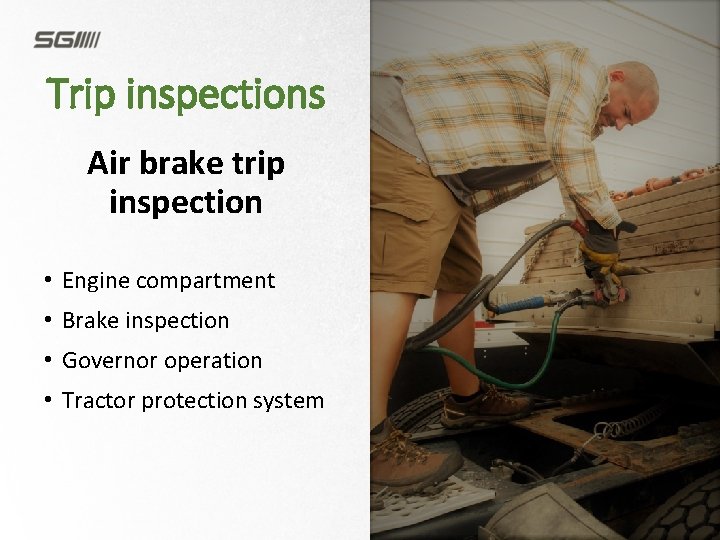
Trip inspections Air brake trip inspection • Engine compartment • Brake inspection • Governor operation • Tractor protection system
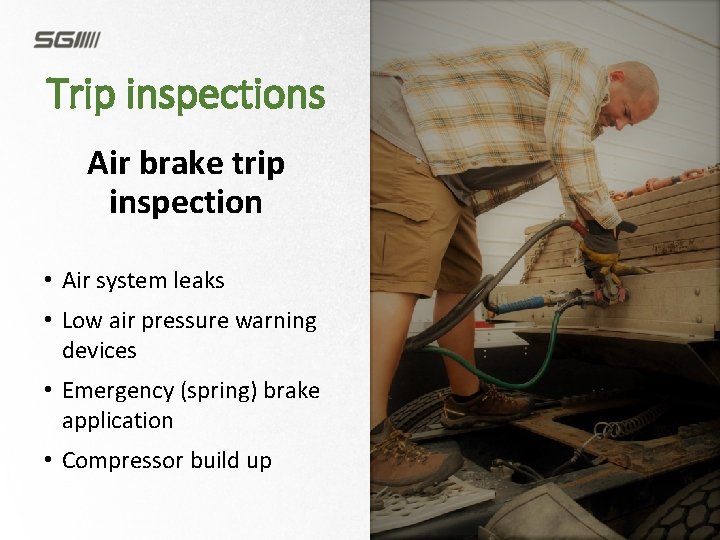
Trip inspections Air brake trip inspection • Air system leaks • Low air pressure warning devices • Emergency (spring) brake application • Compressor build up

Trip Inspections En route inspection Allows the driver to identify any change in condition of the vehicle
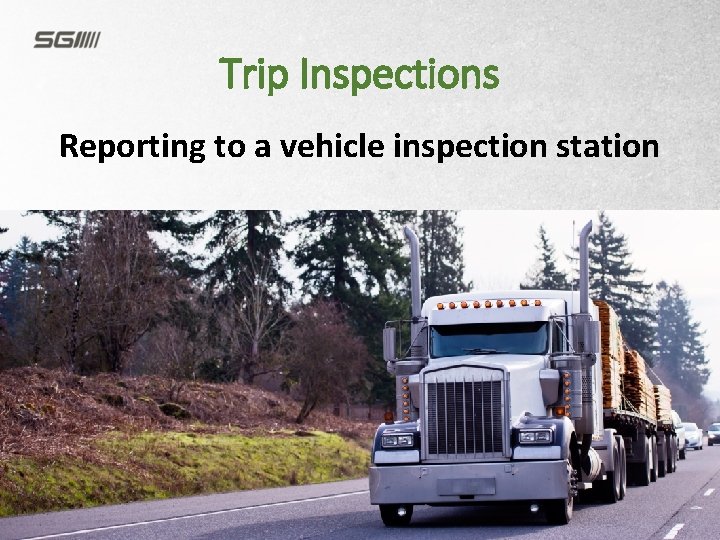
Trip Inspections Reporting to a vehicle inspection station

Trip Inspections Post-trip inspection Eliminate future delays by identifying any defects and needed repairs before the next trip

Activity Inspections – when and where?
Summary • Conducting inspections before, during and after each trip allows the driver to screen for any issues that could potentially cause or contribute to a collision or mechanical breakdown. • Drivers are required to inspect the vehicle as per the inspection items listed in Schedule 1 every 24 hours while the vehicle is in use, note any defects found and complete a trip inspection report.
Summary • Vehicle defects fall into two categories – minor defects which must be corrected before the next trip inspection, and major defects which must be repaired before the vehicle can be driven again. • Performing a systematic, consistent trip inspection each time is important to ensure that none of the components are missed and the vehicle is safe to drive.
Summary • All commercial vehicles or combinations weighing 10, 000 kg or more are required to report to an inspection station in Saskatchewan when the highway lights are flashing.
Module 7 exam

Instructor demonstration and practical evaluation

- Slides: 41