
ACTIVITY THEORY AND HUMANCOMPUTER INTERACTION Simon Tan CS
- Slides: 18
ACTIVITY THEORY AND HUMAN-COMPUTER INTERACTION Simon Tan CS 260, Spring 2009
History The need for Activity Theory
The Problem with HCI Traditional HCI is based on the application of information processing cognitive psychology, which is limited There exists a startling gap between research results and practical design Many good designers have been oblivious to research Research work isn’t affecting practice
The Push for Change Criticism of information processing psychology grew in the 1980 s Recognized a need for consideration of users and their actual work tasks By early 1990 s, HCI researchers were realizing: Human actors are more than just cognitive processors Studies of individual acts are not practical on their own Laboratory experiments < actual work practices Actual use of systems was a long-term process Emphasis on design was growing Contextuality is important A constructive relation between users and systems existed
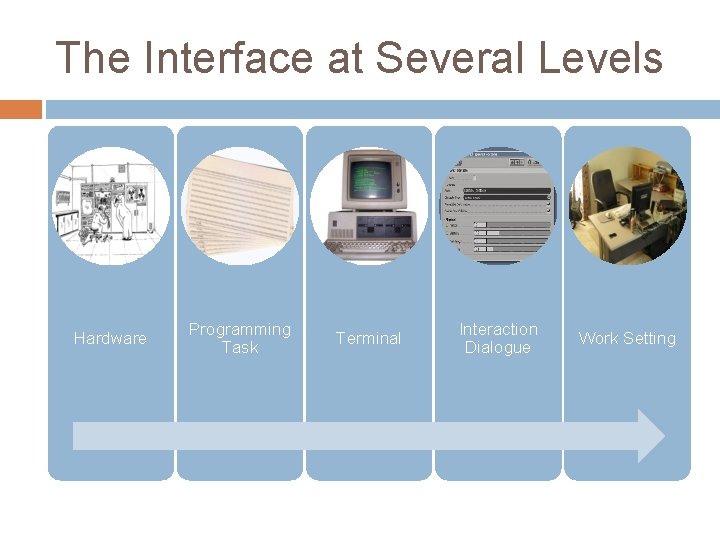
The Interface at Several Levels Hardware Programming Task Terminal Interaction Dialogue Work Setting
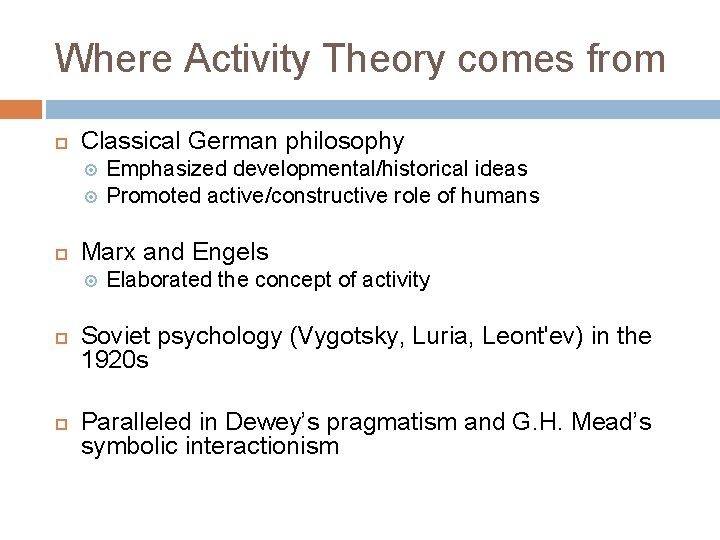
Where Activity Theory comes from Classical German philosophy Marx and Engels Emphasized developmental/historical ideas Promoted active/constructive role of humans Elaborated the concept of activity Soviet psychology (Vygotsky, Luria, Leont'ev) in the 1920 s Paralleled in Dewey’s pragmatism and G. H. Mead’s symbolic interactionism
Activity Theory & Use What is it already? ?
What is Activity Theory? A clarifying tool, not a predictive theory Offers perspectives on human activity and concepts for describing that activity Activity Theory is a philosophical framework for studying human practices as development processes
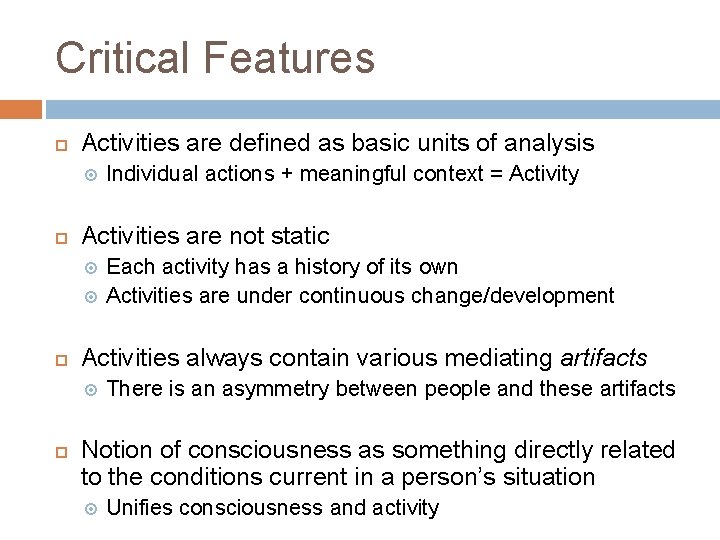
Critical Features Activities are defined as basic units of analysis Activities are not static Each activity has a history of its own Activities are under continuous change/development Activities always contain various mediating artifacts Individual actions + meaningful context = Activity There is an asymmetry between people and these artifacts Notion of consciousness as something directly related to the conditions current in a person’s situation Unifies consciousness and activity
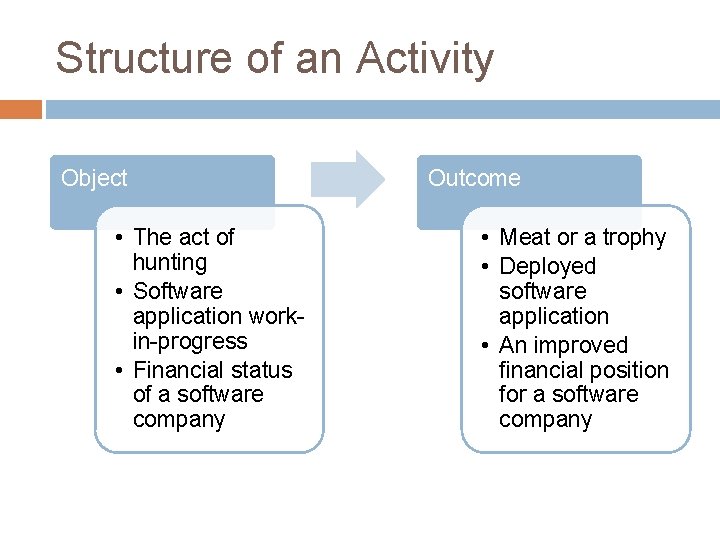
Structure of an Activity Object • The act of hunting • Software application workin-progress • Financial status of a software company Outcome • Meat or a trophy • Deployed software application • An improved financial position for a software company
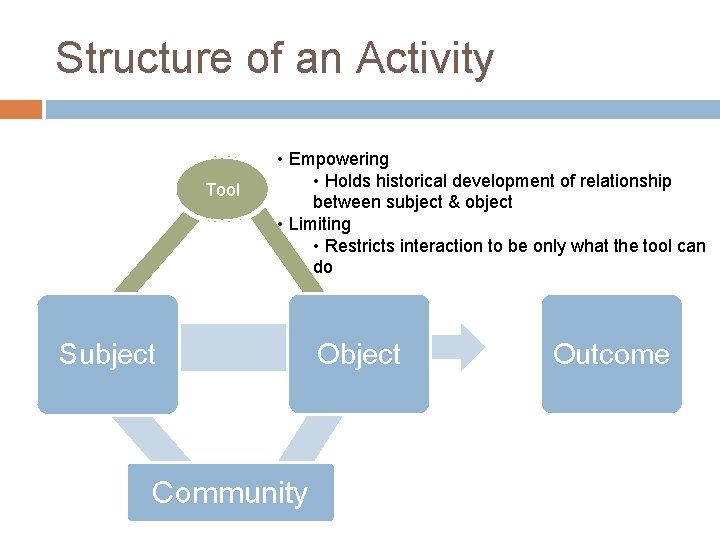
Structure of an Activity Tool • Empowering • Holds historical development of relationship between subject & object • Limiting • Restricts interaction to be only what the tool can do Subject Community Object Outcome
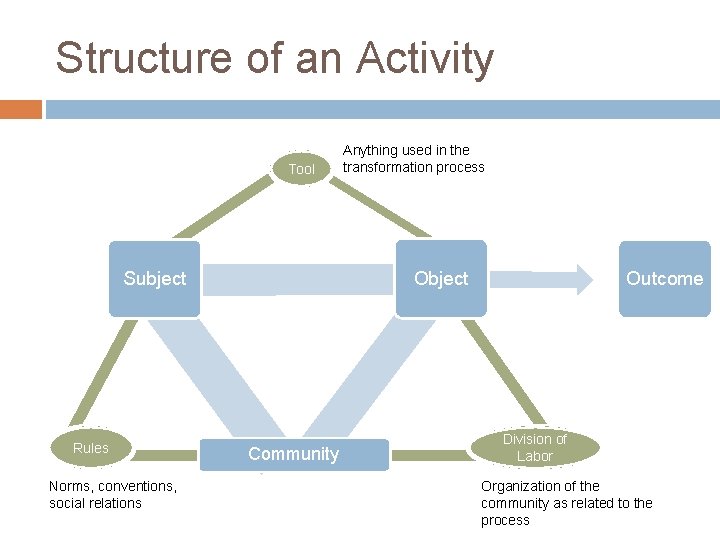
Structure of an Activity Tool Object Subject Rules Norms, conventions, social relations Anything used in the transformation process Community Outcome Division of Labor Organization of the community as related to the process
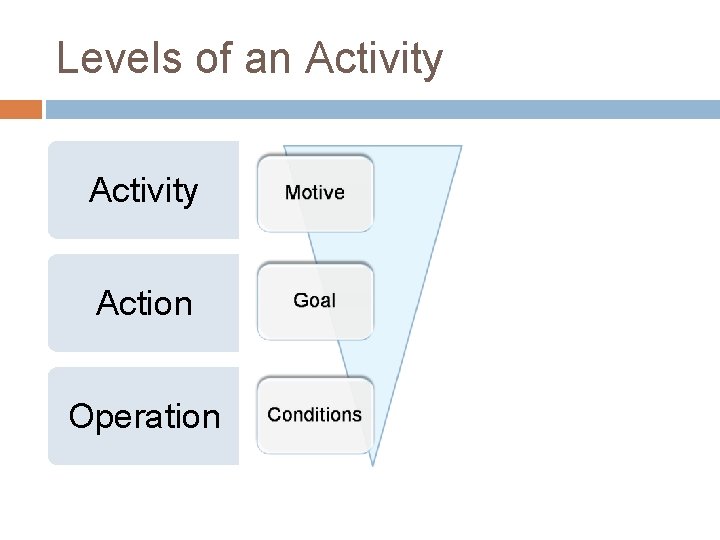
Levels of an Activity Action Operation Completing a software project Programming a module Checking in code to a repository Creating the appropriate data structures Arranging a meeting Proposing a time on everyone’s calendar
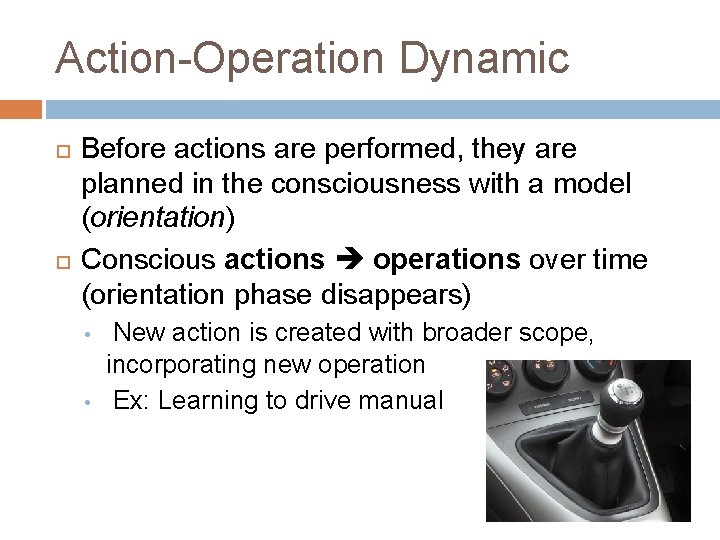
Action-Operation Dynamic Before actions are performed, they are planned in the consciousness with a model (orientation) Conscious actions operations over time (orientation phase disappears) • • New action is created with broader scope, incorporating new operation Ex: Learning to drive manual
Activities are Dynamic Activities have both internal and external sides Subject transforms object and vice versa Subject assimilates the experience of humanity Activities are not isolated Influence from other activities and environment Contradiction is what happens when external activities / internal components are at odds
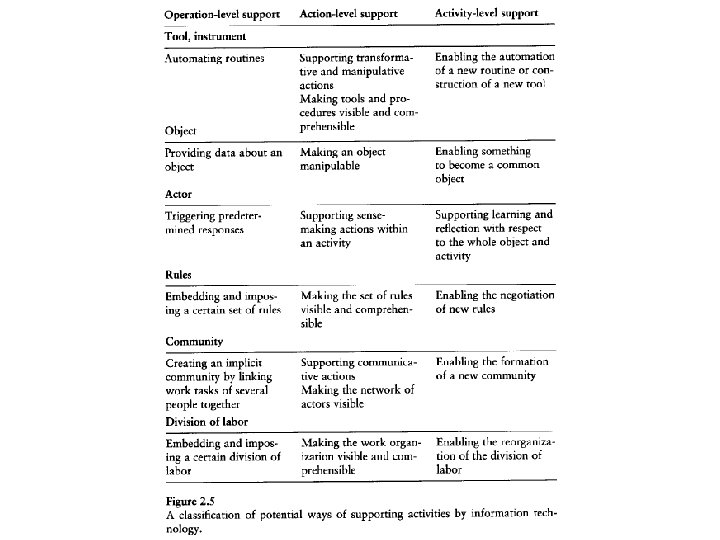
Role of Information Technology In principle, IT can automate all operations IT can also support actions IT can serve as a tool IT can aid sense-making (informate), providing a new perspective of the object of work IT can drive communicative actions between participants IT can be the principal enabler for activities May make an activity feasible May allow an object that wouldn’t have been accessible
Contribution of Activity Theory With Activity Theory, we can better address… Issues belonging to different levels within an integrated framework Interaction in a social context The dynamic features of human practices