
ACTIVITY THE GROWTH OF UNIONS THE AMERICAN INDUSTRIAL

- Slides: 31
ACTIVITY THE GROWTH OF UNIONS THE AMERICAN INDUSTRIAL REVOLUTION Power. Point Presentation & Reading Activity
Pair Share What is a Union? Why would someone want to join a union? What can a Union do to achieve it’s goals?
We Will: be able to explain what unions are, the different types of unions and why they were created by completing a paragraph summary.
INTRODUCTION The Triangle Shirt-Waist Factory Fire
Film Clip: Triangle Shirt-Waist Fire
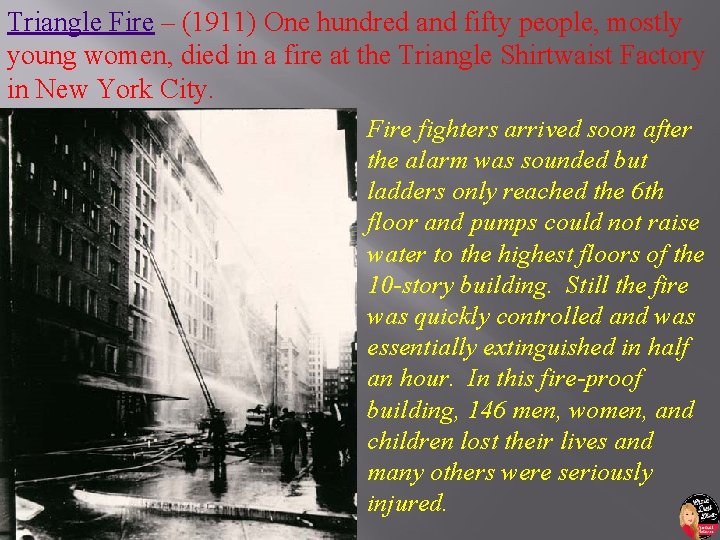
Triangle Fire – (1911) One hundred and fifty people, mostly young women, died in a fire at the Triangle Shirtwaist Factory in New York City. Fire fighters arrived soon after the alarm was sounded but ladders only reached the 6 th floor and pumps could not raise water to the highest floors of the 10 -story building. Still the fire was quickly controlled and was essentially extinguished in half an hour. In this fire-proof building, 146 men, women, and children lost their lives and many others were seriously injured.
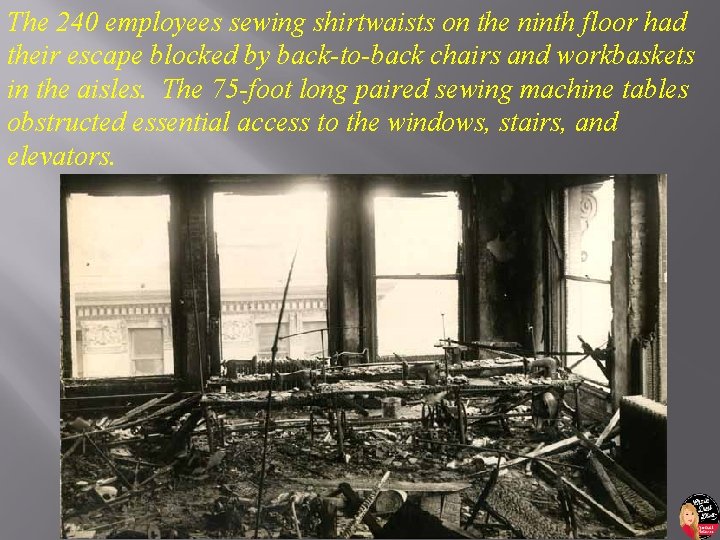
The 240 employees sewing shirtwaists on the ninth floor had their escape blocked by back-to-back chairs and workbaskets in the aisles. The 75 -foot long paired sewing machine tables obstructed essential access to the windows, stairs, and elevators.
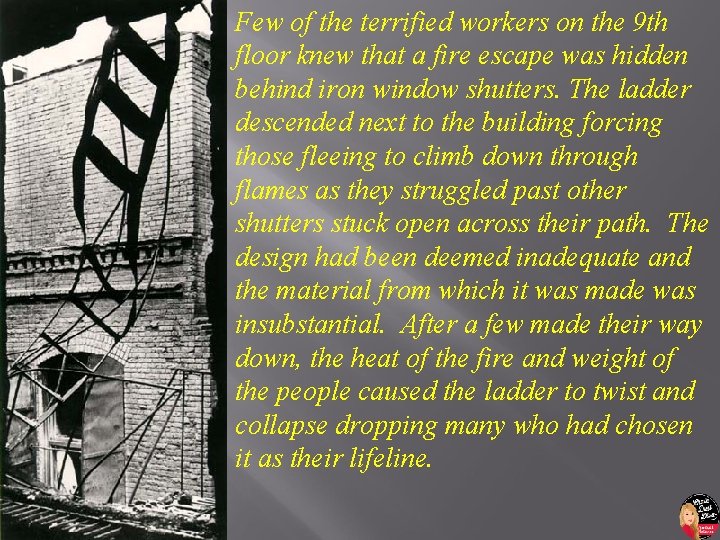
Few of the terrified workers on the 9 th floor knew that a fire escape was hidden behind iron window shutters. The ladder descended next to the building forcing those fleeing to climb down through flames as they struggled past other shutters stuck open across their path. The design had been deemed inadequate and the material from which it was made was insubstantial. After a few made their way down, the heat of the fire and weight of the people caused the ladder to twist and collapse dropping many who had chosen it as their lifeline.
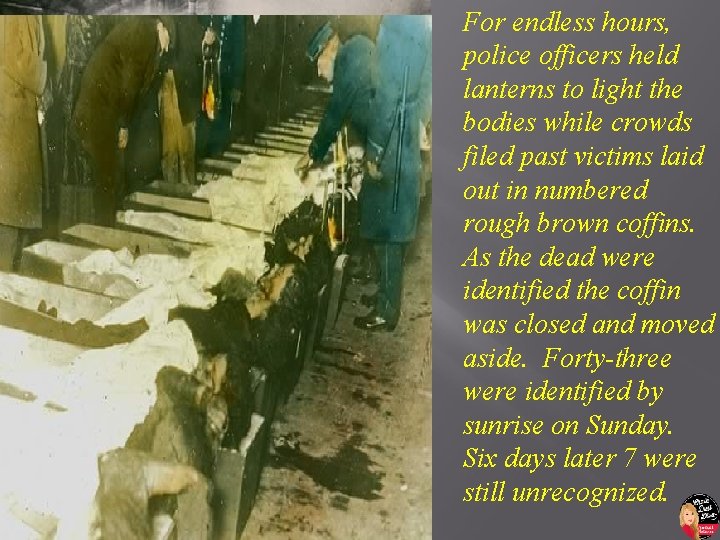
For endless hours, police officers held lanterns to light the bodies while crowds filed past victims laid out in numbered rough brown coffins. As the dead were identified the coffin was closed and moved aside. Forty-three were identified by sunrise on Sunday. Six days later 7 were still unrecognized.
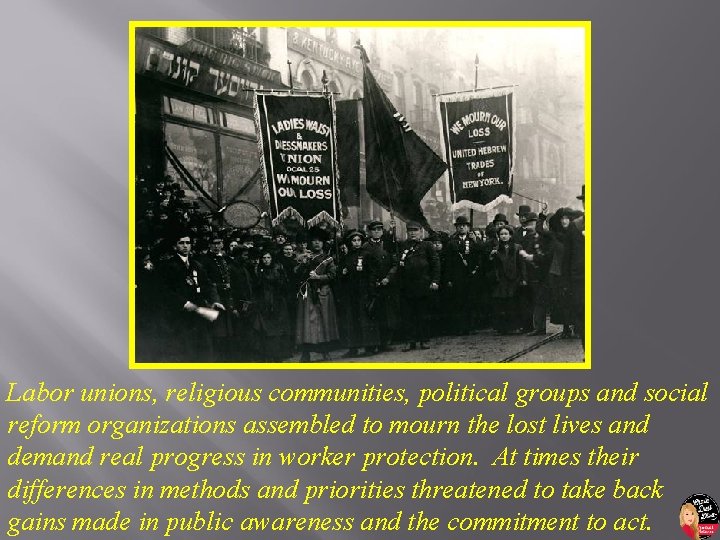
Labor unions, religious communities, political groups and social reform organizations assembled to mourn the lost lives and demand real progress in worker protection. At times their differences in methods and priorities threatened to take back gains made in public awareness and the commitment to act.
PROBLEMS WORKERS FACED
Problem #1: Unfair Working Conditions Low wages Long hours (10 -14 hours a day) No unemployment, no health care benefits Government does not help because of Laissez Faire
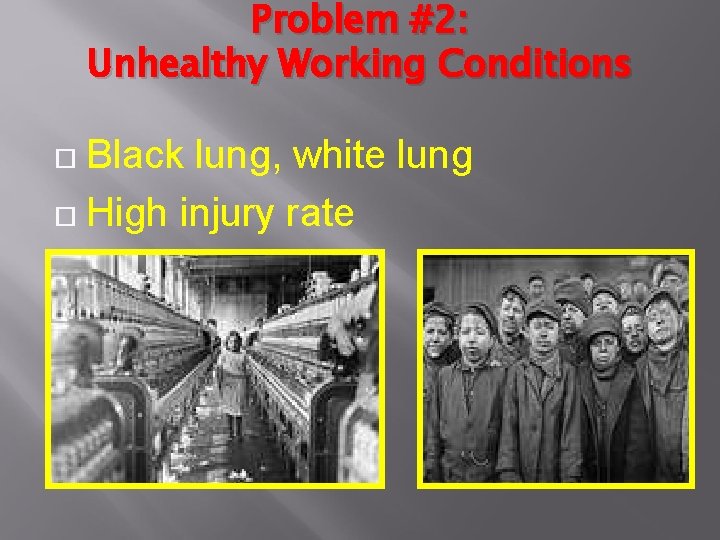
Problem #2: Unhealthy Working Conditions Black lung, white lung High injury rate
Problem #3: Child Labor Children as young six were employed Many worked full time Jobs to help support their families Children were often injured on the job
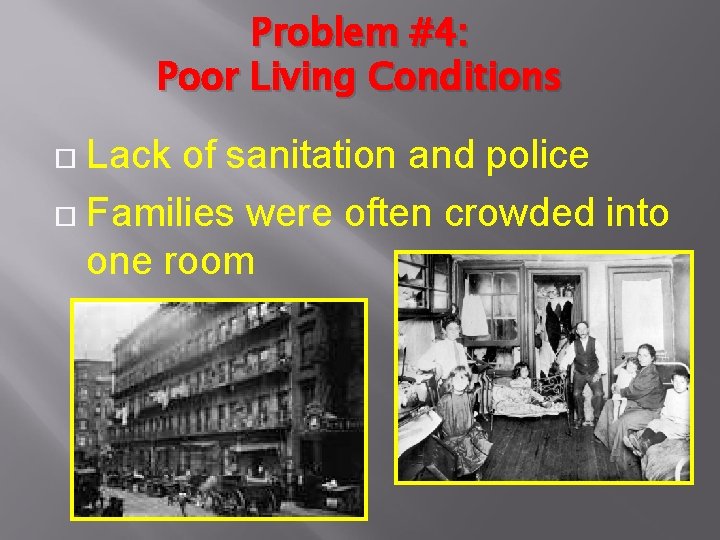
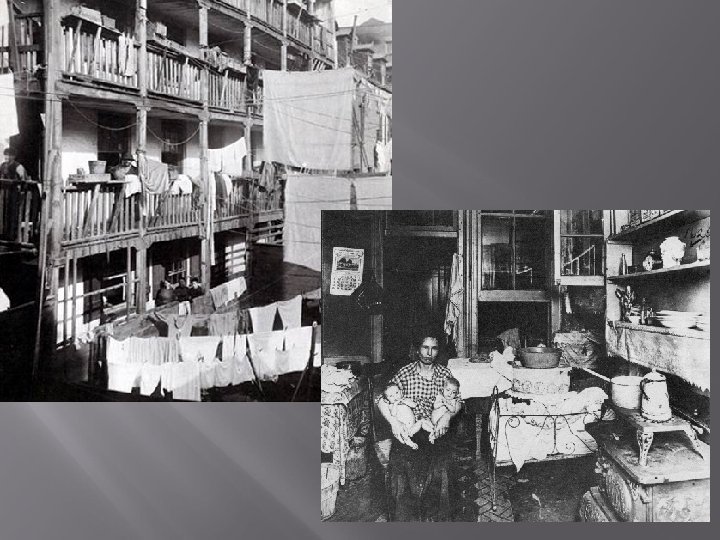
Problem #4: Poor Living Conditions Lack of sanitation and police Families were often crowded into one room
CREATING A UNION
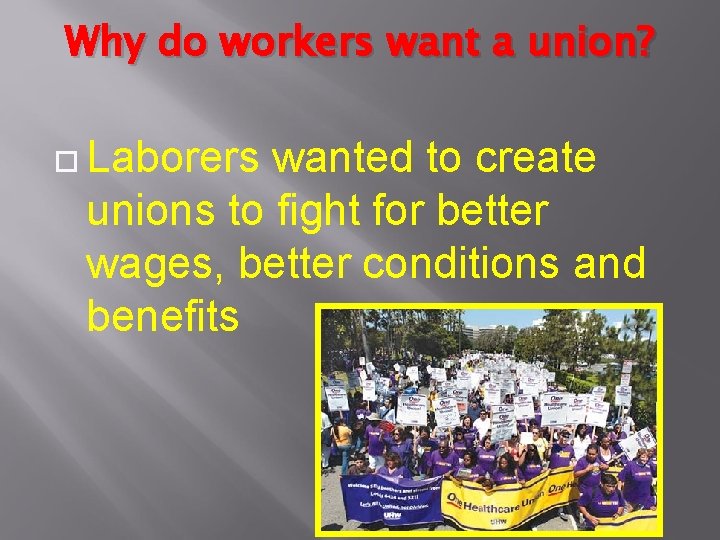
Why do workers want a union? Laborers wanted to create unions to fight for better wages, better conditions and benefits
What Can Unions Do? Strike: stop working Picket: Protest usually by parading and holding signs Boycott: Refuse to use a service or buy a product Arbitration: When the Union & employer representatives meet to try to come to an agreement w/out having to go to court.
Problem #2: Type of Union Should it be one large union for everybody? Should it be specific to an occupation
Problem #3: Employers did not want their workers to join unions If a worker was discovered to be part of a union they were blacklisted Blacklist=name gets recorded and passed around so that no one will employ him
Problem #4: Poor public image General dislike for unions in America
What was the result? Workers eventually were able to form a variety of unions which gave them improved conditions like overtime and the 8 hour day
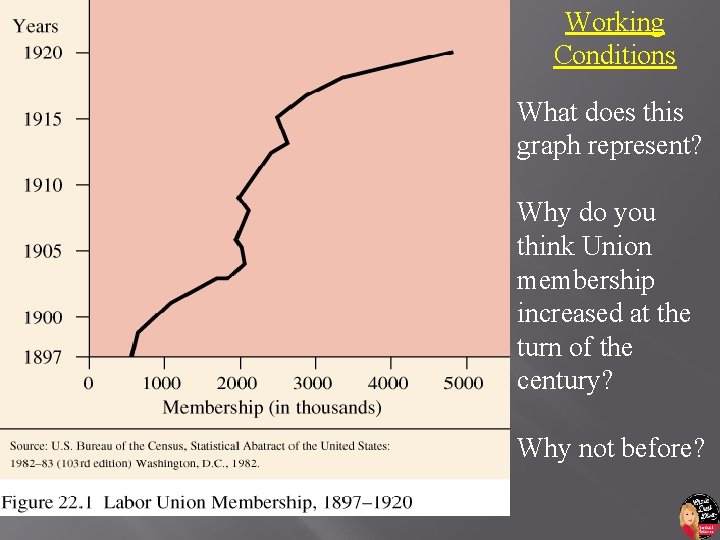
Working Conditions What does this graph represent? Why do you think Union membership increased at the turn of the century? Why not before?
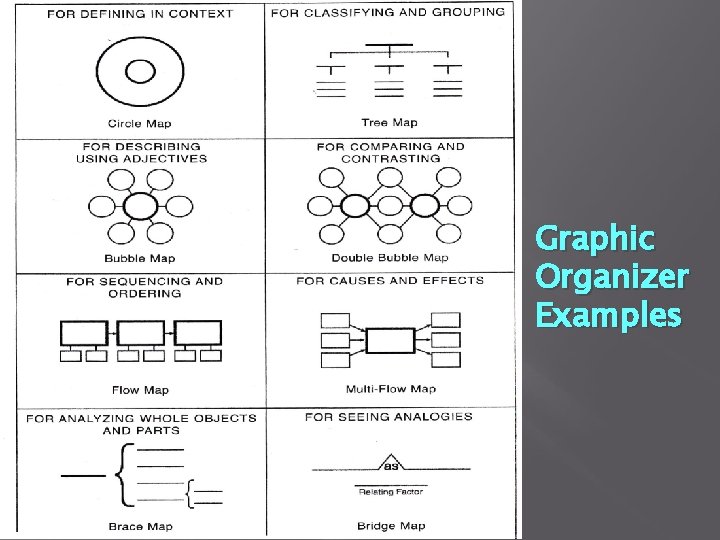
1. Read and highlight important information about The Rise of Labor Unions 2. Choose a “graphic organizer” to graph the information you just read. 3. Create the graphic organizer on your paper and fill it in with the important information from the reading.
Graphic Organizer Examples
Rise of Labor Unions Review
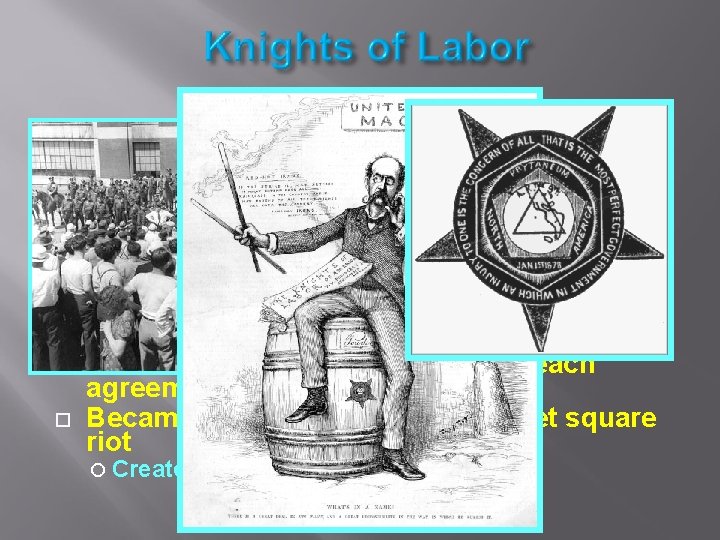
1869 Tried to bring ALL laboring people into one Skilled, unskilled, black, white, women Supported Equal pay for women Temperance Abolition of child labor Arbitration – third party helps to reach agreement Became unpopular after Haymarket square riot Created bad public opinion
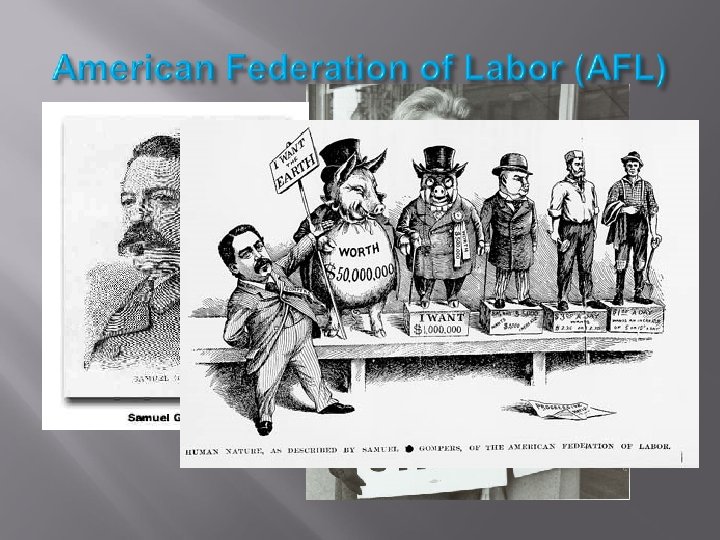
1. 1886 – Samuel Gompers 2. Skilled workers ONLY 3. Separate unions based on craft 4. Collective Bargaining – union, employers, and employees negotiate for better working condition
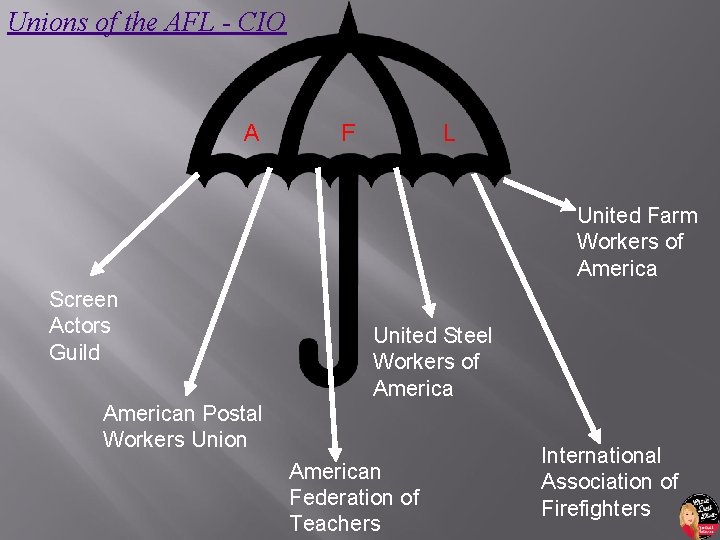
Unions of the AFL - CIO A F L United Farm Workers of America Screen Actors Guild United Steel Workers of American Postal Workers Union American Federation of Teachers International Association of Firefighters
Union Review Questions What is a union? Why do workers form unions? What are some strategies unions could use to get what they want? Why wouldn’t employers want unions to exist?