
Activity Series and Corrosion Practical Applications What is

- Slides: 32
Activity Series and Corrosion Practical Applications
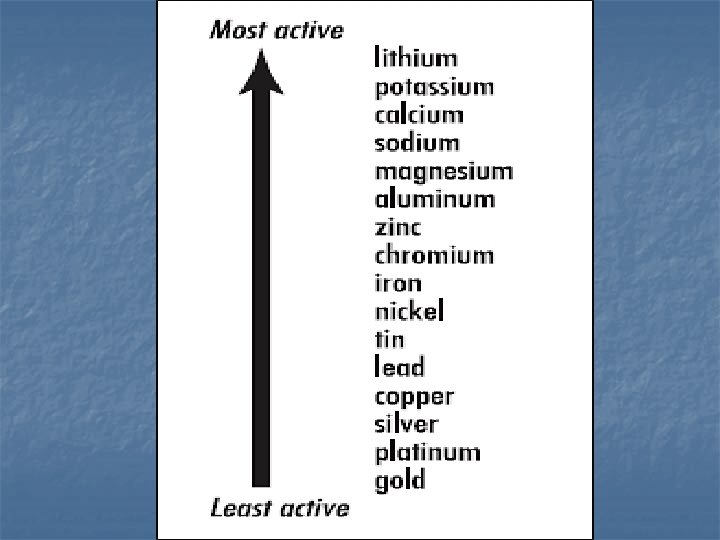
What is “Reactivity”? n n Reactivity: the rate at which a chemical substance undergoes a chemical reaction in time. The reactivity series is a list of elements with the most reactive at the top and least reactive at the bottom. n Can use this to predict reactions
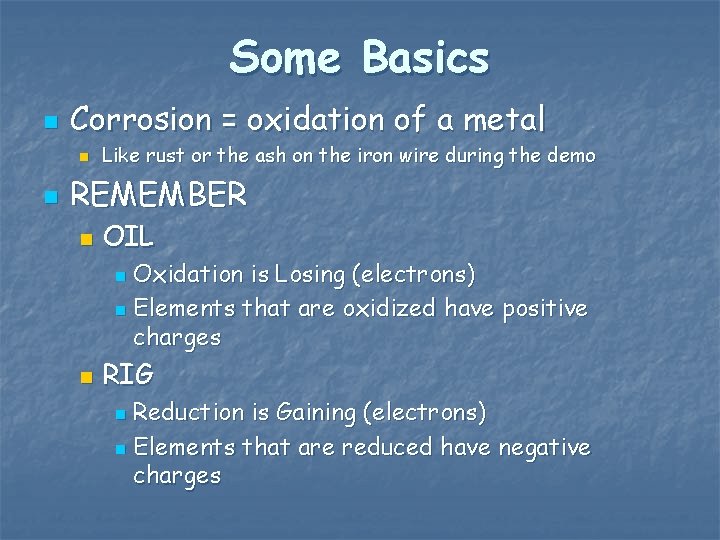
Some Basics n Corrosion = oxidation of a metal n n Like rust or the ash on the iron wire during the demo REMEMBER n OIL Oxidation is Losing (electrons) n Elements that are oxidized have positive charges n n RIG Reduction is Gaining (electrons) n Elements that are reduced have negative charges n
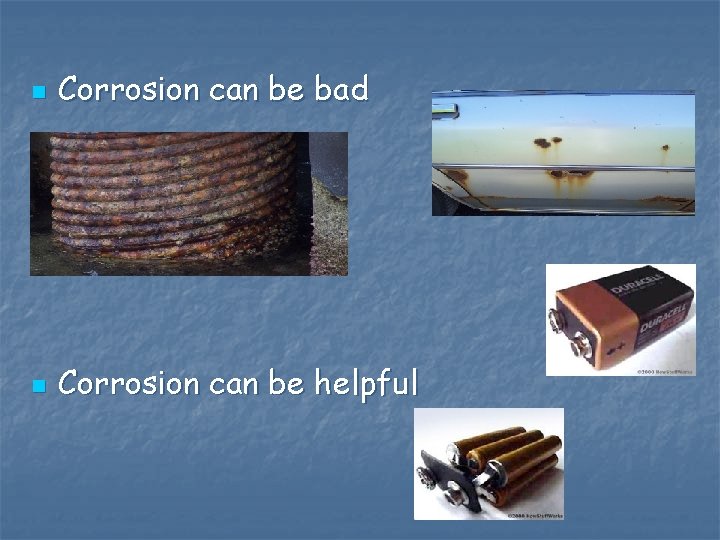
n Corrosion can be bad n Corrosion can be helpful
Practical Applications of the Activity Series n Reduction of metal from ore n Galvanization n Sacrificials
Reducing Metals from Ores n Metals are in oxidized form in ores Need to be reduced to get pure metal n 2 types of reduction: n Chemical n Electrolytic n
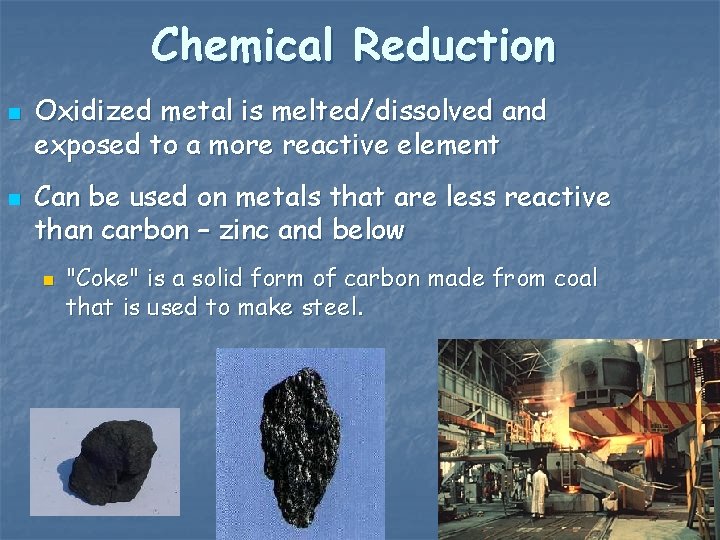
Chemical Reduction n n Oxidized metal is melted/dissolved and exposed to a more reactive element Can be used on metals that are less reactive than carbon – zinc and below n "Coke" is a solid form of carbon made from coal that is used to make steel.
Electrolytic Reduction n Use electricity on molten/dissolved ore n Expensive n Used on aluminum and metals more reactive than Al
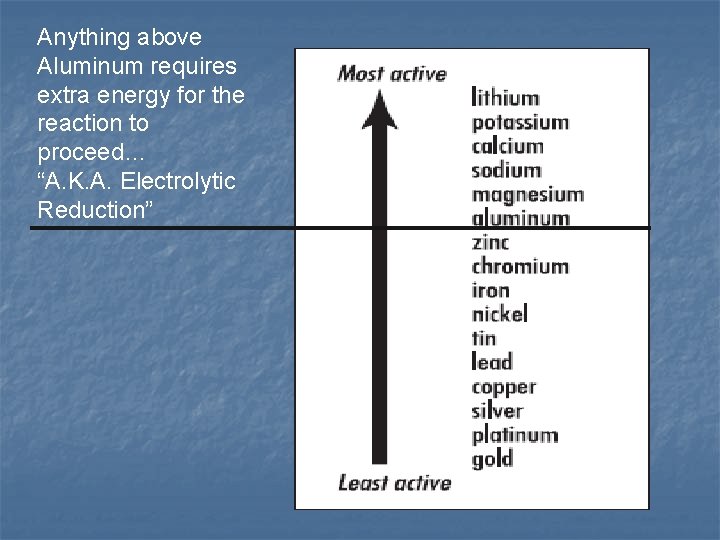
Anything above Aluminum requires extra energy for the reaction to proceed… “A. K. A. Electrolytic Reduction”
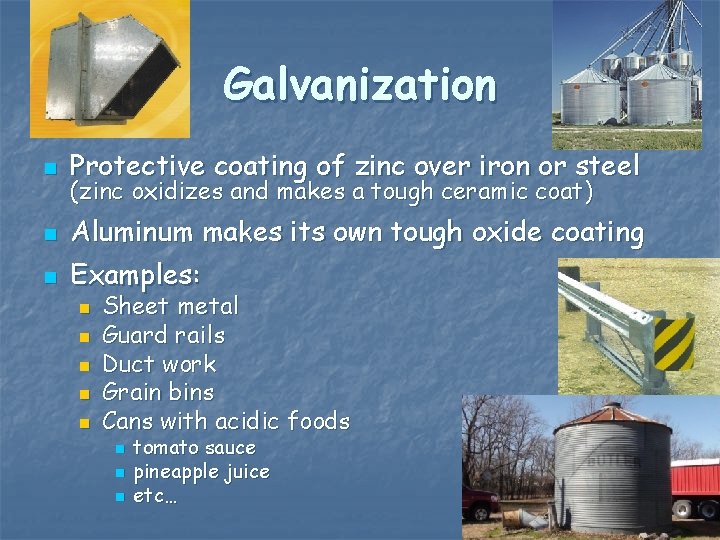
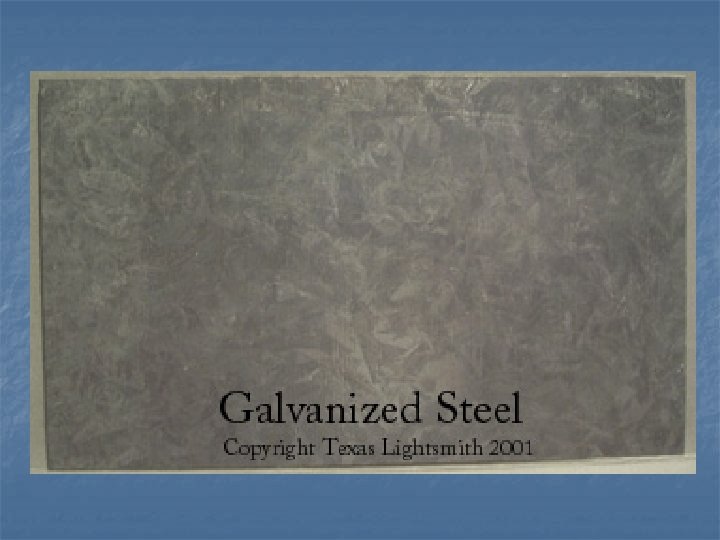
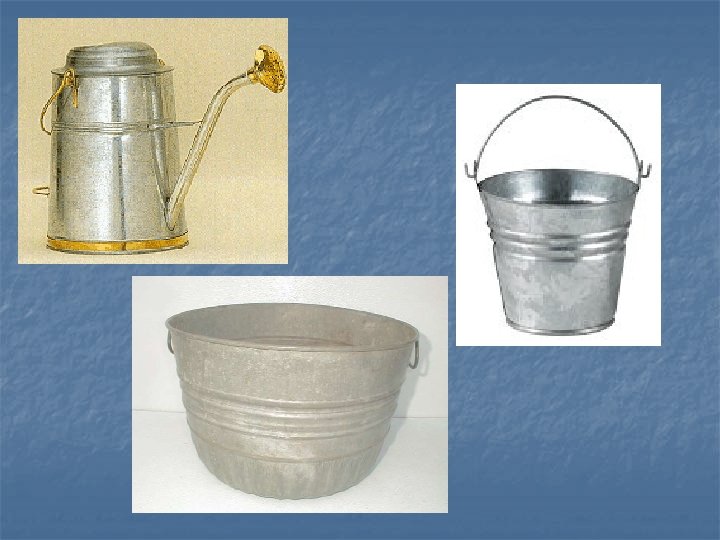
Galvanization n Protective coating of zinc over iron or steel (zinc oxidizes and makes a tough ceramic coat) Aluminum makes its own tough oxide coating Examples: n n n Sheet metal Guard rails Duct work Grain bins Cans with acidic foods n n n tomato sauce pineapple juice etc…
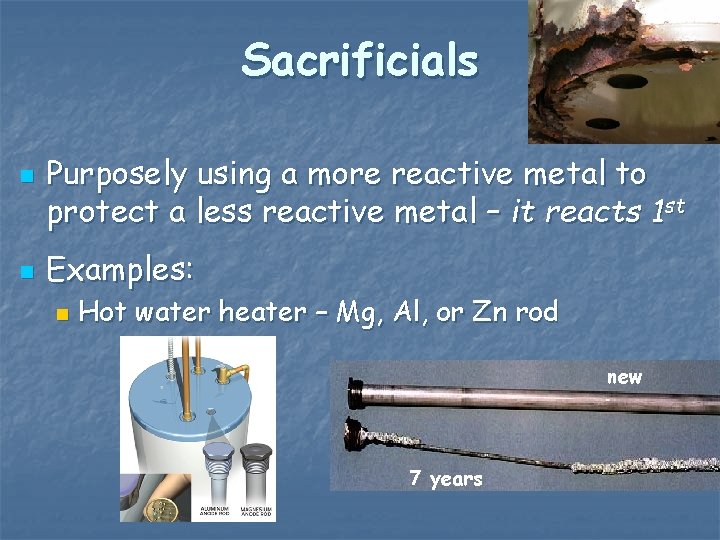
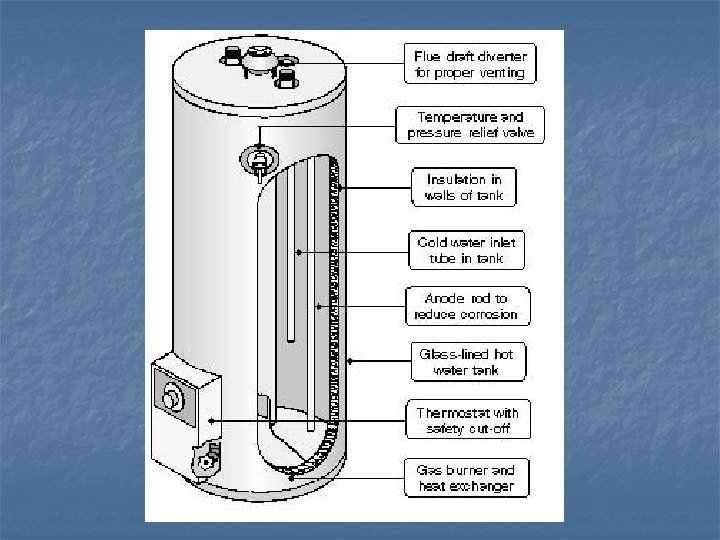
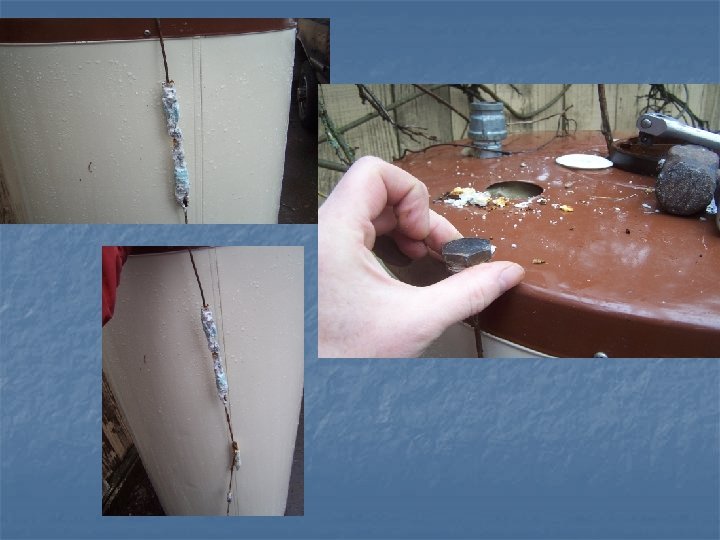
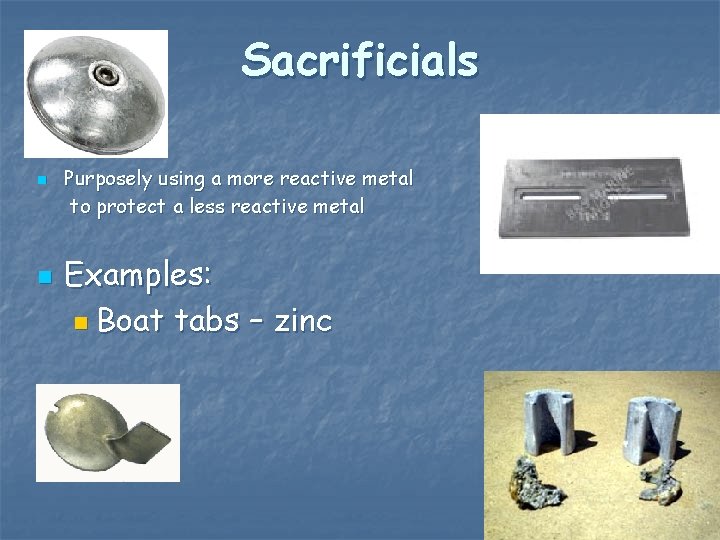
Sacrificials n n Purposely using a more reactive metal to protect a less reactive metal – it reacts 1 st Examples: n Hot water heater – Mg, Al, or Zn rod new 7 years
Sacrificials n n Purposely using a more reactive metal to protect a less reactive metal Examples: n Boat tabs – zinc
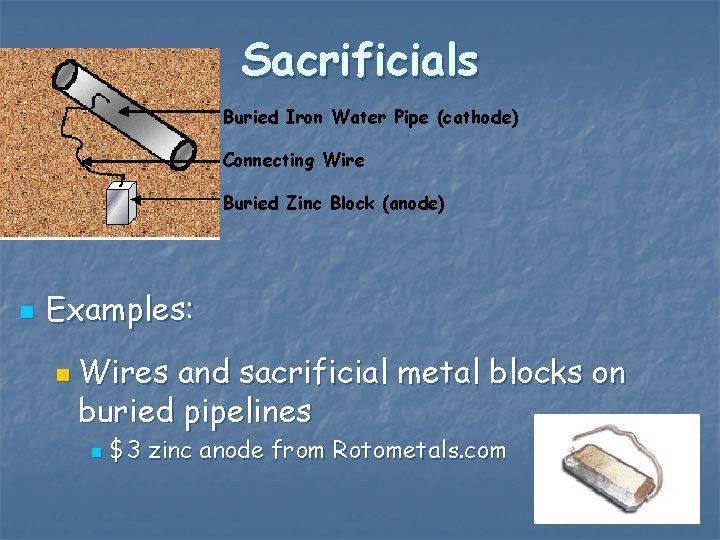
Sacrificials Buried Iron Water Pipe (cathode) Connecting Wire Buried Zinc Block (anode) n Examples: n Wires and sacrificial metal blocks on buried pipelines n $3 zinc anode from Rotometals. com
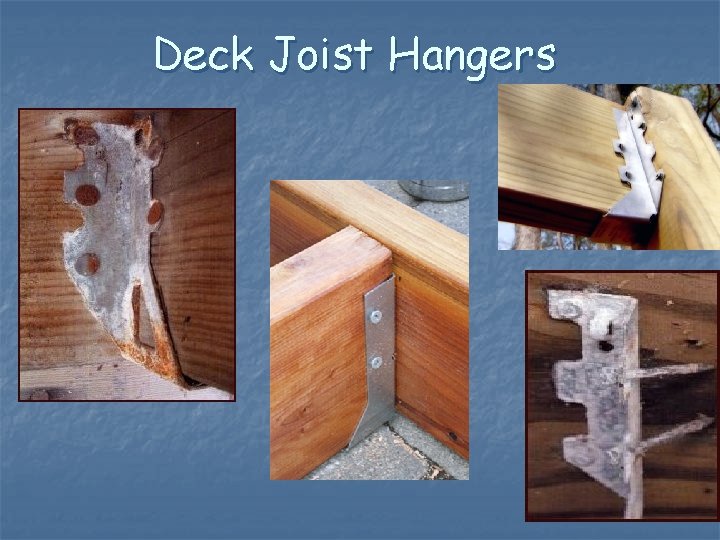
Deck Joist Hangers
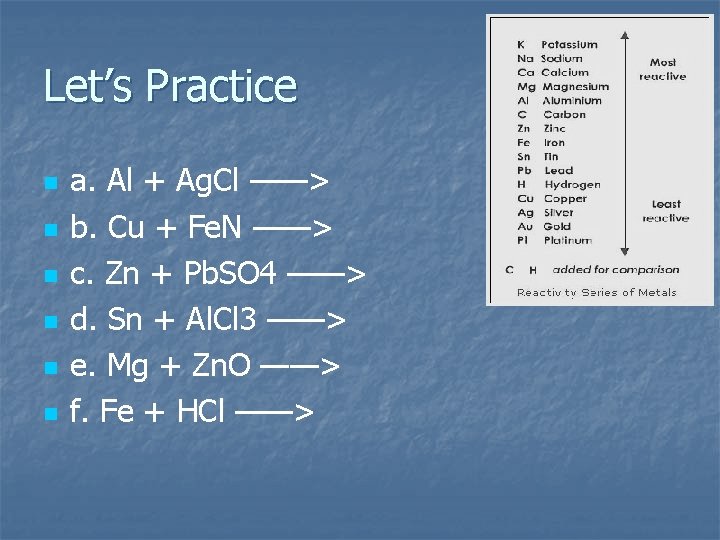
Let’s Practice n n n a. Al + Ag. Cl ——> b. Cu + Fe. N ——> c. Zn + Pb. SO 4 ——> d. Sn + Al. Cl 3 ——> e. Mg + Zn. O ——> f. Fe + HCl ——>
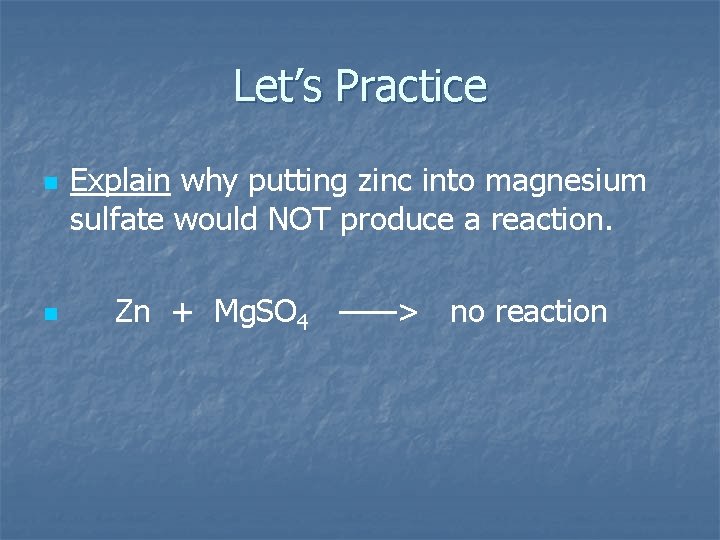
Let’s Practice n n Explain why putting zinc into magnesium sulfate would NOT produce a reaction. Zn + Mg. SO 4 ——> no reaction
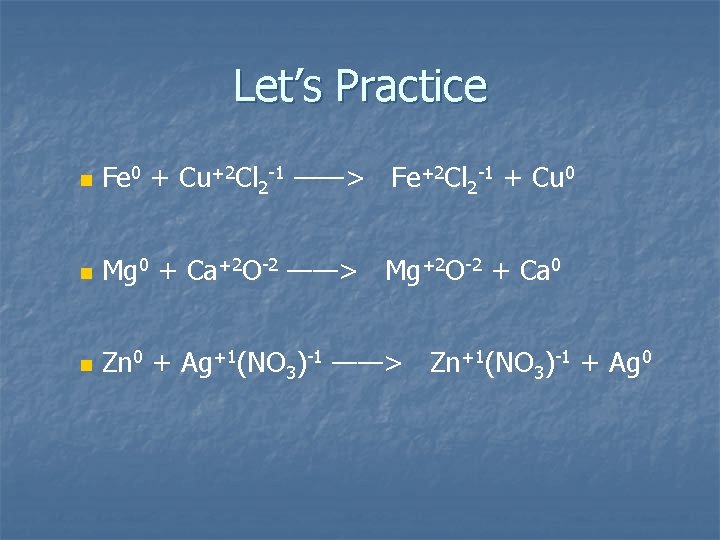
Let’s Practice n Fe 0 + Cu+2 Cl 2 -1 ——> Fe+2 Cl 2 -1 + Cu 0 n Mg 0 + Ca+2 O-2 ——> Mg+2 O-2 + Ca 0 n Zn 0 + Ag+1(NO 3)-1 ——> Zn+1(NO 3)-1 + Ag 0
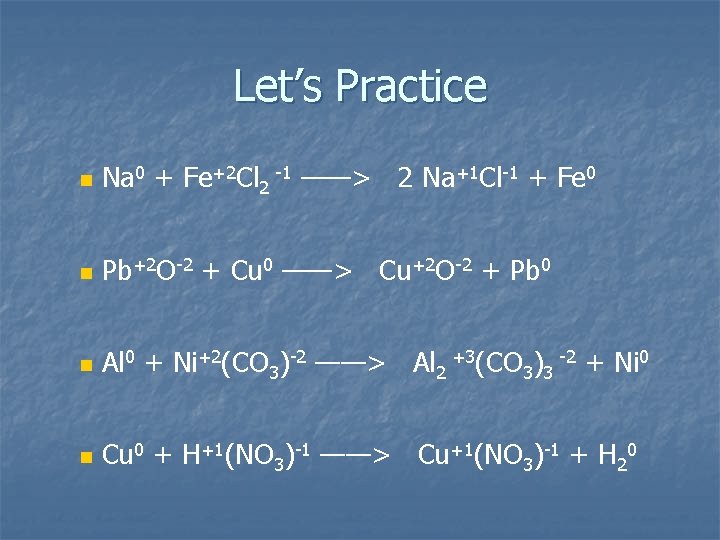
Let’s Practice n Na 0 + Fe+2 Cl 2 -1 ——> 2 Na+1 Cl-1 + Fe 0 n Pb+2 O-2 + Cu 0 ——> Cu+2 O-2 + Pb 0 n Al 0 + Ni+2(CO 3)-2 ——> Al 2 +3(CO 3)3 -2 + Ni 0 n Cu 0 + H+1(NO 3)-1 ——> Cu+1(NO 3)-1 + H 20
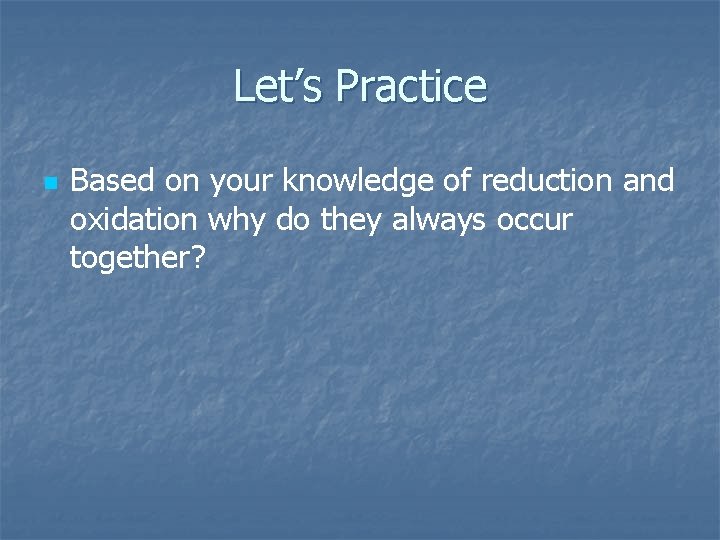
Let’s Practice n Based on your knowledge of reduction and oxidation why do they always occur together?
STOP
Developing the Activity Series n Explain oxidation and reduction using an example from the lab. Include an equation. n Include these terms: n n n n Oxidation Reduction Atom Ion Lose electrons Gain electrons Stable (more or less)
n Explain why putting zinc into magnesium sulfate would NOT produce a reaction. Zn + Mg. SO 4 ---> no reaction
n n n Flameless Ration Heaters Flinn Lab – Making Christmas Ornaments NACE Kit Labs H 2 O 2 and steel wool n Fruit battery n Aluminum can and p. H n Tarnished silver n
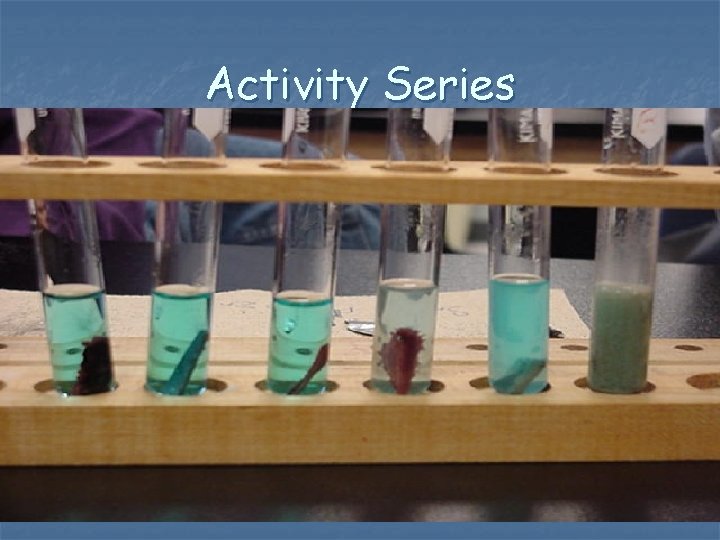
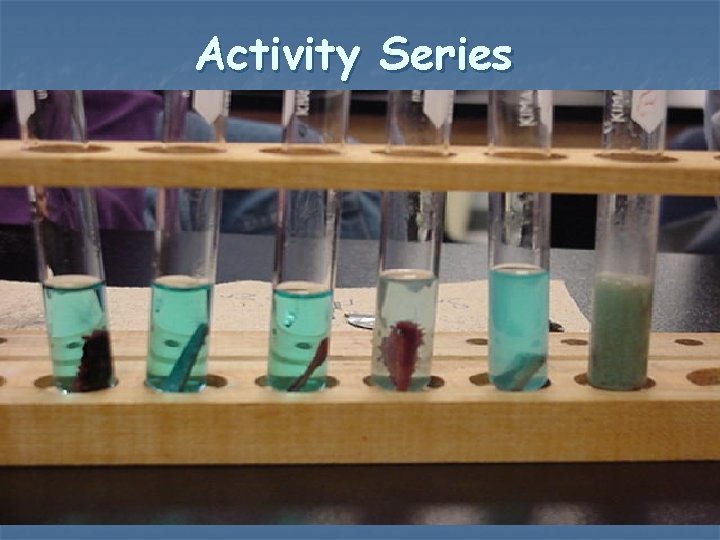
Activity Series
Activity Series
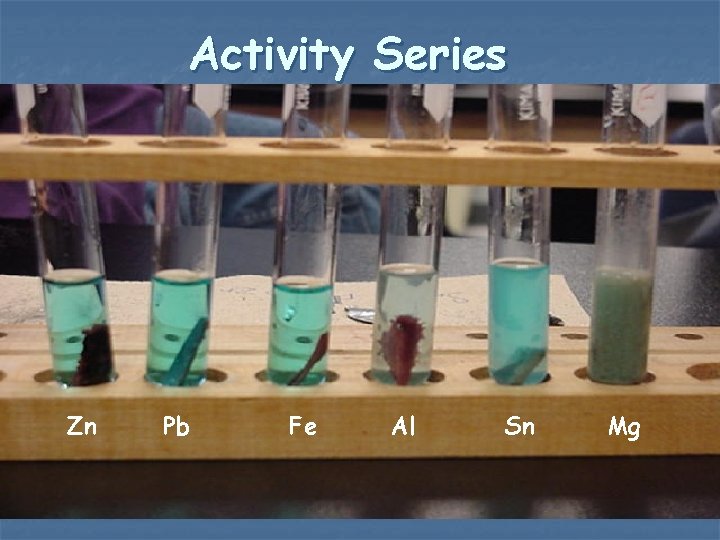
Activity Series Zn Pb Fe Al Sn Mg