
Activity Levels and Needs Understanding the different types
- Slides: 11
Activity Levels and Needs Understanding the different types of activity levels and the needs they have
‘ 10 quick questions!’ • • • Which activity group do badminton and rugby belong to ? The range of movement at a joint is know as. . . F What does the term ‘inclusion’ mean for disability in sport ? Which sex suffers from chemical imbalance, male or female ? Wide hips, narrow shoulders & high% body fat is an. . . E ? High jumpers are typically this body type. . . E ? The level of water vapour in the air is known as. . . H ? IPC stands for. . . ? Why are young gymnasts so succesful. . . ? The combination of speed and strength is known as. . . P ?
Session Outcomes: • By the end of this session we should be able to: • Consider the effects & needs of different demands from different activities • Identify the demands of an activity can have an effect on an individual. • Understand the benefits to be gained from high-activity levels
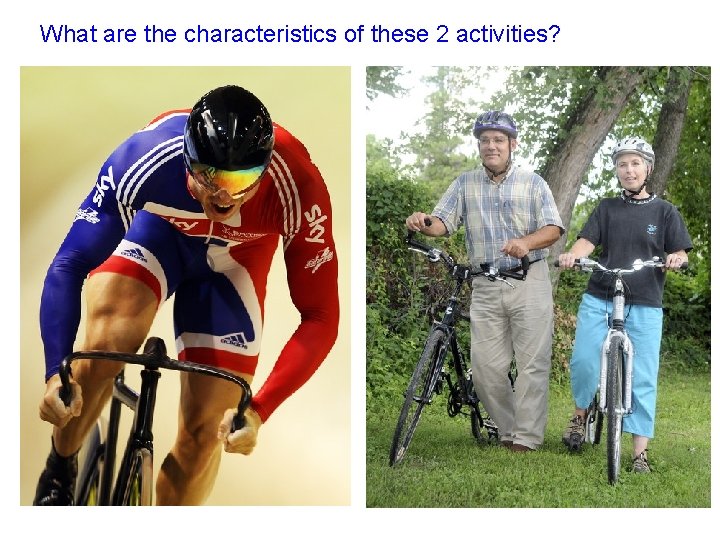
What are the characteristics of these 2 activities?
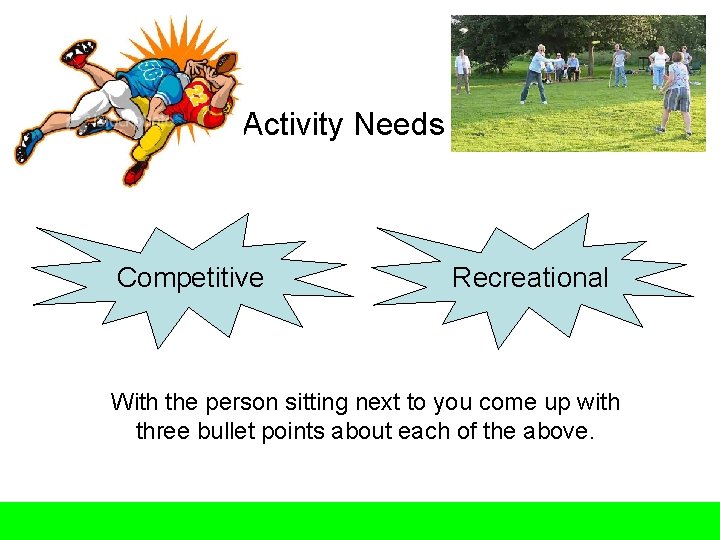
Activity Needs Competitive Recreational With the person sitting next to you come up with three bullet points about each of the above.
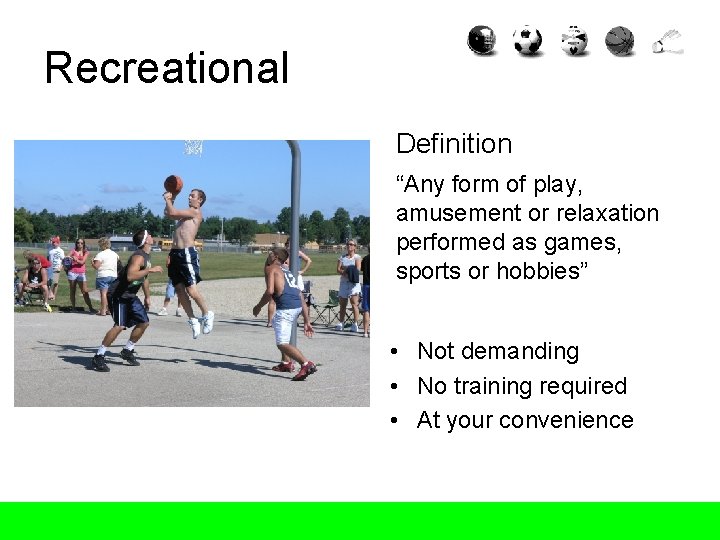
Recreational Definition “Any form of play, amusement or relaxation performed as games, sports or hobbies” • Not demanding • No training required • At your convenience
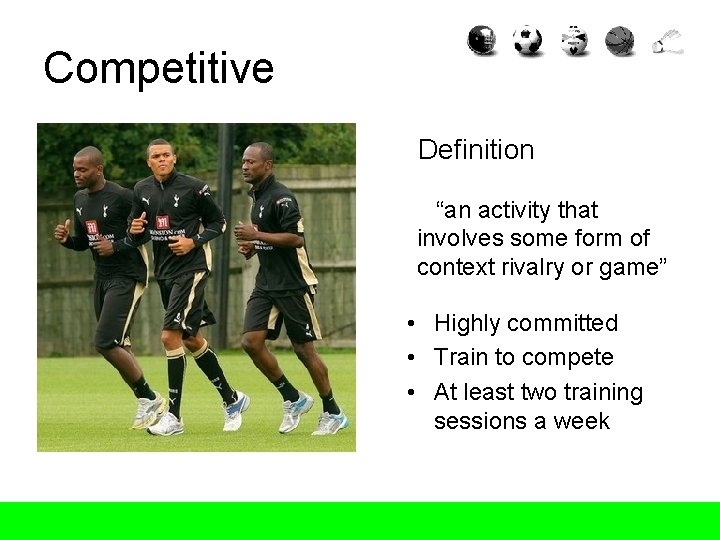
Competitive Definition “an activity that involves some form of context rivalry or game” • Highly committed • Train to compete • At least two training sessions a week
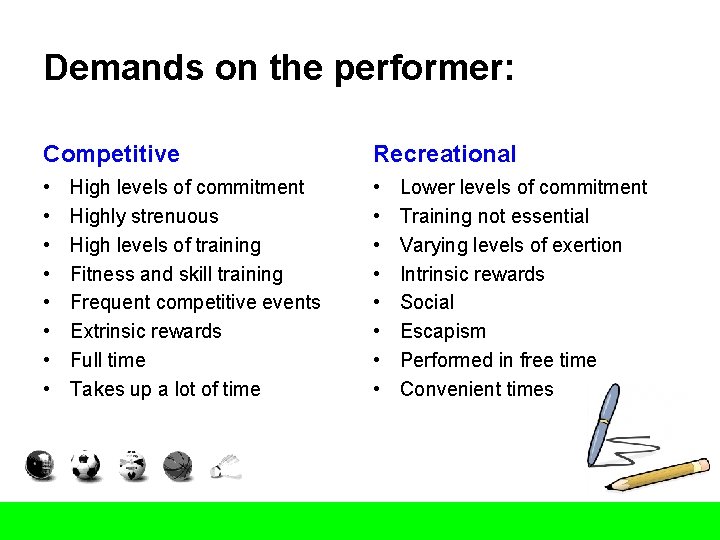
Demands on the performer: Competitive Recreational • • • • High levels of commitment Highly strenuous High levels of training Fitness and skill training Frequent competitive events Extrinsic rewards Full time Takes up a lot of time Lower levels of commitment Training not essential Varying levels of exertion Intrinsic rewards Social Escapism Performed in free time Convenient times
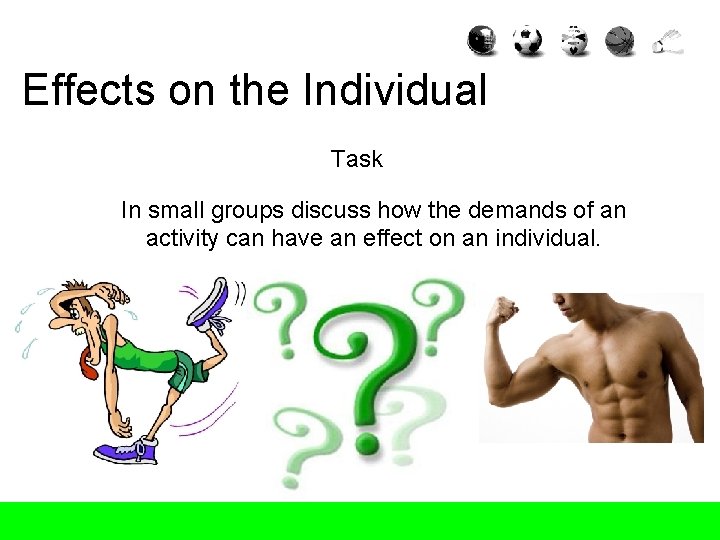
Effects on the Individual Task In small groups discuss how the demands of an activity can have an effect on an individual.
Benefits of High-Activity Levels Task With a partner produce a spider diagram showing what you feel are benefits of high activity levels
Exam Question Identify and define one competitive activity and one recreational activity giving the demands on the performer for each. (14 marks)