
Activity For Life Your Body 247 Nutrition essentials
Activity For Life -Your Body 24/7 Nutrition essentials for active adults By Reshaunda Thornton
SUCCESSFUL AGING Being an adult has many positive aspects Adults’ functioning is the result of better health habits such as: Eating a proper diet Having an active lifestyle Engaging in mental stimulation and flexibility Having positive coping skills Having good social relationships and support Avoiding disease Successful aging involves having a sense of selfefficacy and a perceived control of environment
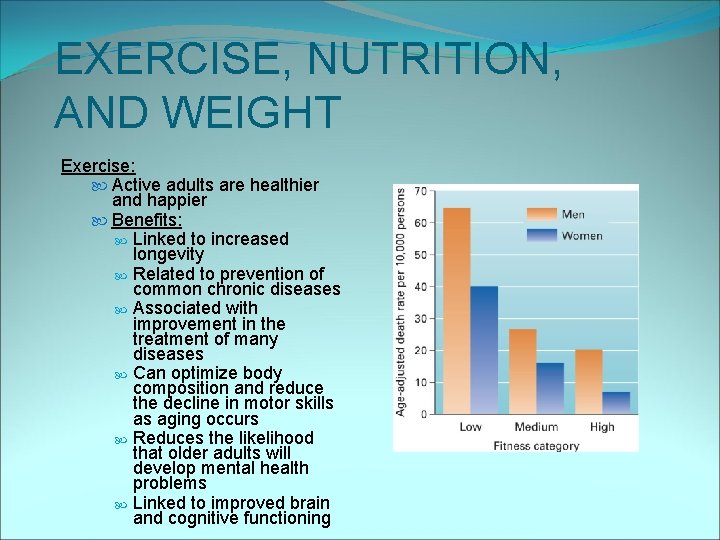
EXERCISE, NUTRITION, AND WEIGHT Exercise: Active adults are healthier and happier Benefits: Linked to increased longevity Related to prevention of common chronic diseases Associated with improvement in the treatment of many diseases Can optimize body composition and reduce the decline in motor skills as aging occurs Reduces the likelihood that older adults will develop mental health problems Linked to improved brain and cognitive functioning
EXERCISE, NUTRITION, AND WEIGHT Nutrition and Weight: Some adults restrict their dietary intake in a way that may be harmful to their health Decreased snacking between meals may contribute to harmful weight loss Calorie restriction has been proven to extend the life span of certain animals, but it is not known if this works in humans New research suggests that balanced nutrient intake may help slow the aging process and possibly prevent some diseases.


How Active Are You? Inactive Lifestyle Normal day-to-day physical activates Moderate Active Lifestyle Walking 1 -3 miles + day-to -day activities Active Lifestyle Walking/running 3 -4 miles daily activities High Active Lifestyle Strength training, walk/run, daily activates
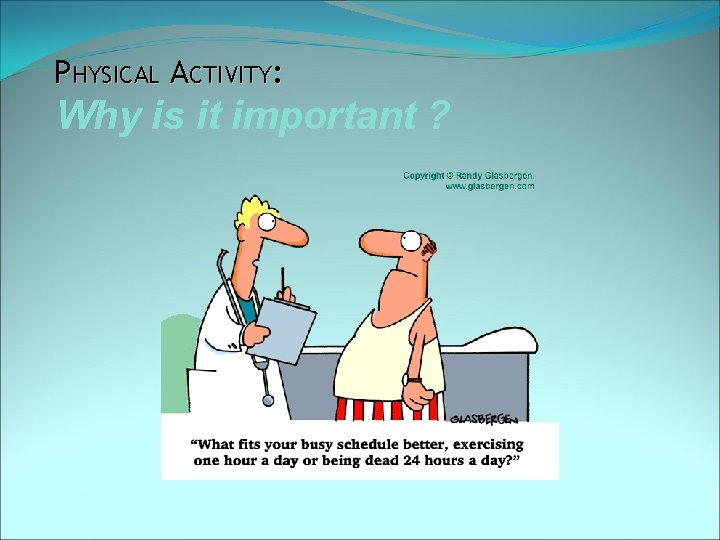
PHYSICAL ACTIVITY: Why is it important ?
Physical Activity Fundamental for preventing diseases Reduces the risk of dying from coronary heart disease and of developing high blood pressure, colon cancer, and diabetes. Can help reduce blood pressure in some people with hypertension. Helps people with chronic, disabling conditions improve their stamina and muscle strength. Reduces symptoms of anxiety and depression and fosters improvements in mood and feelings of well-being. Helps maintain healthy bones, muscles, and joints. Helps control joint swelling and pain associated with arthritis.
Physical Activity Physical activity improves quality of life. Physical activity extends longevity, protects against the development of stroke, obesity, osteoporosis, and depression. Physical activity helps maintain full functioning and independence among aging adults. Relationships between physical activity and improved health include: A reduced oxygen demand at any given level of physical activity. A reduced tendency for blood to form clots where arteries have narrowed. An increased elasticity in the arteries. Changes in the brain and brain chemistry that may improve mood and cognitive functioning.
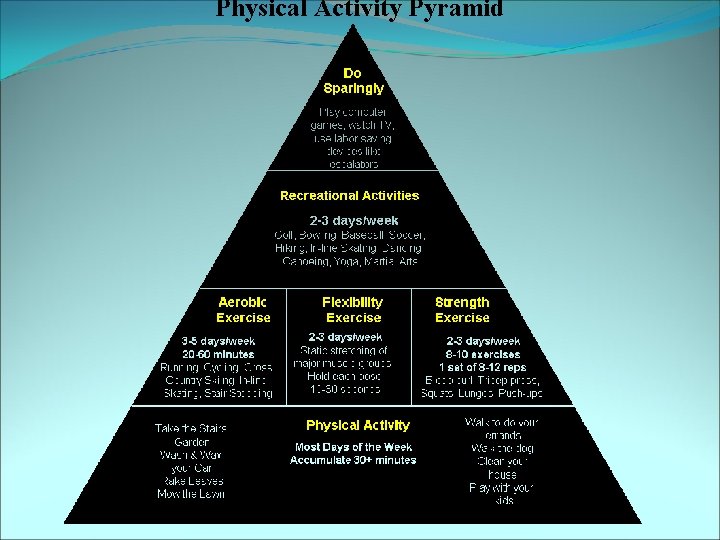
Physical Activity Pyramid
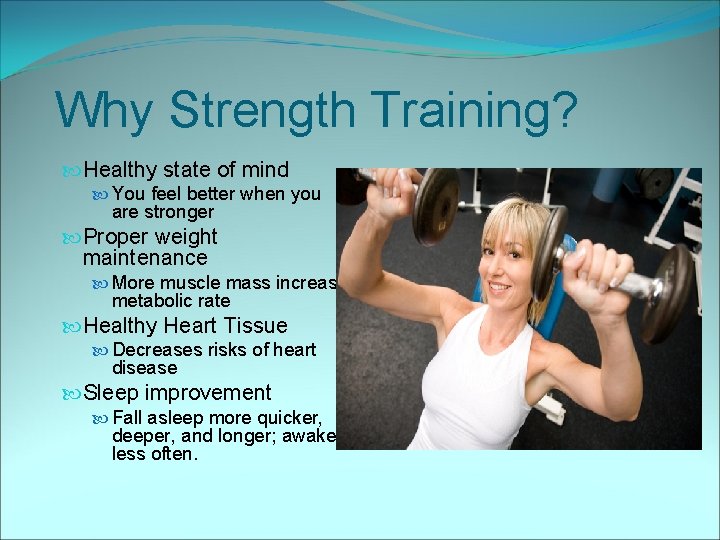
Why Strength Training? Healthy state of mind You feel better when you are stronger Proper weight maintenance More muscle mass increase metabolic rate Healthy Heart Tissue Decreases risks of heart disease Sleep improvement Fall asleep more quicker, deeper, and longer; awaken less often.
The Key…. The key to achieving and maintaining a healthy weight isn't about short-term dietary changes. It's about a lifestyle that includes healthy eating, regular physical activity, and balancing the number of calories you consume with the number of calories your body uses. Staying in control of your weight contributes to good health now and as you age.
Nutrition We require food to grow, stay warm, repair damaged tissue & maintain our health We need carbohydrates, proteins, fats, vitamins, and minerals from foods we eat to provide our body with energy Note: Too many or too few of any of these nutrients will cause a problem. A balanced diet is essential
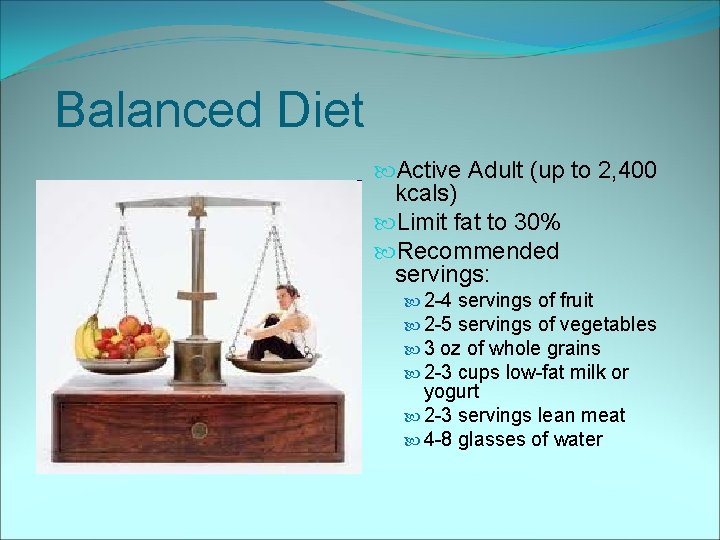
Balanced Diet Active Adult (up to 2, 400 kcals) Limit fat to 30% Recommended servings: 2 -4 servings of fruit 2 -5 servings of vegetables 3 oz of whole grains 2 -3 cups low-fat milk or yogurt 2 -3 servings lean meat 4 -8 glasses of water
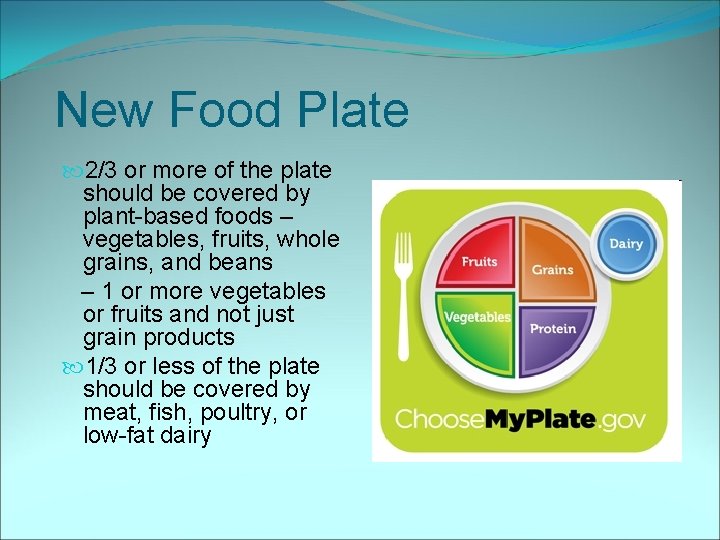
New Food Plate 2/3 or more of the plate should be covered by plant-based foods – vegetables, fruits, whole grains, and beans – 1 or more vegetables or fruits and not just grain products 1/3 or less of the plate should be covered by meat, fish, poultry, or low-fat dairy
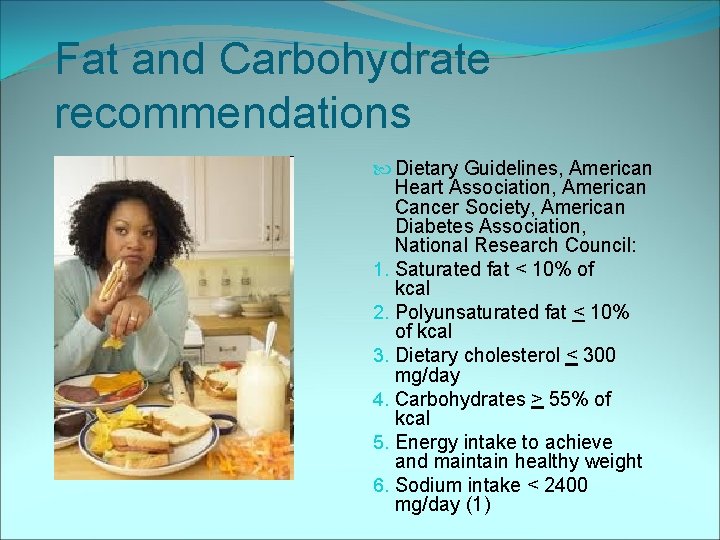
Fat and Carbohydrate recommendations Dietary Guidelines, American Heart Association, American Cancer Society, American Diabetes Association, National Research Council: 1. Saturated fat < 10% of kcal 2. Polyunsaturated fat < 10% of kcal 3. Dietary cholesterol < 300 mg/day 4. Carbohydrates > 55% of kcal 5. Energy intake to achieve and maintain healthy weight 6. Sodium intake < 2400 mg/day (1)
Energize = Carbs Carbohydrates are the golden nutrients. Turn into energy fast and supply vitamins and minerals to increase oxygen to cells and repair muscles and bones stressed by exercise Complex Carbohydrates - Unrefined, uncooked foods (Spinach, Celery, Whole Grain products, Skim Milk, Yogurt low fat, Tomatoes, Onions, Yams, Apples, Peaches, Pears , Plums, Potatoes, Lentils, Soy Milk, Rice Milk)
Less Fat is good A little fat with each meal helps your body absorb fat-soluble vitamins that help build your immune system and strengthen bones A concentrated energy source your body can use during extended exercise **But a little goes a long way. The equivalent of five to eight teaspoons a day will do it! Focus on unsaturated oils from fish and plants, such as olive, canola or soybean oil, along with nuts and avocados because these fats are good for your heart.
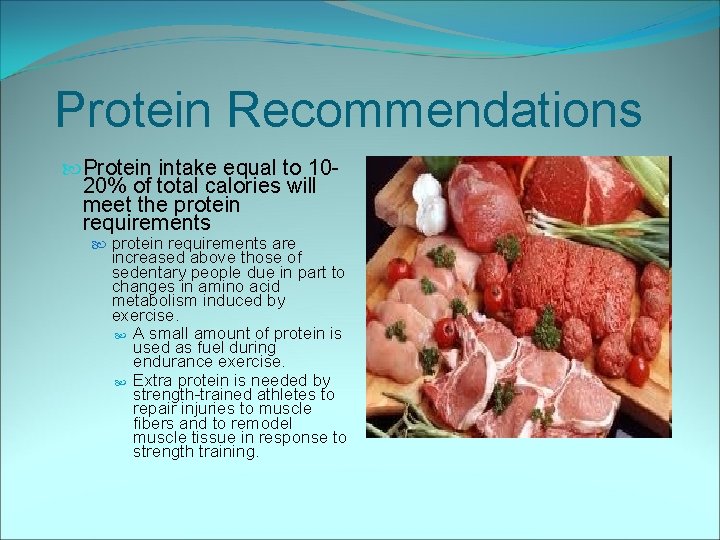
Protein Recommendations Protein intake equal to 1020% of total calories will meet the protein requirements are increased above those of sedentary people due in part to changes in amino acid metabolism induced by exercise. A small amount of protein is used as fuel during endurance exercise. Extra protein is needed by strength-trained athletes to repair injuries to muscle fibers and to remodel muscle tissue in response to strength training.
Strengthen = Protein Vital for building and repairing muscle by replacing worn blood cells and boosting immune system. Food sources of protein deliver important nutrients, including iron, zinc, potassium, magnesium and/or calcium. Protein foods – Lean Fish, Turkey, and Beef. Low fat Milk, Yogurt, and Cheese. Tofu, Peanut butter, Eggs
Feed the Machine Proteins are the building blocks of every cell and tissue in the human body. When you exercise, body proteins are broken down and must be replaced by new proteins. That's why it's important for athletes and physically active people to consume additional protein in their diets. Without enough protein, muscle tissue can be broken down and used as energy by the body, which can lead to muscle atrophy or loss of muscle tissue. Endurance active adults consume 1. 0 to 1. 3 g of protein per kg of bodyweight. Strength-training active adults may need slightly more at 1. 4 to 1. 6 g per kg of bodyweight. Divide your weight in pounds by 2. 2 to convert it to kilograms.
Before Workout: Energize Carbohydrates from whole grains, vegetables and fruits are your body’s favorite fuel because they turn into energy fast Supply vitamins and minerals that help your body get oxygen to cells and repair muscle and bone stressed by exercise. Depending on your calorie needs Fuel First (Will make your workout seem easier and more fun!) 3 or more hours after your last meal, start with a small snack (100 -200 calories) that contains carbohydrates and is chosen from your daily food group totals
After Workout: Cool Down Sports drinks with carbohydrates and electrolytes improve performance by cooling you down, fueling you up, and replacing lost fluids, sodium and potassium. Here’s what to do: Start Wet: Drink 2 cups of fluid 2 hours before activity. Drink 1 -2 cups of fluid 15 minutes before activity. • Stay Wet: Drink on schedule every 10 -20 minutes, not by thirst. • Replenish: Weigh before and after exercise, after voiding and without clothes. For every pound lost, drink 3 cups of fluid to rehydrate fully. Rely on sports drinks, or drink water with salty foods that replace lost minerals and electrolytes.
Fuel – Exercise - Fuel FUEL - 1 to 2 hrs before: Carb-rich snack (yogurt, fresh fruit, whole grain crackers or cereal bars) EXERCISE – Sports drink, energy bar FUEL – Within 30 minutes after: lean protein-rich foods (lean poultry, beef, or fish, protein supplement drinks)
Choose Foods you need These are needed to turn protein into muscle and carbohydrate into energy, create red blood cells, send messages along nerves and contract muscles to get your body moving More of this Whole grain foods Whole fruit Dark green and orange vegetables and beans Enough of this Low-fat milk and dairy products Lean and low-fat proteins **High in VITAMINS and MINERALS and have fewer CALORIES!!
Choose foods you DON’T need Less of this Fried foods Processed food (fast foods) Products w/enriched flour Alcoholic beverages High sugar/calorie foods Fatty foods **High CHOLESTEROL and empty CALORIES!!
Final Message There’s NO need to follow the latest diet Keep an eye on the kinds of foods on your plate and size portion Continue to incorporate daily physical activity
- Slides: 27