
Activity 14 Stem Cell Differentiation Get Started BELLRINGER
Activity 14 Stem Cell Differentiation
Get Started BELLRINGER… � Name some cells of the human body � All cells have identical DNA…how do you think a cell becomes specialized to do a particular job? � Name some organs of the body � How are cells & organs related? Activity 14: Stem Cell Differentiation
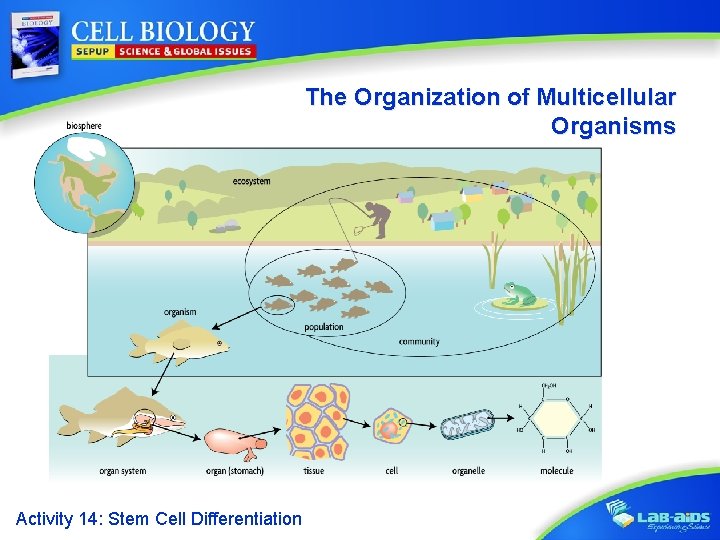
The Organization of Multicellular Organisms Activity 14: Stem Cell Differentiation
Introduction Read the Introduction. What are stem cells? What is differentiation? Name a condition that results when cells don’t function properly. Activity 14: Stem Cell Differentiation
Introduction � Cells that have the ability to produce a variety of types of specialized cells are called stem cells. � The process by which stem cells produce specialized cells is called differentiation. Activity 14: Stem Cell Differentiation
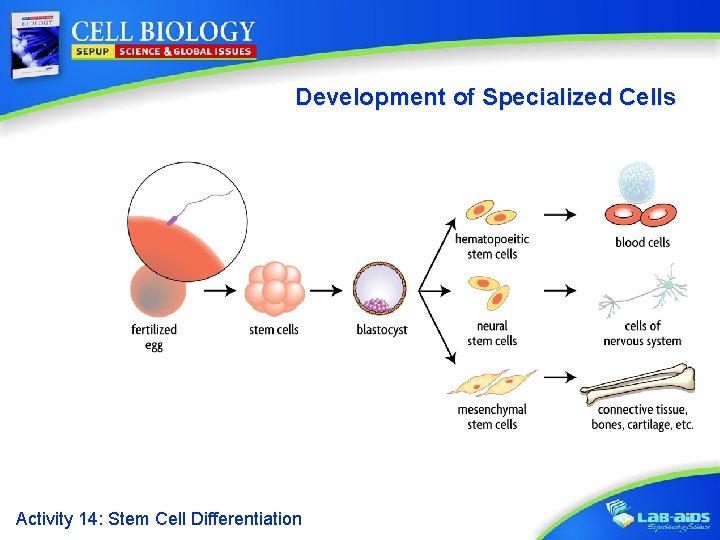
Development of Specialized Cells Activity 14: Stem Cell Differentiation
Introduction Cell Shape is related to its Function � Look at the pictures of various human body cells � Note the difference in their shape � Discuss with your partner how you think the cell’s shape is related to its function Activity 14: Stem Cell Differentiation
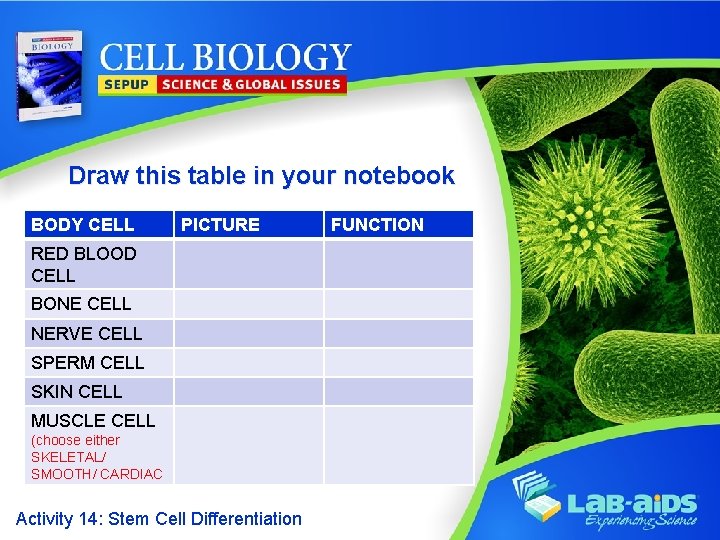
Draw this table in your notebook BODY CELL PICTURE RED BLOOD CELL BONE CELL NERVE CELL SPERM CELL SKIN CELL MUSCLE CELL (choose either SKELETAL/ SMOOTH/ CARDIAC Activity 14: Stem Cell Differentiation FUNCTION
Challenge � How do stem cells produce specialized cells? Activity 14: Stem Cell Differentiation
Follow Up � Now that you know more about stem cells and differentiation, why do you think scientists think stem cells are the key to replacing diseased or damaged tissues in patients with heart disease, cancer, or diabetes? Activity 14: Stem Cell Differentiation
Revisit the Challenge � How do stem cells produce specialized cells? Activity 14: Stem Cell Differentiation
Key Vocabulary � differentiation � stem cells Activity 14: Stem Cell Differentiation
- Slides: 12