
Activities of Daily Living Autism Spectrum Disorders Importance
- Slides: 42
Activities of Daily Living Autism Spectrum Disorders
Importance of ADL Training Needs to be done at the earliest Ø Child must never acquire an inappropriate behavior that is later difficult to unlearn. Ø A family can lead a very comfortable life, travel, socialize. Ø Danger of abuse if the person depends on others for ADL activities like toileting, dressing, bathing etc Ø Ø A MUST for the respect and honor of any person
PRACTICAL DIFFICULTIES Ø Sequencing steps of tasks Ø Not understanding concept of finish. Ø Over or under sensitive –touch/ smells/ sounds/tastes/ sight Ø Motor planning issues Limited exposure to perform independently. Ø Developmental delays / lack of basic skills Ø
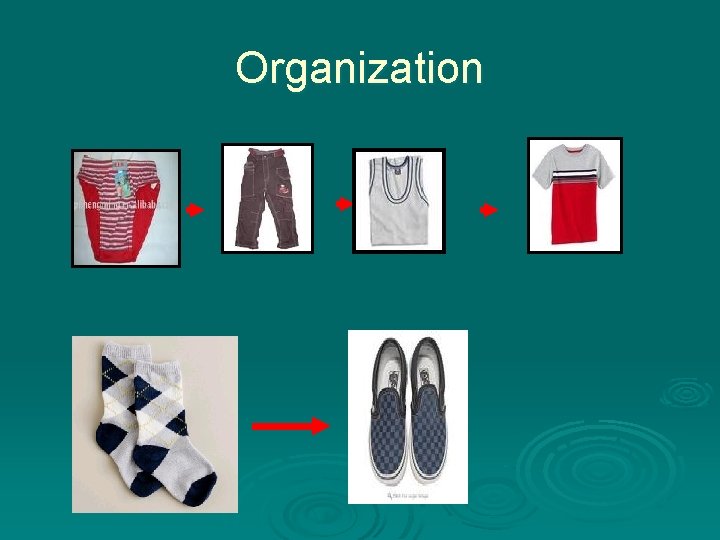
Organization
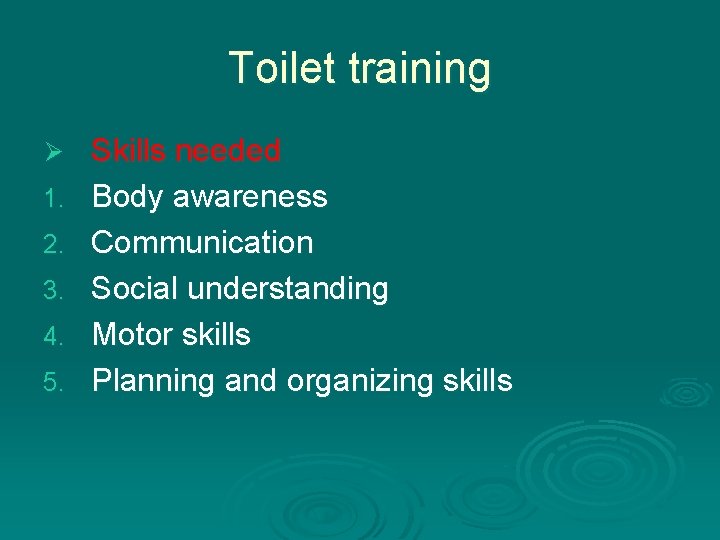
Toilet training Ø 1. 2. 3. 4. 5. Skills needed Body awareness Communication Social understanding Motor skills Planning and organizing skills
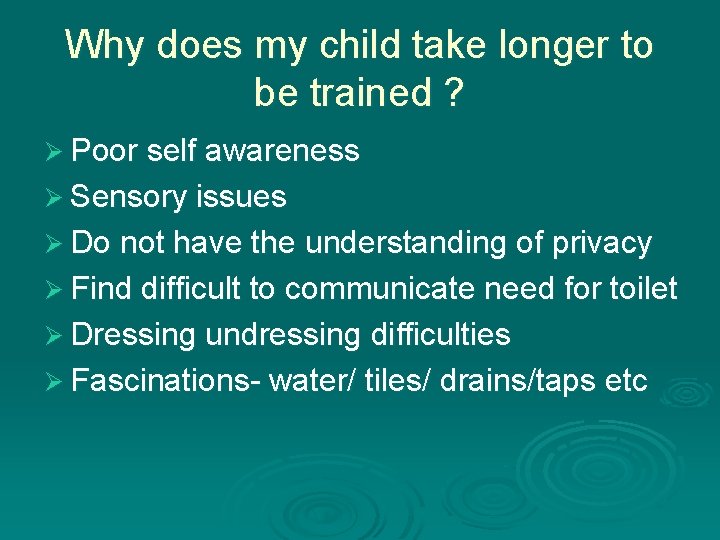
Why does my child take longer to be trained ? Ø Poor self awareness Ø Sensory issues Ø Do not have the understanding of privacy Ø Find difficult to communicate need for toilet Ø Dressing undressing difficulties Ø Fascinations- water/ tiles/ drains/taps etc
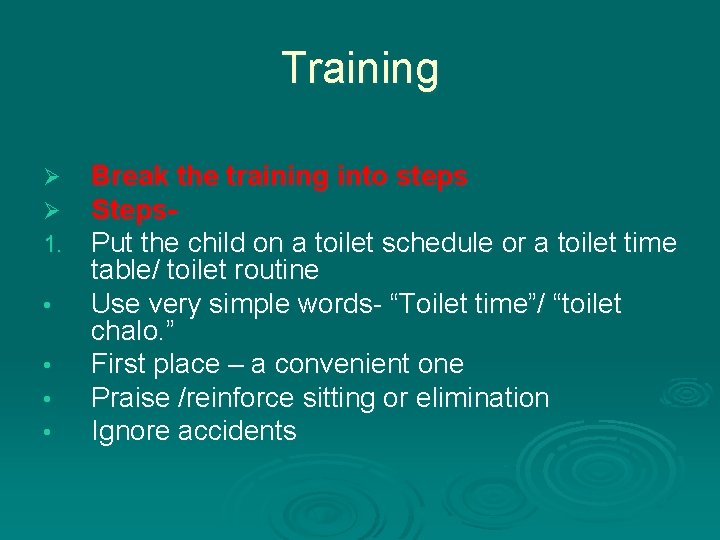
Training Ø Ø 1. • • Break the training into steps Steps. Put the child on a toilet schedule or a toilet time table/ toilet routine Use very simple words- “Toilet time”/ “toilet chalo. ” First place – a convenient one Praise /reinforce sitting or elimination Ignore accidents
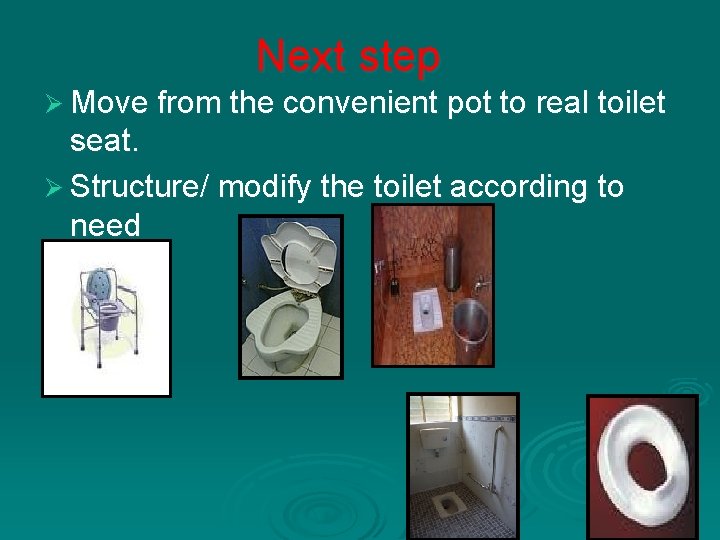
Next step Ø Move from the convenient pot to real toilet seat. Ø Structure/ modify the toilet according to need
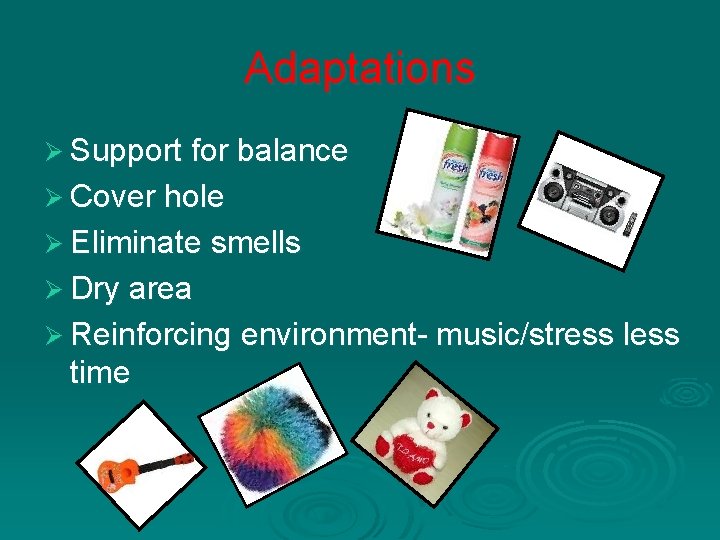
Adaptations Ø Support for balance Ø Cover hole Ø Eliminate smells Ø Dry area Ø Reinforcing environment- music/stress less time
Washing Backward Chaining 1. 2. 3. Ø Ø Cleaning Pour water+ clean Fill water- pour water+ clean Flush adaptations
Cleaning Ø The adult pours water for the child. Ø Gives physical and verbal prompts to clean. Instructions need to be specific- up / down. Ø Gradual withdrawal of prompts.
Pouring Ø The adult fills the water. Ø The child can now use one hand for cleaning. Ø The adult prompts the child physically to pour water. Ø Specific instruction- pour water Ø Gradually the prompts are faded.
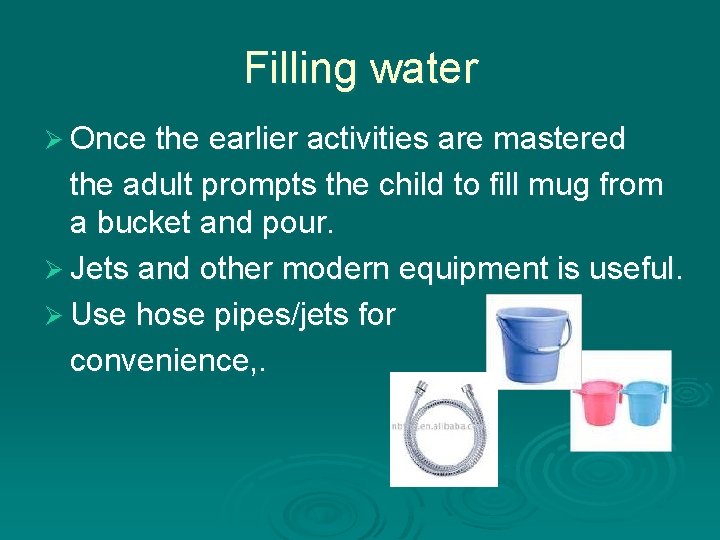
Filling water Ø Once the earlier activities are mastered the adult prompts the child to fill mug from a bucket and pour. Ø Jets and other modern equipment is useful. Ø Use hose pipes/jets for convenience, .
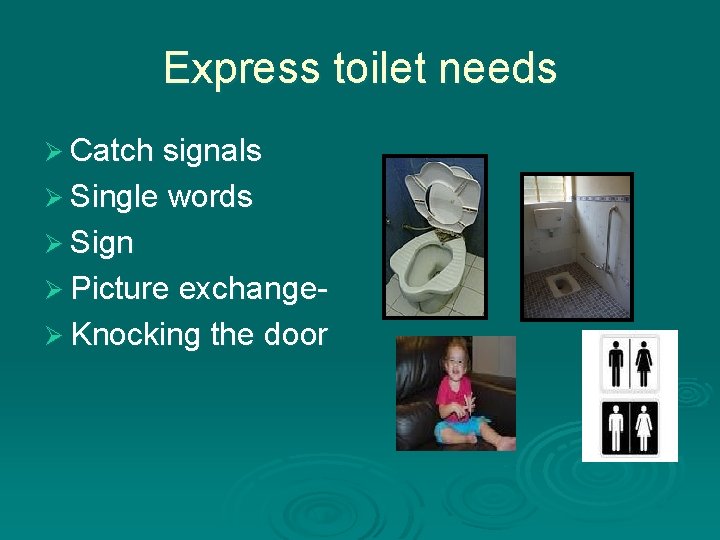
Express toilet needs Ø Catch signals Ø Single words Ø Sign Ø Picture exchangeØ Knocking the door
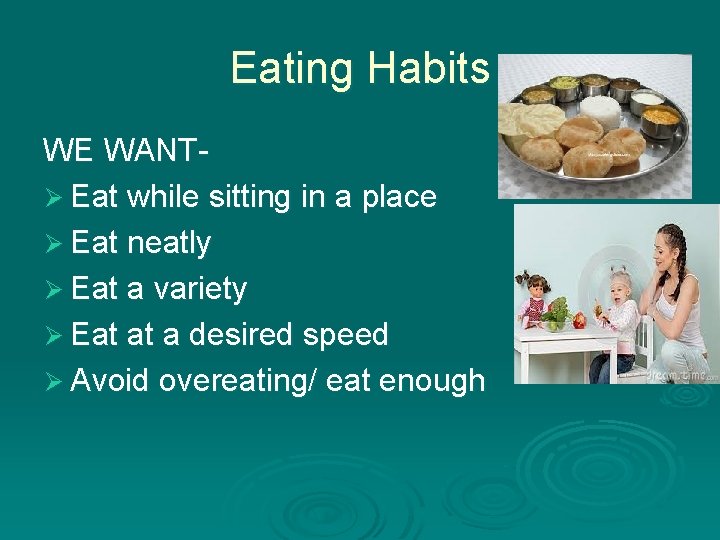
Eating Habits WE WANTØ Eat while sitting in a place Ø Eat neatly Ø Eat a variety Ø Eat at a desired speed Ø Avoid overeating/ eat enough
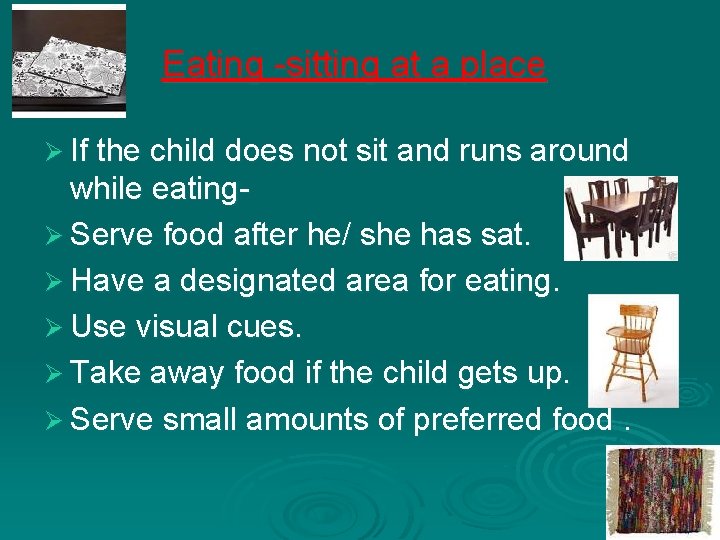
Eating -sitting at a place Ø If the child does not sit and runs around while eatingØ Serve food after he/ she has sat. Ø Have a designated area for eating. Ø Use visual cues. Ø Take away food if the child gets up. Ø Serve small amounts of preferred food.
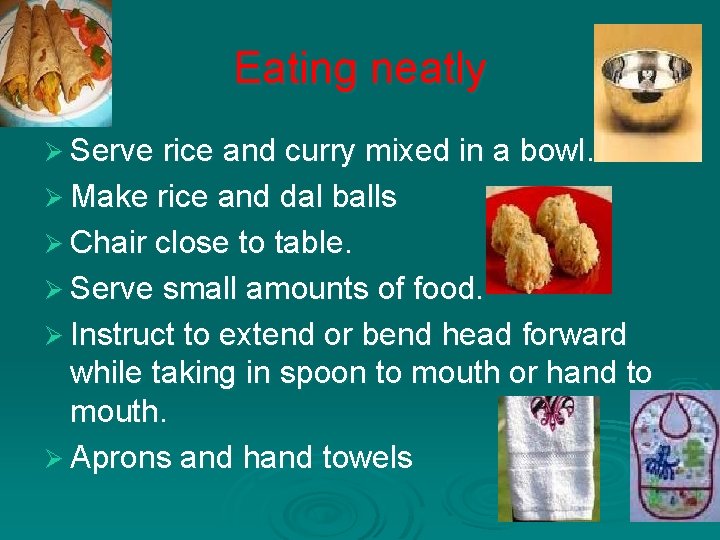
Eating neatly Ø Serve rice and curry mixed in a bowl. Ø Make rice and dal balls Ø Chair close to table. Ø Serve small amounts of food. Ø Instruct to extend or bend head forward while taking in spoon to mouth or hand to mouth. Ø Aprons and hand towels
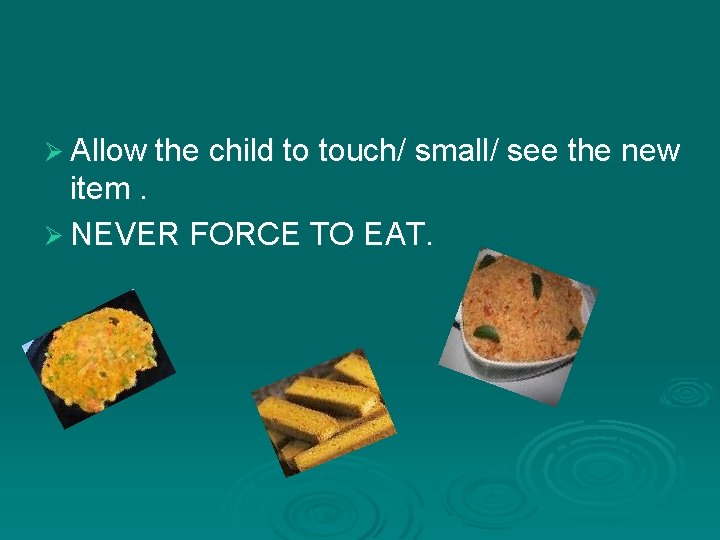
Eat variety of food Check whether any sensory problem. Ø Give small amounts of new food. Ø Reward eating of the small amount of new food with a preferred reinforcer. Ø Select a new food that is somewhat similar to the old one Ø Dosa- bason cheela- idli-pohas. Ø Bread- rusks- stuffed chapati- chapatti and curry Ø
Ø Allow the child to touch/ small/ see the new item. Ø NEVER FORCE TO EAT.
OVER EATING It is often a way of passing time. Ø Plan the activities for the child Ø Meal times need to be visually presented. Ø Structure the environment. Ø Do not have any junk food available. Ø Family will need to be disciplined reg meal times Ø Never allow the child to eat from others’ plates. Ø
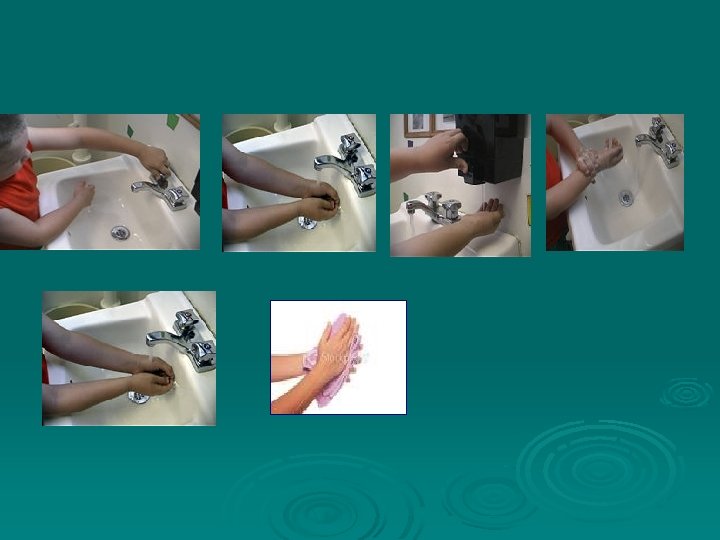
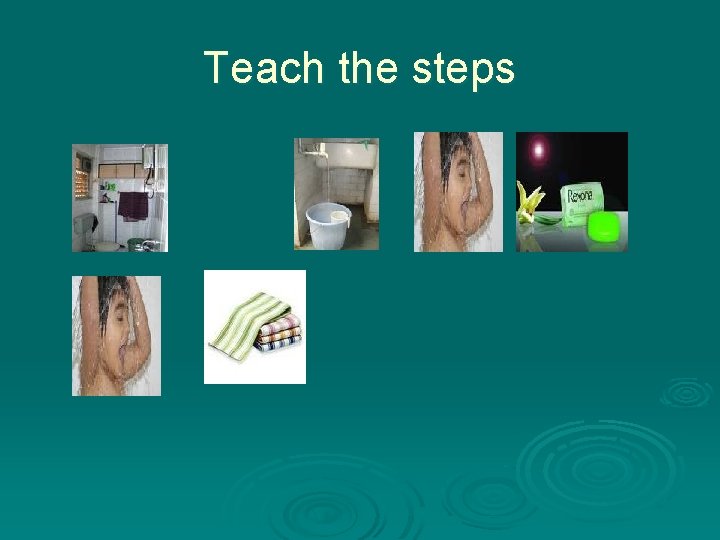
Bath time Ø Sensory issues need to be ruled out. Ø Pour water Ø Applying soap Ø Cleaning self Ø Pour water Ø Use towel Ø Instructions / id of body parts
Teach the steps
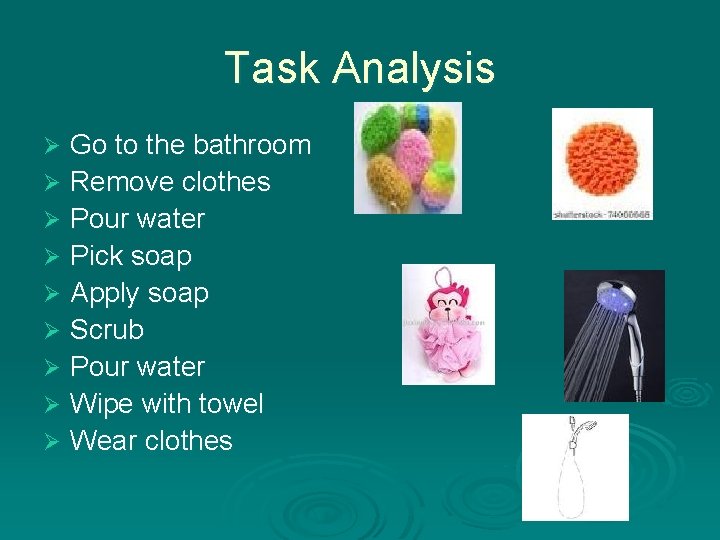
Task Analysis Go to the bathroom Ø Remove clothes Ø Pour water Ø Pick soap Ø Apply soap Ø Scrub Ø Pour water Ø Wipe with towel Ø Wear clothes Ø
BATHING Try different kinds of soaps, lotions, sponges, brushes. Ø Bath with mug vs. shower If the child wants so. Ø After bath, wrap in soft towel or linen Ø Pat dry if the child avoids rubs. Ø Try to figure out what bothers the child- head bath, rubbing towel or soap? Ø It could also be a wet floor that bothers him. Ø
Ø Find out if there is anything that bothers the child Example-sound of filling water, touch, the bathroom structure. Ø Use sponge/ fill water in advance/ prepare the child for contact/ stand in front/ give gentle prompts/ pass string through the soap and put around the child’s neck
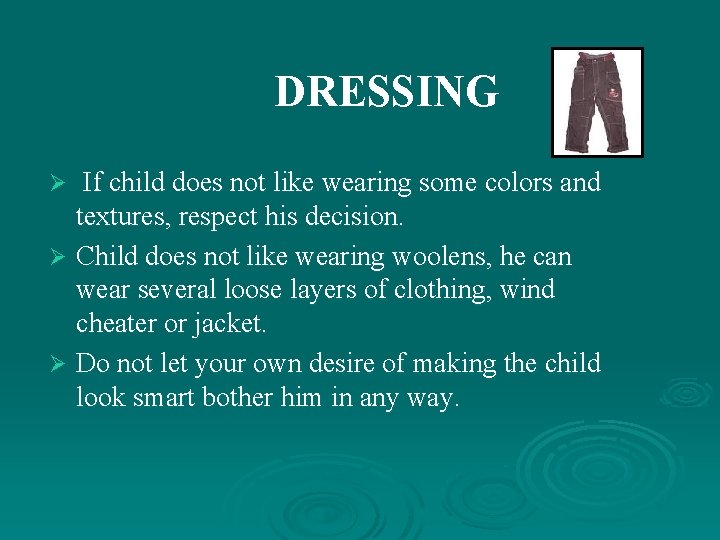
DRESSING If child does not like wearing some colors and textures, respect his decision. Ø Child does not like wearing woolens, he can wear several loose layers of clothing, wind cheater or jacket. Ø Do not let your own desire of making the child look smart bother him in any way. Ø
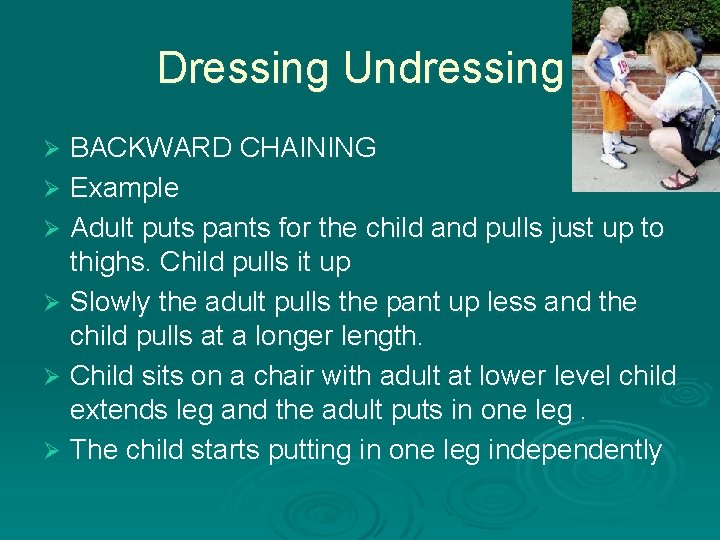
Dressing Undressing BACKWARD CHAINING Ø Example Ø Adult puts pants for the child and pulls just up to thighs. Child pulls it up Ø Slowly the adult pulls the pant up less and the child pulls at a longer length. Ø Child sits on a chair with adult at lower level child extends leg and the adult puts in one leg. Ø The child starts putting in one leg independently Ø
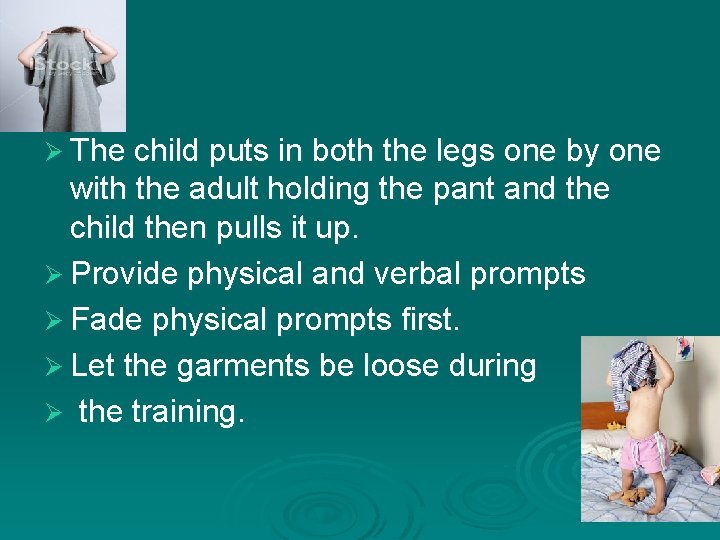
Ø The child puts in both the legs one by one with the adult holding the pant and the child then pulls it up. Ø Provide physical and verbal prompts Ø Fade physical prompts first. Ø Let the garments be loose during Ø the training.
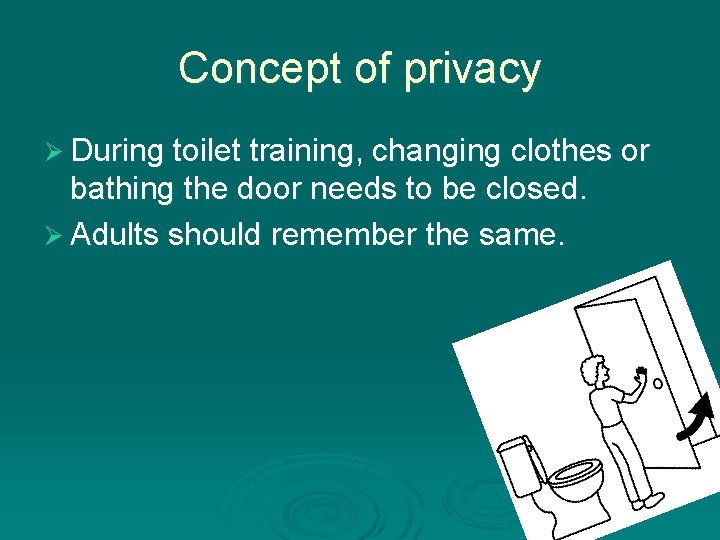
Concept of privacy Ø During toilet training, changing clothes or bathing the door needs to be closed. Ø Adults should remember the same.
Brushing Ø Try brushes of different kids of textures. Ø Soak the new tooth brush in water before use. Ø Vibrating tooth brushes may be tried. Ø Massage gums at other times. Ø Try toothpaste, powders, gels of different flavors
BRUSHING-contd Ø Instead of toothbrush, finger may be used. Ø Traditional methods: Datoon, Mustard oil and Salt can be used Ø Make the child drink plenty of water. Ø Avoid colas and chocolates.
Task Analysis for Brushing Teeth 1. Get your toothbrush. 2. Take out toothpaste. 3. Unscrew toothpaste cap. 4. Lay cap on countertop. 5. Turn on cold water.
Ø Take out your toothbrush. Ø Wet bristles of toothbrush. Ø Put toothpaste on toothbrush. Ø Lay toothpaste tube on countertop. Ø Bring toothbrush with paste up to mouth.
Ø Begin brushing teeth. Ø Left back: top – outside then inside Left back: bottom – outside then inside Ø Then front: top – outside then inside Ø Then front: bottom – outside then inside Then right back: top – outside then inside Then right back: bottom – outside then inside Ø Instruction- “do this”- modeling
Ø Spit toothpaste into sink Ø Rinse toothbrush under water stream. Ø Shake water out of brush.
Specific activities Ø 1. 2. 3. 4. 5. Nail cutting Cut nails after bath Massage hands Turn taking with sibling or parents Cut one nail per day Cut nails while sleeping
Hair cutting Ø See what bothers the child Ø Sound of scissors/spray of water Ø Touch or the falling hair Ø Prepare the child Ø Eliminate distractions Ø Use structure/ social stories
Shaving Backward chaining or forward chaining steps 1. 2. 3. 4. 5. Pick shaving cream Apply shaving cream Use the razor Movements of razors Wash face
Other issues for independent Functioning Mainly preparing for long term –adult life Prepare a snack Move independently Follow routines Take care of belongings Carry messages Shopping Prepare own bed/ wash clothes/ utensils/ fill water for drinking Ø Leisure skills Ø Ø Ø Ø
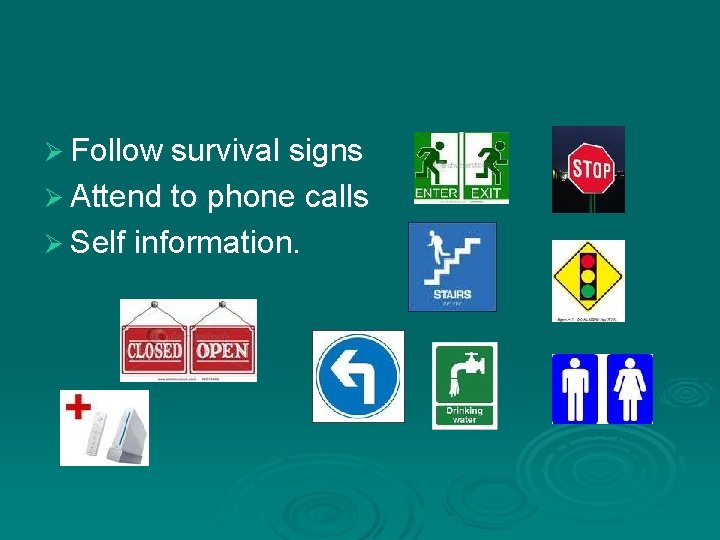
Ø Follow survival signs Ø Attend to phone calls Ø Self information.