
Active Vibration Isolation using a Suspension Point Interferometer
Active Vibration Isolation using a Suspension Point Interferometer Youichi Aso Dept. Physics, University of Tokyo Feb. 20 2004 ASPEN Winter Conference on Gravitational Waves @ ASPEN Center for Physics LIGO-G 040227 -00 -Z
Introduction Suspension Point Interferometer (SPI) Active vibration isolation method using a laser interferometer itself Originally proposed by Prof. R. Drever Low Freq. , Improve Stability, Cryogenic Interferometer Prototype Experiments Current experiment: Combination of SPI and VSPI
Contents SPI – Principle – Advantages, Applications – Proto-Type Experiment VSPI – Principle – Proto-Type Experiment SPI+VSPI – Overview – Experimental apparatus – Development Status, Future plans Summary
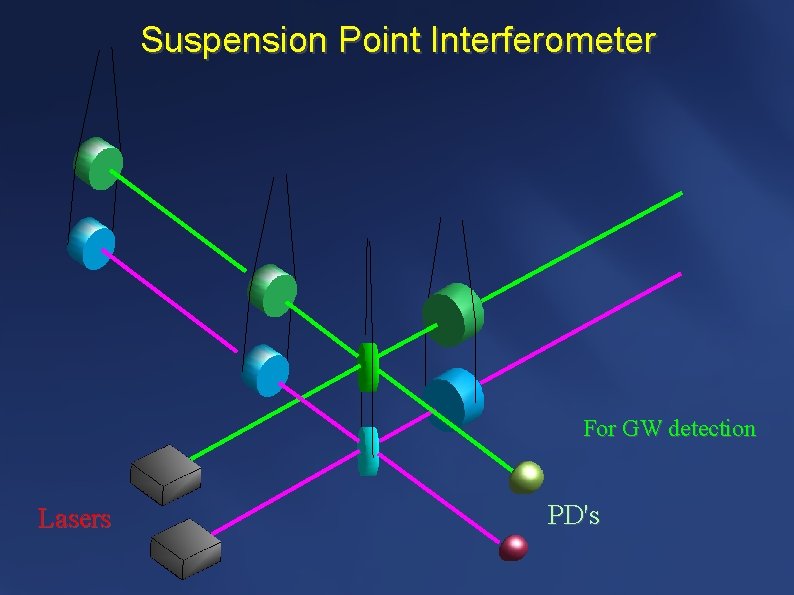
Suspension Point Interferometer For GW detection Lasers PD's

Working principle of SPI Lock SPI Rigid bar Laser
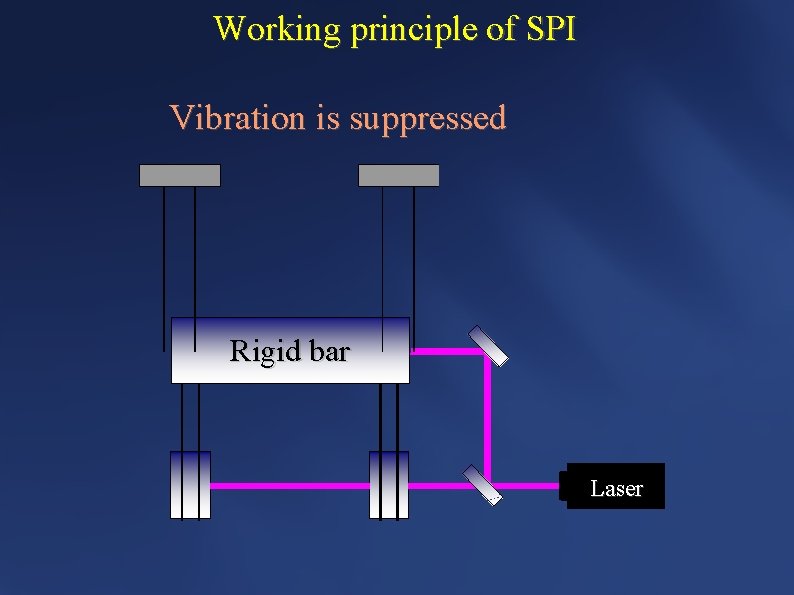
Working principle of SPI Vibration is suppressed Rigid bar Laser
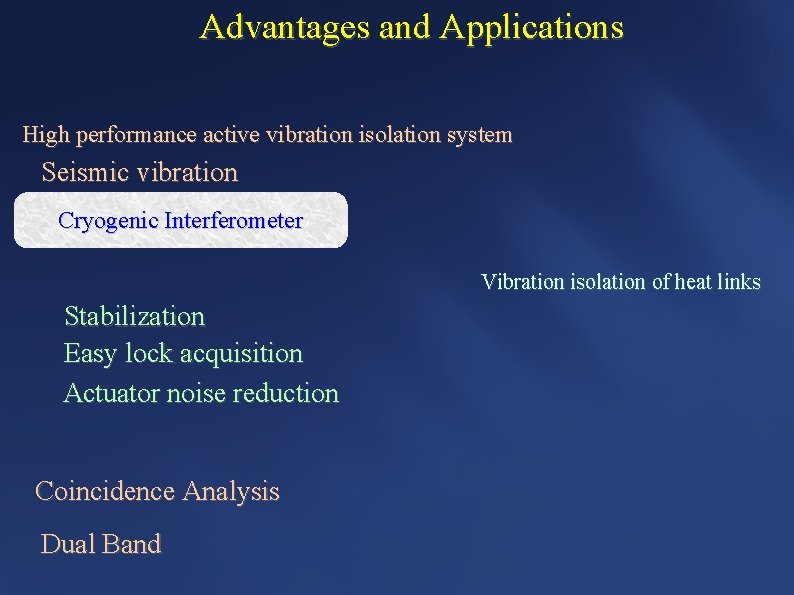
Advantages and Applications High performance active vibration isolation system Seismic vibration Cryogenic Interferometer Vibration isolation of heat links Stabilization Easy lock acquisition Actuator noise reduction Coincidence Analysis Dual Band
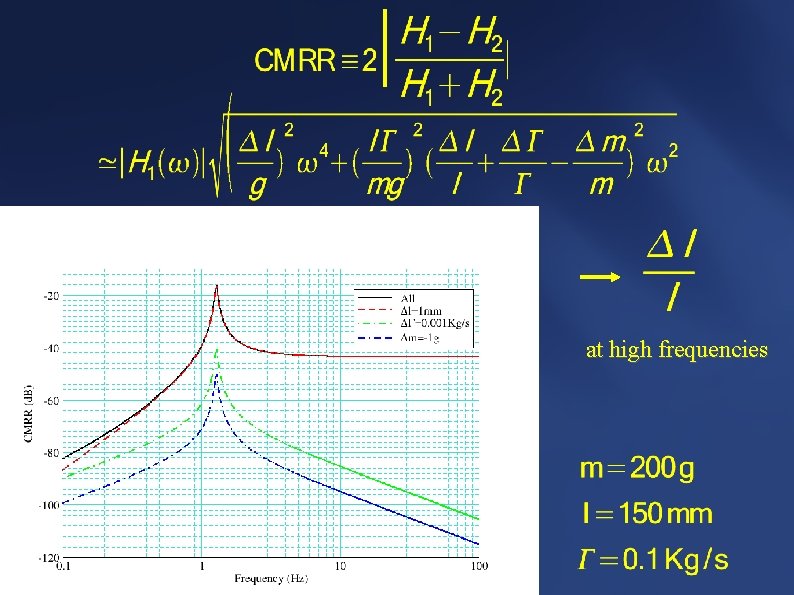
Theoretical performance Main factors Control Gain CMRR Coupling from other degrees of freedom
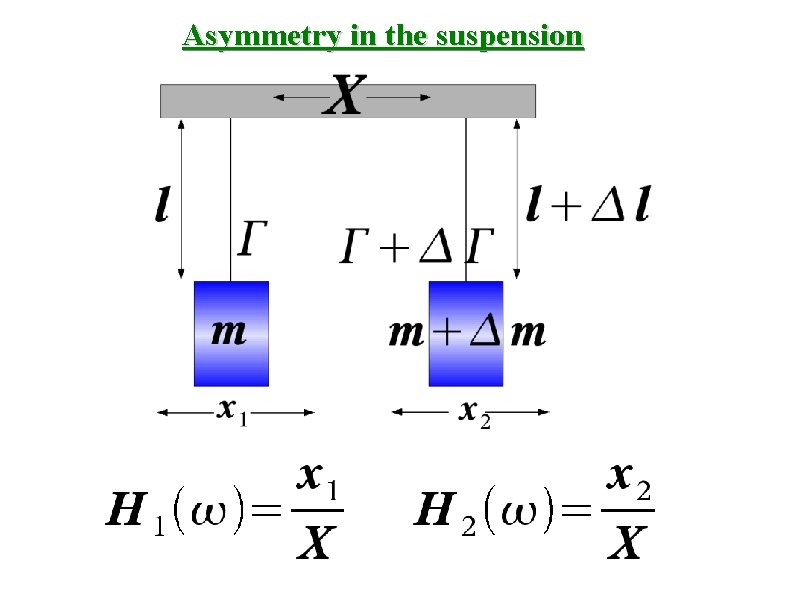
Asymmetry in the suspension
at high frequencies
Prototype experiment

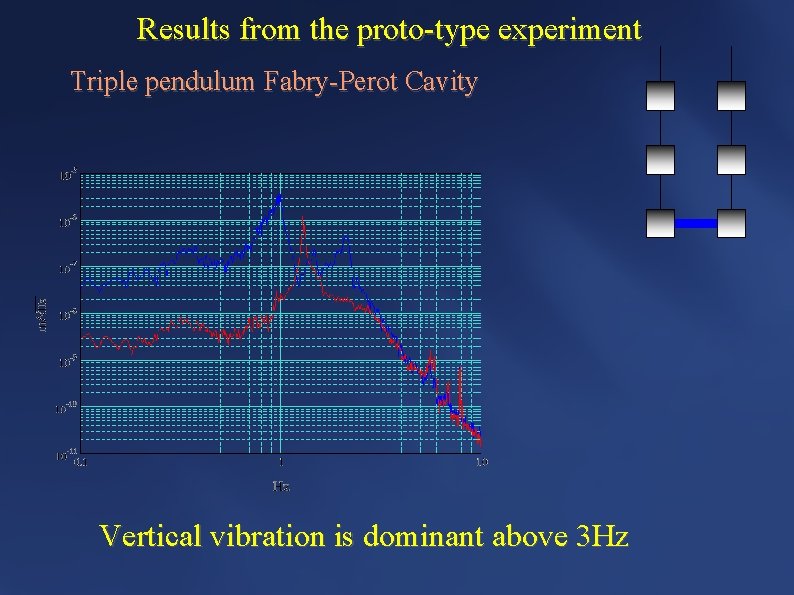
Results from the proto-type experiment Triple pendulum Fabry-Perot Cavity Vertical vibration is dominant above 3 Hz
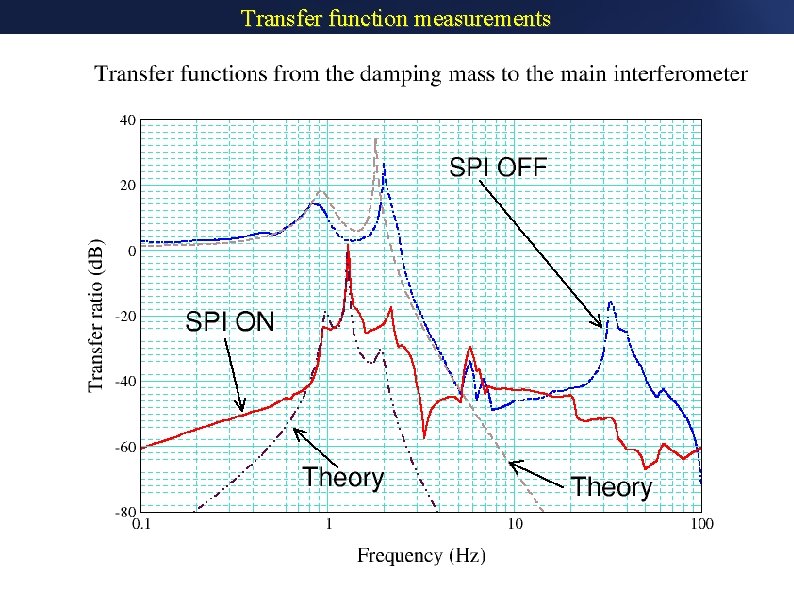
Transfer function measurements

WFS test
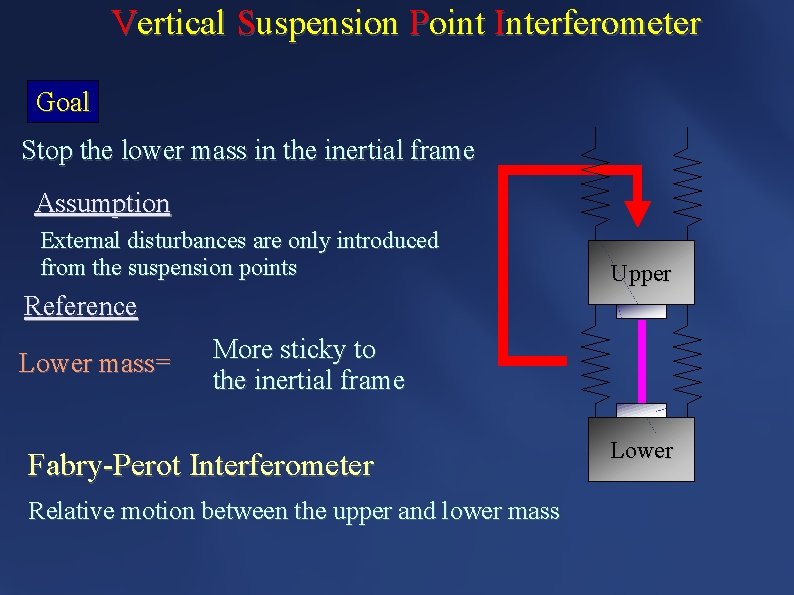
Vertical Suspension Point Interferometer Goal Stop the lower mass in the inertial frame Assumption External disturbances are only introduced from the suspension points Upper Reference Lower mass= More sticky to the inertial frame Fabry-Perot Interferometer Relative motion between the upper and lower mass Lower
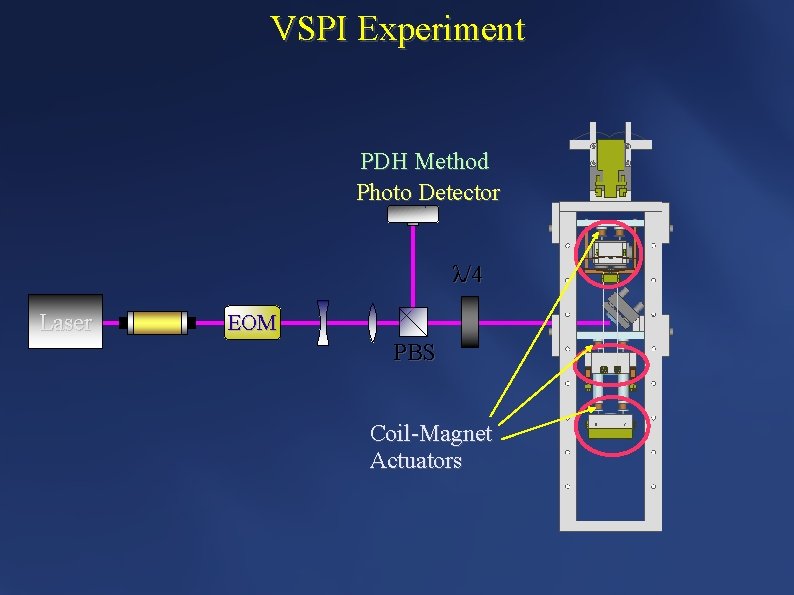
VSPI Experiment PDH Method Photo Detector λ/4 Laser EOM PBS Coil-Magnet Actuators
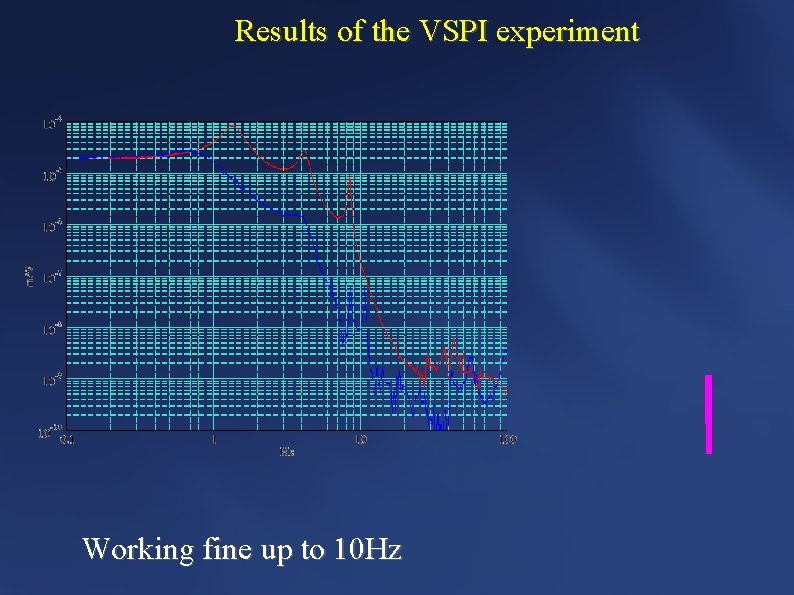
Results of the VSPI experiment Working fine up to 10 Hz
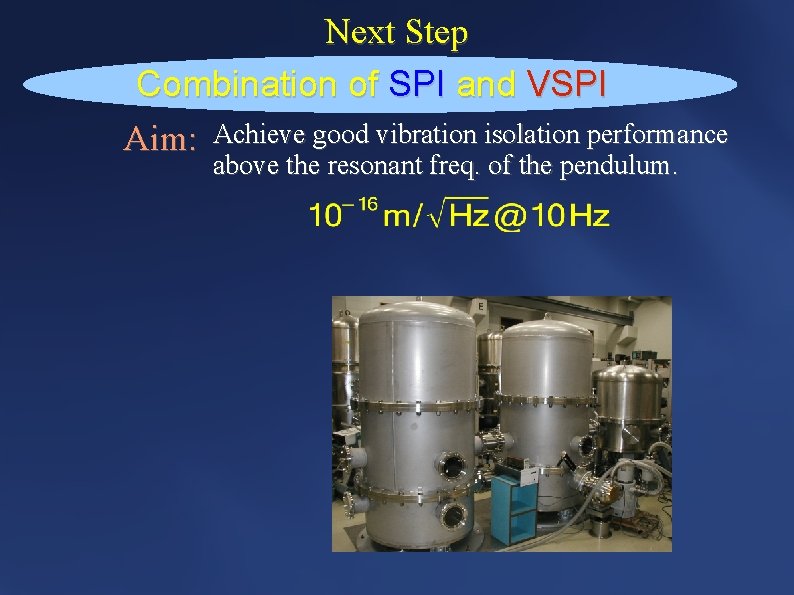
Next Step Combination of SPI and VSPI Aim: Achieve good vibration isolation performance above the resonant freq. of the pendulum.
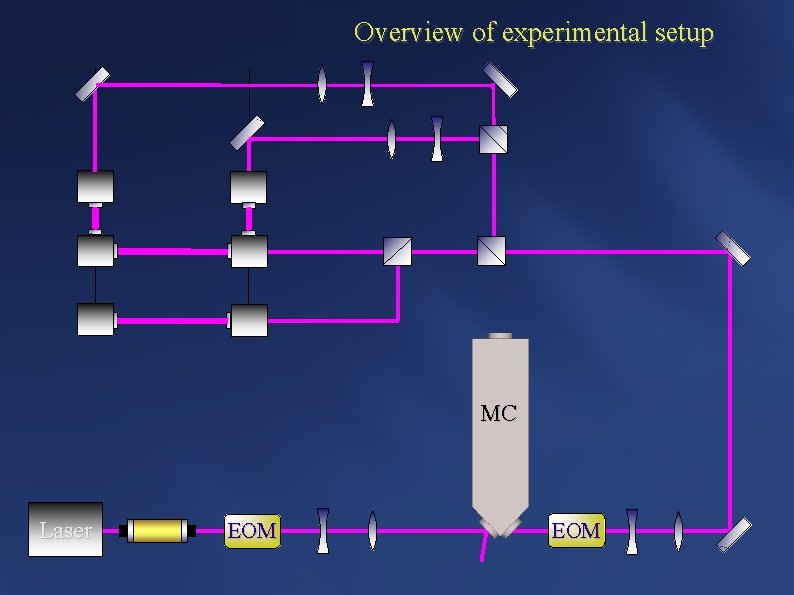
Overview of experimental setup MC Laser EOM
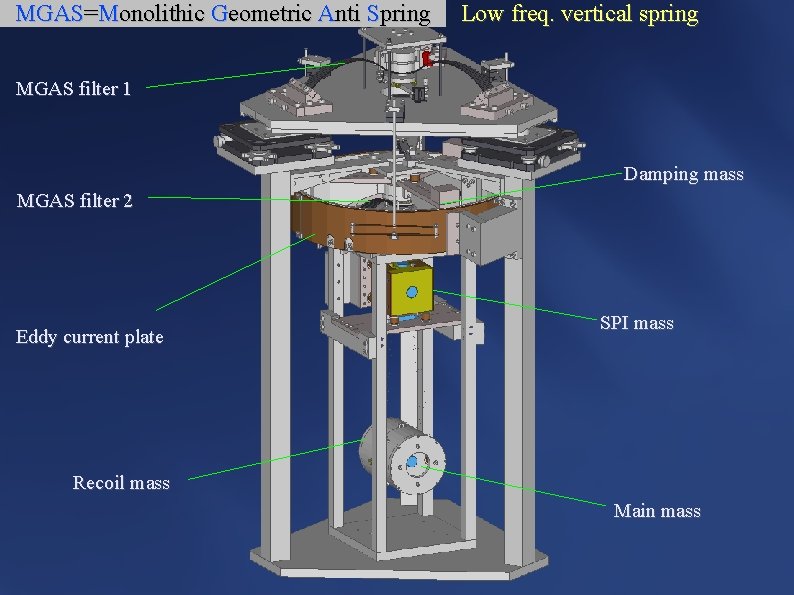
MGAS=Monolithic Geometric Anti Spring Low freq. vertical spring MGAS filter 1 Damping mass MGAS filter 2 Eddy current plate SPI mass Recoil mass Main mass
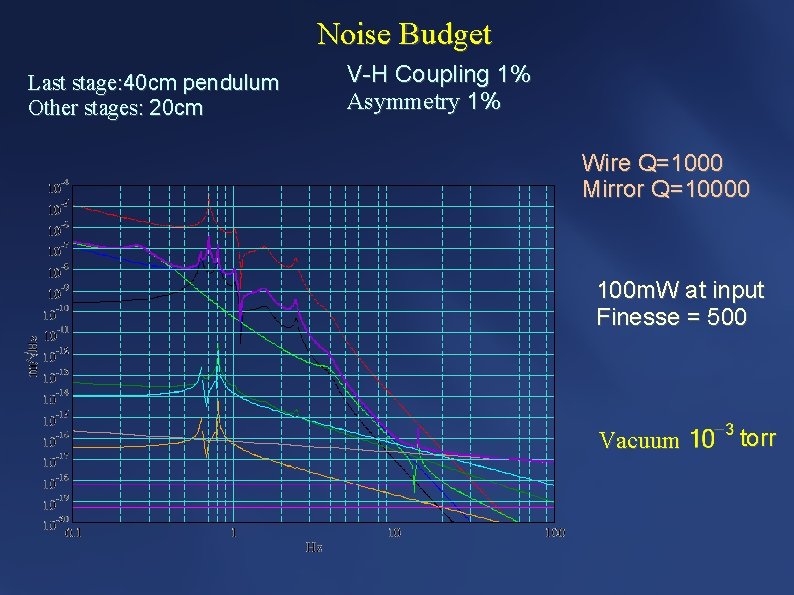
Noise Budget Last stage: 40 cm pendulum Other stages: 20 cm V-H Coupling 1% Asymmetry 1% Wire Q=1000 Mirror Q=10000 100 m. W at input Finesse = 500 Vacuum torr
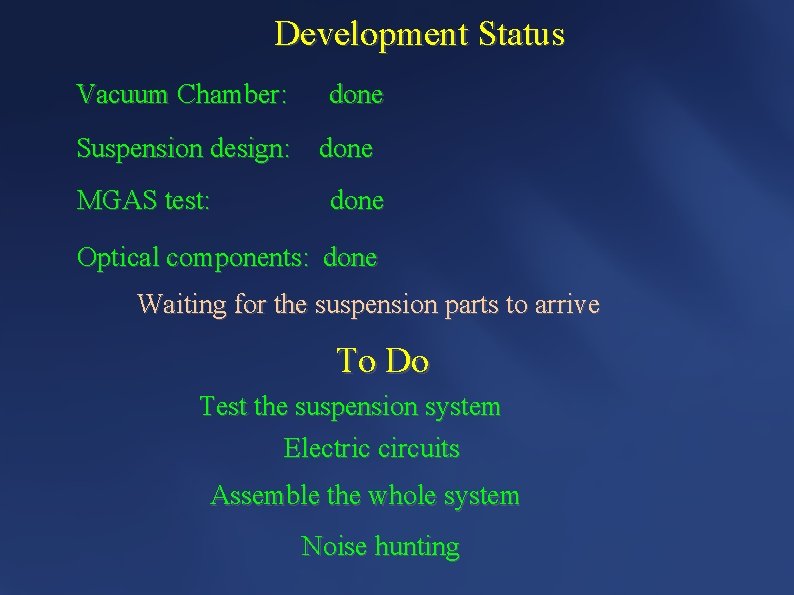
Development Status Vacuum Chamber: done Suspension design: done MGAS test: done Optical components: done Waiting for the suspension parts to arrive To Do Test the suspension system Electric circuits Assemble the whole system Noise hunting
Summary SPI, VSPI High performance active vibration isolation scheme Next generation detectors Prototype experiments Good results below the resonant freq. of the pendulums Limited by vertical vibration Next experiment SPI + MGASF + VSPI better vertical vibration isolation Test and assembly of the suspension is going on
- Slides: 24