
Active Transport 1 ACTIVE TRANSPORT is the B
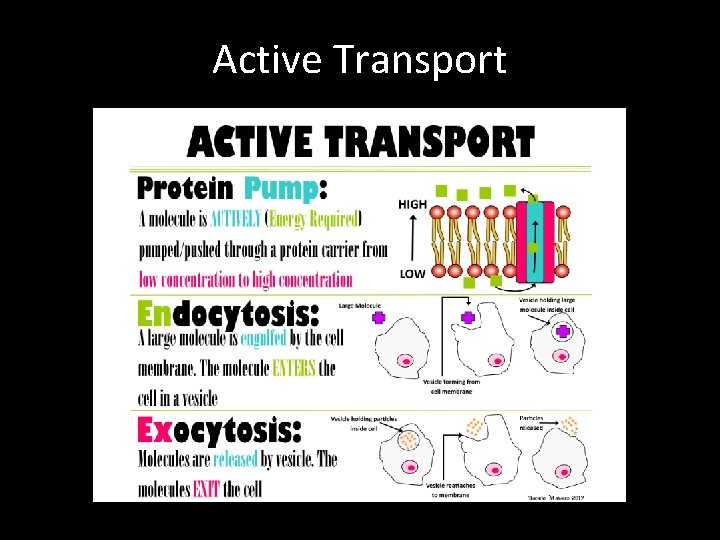
Active Transport
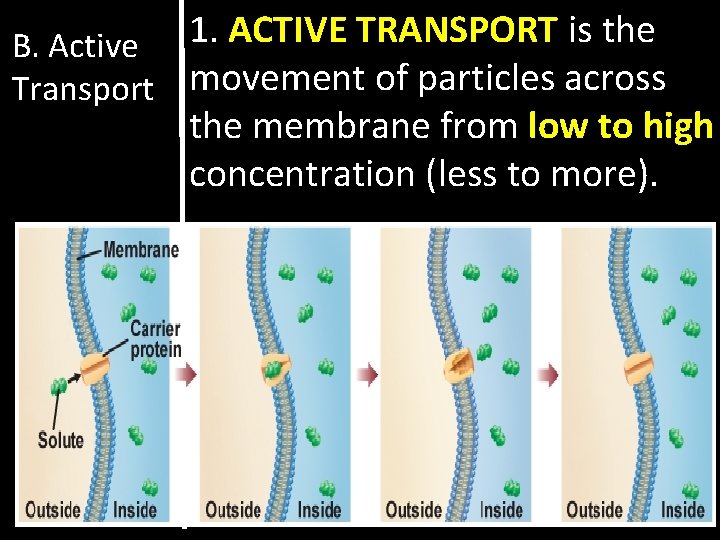
1. ACTIVE TRANSPORT is the B. Active Transport movement of particles across the membrane from low to high concentration (less to more).
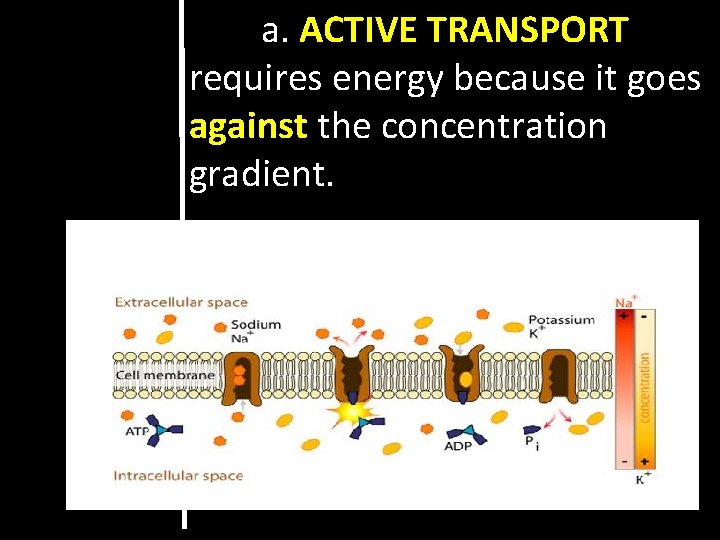
a. ACTIVE TRANSPORT requires energy because it goes against the concentration gradient.
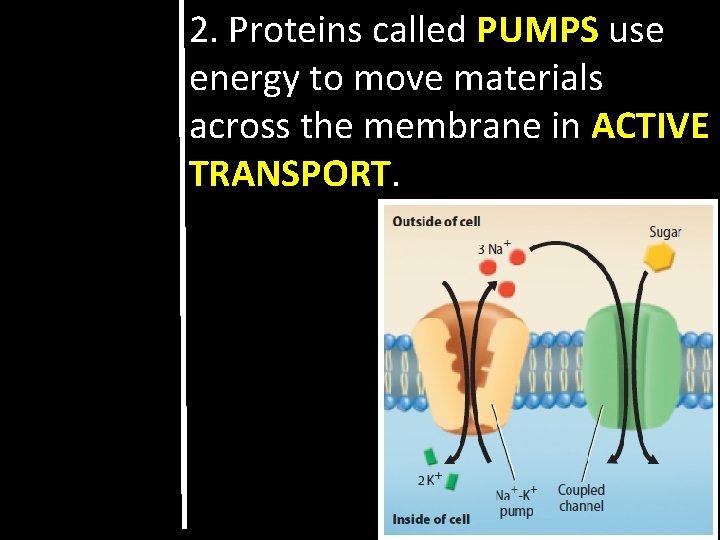
2. Proteins called PUMPS use energy to move materials across the membrane in ACTIVE TRANSPORT.
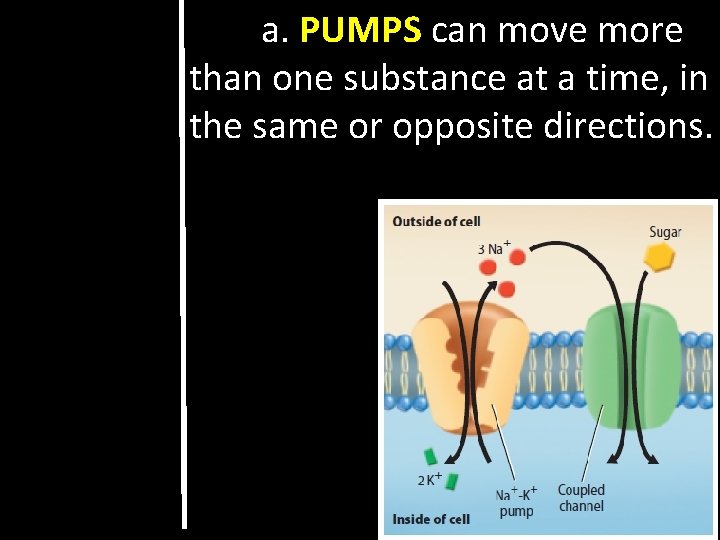
a. PUMPS can move more than one substance at a time, in the same or opposite directions.
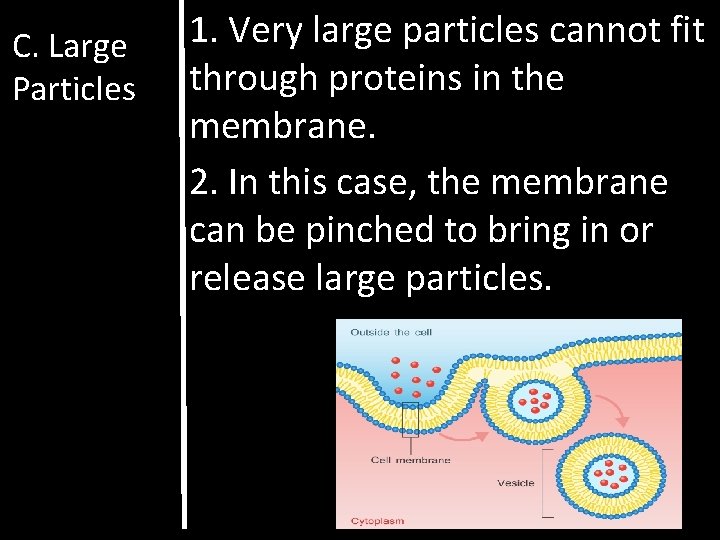
C. Large Particles 1. Very large particles cannot fit through proteins in the membrane. 2. In this case, the membrane can be pinched to bring in or release large particles.
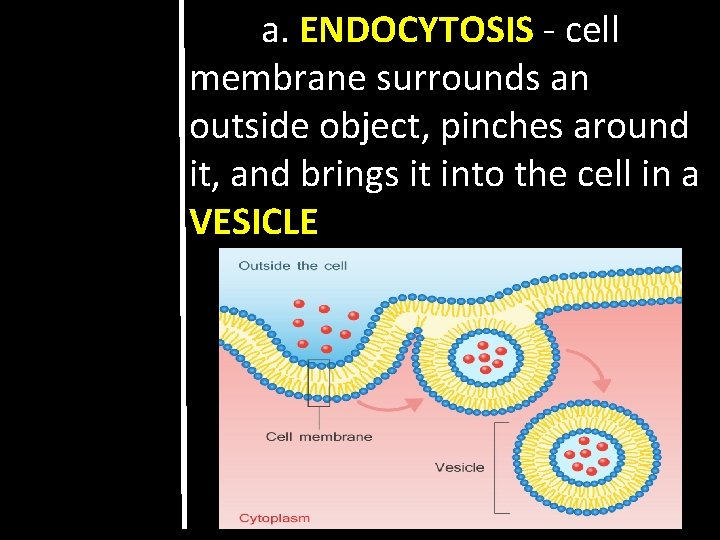
a. ENDOCYTOSIS - cell membrane surrounds an outside object, pinches around it, and brings it into the cell in a VESICLE

Watch WBC’s chase bacteria!
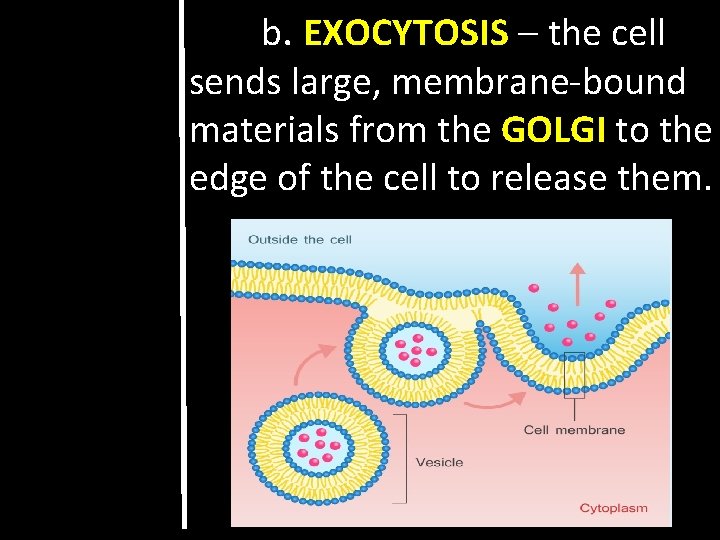
b. EXOCYTOSIS – the cell sends large, membrane-bound materials from the GOLGI to the edge of the cell to release them.
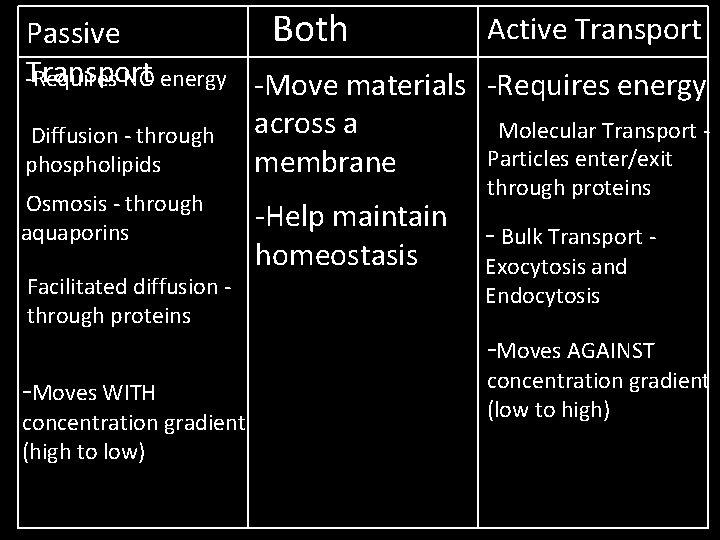
Active Transport Both Passive Transport -Requires NO energy -Move materials -Requires energy across a Molecular Transport Diffusion - through Particles enter/exit membrane phospholipids Osmosis - through aquaporins Facilitated diffusion through proteins -Moves WITH concentration gradient (high to low) -Help maintain homeostasis through proteins - Bulk Transport Exocytosis and Endocytosis -Moves AGAINST concentration gradient (low to high)
- Slides: 10