
Active Suspension System Test Platform Controls Senior Presentation
![17 Frequency Response Actuator Velocity [d. B] 16 15 14 Red => Slope from](https://slidetodoc.com/presentation_image_h2/b647292eb5aa22d68df97b65fee8b1ca/image-11.jpg "17 Frequency Response Actuator Velocity [d. B] 16 15 14 Red => Slope from")
![20 Frequency Response Actuator Velocity [d. B] 18 -3 d. B point at ~](https://slidetodoc.com/presentation_image_h2/b647292eb5aa22d68df97b65fee8b1ca/image-12.jpg "20 Frequency Response Actuator Velocity [d. B] 18 -3 d. B point at ~")





- Slides: 32
Active Suspension System Test Platform – Controls Senior Presentation Project Member: Jerry L. Campbell Advisor: Mr. Steven Gutschlag Presented: 29 April 2004
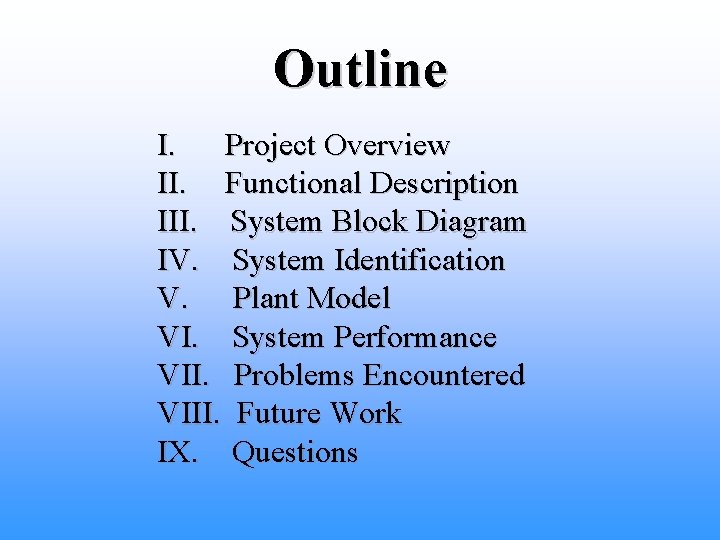
Outline I. Project Overview II. Functional Description III. System Block Diagram IV. System Identification V. Plant Model VI. System Performance VII. Problems Encountered VIII. Future Work IX. Questions
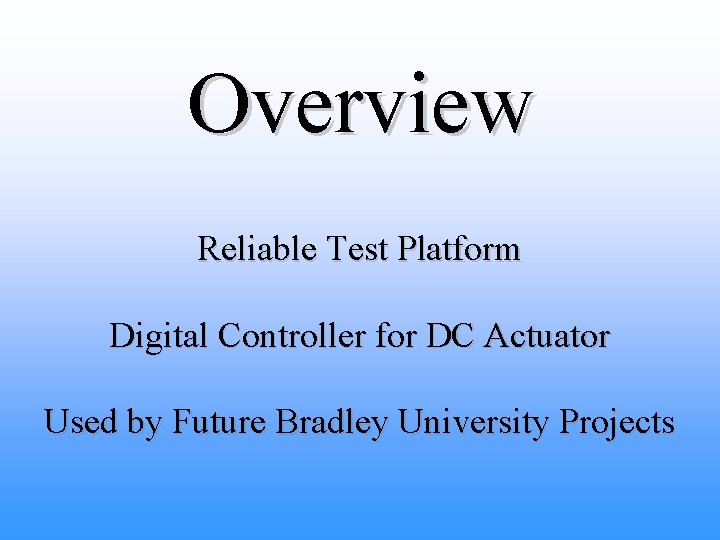
Overview Reliable Test Platform Digital Controller for DC Actuator Used by Future Bradley University Projects
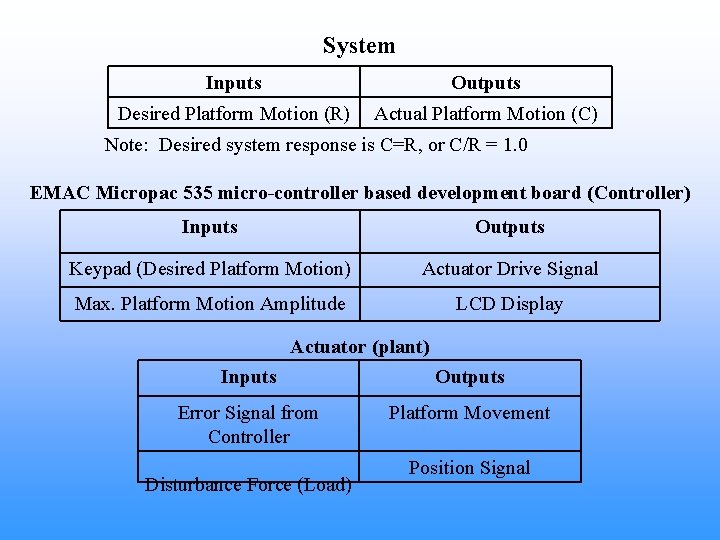
System Inputs Outputs Desired Platform Motion (R) Actual Platform Motion (C) Note: Desired system response is C=R, or C/R = 1. 0 EMAC Micropac 535 micro-controller based development board (Controller) Inputs Outputs Keypad (Desired Platform Motion) Actuator Drive Signal Max. Platform Motion Amplitude LCD Display Actuator (plant) Inputs Outputs Error Signal from Controller Platform Movement Disturbance Force (Load) Position Signal
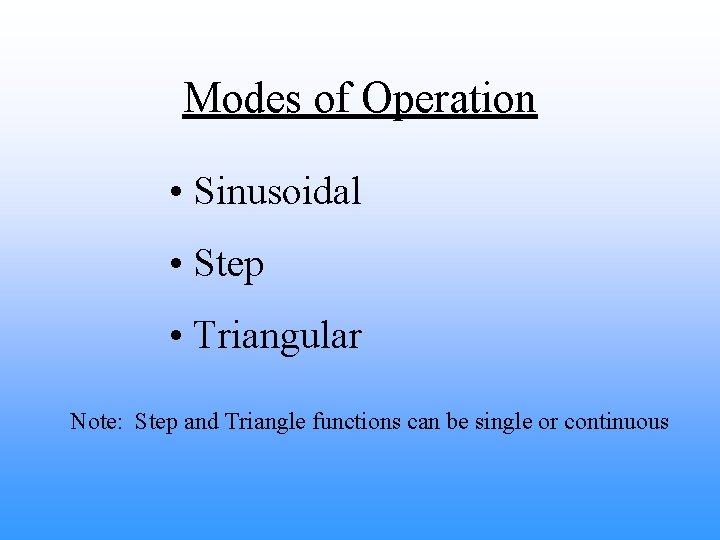
Modes of Operation • Sinusoidal • Step • Triangular Note: Step and Triangle functions can be single or continuous
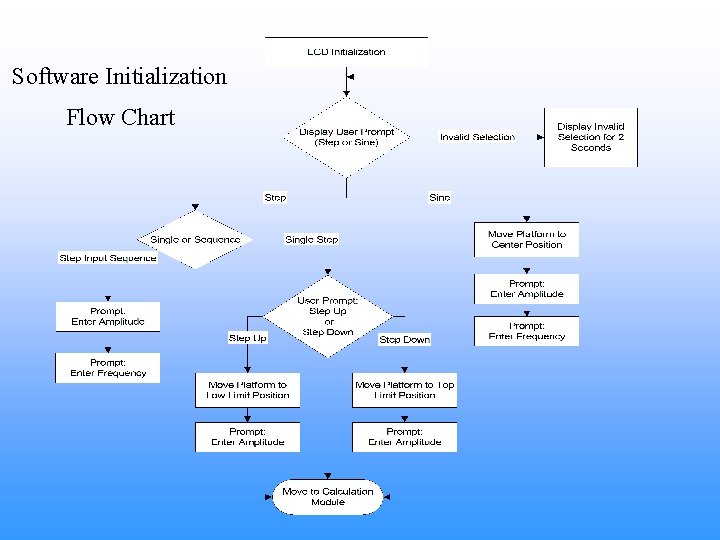
Software Initialization Flow Chart
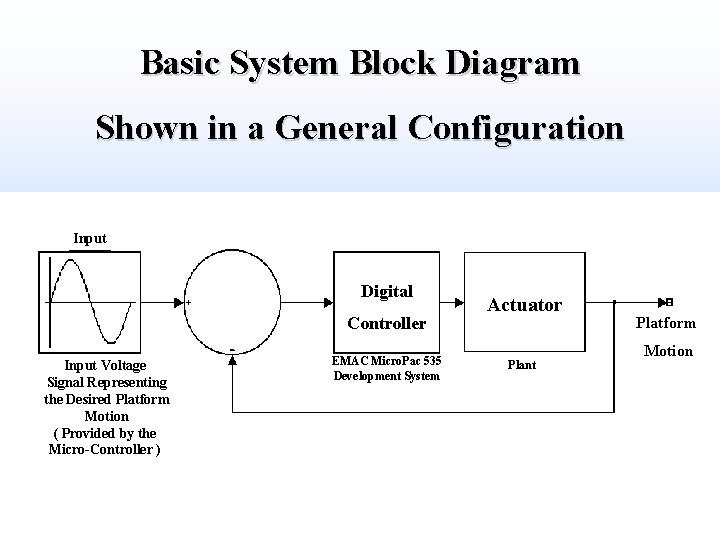
Basic System Block Diagram Shown in a General Configuration Input Digital Controller Input Voltage Signal Representing the Desired Platform Motion ( Provided by the Micro-Controller ) EMAC Micro. Pac 535 Development System Actuator Plant Platform Motion
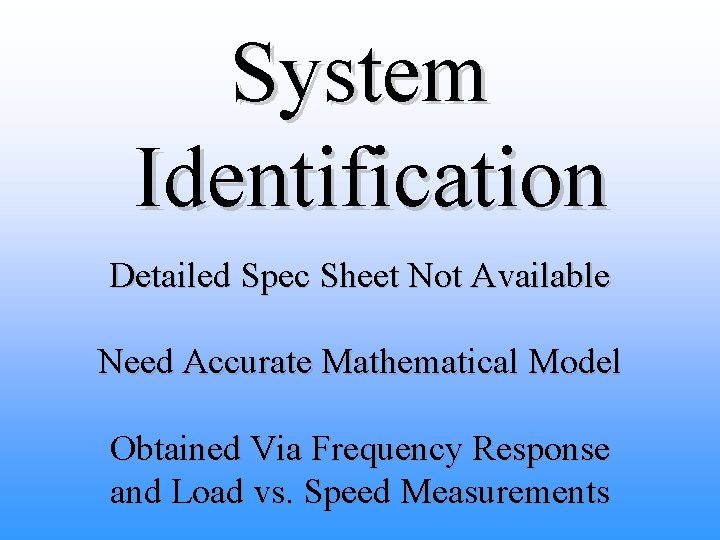
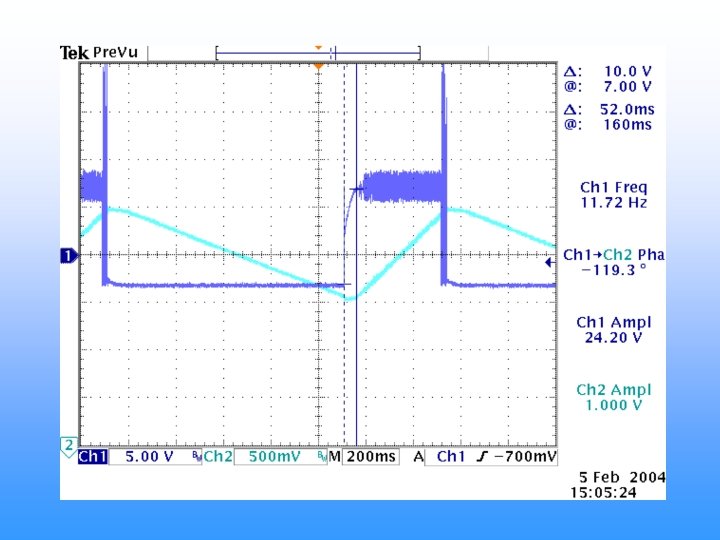
System Identification Detailed Spec Sheet Not Available Need Accurate Mathematical Model Obtained Via Frequency Response and Load vs. Speed Measurements
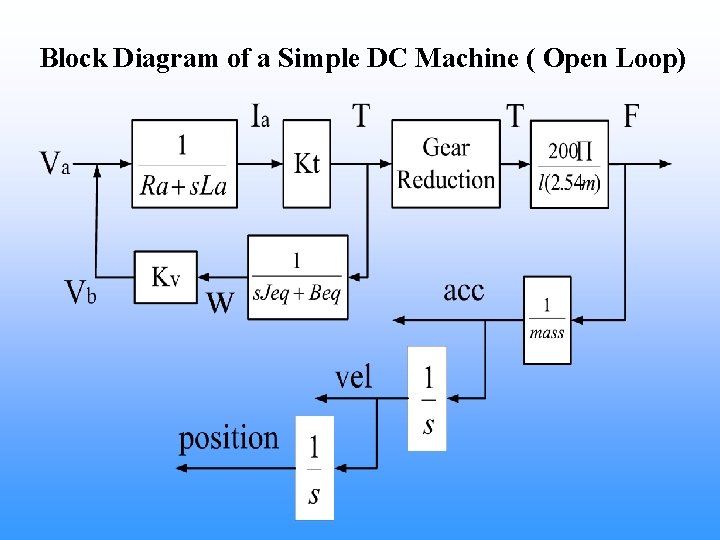
Block Diagram of a Simple DC Machine ( Open Loop)
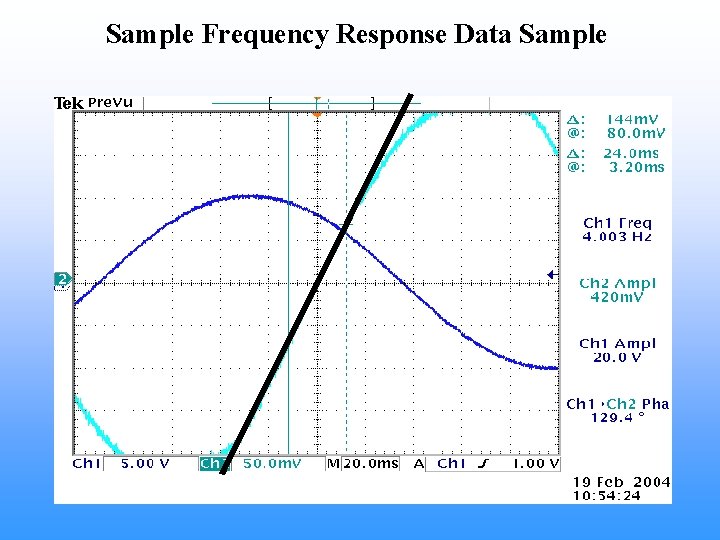
Sample Frequency Response Data Sample
17 Frequency Response Actuator Velocity [d. B] 16 15 14 Red => Slope from pencil Line Blue=> Slope from Cursors 13 12 11 10 0 10 1 10 Applied Frequency [w] 2 10
20 Frequency Response Actuator Velocity [d. B] 18 -3 d. B point at ~ 42 rad/sec 16 14 12 10 8 Red => Slope from pencil Line Blue=> Slope from Cursors 6 4 2 0 0 10 1 10 2 10 Applied Frequency [w] 3 10
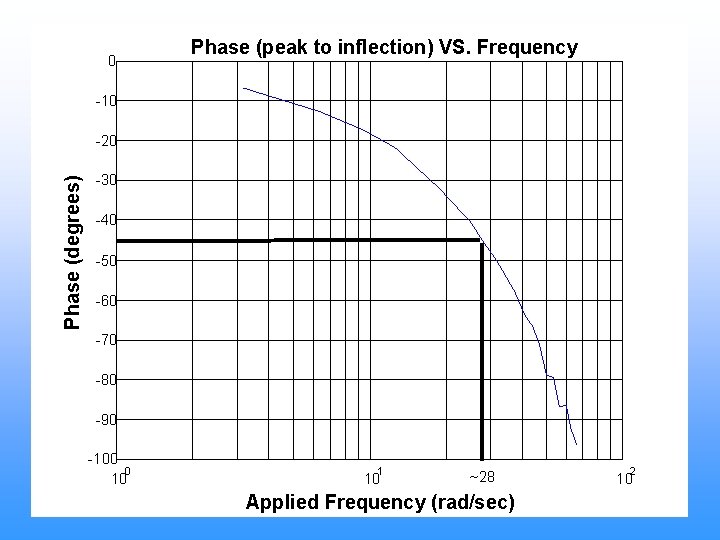
0 Phase (peak to inflection) VS. Frequency -10 Phase (degrees) -20 -30 -40 -50 -60 -70 -80 -90 -100 0 10 1 10 ~28 Applied Frequency (rad/sec) 2 10
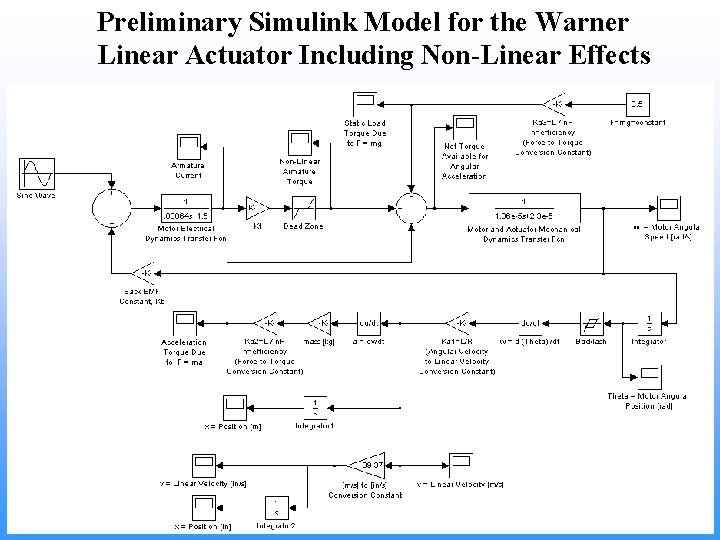
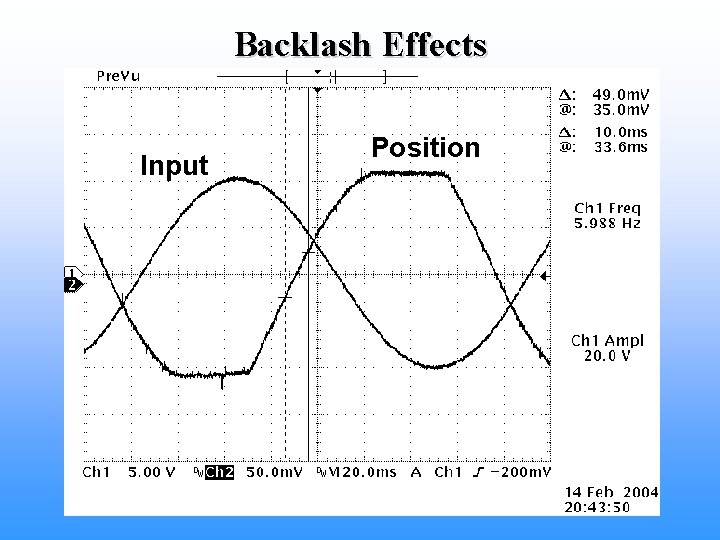
Preliminary Simulink Model for the Warner Linear Actuator Including Non-Linear Effects
Backlash Effects Input Position
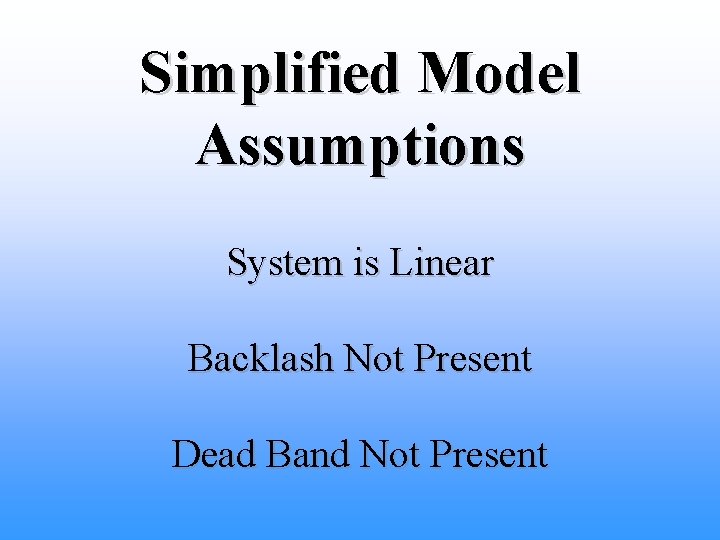
Simplified Model Assumptions System is Linear Backlash Not Present Dead Band Not Present
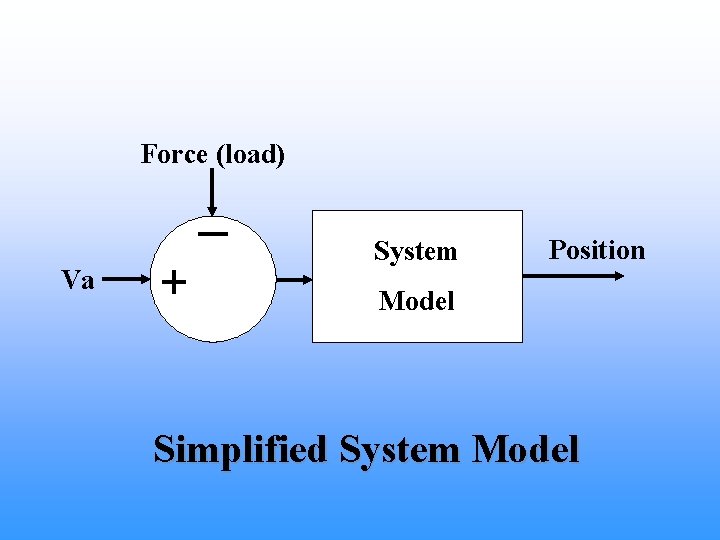
Force (load) Va System Position Model Simplified System Model
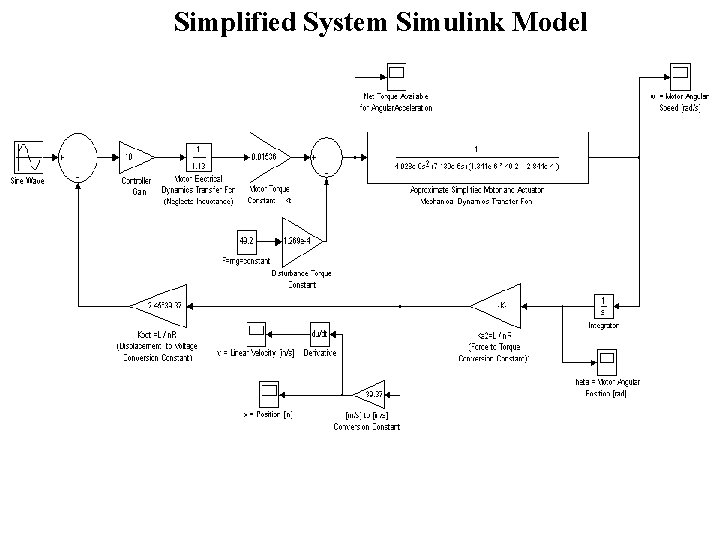
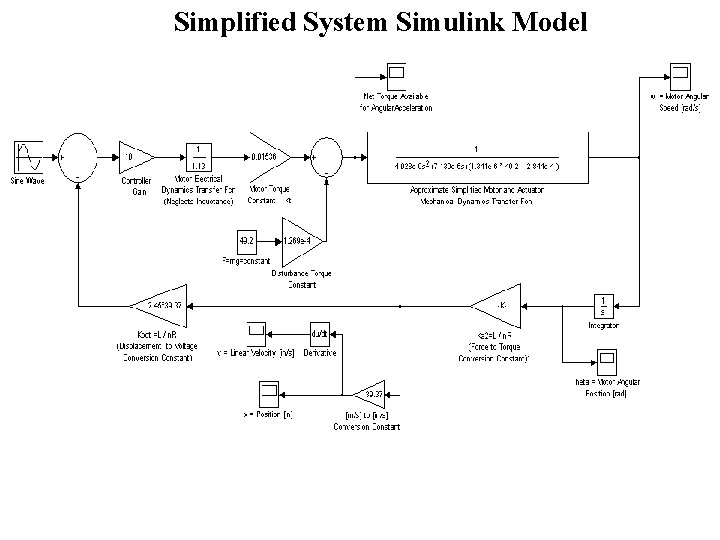
Simplified System Simulink Model
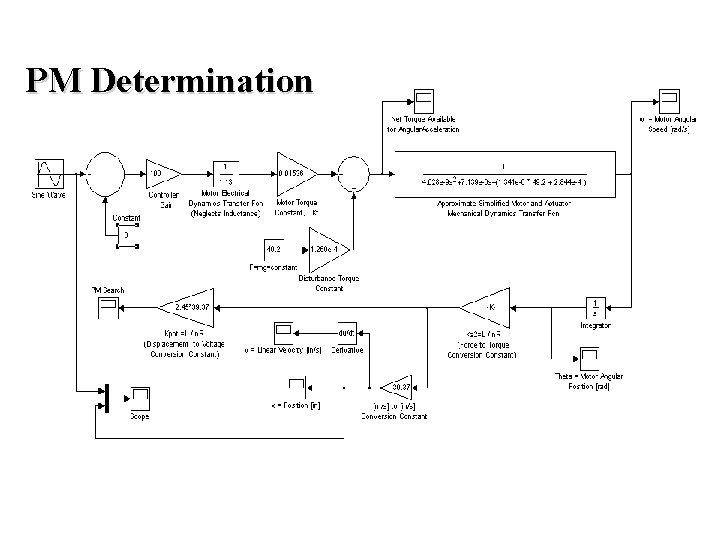
PM Determination
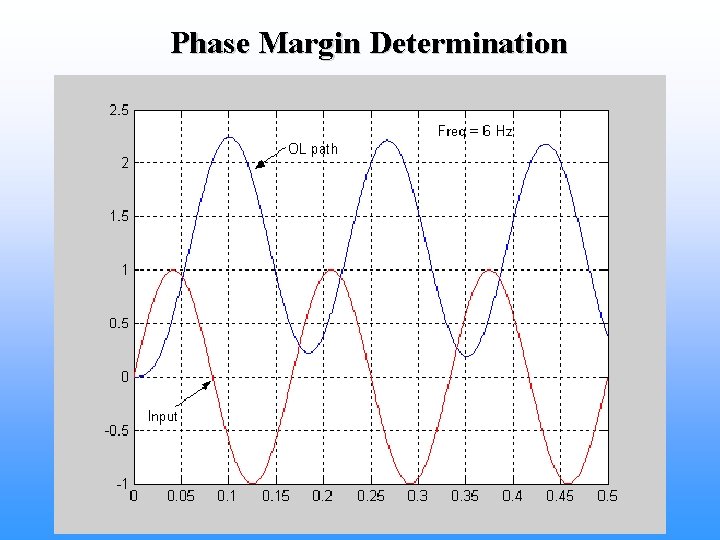
Phase Margin Determination
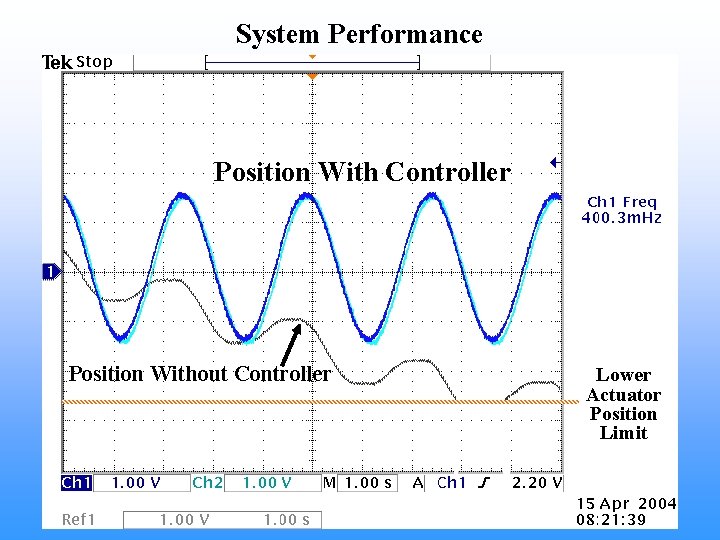
System Performance Position With Controller Position Without Controller Lower Actuator Position Limit
Simplified System Simulink Model
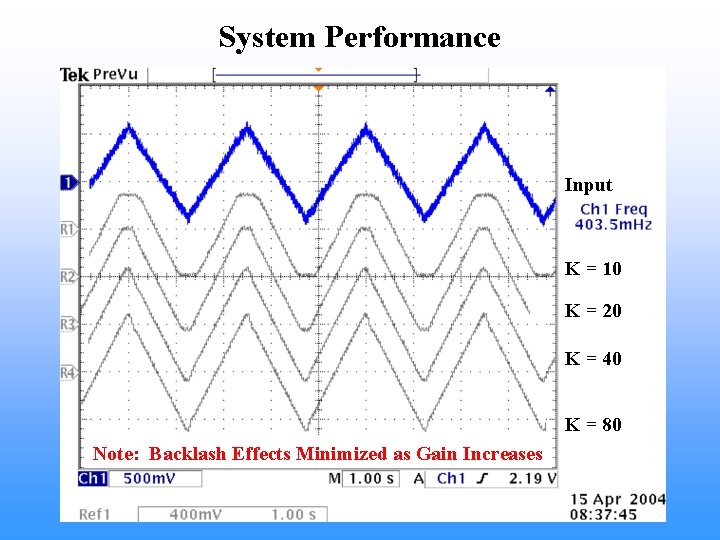
System Performance Input K = 10 K = 20 K = 40 K = 80 Note: Backlash Effects Minimized as Gain Increases
System Step Response Input K = 40 Position
Other Controller Options and Obstacles • Integrator • PI Controller
Problems Encountered Current Limiting Caused Inadequate Data Time Required for System Identification Insufficient Time Left to Implement Digital Control
Future Work Select Practical Hardware Micro-Controller Code Implement Digital Controller W/ EMAC Construct Test Platform
Questions
Questions
Questions
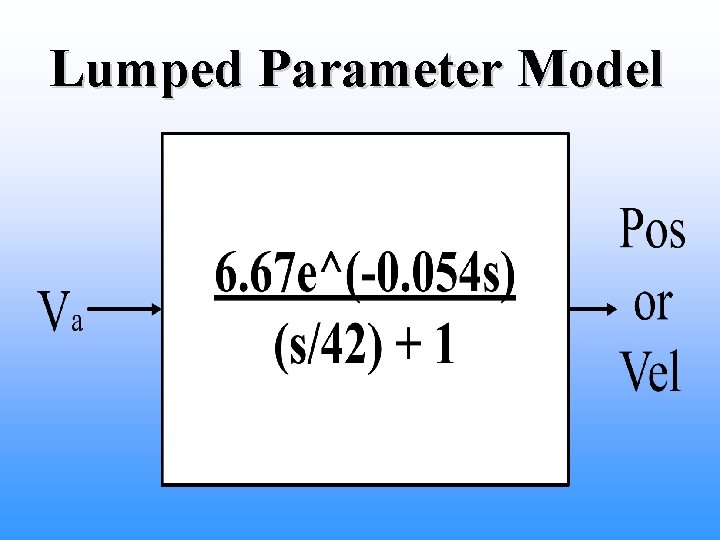
Lumped Parameter Model