
Active Surveillance for Prostate Cancer Utility of Genomic





- Slides: 43
Active Surveillance for Prostate Cancer: Utility of Genomic and Genetic Testing Brian T. Helfand MD, Ph. D Division Chief of Urology Ronald L. Chez Family and Richard Melman Family Endowed Chair of Prostate Cancer North. Shore University Health. System Clinical Associate Professor, Department of Surgery University of Chicago Pritzker School of Medicine
Problems in Prostate Cancer • No “absolute truths” in medicine and prostate cancer • Errors that occur from time of screening to treatment: – PSA screening » 25 -30% daily variability in PSA levels – Prostate biopsy » 30% of men who undergo biopsy may have cancer that miss » 30 -40% of men may have more aggressive tumor than biopsy – Low risk prostate cancer » 30 -40% of men will develop more aggressive tumors
Problems Associated with Errors • • Over-diagnosis of many ”indolent” tumors Over-treatment of many “indolent” tumors Under-diagnosis of some aggressive/lethal cancers Under-treatment of some aggressive/lethal cancers # | Presentation Title | North. Shore | Date
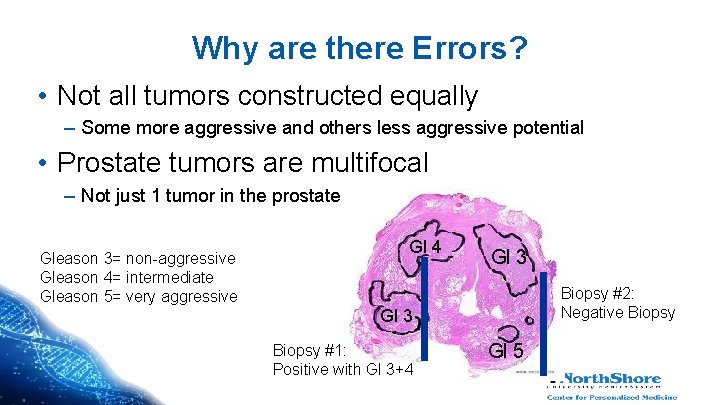
Why are there Errors? • Not all tumors constructed equally – Some more aggressive and others less aggressive potential • Prostate tumors are multifocal – Not just 1 tumor in the prostate Gleason 3= non-aggressive Gleason 4= intermediate Gleason 5= very aggressive Gl 4 Gl 3 Biopsy #2: Negative Biopsy Gl 3 Biopsy #1: Positive with Gl 3+4 Gl 5
Active Surveillance (AS) • Response to these errors and problems • Strategy to safely monitor men with seemingly low risk tumors and avoid over-treatment and possible side effects (e. g. incontinence, erectile dysfunction) # | Presentation Title | North. Shore | Date
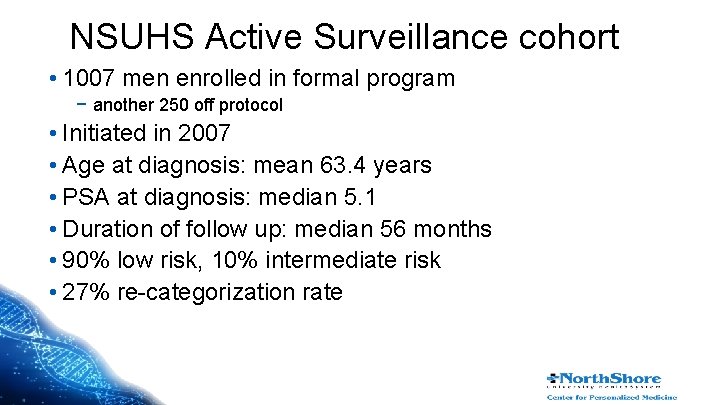
NSUHS Active Surveillance cohort • 1007 men enrolled in formal program − another 250 off protocol • Initiated in 2007 • Age at diagnosis: mean 63. 4 years • PSA at diagnosis: median 5. 1 • Duration of follow up: median 56 months • 90% low risk, 10% intermediate risk • 27% re-categorization rate
Identification of Ideal Candidate for AS My Belief: There is no single test that can reliably identify patients that will never develop more aggressive disease # | Presentation Title | North. Shore | Date
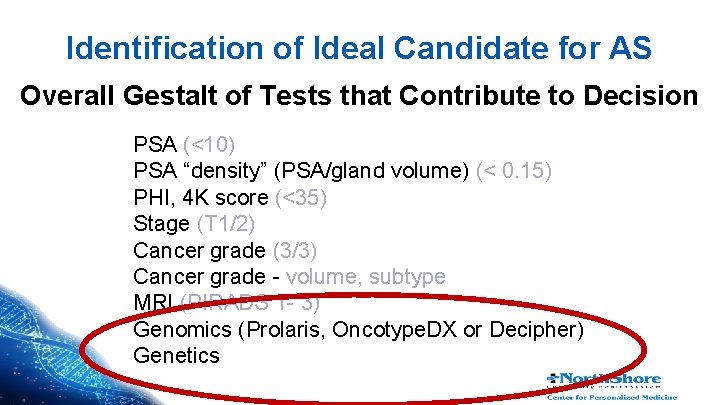
Identification of Ideal Candidate for AS Overall Gestalt of Tests that Contribute to Decision PSA (<10) PSA “density” (PSA/gland volume) (< 0. 15) PHI, 4 K score (<35) Stage (T 1/2) Cancer grade (3/3) Cancer grade - volume, subtype MRI (PIRADS 1 - 3) Genomics (Prolaris, Oncotype. DX or Decipher) Genetics
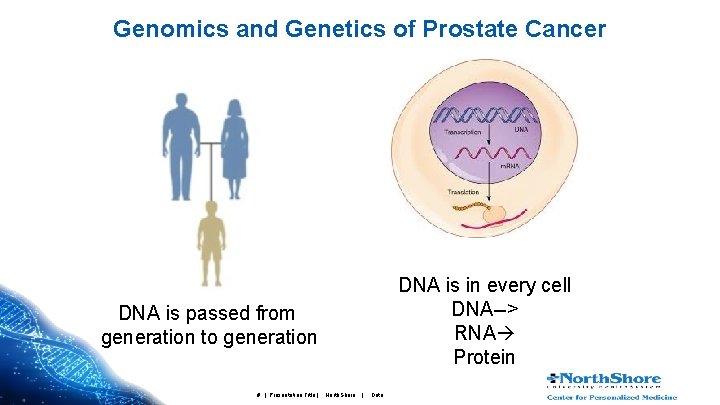
Genomics and Genetics of Prostate Cancer • Genomics is a relatively broad terminology that refers to study of an individual’s complete DNA content and structure • Includes many aspects from DNA sequence to RNA sequence to proteins # | Presentation Title | North. Shore | Date
Genomics and Genetics of Prostate Cancer DNA is in every cell DNA--> RNA Protein DNA is passed from generation to generation # | Presentation Title | North. Shore | Date
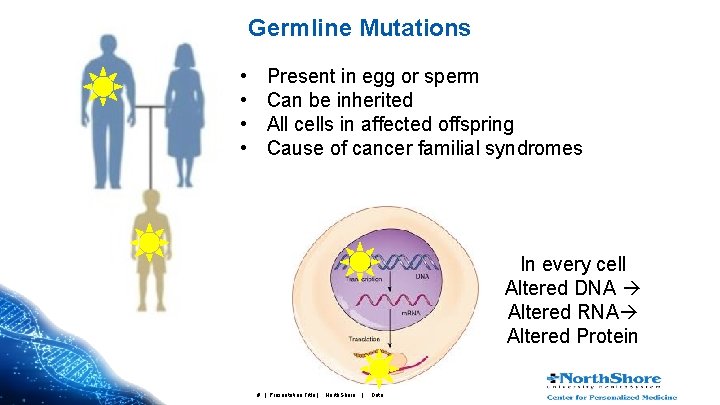
Germline Mutations • • Present in egg or sperm Can be inherited All cells in affected offspring Cause of cancer familial syndromes In every cell Altered DNA Altered RNA Altered Protein # | Presentation Title | North. Shore | Date
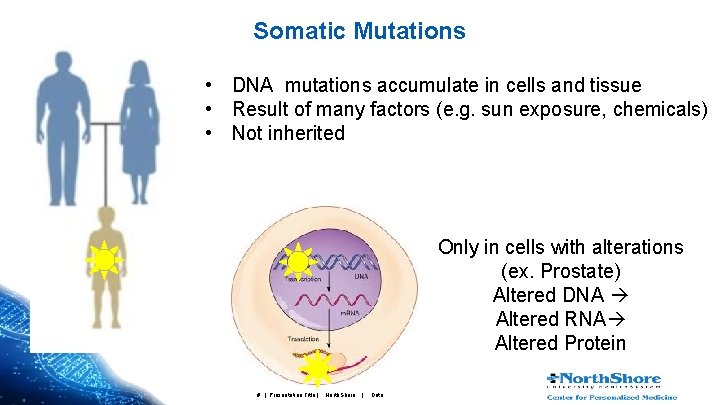
Somatic Mutations • DNA mutations accumulate in cells and tissue • Result of many factors (e. g. sun exposure, chemicals) • Not inherited Only in cells with alterations (ex. Prostate) Altered DNA Altered RNA Altered Protein # | Presentation Title | North. Shore | Date
Genomics and Genetics of Prostate Cancer: Keep it Simple Genomic Tests: Evaluating RNA produced in Cancer Cells Genetic Tests: Evaluating if abnormalities or mutations in Germline DNA (any cell) Somatic DNA (cancer cells) # | Presentation Title | North. Shore | Date
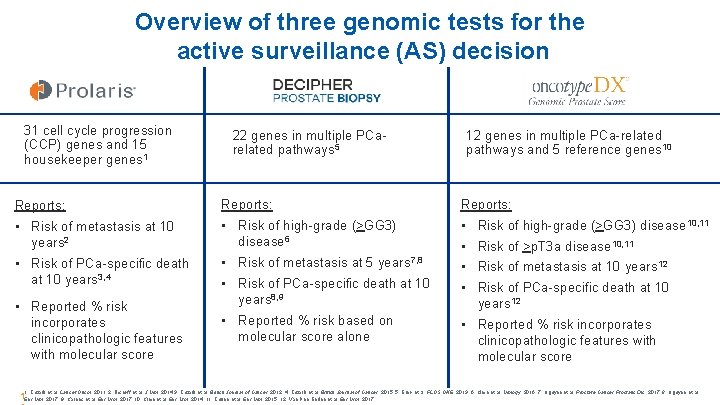
Overview of three genomic tests for the active surveillance (AS) decision 31 cell cycle progression (CCP) genes and 15 housekeeper genes 1 22 genes in multiple PCarelated pathways 5 12 genes in multiple PCa-related pathways and 5 reference genes 10 Reports: • Risk of metastasis at 10 years 2 • Risk of PCa-specific death at 10 years 3, 4 • Risk of high-grade (>GG 3) disease 6 • Risk of metastasis at 5 years 7, 8 • Risk of PCa-specific death at 10 years 8, 9 • Reported % risk based on molecular score alone • • • Reported % risk incorporates clinicopathologic features with molecular score Risk of high-grade (>GG 3) disease 10, 11 Risk of >p. T 3 a disease 10, 11 Risk of metastasis at 10 years 12 Risk of PCa-specific death at 10 years 12 • Reported % risk incorporates clinicopathologic features with molecular score 1. Cuzick et al. Lancet Oncol. 2011. 2. Bishoff et al. J Urol. 2014 3. Cuzick et al. British Journal of Cancer. 2012. 4. Cuzick et al. British Journal of Cancer. 2015. 5. Erho et al. PLOS ONE. 2013. 6. Klein et al. Urology. 2016. 7. Nguyen et al. Prostate Cancer Prostatic Dis. 2017. 8. Nguyen et al. 1 Eur Urol. 2017. 9. Karnes et al. Eur Urol. 2017. 10. Klein et al. Eur Urol. 2014. 11. Cullen et al. Eur Urol. 2015. 12. Van Den Eeden et al. Eur Urol. 2017.
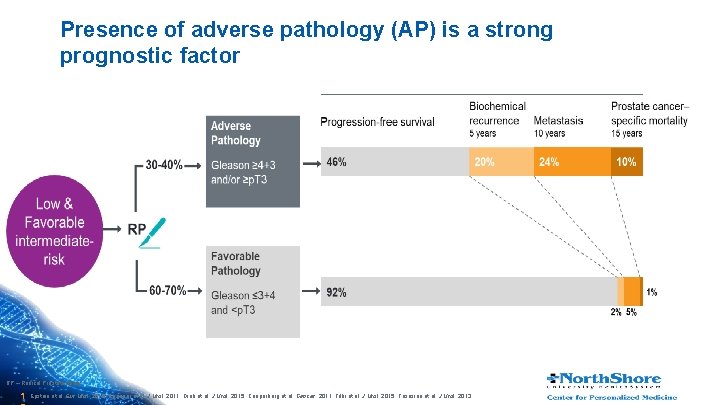
Presence of adverse pathology (AP) is a strong prognostic factor RP – Radical Prostatectomy 1 Epstein et al. Eur Urol. 2016. Eggener et al. J Urol. 2011. Dinh et al. J Urol. 2015. Cooperberg et al. Cancer. 2011. Tilki et al. J Urol. 2015. Tososian et al. J Urol. 2013. .
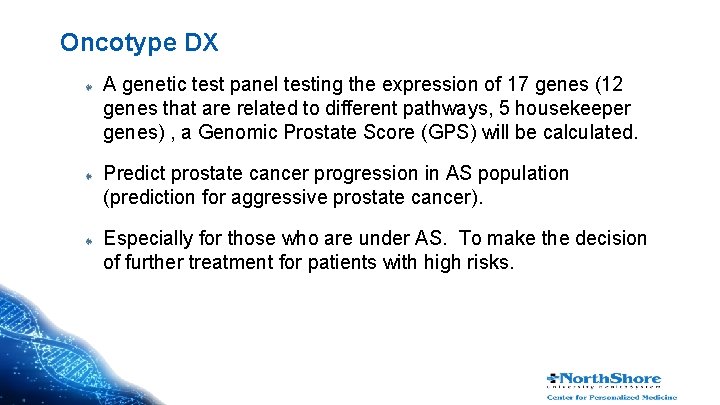
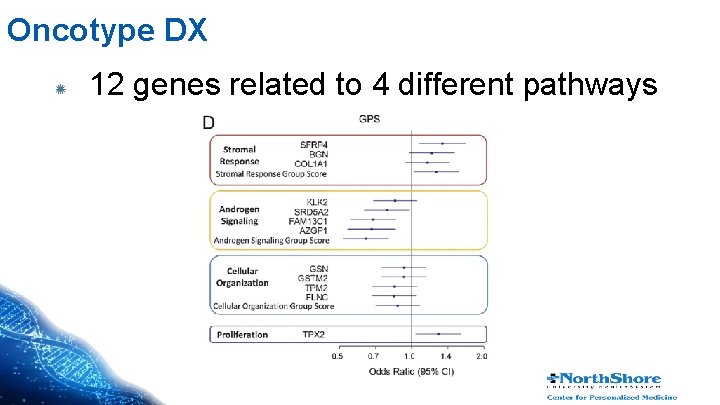
Oncotype DX A genetic test panel testing the expression of 17 genes (12 genes that are related to different pathways, 5 housekeeper genes) , a Genomic Prostate Score (GPS) will be calculated. Predict prostate cancer progression in AS population (prediction for aggressive prostate cancer). Especially for those who are under AS. To make the decision of further treatment for patients with high risks.
Oncotype DX 12 genes related to 4 different pathways
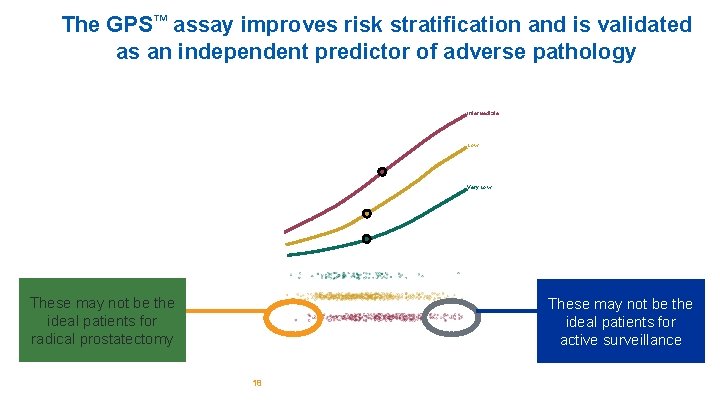
The GPS™ assay improves risk stratification and is validated as an independent predictor of adverse pathology Intermediate Low Very Low These may not be the ideal patients for radical prostatectomy These may not be the ideal patients for active surveillance 18
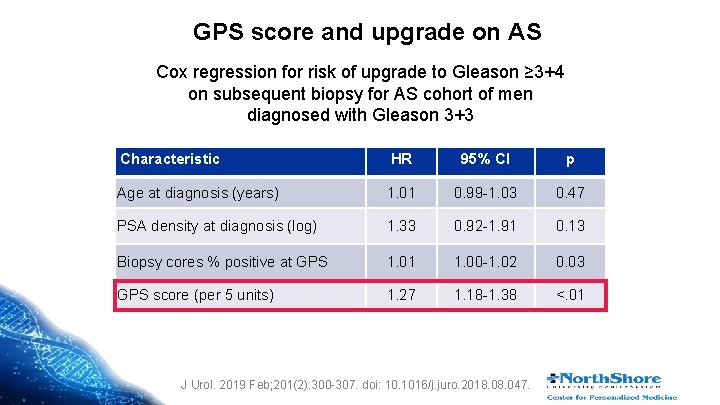
GPS score and upgrade on AS Cox regression for risk of upgrade to Gleason ≥ 3+4 on subsequent biopsy for AS cohort of men diagnosed with Gleason 3+3 Characteristic HR 95% CI p Age at diagnosis (years) 1. 01 0. 99 -1. 03 0. 47 PSA density at diagnosis (log) 1. 33 0. 92 -1. 91 0. 13 Biopsy cores % positive at GPS 1. 01 1. 00 -1. 02 0. 03 GPS score (per 5 units) 1. 27 1. 18 -1. 38 <. 01 J Urol. 2019 Feb; 201(2): 300 -307. doi: 10. 1016/j. juro. 2018. 047.
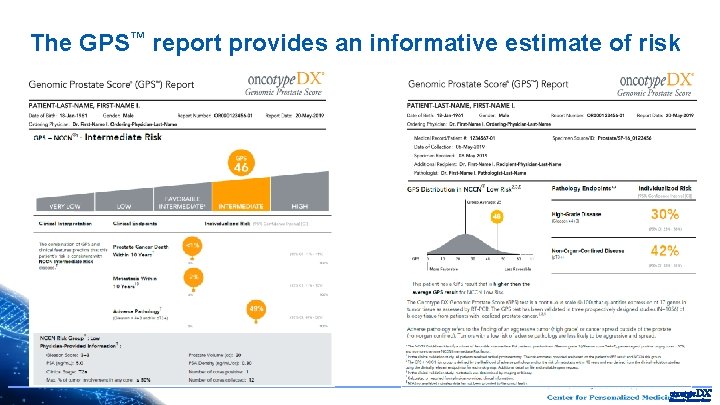
The GPS™ report provides an informative estimate of risk 20
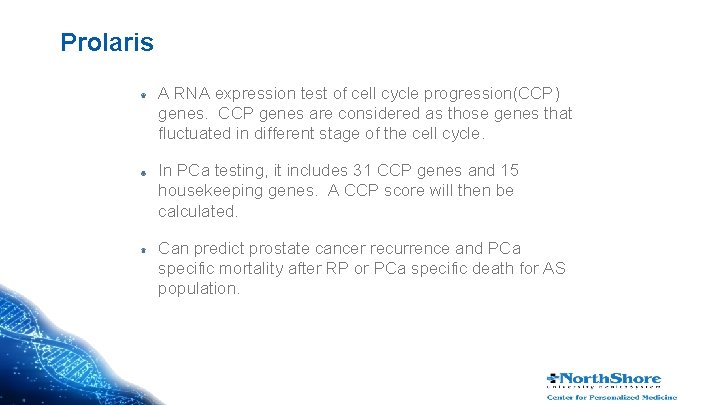
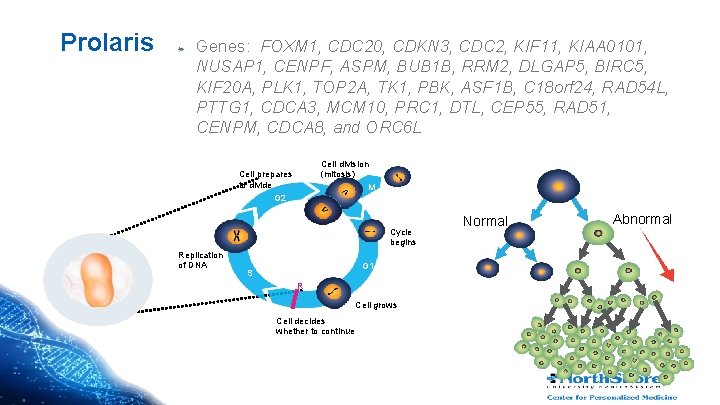
Prolaris A RNA expression test of cell cycle progression(CCP) genes. CCP genes are considered as those genes that fluctuated in different stage of the cell cycle. In PCa testing, it includes 31 CCP genes and 15 housekeeping genes. A CCP score will then be calculated. Can predict prostate cancer recurrence and PCa specific mortality after RP or PCa specific death for AS population.
Prolaris Genes: FOXM 1, CDC 20, CDKN 3, CDC 2, KIF 11, KIAA 0101, NUSAP 1, CENPF, ASPM, BUB 1 B, RRM 2, DLGAP 5, BIRC 5, KIF 20 A, PLK 1, TOP 2 A, TK 1, PBK, ASF 1 B, C 18 orf 24, RAD 54 L, PTTG 1, CDCA 3, MCM 10, PRC 1, DTL, CEP 55, RAD 51, CENPM, CDCA 8, and ORC 6 L Cell division (mitosis) M Cell prepares to divide G 2 Cycle begins Replication of DNA G 1 S R Cell grows Cell decides whether to continue Normal Abnormal
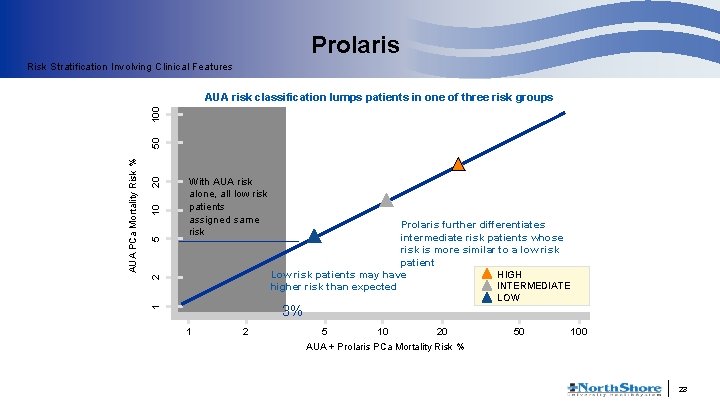
Prolaris Risk Stratification Involving Clinical Features 20 10 5 2 With AUA risk alone, all low risk patients assigned same risk Prolaris further differentiates intermediate risk patients whose risk is more similar to a low risk patient Low risk patients may have HIGH INTERMEDIATE higher risk than expected LOW 3% 1 AUA PCa Mortality Risk % 50 100 AUA risk classification lumps patients in one of three risk groups 1 2 5 10 20 50 100 AUA + Prolaris PCa Mortality Risk % 23
Decipher- biopsy A genetic test panel testing the expression of 22 genes Predict prostate cancer up-grading in AS population To make the decision of further treatment for patients with high risks.
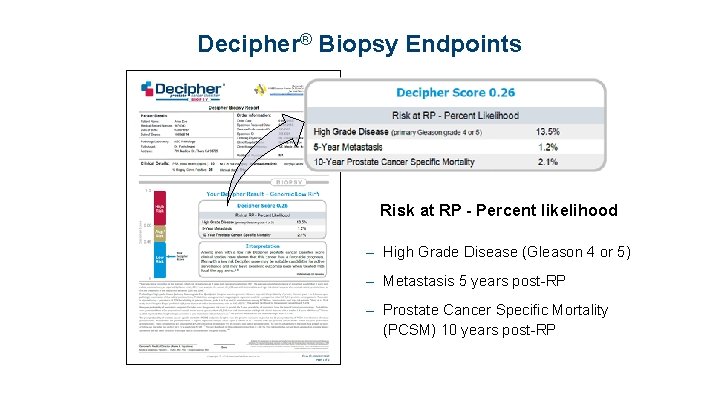
Decipher Outcomes Predict Chance of Primary Gleason 4 in Biopsy, Metastasis and PCSM 25
Decipher® Biopsy Endpoints Risk at RP - Percent likelihood – High Grade Disease (Gleason 4 or 5) – Metastasis 5 years post-RP – Prostate Cancer Specific Mortality (PCSM) 10 years post-RP
GERMLINE GENETICS AND PROSTATE CANCER # | Presentation Title | North. Shore | Date
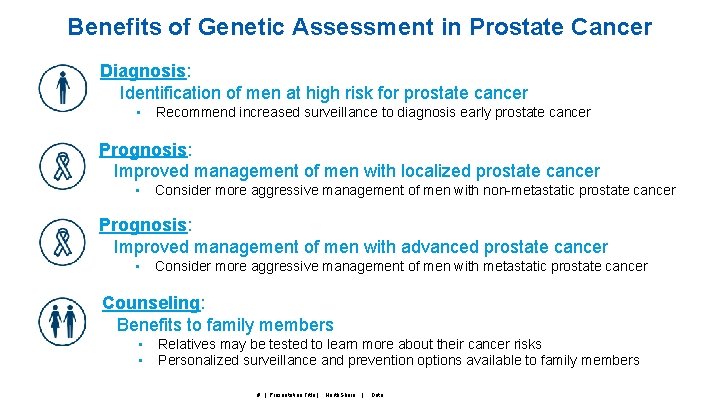
Benefits of Genetic Assessment in Prostate Cancer Diagnosis: Identification of men at high risk for prostate cancer • Recommend increased surveillance to diagnosis early prostate cancer Prognosis: Improved management of men with localized prostate cancer • Consider more aggressive management of men with non-metastatic prostate cancer Prognosis: Improved management of men with advanced prostate cancer • Consider more aggressive management of men with metastatic prostate cancer Counseling: Benefits to family members • • Relatives may be tested to learn more about their cancer risks Personalized surveillance and prevention options available to family members # | Presentation Title | North. Shore | Date
Rare Pathogenic Mutations (RPMs) • Most commercially available panels include 14 genes • Mutations within some of these genes have been implicated in hereditary prostate cancer (e. g. ≥ 3 affected first degree relatives) but many have not • Important to understand which RPMs implicated in susceptibility, aggressiveness and disease response # | Presentation Title | North. Shore | Date
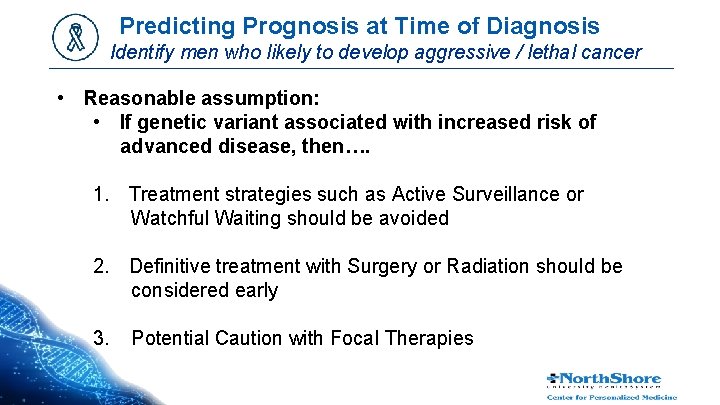
Predicting Prognosis at Time of Diagnosis Identify men who likely to develop aggressive / lethal cancer • Reasonable assumption: • If genetic variant associated with increased risk of advanced disease, then…. 1. Treatment strategies such as Active Surveillance or Watchful Waiting should be avoided 2. Definitive treatment with Surgery or Radiation should be considered early 3. Potential Caution with Focal Therapies
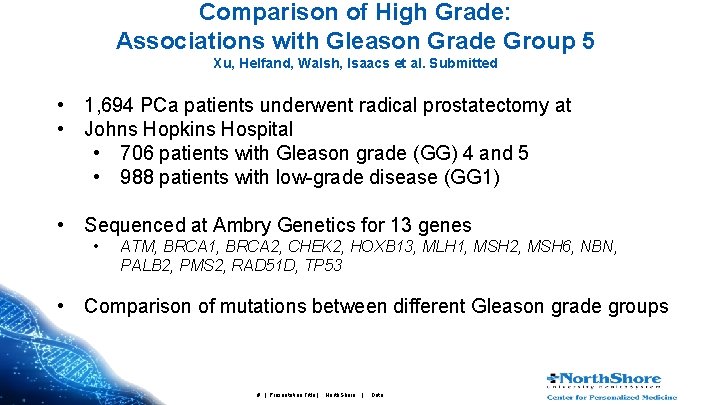
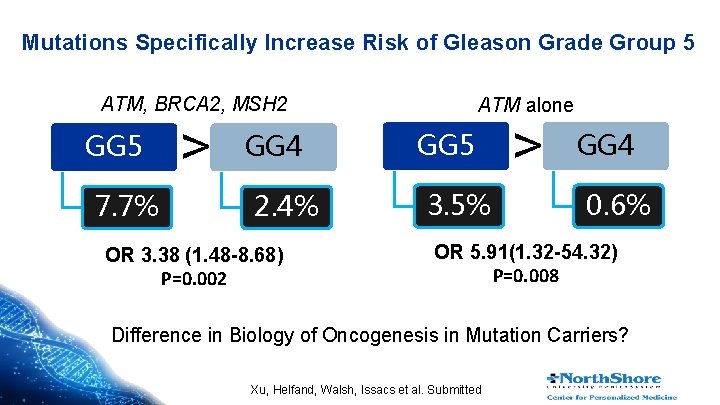
Comparison of High Grade: Associations with Gleason Grade Group 5 Xu, Helfand, Walsh, Isaacs et al. Submitted • 1, 694 PCa patients underwent radical prostatectomy at • Johns Hopkins Hospital • 706 patients with Gleason grade (GG) 4 and 5 • 988 patients with low-grade disease (GG 1) • Sequenced at Ambry Genetics for 13 genes • ATM, BRCA 1, BRCA 2, CHEK 2, HOXB 13, MLH 1, MSH 2, MSH 6, NBN, PALB 2, PMS 2, RAD 51 D, TP 53 • Comparison of mutations between different Gleason grade groups # | Presentation Title | North. Shore | Date
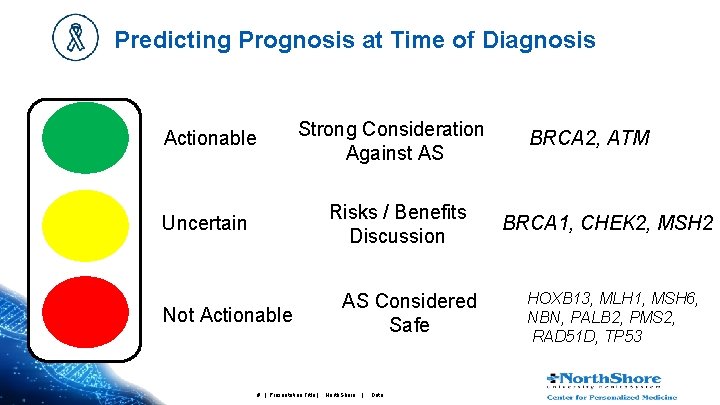
Mutations Specifically Increase Risk of Gleason Grade Group 5 ATM, BRCA 2, MSH 2 GG 5 7. 7% > GG 4 2. 4% OR 3. 38 (1. 48 -8. 68) P=0. 002 ATM alone GG 5 3. 5% > GG 4 0. 6% OR 5. 91(1. 32 -54. 32) P=0. 008 Difference in Biology of Oncogenesis in Mutation Carriers? Xu, Helfand, Walsh, Issacs et al. Submitted
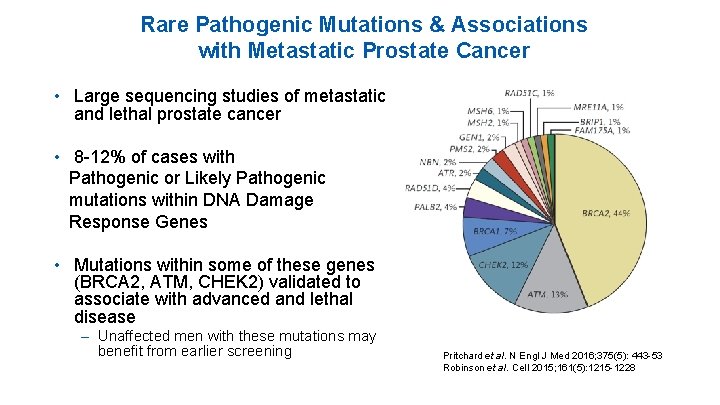
Rare Pathogenic Mutations & Associations with Metastatic Prostate Cancer • Large sequencing studies of metastatic and lethal prostate cancer • 8 -12% of cases with Pathogenic or Likely Pathogenic mutations within DNA Damage Response Genes • Mutations within some of these genes (BRCA 2, ATM, CHEK 2) validated to associate with advanced and lethal disease – Unaffected men with these mutations may benefit from earlier screening Pritchard et al. N Engl J Med 2016; 375(5): 443 -53 Robinson et al. Cell 2015; 161(5): 1215 -1228
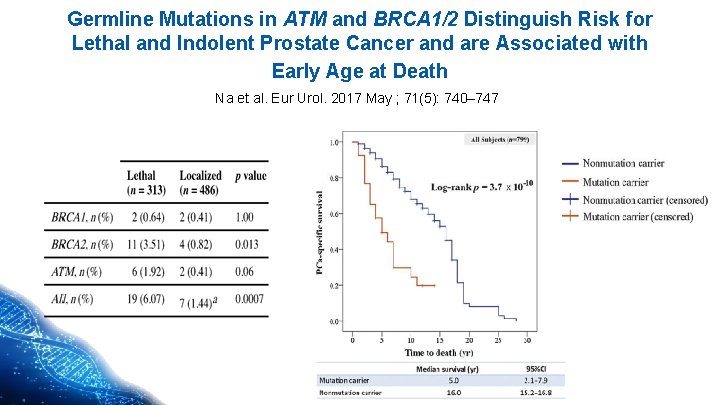
Germline Mutations in ATM and BRCA 1/2 Distinguish Risk for Lethal and Indolent Prostate Cancer and are Associated with Early Age at Death Na et al. Eur Urol. 2017 May ; 71(5): 740– 747
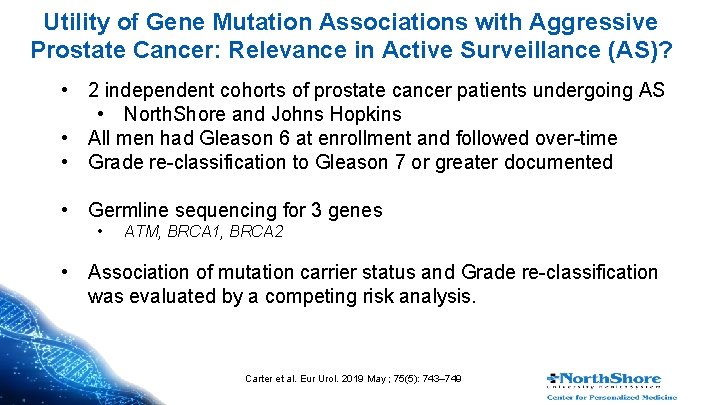
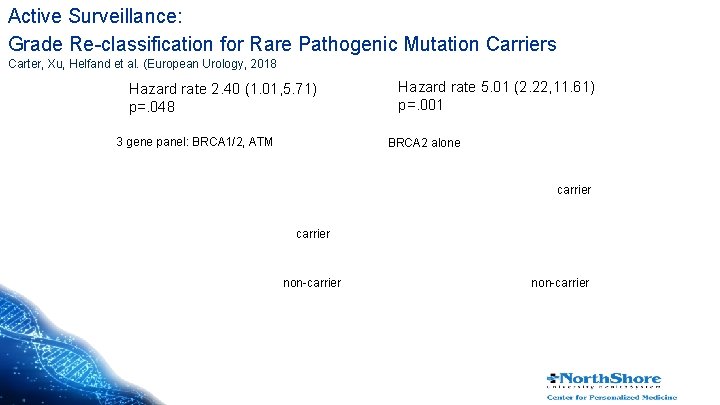
Utility of Gene Mutation Associations with Aggressive Prostate Cancer: Relevance in Active Surveillance (AS)? • 2 independent cohorts of prostate cancer patients undergoing AS • North. Shore and Johns Hopkins • All men had Gleason 6 at enrollment and followed over-time • Grade re-classification to Gleason 7 or greater documented • Germline sequencing for 3 genes • ATM, BRCA 1, BRCA 2 • Association of mutation carrier status and Grade re-classification was evaluated by a competing risk analysis. Carter et al. Eur Urol. 2019 May ; 75(5): 743– 749
Active Surveillance: Grade Re-classification for Rare Pathogenic Mutation Carriers Carter, Xu, Helfand et al. (European Urology, 2018 Hazard rate 2. 40 (1. 01, 5. 71) p=. 048 3 gene panel: BRCA 1/2, ATM Hazard rate 5. 01 (2. 22, 11. 61) p=. 001 BRCA 2 alone carrier non-carrier
Predicting Prognosis at Time of Diagnosis Strong Consideration Against AS Actionable Risks / Benefits Discussion Uncertain Not Actionable # | Presentation Title | AS Considered Safe North. Shore | Date BRCA 2, ATM BRCA 1, CHEK 2, MSH 2 HOXB 13, MLH 1, MSH 6, NBN, PALB 2, PMS 2, RAD 51 D, TP 53
SOMATIC GENETICS AND PROSTATE CANCER BIOPSY RESULTS THE FUTURE? # | Presentation Title | North. Shore | Date
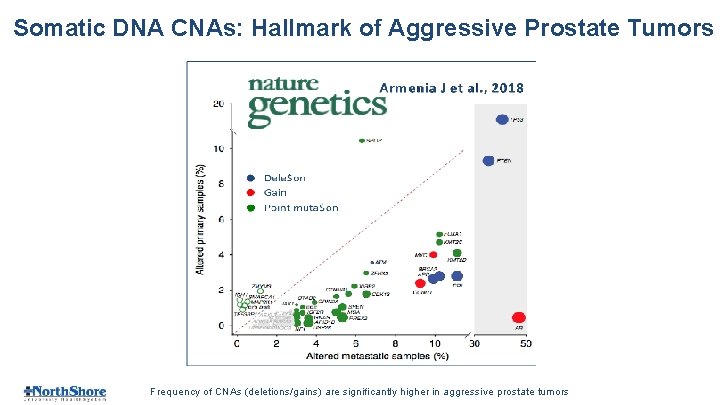
Somatic DNA CNAs: Hallmark of Aggressive Prostate Tumors Frequency of CNAs (deletions/gains) are significantly higher in aggressive prostate tumors
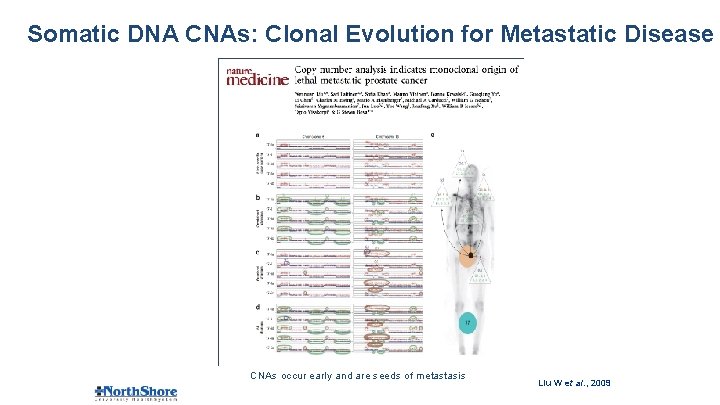
Somatic DNA CNAs: Clonal Evolution for Metastatic Disease CNAs occur early and are seeds of metastasis Liu W et al. , 2009
Frequency of CNAs in Three Types of PCa Patients § Higher frequency of CNAs in patients with lethal/mets for four genes (PTEN, MYC, BRCA 2 and CDKN 1 B) § A dose-response trend of CNAs frequency: lethal/mets > BCR > non-progression § Significantly higher number in those who progressed on AS Liu W et al. , 2020
SUMMARY • Currently, NO single test that reliably predicts AS failure • Results of multiple tests are therefore needed to identify clinical picture of which men likely to fail AS • Should include biomarkers − RNA based (Oncotype, Prolaris, Decipher) − DNA based (BRCA 2, ATM, CHEK 2) • Future tests identifying men most likely to harbor aggressive disease − Somatic DNA tests
Thank you • North. Shore University – Rong Na, MD, Ph. D – Siqun Zhang MD – Jianfeng Xu MD, Dr. PH – Charles Brendler, MD – Chi‐Hsiung Wang, Ph. D – Hongjie Yu, Ph. D – Justin Brueck, MBA – Michael Caplan, MD - Margo Quinn MS Jacquelyn Peckewicz MS Pooja Talaty MS Elena Genova-Peeva Ph. D • Johns Hopkins – William Isaacs, Ph. D – Ballantine Carter, MD – Patrick Walsh, MD “Through our personalized medicine efforts we can help everyone achieve their best” # | Presentation Title | North. Shore | Date