
Active Surveillance for Prostate Cancer An Update Peter




- Slides: 48
Active Surveillance for Prostate Cancer – An Update Peter R. Carroll, MD, MPH Department of Urology and UCSF Helen Diller Family Comprehensive Cancer Center University of California, San Francisco July, 2020
Disclosure • I am a very busy surgeon • I think prostate cancer over – diagnosis and over – treatment are problems • I also think that prostate cancer is often under – treated • The information I will share is largely my own • I will walk you through it Department of Urology
Active Surveillance • Active surveillance is a response to the over - detection and - treatment of prostate cancer brought about by widespread and repeated PSA screening. • Its uptake by the urology community helped pave the way for an upgraded assessment by the USPTF on the early detection of prostate cancer Department of Urology
Active Surveillance - Goals • Avoid or Delay the costs (functional, monetary) of treatment without compromising cancer cure • Compliant with screening/treatment guidelines • Based on the rationale that – Initial assessment is reasonably accurate – Monitoring is accurate and identifies sub – clinical progression at a time that initial treatment options are still available and curative Active surveillance is about timing of treatment Department of Urology
Prostate Cancer A SPECTRUM OF DISEASE Department of Urology
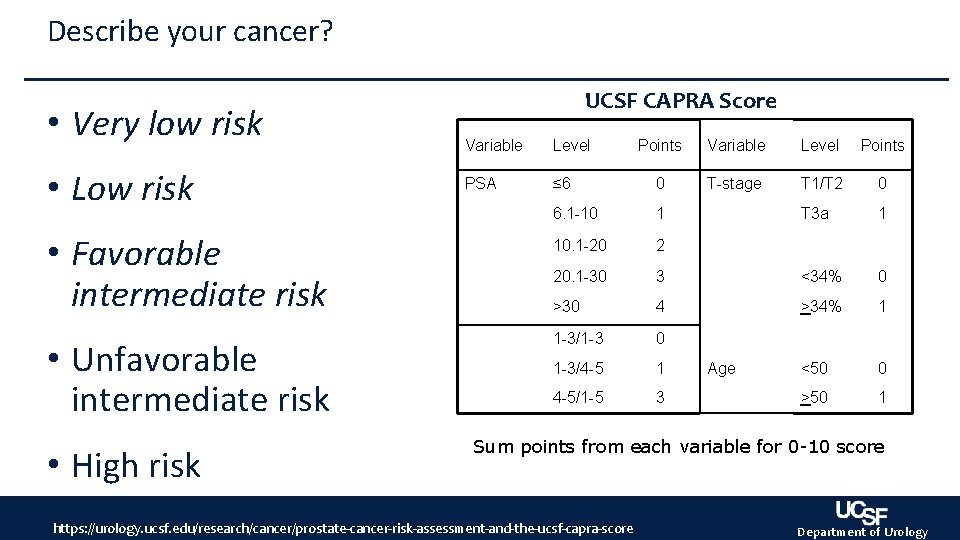
Describe your cancer? • Very low risk UCSF CAPRA Score Points Variable Level Points ≤ 6 0 T-stage T 1/T 2 0 6. 1 -10 1 T 3 a 1 • Favorable intermediate risk 10. 1 -20 2 20. 1 -30 3 <34% 0 >30 4 >34% 1 • Unfavorable intermediate risk 1 -3/1 -3 0 1 -3/4 -5 1 <50 0 4 -5/1 -5 3 >50 1 • Low risk • High risk Variable Level PSA Age Sum points from each variable for 0 -10 score https: //urology. ucsf. edu/research/cancer/prostate-cancer-risk-assessment-and-the-ucsf-capra-score Department of Urology
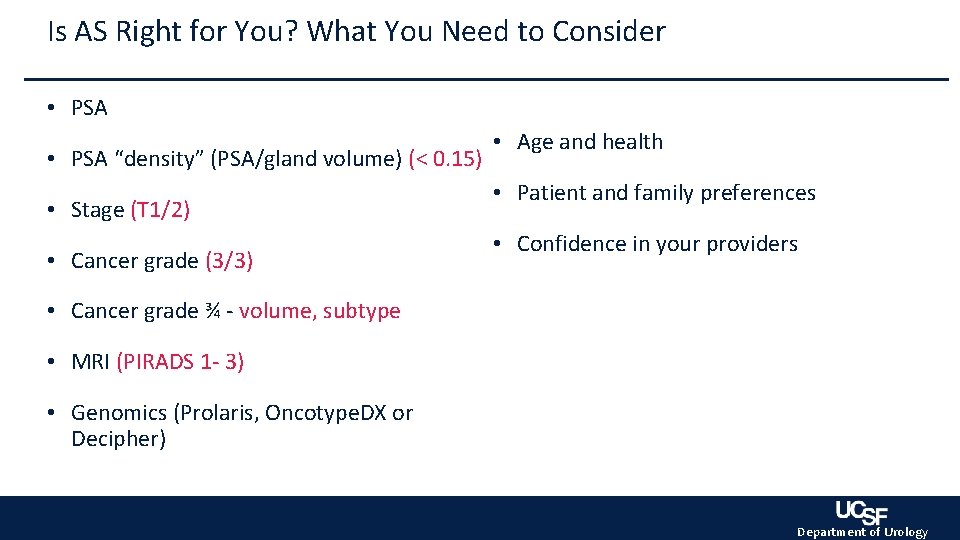
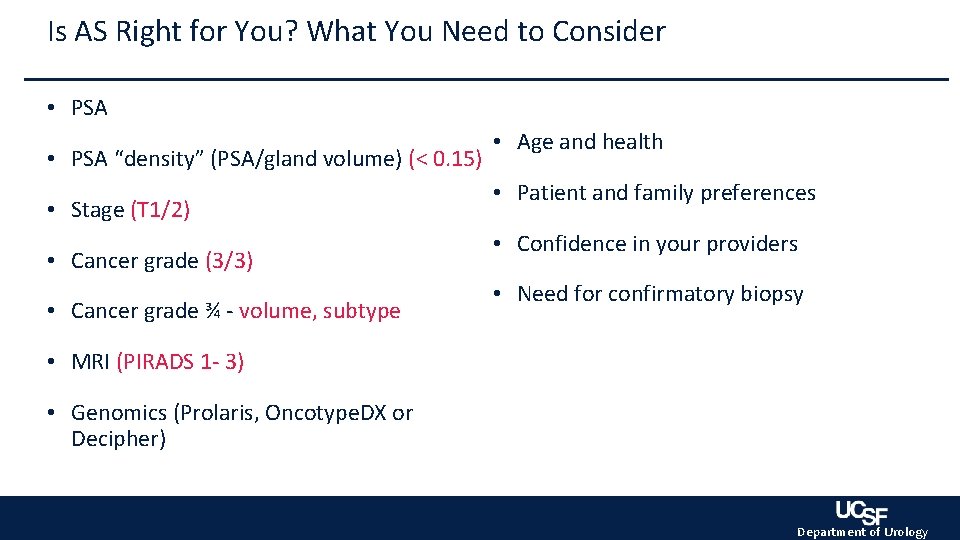
Is AS Right for You? What You Need to Consider • PSA “density” (PSA/gland volume) (< 0. 15) • Stage (T 1/2) • Cancer grade (3/3) • Age and health • Patient and family preferences • Confidence in your providers • Cancer grade ¾ - volume, subtype • MRI (PIRADS 1 - 3) • Genomics (Prolaris, Oncotype. DX or Decipher) Department of Urology
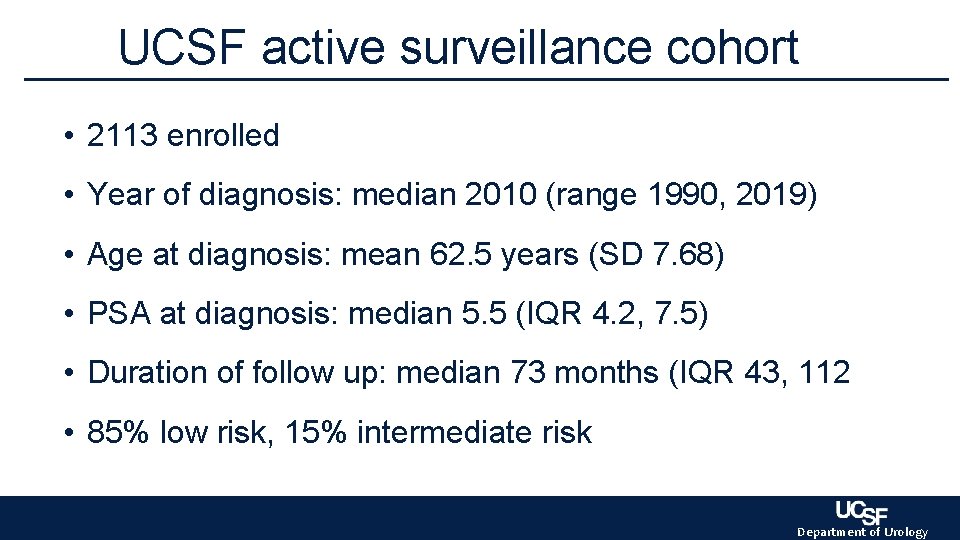
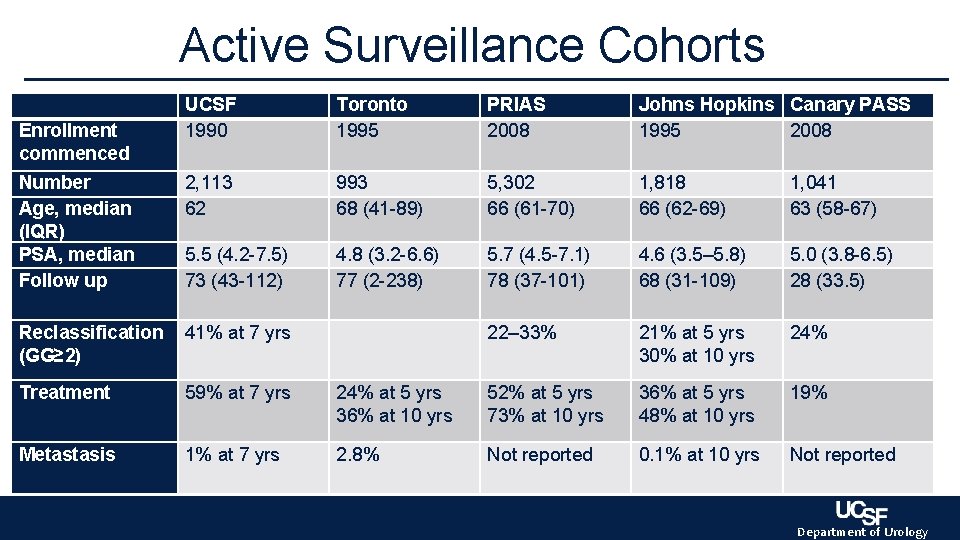
UCSF active surveillance cohort • 2113 enrolled • Year of diagnosis: median 2010 (range 1990, 2019) • Age at diagnosis: mean 62. 5 years (SD 7. 68) • PSA at diagnosis: median 5. 5 (IQR 4. 2, 7. 5) • Duration of follow up: median 73 months (IQR 43, 112 • 85% low risk, 15% intermediate risk Department of Urology
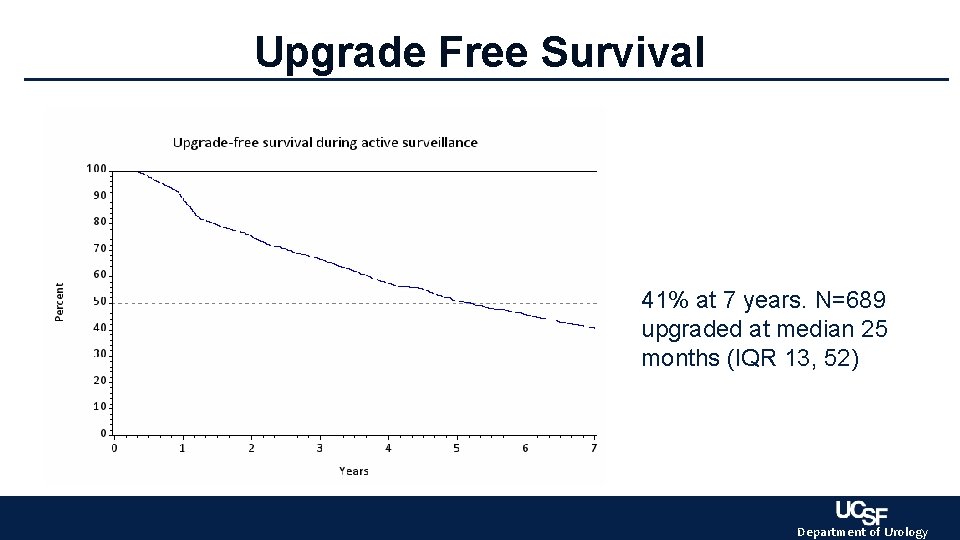
Upgrade Free Survival 41% at 7 years. N=689 upgraded at median 25 months (IQR 13, 52) Department of Urology
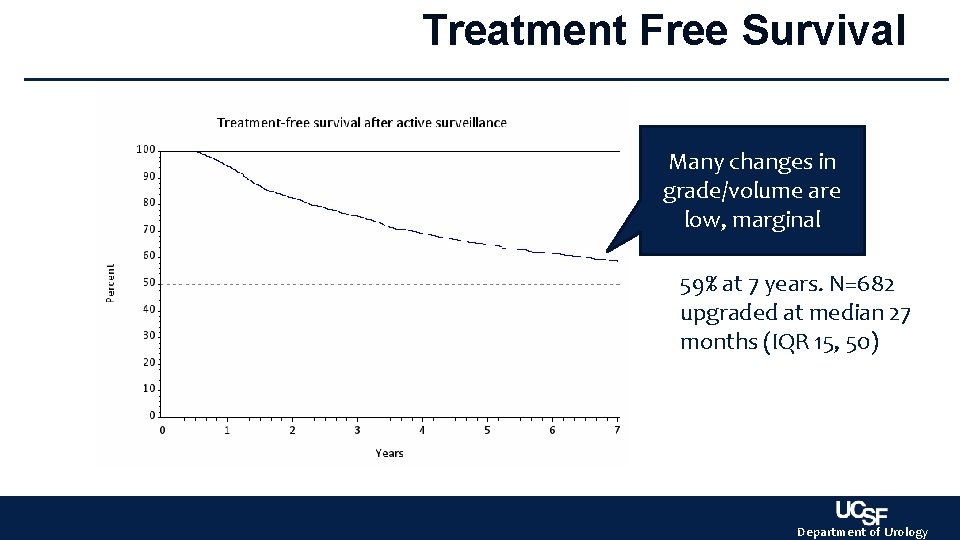
Treatment Free Survival Many changes in grade/volume are low, marginal 59% at 7 years. N=682 upgraded at median 27 months (IQR 15, 50) Department of Urology
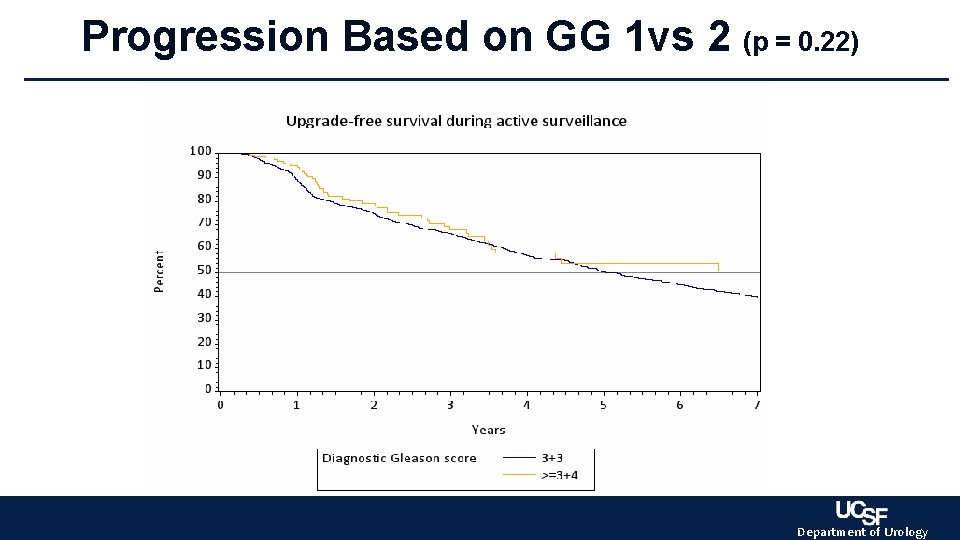
Progression Based on GG 1 vs 2 (p = 0. 22) Department of Urology
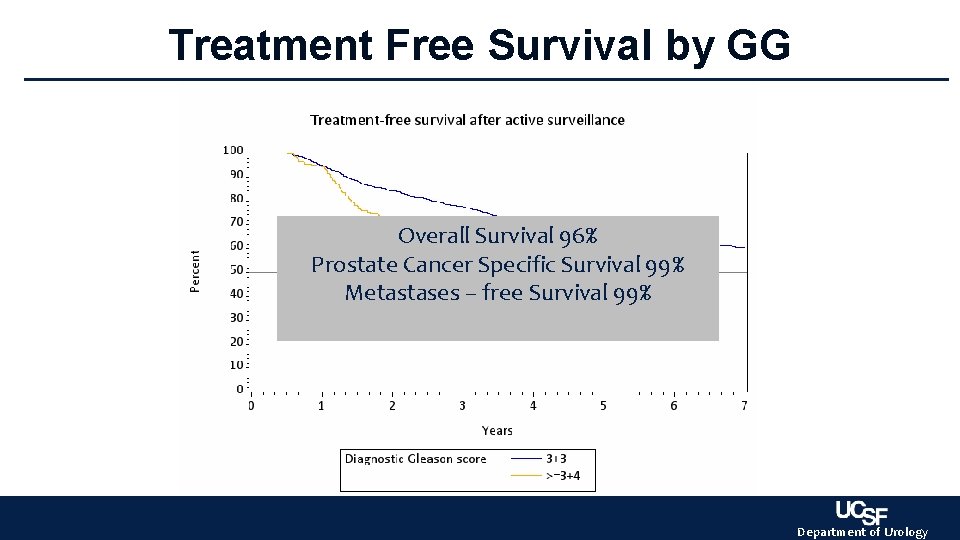
Treatment Free Survival by GG Overall Survival 96% Prostate Cancer Specific Survival 99% Metastases – free Survival 99% Department of Urology
Deferred Treatment Outcome after delayed radical prostatectomy Department of Urology
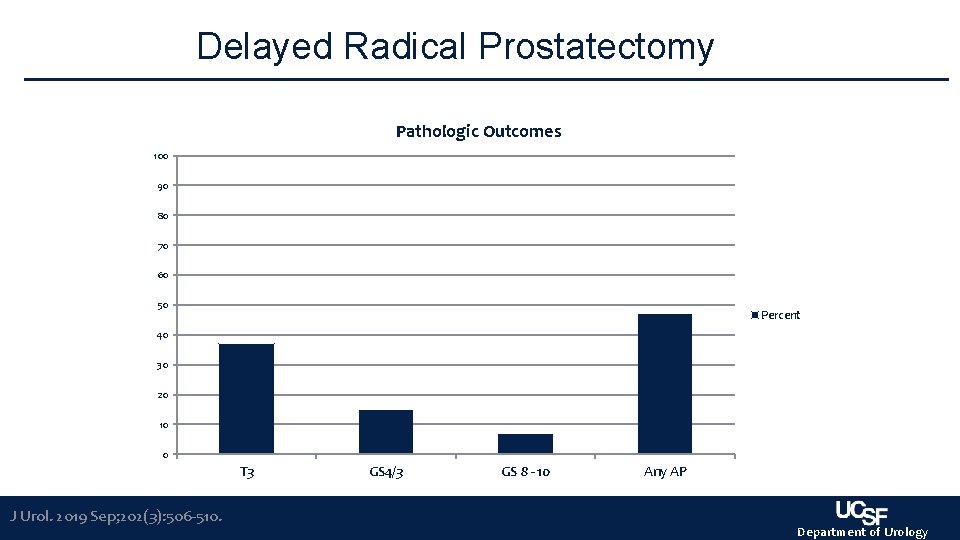
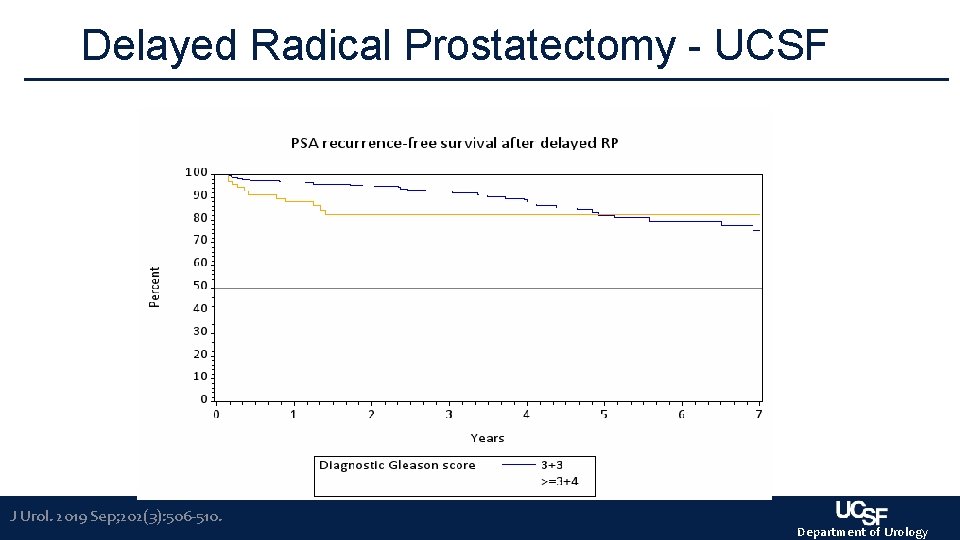
Delayed Radical Prostatectomy Pathologic Outcomes 100 90 80 70 60 50 Percent 40 30 20 10 0 T 3 J Urol. 2019 Sep; 202(3): 506 -510. GS 4/3 GS 8 - 10 Any AP Department of Urology
Active Surveillance IMPACT OF NEW TECHNOLOGY Department of Urology
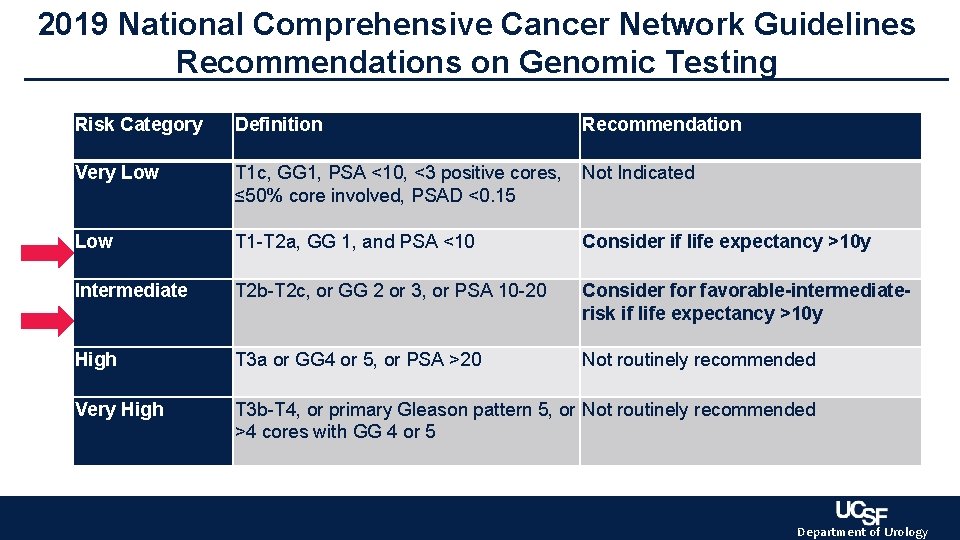
2019 National Comprehensive Cancer Network Guidelines Recommendations on Genomic Testing Risk Category Definition Recommendation Very Low T 1 c, GG 1, PSA <10, <3 positive cores, ≤ 50% core involved, PSAD <0. 15 Not Indicated Low T 1 -T 2 a, GG 1, and PSA <10 Consider if life expectancy >10 y Intermediate T 2 b-T 2 c, or GG 2 or 3, or PSA 10 -20 Consider for favorable-intermediaterisk if life expectancy >10 y High T 3 a or GG 4 or 5, or PSA >20 Not routinely recommended Very High T 3 b-T 4, or primary Gleason pattern 5, or Not routinely recommended >4 cores with GG 4 or 5 Department of Urology
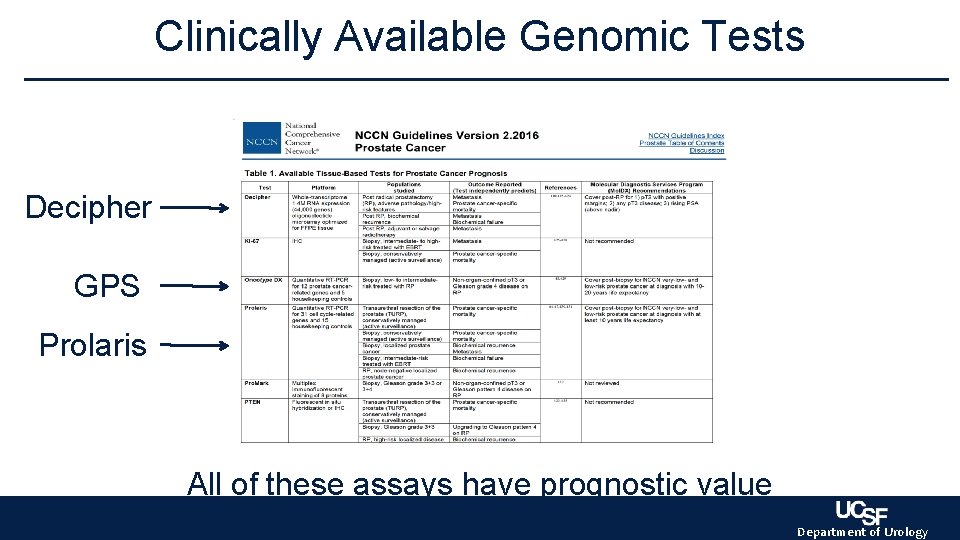
Clinically Available Genomic Tests Decipher GPS Prolaris All of these assays have prognostic value none are predictive biomarkers Department of Urology
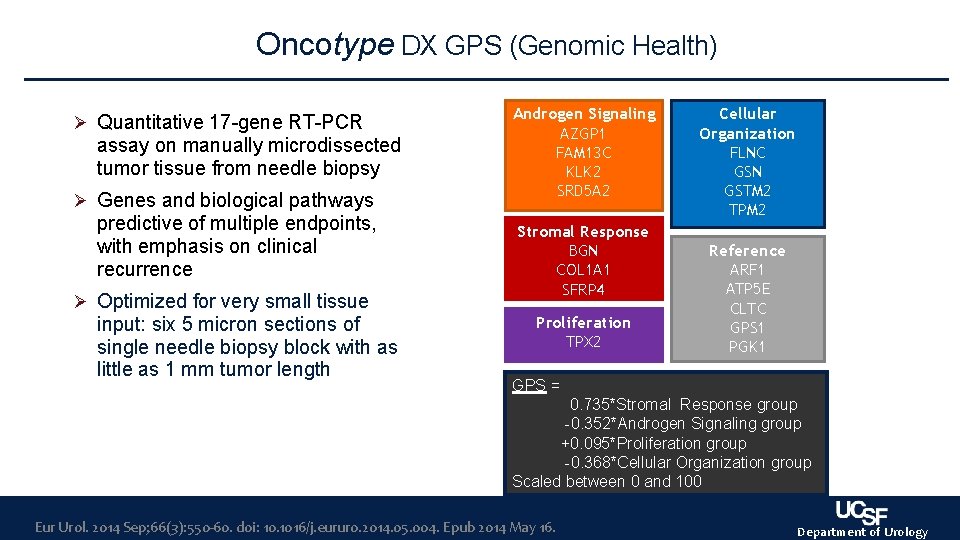
Oncotype DX GPS (Genomic Health) Ø Quantitative 17 -gene RT-PCR assay on manually microdissected tumor tissue from needle biopsy Ø Genes and biological pathways predictive of multiple endpoints, with emphasis on clinical recurrence Ø Optimized for very small tissue input: six 5 micron sections of single needle biopsy block with as little as 1 mm tumor length Androgen Signaling AZGP 1 FAM 13 C KLK 2 SRD 5 A 2 Stromal Response BGN COL 1 A 1 SFRP 4 Proliferation TPX 2 Cellular Organization FLNC GSN GSTM 2 TPM 2 Reference ARF 1 ATP 5 E CLTC GPS 1 PGK 1 GPS = 0. 735*Stromal Response group -0. 352*Androgen Signaling group +0. 095*Proliferation group -0. 368*Cellular Organization group Scaled between 0 and 100 Eur Urol. 2014 Sep; 66(3): 550 -60. doi: 10. 1016/j. eururo. 2014. 05. 004. Epub 2014 May 16. Department of Urology
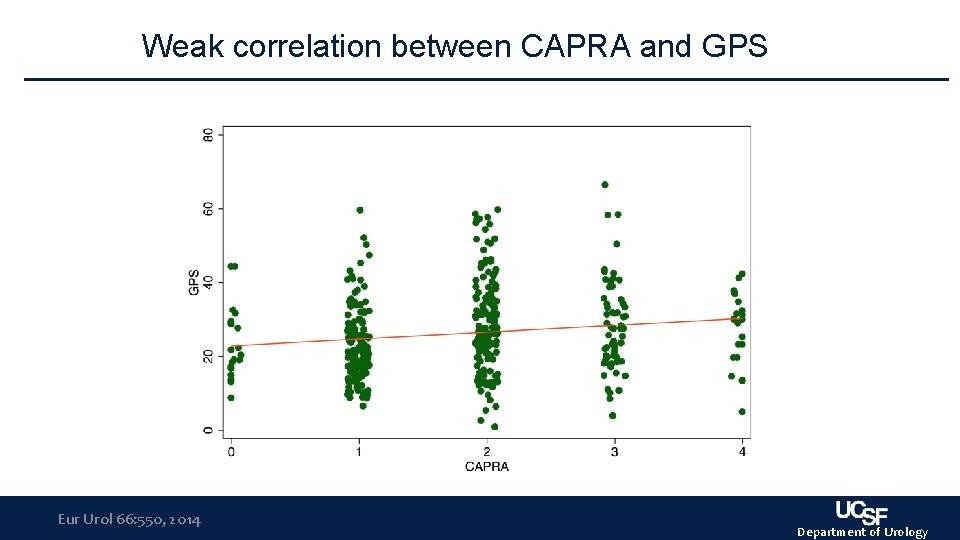
Weak correlation between CAPRA and GPS Eur Urol 66: 550, 2014 Department of Urology
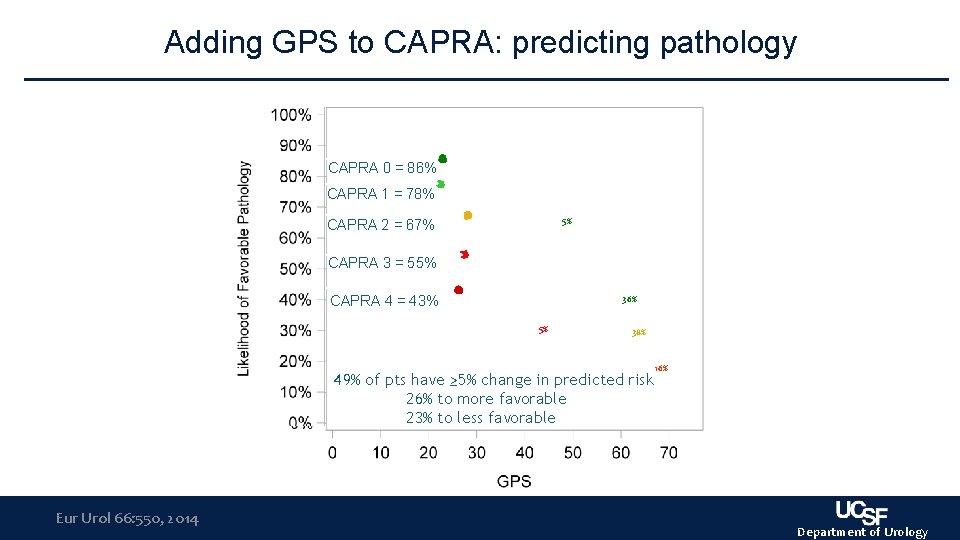
Adding GPS to CAPRA: predicting pathology CAPRA 0 = 86% CAPRA 1 = 78% 5% CAPRA 2 = 67% CAPRA 3 = 55% CAPRA 4 = 43% 36% 5% 38% 49% of pts have ≥ 5% change in predicted risk 26% to more favorable 23% to less favorable Eur Urol 66: 550, 2014 16% Department of Urology
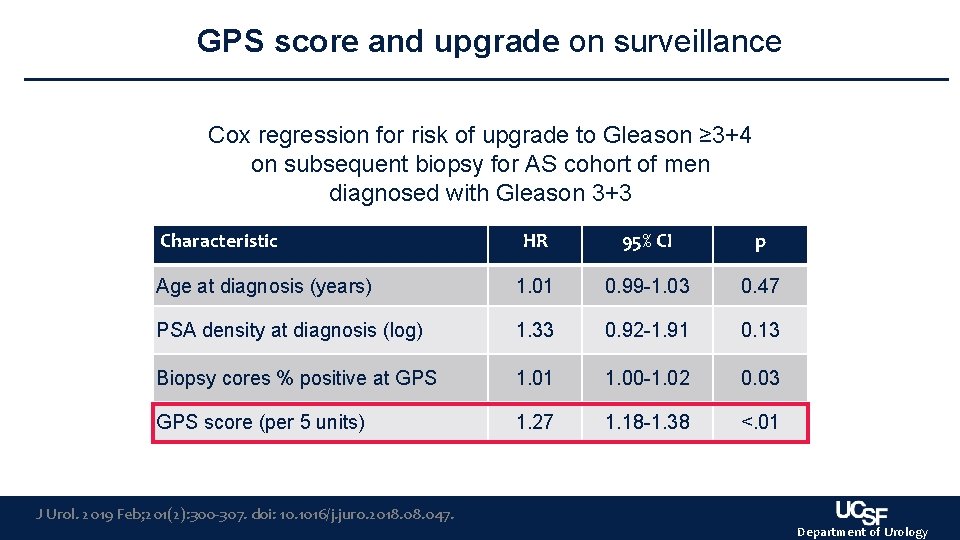
GPS score and upgrade on surveillance Cox regression for risk of upgrade to Gleason ≥ 3+4 on subsequent biopsy for AS cohort of men diagnosed with Gleason 3+3 Characteristic HR 95% CI p Age at diagnosis (years) 1. 01 0. 99 -1. 03 0. 47 PSA density at diagnosis (log) 1. 33 0. 92 -1. 91 0. 13 Biopsy cores % positive at GPS 1. 01 1. 00 -1. 02 0. 03 GPS score (per 5 units) 1. 27 1. 18 -1. 38 <. 01 J Urol. 2019 Feb; 201(2): 300 -307. doi: 10. 1016/j. juro. 2018. 047. Department of Urology
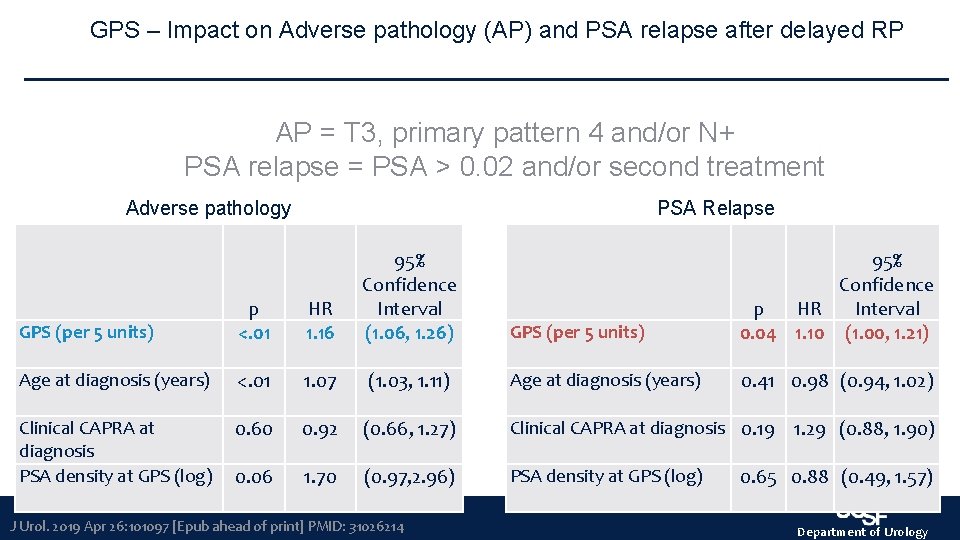
GPS – Impact on Adverse pathology (AP) and PSA relapse after delayed RP AP = T 3, primary pattern 4 and/or N+ PSA relapse = PSA > 0. 02 and/or second treatment Adverse pathology PSA Relapse GPS (per 5 units) p <. 01 HR 1. 16 95% Confidence Interval (1. 06, 1. 26) Age at diagnosis (years) <. 01 1. 07 Clinical CAPRA at diagnosis PSA density at GPS (log) 0. 60 0. 06 GPS (per 5 units) 95% Confidence p HR Interval 0. 04 1. 10 (1. 00, 1. 21) (1. 03, 1. 11) Age at diagnosis (years) 0. 41 0. 98 (0. 94, 1. 02) 0. 92 (0. 66, 1. 27) Clinical CAPRA at diagnosis 0. 19 1. 29 (0. 88, 1. 90) 1. 70 (0. 97, 2. 96) PSA density at GPS (log) J Urol. 2019 Apr 26: 101097 [Epub ahead of print] PMID: 31026214 0. 65 0. 88 (0. 49, 1. 57) Department of Urology
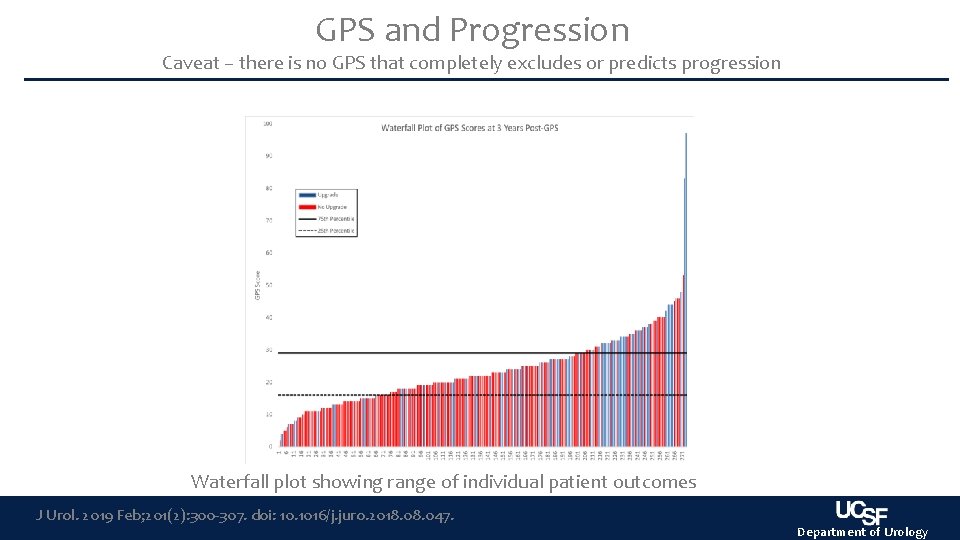
GPS and Progression Caveat – there is no GPS that completely excludes or predicts progression Waterfall plot showing range of individual patient outcomes J Urol. 2019 Feb; 201(2): 300 -307. doi: 10. 1016/j. juro. 2018. 047. Department of Urology
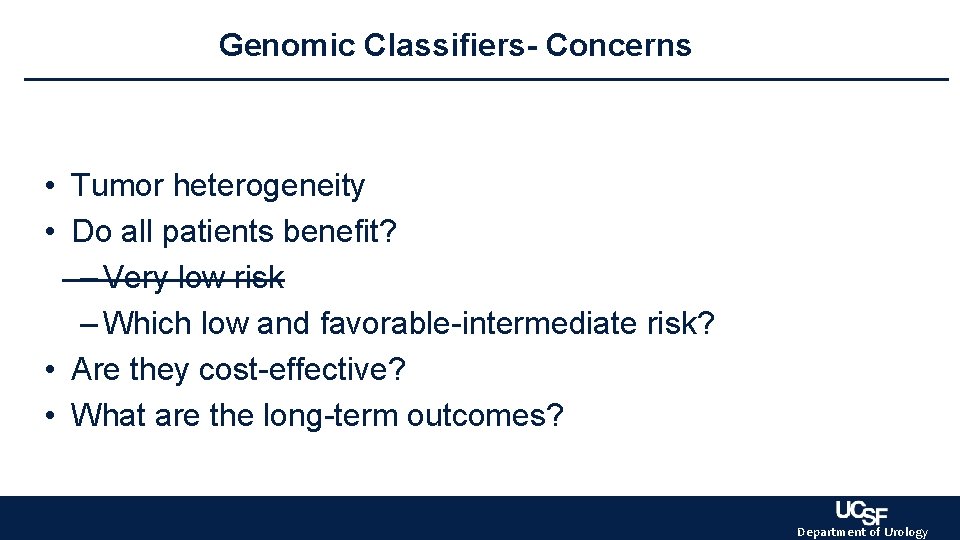
Genomic Classifiers- Concerns • Tumor heterogeneity • Do all patients benefit? – Very low risk – Which low and favorable-intermediate risk? • Are they cost-effective? • What are the long-term outcomes? Department of Urology
Active Surveillance Are there other biomarkers? Department of Urology
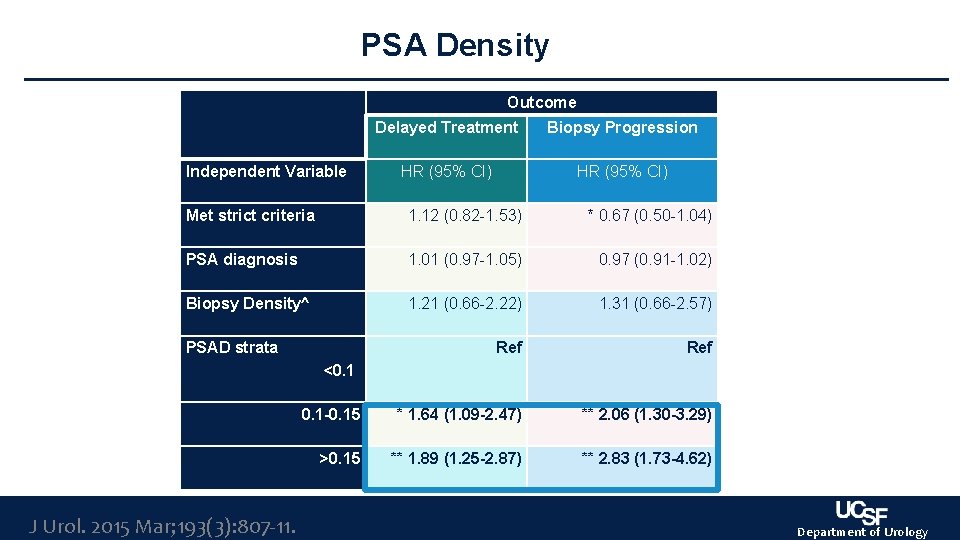
PSA Density Outcome Independent Variable Delayed Treatment Biopsy Progression HR (95% CI) Met strict criteria 1. 12 (0. 82 -1. 53) * 0. 67 (0. 50 -1. 04) PSA diagnosis 1. 01 (0. 97 -1. 05) 0. 97 (0. 91 -1. 02) Biopsy Density^ 1. 21 (0. 66 -2. 22) 1. 31 (0. 66 -2. 57) Ref 0. 1 -0. 15 * 1. 64 (1. 09 -2. 47) ** 2. 06 (1. 30 -3. 29) >0. 15 ** 1. 89 (1. 25 -2. 87) ** 2. 83 (1. 73 -4. 62) PSAD strata <0. 1 J Urol. 2015 Mar; 193(3): 807 -11. Department of Urology
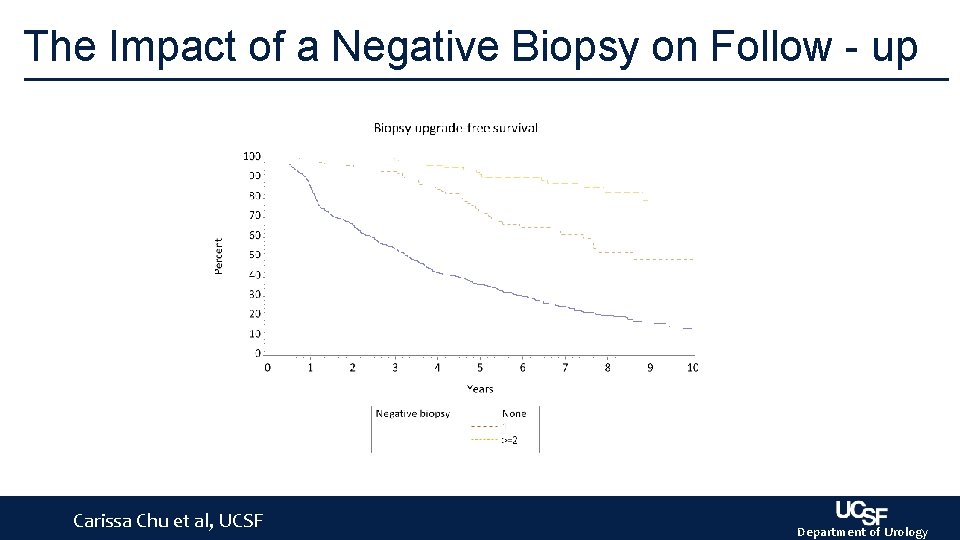
The Impact of a Negative Biopsy on Follow - up Carissa Chu et al, UCSF Department of Urology
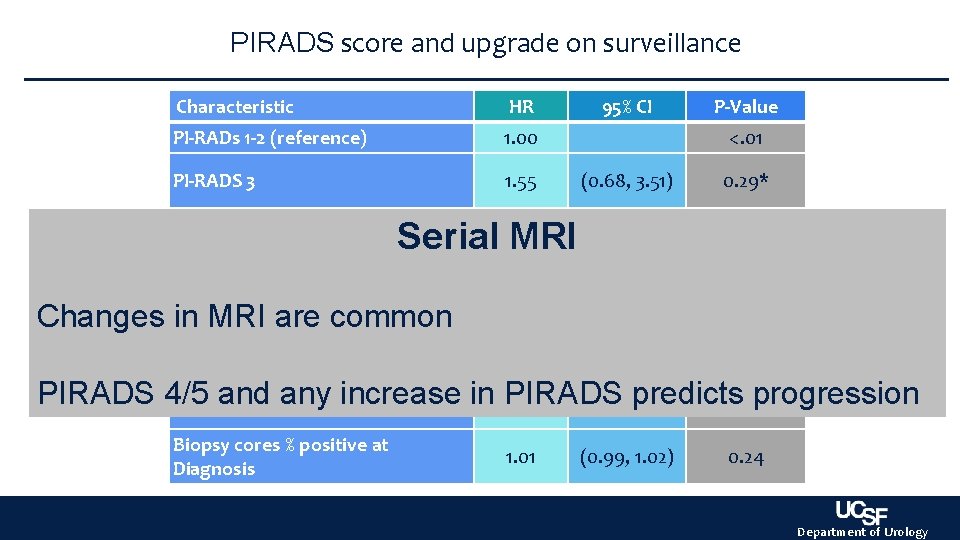
PIRADS score and upgrade on surveillance Characteristic HR PI-RADs 1 -2 (reference) 1. 00 PI-RADS 3 1. 55 PI-RADS 4 95% CI P-Value <. 01 (0. 68, 3. 51) 0. 29* Serial 2. 62 MRI (1. 45, 4. 76) <. 01* PI-RADS 5 4. 38 (2. 36, 8. 16) <. 01* Age at diagnosis (years) 1. 01 (0. 98, 1. 04) 0. 40 Changes in MRI are common PIRADS 4/5 and atany increase in PIRADS progression PSA density diagnosis (log) 1. 47 0. 06 (0. 98, predicts 2. 20) Biopsy cores % positive at Diagnosis 1. 01 (0. 99, 1. 02) 0. 24 Department of Urology
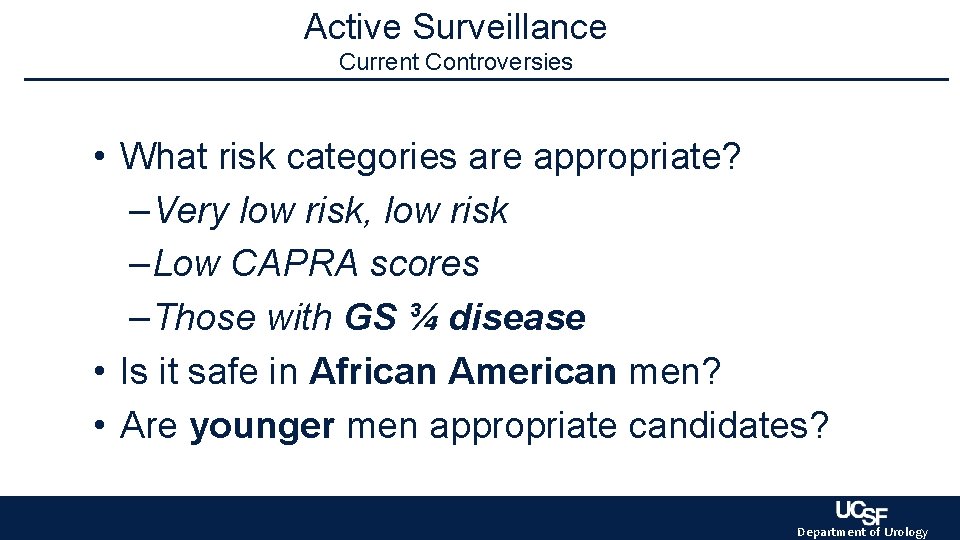
Active Surveillance Current Controversies • What risk categories are appropriate? – Very low risk, low risk – Low CAPRA scores – Those with GS ¾ disease • Is it safe in African American men? • Are younger men appropriate candidates? Department of Urology
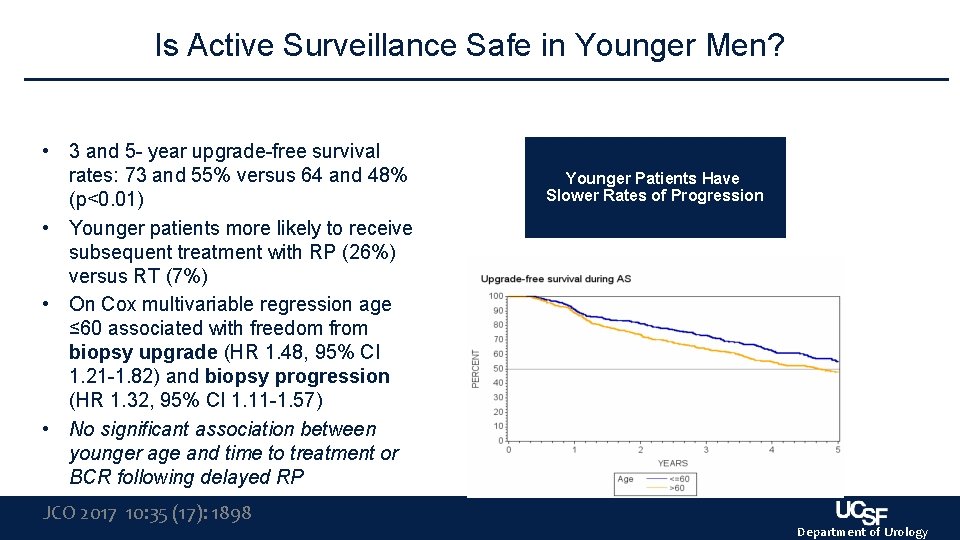
Is Active Surveillance Safe in Younger Men? • 3 and 5 - year upgrade-free survival rates: 73 and 55% versus 64 and 48% (p<0. 01) • Younger patients more likely to receive subsequent treatment with RP (26%) versus RT (7%) • On Cox multivariable regression age ≤ 60 associated with freedom from biopsy upgrade (HR 1. 48, 95% CI 1. 21 -1. 82) and biopsy progression (HR 1. 32, 95% CI 1. 11 -1. 57) • No significant association between younger age and time to treatment or BCR following delayed RP JCO 2017 10: 35 (17): 1898 Younger Patients Have Slower Rates of Progression Department of Urology
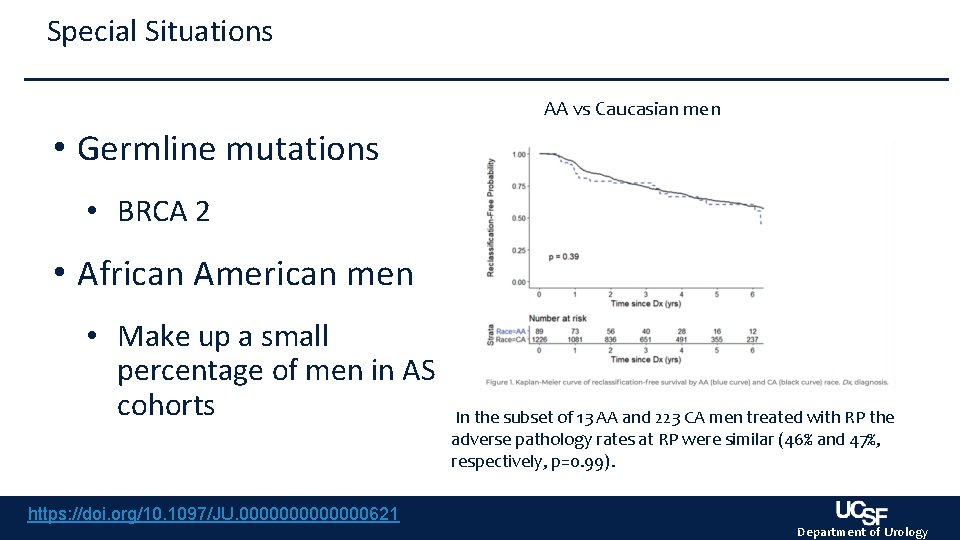
Special Situations AA vs Caucasian men • Germline mutations • BRCA 2 • African American men • Make up a small percentage of men in AS cohorts https: //doi. org/10. 1097/JU. 0000000621 In the subset of 13 AA and 223 CA men treated with RP the adverse pathology rates at RP were similar (46% and 47%, respectively, p=0. 99). Department of Urology
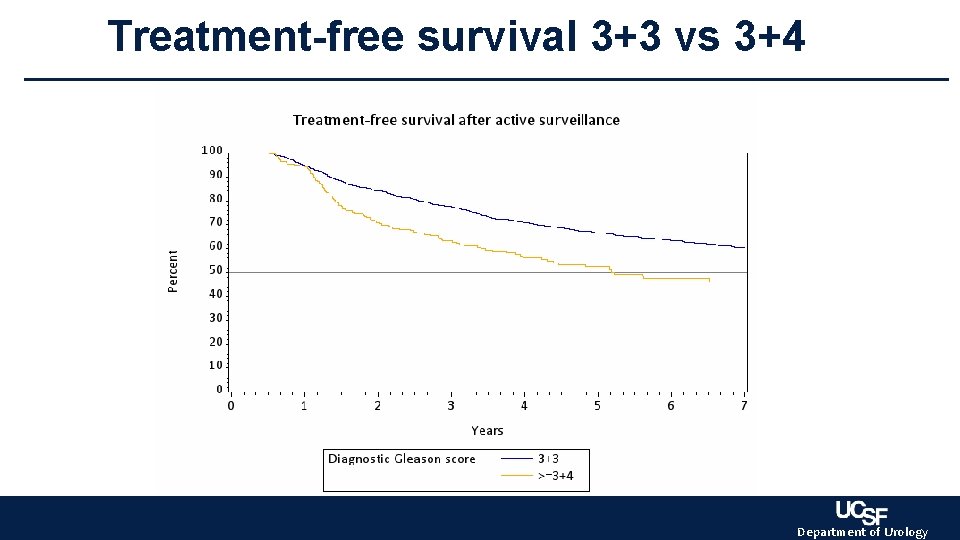
Treatment-free survival 3+3 vs 3+4 Department of Urology
Delayed Radical Prostatectomy - UCSF J Urol. 2019 Sep; 202(3): 506 -510. Department of Urology
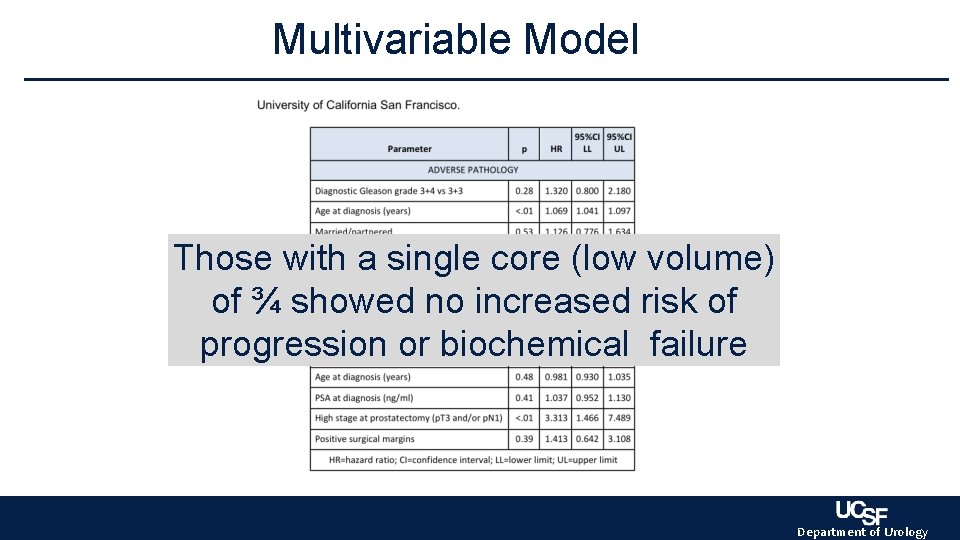
Multivariable Model Those with a single core (low volume) of ¾ showed no increased risk of progression or biochemical failure Department of Urology
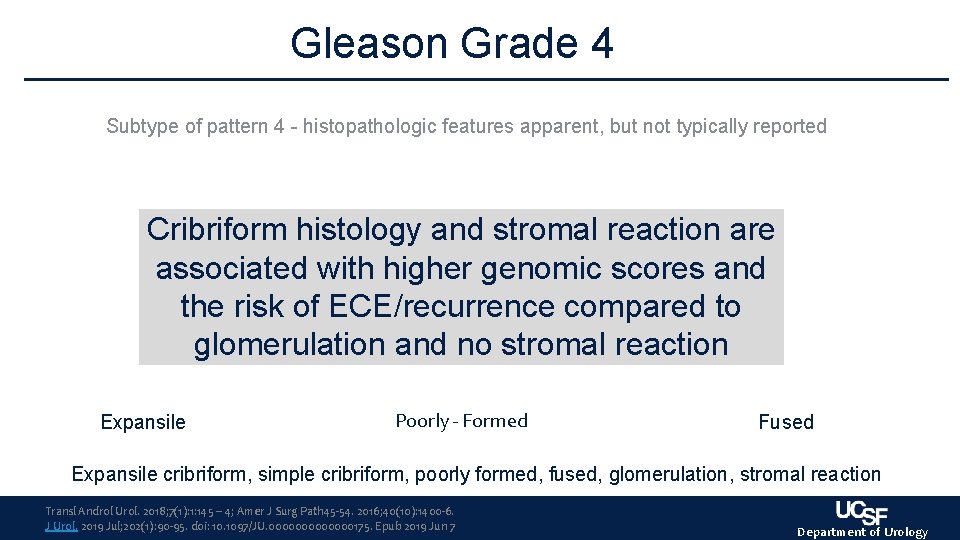
Gleason Grade 4 Subtype of pattern 4 - histopathologic features apparent, but not typically reported Cribriform histology and stromal reaction are associated with higher genomic scores and the risk of ECE/recurrence compared to glomerulation and no stromal reaction Expansile Poorly - Formed Fused Expansile cribriform, simple cribriform, poorly formed, fused, glomerulation, stromal reaction Transl Androl Urol. 2018; 7(1): 1: 145 – 4; Amer J Surg Path 45 -54. 2016; 40(10): 1400 -6. J Urol. 2019 Jul; 202(1): 90 -95. doi: 10. 1097/JU. 0000000175. Epub 2019 Jun 7 Department of Urology
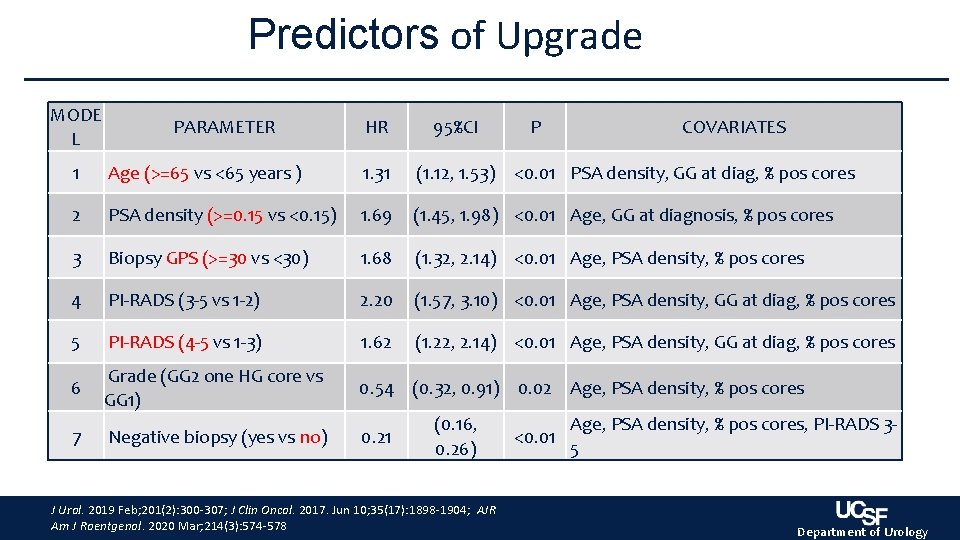
Predictors of Upgrade MODE L PARAMETER HR 95%CI P COVARIATES 1 Age (>=65 vs <65 years ) 1. 31 (1. 12, 1. 53) <0. 01 PSA density, GG at diag, % pos cores 2 PSA density (>=0. 15 vs <0. 15) 1. 69 (1. 45, 1. 98) <0. 01 Age, GG at diagnosis, % pos cores 3 Biopsy GPS (>=30 vs <30) 1. 68 (1. 32, 2. 14) <0. 01 Age, PSA density, % pos cores 4 PI-RADS (3 -5 vs 1 -2) 2. 20 (1. 57, 3. 10) <0. 01 Age, PSA density, GG at diag, % pos cores 5 PI-RADS (4 -5 vs 1 -3) 1. 62 (1. 22, 2. 14) <0. 01 Age, PSA density, GG at diag, % pos cores 6 Grade (GG 2 one HG core vs GG 1) 0. 54 (0. 32, 0. 91) 0. 02 Age, PSA density, % pos cores 7 Negative biopsy (yes vs no) 0. 21 (0. 16, 0. 26) J Urol. 2019 Feb; 201(2): 300 -307; J Clin Oncol. 2017. Jun 10; 35(17): 1898 -1904; AJR Am J Roentgenol. 2020 Mar; 214(3): 574 -578 <0. 01 Age, PSA density, % pos cores, PI-RADS 35 Department of Urology
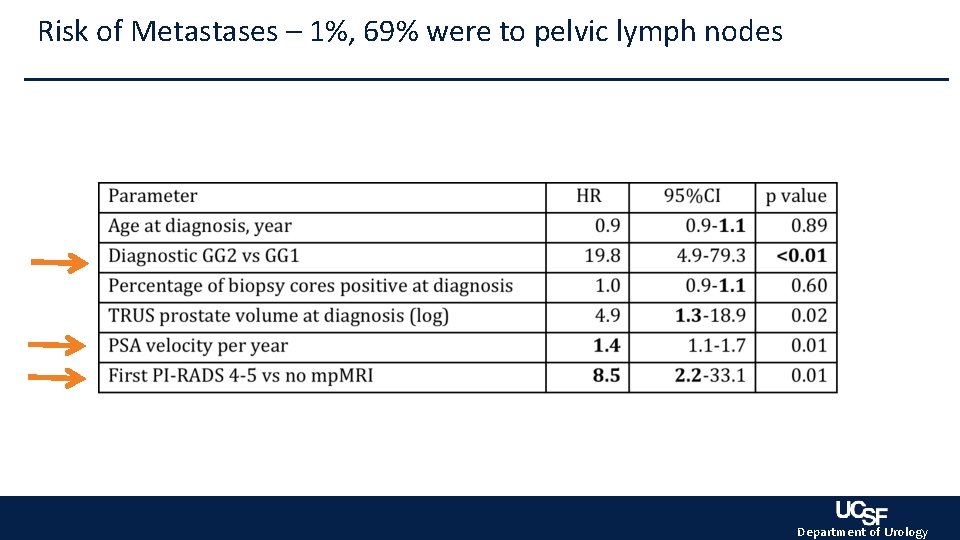
Risk of Metastases – 1%, 69% were to pelvic lymph nodes Department of Urology
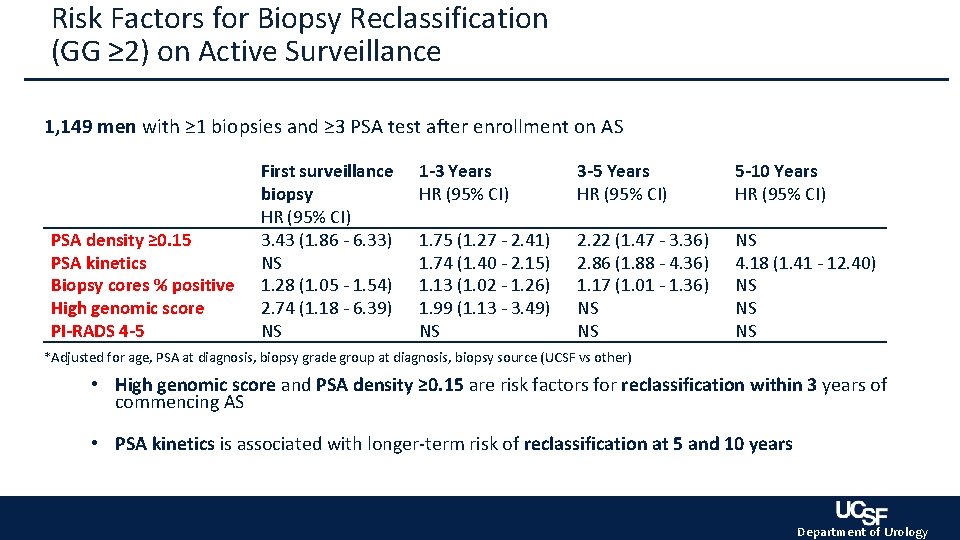
Risk Factors for Biopsy Reclassification (GG ≥ 2) on Active Surveillance 1, 149 men with ≥ 1 biopsies and ≥ 3 PSA test after enrollment on AS PSA density ≥ 0. 15 PSA kinetics Biopsy cores % positive High genomic score PI-RADS 4 -5 First surveillance biopsy HR (95% CI) 3. 43 (1. 86 - 6. 33) NS 1. 28 (1. 05 - 1. 54) 2. 74 (1. 18 - 6. 39) NS 1 -3 Years HR (95% CI) 3 -5 Years HR (95% CI) 5 -10 Years HR (95% CI) 1. 75 (1. 27 - 2. 41) 1. 74 (1. 40 - 2. 15) 1. 13 (1. 02 - 1. 26) 1. 99 (1. 13 - 3. 49) NS 2. 22 (1. 47 - 3. 36) 2. 86 (1. 88 - 4. 36) 1. 17 (1. 01 - 1. 36) NS NS NS 4. 18 (1. 41 - 12. 40) NS NS NS *Adjusted for age, PSA at diagnosis, biopsy grade group at diagnosis, biopsy source (UCSF vs other) • High genomic score and PSA density ≥ 0. 15 are risk factors for reclassification within 3 years of commencing AS • PSA kinetics is associated with longer-term risk of reclassification at 5 and 10 years Lonergan et al. , J. Urol. 2020 (in press) Department of Urology
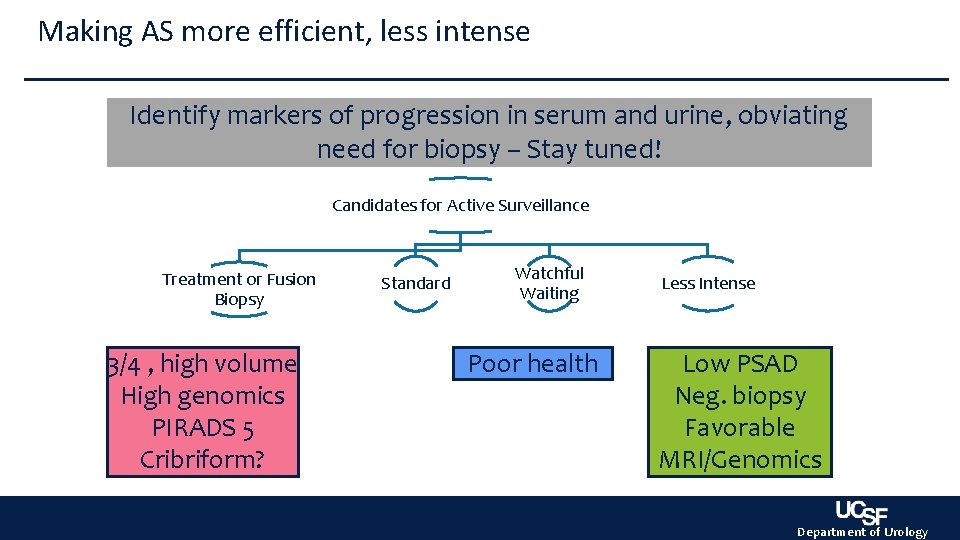
Making AS more efficient, less intense Identify markers of progression in serum and urine, obviating need for biopsy – Stay tuned! Candidates for Active Surveillance Treatment or Fusion Biopsy 3/4 , high volume High genomics PIRADS 5 Cribriform? Standard Watchful Waiting Poor health Less Intense Low PSAD Neg. biopsy Favorable MRI/Genomics Department of Urology
Active Surveillance Cohorts UCSF 1990 Toronto 1995 PRIAS 2008 Johns Hopkins Canary PASS 1995 2008 Number Age, median (IQR) PSA, median Follow up 2, 113 62 993 68 (41 -89) 5, 302 66 (61 -70) 1, 818 66 (62 -69) 1, 041 63 (58 -67) 5. 5 (4. 2 -7. 5) 73 (43 -112) 4. 8 (3. 2 -6. 6) 77 (2 -238) 5. 7 (4. 5 -7. 1) 78 (37 -101) 4. 6 (3. 5– 5. 8) 68 (31 -109) 5. 0 (3. 8 -6. 5) 28 (33. 5) Reclassification (GG≥ 2) 41% at 7 yrs 22– 33% 21% at 5 yrs 30% at 10 yrs 24% Treatment 59% at 7 yrs 24% at 5 yrs 36% at 10 yrs 52% at 5 yrs 73% at 10 yrs 36% at 5 yrs 48% at 10 yrs 19% Metastasis 1% at 7 yrs 2. 8% Not reported 0. 1% at 10 yrs Not reported Enrollment commenced Department of Urology
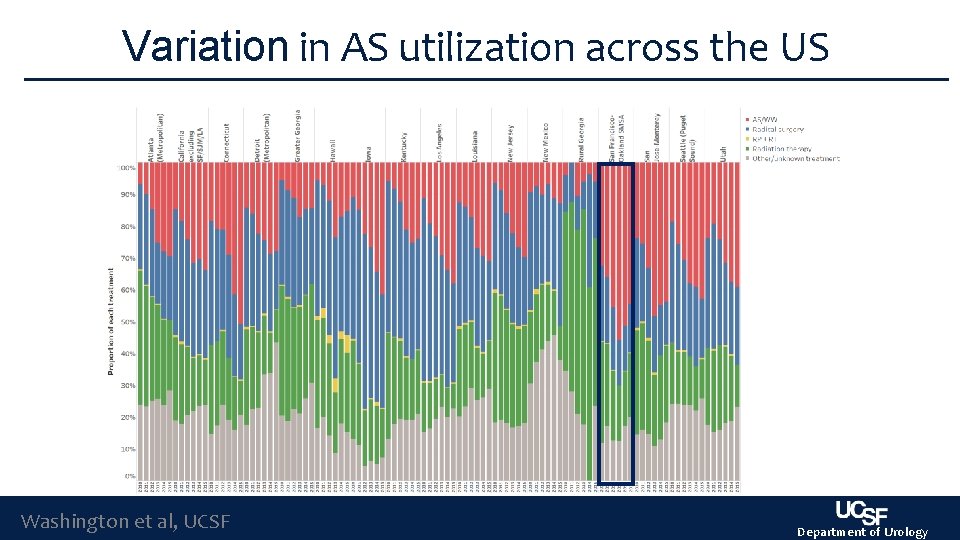
Variation in AS utilization across the US Washington et al, UCSF Department of Urology
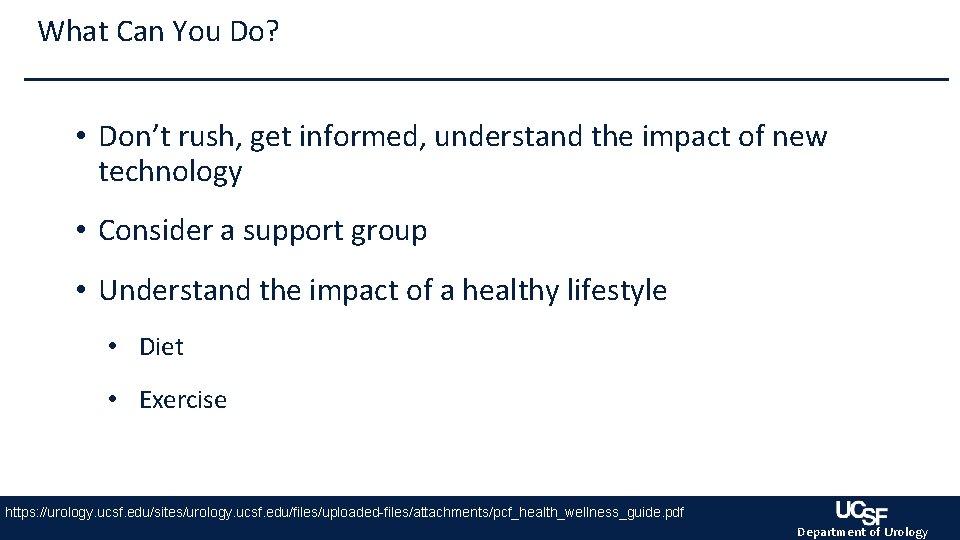
What Can You Do? • Don’t rush, get informed, understand the impact of new technology • Consider a support group • Understand the impact of a healthy lifestyle • Diet • Exercise https: //urology. ucsf. edu/sites/urology. ucsf. edu/files/uploaded-files/attachments/pcf_health_wellness_guide. pdf Department of Urology
Is AS Right for You? What You Need to Consider • PSA “density” (PSA/gland volume) (< 0. 15) • Stage (T 1/2) • Cancer grade (3/3) • Cancer grade ¾ - volume, subtype • Age and health • Patient and family preferences • Confidence in your providers • Need for confirmatory biopsy • MRI (PIRADS 1 - 3) • Genomics (Prolaris, Oncotype. DX or Decipher) Department of Urology
Active Surveillance New Developments Department of Urology
Active Surveillance New Developments • Use of markers of specificity before biopsy – Serum/Urine – Multiparametric MRI – Reduce biopsy rates 20% - 40% • Focal Therapy in lieu of Active Surveillance Department of Urology
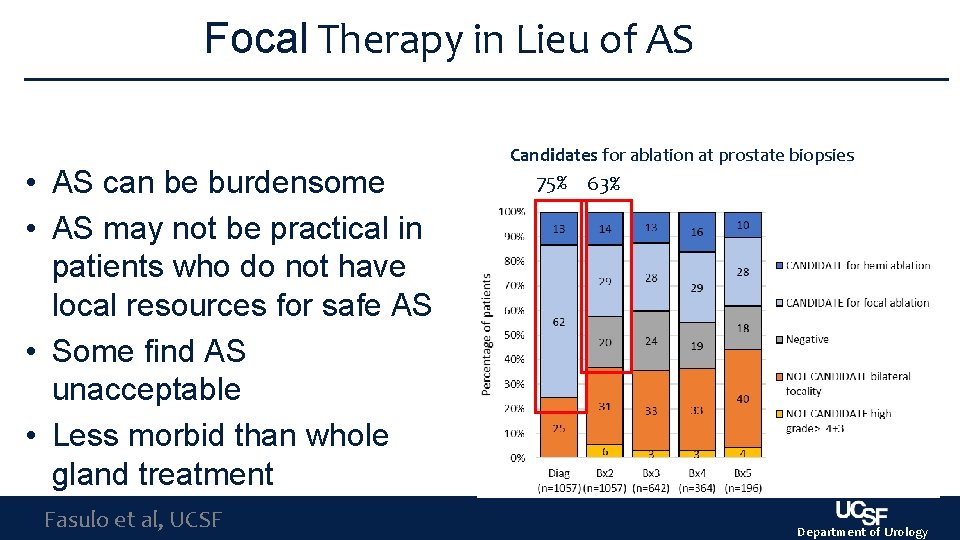
Focal Therapy in Lieu of AS • AS can be burdensome • AS may not be practical in patients who do not have local resources for safe AS • Some find AS unacceptable • Less morbid than whole gland treatment Fasulo et al, UCSF Candidates for ablation at prostate biopsies 75% 63% Department of Urology
Active Surveillance Summary • Active surveillance is the preferred form of treatment for men with very low, low - risk and selected patients with favorable intermediate - risk disease • New technology (MRI, genomics) appears to make it safer • Its use remains highly variable • It will be challenged by focal therapy Department of Urology