
Active Supervision The Keys to Success E 4Where

- Slides: 23
Active Supervision: The Keys to Success
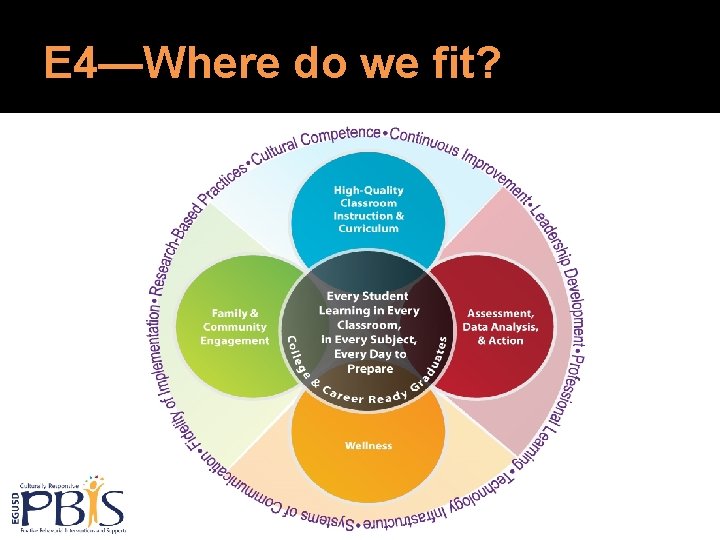
E 4—Where do we fit?
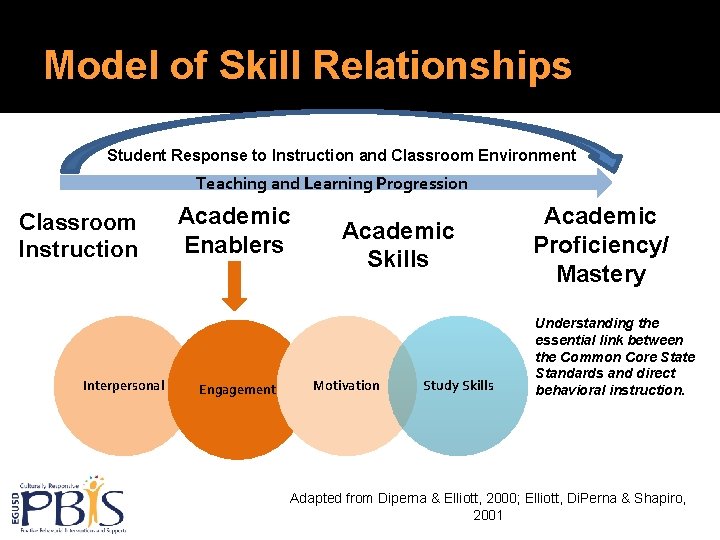
Model of Skill Relationships Student Response to Instruction and Classroom Environment Teaching and Learning Progression Classroom Instruction Interpersonal Academic Enablers Engagement Academic Skills Motivation Study Skills Academic Proficiency/ Mastery Understanding the essential link between the Common Core State Standards and direct behavioral instruction. Adapted from Diperna & Elliott, 2000; Elliott, Di. Perna & Shapiro, 2001
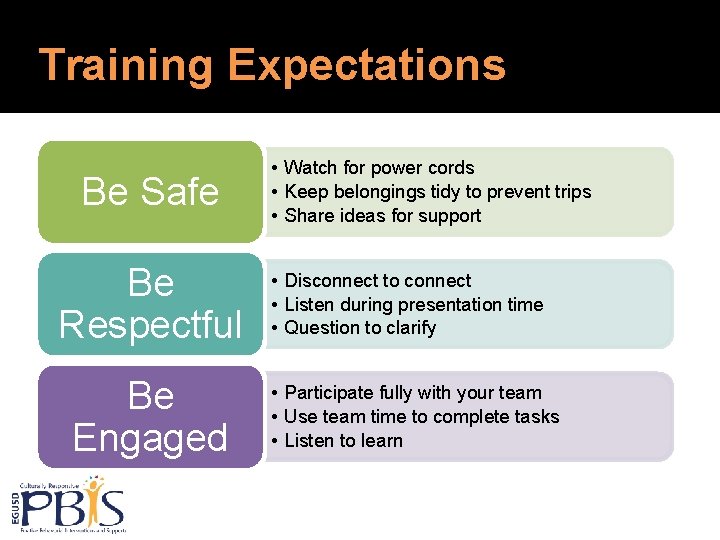
Training Expectations Be Safe Be Respectful Be Engaged • Watch for power cords • Keep belongings tidy to prevent trips • Share ideas for support • Disconnect to connect • Listen during presentation time • Question to clarify • Participate fully with your team • Use team time to complete tasks • Listen to learn
Active Supervision: Doing it Well
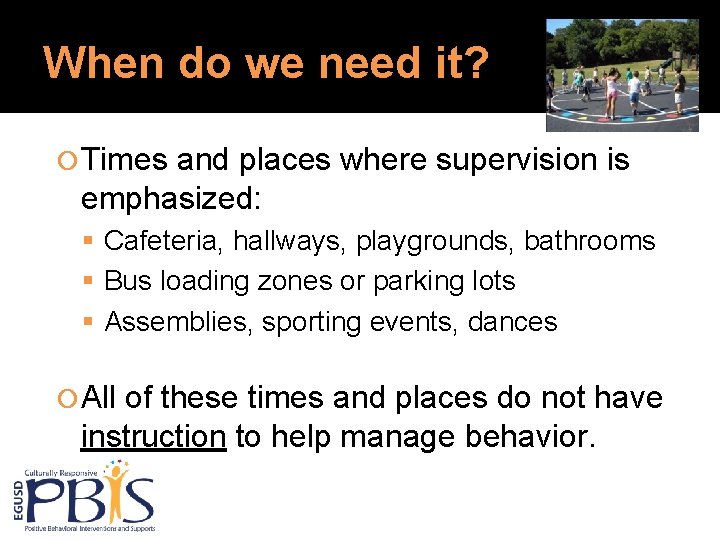
When do we need it? Times and places where supervision is emphasized: Cafeteria, hallways, playgrounds, bathrooms Bus loading zones or parking lots Assemblies, sporting events, dances All of these times and places do not have instruction to help manage behavior.
Consider the differences… Classroom vs Teacher directed Instructional focus Small, predictable number of students Walls to determine boundaries Non-Classroom Student directed Social/Play focus Large number of students Large areas to supervise
Management Features What can we use to help us? Physical/environmental arrangements Assigned tables, teacher ‘spot’ to line up, etc. Routines & expectations What to do at whistle; where to put equipment, etc. Staff behavior When/where are teachers asked to pick up class? Student behavior Where do students line up?
Teamwork… It makes the dream work! We support each other… Friendly adult presence Prompts desired behavior Deters problem behavior “Being a good citizen” is who we are! Contributes to school climate See adults on campus as a team
The Active Supervision Self-Assessment
Time to take a look… Let’s investigate our own practice of the essential features of Active Supervision. As we go through the following slides, use your Active Supervision Self-Assessment. Evaluate yourself by marking yes or no.
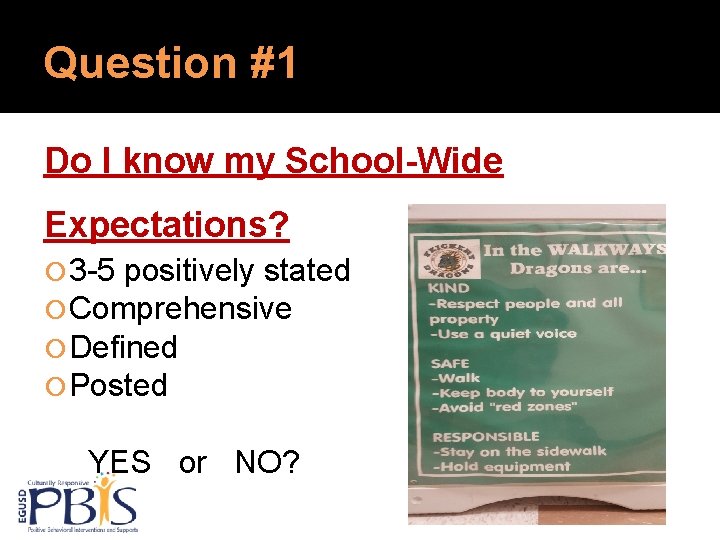
Question #1 Do I know my School-Wide Expectations? 3 -5 positively stated Comprehensive Defined Posted YES or NO?
Question #2 Do I move continuously throughout my area? Be active Obvious Positive Interactive Unpredictable YES or NO?
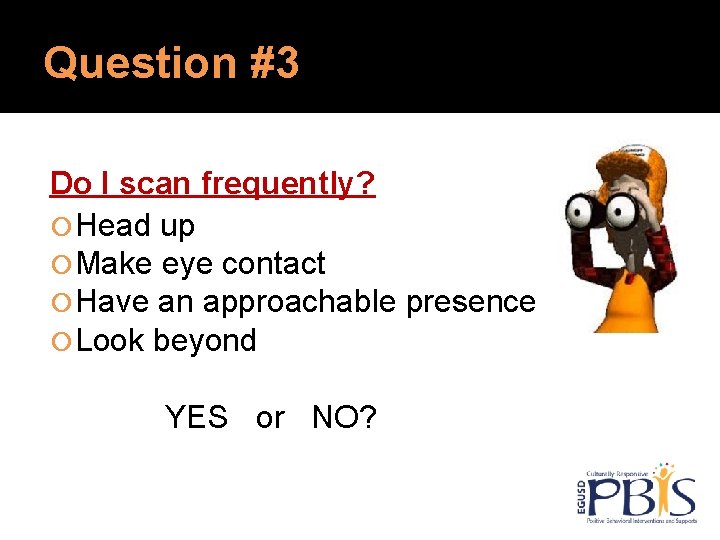
Question #3 Do I scan frequently? Head up Make eye contact Have an approachable presence Look beyond YES or NO?
Question #4 Do I positively interact with most students? Use a variety of interaction types: Specific Praise tied to schooolwide expectations Positive compliments, comments Variety of Students Quick and in abundance Noticeable Age appropriate YES or NO?
Question #5 Do I positively interact with five or more students? Displaying school-wide expectations? Individualized Behavior specific Sincere Genuine YES or NO?
Question #6 Do I use the 5: 1 rule? Have more positive student contacts than negative For every reprimand or corrective statement, provide 5 positive interactions or acknowledgements Use variety of positive interactions YES or NO?
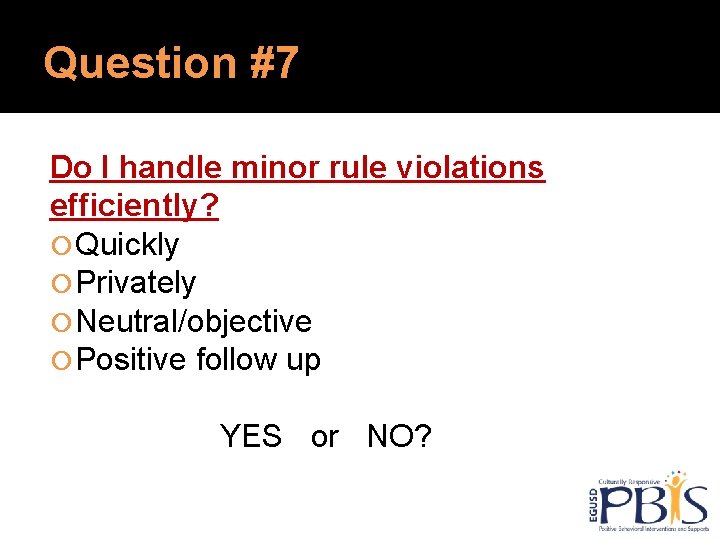
Question #7 Do I handle minor rule violations efficiently? Quickly Privately Neutral/objective Positive follow up YES or NO?
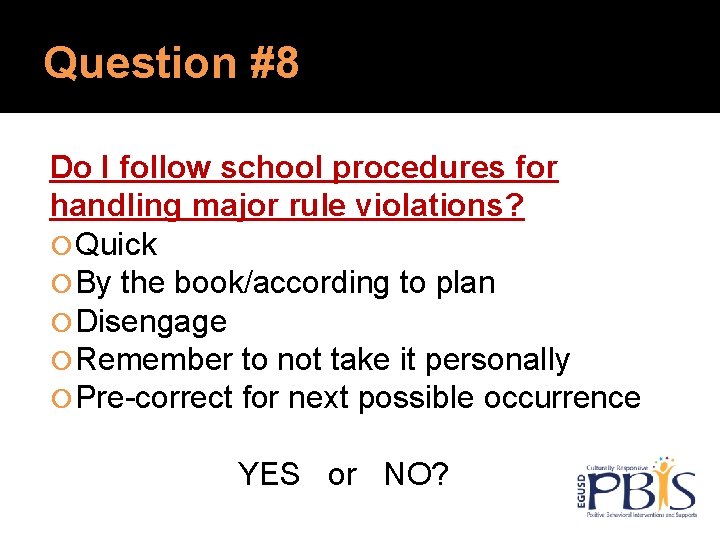
Question #8 Do I follow school procedures for handling major rule violations? Quick By the book/according to plan Disengage Remember to not take it personally Pre-correct for next possible occurrence YES or NO?
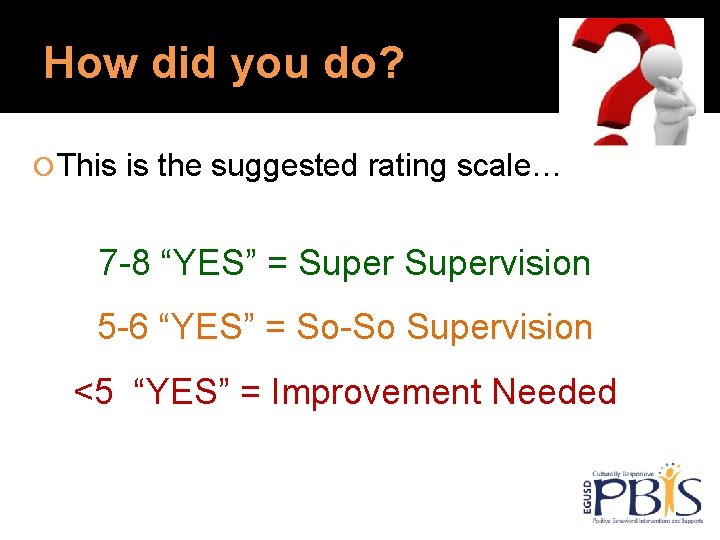
How did you do? This is the suggested rating scale… 7 -8 “YES” = Supervision 5 -6 “YES” = So-So Supervision <5 “YES” = Improvement Needed
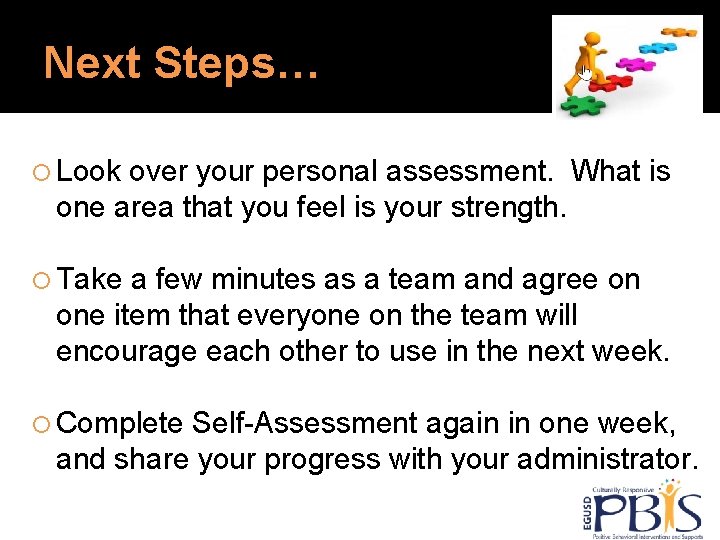
Next Steps… Look over your personal assessment. What is one area that you feel is your strength. Take a few minutes as a team and agree on one item that everyone on the team will encourage each other to use in the next week. Complete Self-Assessment again in one week, and share your progress with your administrator.
Questions?
Thank you! Contact information: