
ACTIVE SHOOTER RUN HIDE FIGHT OVERVIEW This presentation

- Slides: 25
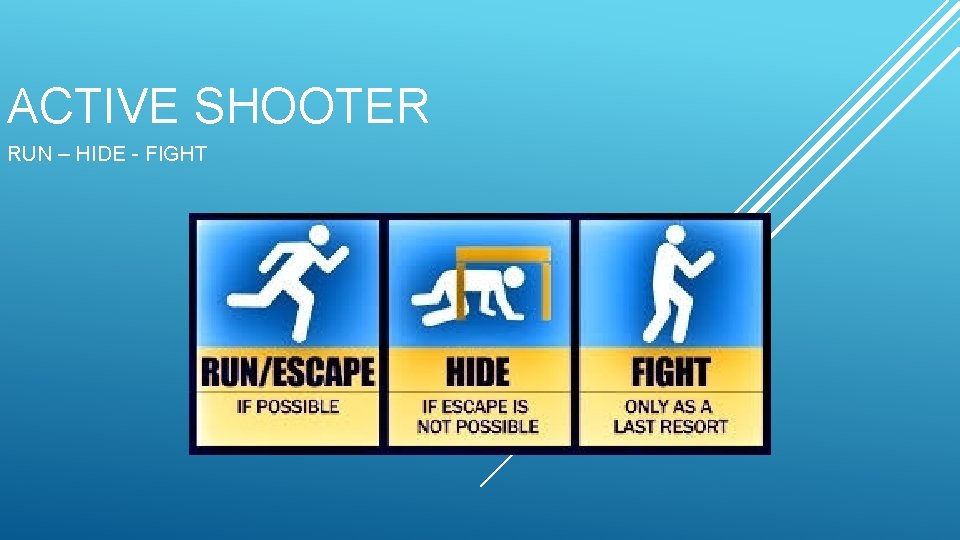
ACTIVE SHOOTER RUN – HIDE - FIGHT
OVERVIEW This presentation is intended to raise self awareness and better enable us all to: q Recognize potential warning signs of violence q Discuss preventive measures q Identify steps to protect yourself q Learn how to interact with law enforcement & security
ACTIVE SHOOTER STATISTICS Mass shootings and terrorist attacks have been on the rise since 2000 They are unpredictable, evolve quickly and continue until stopped by law enforcement, public intervention or suicide Police will act swiftly and with extreme force to protect human life Because attacks are unique, police tactics & responses may widely vary among agencies Be mentally prepared to react & adapt to danger Insert FBI slide from P visit
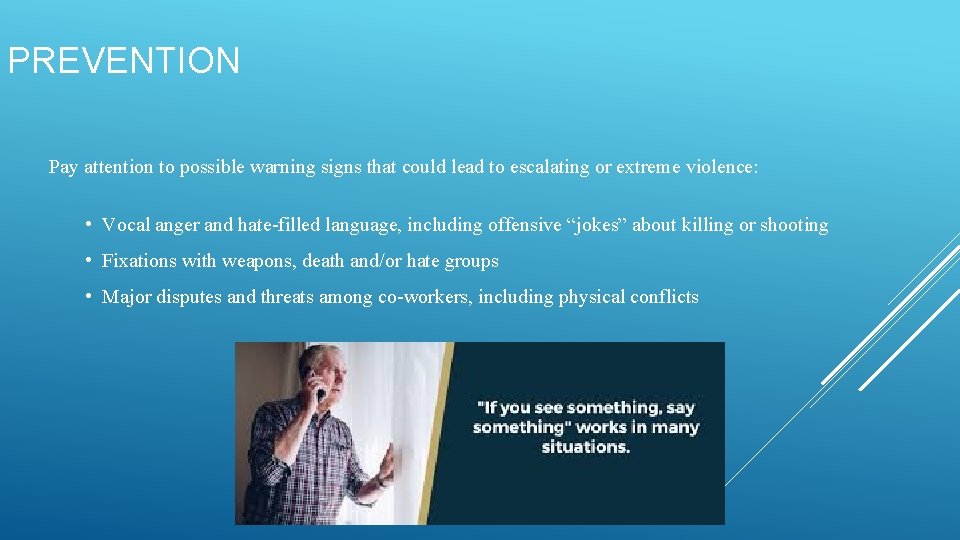
PREVENTION Pay attention to possible warning signs that could lead to escalating or extreme violence: • Vocal anger and hate-filled language, including offensive “jokes” about killing or shooting • Fixations with weapons, death and/or hate groups • Major disputes and threats among co-workers, including physical conflicts
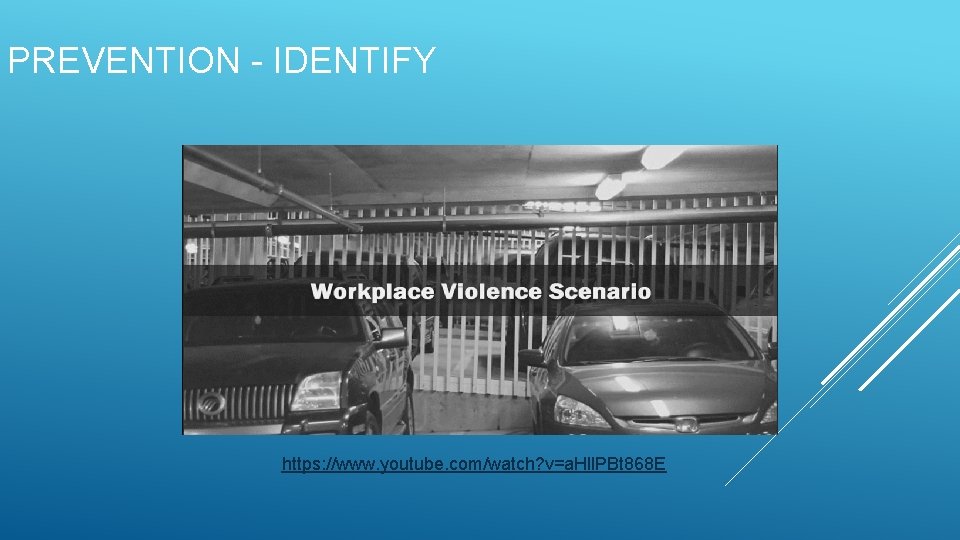
PREVENTION - IDENTIFY https: //www. youtube. com/watch? v=a. Hll. PBt 868 E
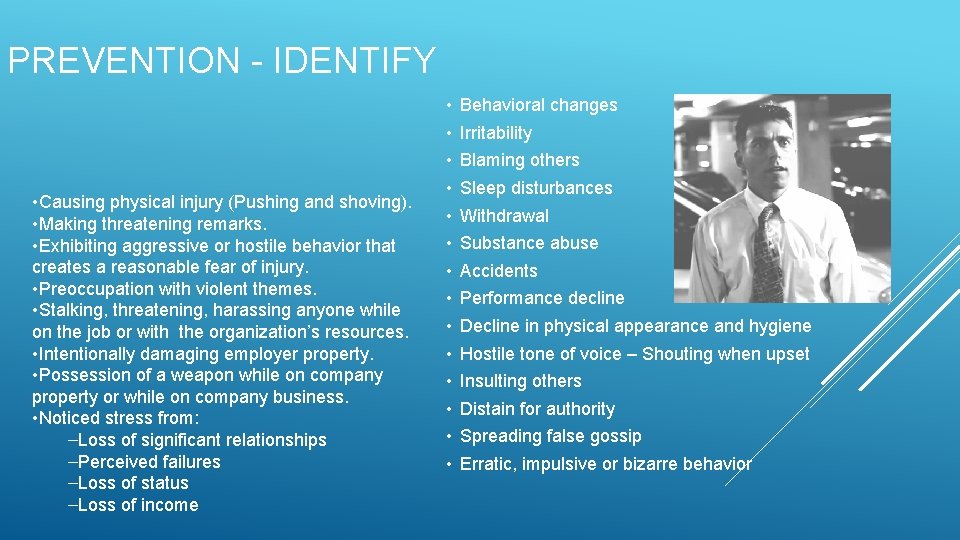
PREVENTION - IDENTIFY • Causing physical injury (Pushing and shoving). • Making threatening remarks. • Exhibiting aggressive or hostile behavior that creates a reasonable fear of injury. • Preoccupation with violent themes. • Stalking, threatening, harassing anyone while on the job or with the organization’s resources. • Intentionally damaging employer property. • Possession of a weapon while on company property or while on company business. • Noticed stress from: –Loss of significant relationships –Perceived failures –Loss of status –Loss of income • • • • Behavioral changes Irritability Blaming others Sleep disturbances Withdrawal Substance abuse Accidents Performance decline Decline in physical appearance and hygiene Hostile tone of voice – Shouting when upset Insulting others Distain for authority Spreading false gossip Erratic, impulsive or bizarre behavior
PREVENTION - REPORTING Common Roadblocks to Reporting • Lack of awareness about the warning signs or denying that signs are present. • Hesitation to get involved. • Assumption that reporting is someone else’s responsibility. • Apprehension about getting a co-worker in trouble or meddling in their personal affairs. • Fear of retaliation.
PREVENTION - INVESTIGATING Reports of concerns will be investigated Every effort will be made to maintain the privacy of the reporter and the subject of the complaint. The goal is to maintain a safe and positive environment – not discipline or punish. Report to someone you trust – parent, teacher, counselor, adult friend
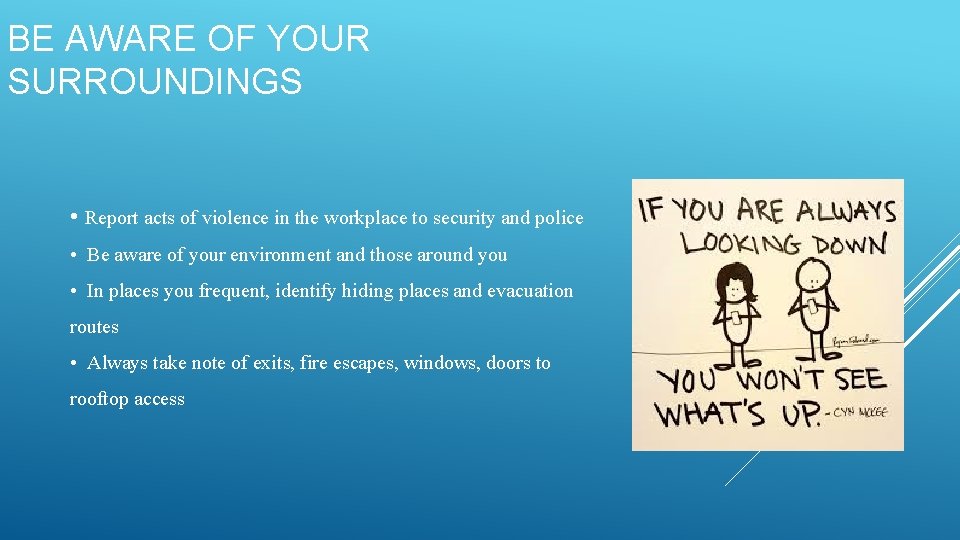
BE AWARE OF YOUR SURROUNDINGS • Report acts of violence in the workplace to security and police • Be aware of your environment and those around you • In places you frequent, identify hiding places and evacuation routes • Always take note of exits, fire escapes, windows, doors to rooftop access
ACTIVE SHOOTER – ACTIVE ASSAILANT This information is critically important at: Any TIME, Any WHERE (at work or home), Any PLACE (at church, at the mall, at theater) Video - https: //www. dhs. gov/options-consideration-active-shooter-preparedness-video
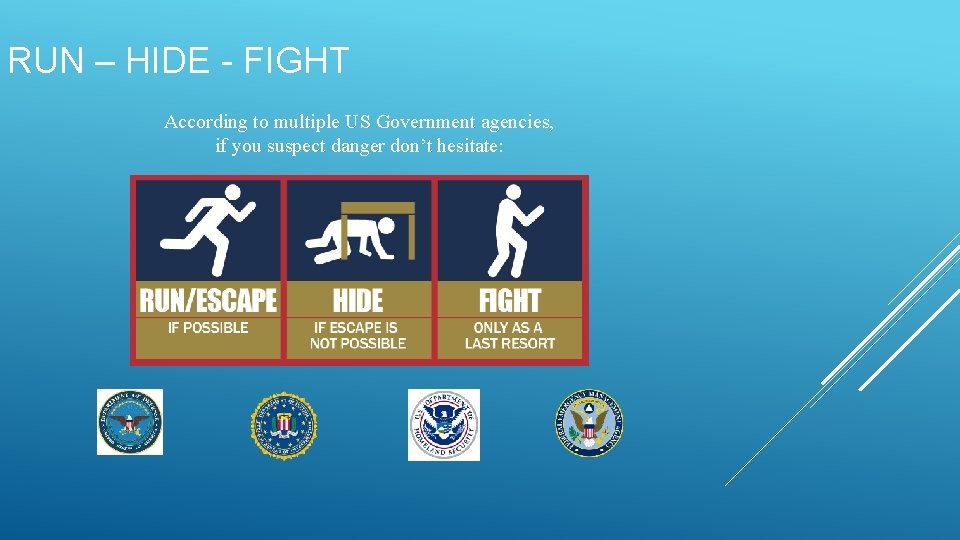
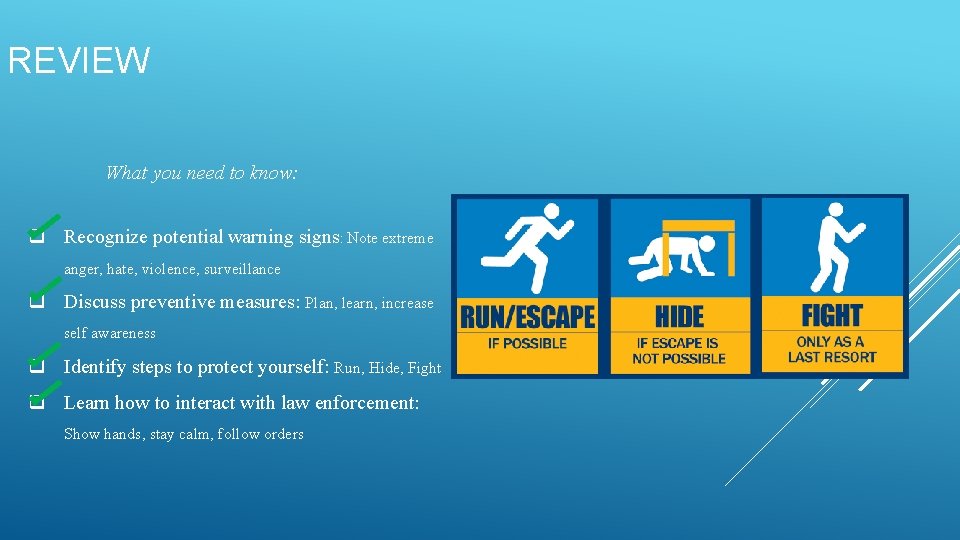
RUN – HIDE - FIGHT According to multiple US Government agencies, if you suspect danger don’t hesitate:
RESPONSES Concepts are simple: RUN…. HIDE… FIGHT Challenges Under Stress: 1. Time is PRECIOUS • At first gunshot – SURREAL (unreal, dreamlike, uncanny) = You just lost PRECIOUS seconds! • Gunshot is a starter’s pistol. Get your feet moving! - Adopt a SURVIVOR’s MINDSET 2. Knowing when to RUN vs. HIDE • One Question: Where did that gunshot come from? (direction? And distance? ) • Under stress, the most likely instinct is HIDE • It is very hard to hit a moving target at distance – RUN is the best option • Hallways are a fatal funnel. Get out quickly! 3. HIDE also means BARRICADE (photo to the right is an actual photo of a school classroom)
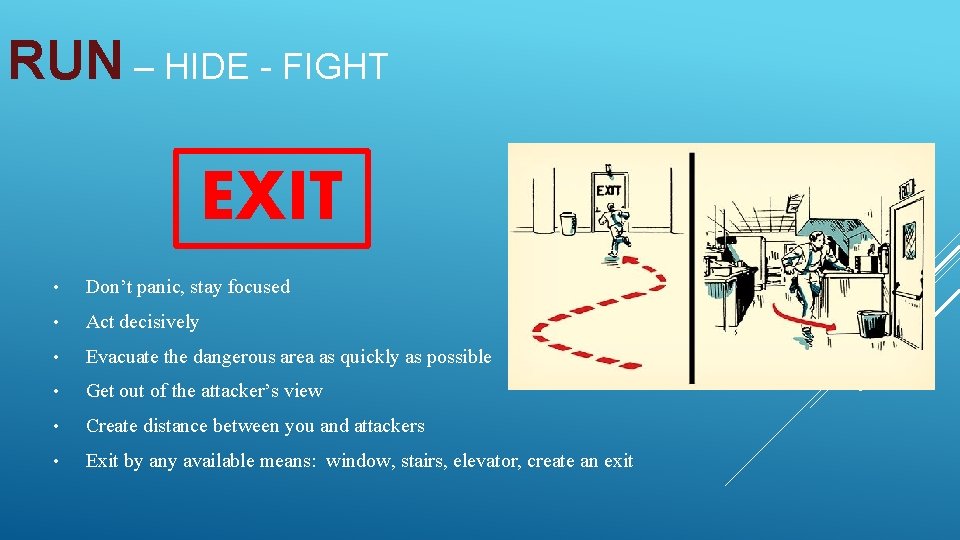
RUN – HIDE - FIGHT EXIT • Don’t panic, stay focused • Act decisively • Evacuate the dangerous area as quickly as possible • Get out of the attacker’s view • Create distance between you and attackers • Exit by any available means: window, stairs, elevator, create an exit
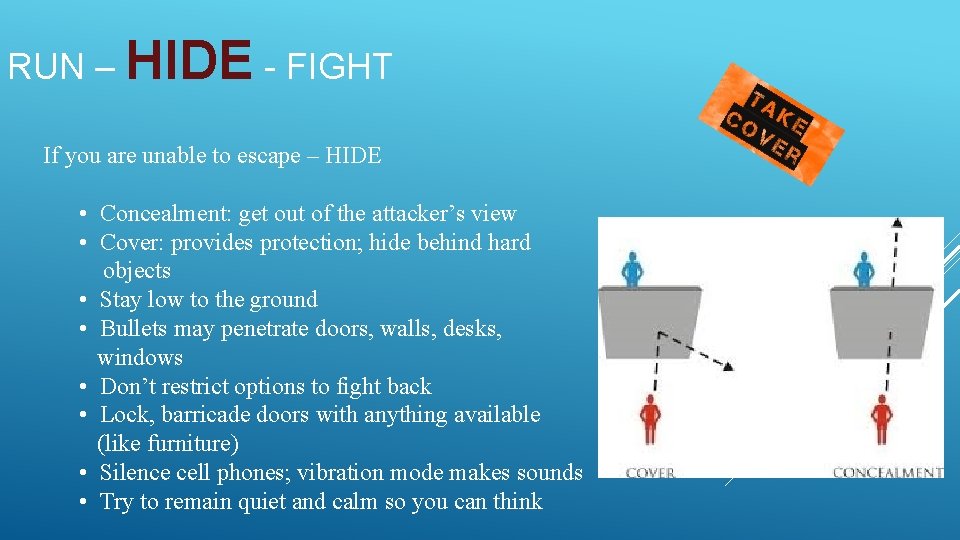
RUN – HIDE - FIGHT If you are unable to escape – HIDE • Concealment: get out of the attacker’s view • Cover: provides protection; hide behind hard objects • Stay low to the ground • Bullets may penetrate doors, walls, desks, windows • Don’t restrict options to fight back • Lock, barricade doors with anything available (like furniture) • Silence cell phones; vibration mode makes sounds • Try to remain quiet and calm so you can think
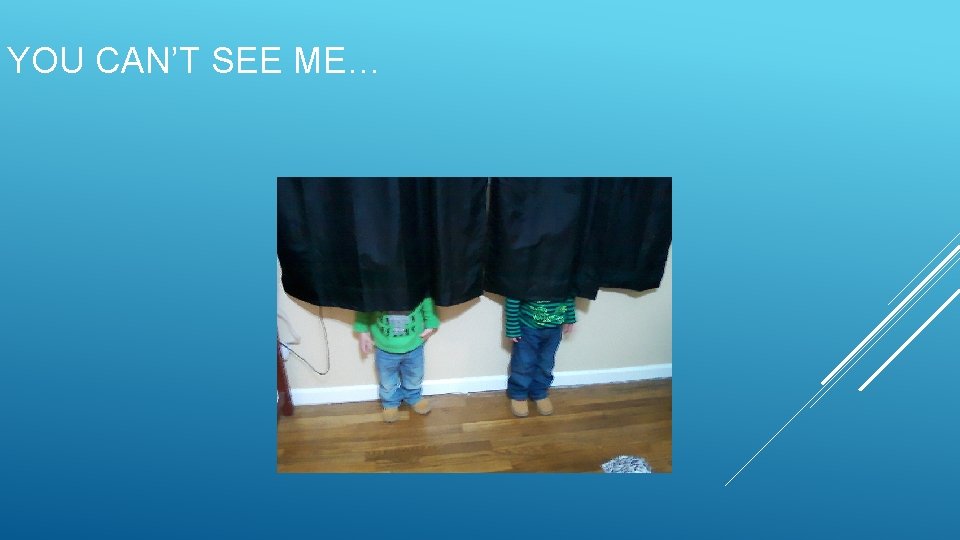
YOU CAN’T SEE ME…
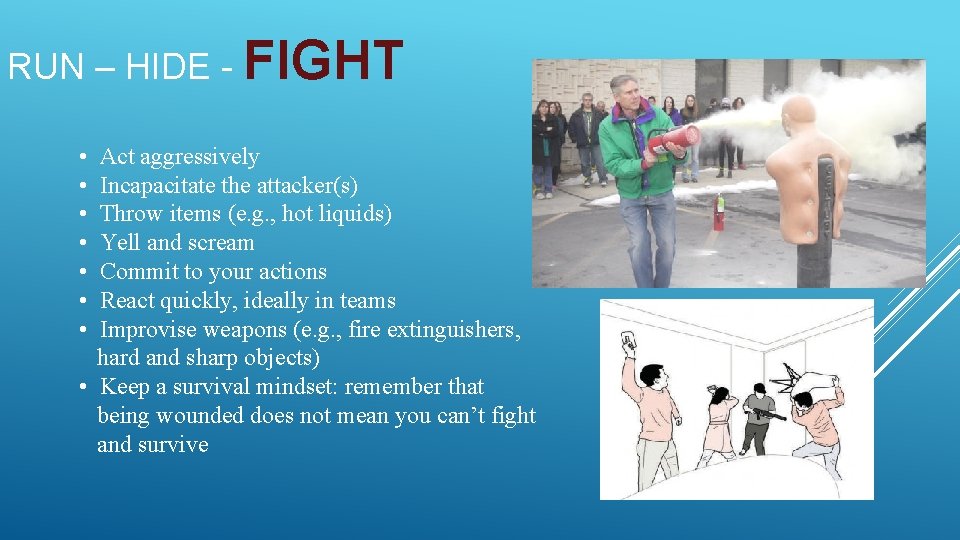
RUN – HIDE - FIGHT • • Act aggressively Incapacitate the attacker(s) Throw items (e. g. , hot liquids) Yell and scream Commit to your actions React quickly, ideally in teams Improvise weapons (e. g. , fire extinguishers, hard and sharp objects) • Keep a survival mindset: remember that being wounded does not mean you can’t fight and survive
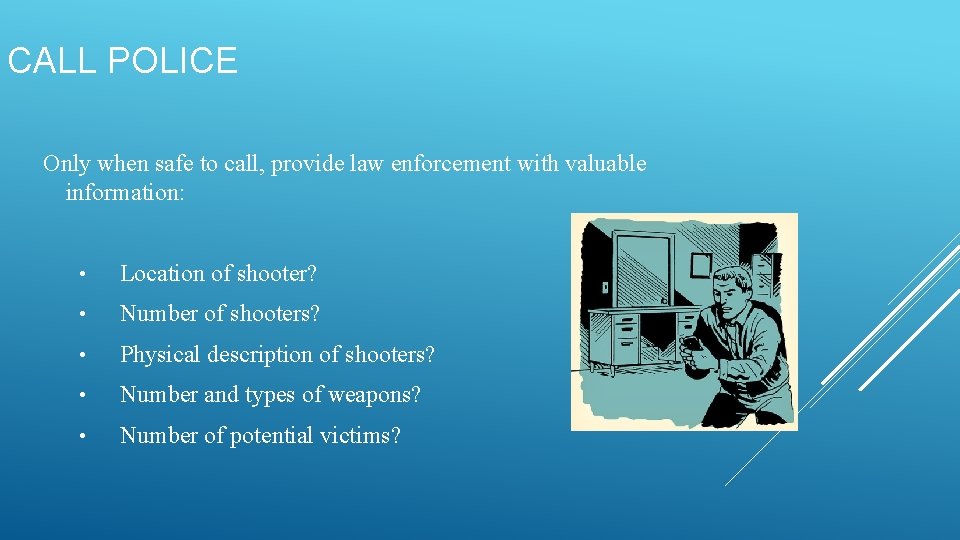
CALL POLICE Only when safe to call, provide law enforcement with valuable information: • Location of shooter? • Number of shooters? • Physical description of shooters? • Number and types of weapons? • Number of potential victims?
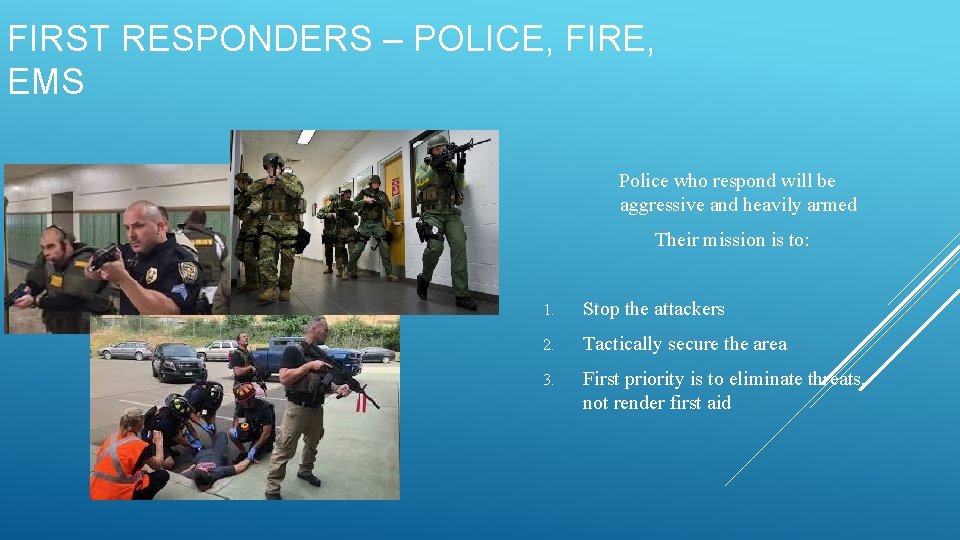
FIRST RESPONDERS – POLICE, FIRE, EMS Police who respond will be aggressive and heavily armed Their mission is to: 1. Stop the attackers 2. Tactically secure the area 3. First priority is to eliminate threats, not render first aid
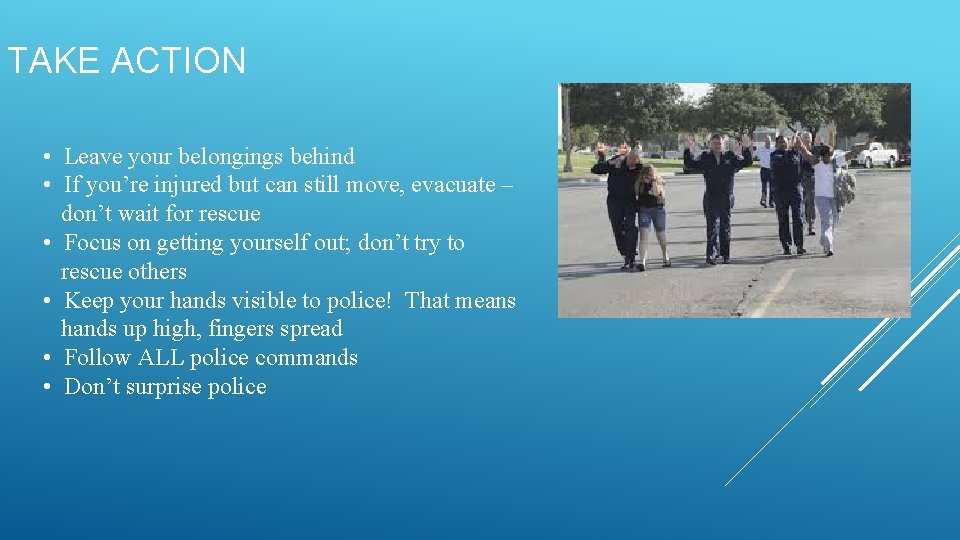
TAKE ACTION • Leave your belongings behind • If you’re injured but can still move, evacuate – don’t wait for rescue • Focus on getting yourself out; don’t try to rescue others • Keep your hands visible to police! That means hands up high, fingers spread • Follow ALL police commands • Don’t surprise police
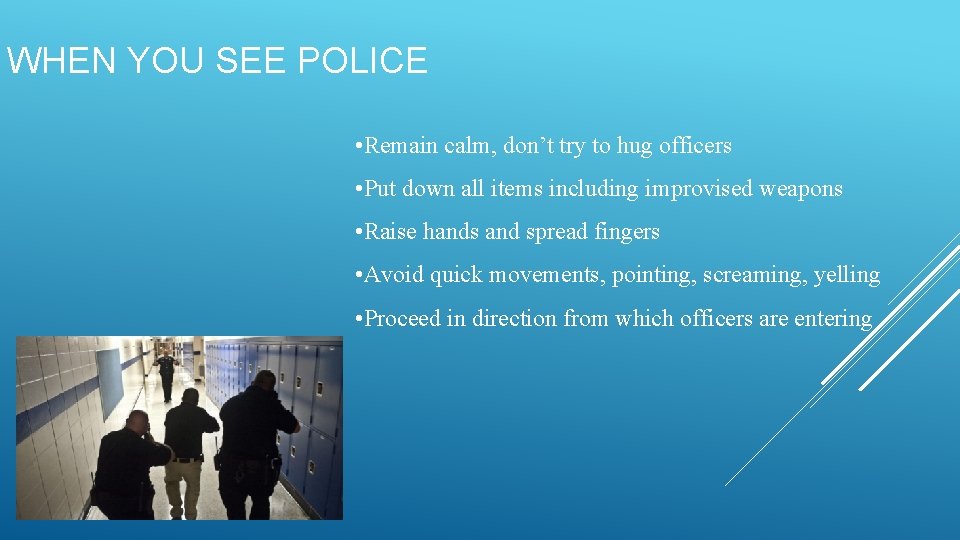
WHEN YOU SEE POLICE • Remain calm, don’t try to hug officers • Put down all items including improvised weapons • Raise hands and spread fingers • Avoid quick movements, pointing, screaming, yelling • Proceed in direction from which officers are entering
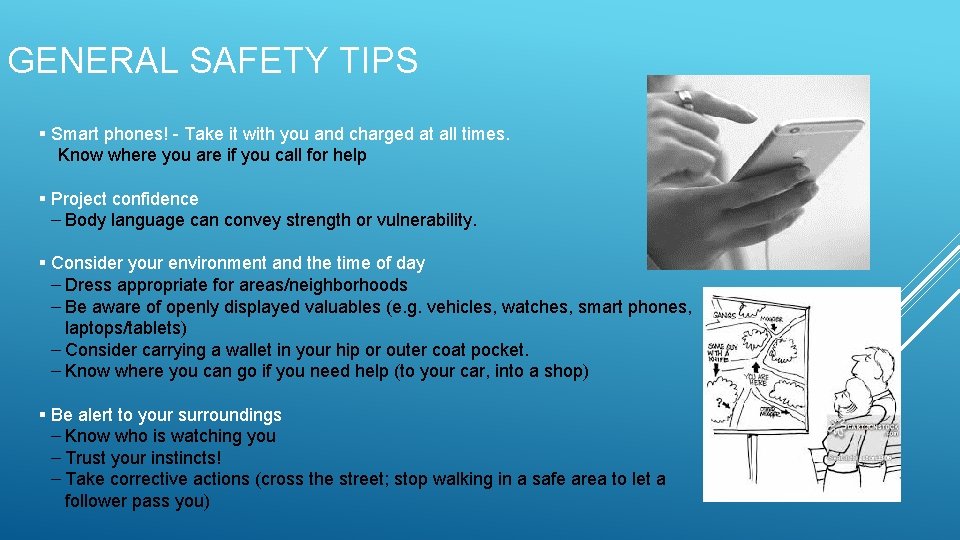
GENERAL SAFETY TIPS § Smart phones! - Take it with you and charged at all times. Know where you are if you call for help § Project confidence – Body language can convey strength or vulnerability. § Consider your environment and the time of day – Dress appropriate for areas/neighborhoods – Be aware of openly displayed valuables (e. g. vehicles, watches, smart phones, laptops/tablets) – Consider carrying a wallet in your hip or outer coat pocket. – Know where you can go if you need help (to your car, into a shop) § Be alert to your surroundings – Know who is watching you – Trust your instincts! – Take corrective actions (cross the street; stop walking in a safe area to let a follower pass you)
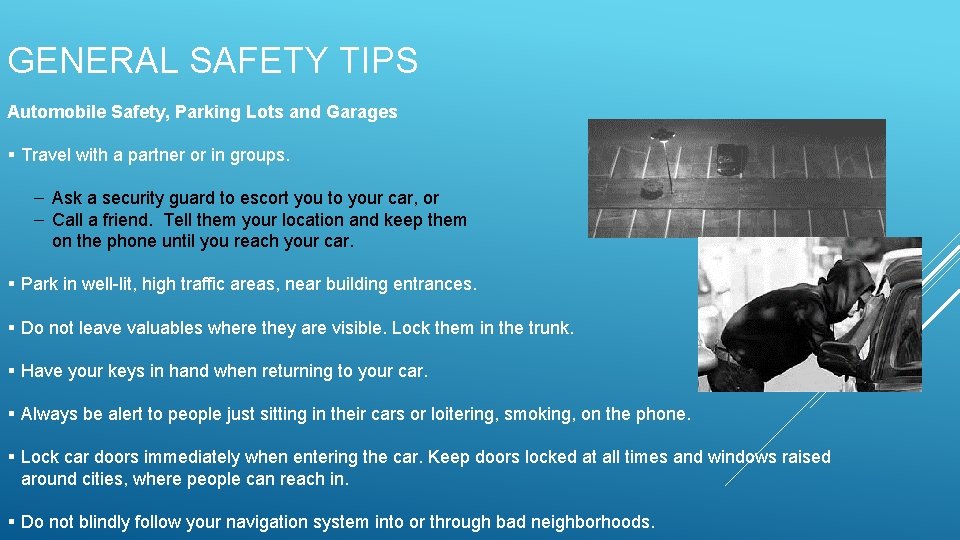
GENERAL SAFETY TIPS Automobile Safety, Parking Lots and Garages § Travel with a partner or in groups. – Ask a security guard to escort you to your car, or – Call a friend. Tell them your location and keep them on the phone until you reach your car. § Park in well-lit, high traffic areas, near building entrances. § Do not leave valuables where they are visible. Lock them in the trunk. § Have your keys in hand when returning to your car. § Always be alert to people just sitting in their cars or loitering, smoking, on the phone. § Lock car doors immediately when entering the car. Keep doors locked at all times and windows raised around cities, where people can reach in. § Do not blindly follow your navigation system into or through bad neighborhoods.
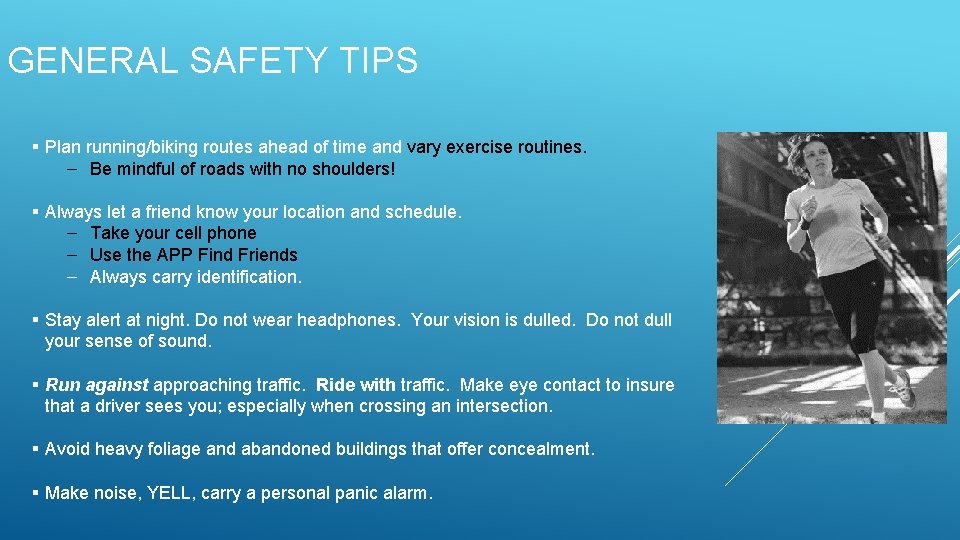
GENERAL SAFETY TIPS § Plan running/biking routes ahead of time and vary exercise routines. – Be mindful of roads with no shoulders! § Always let a friend know your location and schedule. – Take your cell phone – Use the APP Find Friends – Always carry identification. § Stay alert at night. Do not wear headphones. Your vision is dulled. Do not dull your sense of sound. § Run against approaching traffic. Ride with traffic. Make eye contact to insure that a driver sees you; especially when crossing an intersection. § Avoid heavy foliage and abandoned buildings that offer concealment. § Make noise, YELL, carry a personal panic alarm.
REVIEW What you need to know: q Recognize potential warning signs: Note extreme anger, hate, violence, surveillance q Discuss preventive measures: Plan, learn, increase self awareness q Identify steps to protect yourself: Run, Hide, Fight q Learn how to interact with law enforcement: Show hands, stay calm, follow orders
QUESTIONS