
Active Noise Cancellation Jessica Arbona Christopher Brady Dr

Active Noise Cancellation Jessica Arbona & Christopher Brady Dr. In Soo Ahn & Dr. Yufeng Lu, Advisors
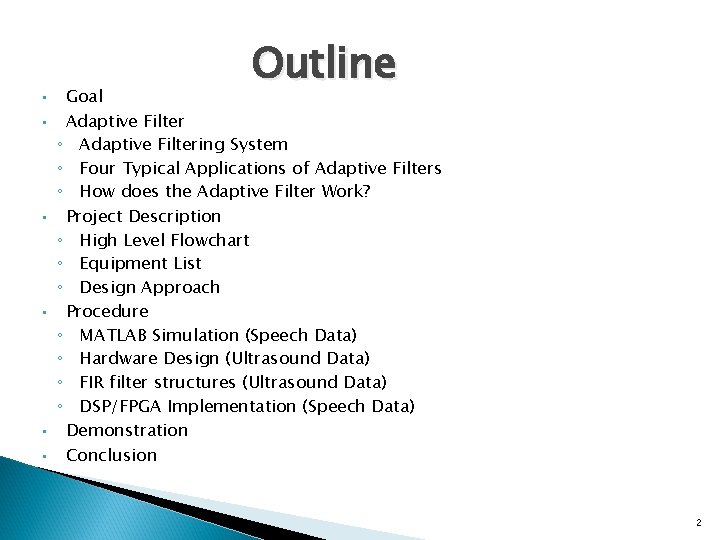
• • • Outline Goal Adaptive Filter ◦ Adaptive Filtering System ◦ Four Typical Applications of Adaptive Filters ◦ How does the Adaptive Filter Work? Project Description ◦ High Level Flowchart ◦ Equipment List ◦ Design Approach Procedure ◦ MATLAB Simulation (Speech Data) ◦ Hardware Design (Ultrasound Data) ◦ FIR filter structures (Ultrasound Data) ◦ DSP/FPGA Implementation (Speech Data) Demonstration Conclusion 2
Goal � The goal of the project is to design and implement an active noise cancellation system using an adaptive filter. 3
Adaptive Filter
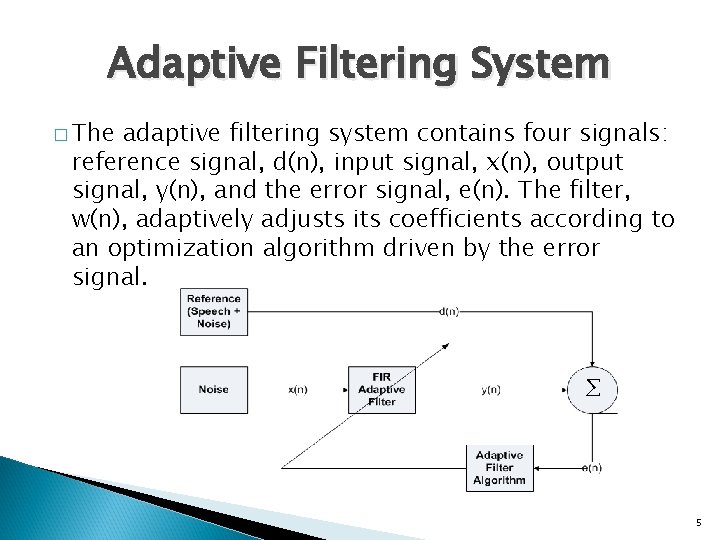
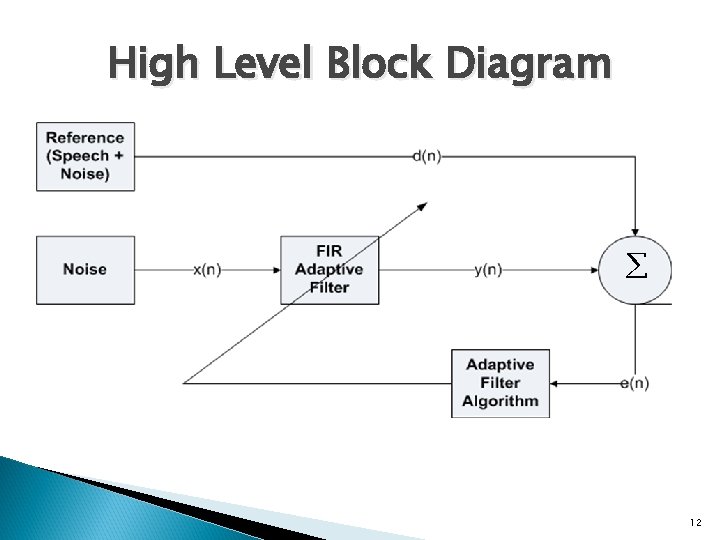
Adaptive Filtering System � The adaptive filtering system contains four signals: reference signal, d(n), input signal, x(n), output signal, y(n), and the error signal, e(n). The filter, w(n), adaptively adjusts its coefficients according to an optimization algorithm driven by the error signal. ∑ 5
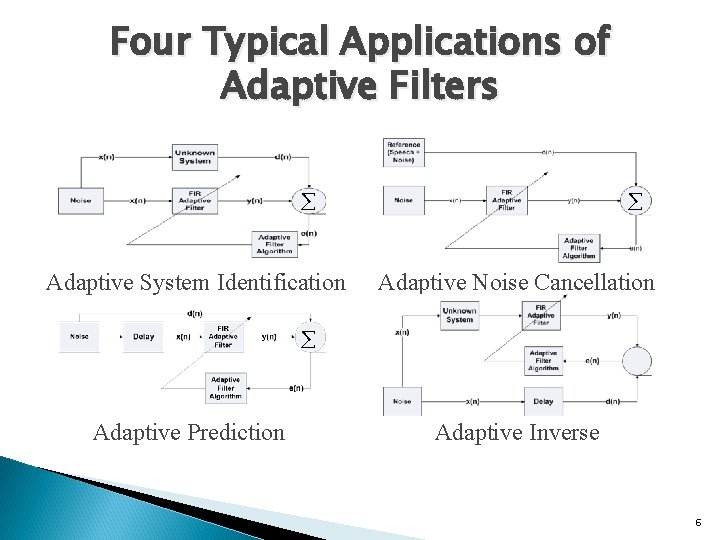
Four Typical Applications of Adaptive Filters ∑ Adaptive System Identification ∑ Adaptive Noise Cancellation ∑ Adaptive Prediction Adaptive Inverse 6
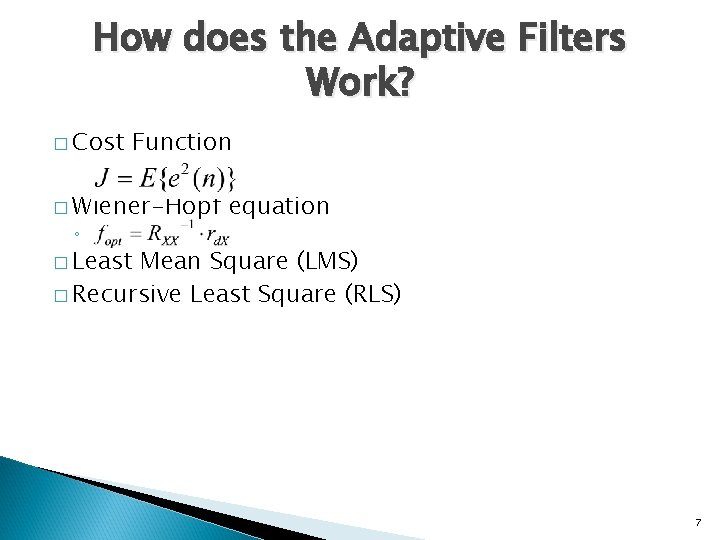
How does the Adaptive Filters Work? � Cost Function � Wiener-Hopf ◦ D equation � Least Mean Square (LMS) � Recursive Least Square (RLS) 7
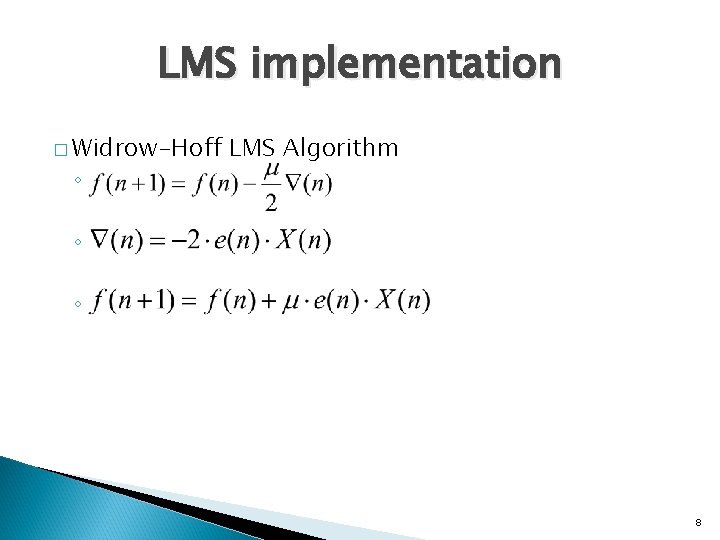
LMS implementation � Widrow-Hoff ◦ LMS Algorithm ◦ ◦ d 8
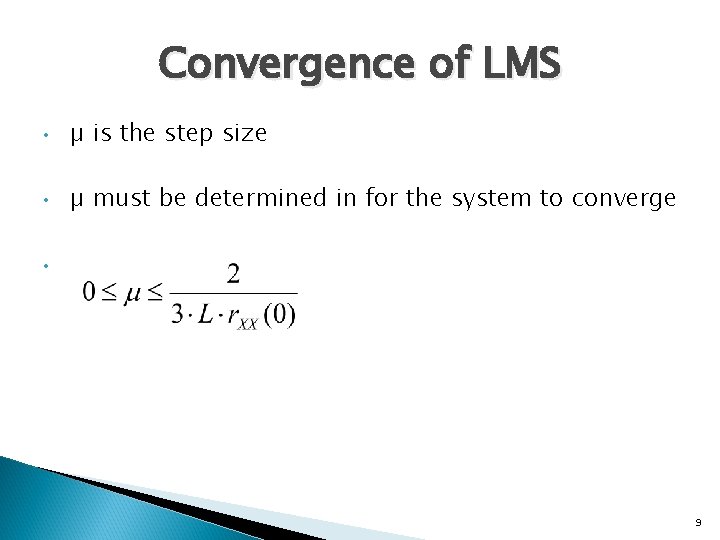
Convergence of LMS • µ is the step size • µ must be determined in for the system to converge • f 9
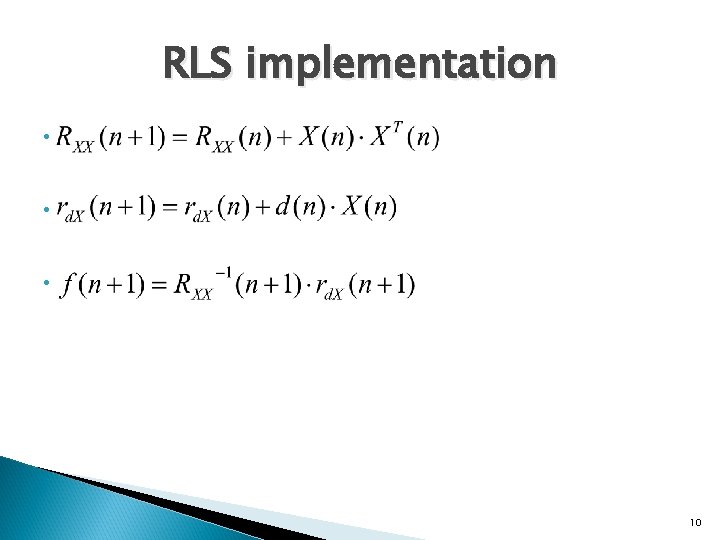
RLS implementation • • • 10

Project Description
High Level Block Diagram ∑ 12
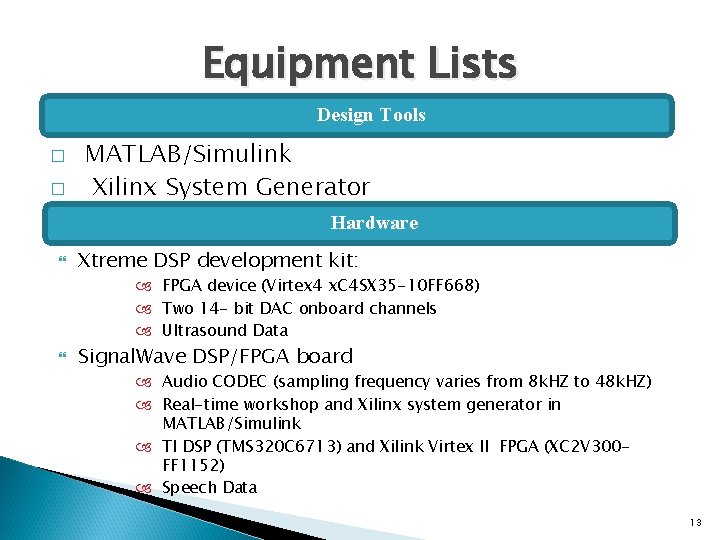
Equipment Lists � � Design Tools MATLAB/Simulink Xilinx System Generator � Hardware Xtreme DSP development kit: FPGA device (Virtex 4 x. C 4 SX 35 -10 FF 668) Two 14 - bit DAC onboard channels Ultrasound Data Signal. Wave DSP/FPGA board Audio CODEC (sampling frequency varies from 8 k. HZ to 48 k. HZ) Real-time workshop and Xilinx system generator in MATLAB/Simulink TI DSP (TMS 320 C 6713) and Xilink Virtex II FPGA (XC 2 V 300 FF 1152) Speech Data 13
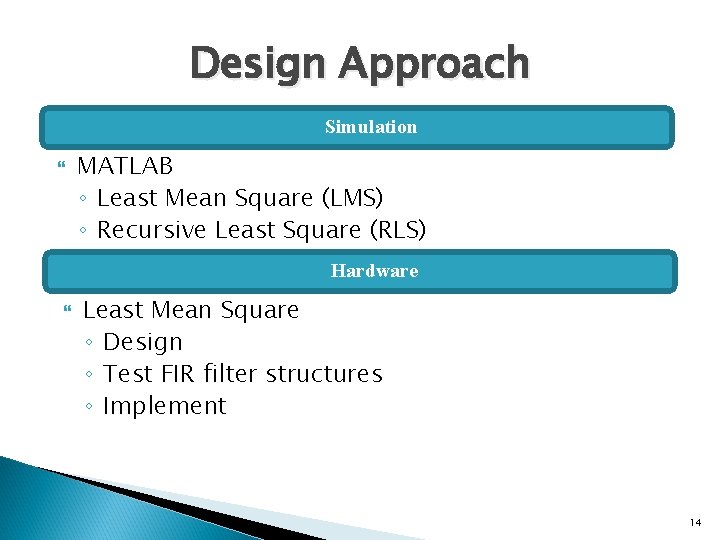
Design Approach MATLAB ◦ Least Mean Square (LMS) ◦ Recursive Least Square (RLS) Simulation Hardware Least Mean Square ◦ Design ◦ Test FIR filter structures ◦ Implement 14

Procedure
MATLAB Simulation (Speech Data)
Design Description Speech Data Processing MATLAB simulation with Tap (L) = 10 ◦ LMS ◦ RLS Speech Data Recorded Voice Signal Recorded Engine Noise 17
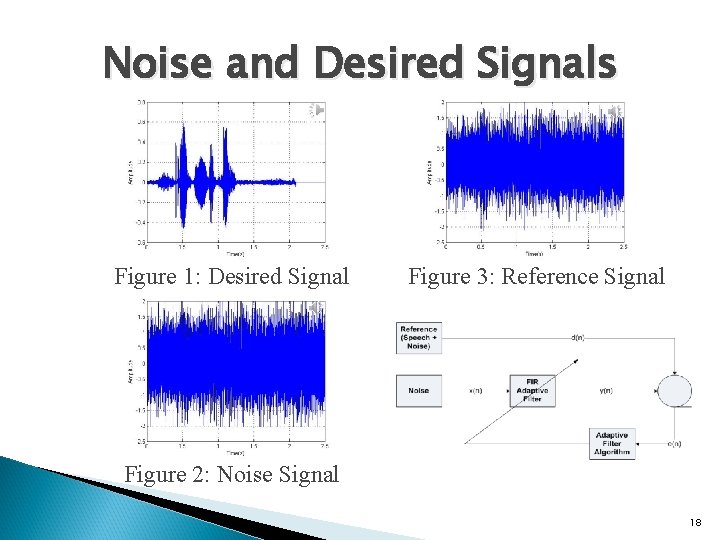
Noise and Desired Signals Figure 1: Desired Signal Figure 3: Reference Signal Figure 2: Noise Signal 18
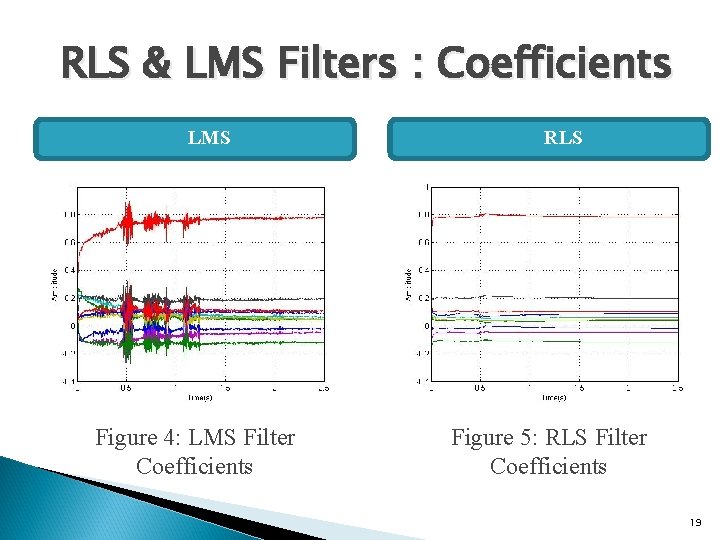
RLS & LMS Filters : Coefficients LMS Figure 4: LMS Filter Coefficients RLS Figure 5: RLS Filter Coefficients 19
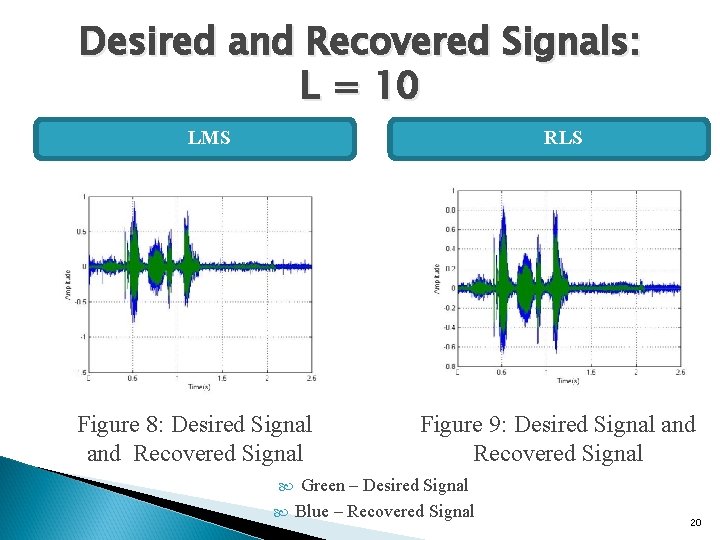
Desired and Recovered Signals: L = 10 LMS Figure 8: Desired Signal and Recovered Signal RLS Figure 9: Desired Signal and Recovered Signal Green – Desired Signal Blue – Recovered Signal 20

Hardware Design (Ultrasound Data)
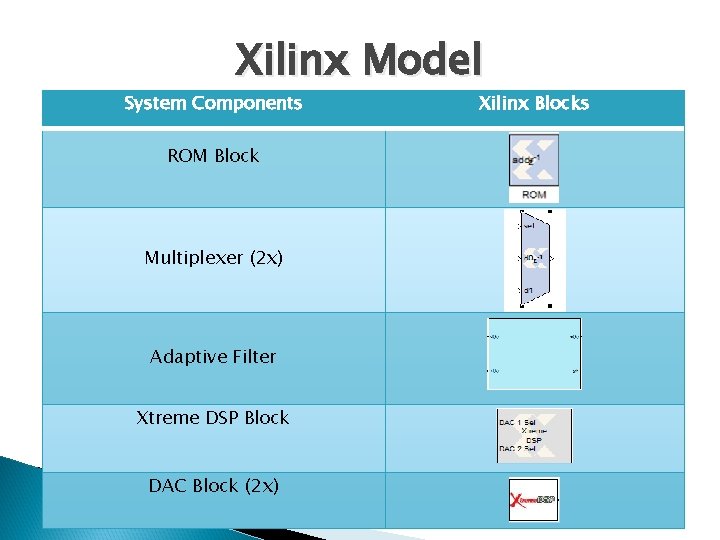
Xilinx Model System Components Xilinx Blocks ROM Block Multiplexer (2 x) Adaptive Filter Xtreme DSP Block DAC Block (2 x) 22
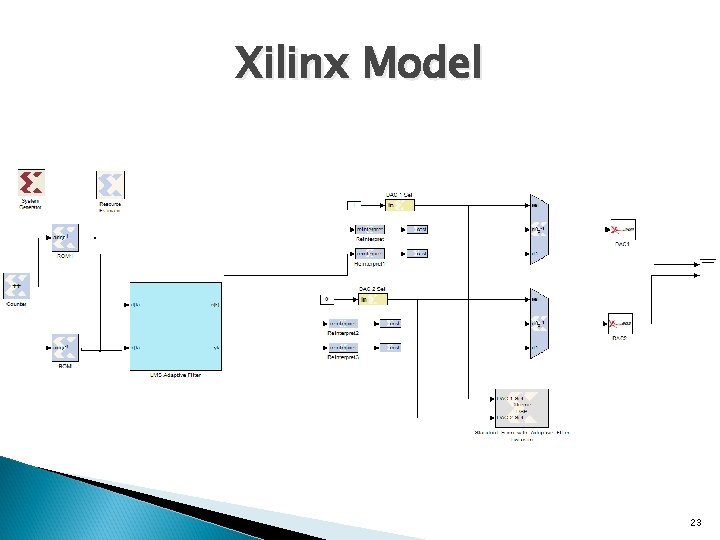
Xilinx Model 23
Adaptive Filter Design Description: • L = 6 • Adaptive FIR Filter 24
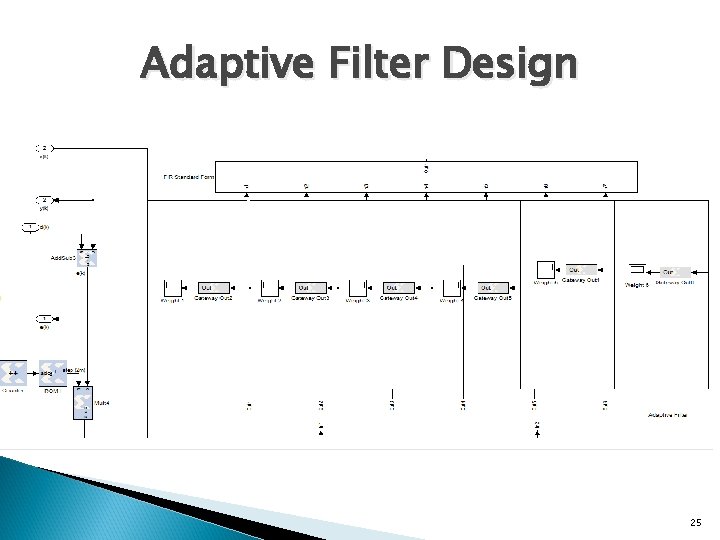
Adaptive Filter Design 25
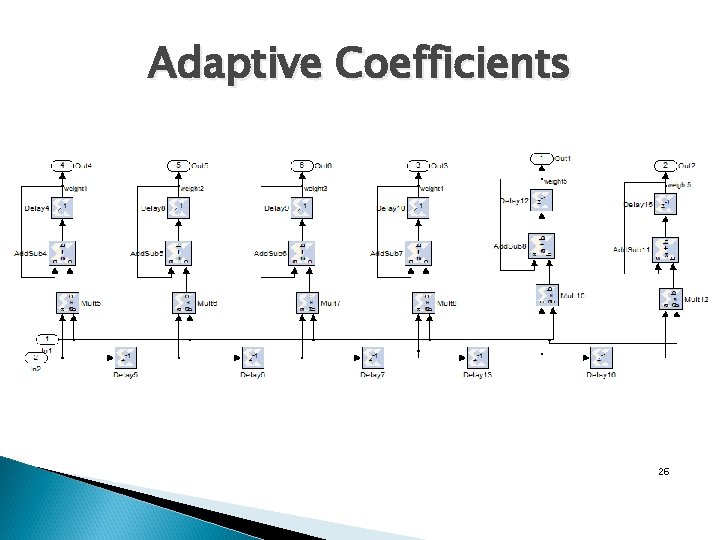
Adaptive Coefficients 26
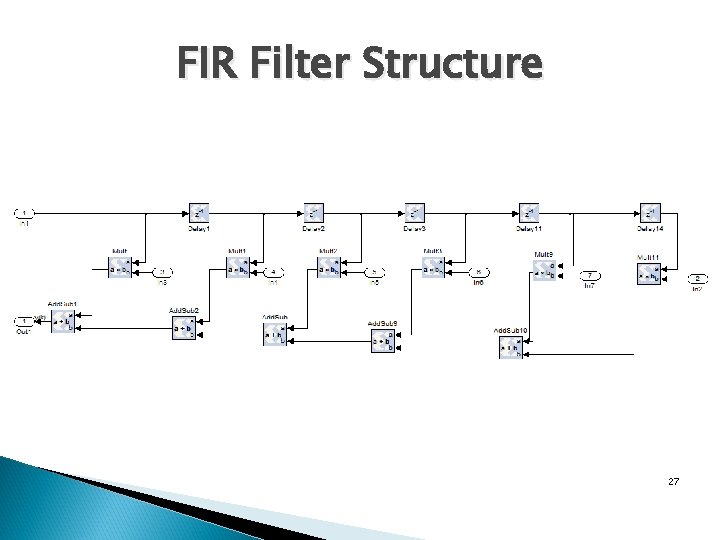
FIR Filter Structure 27
Desired and Recovered Signals: L = 10 Xtreme. DSP- Virtex 4 Hardware Results Orange – Input signal Blue – Output Signal 28
FIR filter structures (Ultrasound Data)
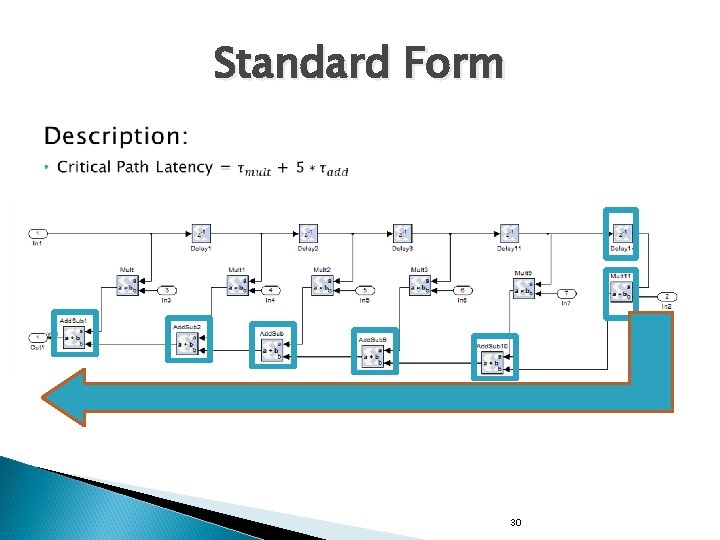
Standard Form 30
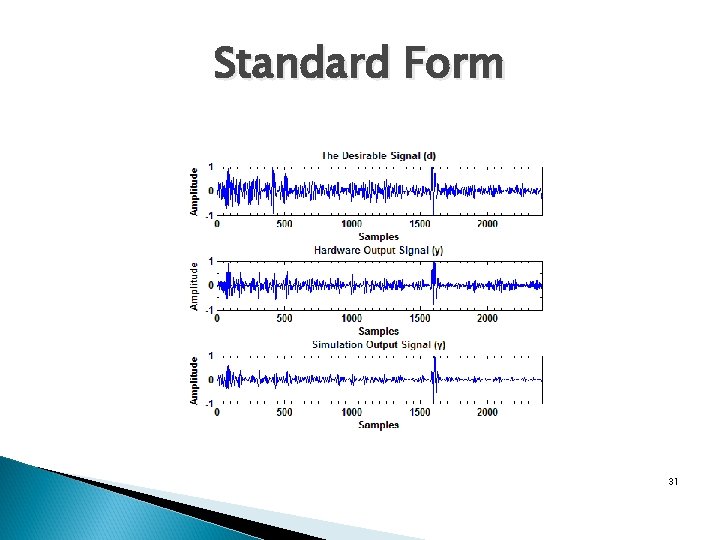
Standard Form 31
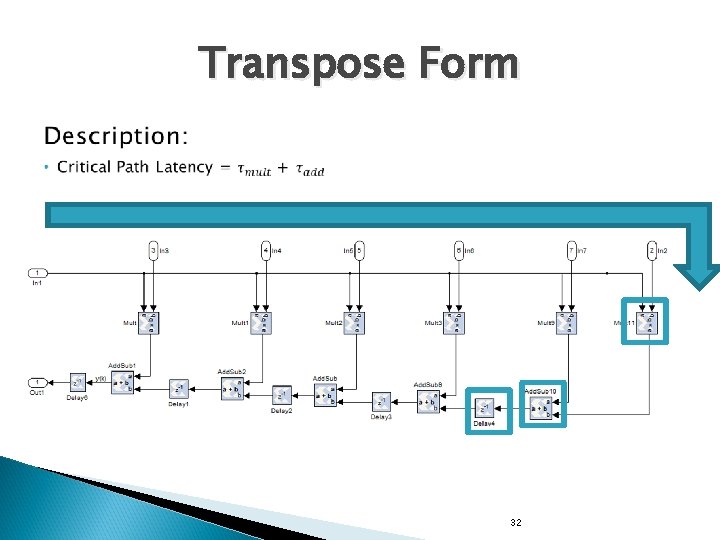
Transpose Form 32
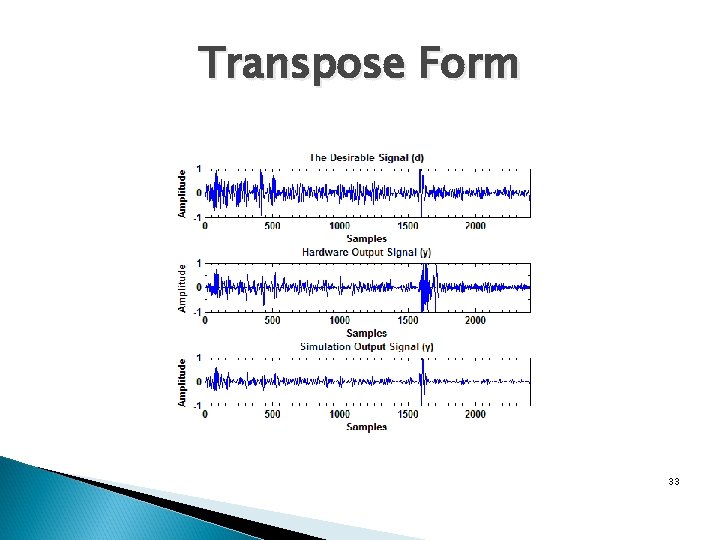
Transpose Form 33
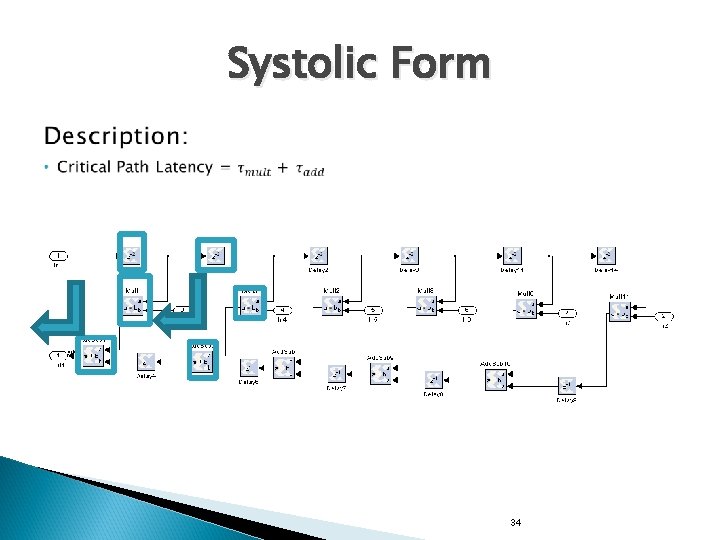
Systolic Form 34
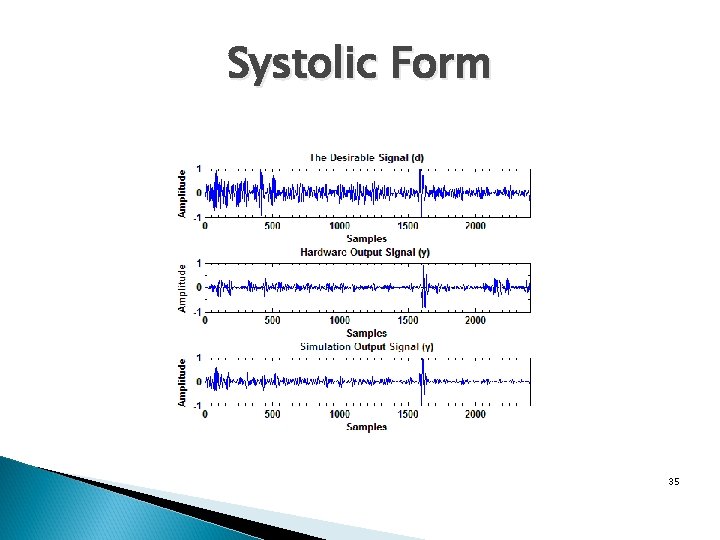
Systolic Form 35
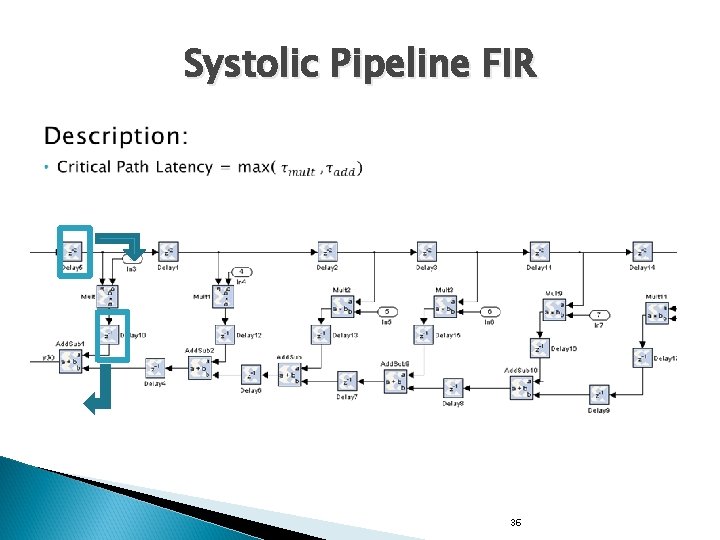
Systolic Pipeline FIR 36
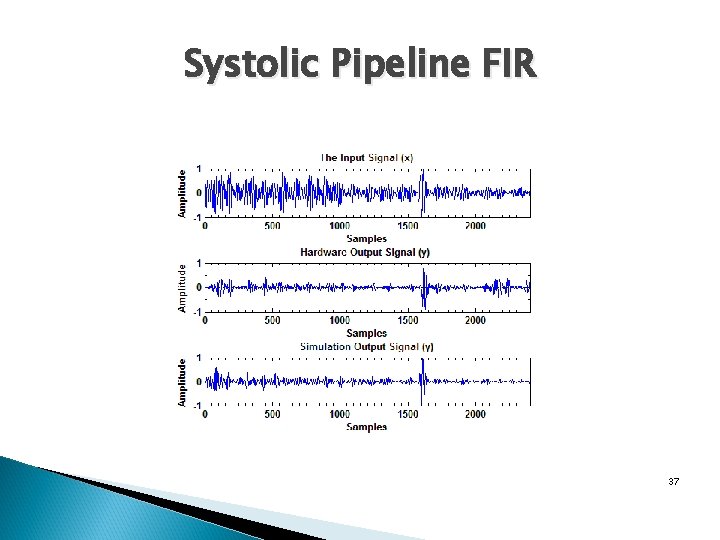
Systolic Pipeline FIR 37
DSP/FPGA Implementation (Speech Data)
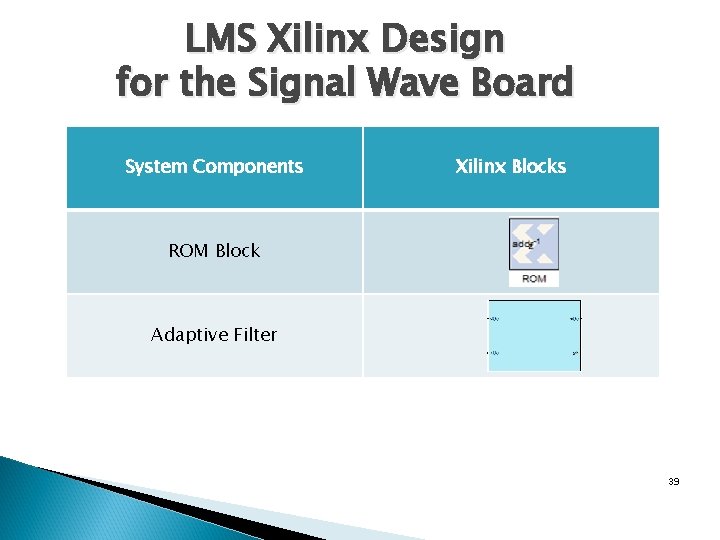
LMS Xilinx Design for the Signal Wave Board System Components Xilinx Blocks ROM Block Adaptive Filter 39
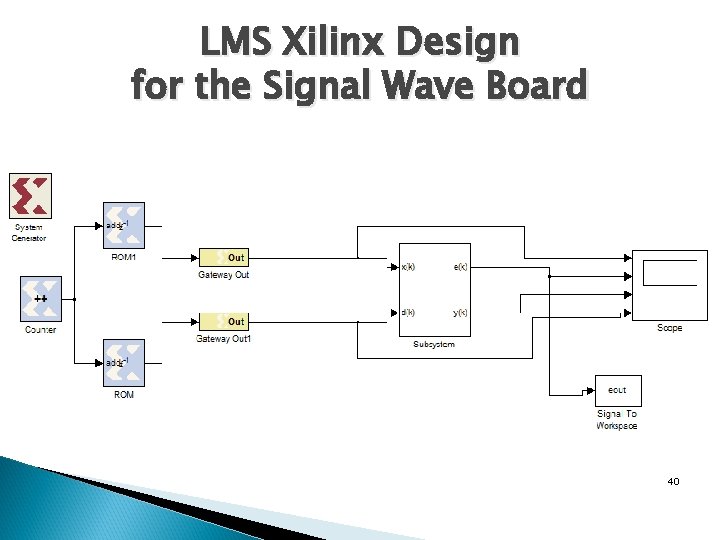
LMS Xilinx Design for the Signal Wave Board 40
Overall Design of the Adaptive Filter Description: • L =10 • Adaptive FIR Filter 41
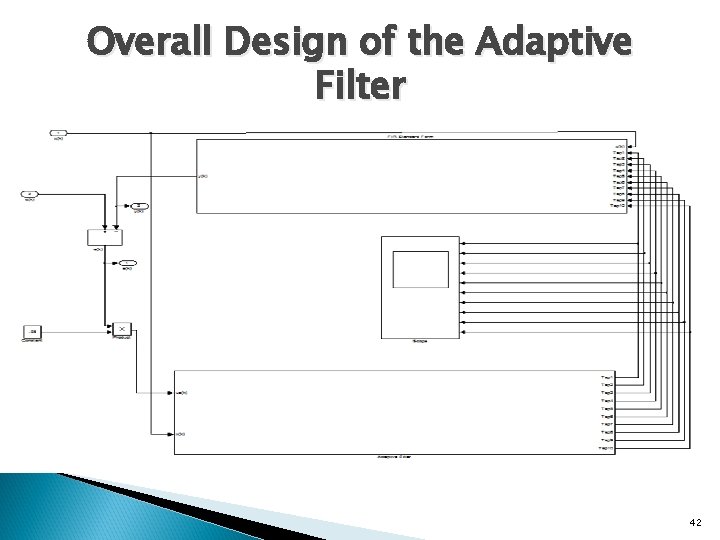
Overall Design of the Adaptive Filter 42
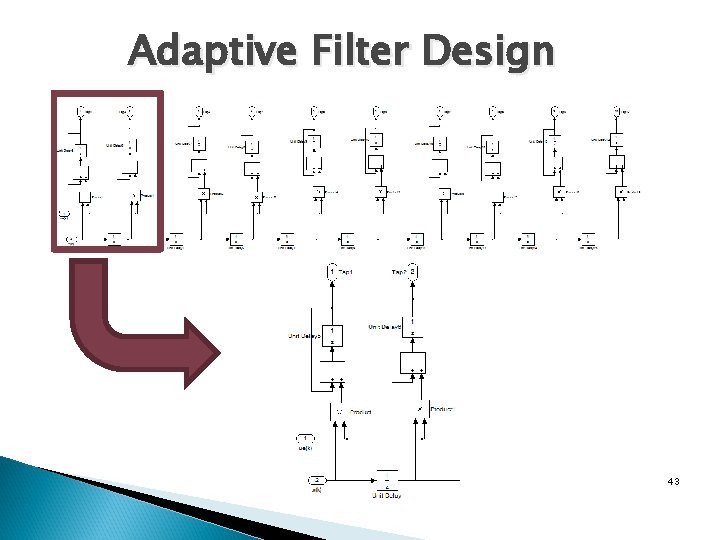
Adaptive Filter Design 43
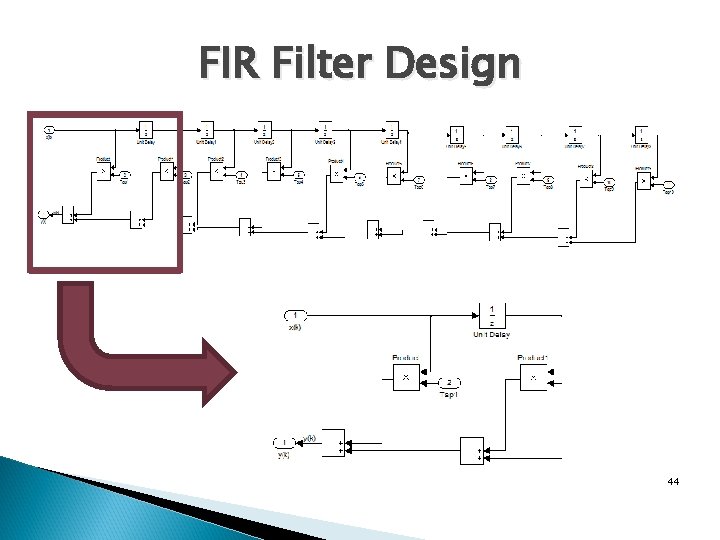
FIR Filter Design 44
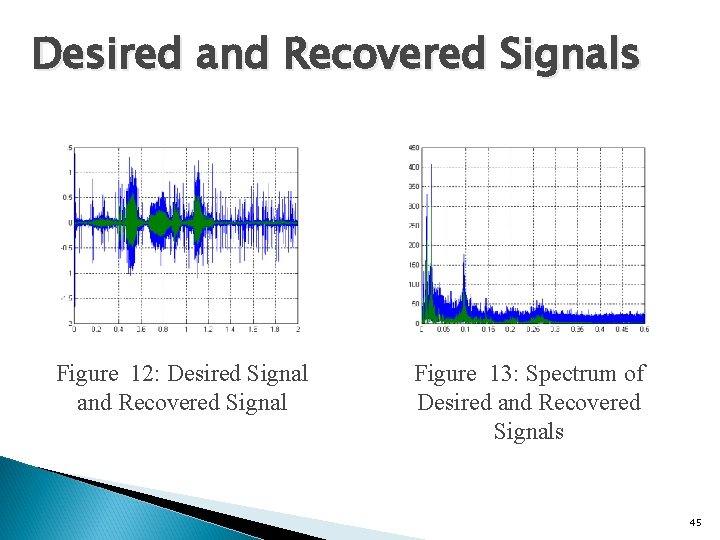
Desired and Recovered Signals Figure 12: Desired Signal and Recovered Signal Figure 13: Spectrum of Desired and Recovered Signals 45

Demonstration
Conclusion � The adaptive filter is successfully simulated in MATLAB using various types of noise. The simulation results show a 24 d. B reduction in the mean square error. These results are used in developing the Xilinx model of the system. After the system is successfully designed, alternative FIR structures are investigated in an attempt to improve efficiency. The standard FIR structure is found to be better suited for hardware implementation on a DSP/FPGA board. 47
Reference � The adaptive filter is successfully simulated in MATLAB using various types of noise. The simulation results show a 24 d. B reduction in the mean square error. These results are used in developing the Xilinx model of the system. After the system is successfully designed, alternative FIR structures are investigated in an attempt to improve efficiency. The standard FIR structure is found to be better suited for hardware implementation on a DSP/FPGA board. 48
- Slides: 48