
Active Literacy Stage 2 3 Taught Writing A
- Slides: 14
Active Literacy Stage 2 & 3 Taught Writing
A Curriculum for Excellence and Active Literacy Research indicates improved results when literacy is taught in meaningful contexts and using an ‘active’ approach. Stage 2 and 3 build on the foundations developing and expanding skills and abilities. Making Literacy cross curricular and meaningful.
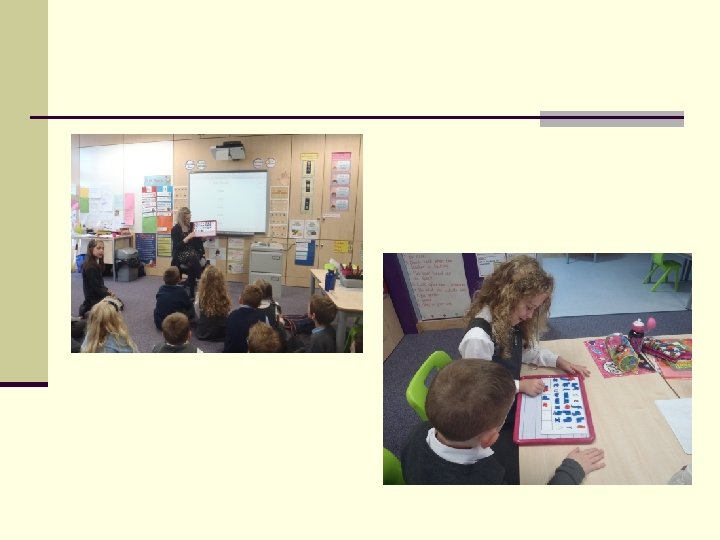
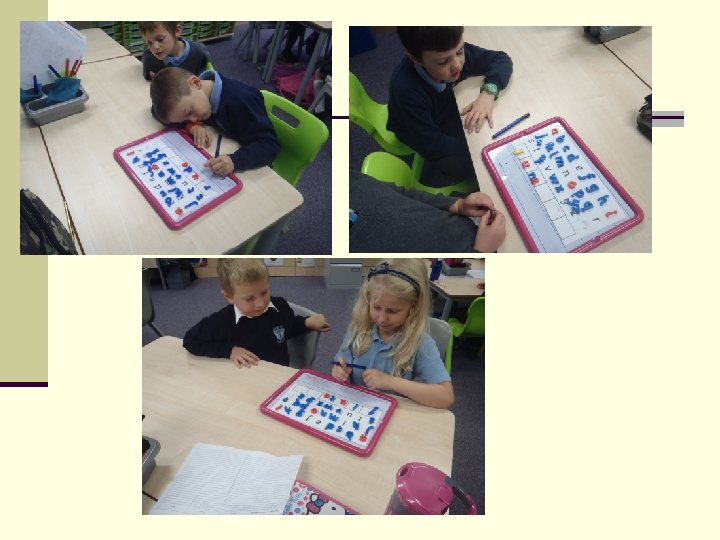
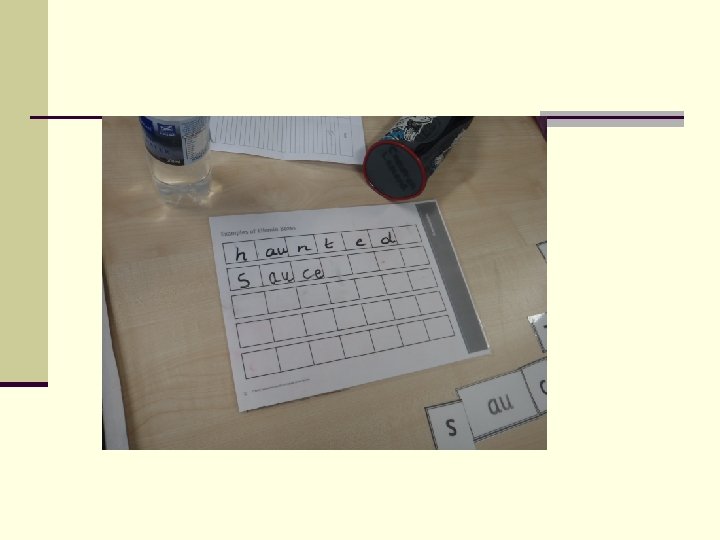
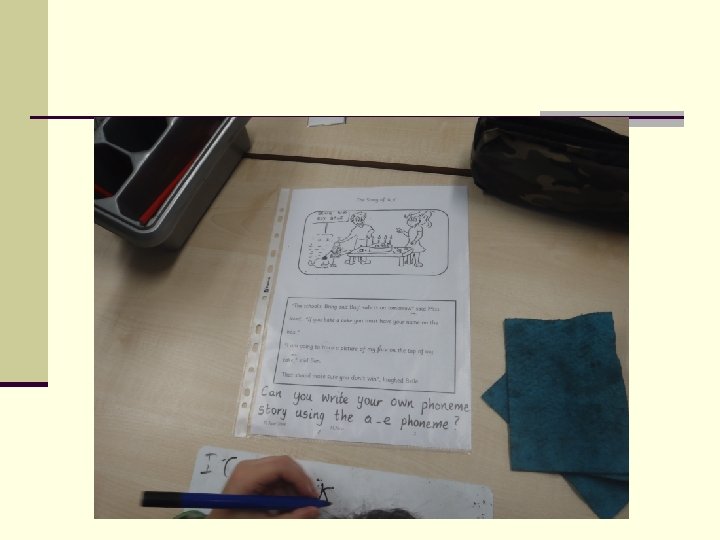
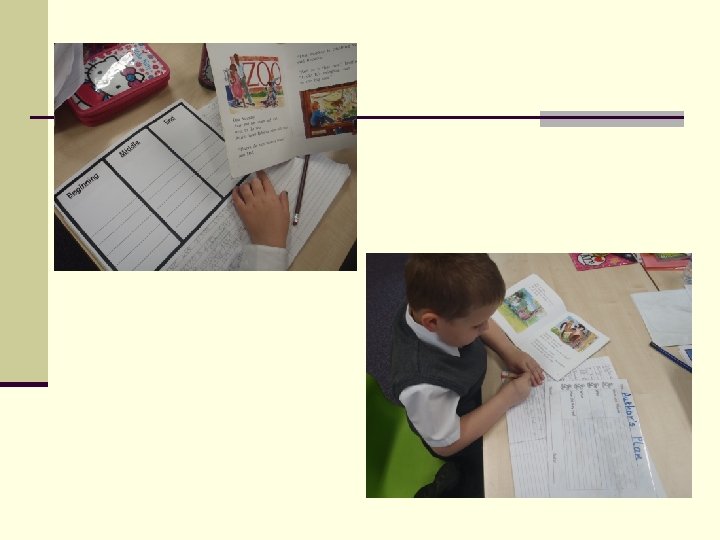
Writing n Very important that pupils write every day. n Follow-up tasks from Guided Reading will always require the pupils to write. n Independent, active activities will always involve some writing. n Alongside all of this, pupils still need to be taught how to write. n One taught writing lesson per week related to a meaningful context created within the classroom.
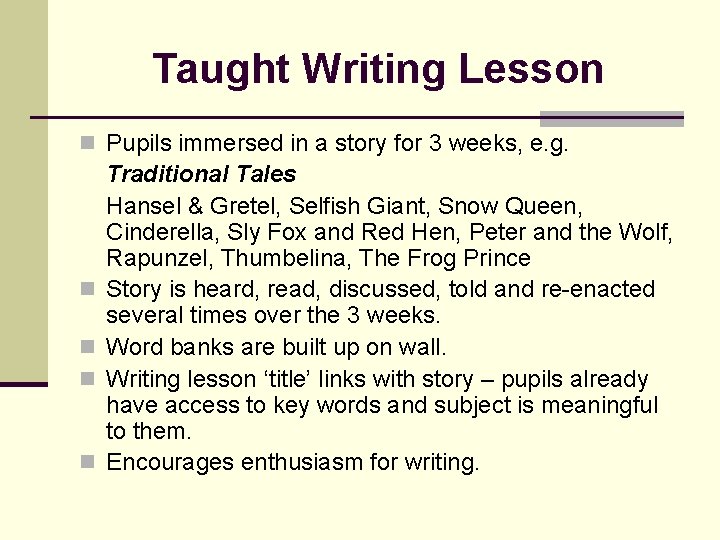
Taught Writing Lesson n Pupils immersed in a story for 3 weeks, e. g. n n Traditional Tales Hansel & Gretel, Selfish Giant, Snow Queen, Cinderella, Sly Fox and Red Hen, Peter and the Wolf, Rapunzel, Thumbelina, The Frog Prince Story is heard, read, discussed, told and re-enacted several times over the 3 weeks. Word banks are built up on wall. Writing lesson ‘title’ links with story – pupils already have access to key words and subject is meaningful to them. Encourages enthusiasm for writing.
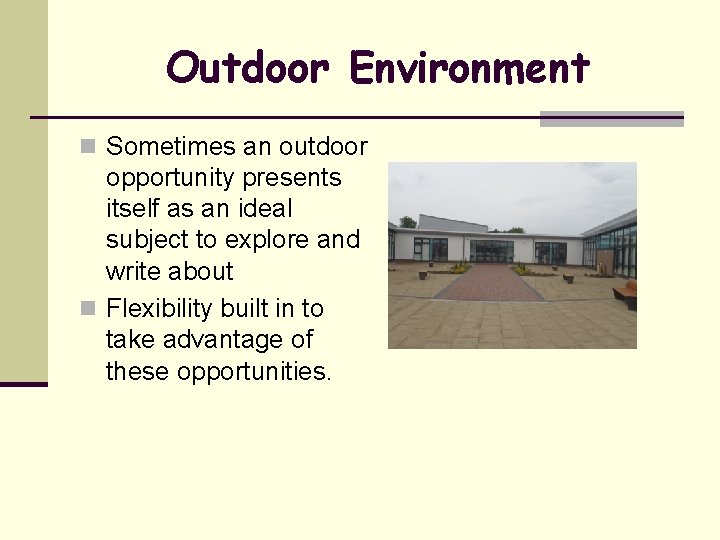
Outdoor Environment n Sometimes an outdoor opportunity presents itself as an ideal subject to explore and write about n Flexibility built in to take advantage of these opportunities.
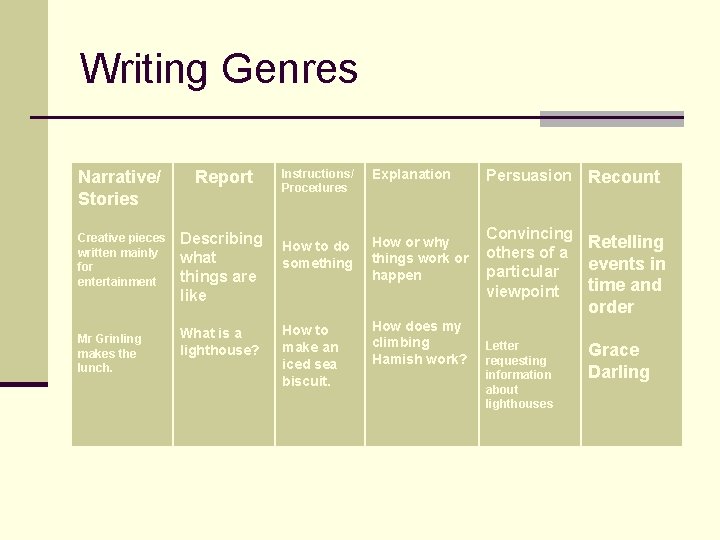
Writing Genres Narrative/ Stories Report Creative pieces written mainly for entertainment Describing what things are like Mr Grinling makes the lunch. What is a lighthouse? Instructions/ Procedures Explanation Persuasion Recount How to do something How or why things work or happen Convincing Retelling others of a events in particular time and viewpoint order How to make an iced sea biscuit. How does my climbing Hamish work? Letter requesting information about lighthouses Grace Darling
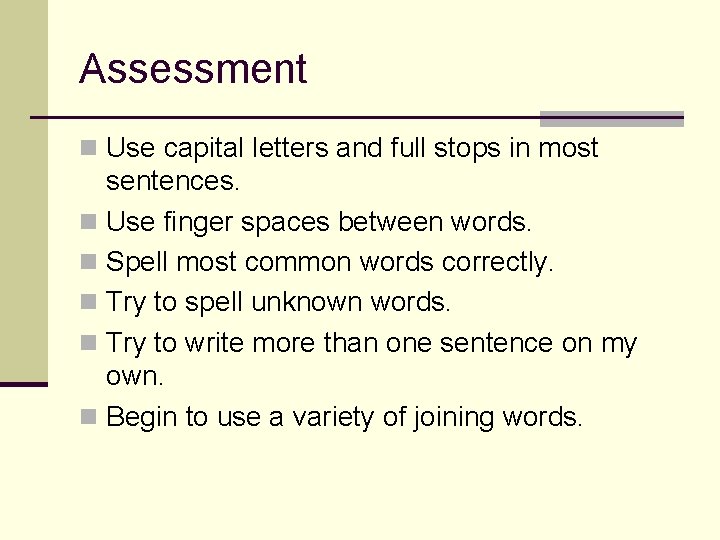
Assessment n Use capital letters and full stops in most sentences. n Use finger spaces between words. n Spell most common words correctly. n Try to spell unknown words. n Try to write more than one sentence on my own. n Begin to use a variety of joining words.
Ways to Support Writing at Home n Read, read and read again! n Shopping lists, forms, name and address n Create characters n Ask the right questions n Where have we been? n Share vocabulary- word of the day, describe your dinner n Every picture tells a story n Finger gym
The writing lesson…