
Active Learning Methodologies in Classics Facilitators Louise Potter

- Slides: 31
Active Learning Methodologies in Classics Facilitators: Louise Potter & Colm Dooley
The Learning Gap = the difference between what we know about effective learning. . . and what is currently happening in the classroom.
Active teaching and Learning • Presumes all are doing and thinking
Learning Theories • • Visual/Auditory/Kinesthetic Left Brain/Right Brain Multiple Intelligences Co-operative/Group Learning • http: //www. lancsngfl. ac. uk/nati onalstrategy/literacy/files/The. Br ainand. Learning. pdf
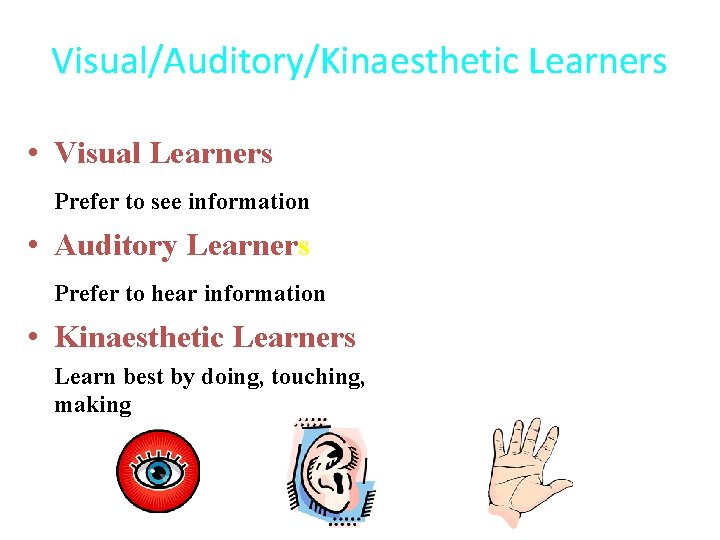
Visual/Auditory/Kinaesthetic Learners • Visual Learners Prefer to see information • Auditory Learners Prefer to hear information • Kinaesthetic Learners Learn best by doing, touching, making
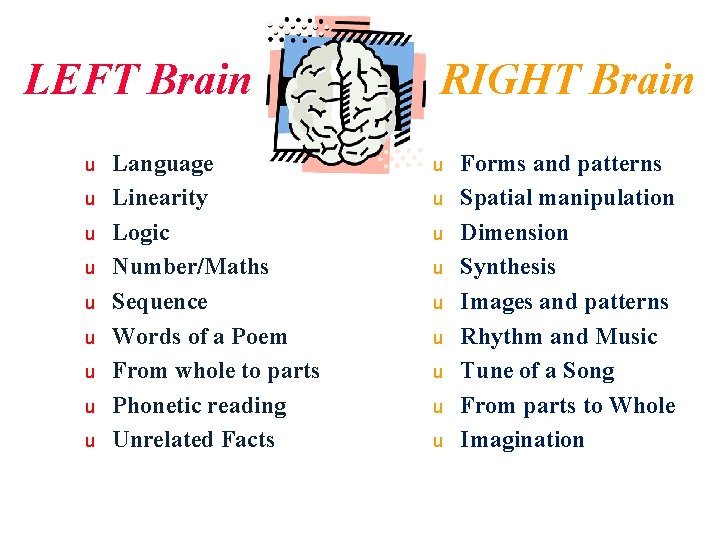
LEFT Brain u u u u u Language Linearity Logic Number/Maths Sequence Words of a Poem From whole to parts Phonetic reading Unrelated Facts RIGHT Brain u u u u u Forms and patterns Spatial manipulation Dimension Synthesis Images and patterns Rhythm and Music Tune of a Song From parts to Whole Imagination
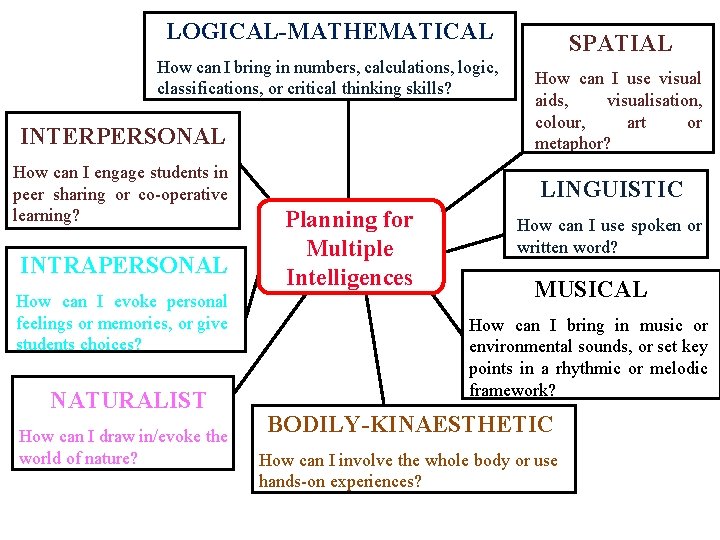
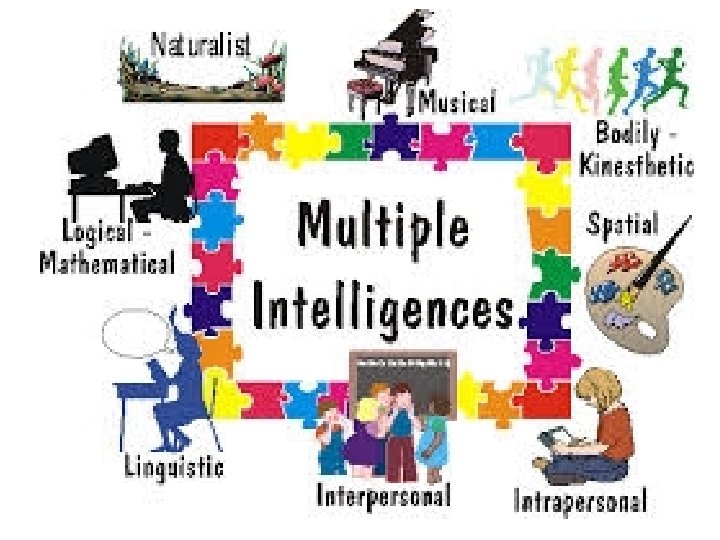
LOGICAL-MATHEMATICAL How can I bring in numbers, calculations, logic, classifications, or critical thinking skills? INTERPERSONAL How can I engage students in peer sharing or co-operative learning? INTRAPERSONAL How can I evoke personal feelings or memories, or give students choices? NATURALIST How can I draw in/evoke the world of nature? Adapted from Howard Gardner SPATIAL How can I use visual aids, visualisation, colour, art or metaphor? LINGUISTIC Planning for Multiple Intelligences How can I use spoken or written word? MUSICAL How can I bring in music or environmental sounds, or set key points in a rhythmic or melodic framework? BODILY-KINAESTHETIC How can I involve the whole body or use hands-on experiences?
Soft touch…
What is active learning? • Active learning involves students doing things and thinking about what they are doing. • Active teaching and learning involves the use of strategies which maximise opportunities for interaction.
Attempts to avoid… • Parroting in a vacuum • Anonymity • Disturbance/Misbehaviour • Domination by the few • Predictability • Boredom
Attempts to… • Develop skills • Promote metacognition • Promote collegiality • Promote perseverance/resilience • Engage/Motivate • Promote problem solving and creativity
TWO MINUTE THINK!
Write down the objective/learning outcome verbs that you would most often use for your classes
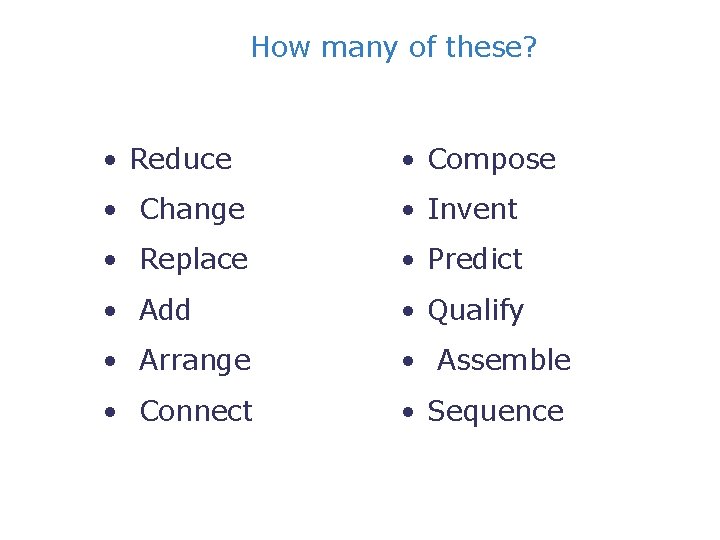
How many of these? • Reduce • Compose • Change • Invent • Replace • Predict • Add • Qualify • Arrange • Assemble • Connect • Sequence
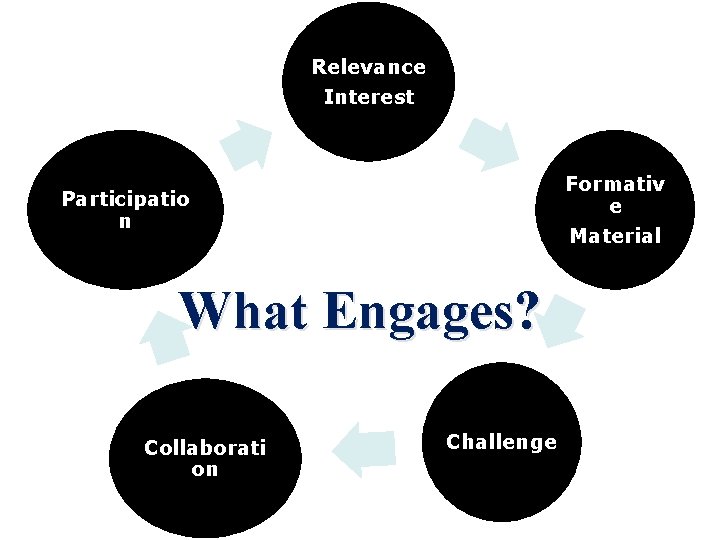
Relevance Interest Formativ e Participatio n Material What Engages? Collaborati on Challenge
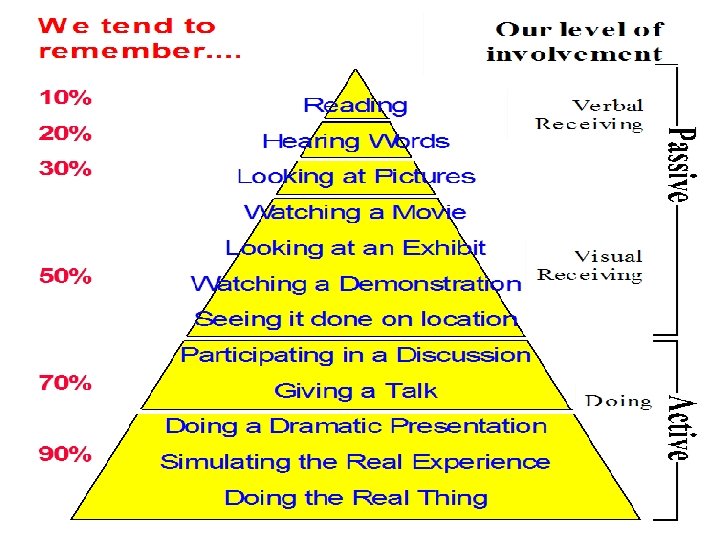
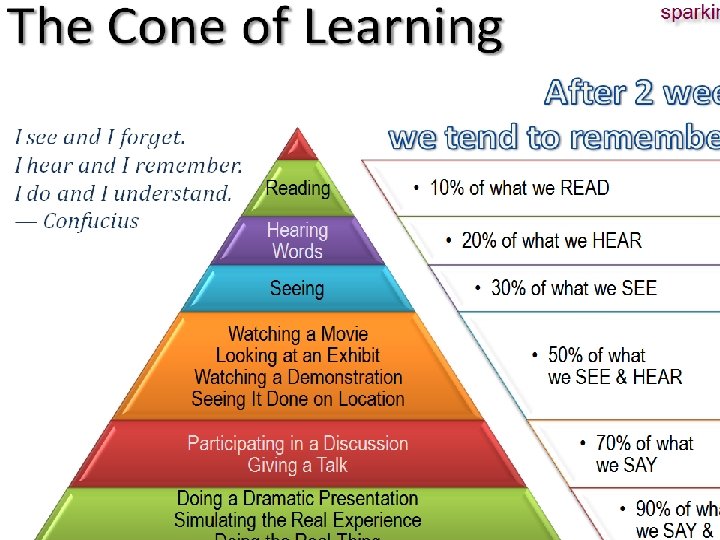
This is not new thinking… I HEAR AND I FORGET I SEE AND I REMEMBER I DO AND I UNDERSTAND Confucius 5 th Century BCE China “One must learn by doing the thing, for though you think you know it-you have no certainty, until you try. ” Sophocles 5 th. Century BCE Greece
TWO MINUTE THINK!
So how does thinking alter the role of the teacher in the classroom?
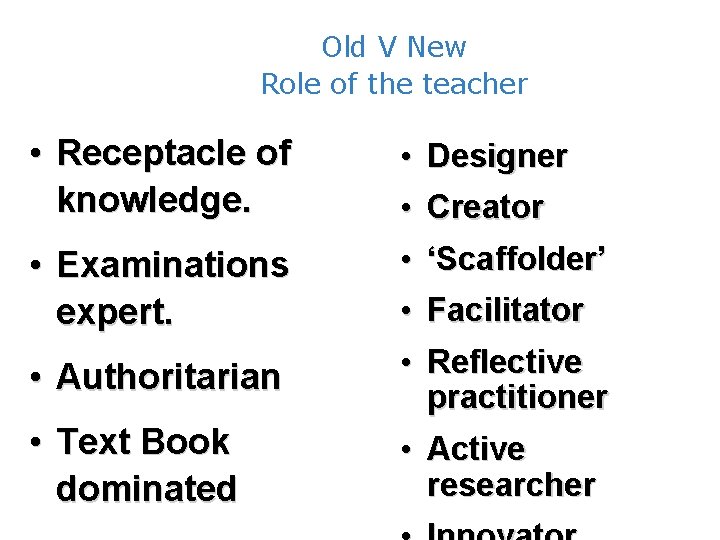
Old V New Role of the teacher • Receptacle of knowledge. • Examinations expert. • Authoritarian • Text Book dominated • Designer • Creator • ‘Scaffolder’ • Facilitator • Reflective practitioner • Active researcher
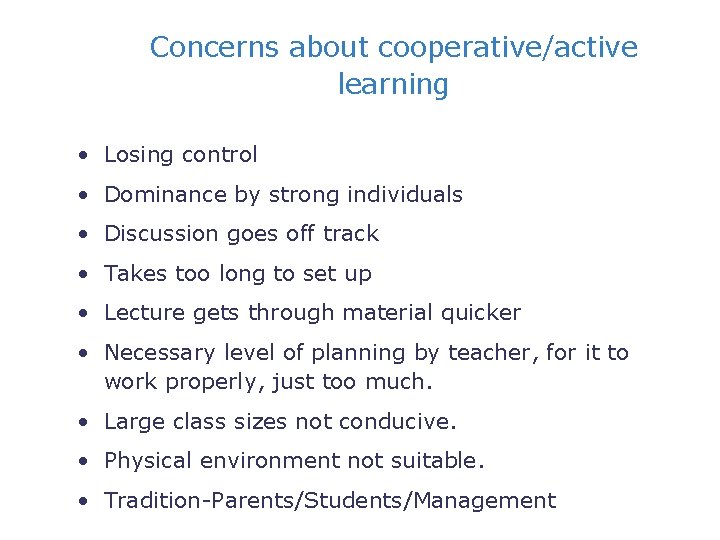
Concerns about cooperative/active learning • Losing control • Dominance by strong individuals • Discussion goes off track • Takes too long to set up • Lecture gets through material quicker • Necessary level of planning by teacher, for it to work properly, just too much. • Large class sizes not conducive. • Physical environment not suitable. • Tradition-Parents/Students/Management
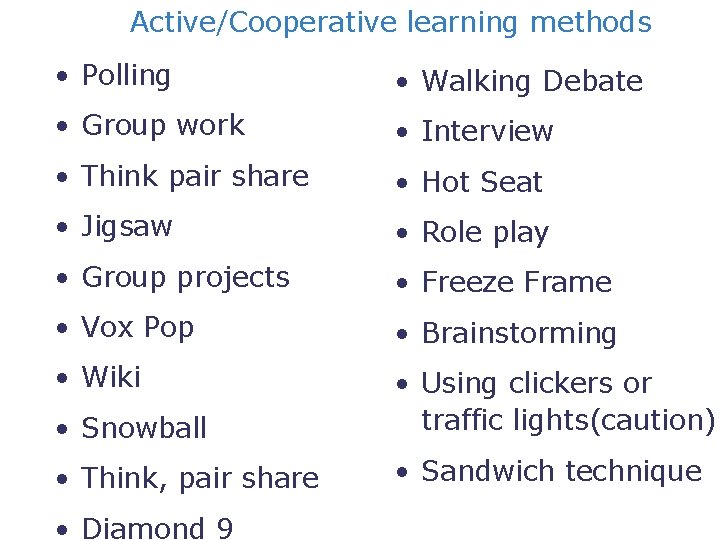
Active/Cooperative learning methods • Polling • Walking Debate • Group work • Interview • Think pair share • Hot Seat • Jigsaw • Role play • Group projects • Freeze Frame • Vox Pop • Brainstorming • Wiki • Snowball • Using clickers or traffic lights(caution) • Think, pair share • Sandwich technique • Diamond 9
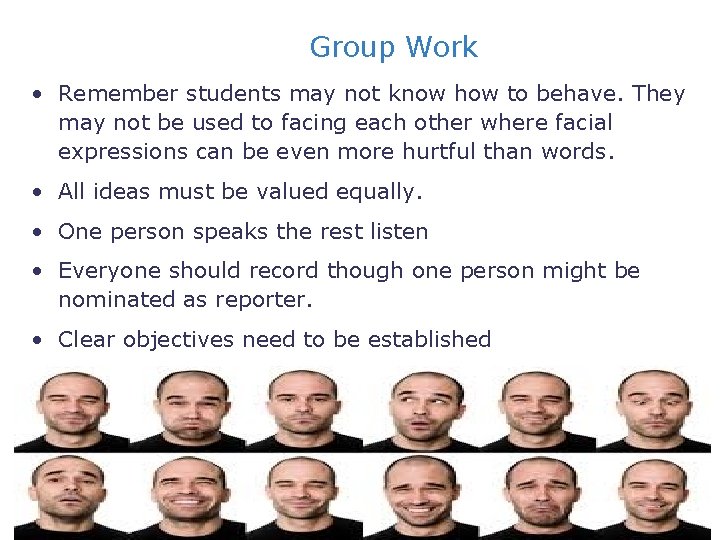
Group Work • Remember students may not know how to behave. They may not be used to facing each other where facial expressions can be even more hurtful than words. • All ideas must be valued equally. • One person speaks the rest listen • Everyone should record though one person might be nominated as reporter. • Clear objectives need to be established
Tasks within group…. Differentiation • Reader • Illustrator • Reporter • Time Keeper • Observer (Like secretary) • Chairperson (Interpersonal) • Group critic • Runner – Clarifies with the teacher • Summariser
Some reading suggestions: • Mike Hughes • Edward De Bono • Carol Mc. Guinness • Paul Ginnis
Teaching CREATIVITY