
Activator Photosynthesis Visual Diagram Photosynthesis Foldable 1 Solar
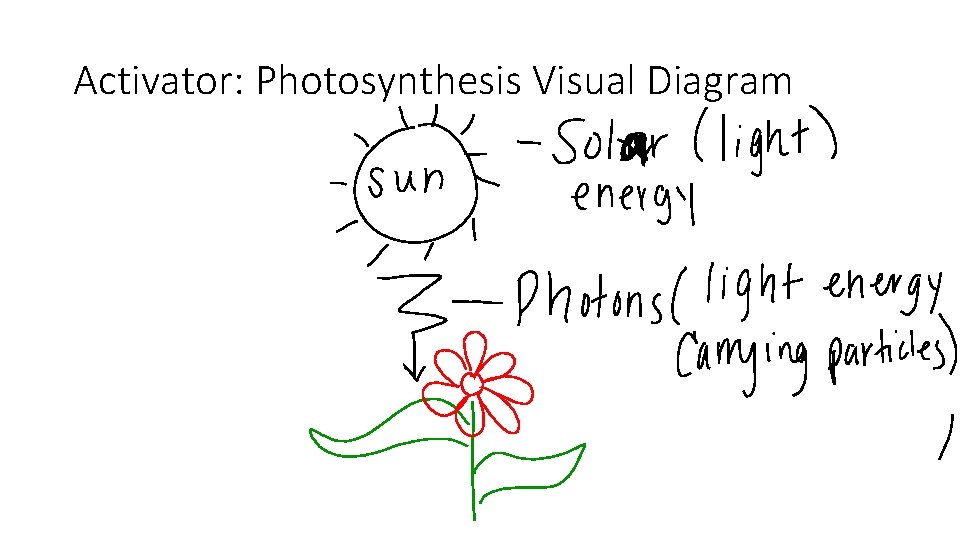
Activator: Photosynthesis Visual Diagram
Photosynthesis Foldable
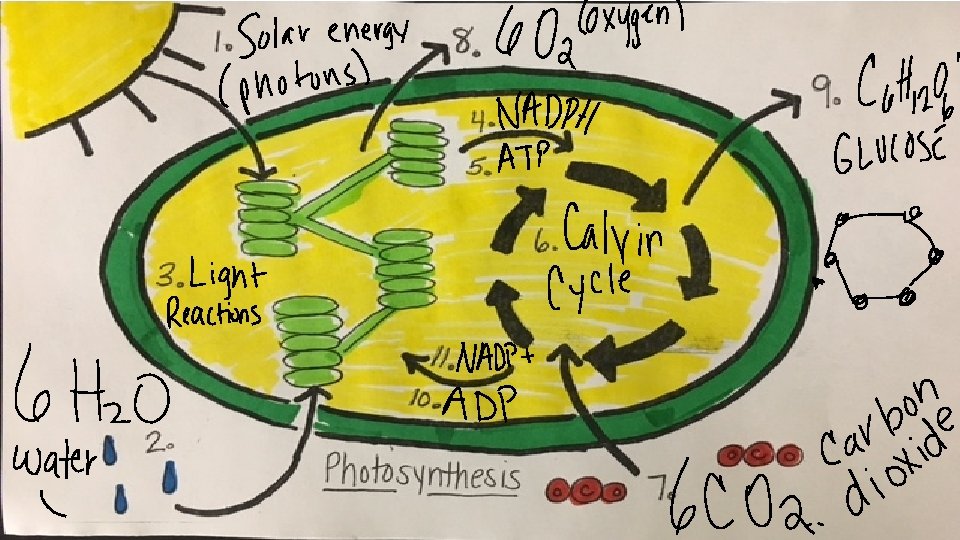
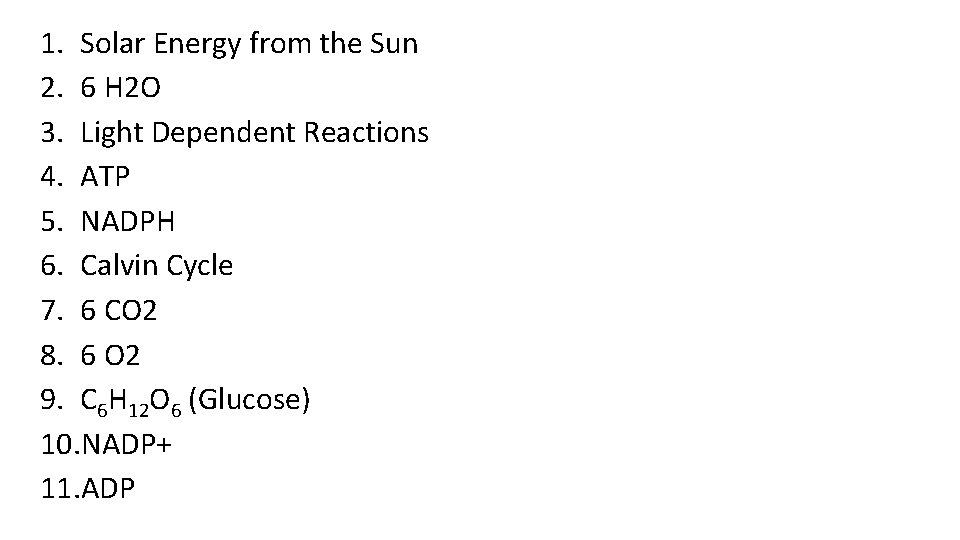
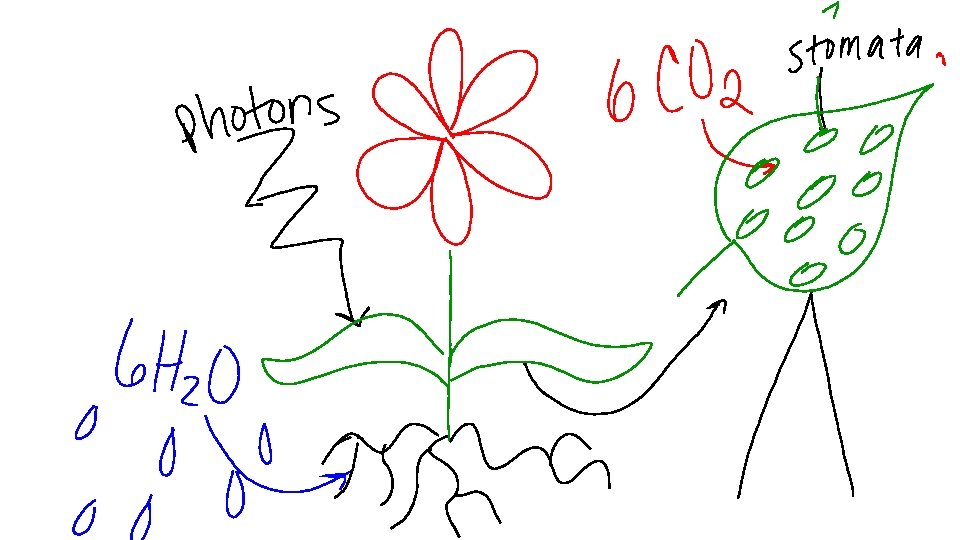
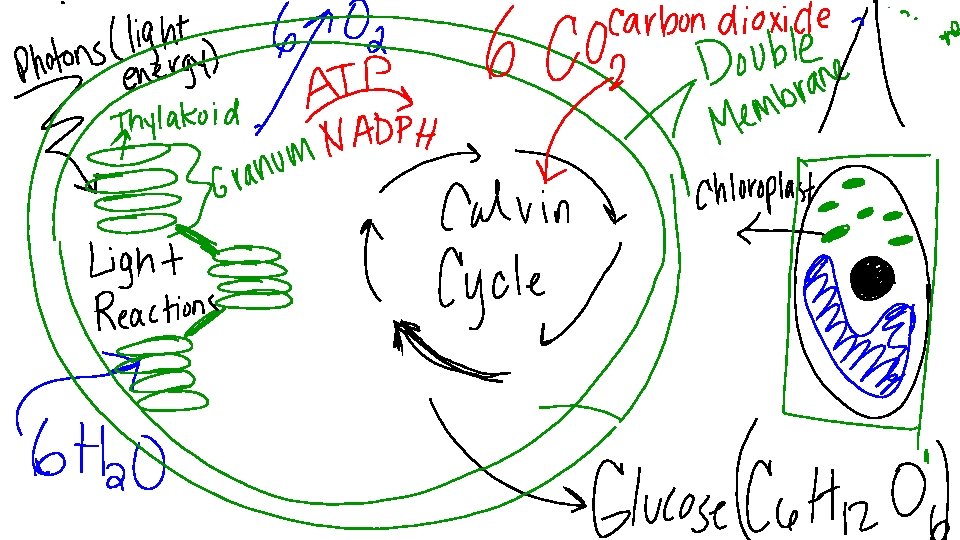
1. Solar Energy from the Sun 2. 6 H 2 O 3. Light Dependent Reactions 4. ATP 5. NADPH 6. Calvin Cycle 7. 6 CO 2 8. 6 O 2 9. C 6 H 12 O 6 (Glucose) 10. NADP+ 11. ADP
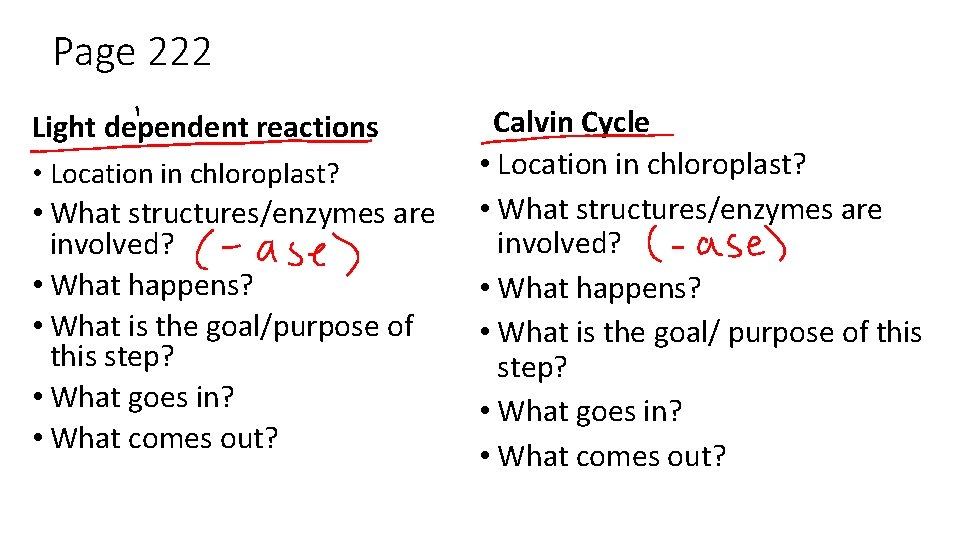
Page 222 Light dependent reactions • Location in chloroplast? • What structures/enzymes are involved? • What happens? • What is the goal/purpose of this step? • What goes in? • What comes out? Calvin Cycle • Location in chloroplast? • What structures/enzymes are involved? • What happens? • What is the goal/ purpose of this step? • What goes in? • What comes out?
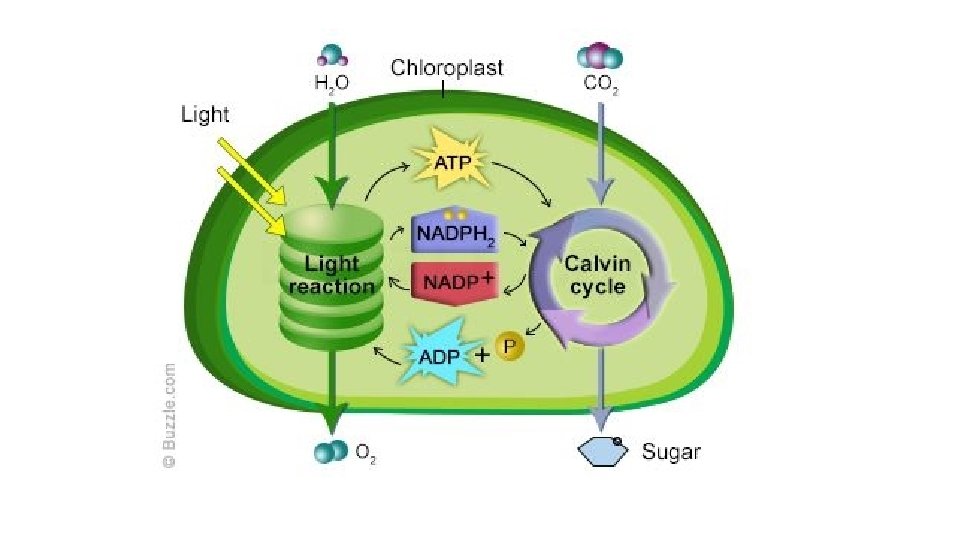
1. Light Dependent Reactions - Occur inside the Thylakoid membrane (pancake stacks) -Six molecules of water (H 2 O) are split by the enzyme chlorophyll using energy from the sun. - Six molecules of oxygen gas (O 2) are released as a waste product. - ATP, and NADPH pass energy and hydrogen atoms to the Calvin Cycle.
• Where? Thylakoid Membrane • What? 6 H 2 O are split into H and O by light energy. Oxygen gas released as waste product. Hydrogen passed to Calvin Cycle. IN: 6 H 2 O + Light Energy OUT: 6 O 2 + ATP and NADPH
2. Calvin Cycle (AKA: Light Independent Reactions, Dark Reactions) • Happens in the stroma (liquid outside of the thylakoid stacks, or granum) • Energy and hydrogen atoms from the Light Dependent Reactions, as well as Carbon Dioxide (CO 2), are taken in as reactants for this cycle. • Energy is used to ‘rearrange’ Carbon, Oxygen, and Hydrogen atoms into C 6 H 12 O 6 (Glucose) • ADP and NADP+ return to the Light Dependent Reactions to obtain more energy and hydrogen atoms.
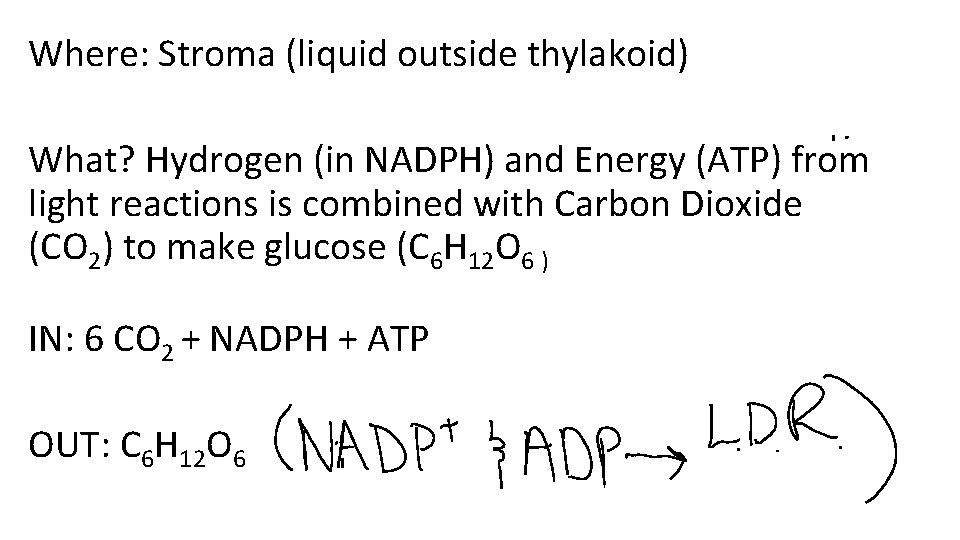
Where: Stroma (liquid outside thylakoid) What? Hydrogen (in NADPH) and Energy (ATP) from light reactions is combined with Carbon Dioxide (CO 2) to make glucose (C 6 H 12 O 6 ) IN: 6 CO 2 + NADPH + ATP OUT: C 6 H 12 O 6
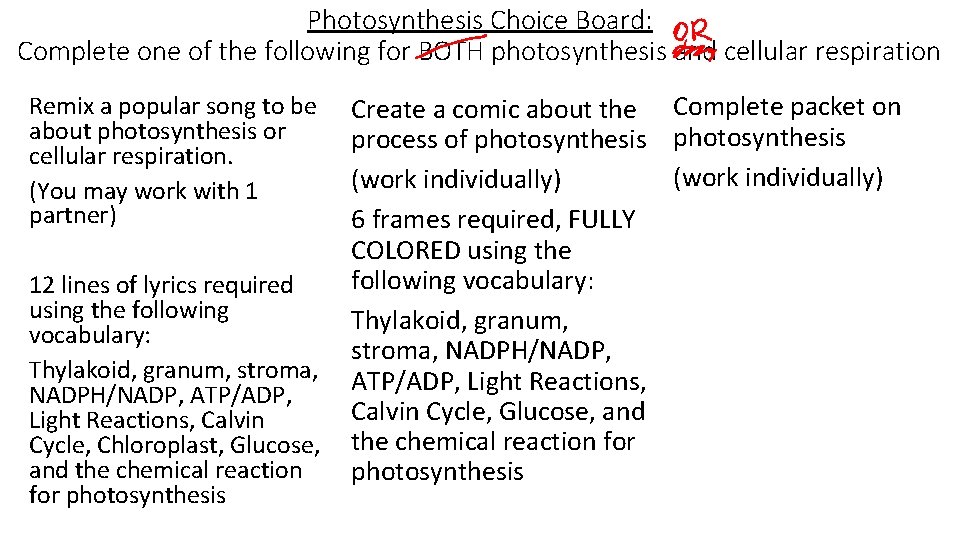
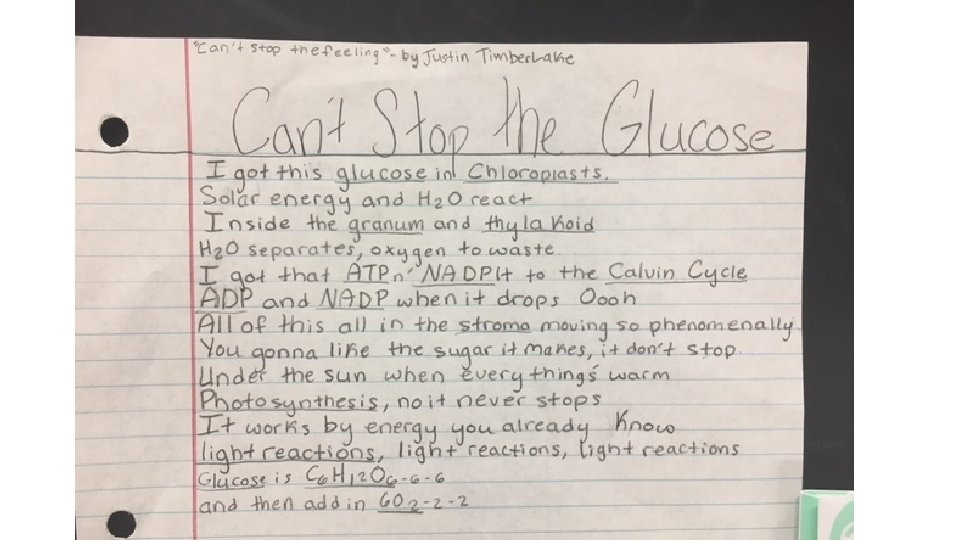
Photosynthesis Choice Board: Complete one of the following for BOTH photosynthesis and cellular respiration Remix a popular song to be about photosynthesis or cellular respiration. (You may work with 1 partner) 12 lines of lyrics required using the following vocabulary: Thylakoid, granum, stroma, NADPH/NADP, ATP/ADP, Light Reactions, Calvin Cycle, Chloroplast, Glucose, and the chemical reaction for photosynthesis Create a comic about the Complete packet on process of photosynthesis (work individually) 6 frames required, FULLY COLORED using the following vocabulary: Thylakoid, granum, stroma, NADPH/NADP, ATP/ADP, Light Reactions, Calvin Cycle, Glucose, and the chemical reaction for photosynthesis

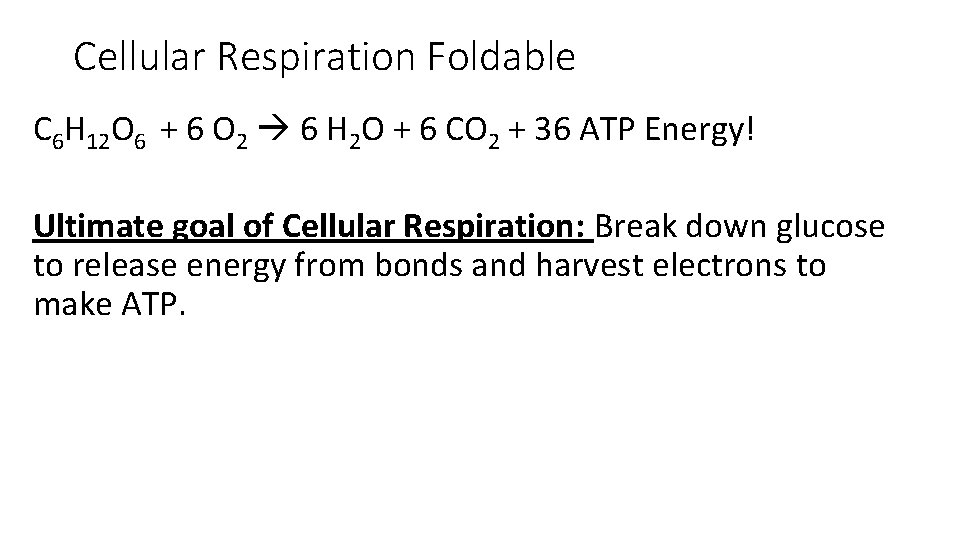
Cellular Respiration Foldable C 6 H 12 O 6 + 6 O 2 6 H 2 O + 6 CO 2 + 36 ATP Energy! Ultimate goal of Cellular Respiration: Break down glucose to release energy from bonds and harvest electrons to make ATP.
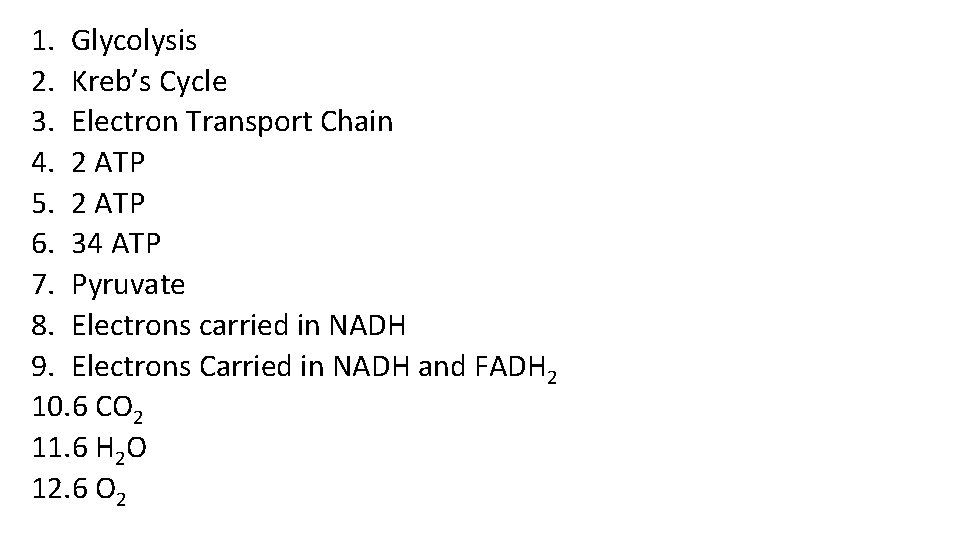
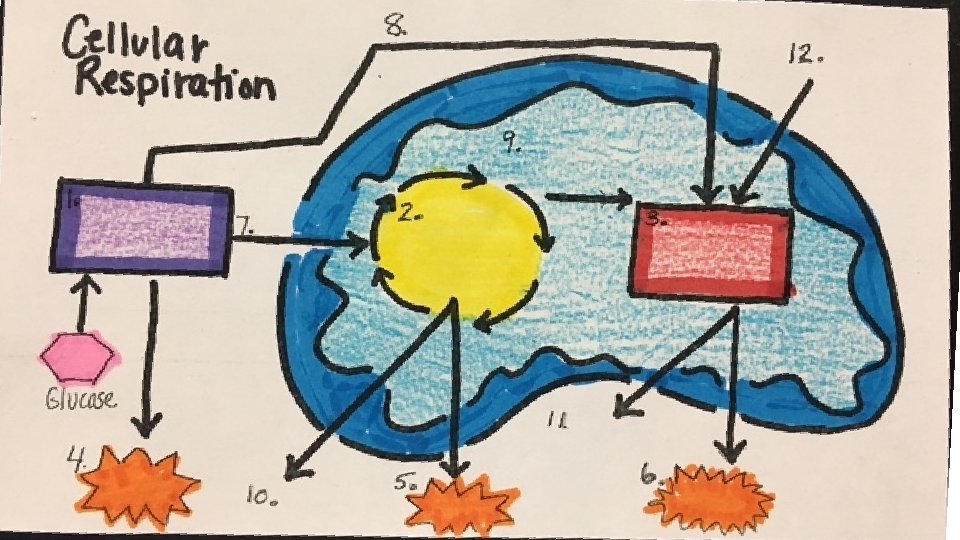
1. Glycolysis 2. Kreb’s Cycle 3. Electron Transport Chain 4. 2 ATP 5. 2 ATP 6. 34 ATP 7. Pyruvate 8. Electrons carried in NADH 9. Electrons Carried in NADH and FADH 2 10. 6 CO 2 11. 6 H 2 O 12. 6 O 2
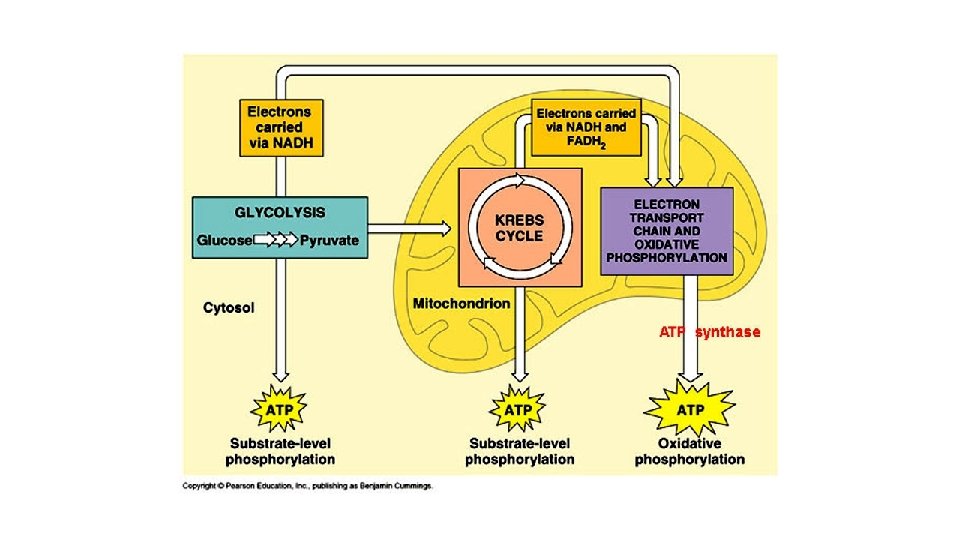
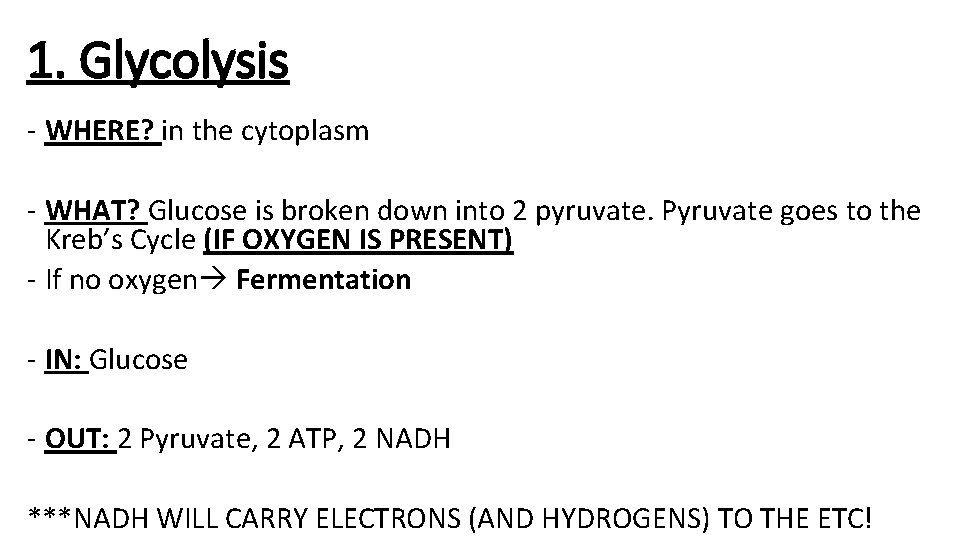
1. Glycolysis - WHERE? in the cytoplasm - WHAT? Glucose is broken down into 2 pyruvate. Pyruvate goes to the Kreb’s Cycle (IF OXYGEN IS PRESENT) - If no oxygen Fermentation - IN: Glucose - OUT: 2 Pyruvate, 2 ATP, 2 NADH ***NADH WILL CARRY ELECTRONS (AND HYDROGENS) TO THE ETC!
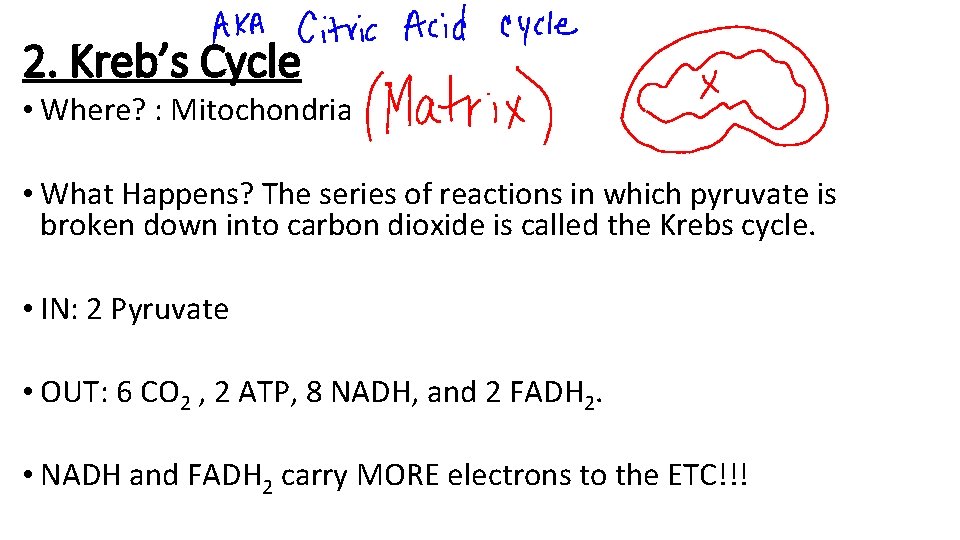
2. Kreb’s Cycle • Where? : Mitochondria • What Happens? The series of reactions in which pyruvate is broken down into carbon dioxide is called the Krebs cycle. • IN: 2 Pyruvate • OUT: 6 CO 2 , 2 ATP, 8 NADH, and 2 FADH 2. • NADH and FADH 2 carry MORE electrons to the ETC!!!
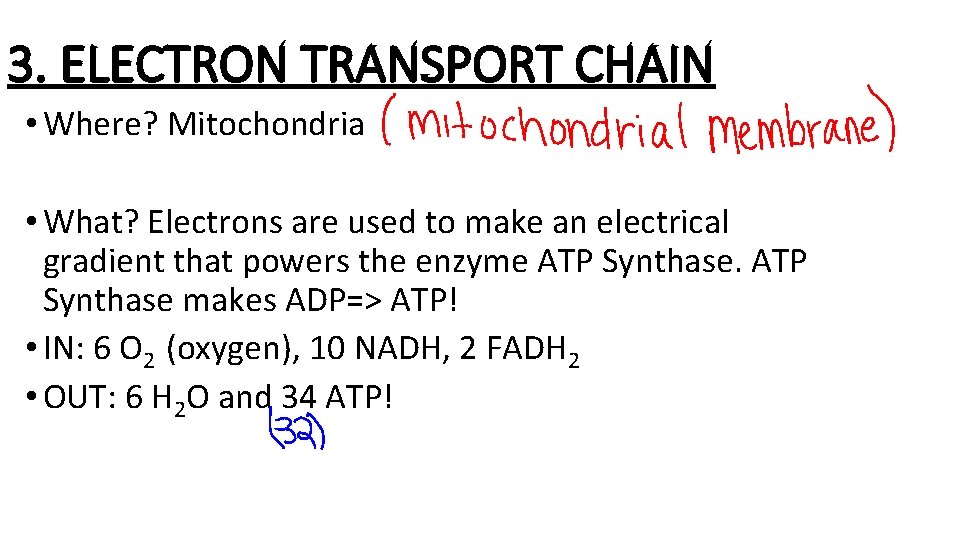
3. ELECTRON TRANSPORT CHAIN • Where? Mitochondria • What? Electrons are used to make an electrical gradient that powers the enzyme ATP Synthase makes ADP=> ATP! • IN: 6 O 2 (oxygen), 10 NADH, 2 FADH 2 • OUT: 6 H 2 O and 34 ATP!
- Slides: 22