
ACTIVATION ENERGY AND RATES The final saga Mechanisms









- Slides: 19
ACTIVATION ENERGY AND RATES The final saga
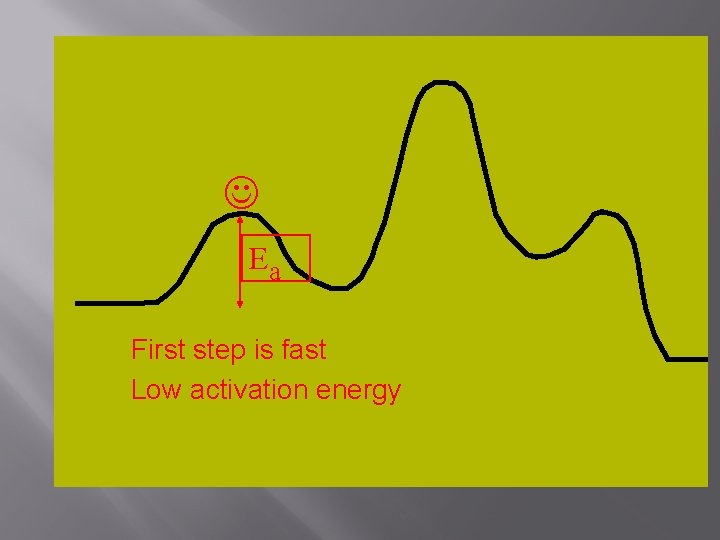
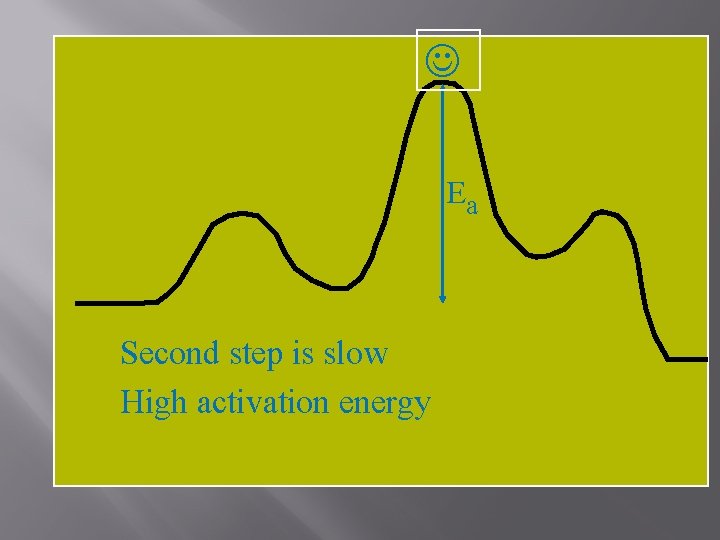
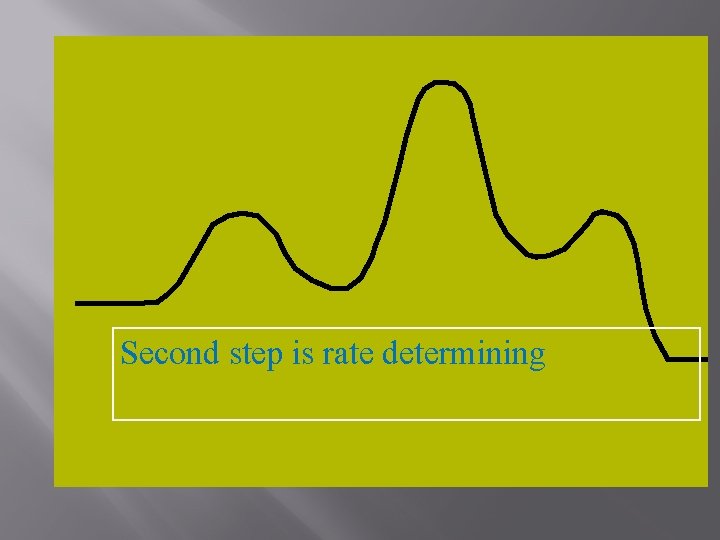
Mechanisms and rates � � � There is an activation energy for each elementary step. Activation energy determines k. k = Ae- (Ea/RT) k determines rate Slowest step (rate determining) must have the highest activation energy.
• This reaction takes place in three steps
Ea First step is fast Low activation energy
Ea Second step is slow High activation energy
Ea Third step is fast Low activation energy
Second step is rate determining
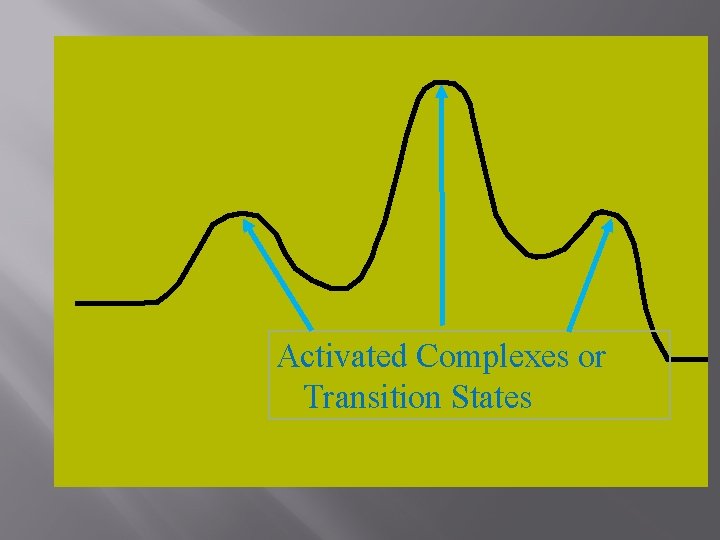
Intermediates are present
Activated Complexes or Transition States
Catalysts � � Speed up a reaction without being used up in the reaction. Enzymes are biological catalysts. Homogenous Catalysts are in the same phase as the reactants. Heterogeneous Catalysts are in a different phase as the reactants.
How Catalysts Work � � � Catalysts allow reactions to proceed by a different mechanism - a new pathway. New pathway has a lower activation energy. More molecules will have this activation energy. Does not change E Show up as a reactant in one step and a product in a later step
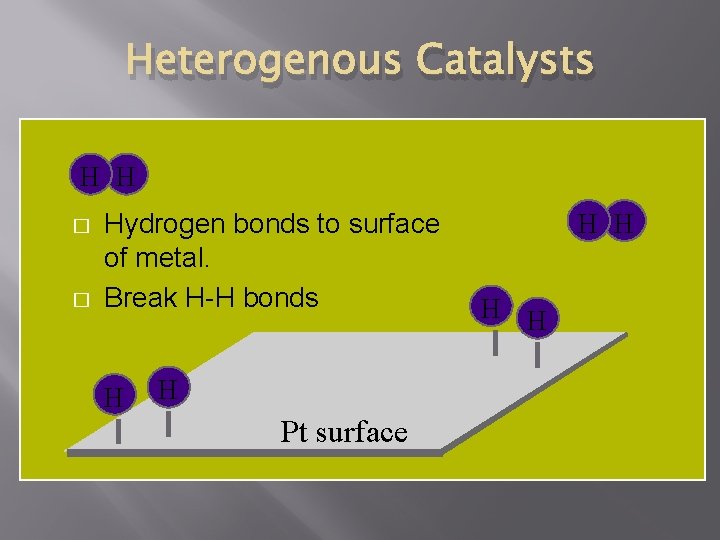
Heterogenous Catalysts H H � � Hydrogen bonds to surface of metal. Break H-H bonds H H Pt surface H H
Heterogenous Catalysts H H H C C H H H Pt surface
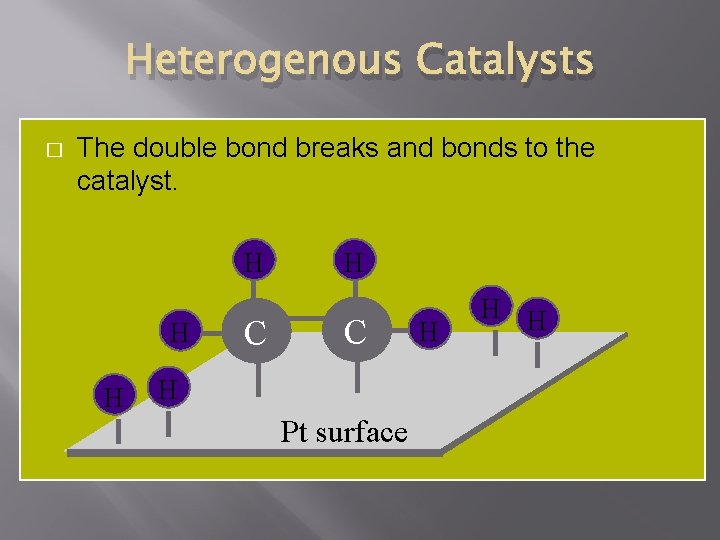
Heterogenous Catalysts � The double bond breaks and bonds to the catalyst. H H H C H Pt surface H H H
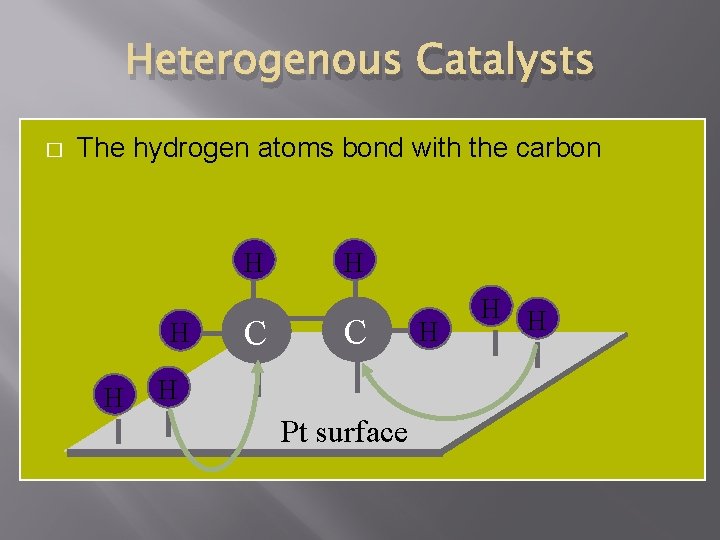
Heterogenous Catalysts � The hydrogen atoms bond with the carbon H H H C H Pt surface H H H
Heterogenous Catalysts H H H C C H H H Pt surface H H
Homogenous Catalysts � � Chlorofluorocarbons (CFCs) catalyze the decomposition of ozone. Enzymes regulating the body processes. (Protein catalysts)
Catalysts and rate � � � Catalysts will speed up a reaction but only to a certain point. Past a certain point adding more reactants won’t change the rate. Zero Order
Catalysts and rate. R a t e � � Rate increases until the active sites of catalyst are filled. Then rate is independent of concentration Concentration of reactants