
Activated Sludge Workshop Techniques and Tools that Improve

- Slides: 28
Activated Sludge Workshop Techniques and Tools that Improve Clarifier Performance Mike Beattie Operations and Reliability
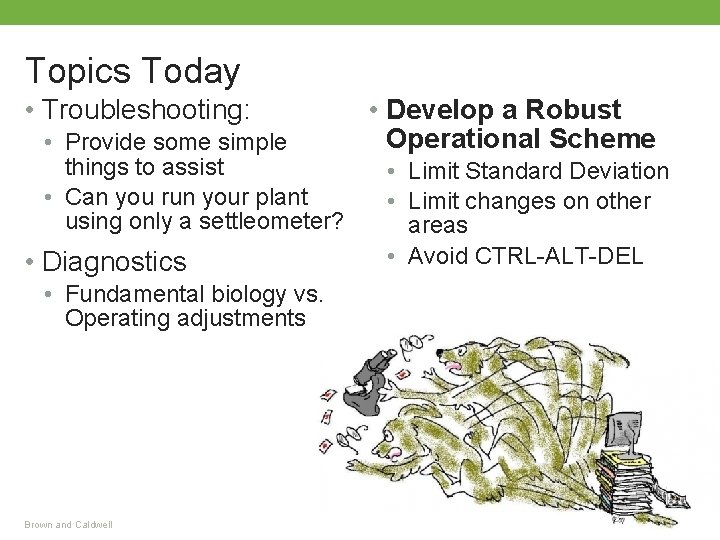
Topics Today • Troubleshooting: • Provide some simple things to assist • Can you run your plant using only a settleometer? • Diagnostics • Develop a Robust Operational Scheme • Limit Standard Deviation • Limit changes on other areas • Avoid CTRL-ALT-DEL • Fundamental biology vs. Operating adjustments Brown and Caldwell 2
My History 1992 Administrative Order • Reduce overflows • No more convenience pressure relief • Treat more/bypass less • Would a clarifier that could only treat 3 MGD be of any use? Brown and Caldwell 3
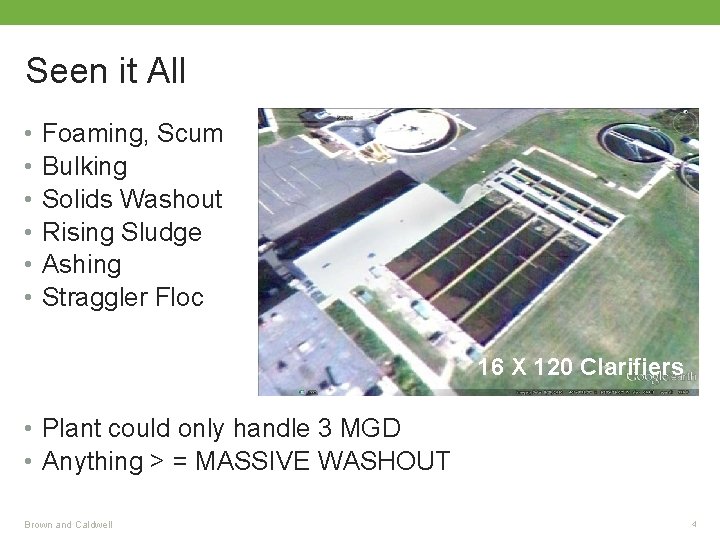
Seen it All • • • Foaming, Scum Bulking Solids Washout Rising Sludge Ashing Straggler Floc 16 X 120 Clarifiers • Plant could only handle 3 MGD • Anything > = MASSIVE WASHOUT Brown and Caldwell 4
Questions and Quest for Knowledge (The Grail) • What causes all of these things to happen? • What where the commonalities? • The end result had to be a simple decision making tool • Operators had to Understand Original Design Intent (train, 21 conversations) • SOR, Weir Overflow Rate, Solids Loading Rate, Solids Under-loading Rate Nuances of settled sludge • Too much or too little food results in poor sludge quality Brown and Caldwell 5
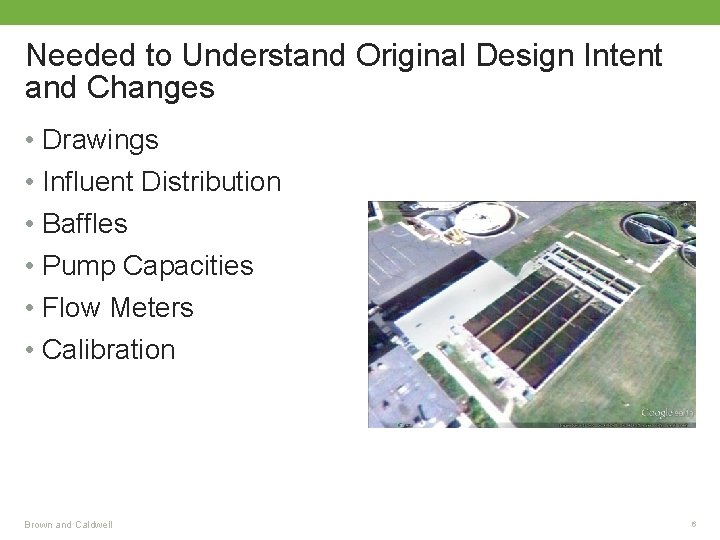
Needed to Understand Original Design Intent and Changes • Drawings • Influent Distribution • Baffles • Pump Capacities • Flow Meters • Calibration Brown and Caldwell 6
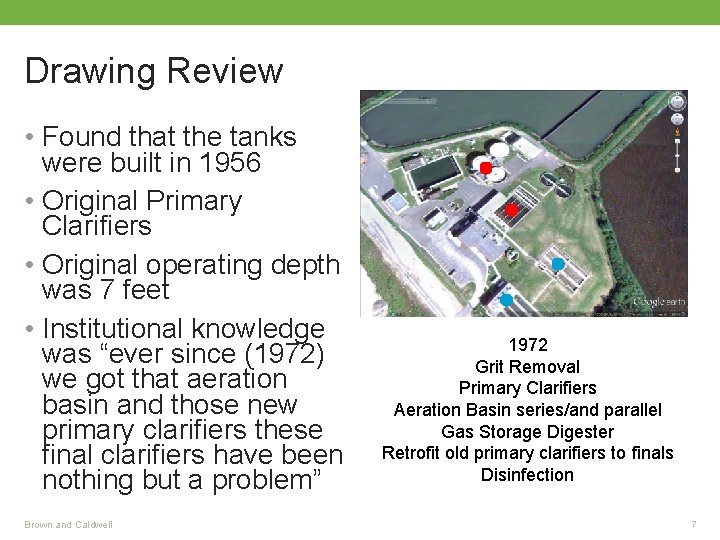
Drawing Review • Found that the tanks were built in 1956 • Original Primary Clarifiers • Original operating depth was 7 feet • Institutional knowledge was “ever since (1972) we got that aeration basin and those new primary clarifiers these final clarifiers have been nothing but a problem” Brown and Caldwell 1972 Grit Removal Primary Clarifiers Aeration Basin series/and parallel Gas Storage Digester Retrofit old primary clarifiers to finals Disinfection 7
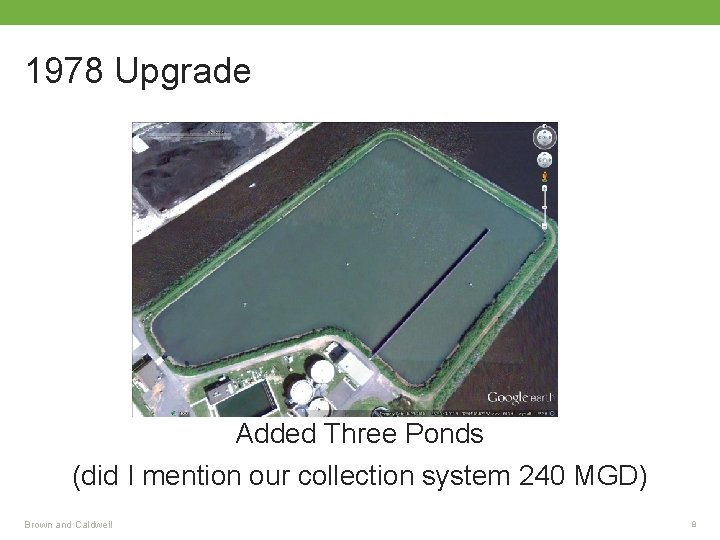
1978 Upgrade Added Three Ponds (did I mention our collection system 240 MGD) Brown and Caldwell 8
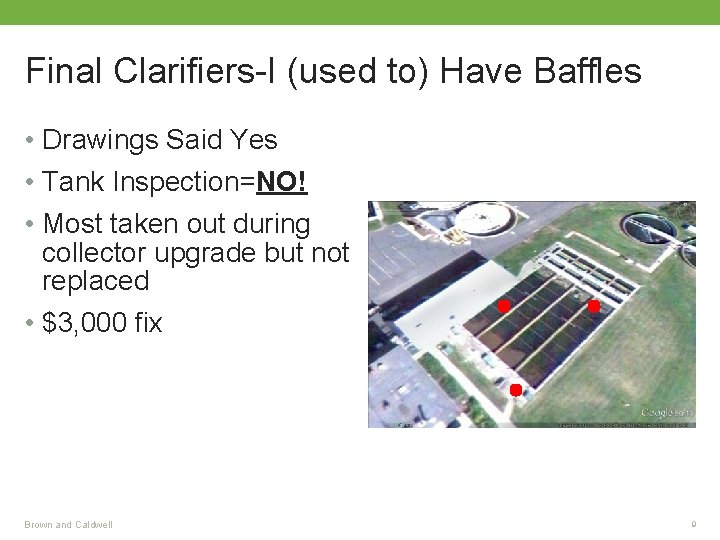
Final Clarifiers-I (used to) Have Baffles • Drawings Said Yes • Tank Inspection=NO! • Most taken out during collector upgrade but not replaced • $3, 000 fix Brown and Caldwell 9
Influent Distribution • Inspecting for debris is very helpful • Sampling the entire water column? • Could a sludge judge, some buckets and a little laboratory work tell you anything? • Proper Sludge Judge Use (ITA Study) • Dye testing can be helpful • CFD modeling can be helpful Brown and Caldwell 10
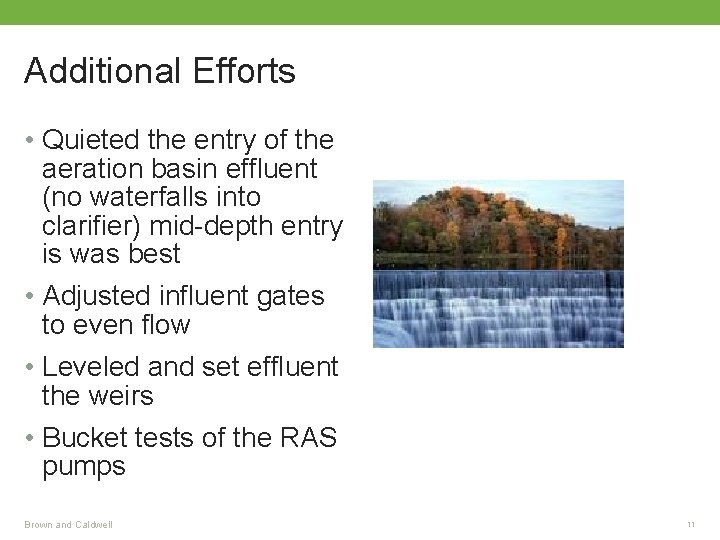
Additional Efforts • Quieted the entry of the aeration basin effluent (no waterfalls into clarifier) mid-depth entry is was best • Adjusted influent gates to even flow • Leveled and set effluent the weirs • Bucket tests of the RAS pumps Brown and Caldwell 11
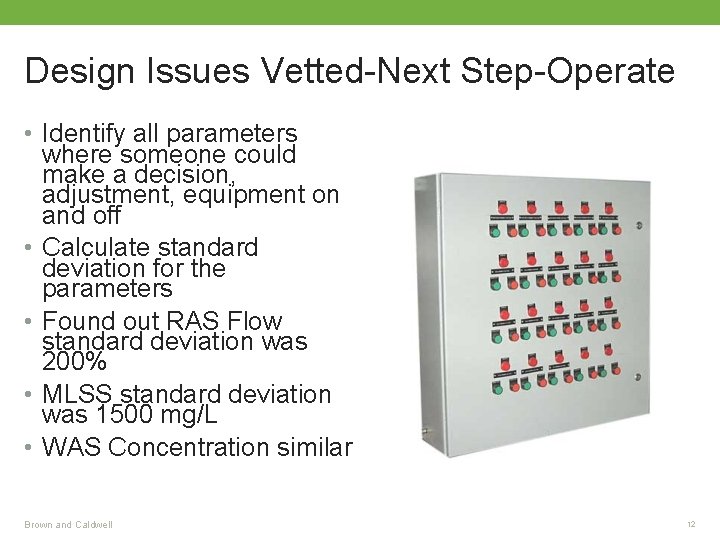
Design Issues Vetted-Next Step-Operate • Identify all parameters where someone could make a decision, adjustment, equipment on and off • Calculate standard deviation for the parameters • Found out RAS Flow standard deviation was 200% • MLSS standard deviation was 1500 mg/L • WAS Concentration similar Brown and Caldwell 12
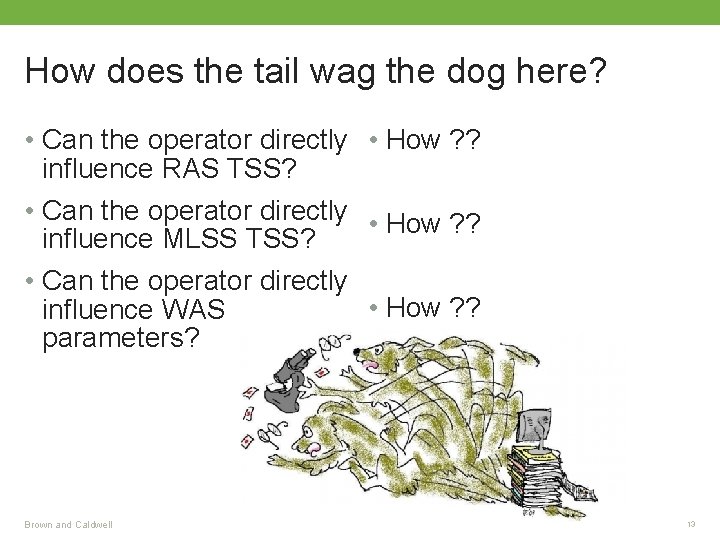
How does the tail wag the dog here? • Can the operator directly • How ? ? influence RAS TSS? • Can the operator directly • How ? ? influence MLSS TSS? • Can the operator directly • How ? ? influence WAS parameters? Brown and Caldwell 13
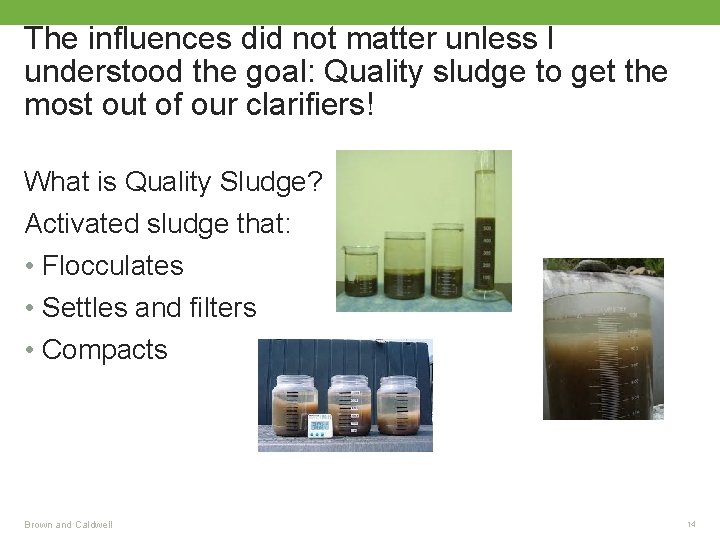
The influences did not matter unless I understood the goal: Quality sludge to get the most out of our clarifiers! What is Quality Sludge? Activated sludge that: • Flocculates • Settles and filters • Compacts Brown and Caldwell 14
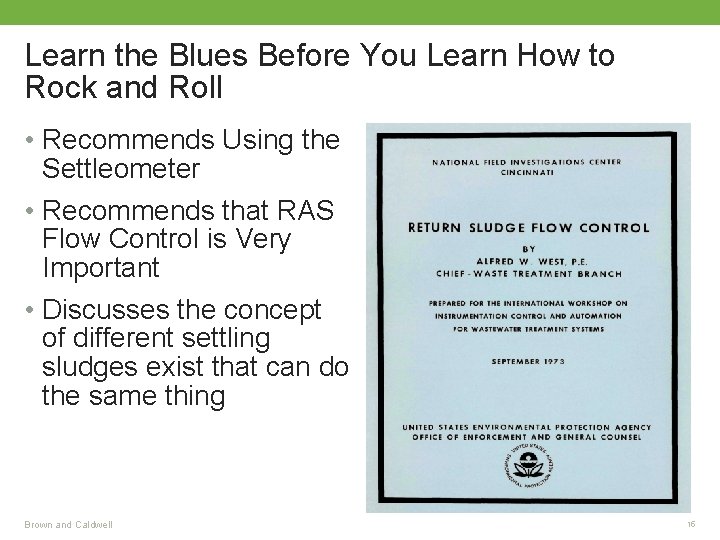
Learn the Blues Before You Learn How to Rock and Roll • Recommends Using the Settleometer • Recommends that RAS Flow Control is Very Important • Discusses the concept of different settling sludges exist that can do the same thing Brown and Caldwell 15
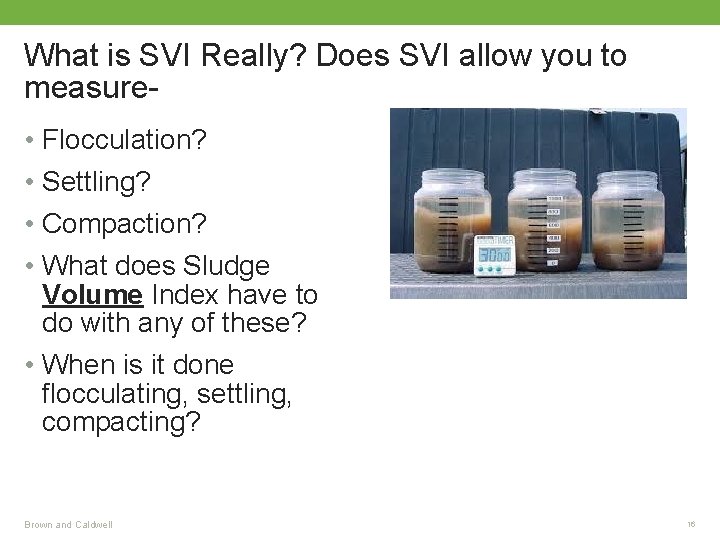
What is SVI Really? Does SVI allow you to measure • Flocculation? • Settling? • Compaction? • What does Sludge Volume Index have to do with any of these? • When is it done flocculating, settling, compacting? Brown and Caldwell 16
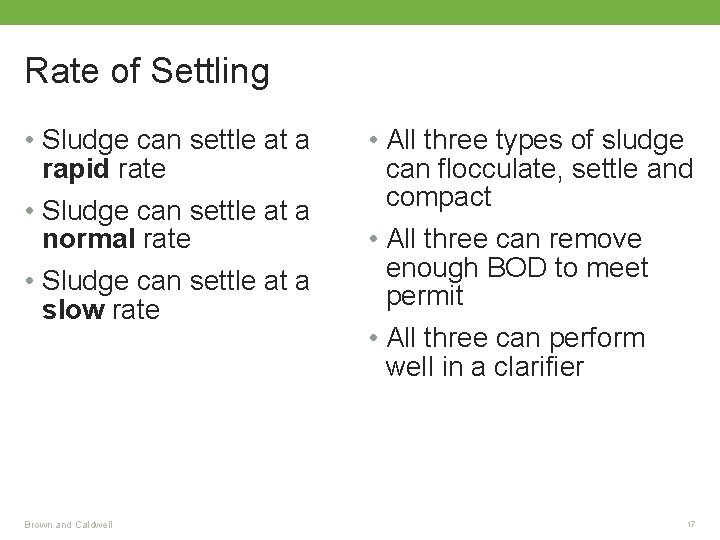
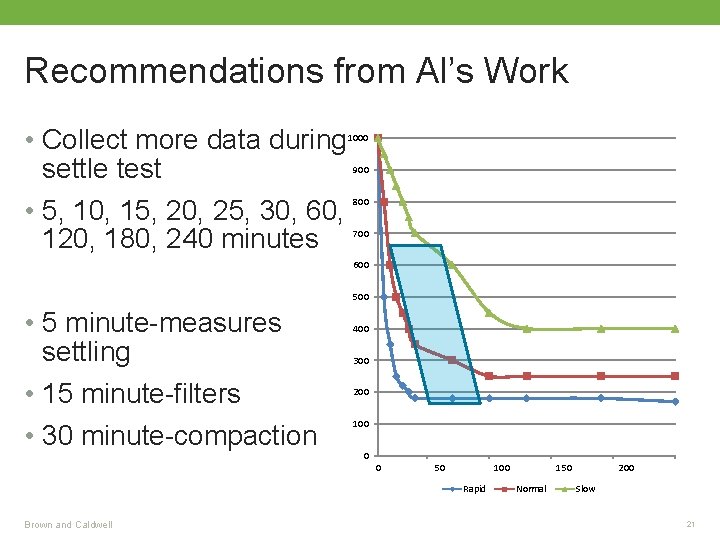
Rate of Settling • Sludge can settle at a rapid rate • Sludge can settle at a normal rate • Sludge can settle at a slow rate Brown and Caldwell • All three types of sludge can flocculate, settle and compact • All three can remove enough BOD to meet permit • All three can perform well in a clarifier 17
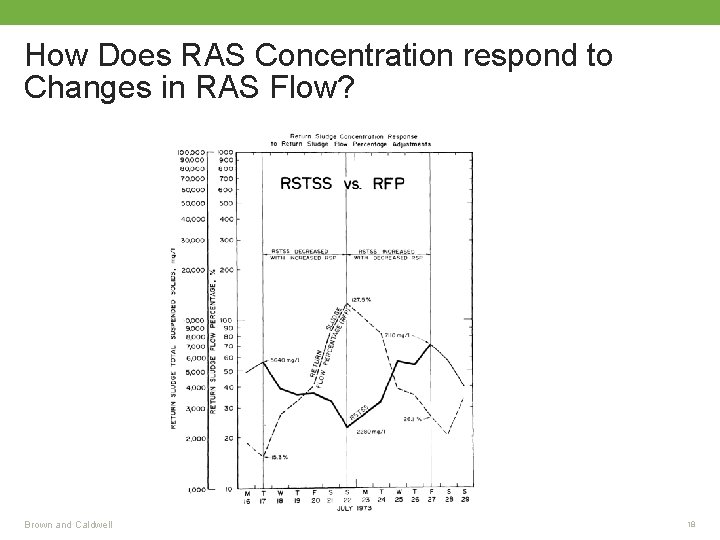
How Does RAS Concentration respond to Changes in RAS Flow? Brown and Caldwell 18
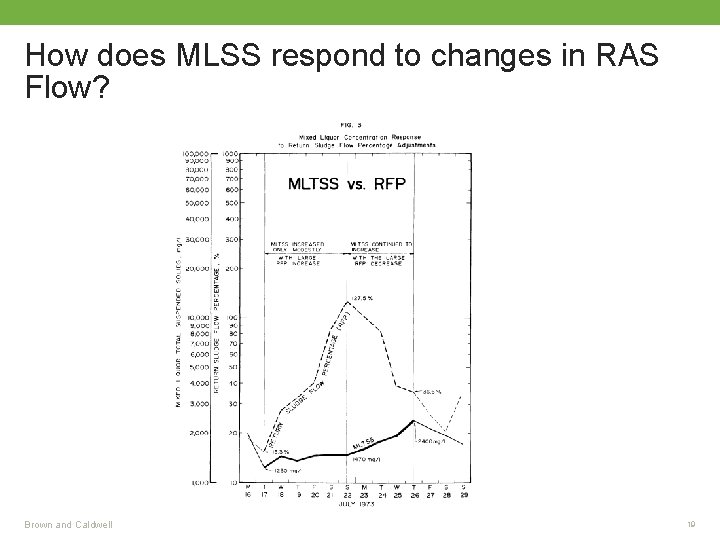
How does MLSS respond to changes in RAS Flow? Brown and Caldwell 19
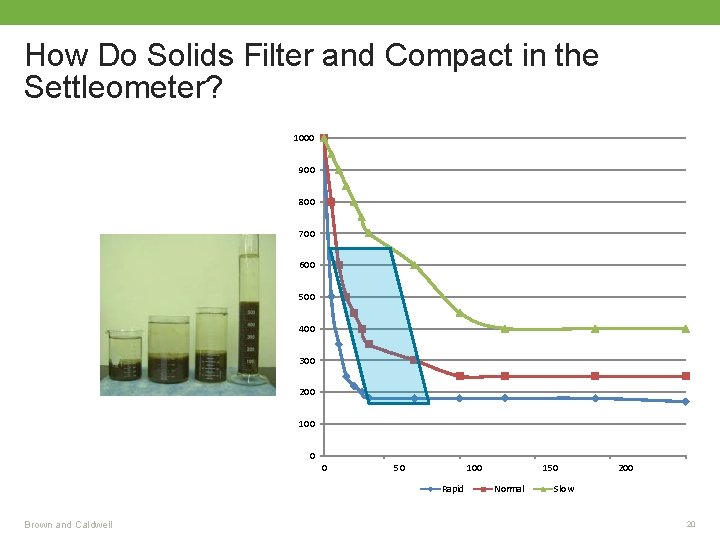
How Do Solids Filter and Compact in the Settleometer? 1000 900 800 700 600 500 400 300 200 100 0 0 50 100 Rapid Brown and Caldwell 150 Normal 200 Slow 20
Recommendations from Al’s Work • Collect more data during settle test • 5, 10, 15, 20, 25, 30, 60, 120, 180, 240 minutes 1000 900 800 700 600 500 • 5 minute-measures settling • 15 minute-filters • 30 minute-compaction 400 300 200 100 0 0 50 100 Rapid Brown and Caldwell 150 Normal 200 Slow 21
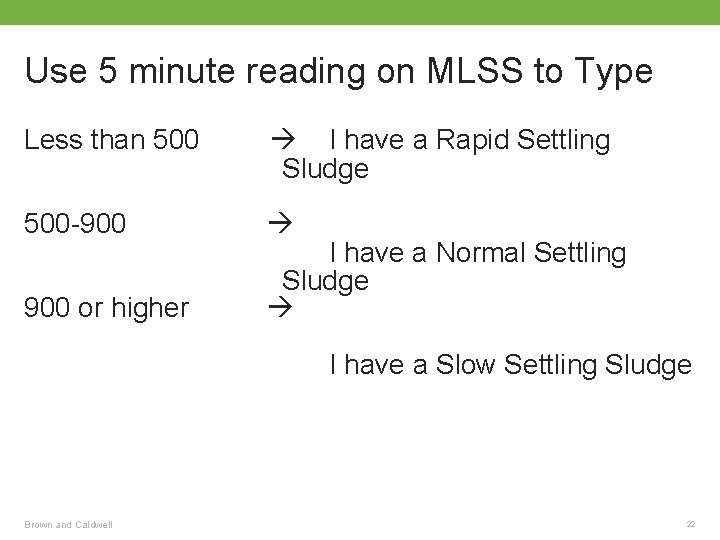
Use 5 minute reading on MLSS to Type Less than 500 I have a Rapid Settling Sludge 500 -900 or higher I have a Normal Settling Sludge I have a Slow Settling Sludge Brown and Caldwell 22
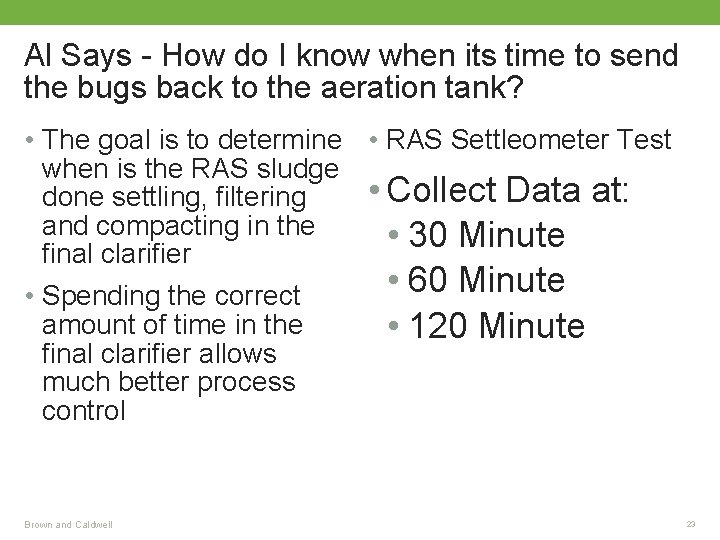
Al Says - How do I know when its time to send the bugs back to the aeration tank? • The goal is to determine • RAS Settleometer Test when is the RAS sludge • Collect Data at: done settling, filtering and compacting in the • 30 Minute final clarifier • 60 Minute • Spending the correct amount of time in the • 120 Minute final clarifier allows much better process control Brown and Caldwell 23
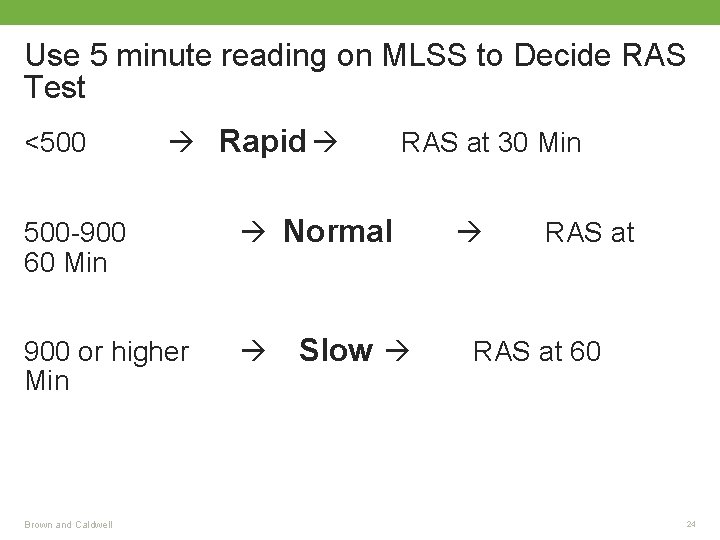
Use 5 minute reading on MLSS to Decide RAS Test <500 Rapid 500 -900 60 Min Normal 900 or higher Min Brown and Caldwell RAS at 30 Min Slow RAS at 60 24
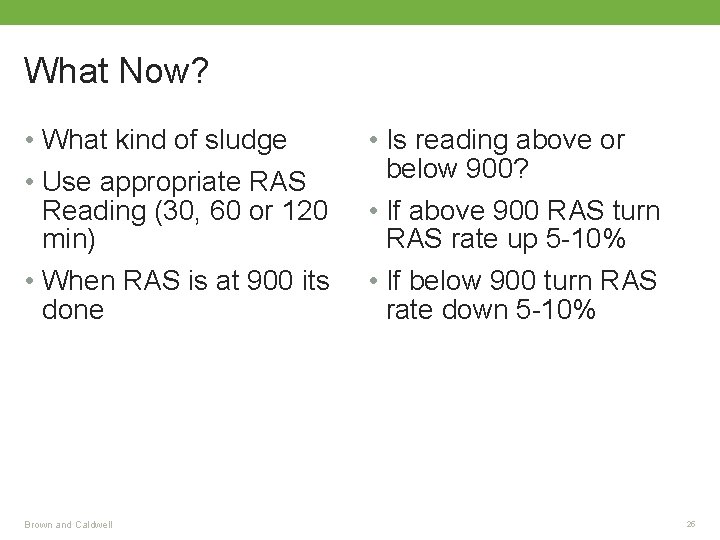
What Now? • What kind of sludge • Use appropriate RAS Reading (30, 60 or 120 min) • When RAS is at 900 its done Brown and Caldwell • Is reading above or below 900? • If above 900 RAS turn RAS rate up 5 -10% • If below 900 turn RAS rate down 5 -10% 25
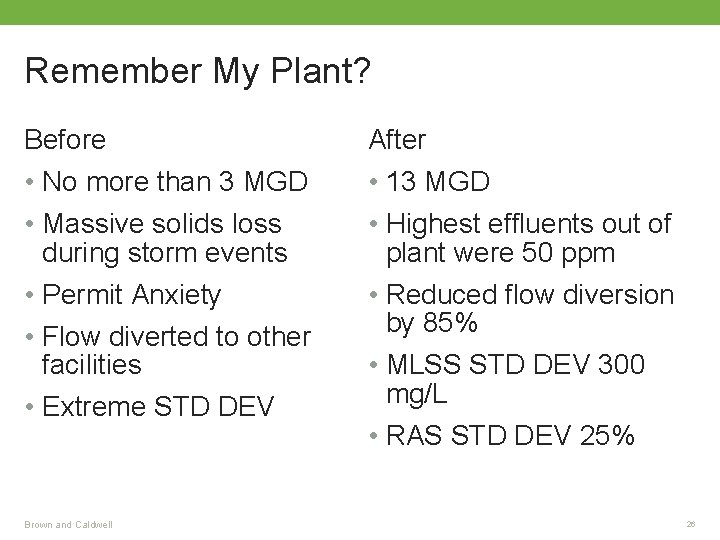
Remember My Plant? Before After • No more than 3 MGD • Massive solids loss during storm events • Permit Anxiety • Flow diverted to other facilities • Extreme STD DEV • 13 MGD • Highest effluents out of plant were 50 ppm • Reduced flow diversion by 85% • MLSS STD DEV 300 mg/L • RAS STD DEV 25% Brown and Caldwell 26
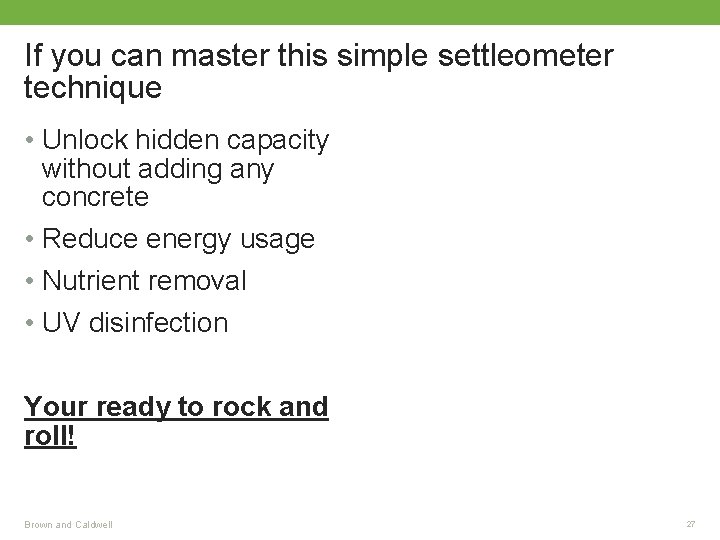
If you can master this simple settleometer technique • Unlock hidden capacity without adding any concrete • Reduce energy usage • Nutrient removal • UV disinfection Your ready to rock and roll! Brown and Caldwell 27
Questions? ? Mike Beattie Brown & Caldwell Operations/Reliability mbeattie@brwncald. com 952 -240 -0341 Brown and Caldwell 28