
ActionControl Processes as Predictors of Change in Adjustment
- Slides: 16
Action-Control Processes as Predictors of Change in Adjustment Across the Transition to Middle School. Vanlede, M. , Little, T. D. , & Card, N. A. ISSBD Meeting, Ghent, July 2004
Research question Which features of young adolescents’ action control processes best predict adjustment across the transition to middle school?
Context: School transition • Threatening and challenging situation that requires action and adaptation Excellent context to examine action-control processes and their effects on adjustemnt • Inconsistent results concerning effects of transition on adjustment suggestion: examine intraindividual differences (within-person changes)
Action-control theory Metatheoretical perspective to understand the various self-regulatory processes that children utilize in negotiating their complex and often challenging worlds (Little, Lopez, & Wanner, 2001)
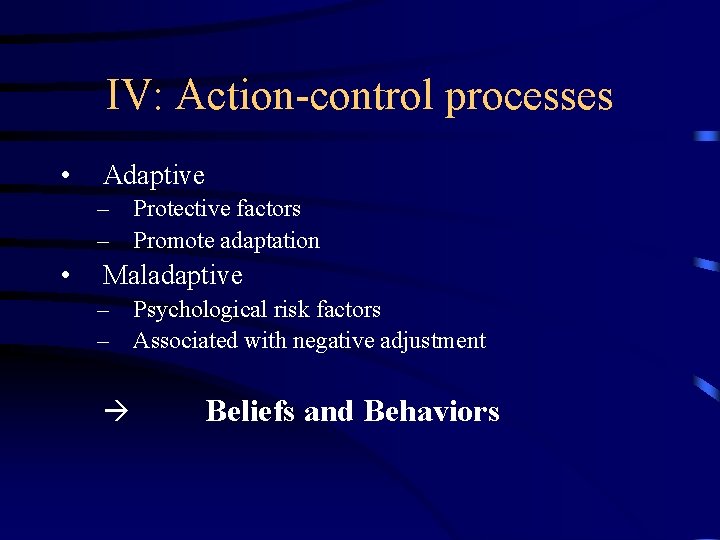
IV: Action-control processes • Adaptive – Protective factors – Promote adaptation • Maladaptive – Psychological risk factors – Associated with negative adjustment Beliefs and Behaviors
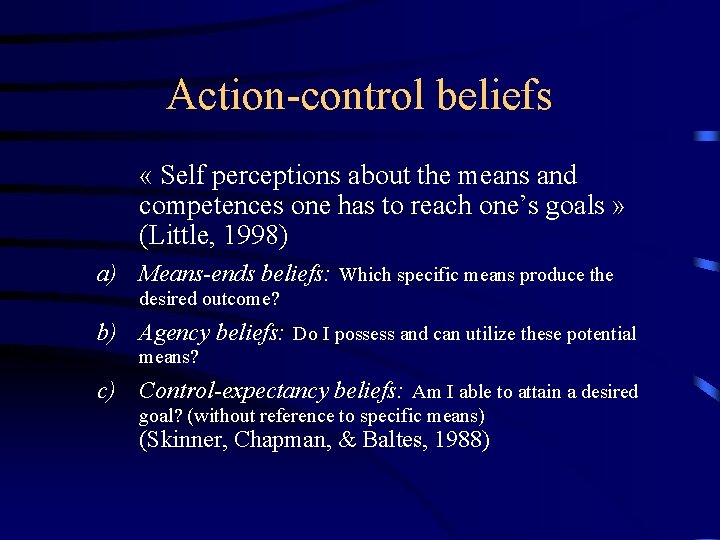
Action-control beliefs « Self perceptions about the means and competences one has to reach one’s goals » (Little, 1998) a) Means-ends beliefs: Which specific means produce the desired outcome? b) Agency beliefs: Do I possess and can utilize these potential means? c) Control-expectancy beliefs: Am I able to attain a desired goal? (without reference to specific means) (Skinner, Chapman, & Baltes, 1988)
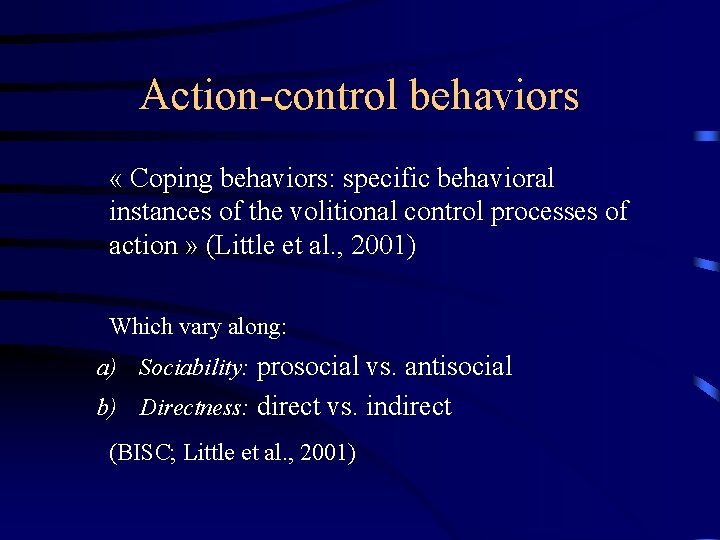
Action-control behaviors « Coping behaviors: specific behavioral instances of the volitional control processes of action » (Little et al. , 2001) Which vary along: a) Sociability: prosocial vs. antisocial b) Directness: direct vs. indirect (BISC; Little et al. , 2001)
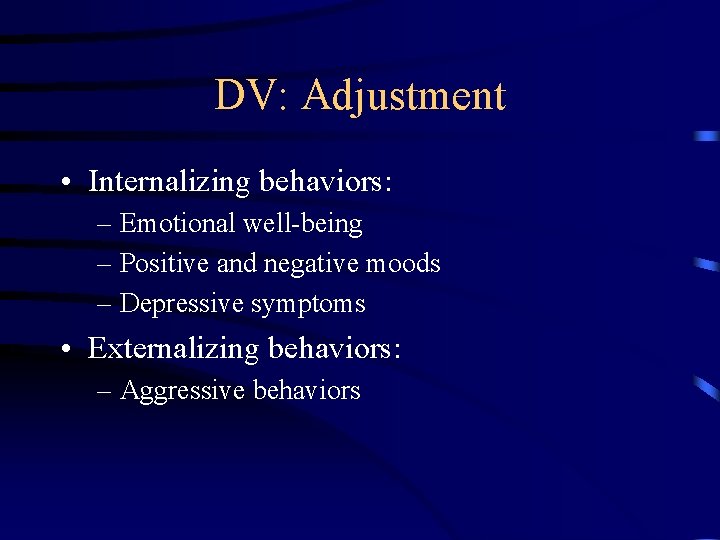
DV: Adjustment • Internalizing behaviors: – Emotional well-being – Positive and negative moods – Depressive symptoms • Externalizing behaviors: – Aggressive behaviors
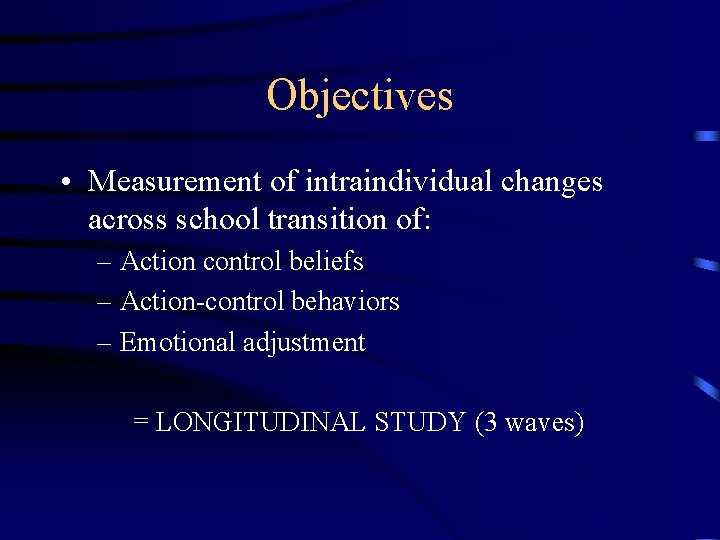
Objectives • Measurement of intraindividual changes across school transition of: – Action control beliefs – Action-control behaviors – Emotional adjustment = LONGITUDINAL STUDY (3 waves)
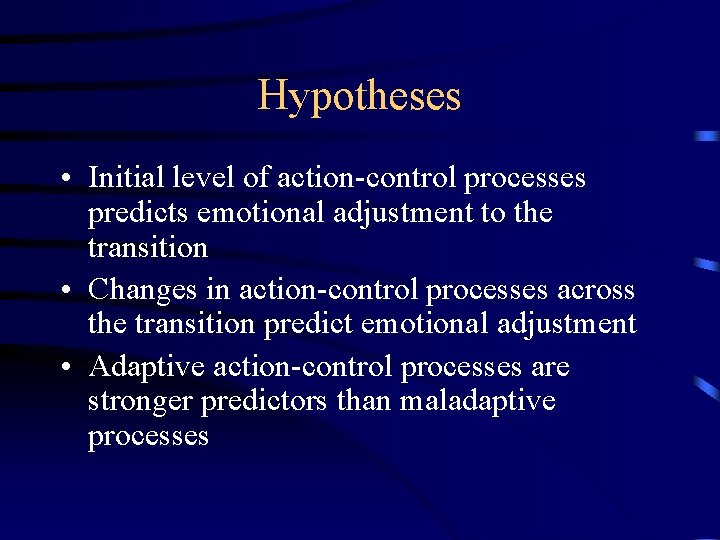
Hypotheses • Initial level of action-control processes predicts emotional adjustment to the transition • Changes in action-control processes across the transition predict emotional adjustment • Adaptive action-control processes are stronger predictors than maladaptive processes
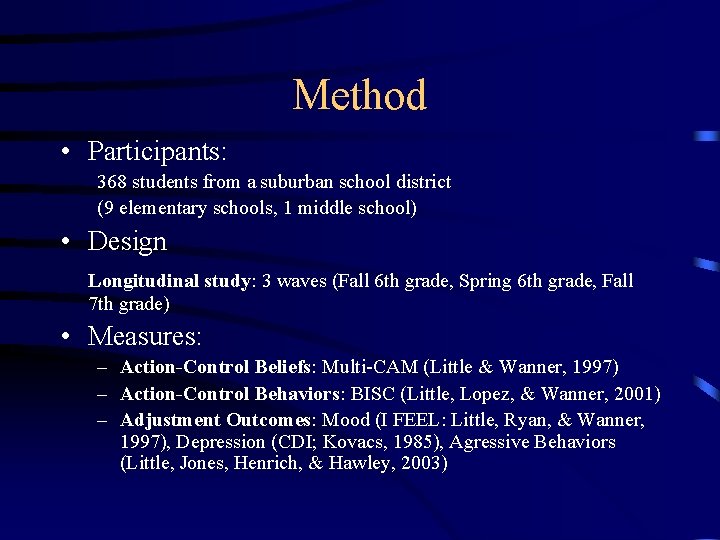
Method • Participants: 368 students from a suburban school district (9 elementary schools, 1 middle school) • Design Longitudinal study: 3 waves (Fall 6 th grade, Spring 6 th grade, Fall 7 th grade) • Measures: – Action-Control Beliefs: Multi-CAM (Little & Wanner, 1997) – Action-Control Behaviors: BISC (Little, Lopez, & Wanner, 2001) – Adjustment Outcomes: Mood (I FEEL: Little, Ryan, & Wanner, 1997), Depression (CDI; Kovacs, 1985), Agressive Behaviors (Little, Jones, Henrich, & Hawley, 2003)
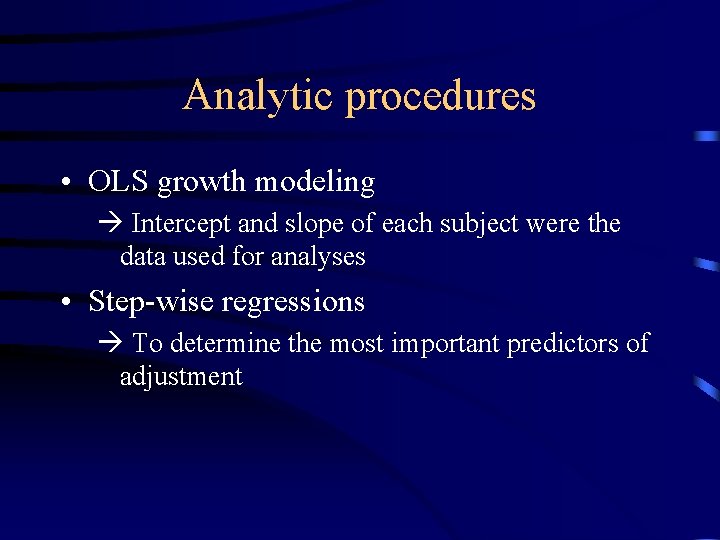
Analytic procedures • OLS growth modeling Intercept and slope of each subject were the data used for analyses • Step-wise regressions To determine the most important predictors of adjustment
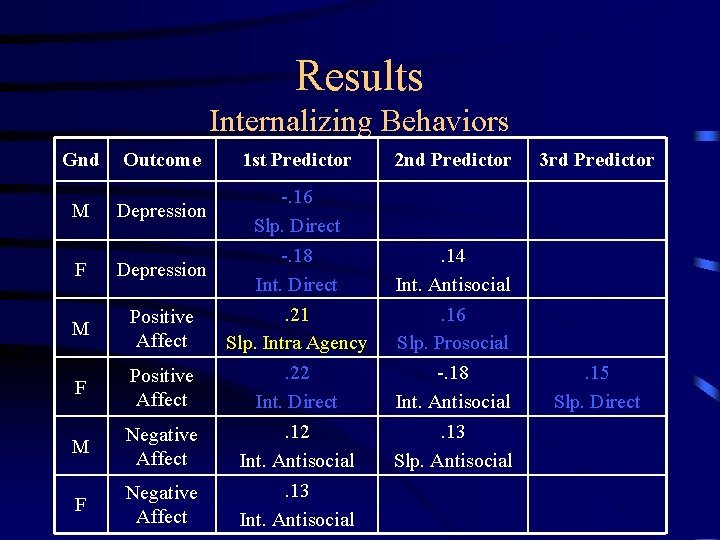
Results Internalizing Behaviors Gnd Outcome 1 st Predictor Depression -. 16 Slp. Direct F Depression -. 18 Int. Direct . 14 Int. Antisocial M Positive Affect F Positive Affect . 21 Slp. Intra Agency. 22 Int. Direct . 16 Slp. Prosocial -. 18 Int. Antisocial M Negative Affect . 13 Slp. Antisocial F Negative Affect . 12 Int. Antisocial. 13 Int. Antisocial M 2 nd Predictor 3 rd Predictor . 15 Slp. Direct
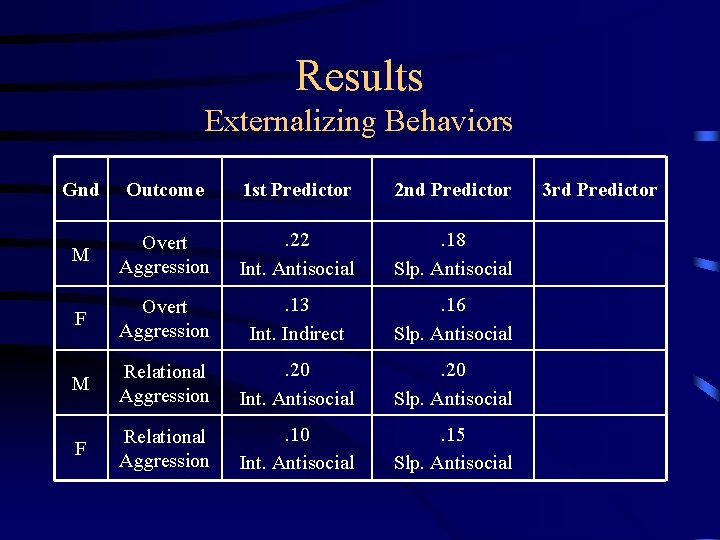
Results Externalizing Behaviors Gnd Outcome 1 st Predictor 2 nd Predictor M Overt Aggression . 22 Int. Antisocial . 18 Slp. Antisocial F Overt Aggression . 13 Int. Indirect . 16 Slp. Antisocial M Relational Aggression . 20 Int. Antisocial . 20 Slp. Antisocial F Relational Aggression . 10 Int. Antisocial . 15 Slp. Antisocial 3 rd Predictor
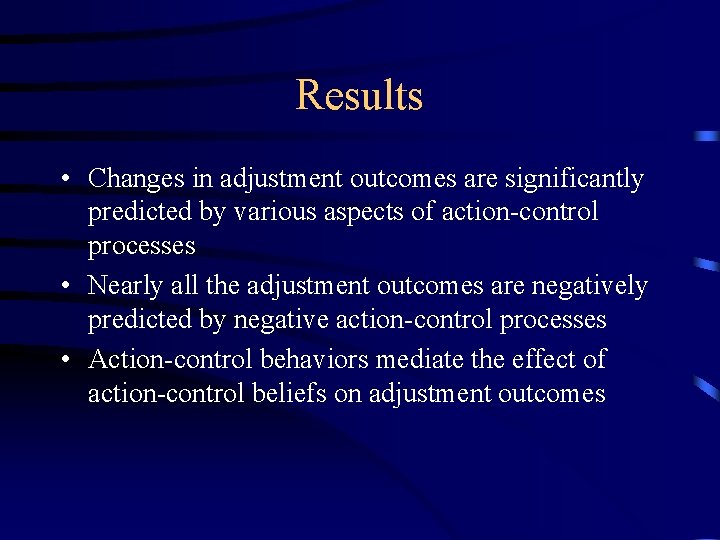
Results • Changes in adjustment outcomes are significantly predicted by various aspects of action-control processes • Nearly all the adjustment outcomes are negatively predicted by negative action-control processes • Action-control behaviors mediate the effect of action-control beliefs on adjustment outcomes
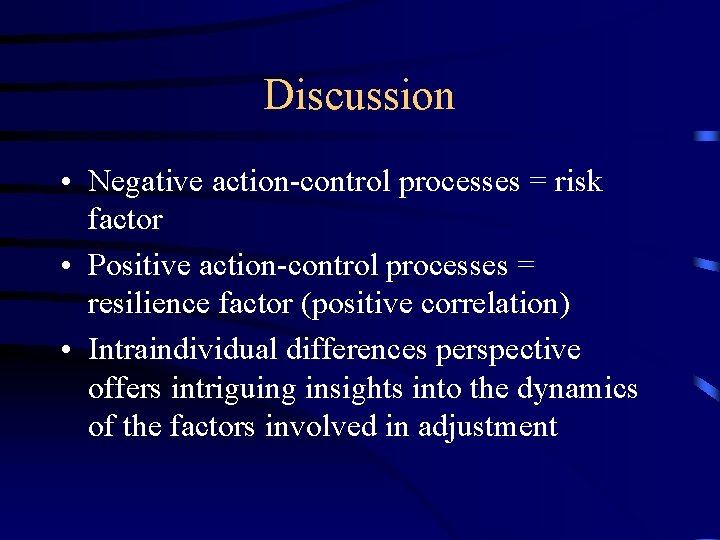
Discussion • Negative action-control processes = risk factor • Positive action-control processes = resilience factor (positive correlation) • Intraindividual differences perspective offers intriguing insights into the dynamics of the factors involved in adjustment