
Action Research Session 4 Lewins Original model Reflect

- Slides: 8
Action Research Session 4
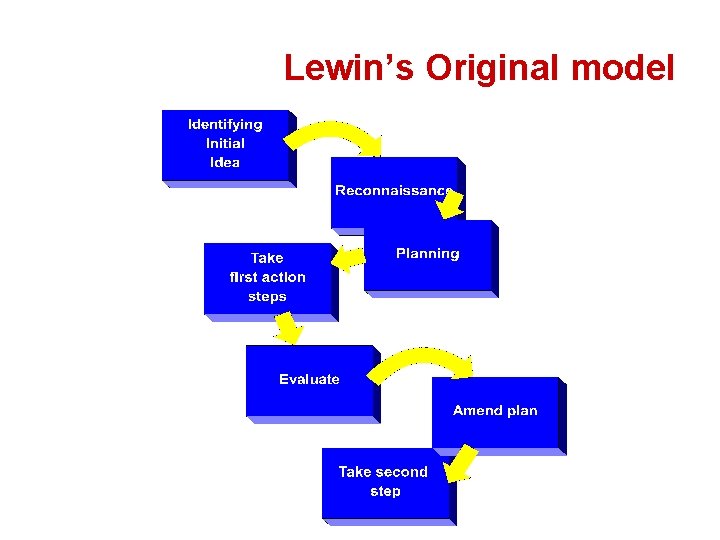
Lewin’s Original model
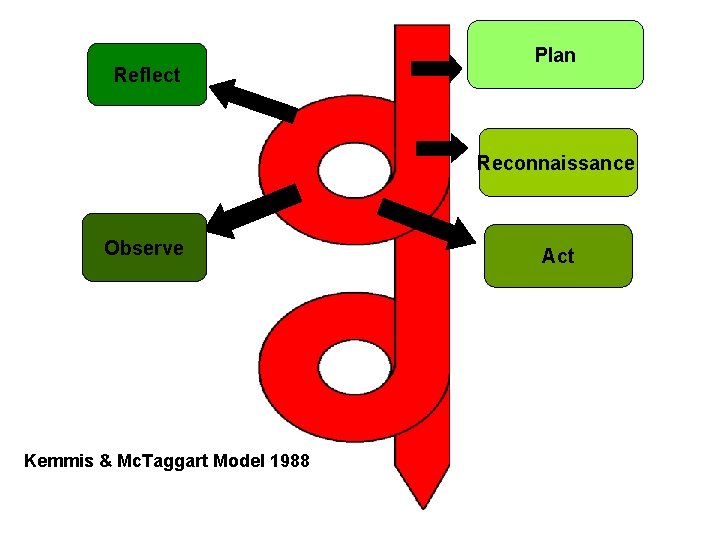
Reflect Plan Reconnaissance Observe Kemmis & Mc. Taggart Model 1988 Act
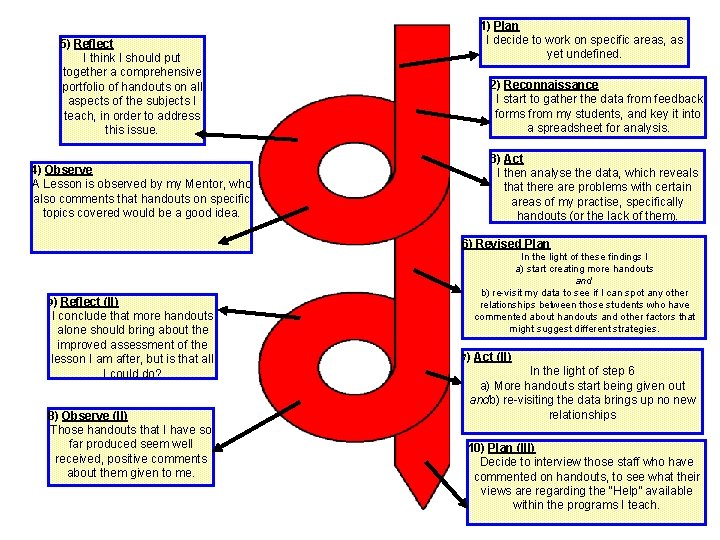
1) Plan I decide to work on specific areas, as yet undefined. 5) Reflect I think I should put together a comprehensive portfolio of handouts on all aspects of the subjects I teach, in order to address this issue. 2) Reconnaissance I start to gather the data from feedback forms from my students, and key it into a spreadsheet for analysis. 3) Act I then analyse the data, which reveals that there are problems with certain areas of my practise, specifically handouts (or the lack of them). 4) Observe A Lesson is observed by my Mentor, who also comments that handouts on specific topics covered would be a good idea. 6) Revised Plan Reflect (II) I conclude that more handouts alone should bring about the improved assessment of the lesson I am after, but is that all I could do? In the light of these findings I a) start creating more handouts and b) re-visit my data to see if I can spot any other relationships between those students who have commented about handouts and other factors that might suggest different strategies. 9) 8) Observe (II) Those handouts that I have so far produced seem well received, positive comments about them given to me. 7) Act (II) In the light of step 6 a) More handouts start being given out andb) re-visiting the data brings up no new relationships 10) Plan (III) Decide to interview those staff who have commented on handouts, to see what their views are regarding the “Help” available within the programs I teach.
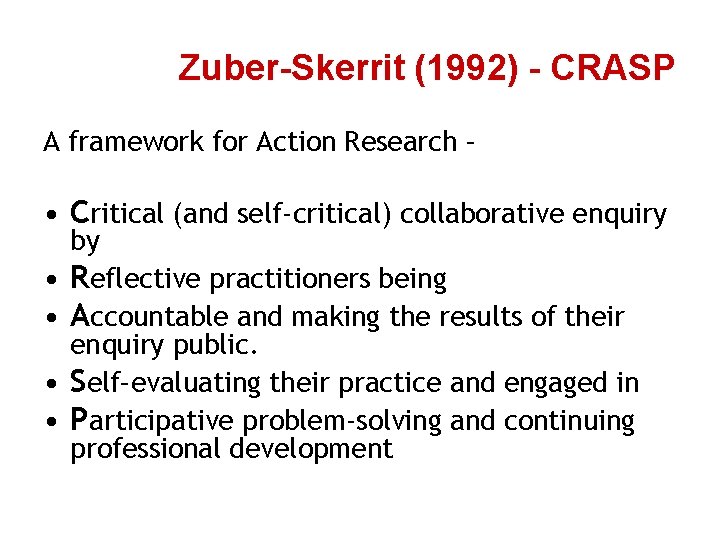
Zuber-Skerrit (1992) - CRASP A framework for Action Research – • Critical (and self-critical) collaborative enquiry • • by Reflective practitioners being Accountable and making the results of their enquiry public. Self–evaluating their practice and engaged in Participative problem-solving and continuing professional development
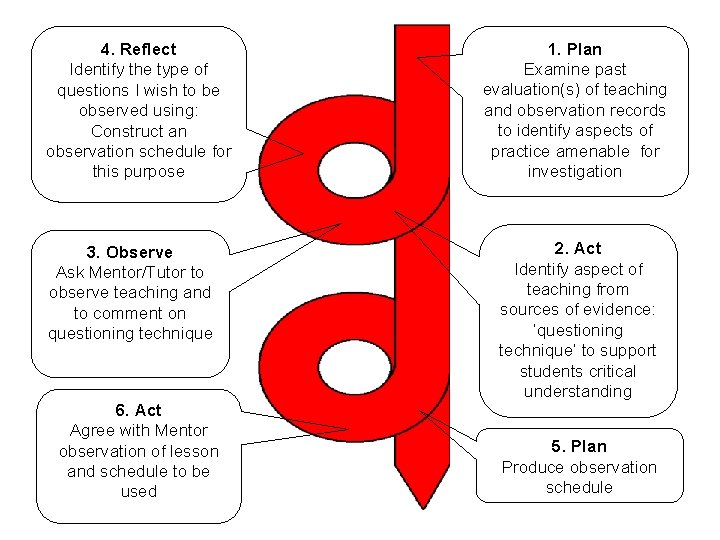
4. Reflect Identify the type of questions I wish to be observed using: Construct an observation schedule for this purpose 3. Observe Ask Mentor/Tutor to observe teaching and to comment on questioning technique 6. Act Agree with Mentor observation of lesson and schedule to be used 1. Plan Examine past evaluation(s) of teaching and observation records to identify aspects of practice amenable for investigation 2. Act Identify aspect of teaching from sources of evidence: ‘questioning technique’ to support students critical understanding 5. Plan Produce observation schedule
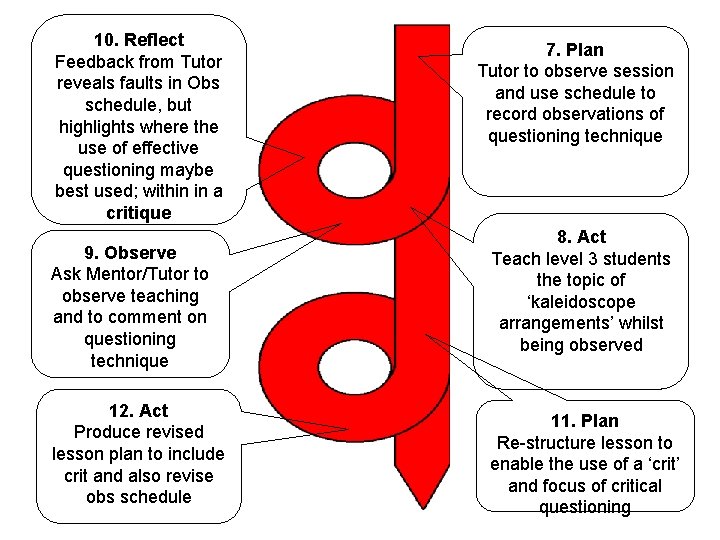
10. Reflect Feedback from Tutor reveals faults in Obs schedule, but highlights where the use of effective questioning maybe best used; within in a critique 9. Observe Ask Mentor/Tutor to observe teaching and to comment on questioning technique 12. Act Produce revised lesson plan to include crit and also revise obs schedule 7. Plan Tutor to observe session and use schedule to record observations of questioning technique 8. Act Teach level 3 students the topic of ‘kaleidoscope arrangements’ whilst being observed 11. Plan Re-structure lesson to enable the use of a ‘crit’ and focus of critical questioning
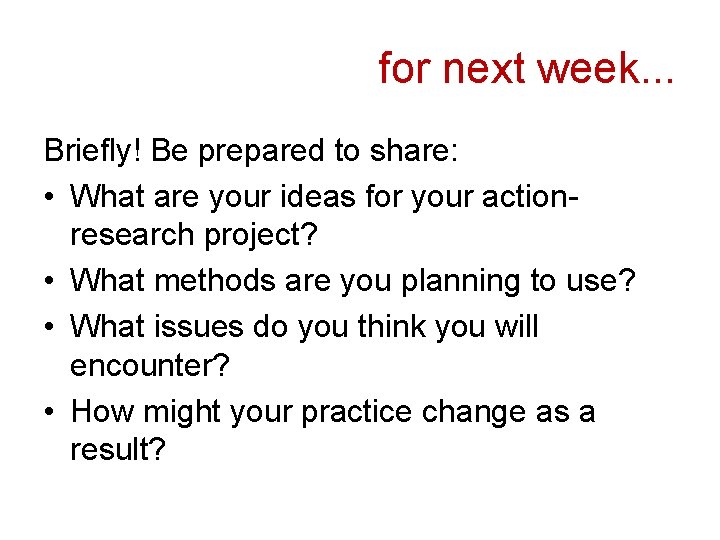
for next week. . . Briefly! Be prepared to share: • What are your ideas for your actionresearch project? • What methods are you planning to use? • What issues do you think you will encounter? • How might your practice change as a result?