
Action Research Kindergarten Phonemic Awareness and Decoding Elizabeth
Action Research – Kindergarten Phonemic Awareness and Decoding Elizabeth M. Smith
Initial Meeting • Met with Mrs. Mc. Adams to identify which students would benefit from extra help • Identified two girls, A and M • According to Mrs. Mc. Adams Student A was an imaginative girl who was reading, but needed help on fluency • According to Mrs. Mc. Adams Student M was a more shy reader that needed help being more confident in her reading
Initial Question after meeting with Mrs. Mc. Adams: What is best practice for encouraging fluency in emerging readers?
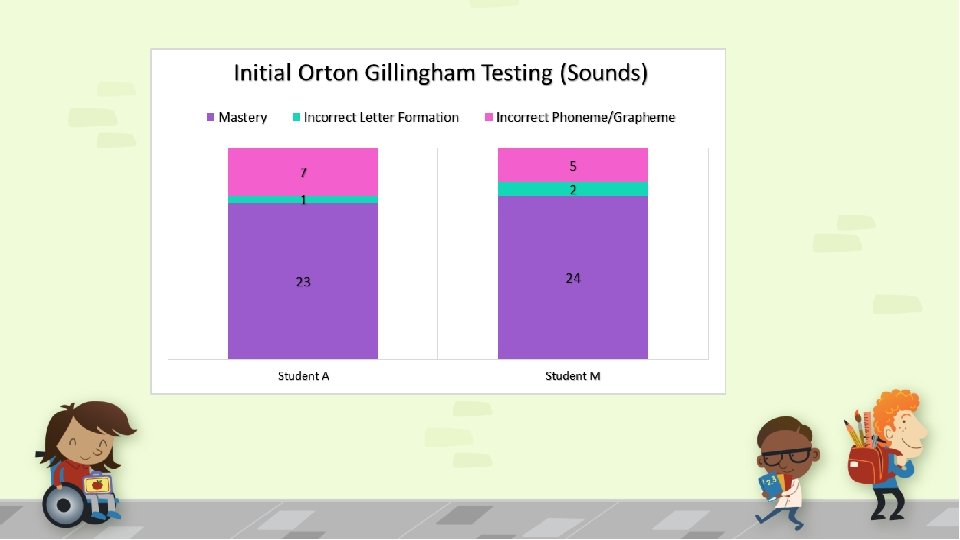
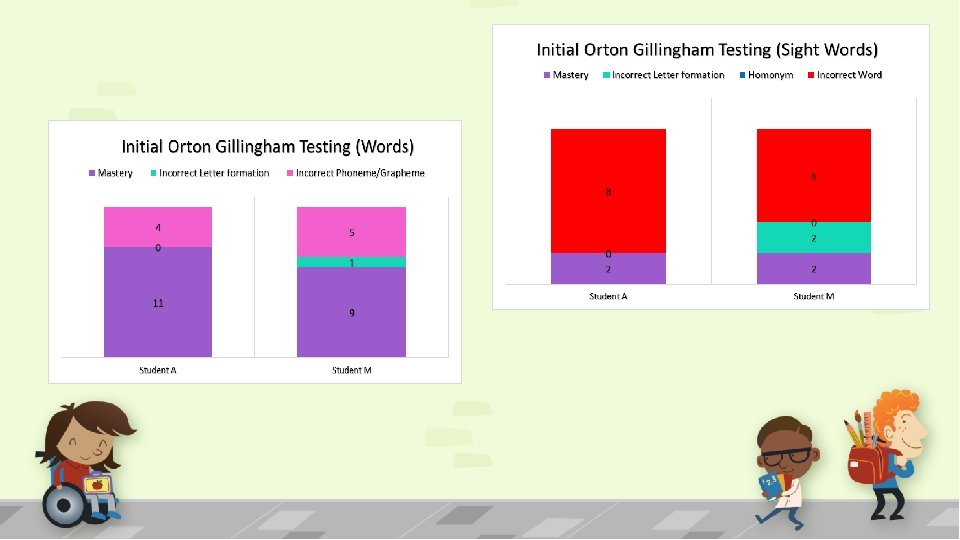
Student A Initial Meeting with student • Upon initial assessing student A, I discovered: • She needed help slowing down and looking at the text • She did not know how to take a big word and break it down into it’s sounds to sound it out • She made up a story most of the time instead of reading the words Assessing • I assessed her using • Orton Gillingham phonemic awareness test • Sounds • Words • Sight Words • Metalinguistic Interview • Reading Inventory • Interest Survey
Student M Initial Meeting with student • Upon initial assessment with student M, I discovered: • She knew all the sounds and sort of knew how to combine them but was not confident in that ability • She could read but not fluently and confidently Assessing • I assessed her using • Orton Gillingham phonemic awareness test • Sounds • Words • Sight Words • Metalinguistic Interview • Reading Inventory • Interest Survey
Revised Question after initial assessment: What is the best practice for teaching decoding to children who are just starting to read?
Best Practices: First method I used and researched was the Orton Gillingham Approach. Orton Gillingham (OG) uses a multi-sensory approach to learning, incorporating the entire body into learning. OG approach focuses on phonemic awareness and phonics. **IMSE is an Institute that trains people in the Orton Gillingham approach I decided to use this method because of it’s focus on decoding and teaching blending along with reading skills.
IMSE; Orton Gillingham Approach • “A strong literature approach containing a rich mixture of written and oral language with organized, direct instruction to meet the needs of an emergent reader” • Benefits all students, especially those not yet identified as being at risk, and those who do not qualify for special services. • Teaching children to manipulate phonemes in words allows them to be more effective learners. Liuzzo, 2013
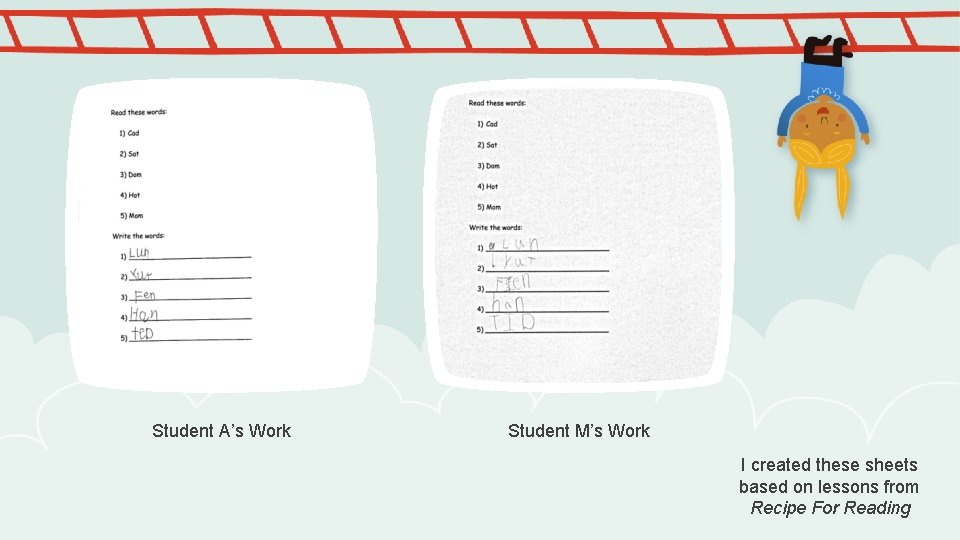
Student A’s Work Student M’s Work I created these sheets based on lessons from Recipe For Reading
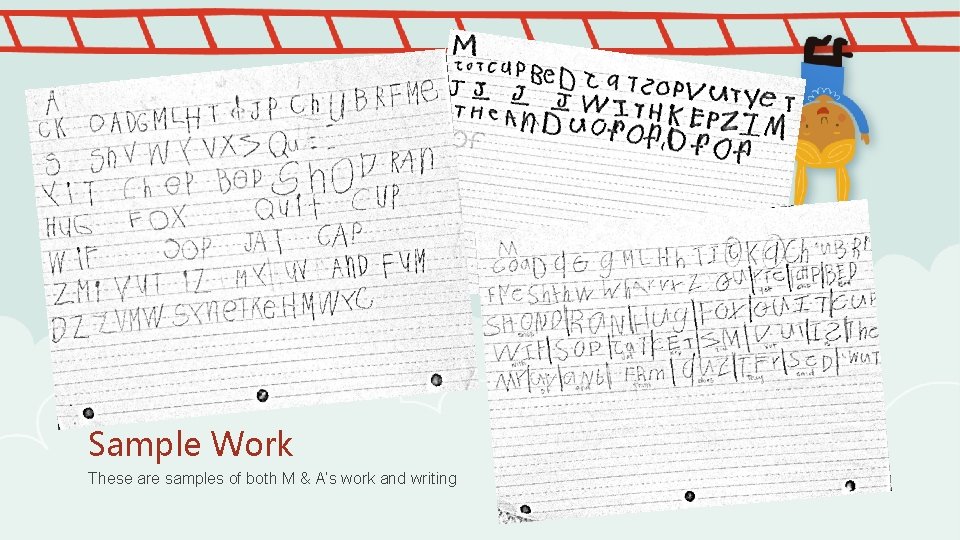
Sample Work These are samples of both M & A’s work and writing
Mid-Point Data Student A • She improved in her mastery of phonemes, mastering 4 more and forming all correctly • When sounding out words she correctly spelled 2 which she had missed before, but she missed two of the same words again and also missed one new. • Time did not allow us to do the Red Words – (Both Girls) Student M • She improved in her mastery of phonemes, mastering 1 more and correctly forming all but her “J’s” • Still struggling with diagraphs • When sounding out words she correctly sounded out 2 of the words she had missed before. • However, she missed 2 words that she had gotten correctly the time before.
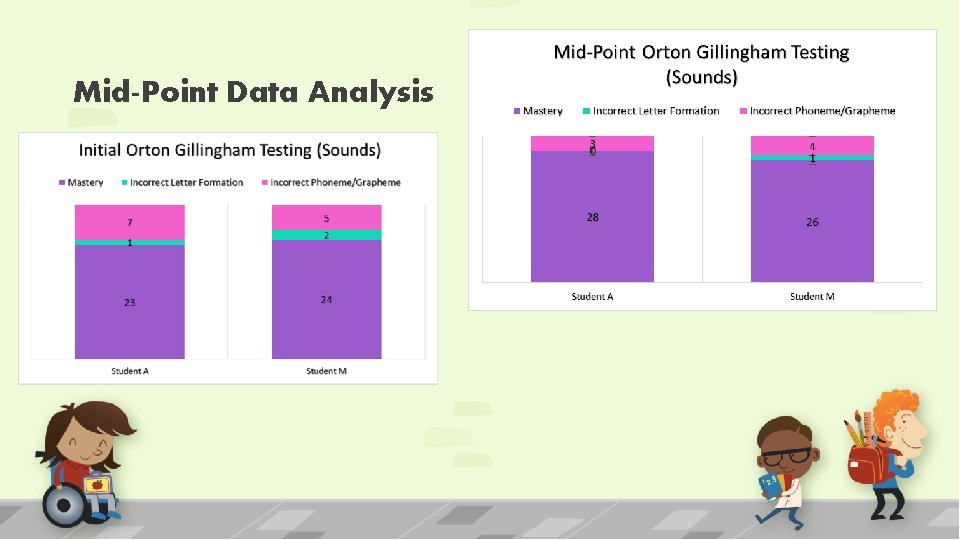
Mid-Point Data Analysis
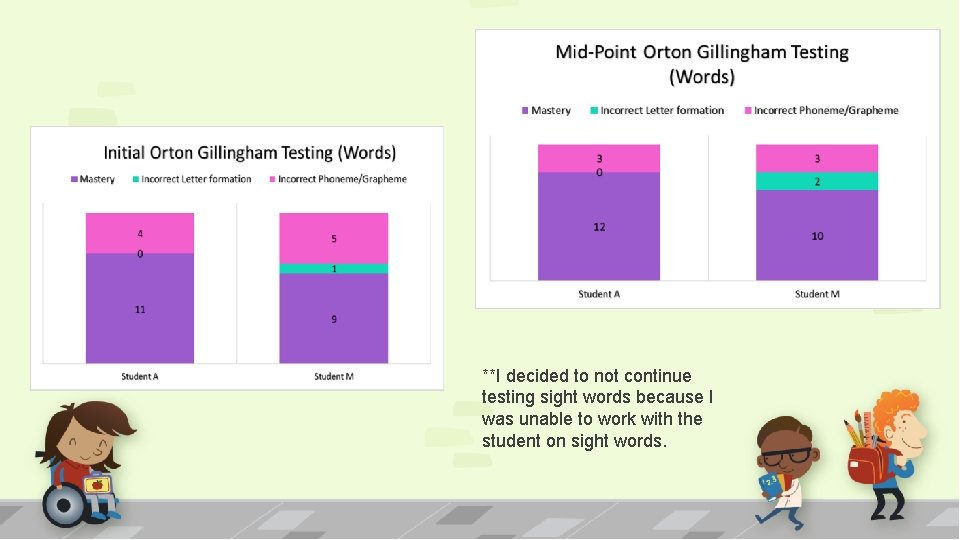
**I decided to not continue testing sight words because I was unable to work with the student on sight words.
What Now? • After reviewing the data, I decided that the blending drills from OG were working • The students were independently breaking apart the words using the strategies that we had been working on without my prompting. • However, I realized that I needed to add to this and work on their reading skills • Specifically understanding what they are reading.
Changes Made: I did not change much but did add to what I was already doing with the girls. We began doing readings that required them to answer questions or recall information. The worksheets I obtained from Reading A-Z.
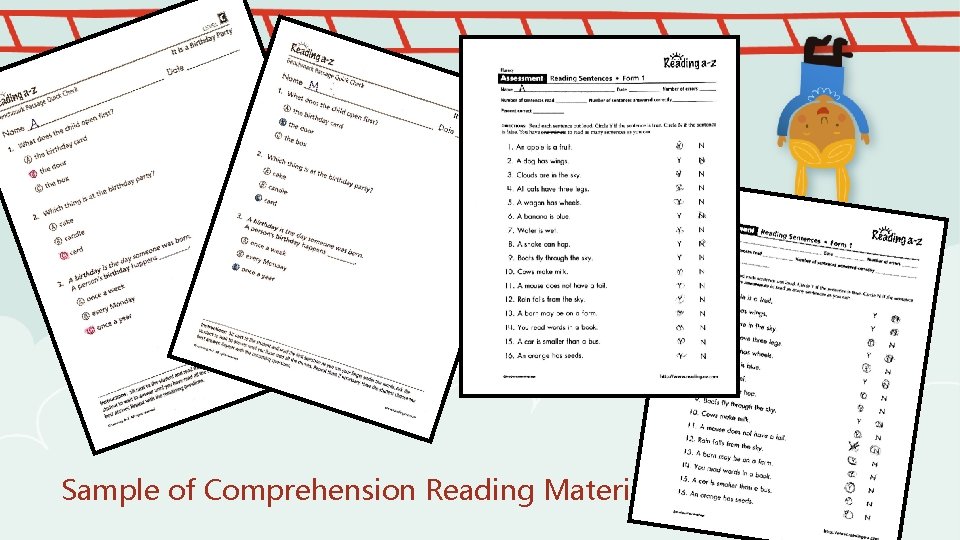
Sample of Comprehension Reading Materials
Final Assessments Student A She has mastered all her sounds except differentiating the hard and soft /th/ She sounded out all the words except one (with) which contained the /th/ that she struggles with Student M Mastered all the sounds except for the diagraphs (excluding /sh/) Still not forming “j” correctly Spelled all the words correctly except 2 (chip & with) and only misformed her “j”
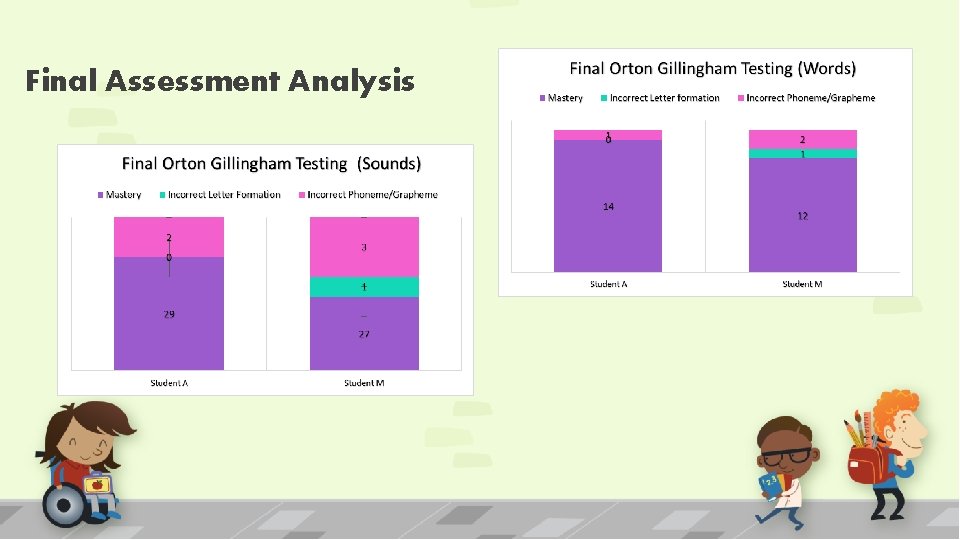
Final Assessment Analysis
Thoughts and Reflections: • Throughout this experience, I learned how to tailor different strategies and approaches for different students. • I know that in the long run I did not do much with these students but give them a few more strategies to learn to read but I hope that these will stick with them and help them develop further knowledge based upon the concepts I used. • This was a really eye-opening experience to some of the struggles of dealing with very differing students and finding a practice that fits them
References • Liuzzo, J. (2013). A Multi-Sensory Reading Methodology: Teacher Training Manual. The Institute for Multi-Sensory Education. • Reading A-Z. (n. d. ). Retrieved October 11, 2014, from http: //www. readingaz. com/ • Reutzel, D. , & Cooter, R. (2012). Teaching children to read: The teacher makes the difference (6 th ed. ). Boston: Pearson. • Traub, N. , & Bloom, F. (2002). Recipe for reading (4 th ed. ). New York: Educators Publishing Service.
- Slides: 22