
Action Potential and Properties of Nerves 1 3102021
- Slides: 38
Action Potential and Properties of Nerves ﻃﻪ ﺻﺎﺩﻕ ﺃﺤﻤﺪ. ﺩ 1 3/10/2021
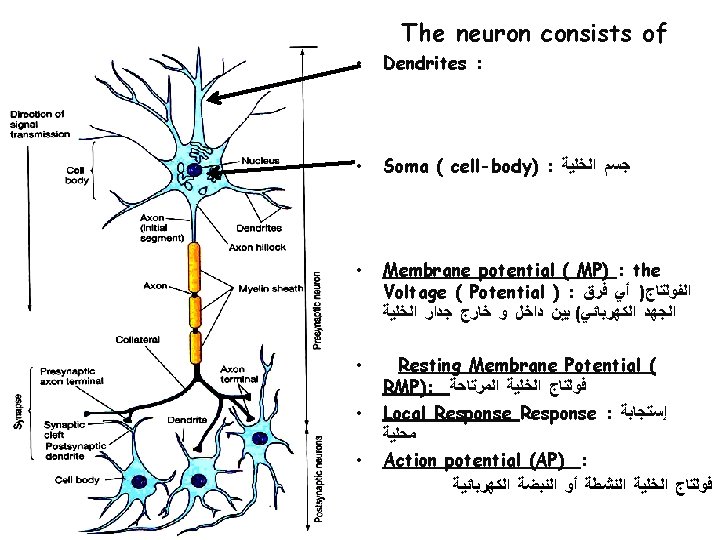
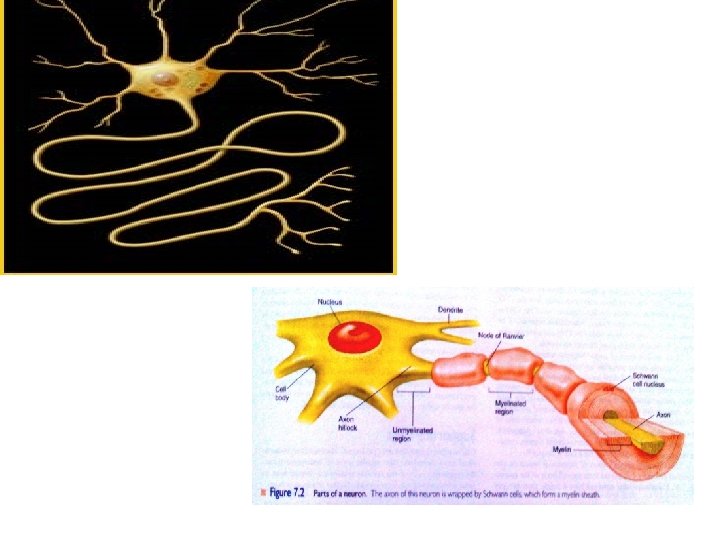
• Objectives • At the end of this lecture the student should be able to : • Describe the voltage-gated sodium and potassium membrane channels and their states. • Explain the resting membrane ptential ( RMP) , Threshold Potential, Reversal Potential , Local Response and Action Potential. • Describe components of a neuron dendrites , soma , axon hillock and their physiological significance • Describe the electrical changes in membrane potential during the action potential , their chemical bases and excitability changes. • Describe conduction along nerve fibers , role of myelination and how nerve fibers are classified.
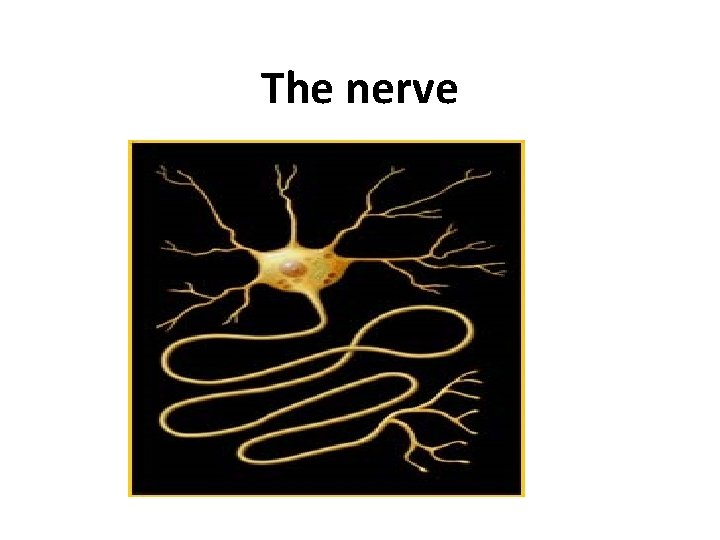
The nerve
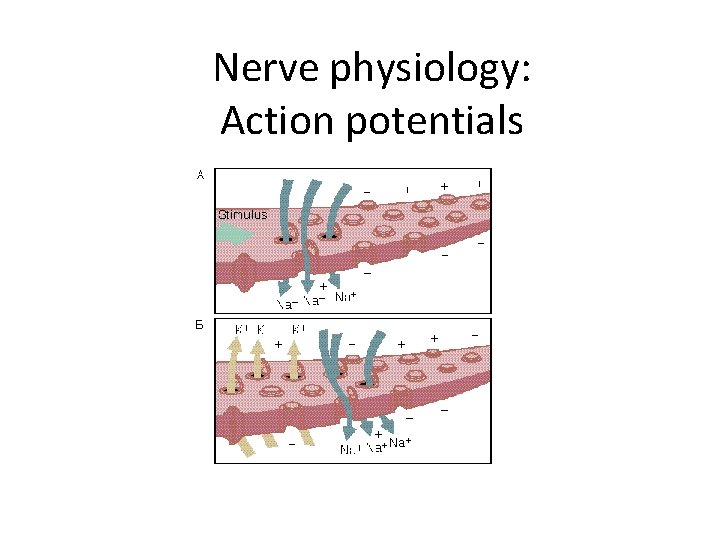
Nerve physiology: Action potentials
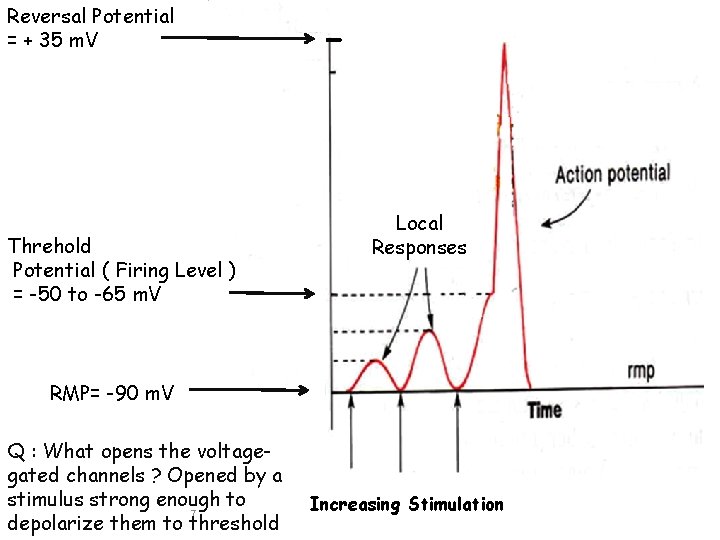
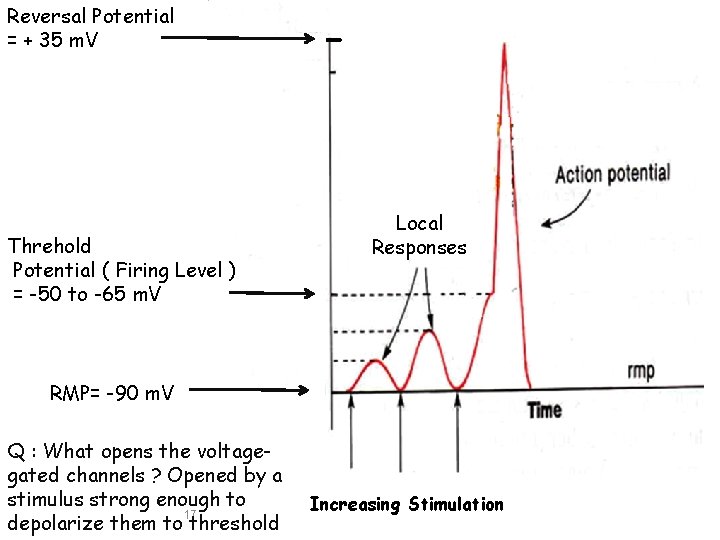
Reversal Potential = + 35 m. V Threhold Potential ( Firing Level ) = -50 to -65 m. V Local Responses RMP= -90 m. V Q : What opens the voltagegated channels ? Opened by a stimulus strong enough to 7 depolarize them to threshold Increasing Stimulation
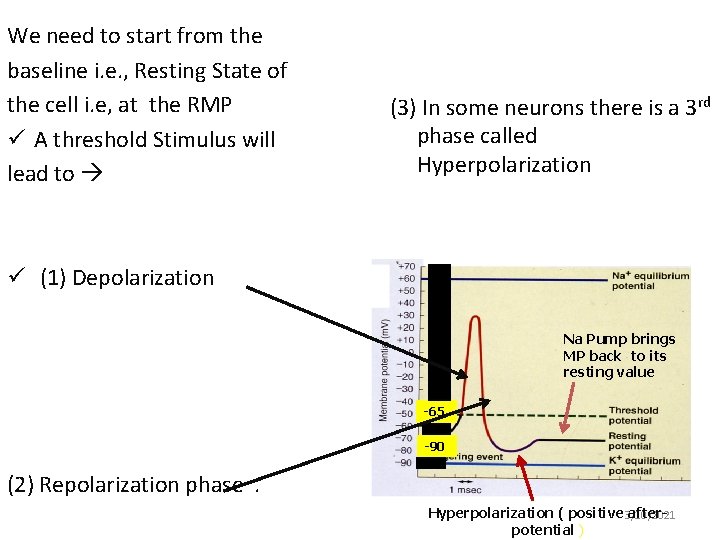
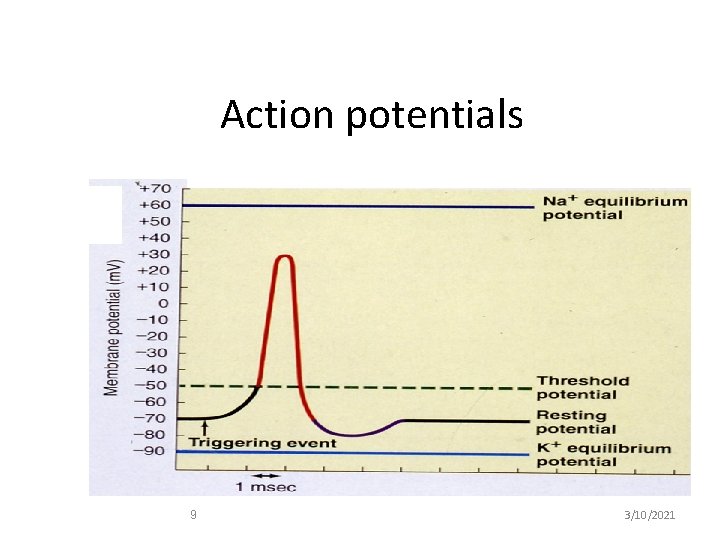
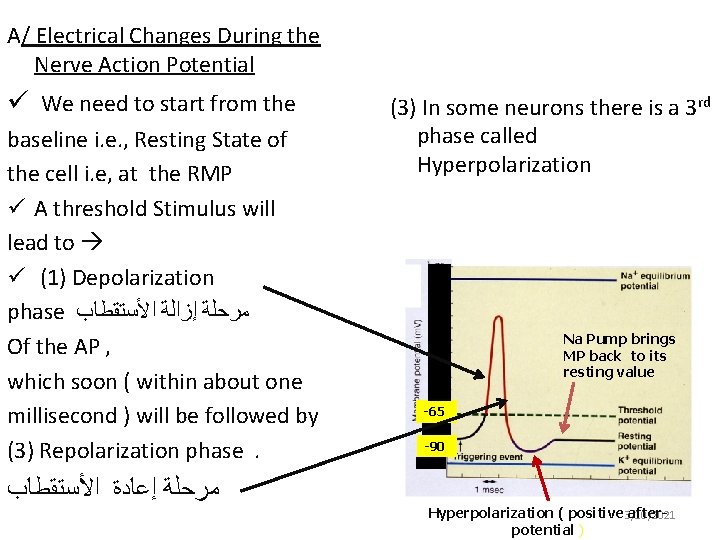
We need to start from the baseline i. e. , Resting State of the cell i. e, at the RMP ü A threshold Stimulus will lead to (3) In some neurons there is a 3 rd phase called Hyperpolarization ü (1) Depolarization Na Pump brings MP back to its resting value -65 -90 (2) Repolarization phase. Hyperpolarization ( positive 3/10/2021 afterpotential )
Action potentials 9 3/10/2021
Activation-Inactivation-Deactivation
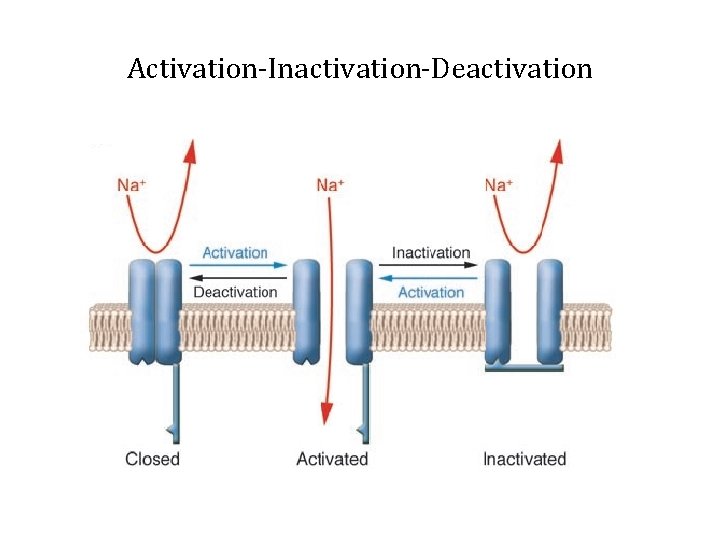
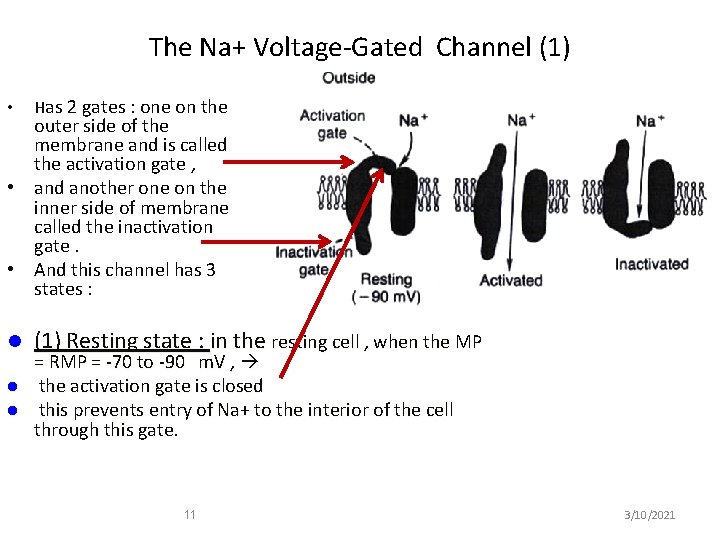
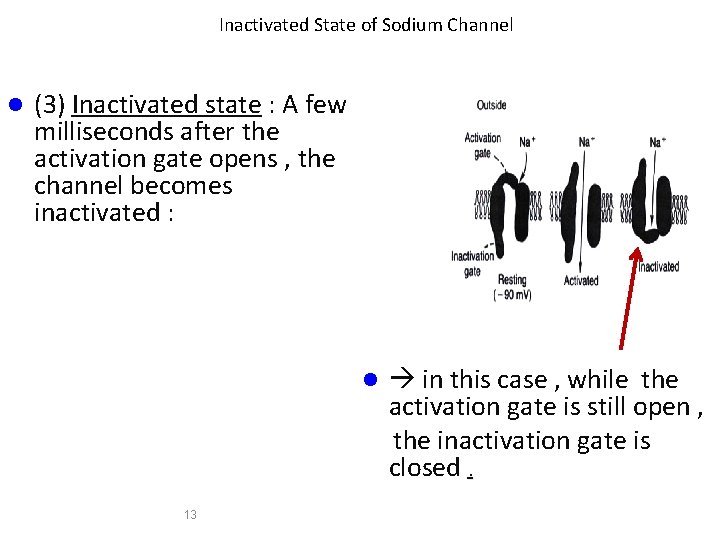
The Na+ Voltage-Gated Channel (1) • Has 2 gates : one on the l (1) Resting state : in the resting cell , when the MP outer side of the membrane and is called the activation gate , • and another one on the inner side of membrane called the inactivation gate. • And this channel has 3 states : = RMP = -70 to -90 m. V , l the activation gate is closed l this prevents entry of Na+ to the interior of the cell through this gate. 11 3/10/2021
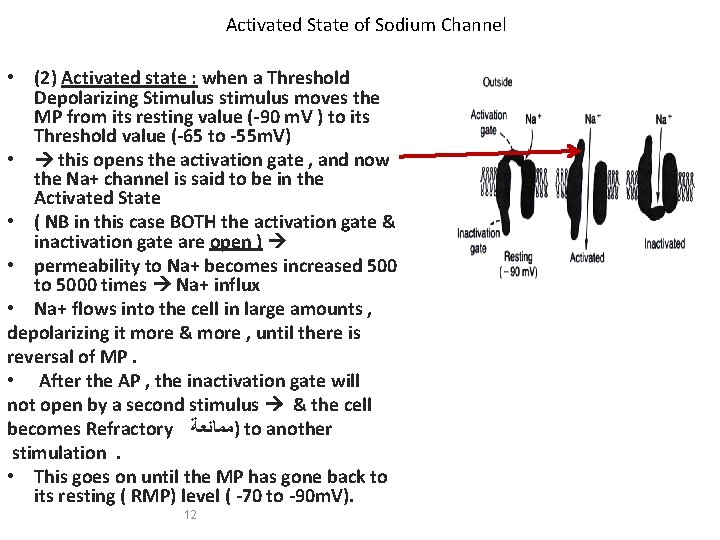
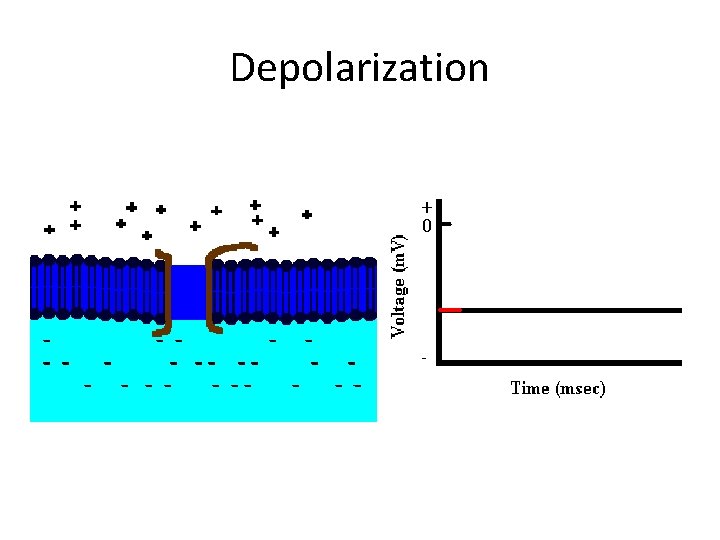
Activated State of Sodium Channel • (2) Activated state : when a Threshold Depolarizing Stimulus stimulus moves the MP from its resting value (-90 m. V ) to its Threshold value (-65 to -55 m. V) • this opens the activation gate , and now the Na+ channel is said to be in the Activated State • ( NB in this case BOTH the activation gate & inactivation gate are open ) • permeability to Na+ becomes increased 500 to 5000 times Na+ influx • Na+ flows into the cell in large amounts , depolarizing it more & more , until there is reversal of MP. • After the AP , the inactivation gate will not open by a second stimulus & the cell becomes Refractory )ﻣﻤﺎﻧﻌﺔ to another stimulation. • This goes on until the MP has gone back to its resting ( RMP) level ( -70 to -90 m. V). 12
Inactivated State of Sodium Channel l (3) Inactivated state : A few milliseconds after the activation gate opens , the channel becomes inactivated : l 13 in this case , while the activation gate is still open , the inactivation gate is closed.
Depolarization
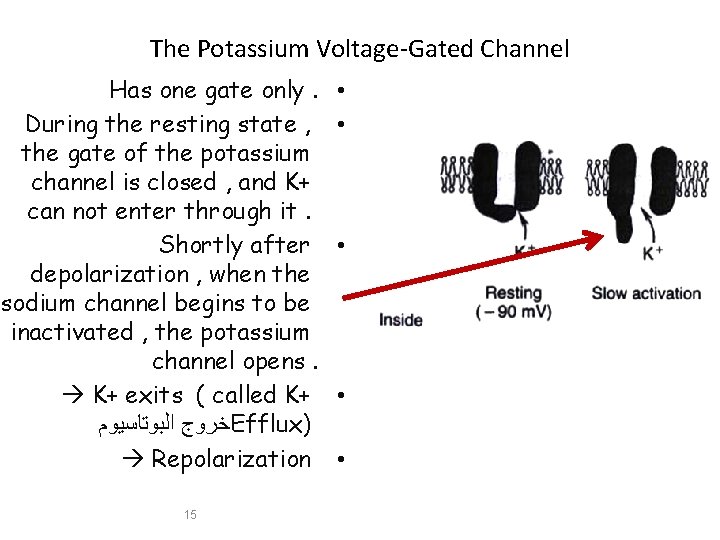
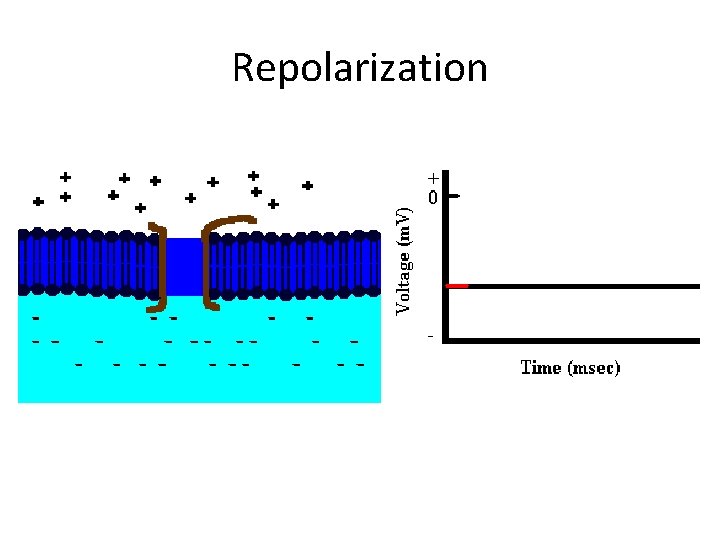
The Potassium Voltage-Gated Channel Has one gate only. During the resting state , the gate of the potassium channel is closed , and K+ can not enter through it. Shortly after depolarization , when the sodium channel begins to be inactivated , the potassium channel opens. K+ exits ( called K+ ﺧﺮﻭﺝ ﺍﻟﺒﻮﺗﺎﺳﻴﻮﻡ Efflux) Repolarization 15 • • •
Repolarization
Reversal Potential = + 35 m. V Threhold Potential ( Firing Level ) = -50 to -65 m. V Local Responses RMP= -90 m. V Q : What opens the voltagegated channels ? Opened by a stimulus strong enough to 17 depolarize them to threshold Increasing Stimulation
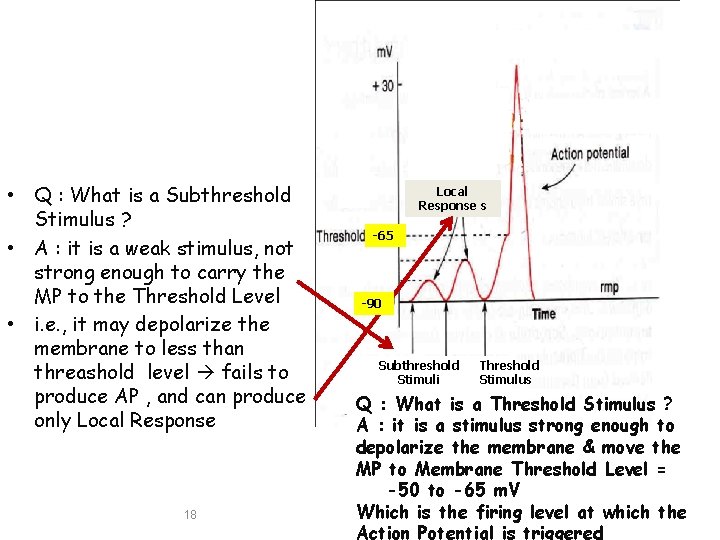
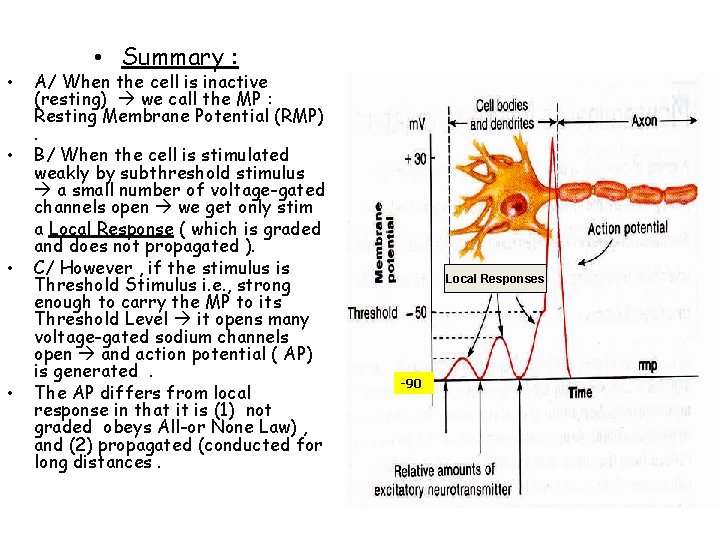
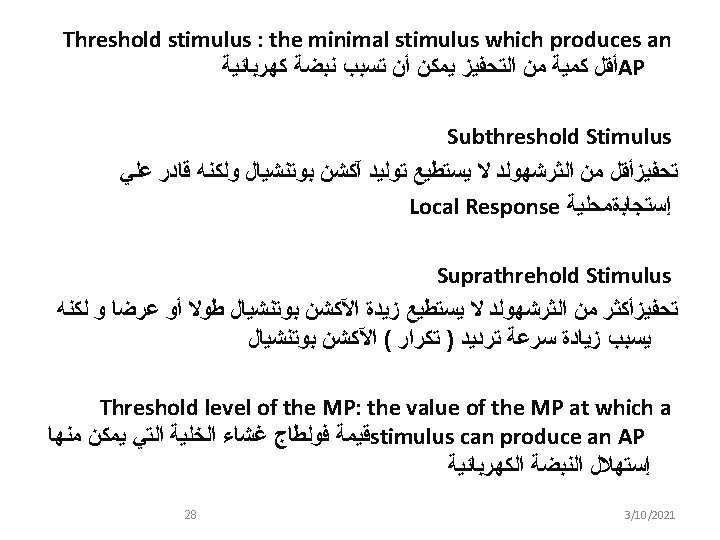
• Q : What is a Subthreshold Stimulus ? • A : it is a weak stimulus, not strong enough to carry the MP to the Threshold Level • i. e. , it may depolarize the membrane to less than threashold level fails to produce AP , and can produce only Local Response 18 Local Response s -65 -90 Subthreshold Stimuli Threshold Stimulus Q : What is a Threshold Stimulus ? A : it is a stimulus strong enough to depolarize the membrane & move the MP to Membrane Threshold Level = -50 to -65 m. V Which is the firing level at which the Action Potential is triggered
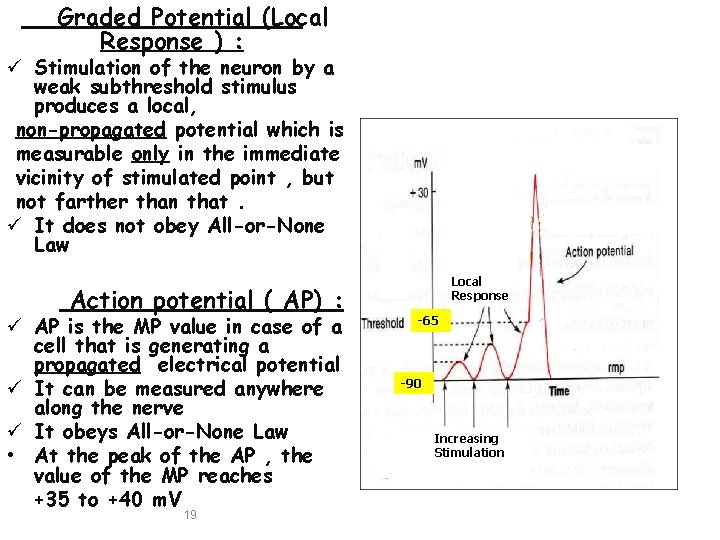
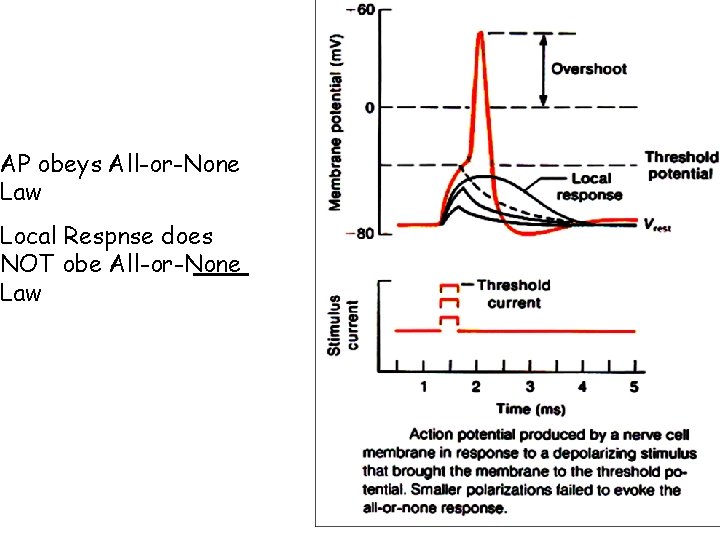
Graded Potential (Local Response ) : ü Stimulation of the neuron by a weak subthreshold stimulus produces a local, non-propagated potential which is measurable only in the immediate vicinity of stimulated point , but not farther than that. ü It does not obey All-or-None Law Action potential ( AP) : ü AP is the MP value in case of a cell that is generating a propagated electrical potential ü It can be measured anywhere along the nerve ü It obeys All-or-None Law • At the peak of the AP , the value of the MP reaches +35 to +40 m. V 19 Local Response -65 -90 Increasing Stimulation
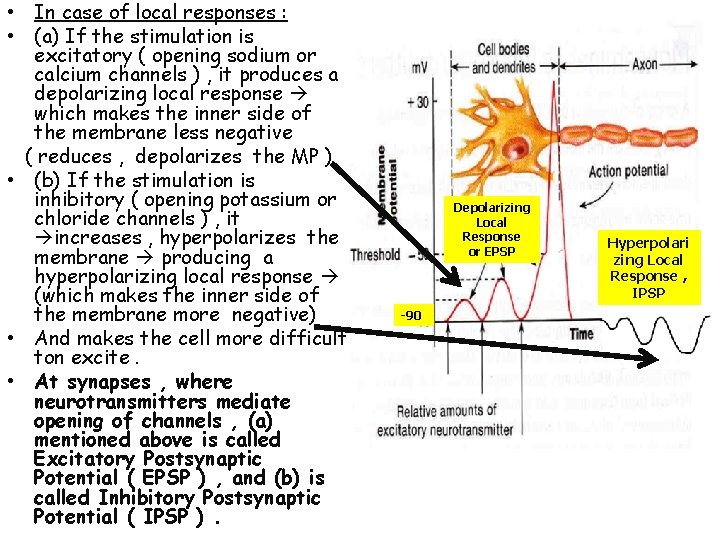
• In case of local responses : • (a) If the stimulation is excitatory ( opening sodium or calcium channels ) , it produces a depolarizing local response which makes the inner side of the membrane less negative ( reduces , depolarizes the MP ) • (b) If the stimulation is inhibitory ( opening potassium or chloride channels ) , it increases , hyperpolarizes the membrane producing a hyperpolarizing local response (which makes the inner side of the membrane more negative) • And makes the cell more difficult ton excite. • At synapses , where neurotransmitters mediate opening of channels , (a) mentioned above is called Excitatory Postsynaptic Potential ( EPSP ) , and (b) is called Inhibitory Postsynaptic Potential ( IPSP ). Depolarizing Local Response or EPSP -90 Hyperpolari zing Local Response , IPSP
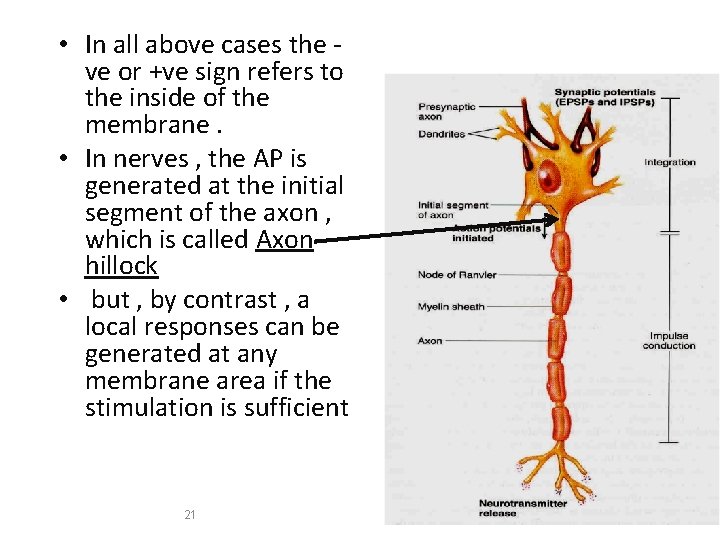
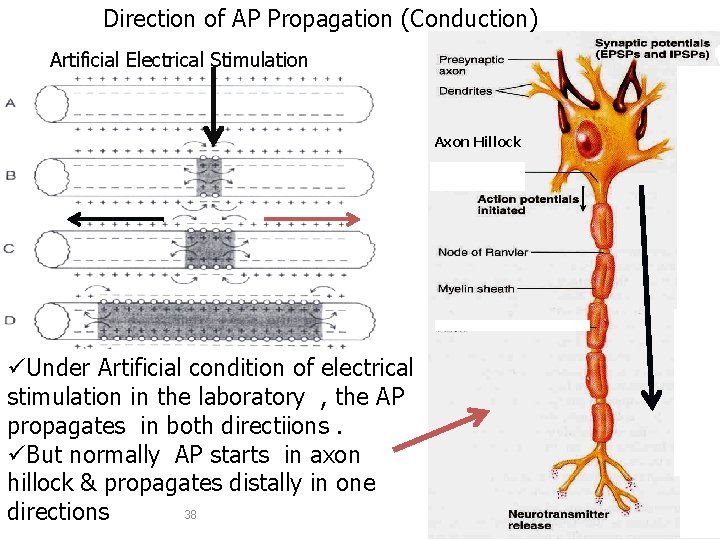
• In all above cases the ve or +ve sign refers to the inside of the membrane. • In nerves , the AP is generated at the initial segment of the axon , which is called Axon hillock • but , by contrast , a local responses can be generated at any membrane area if the stimulation is sufficient 21
• • • Summary : A/ When the cell is inactive (resting) we call the MP : Resting Membrane Potential (RMP). B/ When the cell is stimulated weakly by subthreshold stimulus a small number of voltage-gated channels open we get only stim a Local Response ( which is graded and does not propagated ). C/ However , if the stimulus is Threshold Stimulus i. e. , strong enough to carry the MP to its Threshold Level it opens many voltage-gated sodium channels open and action potential ( AP) is generated. The AP differs from local response in that it is (1) not graded obeys All-or None Law) , and (2) propagated (conducted for long distances. Local Responses -90
AP obeys All-or-None Law Local Respnse does NOT obe All-or-None Law 23
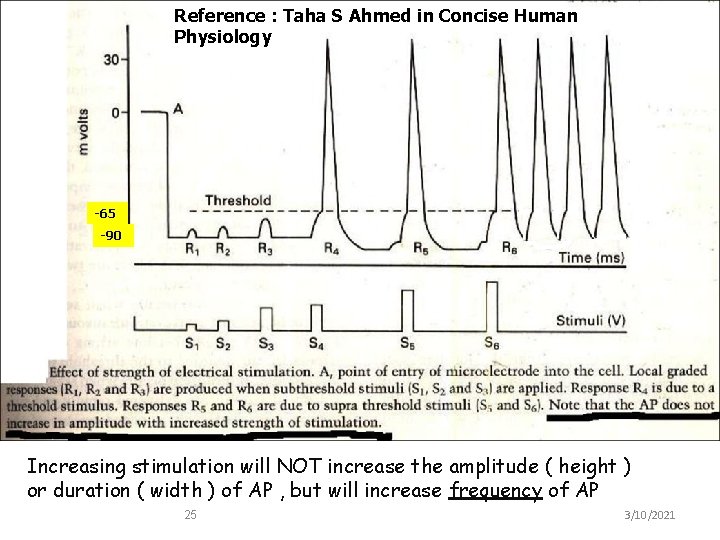
• Please Note that • (1) If we stimulate a sensory receptor (e. g. , pain nerveending in skin ) with a subthreshold stimulus this will cause depolarization of the receptor cell membrane to below threshold level will result only in a Local Response • (2) If we stimulate it with a threshold stimulus i. e. , a stimulus that carries the MP to the Firing Level ( Threshold Level = -65 m. V ) we get AP • (3) If we stimulate with a suprathreshold ( above threshold ) stimulus AP will not increase in size or duration , but will increase in frequency ﺳﺮﻋﺔ ﺗﺮﺩﺩ 24
Reference : Taha S Ahmed in Concise Human Physiology -65 -90 Increasing stimulation will NOT increase the amplitude ( height ) or duration ( width ) of AP , but will increase frequency of AP 25 3/10/2021
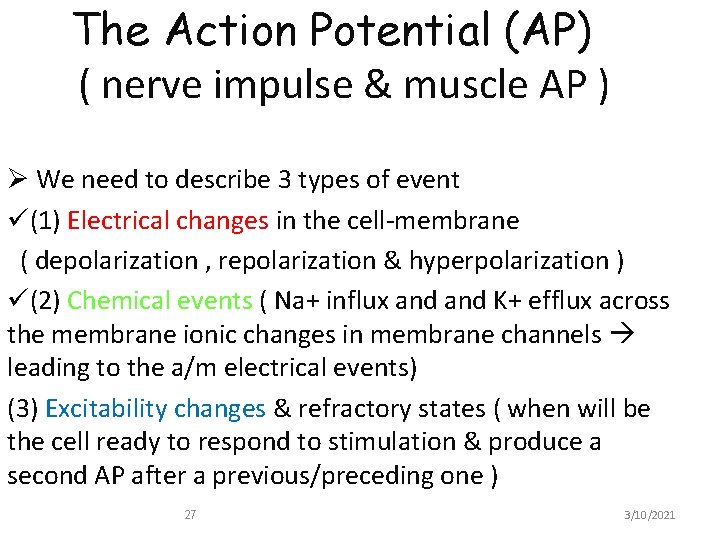
The Action Potential (AP) ( nerve impulse & muscle AP ) Ø We need to describe 3 types of event ü(1) Electrical changes in the cell-membrane ( depolarization , repolarization & hyperpolarization ) ü(2) Chemical events ( Na+ influx and K+ efflux across the membrane ionic changes in membrane channels leading to the a/m electrical events) (3) Excitability changes & refractory states ( when will be the cell ready to respond to stimulation & produce a second AP after a previous/preceding one ) 27 3/10/2021
A/ Electrical Changes During the Nerve Action Potential ü We need to start from the baseline i. e. , Resting State of the cell i. e, at the RMP ü A threshold Stimulus will lead to ü (1) Depolarization phase ﻣﺮﺣﻠﺔ ﺇﺯﺍﻟﺔ ﺍﻷﺴﺘﻘﻄﺎﺏ Of the AP , which soon ( within about one millisecond ) will be followed by (3) Repolarization phase. (3) In some neurons there is a 3 rd phase called Hyperpolarization Na Pump brings MP back to its resting value -65 -90 ﻣﺮﺣﻠﺔ ﺇﻋﺎﺩﺓ ﺍﻷﺴﺘﻘﻄﺎﺏ Hyperpolarization ( positive 3/10/2021 afterpotential )
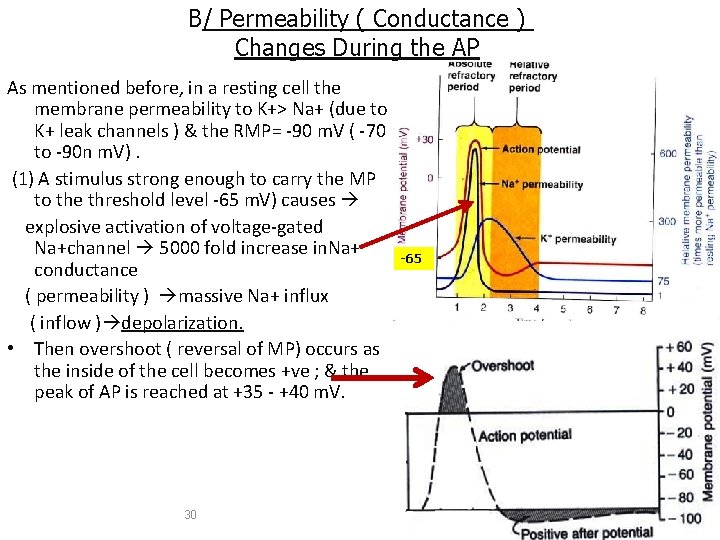
B/ Permeability ( Conductance ) Changes During the AP As mentioned before, in a resting cell the membrane permeability to K+> Na+ (due to K+ leak channels ) & the RMP= -90 m. V ( -70 to -90 n m. V). (1) A stimulus strong enough to carry the MP to the threshold level -65 m. V) causes explosive activation of voltage-gated Na+channel 5000 fold increase in. Na+ conductance ( permeability ) massive Na+ influx ( inflow ) depolarization. • Then overshoot ( reversal of MP) occurs as the inside of the cell becomes +ve ; & the peak of AP is reached at +35 - +40 m. V. 30 -65 3/10/2021
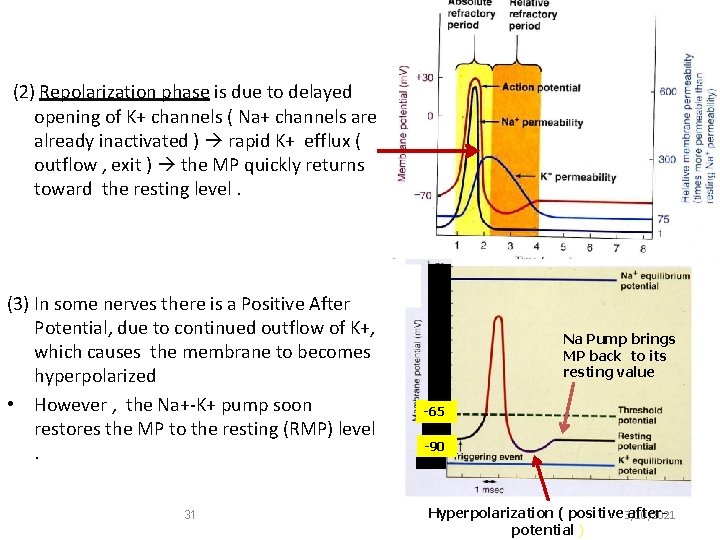
(2) Repolarization phase is due to delayed opening of K+ channels ( Na+ channels are already inactivated ) rapid K+ efflux ( outflow , exit ) the MP quickly returns toward the resting level. (3) In some nerves there is a Positive After Potential, due to continued outflow of K+, which causes the membrane to becomes hyperpolarized • However , the Na+-K+ pump soon restores the MP to the resting (RMP) level. 31 Na Pump brings MP back to its resting value -65 -90 Hyperpolarization ( positive 3/10/2021 afterpotential )
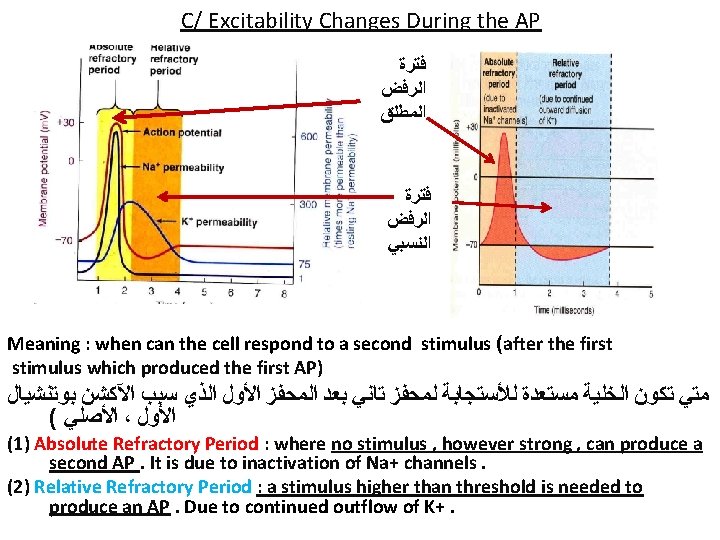
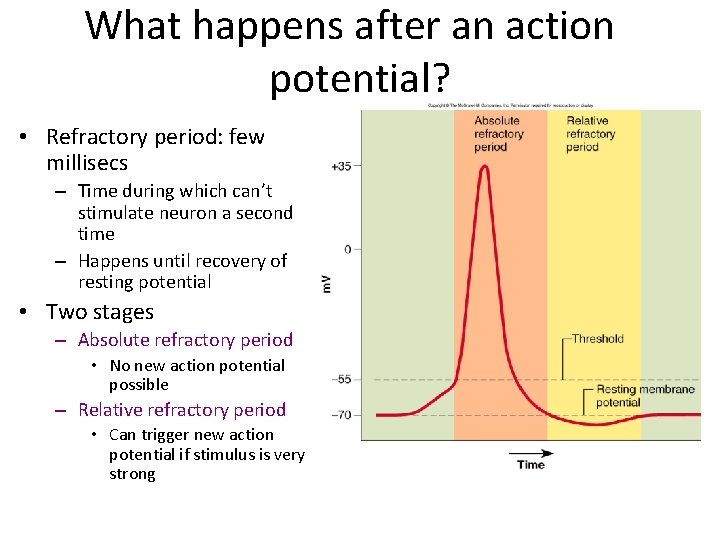
C/ Excitability Changes During the AP ﻓﺘﺮﺓ ﺍﻟﺮﻓﺾ ﺍﻟﻤﻄﻠﻖ ﻓﺘﺮﺓ ﺍﻟﺮﻓﺾ ﺍﻟﻨﺴﺒﻲ Meaning : when can the cell respond to a second stimulus (after the first stimulus which produced the first AP) ﻣﺘﻲ ﺗﻜﻮﻥ ﺍﻟﺨﻠﻴﺔ ﻣﺴﺘﻌﺪﺓ ﻟﻸﺴﺘﺠﺎﺑﺔ ﻟﻤﺤﻔﺰ ﺗﺎﻧﻲ ﺑﻌﺪ ﺍﻟﻤﺤﻔﺰ ﺍﻷﻮﻝ ﺍﻟﺬﻱ ﺳﺒﺐ ﺍﻵﻜﺸﻦ ﺑﻮﺗﻨﺸﻴﺎﻝ ( ﺍﻷﺼﻠﻲ ، ﺍﻷﻮﻝ (1) Absolute Refractory Period : where no stimulus , however strong , can produce a second AP. It is due to inactivation of Na+ channels. (2) Relative Refractory Period : a stimulus higher than threshold is needed to produce an AP. Due to continued outflow of K+.
What happens after an action potential? • Refractory period: few millisecs – Time during which can’t stimulate neuron a second time – Happens until recovery of resting potential • Two stages – Absolute refractory period • No new action potential possible – Relative refractory period • Can trigger new action potential if stimulus is very strong
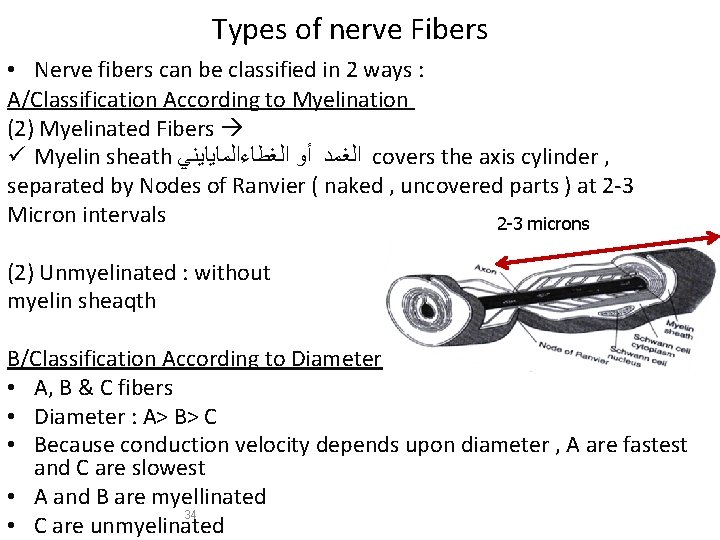
Types of nerve Fibers • Nerve fibers can be classified in 2 ways : A/Classification According to Myelination (2) Myelinated Fibers ü Myelin sheath ﺍﻟﻐﻤﺪ ﺃﻮ ﺍﻟﻐﻄﺎﺀﺍﻟﻤﺎﻳﺎﻳﻨﻲ covers the axis cylinder , separated by Nodes of Ranvier ( naked , uncovered parts ) at 2 -3 Micron intervals 2 -3 microns (2) Unmyelinated : without myelin sheaqth B/Classification According to Diameter • A, B & C fibers • Diameter : A> B> C • Because conduction velocity depends upon diameter , A are fastest and C are slowest • A and B are myellinated 34 • C are unmyelinated
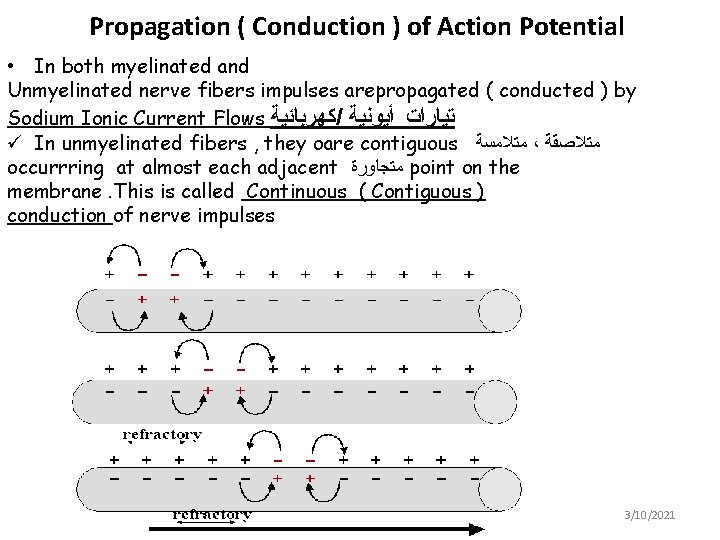
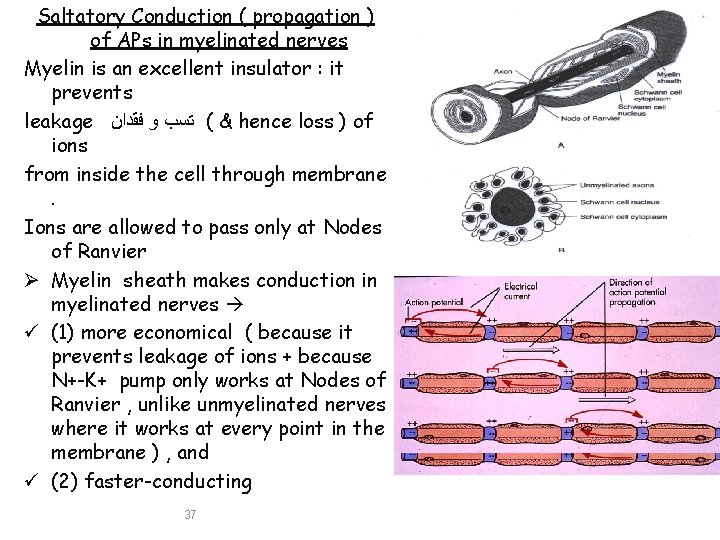
Propagation ( Conduction ) of Action Potential • In both myelinated and Unmyelinated nerve fibers impulses arepropagated ( conducted ) by Sodium Ionic Current Flows ﻛﻬﺮﺑﺎﺋﻴﺔ / ﺗﻴﺎﺭﺍﺕ ﺃﻴﻮﻧﻴﺔ ü In unmyelinated fibers , they oare contiguous ﻣﺘﻼﻣﺴﺔ ، ﻣﺘﻼﺻﻘﺔ occurrring at almost each adjacent ﻣﺘﺠﺎﻭﺭﺓ point on the membrane. This is called Continuous ( Contiguous ) conduction of nerve impulses 35 3/10/2021
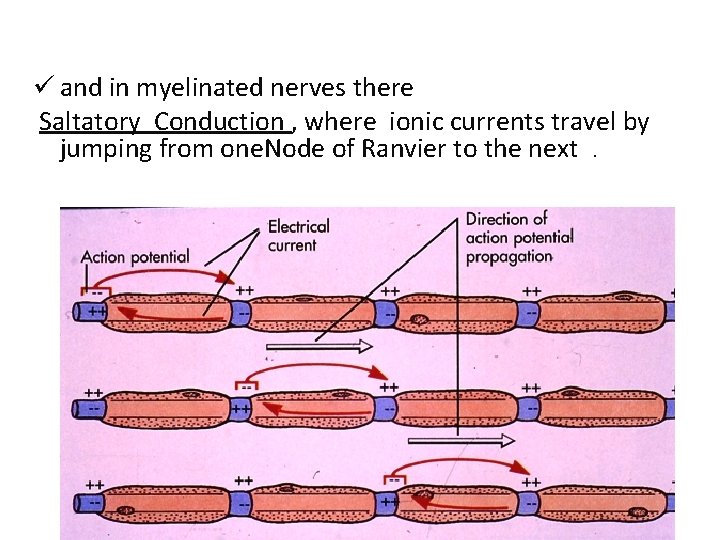
ü and in myelinated nerves there Saltatory Conduction , where ionic currents travel by jumping from one. Node of Ranvier to the next. 36 3/10/2021
Saltatory Conduction ( propagation ) of APs in myelinated nerves Myelin is an excellent insulator : it prevents leakage & ( ﺗﺴﺐ ﻭ ﻓﻘﺪﺍﻥ hence loss ) of ions from inside the cell through membrane. Ions are allowed to pass only at Nodes of Ranvier Ø Myelin sheath makes conduction in myelinated nerves ü (1) more economical ( because it prevents leakage of ions + because N+-K+ pump only works at Nodes of Ranvier , unlike unmyelinated nerves where it works at every point in the membrane ) , and ü (2) faster-conducting 37
Direction of AP Propagation (Conduction) Artificial Electrical Stimulation Axon Hillock üUnder Artificial condition of electrical stimulation in the laboratory , the AP propagates in both directiions. üBut normally AP starts in axon hillock & propagates distally in one 38 directions 3/10/2021