
ACTION Planning for Sustainable Urban Mobility Nguyen T
ACTION Planning for Sustainable Urban Mobility Nguyen T. Trang Capacity Development Unit UN-Habitat
w w w. u n h a b i t a t. o r g 2
What is Action Planning? Action planning is a process which will help you to focus on a particular goal/objective and to decide what steps you need to take to achieve it within a given period of time. Preparing an action plan is a good way to help you to reach your objectives By failing to PLAN, you are PLANNING to fail “By failing to prepare, you are preparing to fail. ” ― Benjamin Franklin
THE PROCESS
Step 1: Understanding the Problem • Strength – Weakness – Opportunity – Threat Analysis (SWOT) • Problem Tree • Charts, diagrams, questionnaires and interview • Maps, aerial photographs and satellite images
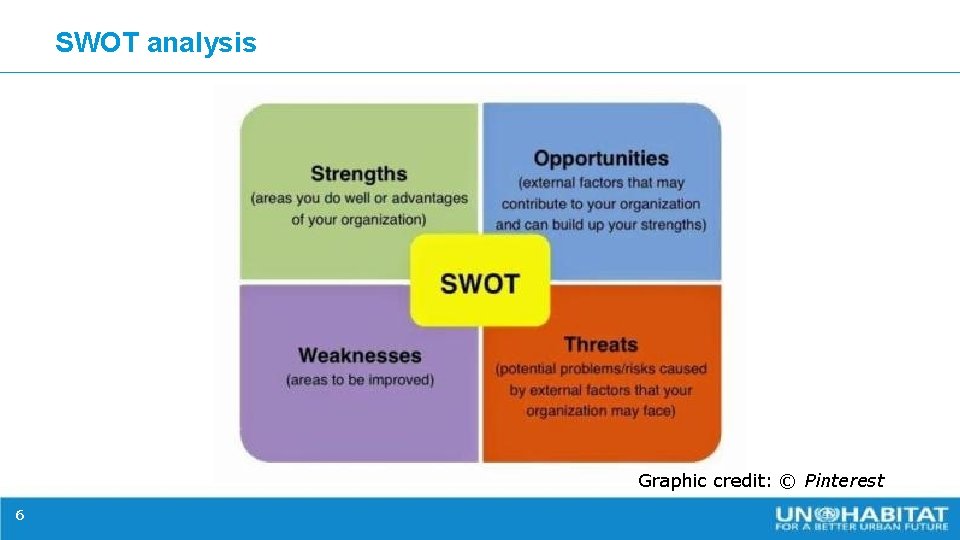
SWOT analysis Graphic credit: © Pinterest 6
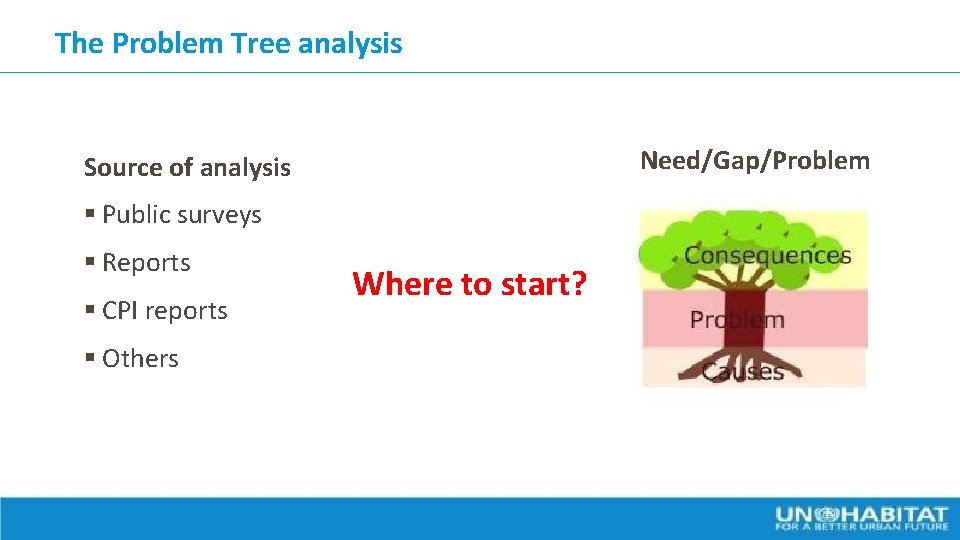
The Problem Tree analysis Need/Gap/Problem Source of analysis § Public surveys § Reports § CPI reports § Others Where to start?
SDG 11’s 10 Targets • • • 8 11. 1 Inadequate housing and slums 11. 2 Sustainable transport 11. 3 Participatory planning 11. 4 Cultural heritage 11. 5 Disaster reduction 11. 6 Air quality and waste management 11. 7 Public spaces 11. a Rural-urban and regional planning 11. b Mitigation of climate change, resilience 11. c Financial and technical support (LDCs) for sustainable buildings
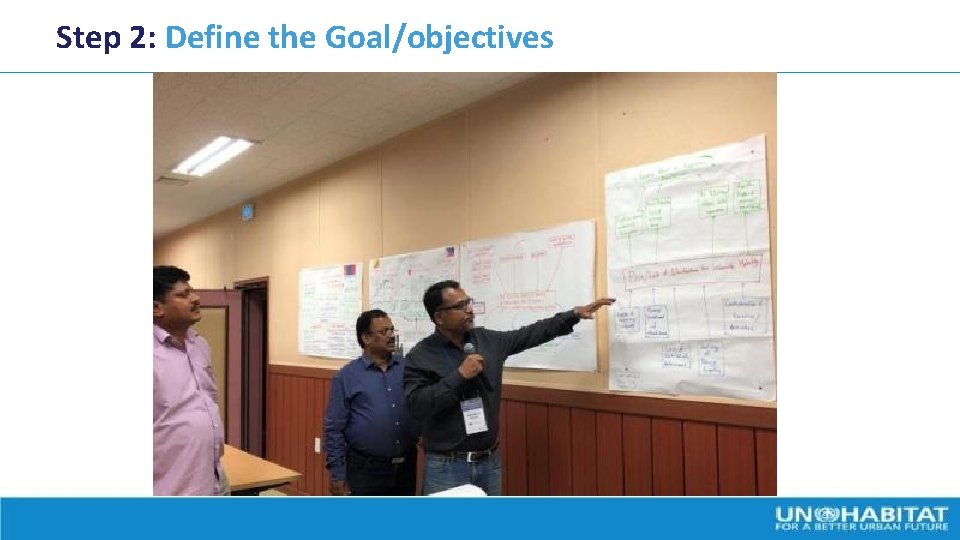
Step 2: Define the Goal/objectives
Step 2: Defining your vision/goal and objective(s) • Long term vision (Goal) • Strategic • Medium and short term • Realistic objectives • Objective Tree • Consensus
How to inform your decision making? Based on what do you decide? • Guidance: National laws/National Development Strategies • Pressure (Political, economic, social) • Needs • Etc. Data
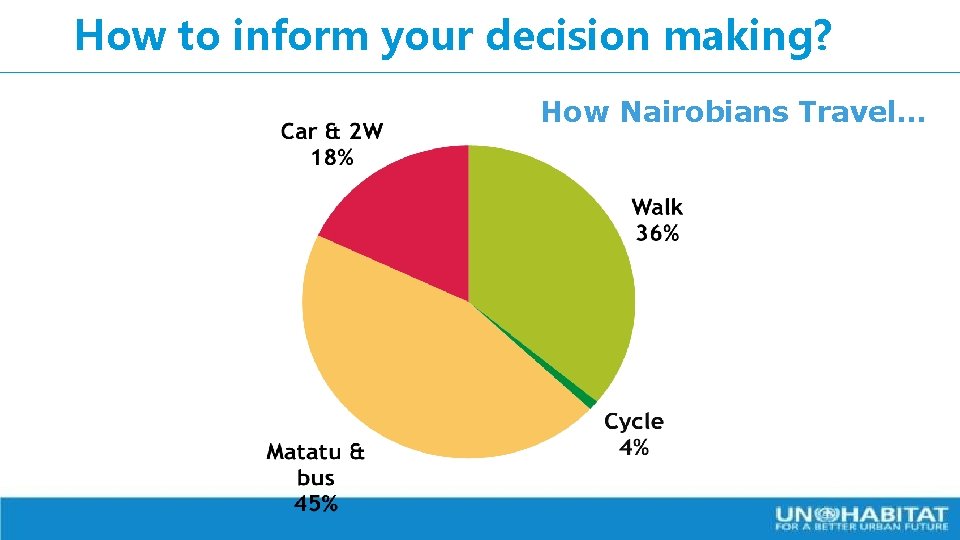
How to inform your decision making? How Nairobians Travel…
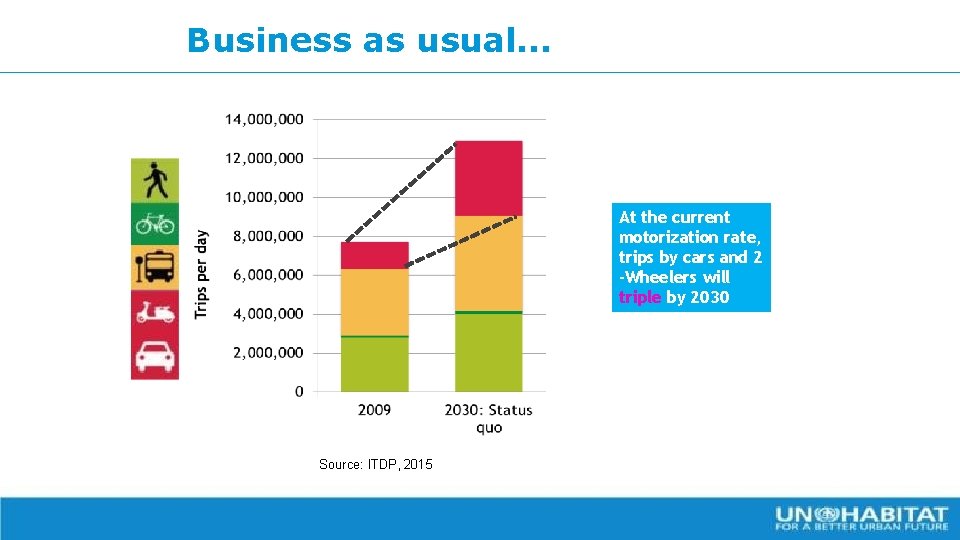
Business as usual… At the current motorization rate, trips by cars and 2 -Wheelers will triple by 2030 Source: ITDP, 2015
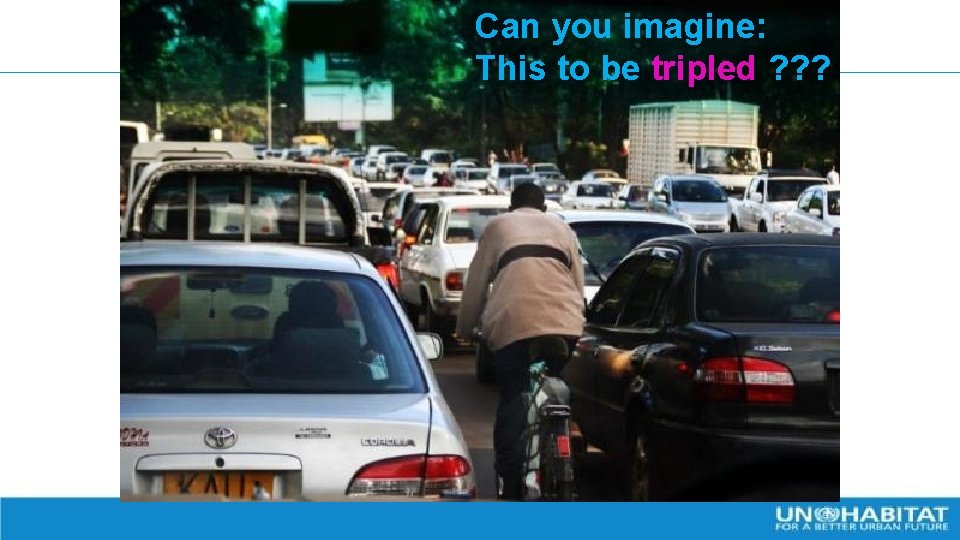
Can you imagine: This to be tripled ? ? ?
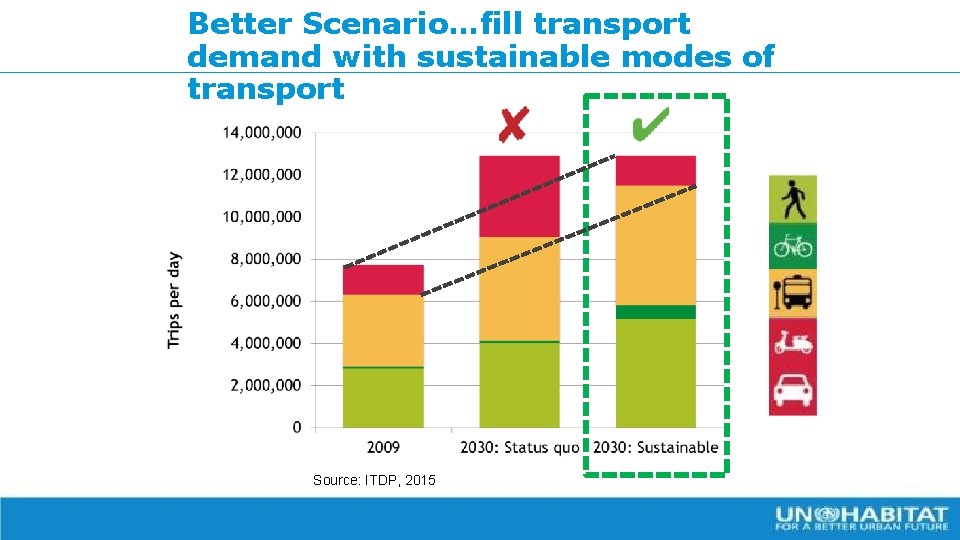
Better Scenario…fill transport demand with sustainable modes of transport Source: ITDP, 2015
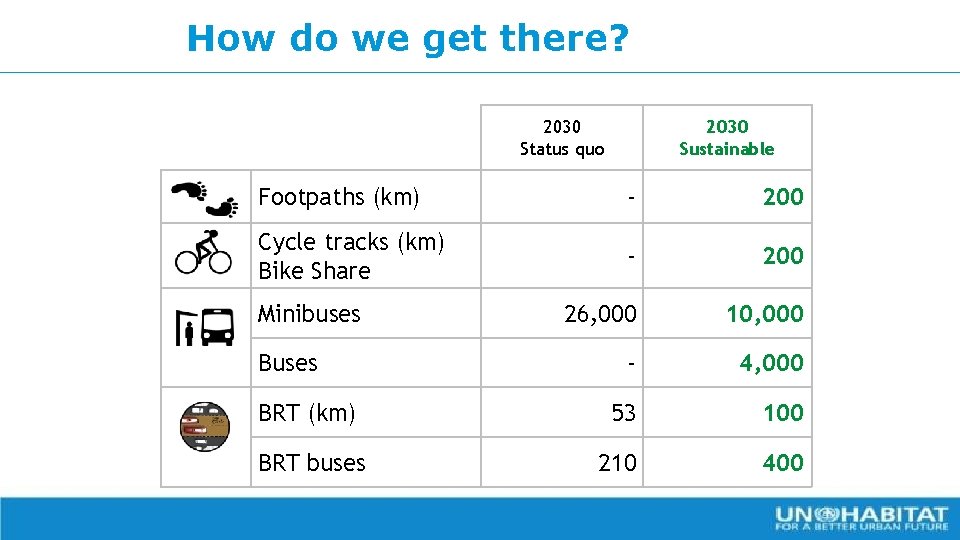
How do we get there? 2030 Status quo 2030 Sustainable Footpaths (km) - 200 Cycle tracks (km) Bike Share - 200 26, 000 10, 000 - 4, 000 BRT (km) 53 100 BRT buses 210 400 Minibuses Buses
Prioritization • Relevance: is this closely related to the core problem? • Urgency: how critical the issue is? • Resource: can we afford it financially and technically? • Effectiveness: would this help? • Sustainability: would this last? 17
Step 3: Defining your set of specific tasks
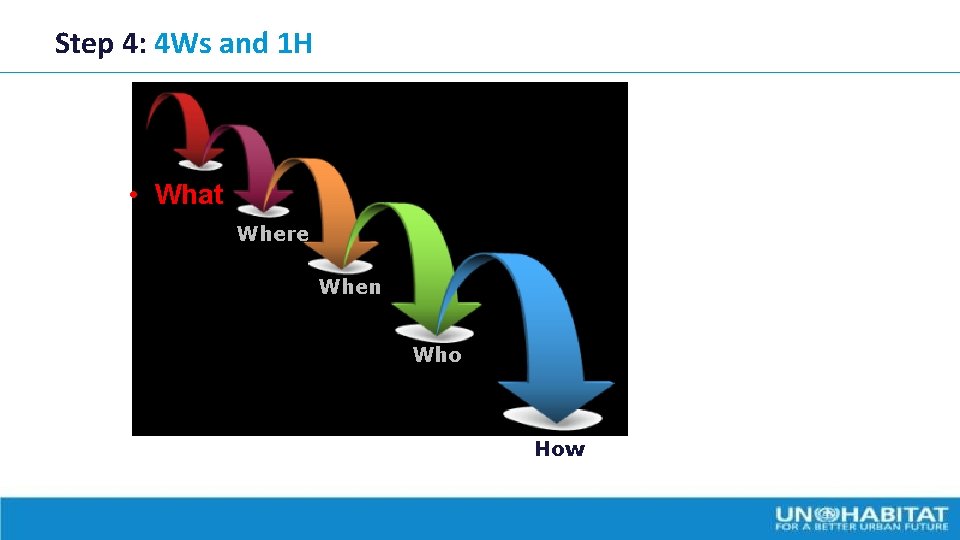
Step 4: 4 Ws and 1 H • What Where When Who How
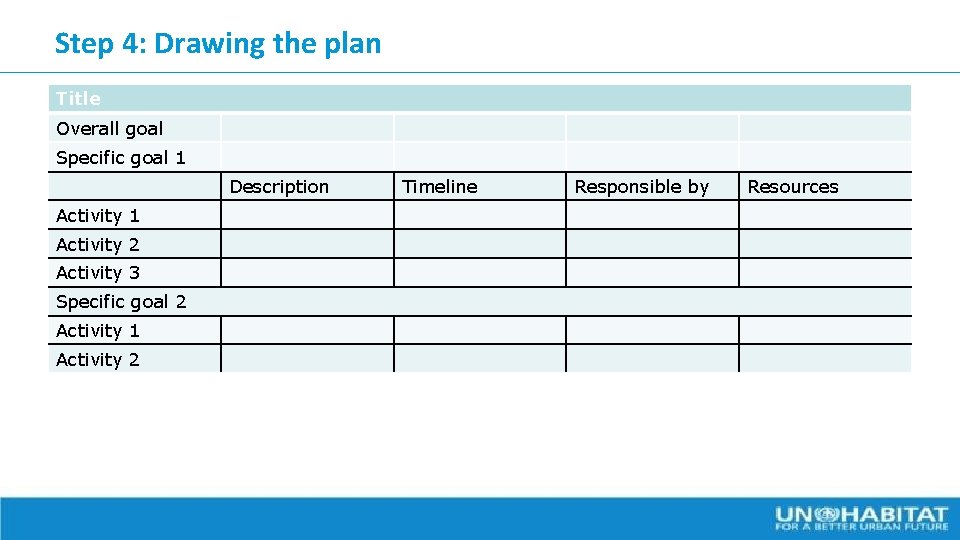
Step 4: Drawing the plan Title Overall goal Specific goal 1 Description Activity 1 Activity 2 Activity 3 Specific goal 2 Activity 1 Activity 2 Timeline Responsible by Resources
Step 5: Develop the full plan/Structure of the plan • • • Executive summary Vision Supportive legislation framework (optional) Stakeholder analysis/gender analysis (optional) Key problems Goal/Objectives Description of components/activities/timelines Financial feasibility analysis Reference list Annexes
Cautions ! Visions + practicality Integration + clarity Coordination + transparent Collaboration + agreement/consensus Co-benefit
Is that IT? ? ?
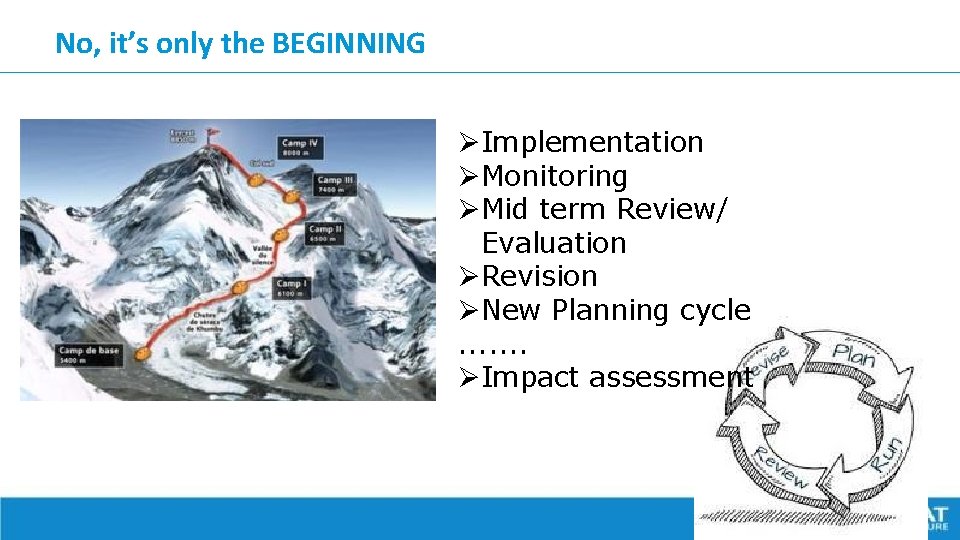
No, it’s only the BEGINNING ØImplementation ØMonitoring ØMid term Review/ Evaluation ØRevision ØNew Planning cycle. . . . ØImpact assessment
THE GROUP WORK
Your city profile/case study • • • Context/Introduction Identify your strategy/key problems (life quality and mobility) Define your main vision Use the objectives based on the identified problems/causes/impacts Action plan of your city… o o o Who are the key stakeholders in the Planning process? Do you see any potential to collect data/information in your city for monitoring the sustainable urban mobility development? What are the financial resources could be mobilized to make it happen?
Let’s get to WORK !
- Slides: 27