
Action Plan for Habitat Restoration and Nature Interpretation
Action Plan for Habitat Restoration and Nature Interpretation in Natura 2000 Site Mura in Slovenia Aleksander Koren Bad Radkersburg, 28. 6. 2019 Project co-funded by European Union funds (ERDF, IPA)
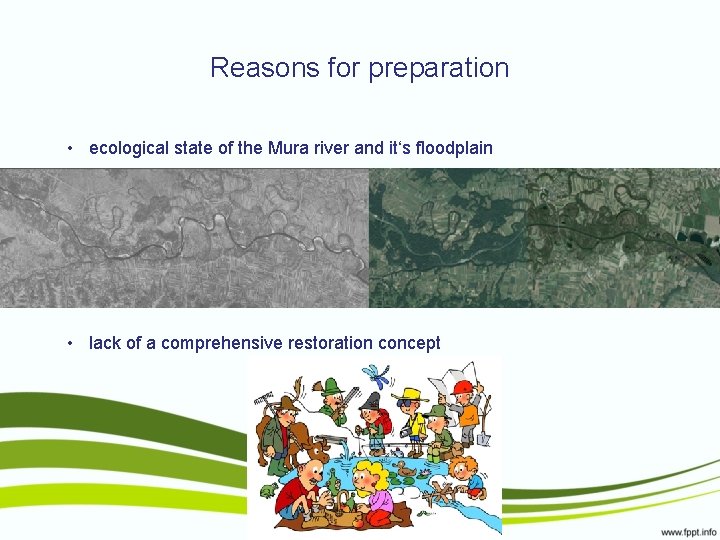
Reasons for preparation • ecological state of the Mura river and it‘s floodplain • lack of a comprehensive restoration concept
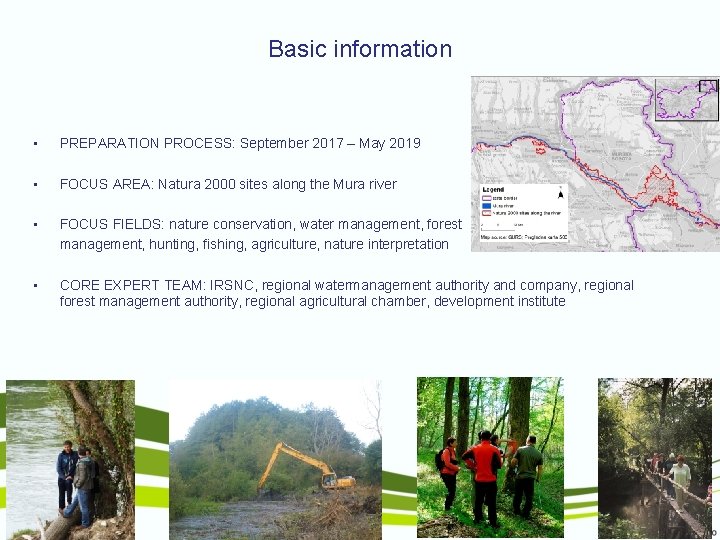
Basic information • PREPARATION PROCESS: September 2017 – May 2019 • FOCUS AREA: Natura 2000 sites along the Mura river • FOCUS FIELDS: nature conservation, water management, forest management, hunting, fishing, agriculture, nature interpretation • CORE EXPERT TEAM: IRSNC, regional watermanagement authority and company, regional forest management authority, regional agricultural chamber, development institute
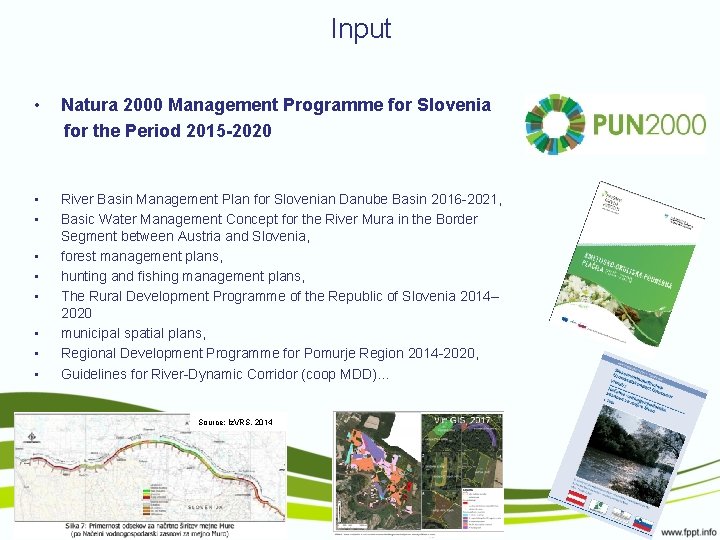
Input • Natura 2000 Management Programme for Slovenia for the Period 2015 -2020 • • River Basin Management Plan for Slovenian Danube Basin 2016 -2021, Basic Water Management Concept for the River Mura in the Border Segment between Austria and Slovenia, forest management plans, hunting and fishing management plans, The Rural Development Programme of the Republic of Slovenia 2014– 2020 municipal spatial plans, Regional Development Programme for Pomurje Region 2014 -2020, Guidelines for River-Dynamic Corridor (coop MDD)… • • • Source: Iz. VRS, 2014
Objectives • • achieving favorable conservation status of Natura 2000 Mura sites species in habitat types and thereby achieving the objectives of PUN 2000, preservation and restoration of valuable natural features (riverbed, side-arms, oxbows, floodplain forests, wet meadows) along the Mura River, ensuring and maintaining good ecological status of waters, and thus achieving the objectives of the River Basin Management Plan, increasing the retention capacity and flowability of high waters, and thus improving flood safety, stopping the deepening of the river bed, and thus maintaining or increasing the level of groundwater in the area of water sources of drinking water and agricultural and forestry land, restoring the structures and functions of flood forests, thus ensuring the conditions for the long-term sustainable use of timber, restoration and preservation of extensive wet grasslands in this production capacity of agricultural land, the establishment of a high-quality nature-conservation infrastructure in the Natura 2000 Mura area, thus supporting the achievement of the educational and development goals of the Mura Biosphere Reserve. Actions improve or preserve all important ecosystem services. The Action plan follows several goals, not just nature conservation goals!

Implementation process
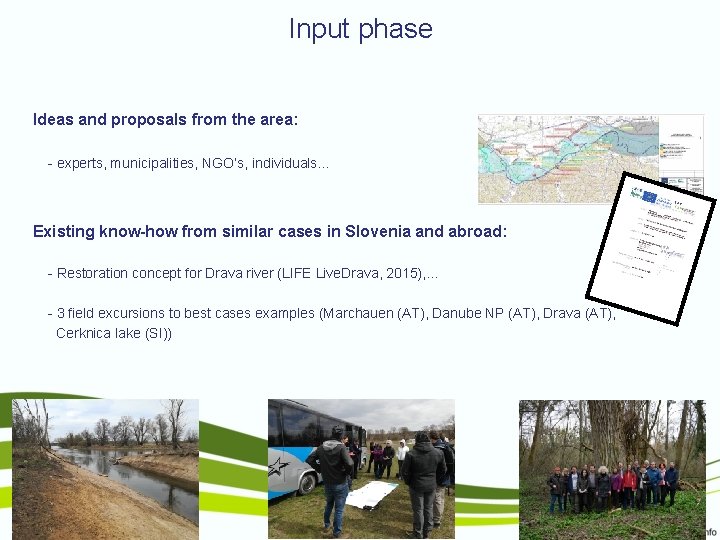
Input phase Ideas and proposals from the area: - experts, municipalities, NGO‘s, individuals… Existing know-how from similar cases in Slovenia and abroad: - Restoration concept for Drava river (LIFE Live. Drava, 2015), … - 3 field excursions to best cases examples (Marchauen (AT), Danube NP (AT), Drava (AT), Cerknica lake (SI))

Participatory process
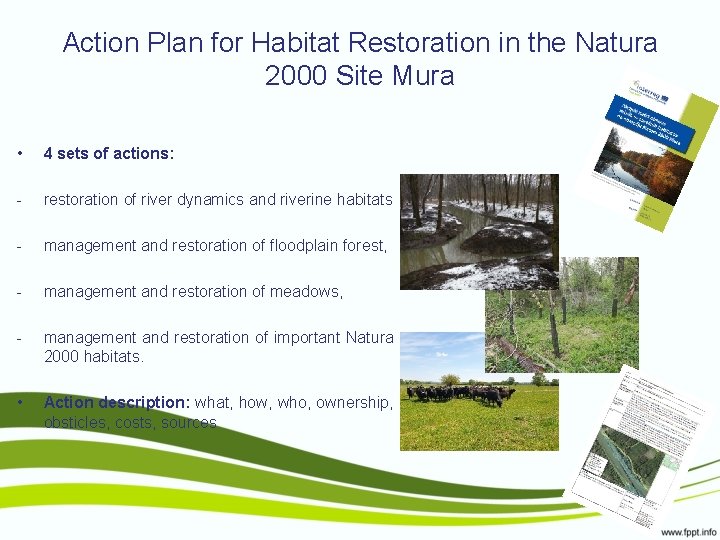
Action Plan for Habitat Restoration in the Natura 2000 Site Mura • 4 sets of actions: - restoration of river dynamics and riverine habitats - management and restoration of floodplain forest, - management and restoration of meadows, - management and restoration of important Natura 2000 habitats. • Action description: what, how, who, ownership, obsticles, costs, sources

The Concept of Nature Interpretation in Natura 2000 Site Mura • Existing interpretation basis • Common story • Media for interpretation of nature in Natura 2000 site Mura • Measures for interpretation of nature in Natura 2000 site Mura • Guidelines for further steps/development
Purpose - Comprehensive action plan accepted by most of the stakeholders and all key stakeholders. - Used by nature conservation authorities as well as other key stakeholders like water management and forest management authorities and local communities. - Regular management of Natura 2000 site Mura. - Preparation and implementation of future restoration projects along the Mura river. NATURA MURA Cohesion project - Preparation: November 2018 – December 2019 - Implementation: 2020 - 2023
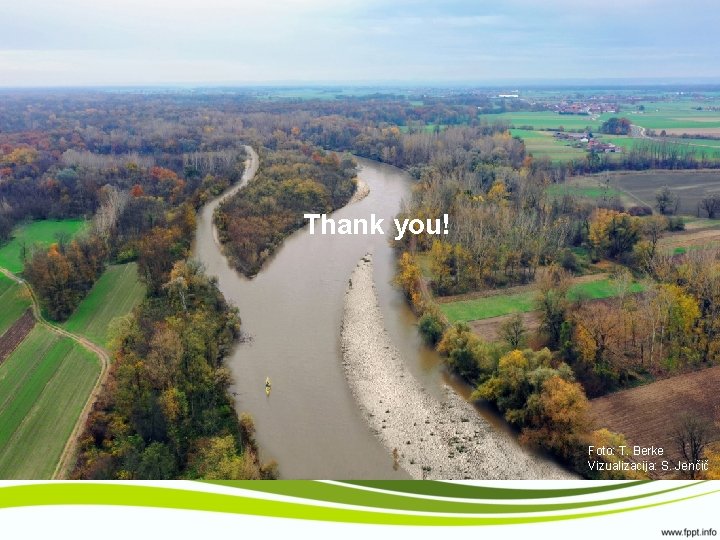
Thank you! Foto: T. Berke Vizualizacija: S. Jenčič
- Slides: 12