
Action Learning Sets Tracey Roberts OD Partner Organisational
Action Learning Sets Tracey Roberts – OD Partner, Organisational Development
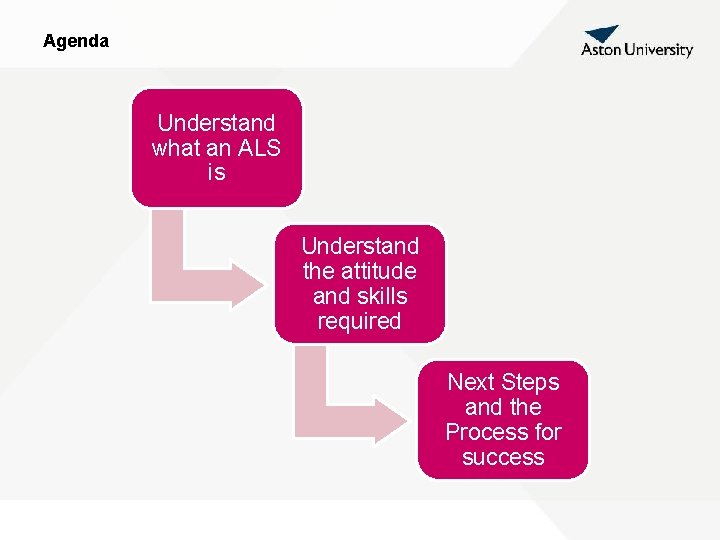
Agenda Understand what an ALS is Understand the attitude and skills required Next Steps and the Process for success
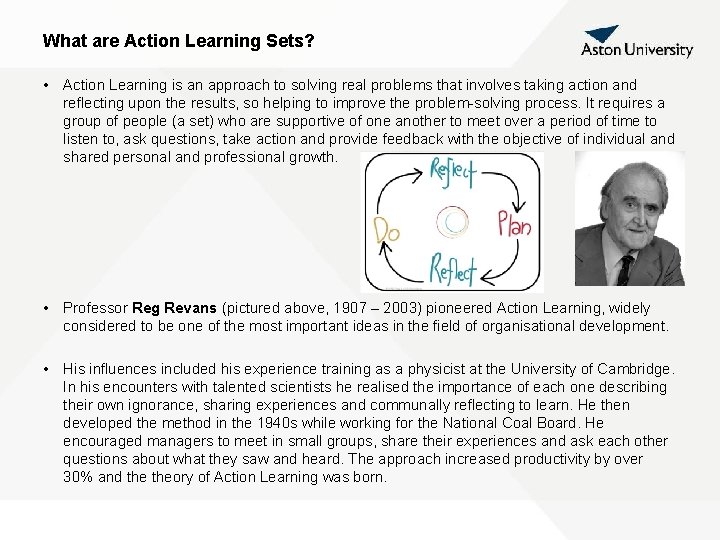
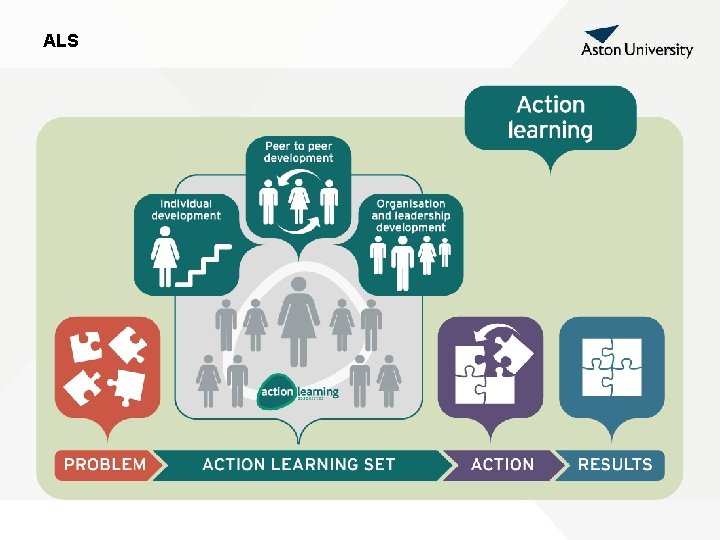
What are Action Learning Sets? • Action Learning is an approach to solving real problems that involves taking action and reflecting upon the results, so helping to improve the problem-solving process. It requires a group of people (a set) who are supportive of one another to meet over a period of time to listen to, ask questions, take action and provide feedback with the objective of individual and shared personal and professional growth. • Professor Reg Revans (pictured above, 1907 – 2003) pioneered Action Learning, widely considered to be one of the most important ideas in the field of organisational development. • His influences included his experience training as a physicist at the University of Cambridge. In his encounters with talented scientists he realised the importance of each one describing their own ignorance, sharing experiences and communally reflecting to learn. He then developed the method in the 1940 s while working for the National Coal Board. He encouraged managers to meet in small groups, share their experiences and ask each other questions about what they saw and heard. The approach increased productivity by over 30% and theory of Action Learning was born.
ALS
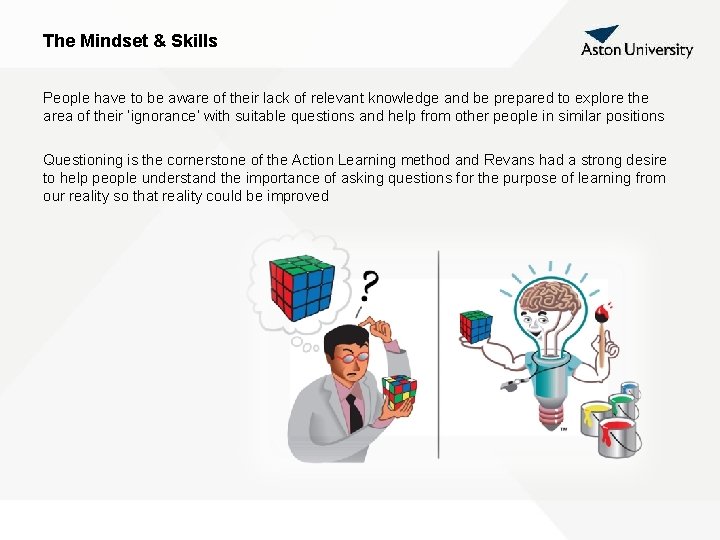
The Mindset & Skills People have to be aware of their lack of relevant knowledge and be prepared to explore the area of their ‘ignorance’ with suitable questions and help from other people in similar positions Questioning is the cornerstone of the Action Learning method and Revans had a strong desire to help people understand the importance of asking questions for the purpose of learning from our reality so that reality could be improved

The Roles Set members have a crucial role in the Action Learning Set meeting - listening carefully to the presenter’s issue, clarifying their understanding, asking open and helpful questions to help the presenter identify and be clear about the crux of the matter and helping the presenter to identify possible actions which may address the issue being explored. Set Members Set Facilitators Help Action Learning Sets to establish a set of ground rules Role-model the skills needed relating to effective listening, questioning and feedback. Manage the process including timing, bidding to present challenges, summarising and managing behaviour. Set Challenge/Issues Set Presenters present their issue, opportunity, challenge or project, together with the success criteria, to the set members. The issue being presented to set members should be open-ended, in other words, it should be something that can be openly explored to identify the crux of the problem.
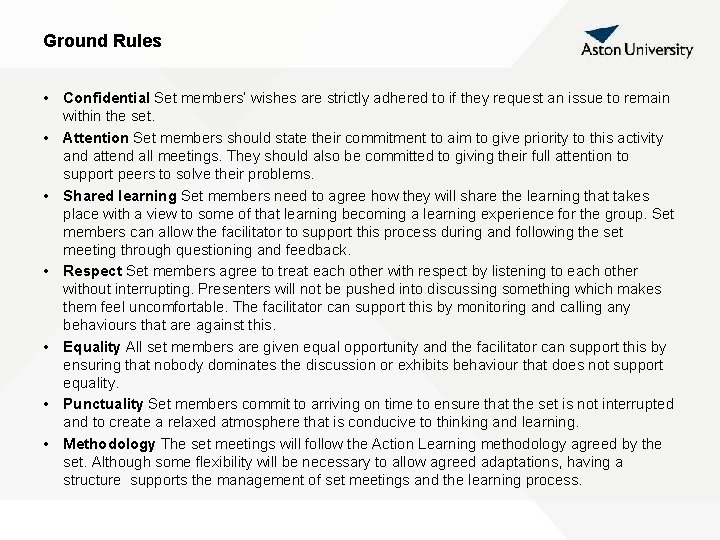
Ground Rules • Confidential Set members’ wishes are strictly adhered to if they request an issue to remain within the set. • Attention Set members should state their commitment to aim to give priority to this activity and attend all meetings. They should also be committed to giving their full attention to support peers to solve their problems. • Shared learning Set members need to agree how they will share the learning that takes place with a view to some of that learning becoming a learning experience for the group. Set members can allow the facilitator to support this process during and following the set meeting through questioning and feedback. • Respect Set members agree to treat each other with respect by listening to each other without interrupting. Presenters will not be pushed into discussing something which makes them feel uncomfortable. The facilitator can support this by monitoring and calling any behaviours that are against this. • Equality All set members are given equal opportunity and the facilitator can support this by ensuring that nobody dominates the discussion or exhibits behaviour that does not support equality. • Punctuality Set members commit to arriving on time to ensure that the set is not interrupted and to create a relaxed atmosphere that is conducive to thinking and learning. • Methodology The set meetings will follow the Action Learning methodology agreed by the set. Although some flexibility will be necessary to allow agreed adaptations, having a structure supports the management of set meetings and the learning process.
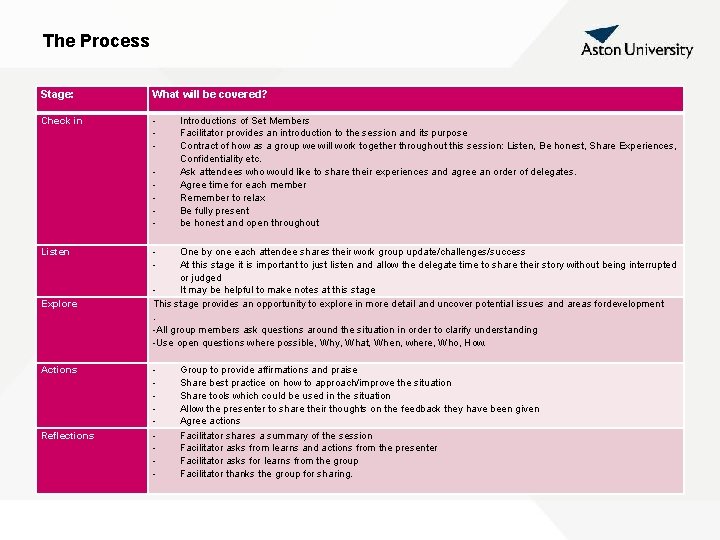
The Process Stage: What will be covered? Check in - Listen Explore Actions Reflections - Introductions of Set Members Facilitator provides an introduction to the session and its purpose Contract of how as a group we will work together throughout this session: Listen, Be honest, Share Experiences, Confidentiality etc. Ask attendees who would like to share their experiences and agree an order of delegates. Agree time for each member Remember to relax Be fully present be honest and open throughout One by one each attendee shares their work group update/challenges/success At this stage it is important to just listen and allow the delegate time to share their story without being interrupted or judged It may be helpful to make notes at this stage This stage provides an opportunity to explore in more detail and uncover potential issues and areas for development. -All group members ask questions around the situation in order to clarify understanding -Use open questions where possible, Why, What, When, where, Who, How. Group to provide affirmations and praise Share best practice on how to approach/improve the situation Share tools which could be used in the situation Allow the presenter to share their thoughts on the feedback they have been given Agree actions Facilitator shares a summary of the session Facilitator asks from learns and actions from the presenter Facilitator asks for learns from the group Facilitator thanks the group for sharing.
- Slides: 8