
Actinic Keratosis These dry scaly patches or spots

- Slides: 16
Actinic Keratosis
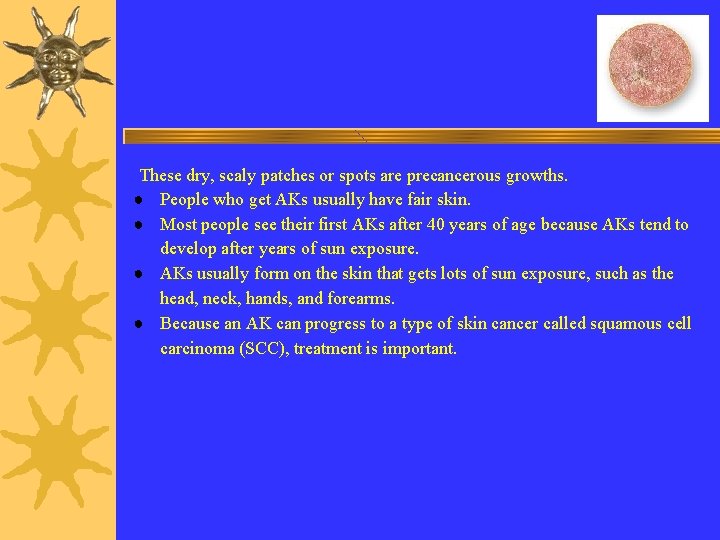
These dry, scaly patches or spots are precancerous growths. ● People who get AKs usually have fair skin. ● Most people see their first AKs after 40 years of age because AKs tend to develop after years of sun exposure. ● AKs usually form on the skin that gets lots of sun exposure, such as the head, neck, hands, and forearms. ● Because an AK can progress to a type of skin cancer called squamous cell carcinoma (SCC), treatment is important.
>58 million American have AKs
AK Treatment Options 1 - LN 2 2 - Topical Prescriptions - ingenol mebutate (Picato) - imiquimod (Aldara / Zyclara) - 5 -fluorouracil (Efudex / Carac / etc) - diclofenac sodium (Solaraze) 3 - Photodynamic Therapy (PDT) - topical 5 -aminolevulinic acid (5 -ALA / Levulan Kerastick) - methyl aminolevulinate (MAL / Metvixia) - BLU-U
AK Treatment Options 4 - Others: - Curettage and Electrodessication - Chemical Peeling - Laser Surgery
Basal Cell Carcinoma
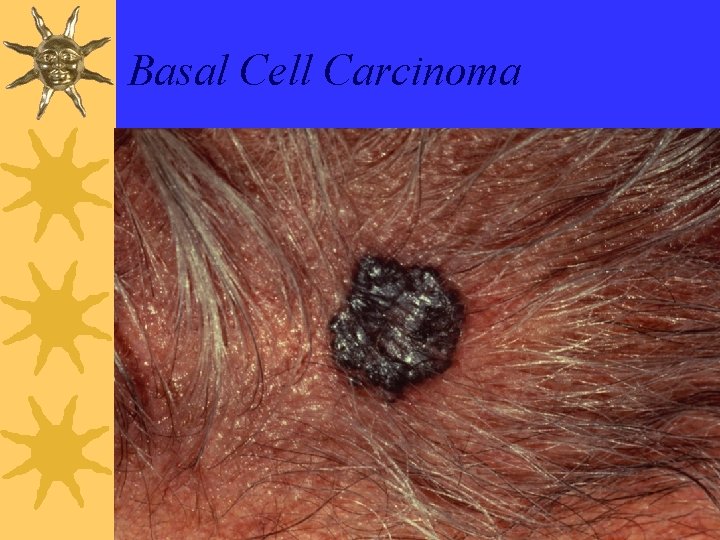
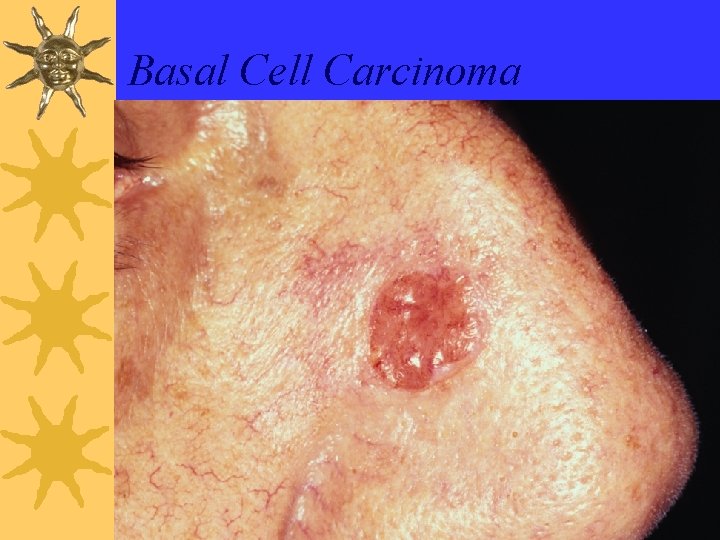
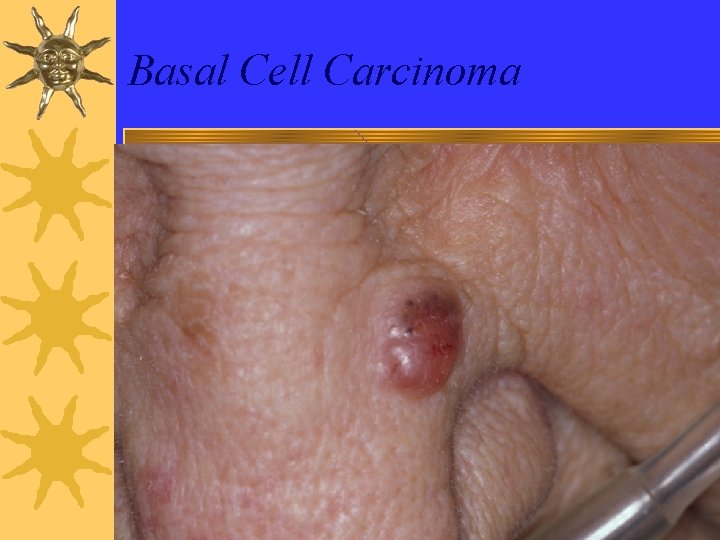
Basal Cell Carcinoma ✶Most common type of Cancer ✶Most common type of skin cancer ✶If caught early, > 95% curable
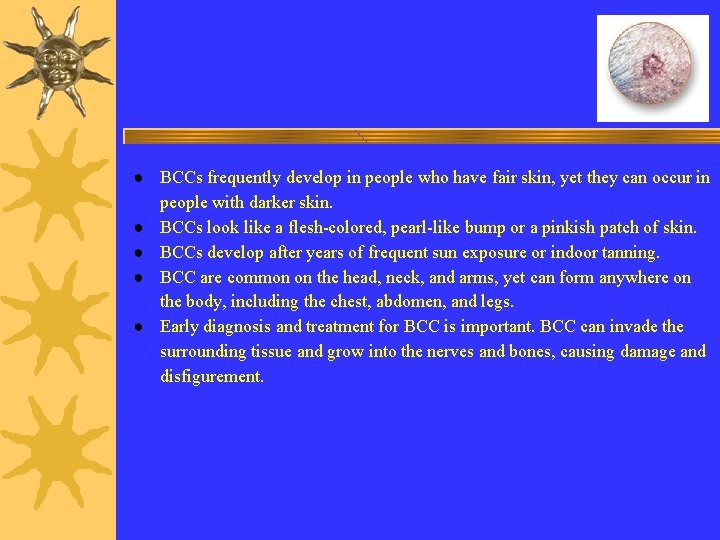
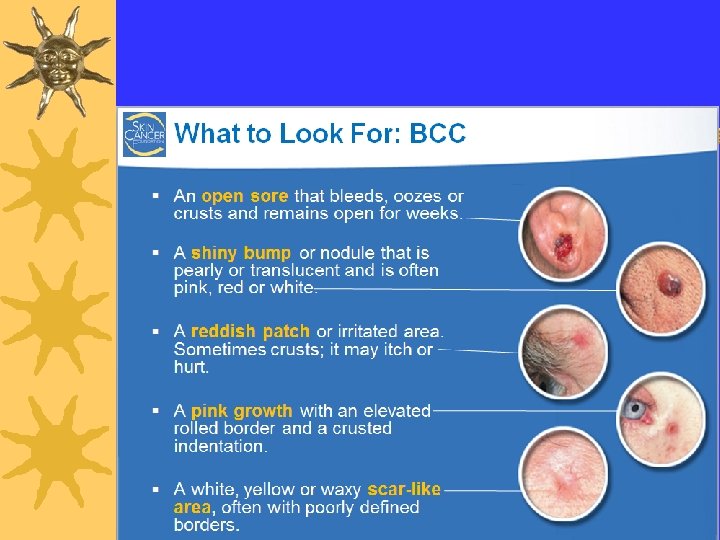
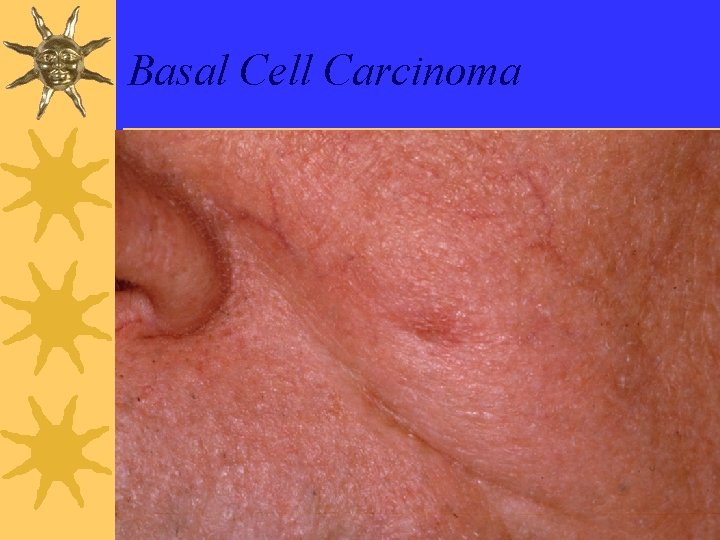
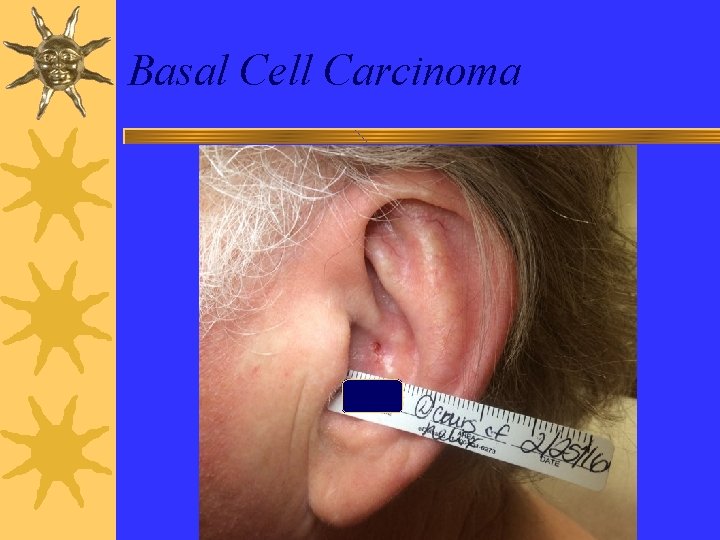
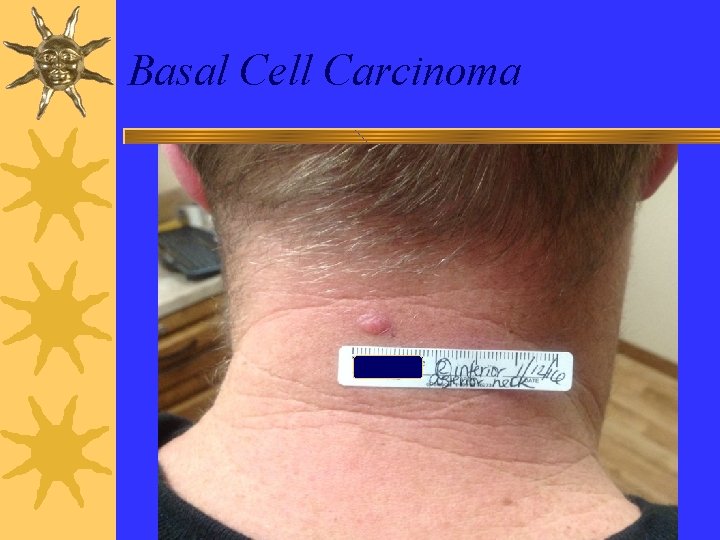
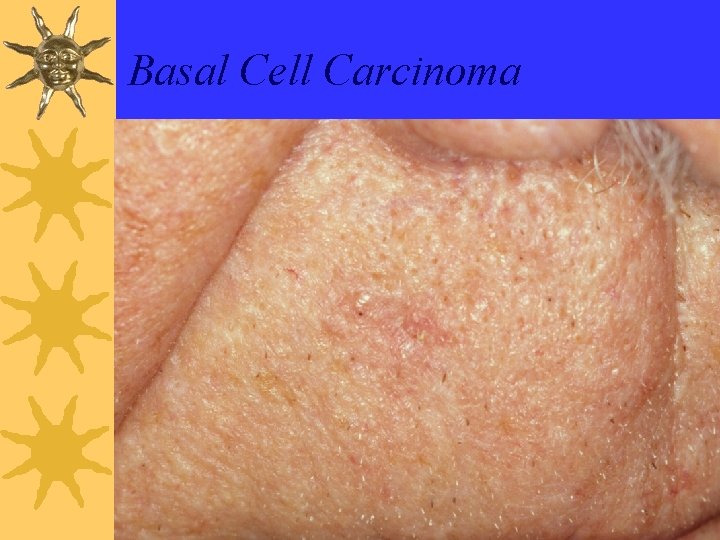
● BCCs frequently develop in people who have fair skin, yet they can occur in people with darker skin. ● BCCs look like a flesh-colored, pearl-like bump or a pinkish patch of skin. ● BCCs develop after years of frequent sun exposure or indoor tanning. ● BCC are common on the head, neck, and arms, yet can form anywhere on the body, including the chest, abdomen, and legs. ● Early diagnosis and treatment for BCC is important. BCC can invade the surrounding tissue and grow into the nerves and bones, causing damage and disfigurement.
Basal Cell Carcinoma
Basal Cell Carcinoma
Basal Cell Carcinoma
Basal Cell Carcinoma
Basal Cell Carcinoma
Basal Cell Carcinoma
Basal Cell Carcinoma