
ACTFL Proficiency Guidelines An overview of leveling categories
- Slides: 27
ACTFL Proficiency Guidelines An overview of leveling categories
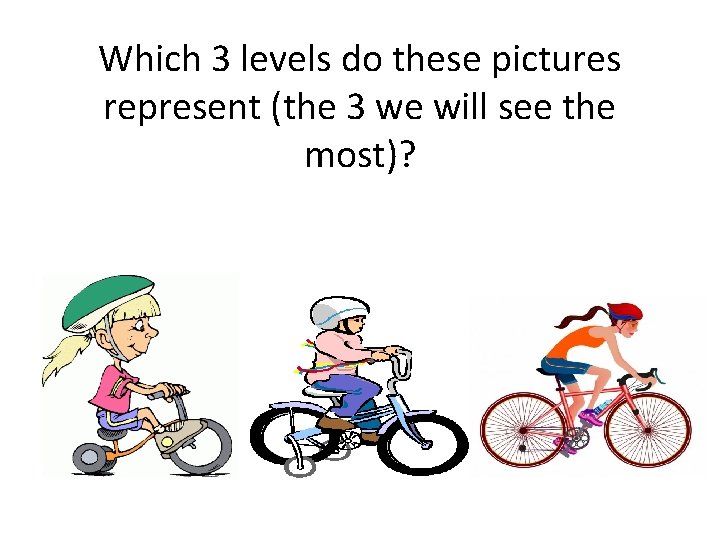
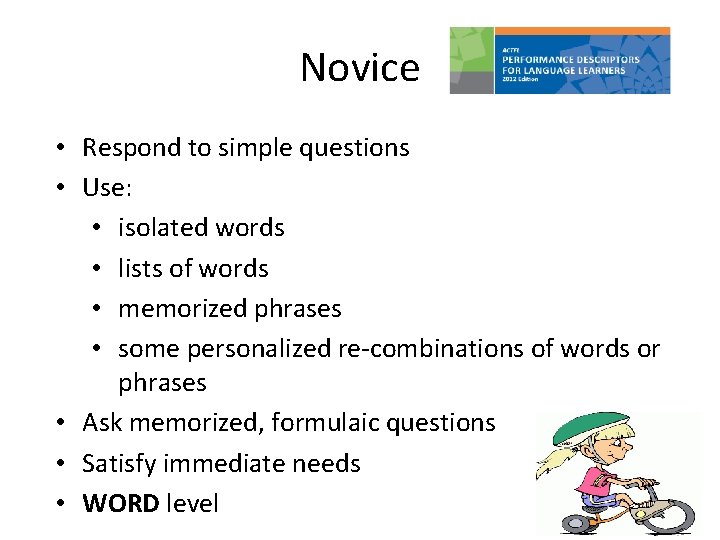
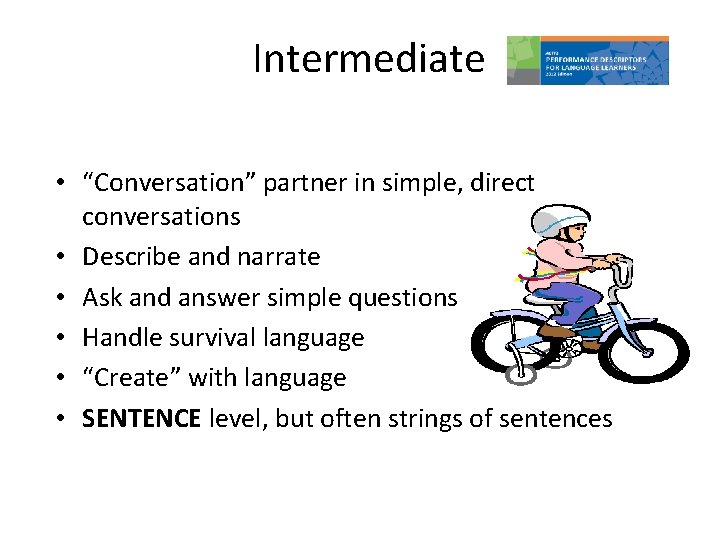
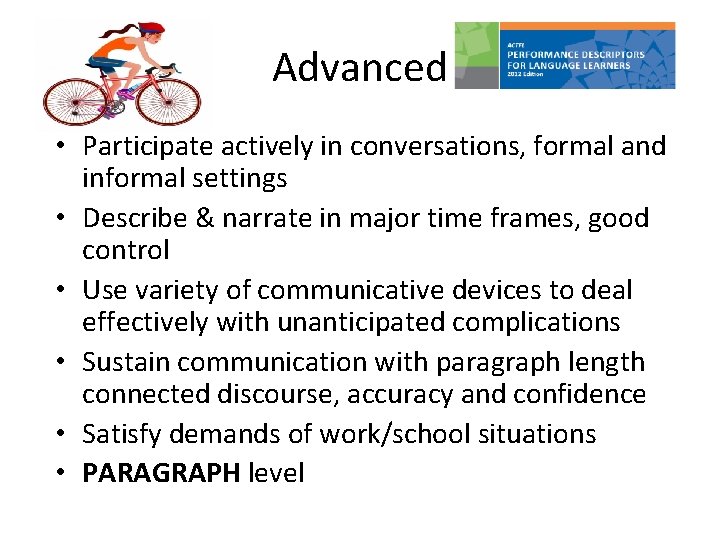
Which 3 levels do these pictures represent (the 3 we will see the most)?
Novice • Respond to simple questions • Use: • isolated words • lists of words • memorized phrases • some personalized re-combinations of words or phrases • Ask memorized, formulaic questions • Satisfy immediate needs • WORD level
Intermediate • “Conversation” partner in simple, direct conversations • Describe and narrate • Ask and answer simple questions • Handle survival language • “Create” with language • SENTENCE level, but often strings of sentences
Advanced • Participate actively in conversations, formal and informal settings • Describe & narrate in major time frames, good control • Use variety of communicative devices to deal effectively with unanticipated complications • Sustain communication with paragraph length connected discourse, accuracy and confidence • Satisfy demands of work/school situations • PARAGRAPH level
Within each level is Low, Mid, and High…… How do we decide among them?
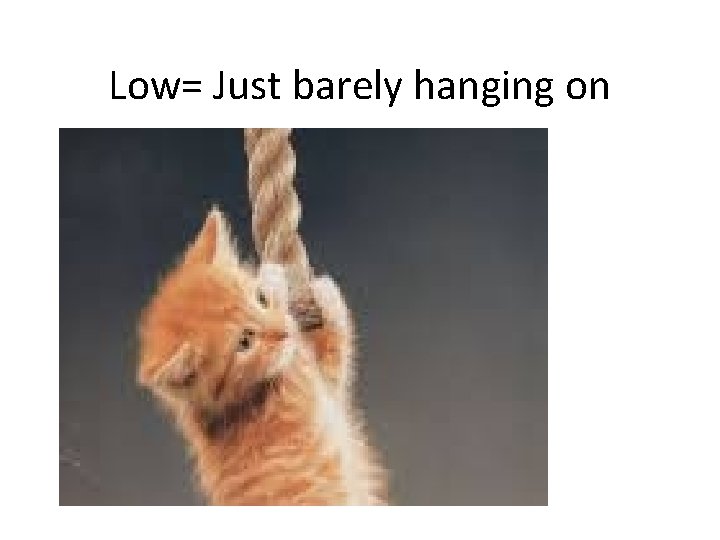
Low= Just barely hanging on
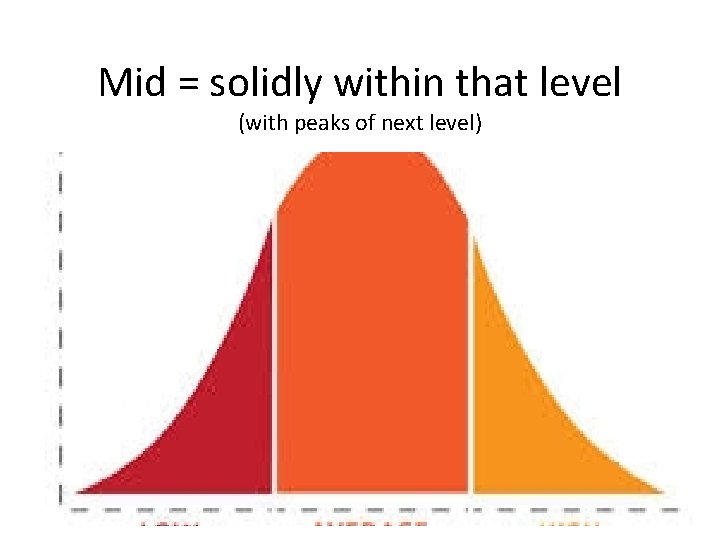
Mid = solidly within that level (with peaks of next level)
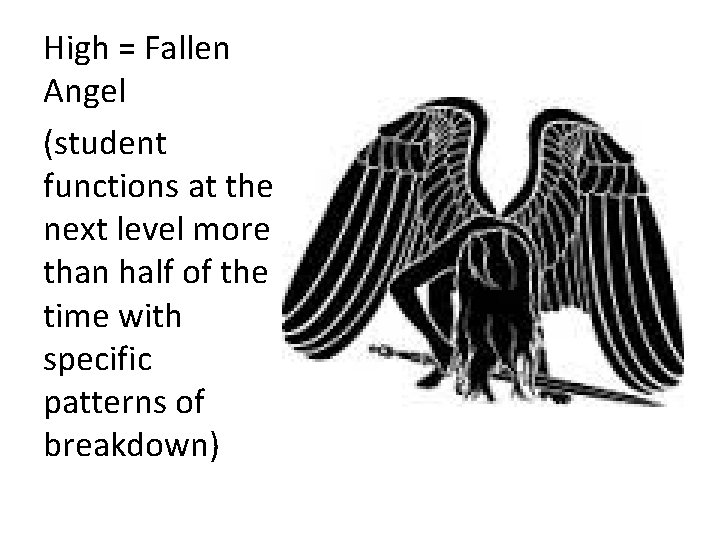
High = Fallen Angel (student functions at the next level more than half of the time with specific patterns of breakdown)
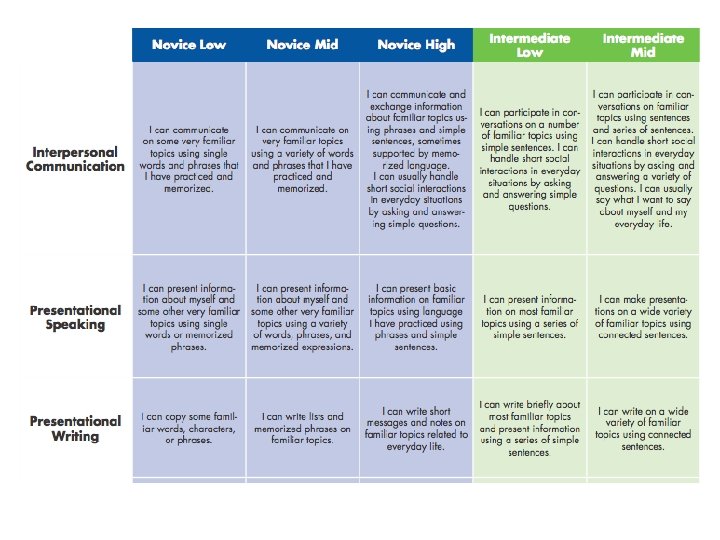
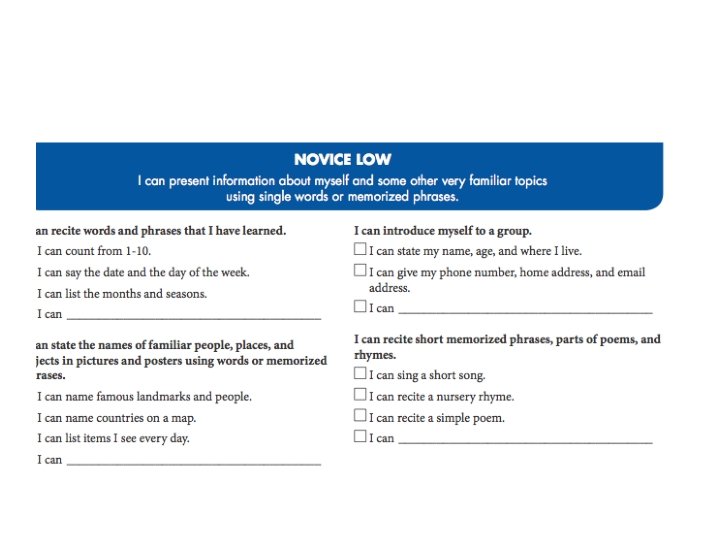
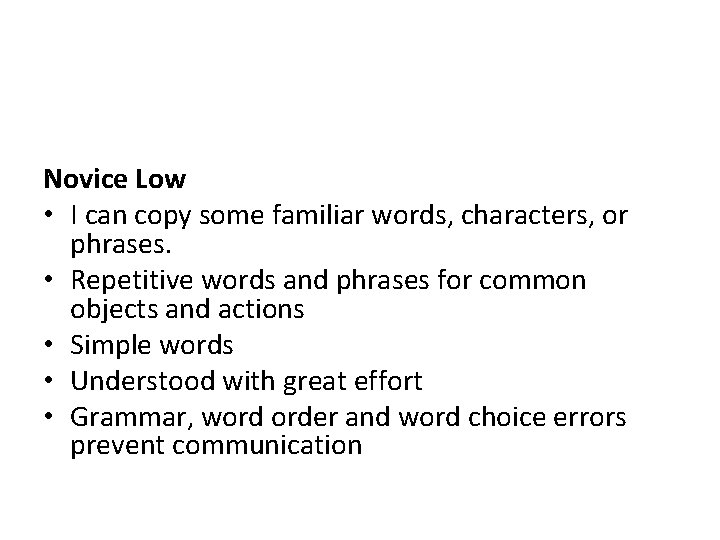
Novice Low • I can copy some familiar words, characters, or phrases. • Repetitive words and phrases for common objects and actions • Simple words • Understood with great effort • Grammar, word order and word choice errors prevent communication
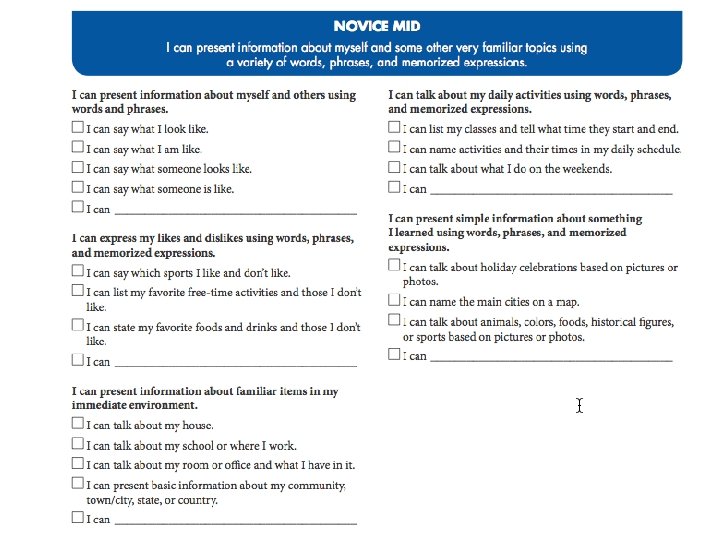
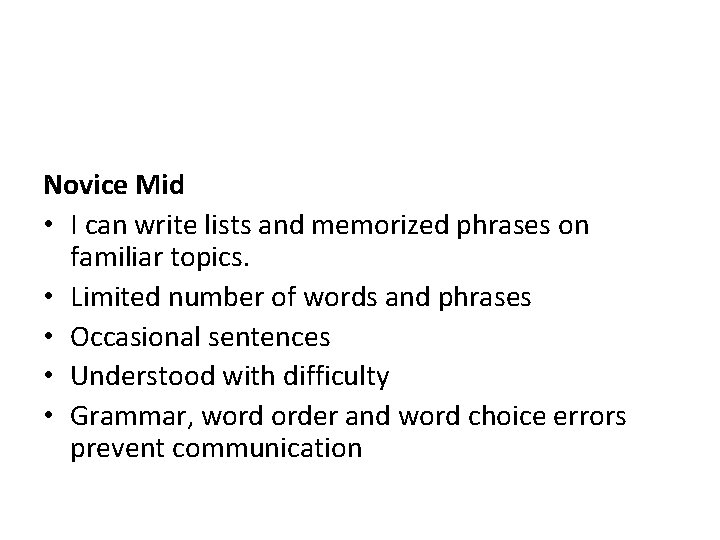
Novice Mid • I can write lists and memorized phrases on familiar topics. • Limited number of words and phrases • Occasional sentences • Understood with difficulty • Grammar, word order and word choice errors prevent communication
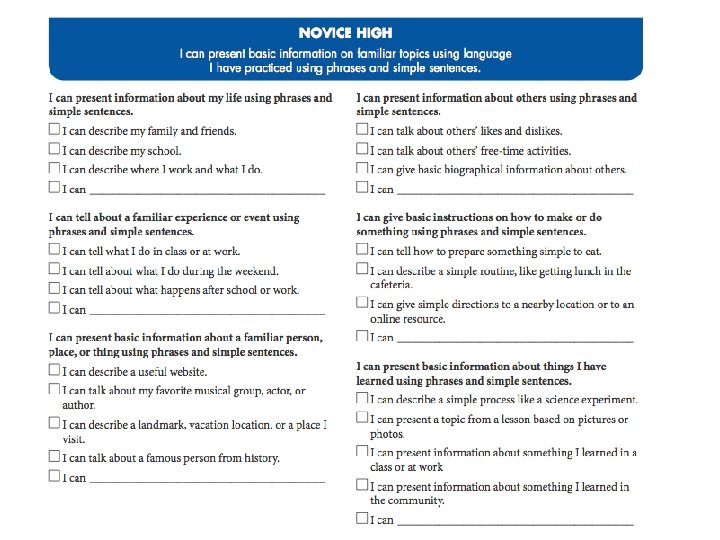
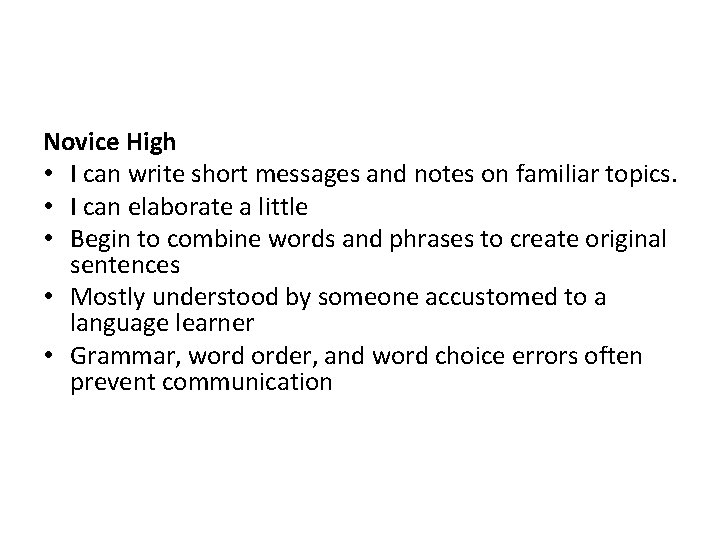
Novice High • I can write short messages and notes on familiar topics. • I can elaborate a little • Begin to combine words and phrases to create original sentences • Mostly understood by someone accustomed to a language learner • Grammar, word order, and word choice errors often prevent communication
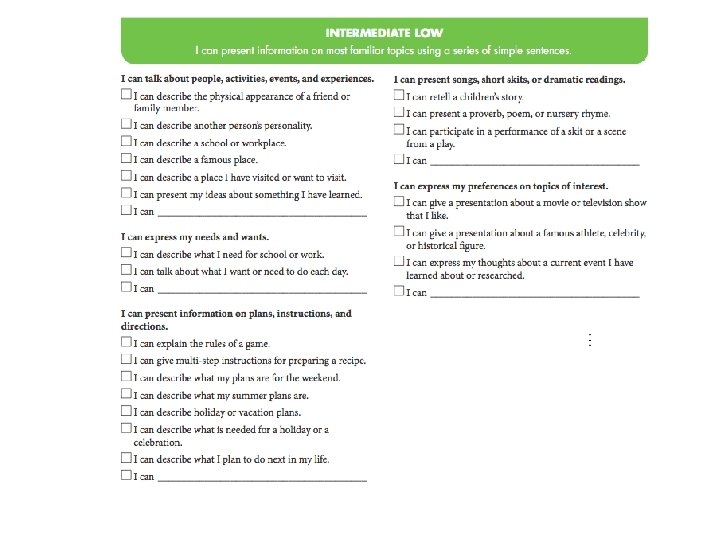
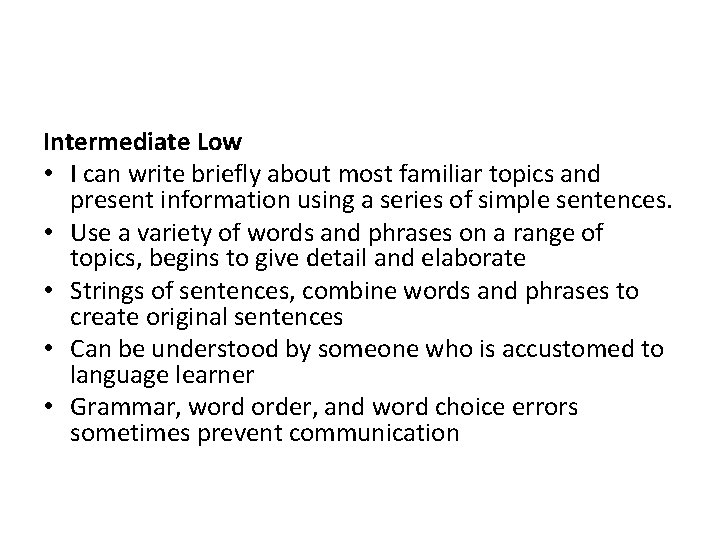
Intermediate Low • I can write briefly about most familiar topics and present information using a series of simple sentences. • Use a variety of words and phrases on a range of topics, begins to give detail and elaborate • Strings of sentences, combine words and phrases to create original sentences • Can be understood by someone who is accustomed to language learner • Grammar, word order, and word choice errors sometimes prevent communication
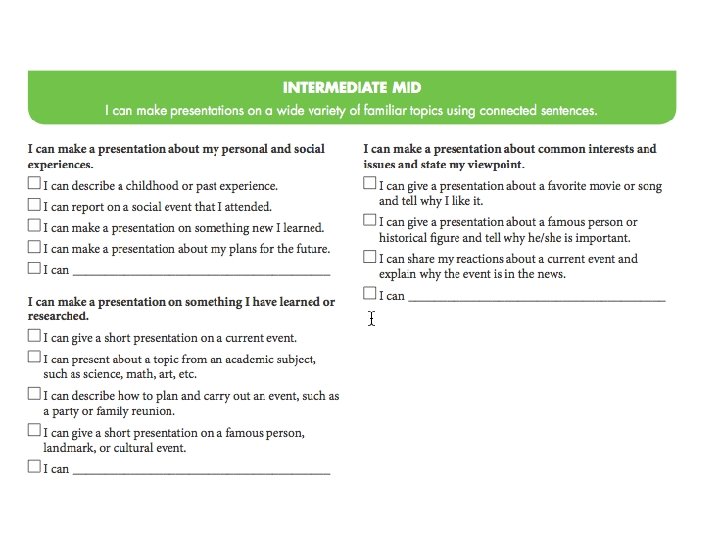
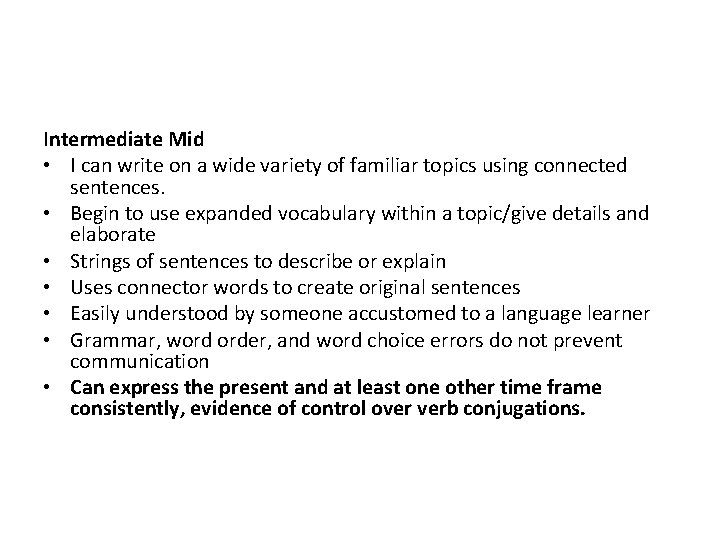
Intermediate Mid • I can write on a wide variety of familiar topics using connected sentences. • Begin to use expanded vocabulary within a topic/give details and elaborate • Strings of sentences to describe or explain • Uses connector words to create original sentences • Easily understood by someone accustomed to a language learner • Grammar, word order, and word choice errors do not prevent communication • Can express the present and at least one other time frame consistently, evidence of control over verb conjugations.
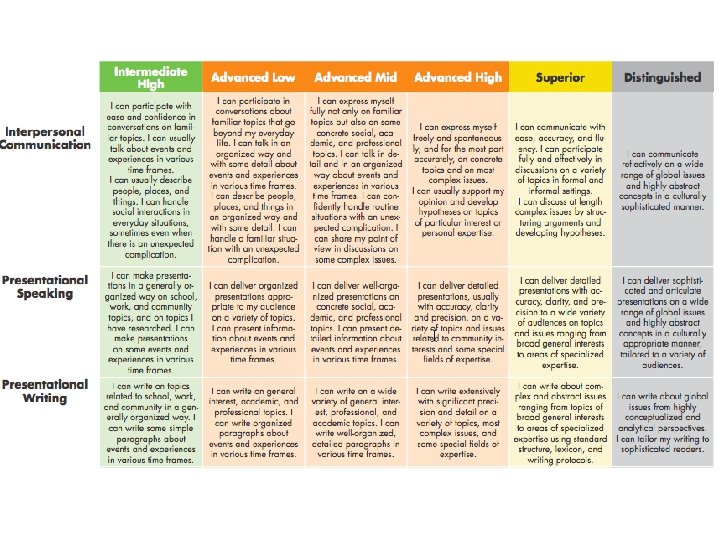
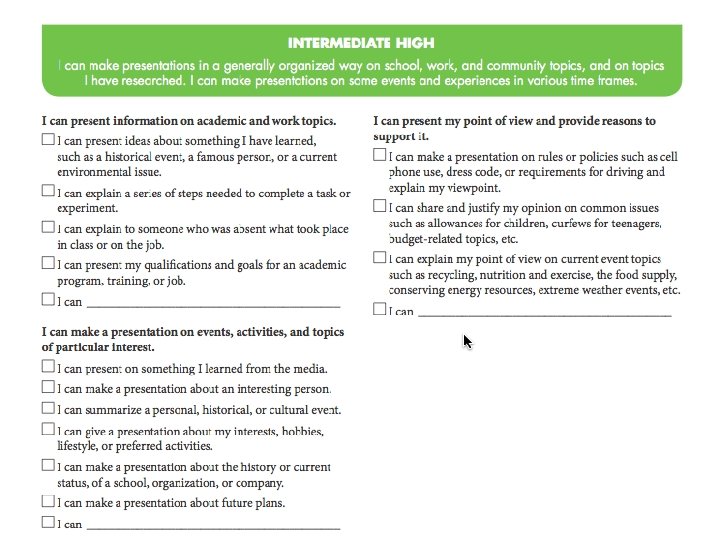
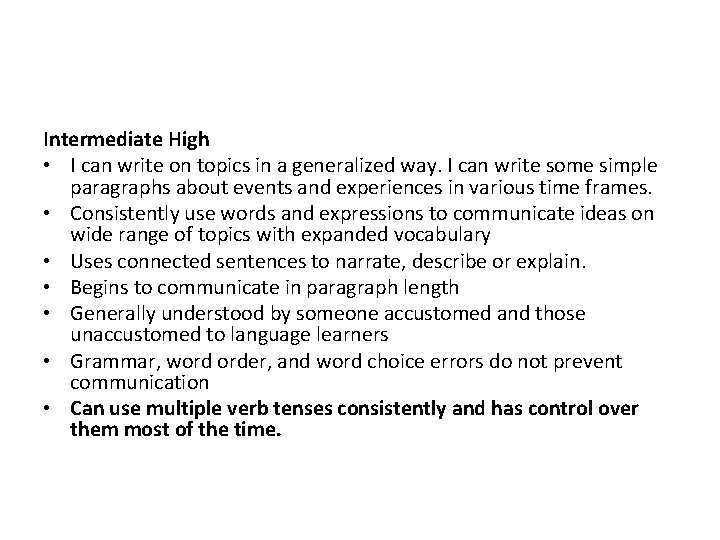
Intermediate High • I can write on topics in a generalized way. I can write some simple paragraphs about events and experiences in various time frames. • Consistently use words and expressions to communicate ideas on wide range of topics with expanded vocabulary • Uses connected sentences to narrate, describe or explain. • Begins to communicate in paragraph length • Generally understood by someone accustomed and those unaccustomed to language learners • Grammar, word order, and word choice errors do not prevent communication • Can use multiple verb tenses consistently and has control over them most of the time.
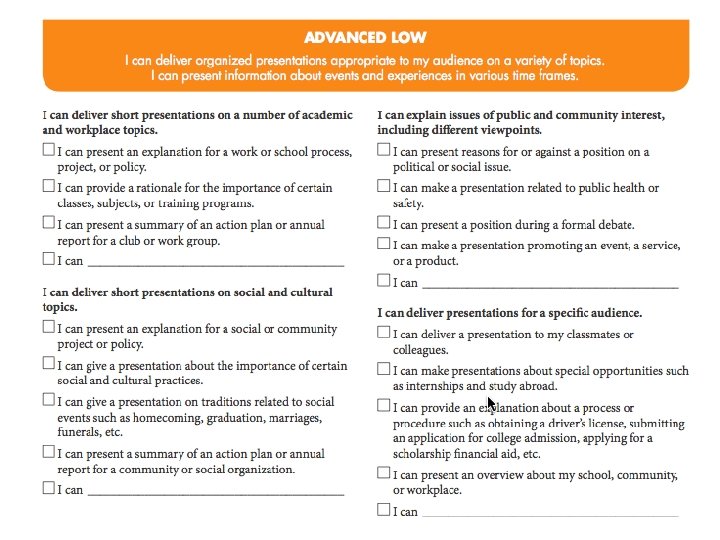
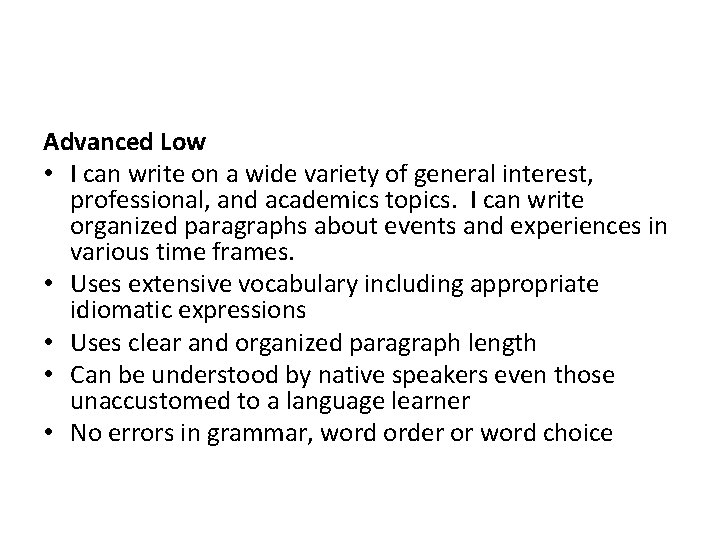
Advanced Low • I can write on a wide variety of general interest, professional, and academics topics. I can write organized paragraphs about events and experiences in various time frames. • Uses extensive vocabulary including appropriate idiomatic expressions • Uses clear and organized paragraph length • Can be understood by native speakers even those unaccustomed to a language learner • No errors in grammar, word order or word choice
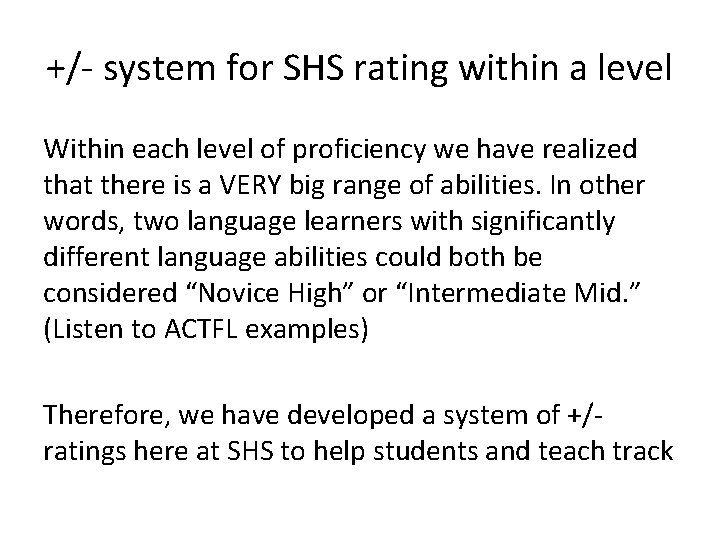
+/- system for SHS rating within a level Within each level of proficiency we have realized that there is a VERY big range of abilities. In other words, two language learners with significantly different language abilities could both be considered “Novice High” or “Intermediate Mid. ” (Listen to ACTFL examples) Therefore, we have developed a system of +/ratings here at SHS to help students and teach track
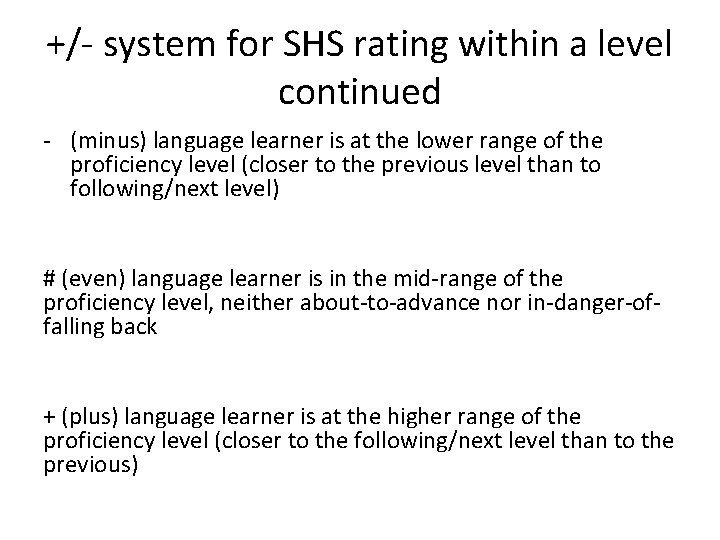
+/- system for SHS rating within a level continued - (minus) language learner is at the lower range of the proficiency level (closer to the previous level than to following/next level) # (even) language learner is in the mid-range of the proficiency level, neither about-to-advance nor in-danger-offalling back + (plus) language learner is at the higher range of the proficiency level (closer to the following/next level than to the previous)