
Actaeon in Greek mythology son of the priestly
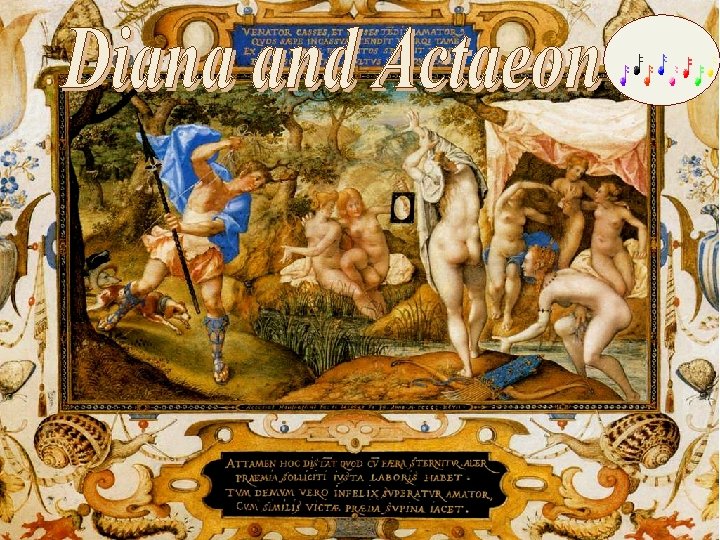
- Slides: 67
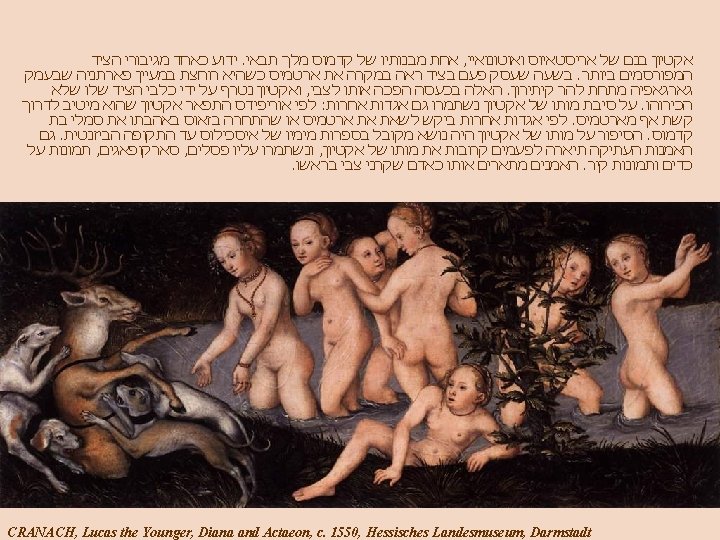
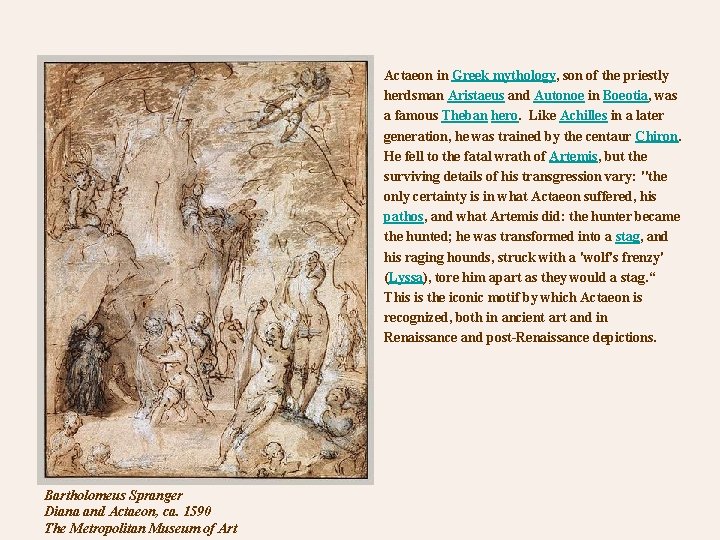
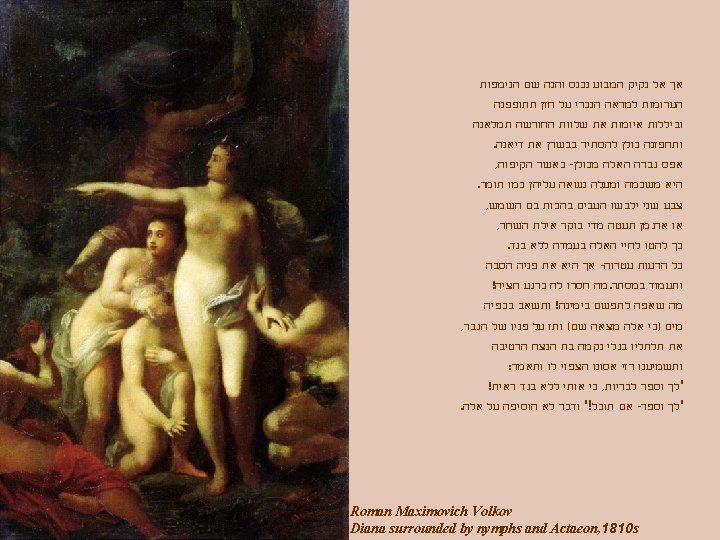
Actaeon in Greek mythology, son of the priestly herdsman Aristaeus and Autonoe in Boeotia, was a famous Theban hero. Like Achilles in a later generation, he was trained by the centaur Chiron. He fell to the fatal wrath of Artemis, but the surviving details of his transgression vary: "the only certainty is in what Actaeon suffered, his pathos, and what Artemis did: the hunter became the hunted; he was transformed into a stag, and his raging hounds, struck with a 'wolf's frenzy' (Lyssa), tore him apart as they would a stag. “ This is the iconic motif by which Actaeon is recognized, both in ancient art and in Renaissance and post-Renaissance depictions. Bartholomeus Spranger Diana and Actaeon, ca. 1590 The Metropolitan Museum of Art
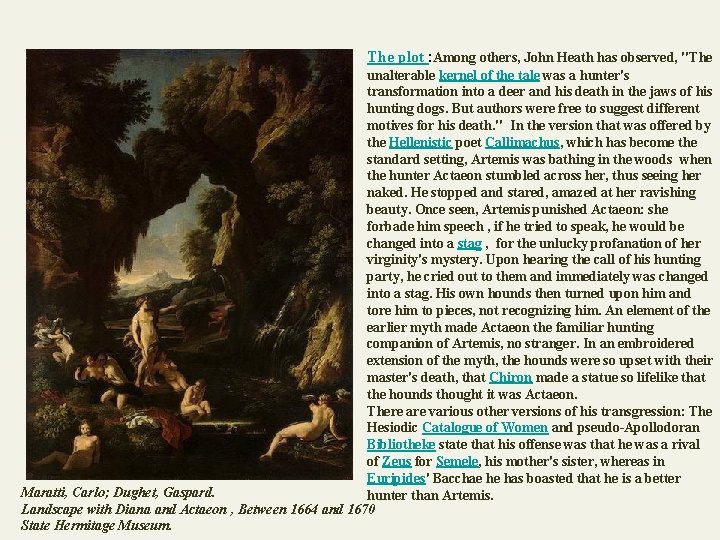
The plot : Among others, John Heath has observed, "The unalterable kernel of the tale was a hunter's transformation into a deer and his death in the jaws of his hunting dogs. But authors were free to suggest different motives for his death. " In the version that was offered by the Hellenistic poet Callimachus, which has become the standard setting, Artemis was bathing in the woods when the hunter Actaeon stumbled across her, thus seeing her naked. He stopped and stared, amazed at her ravishing beauty. Once seen, Artemis punished Actaeon: she forbade him speech , if he tried to speak, he would be changed into a stag , for the unlucky profanation of her virginity's mystery. Upon hearing the call of his hunting party, he cried out to them and immediately was changed into a stag. His own hounds then turned upon him and tore him to pieces, not recognizing him. An element of the earlier myth made Actaeon the familiar hunting companion of Artemis, no stranger. In an embroidered extension of the myth, the hounds were so upset with their master's death, that Chiron made a statue so lifelike that the hounds thought it was Actaeon. There are various other versions of his transgression: The Hesiodic Catalogue of Women and pseudo-Apollodoran Bibliotheke state that his offense was that he was a rival of Zeus for Semele, his mother's sister, whereas in Euripides' Bacchae he has boasted that he is a better Maratti, Carlo; Dughet, Gaspard. hunter than Artemis. Landscape with Diana and Actaeon , Between 1664 and 1670 State Hermitage Museum.
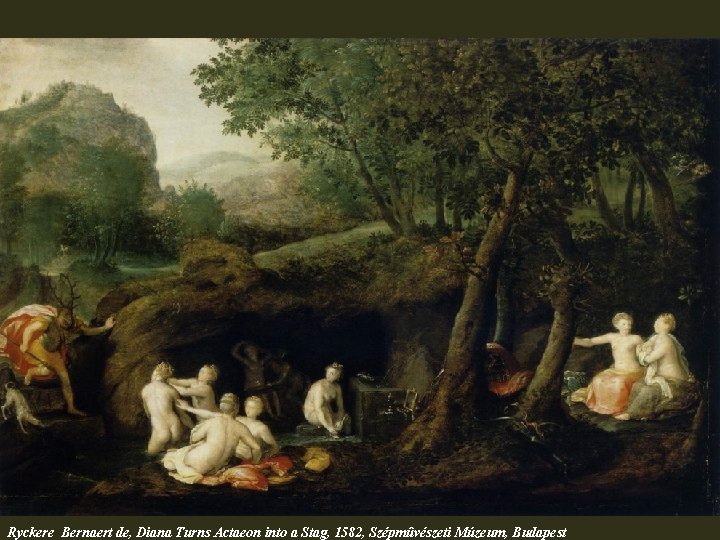
Ryckere Bernaert de, Diana Turns Actaeon into a Stag, 1582, Szépmûvészeti Múzeum, Budapest
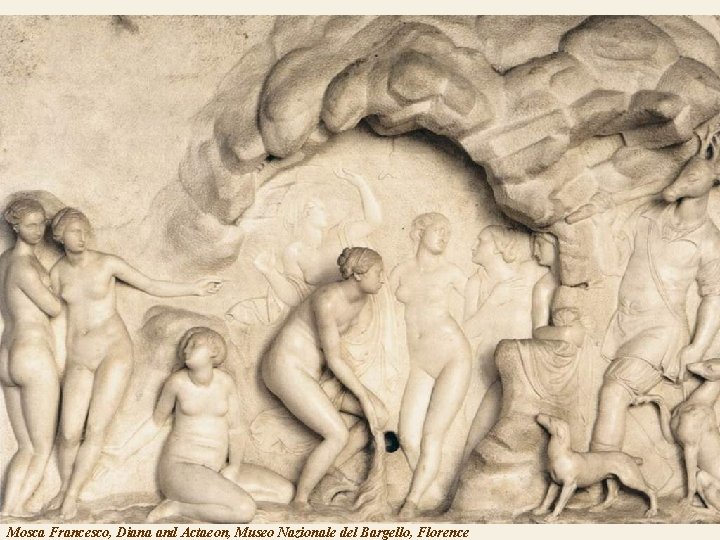
Mosca Francesco, Diana and Actaeon, Museo Nazionale del Bargello, Florence
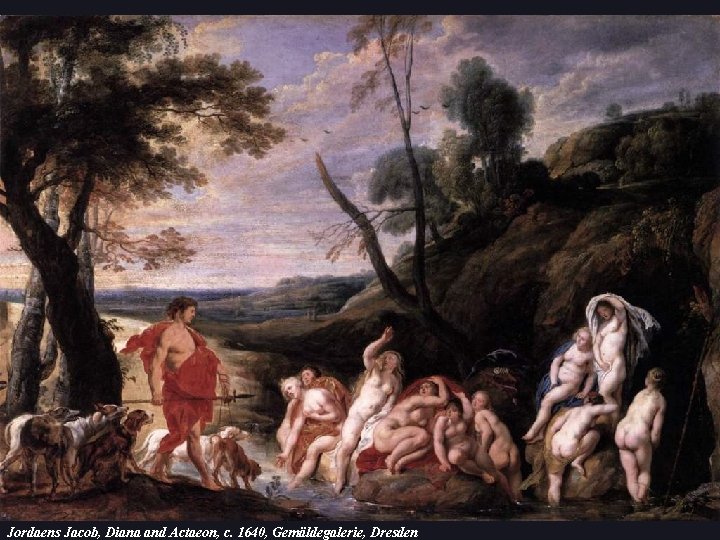
Jordaens Jacob, Diana and Actaeon, c. 1640, Gemäldegalerie, Dresden
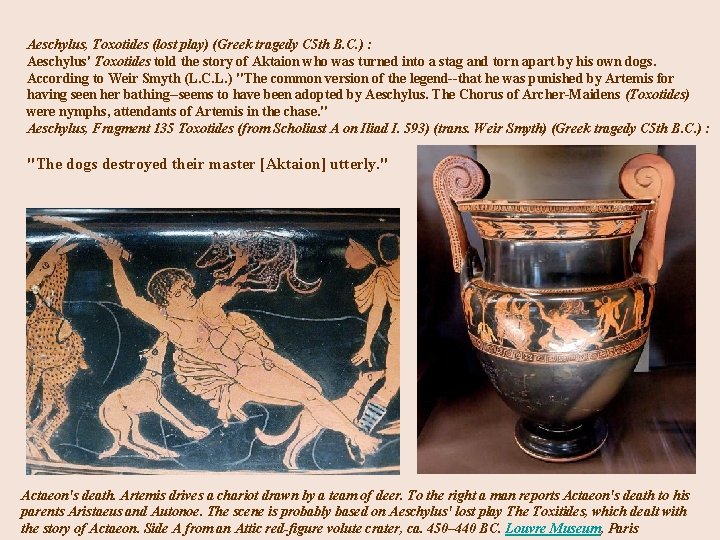
Aeschylus, Toxotides (lost play) (Greek tragedy C 5 th B. C. ) : Aeschylus' Toxotides told the story of Aktaion who was turned into a stag and torn apart by his own dogs. According to Weir Smyth (L. C. L. ) "The common version of the legend--that he was punished by Artemis for having seen her bathing--seems to have been adopted by Aeschylus. The Chorus of Archer-Maidens (Toxotides) were nymphs, attendants of Artemis in the chase. " Aeschylus, Fragment 135 Toxotides (from Scholiast A on Iliad I. 593) (trans. Weir Smyth) (Greek tragedy C 5 th B. C. ) : "The dogs destroyed their master [Aktaion] utterly. " Actaeon's death. Artemis drives a chariot drawn by a team of deer. To the right a man reports Actaeon's death to his parents Aristaeus and Autonoe. The scene is probably based on Aeschylus' lost play The Toxitides, which dealt with the story of Actaeon. Side A from an Attic red-figure volute crater, ca. 450– 440 BC. Louvre Museum, Paris
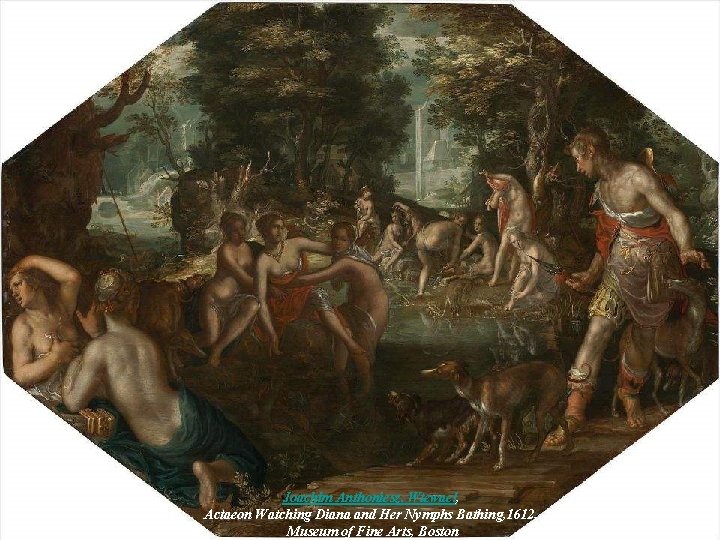
Joachim Anthoniesz. Wtewael, Actaeon Watching Diana and Her Nymphs Bathing, 1612, Museum of Fine Arts, Boston
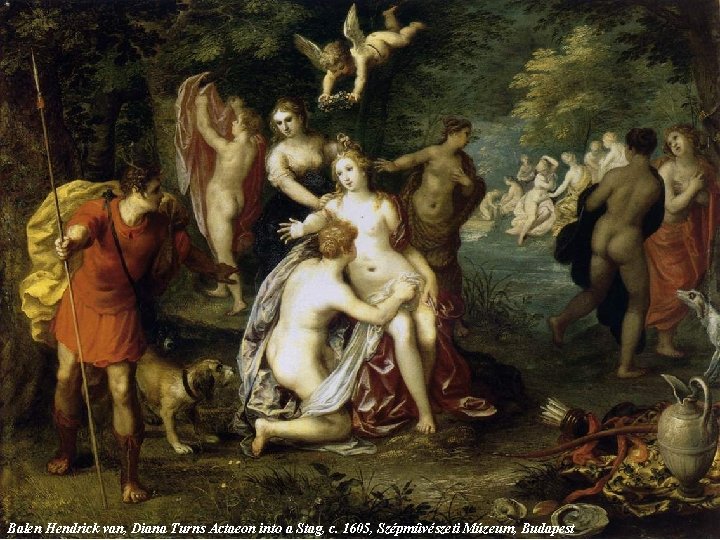
Balen Hendrick van, Diana Turns Actaeon into a Stag, c. 1605, Szépmûvészeti Múzeum, Budapest
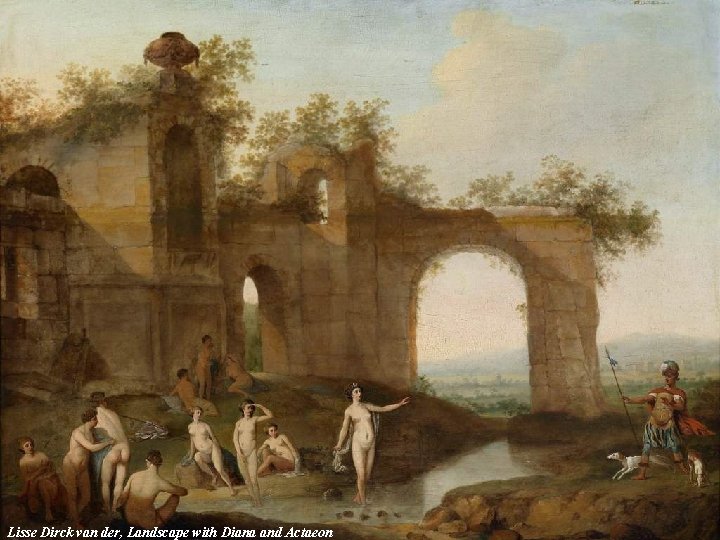
Lisse Dirck van der, Landscape with Diana and Actaeon
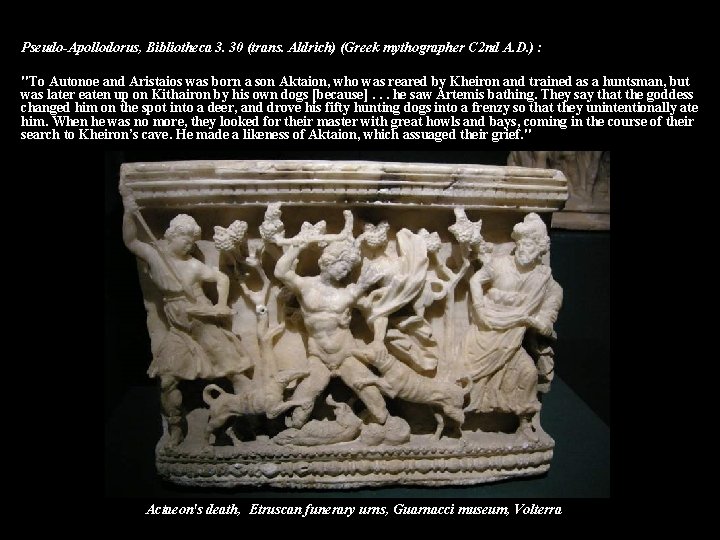
Pseudo-Apollodorus, Bibliotheca 3. 30 (trans. Aldrich) (Greek mythographer C 2 nd A. D. ) : "To Autonoe and Aristaios was born a son Aktaion, who was reared by Kheiron and trained as a huntsman, but was later eaten up on Kithairon by his own dogs [because]. . . he saw Artemis bathing. They say that the goddess changed him on the spot into a deer, and drove his fifty hunting dogs into a frenzy so that they unintentionally ate him. When he was no more, they looked for their master with great howls and bays, coming in the course of their search to Kheiron’s cave. He made a likeness of Aktaion, which assuaged their grief. " Actaeon's death, Etruscan funerary urns, Guarnacci museum, Volterra
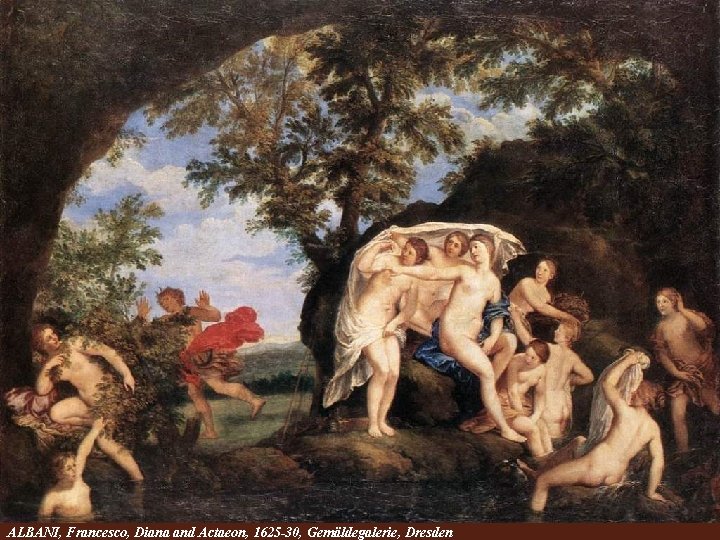
ALBANI, Francesco, Diana and Actaeon, 1625 -30, Gemäldegalerie, Dresden
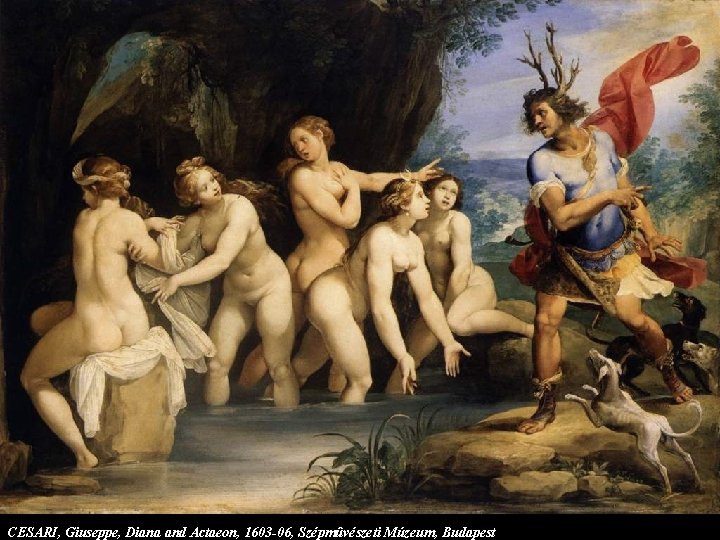
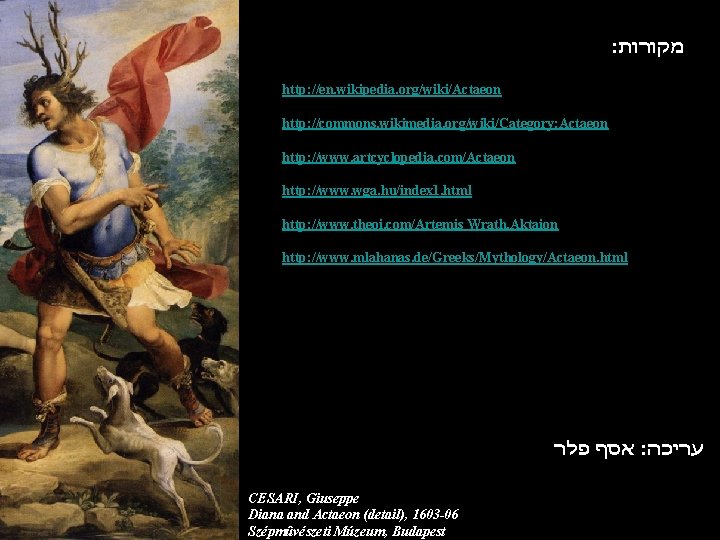
CESARI, Giuseppe, Diana and Actaeon, 1603 -06, Szépmûvészeti Múzeum, Budapest
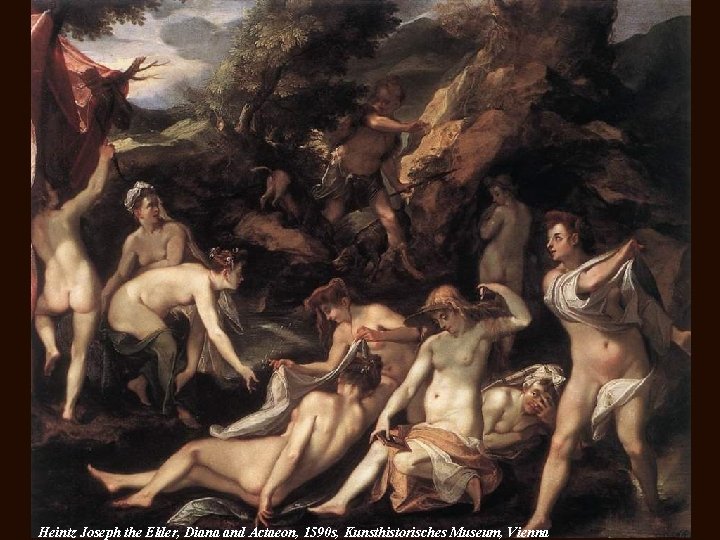
Heintz Joseph the Elder, Diana and Actaeon, 1590 s, Kunsthistorisches Museum, Vienna
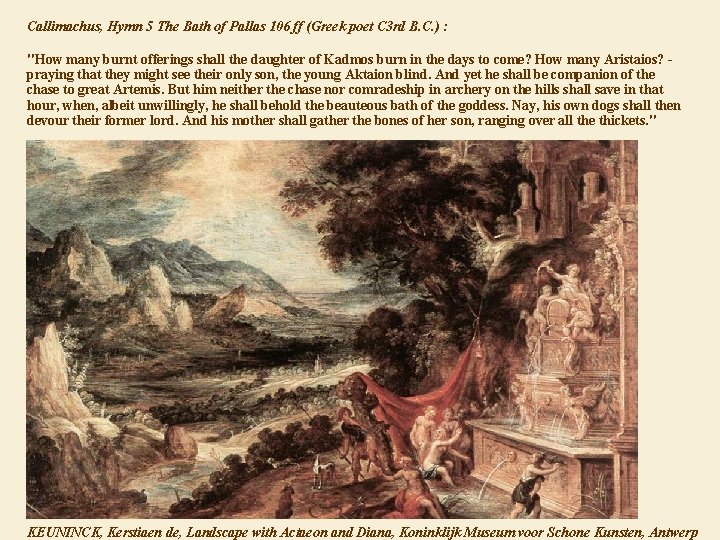
Callimachus, Hymn 5 The Bath of Pallas 106 ff (Greek poet C 3 rd B. C. ) : "How many burnt offerings shall the daughter of Kadmos burn in the days to come? How many Aristaios? praying that they might see their only son, the young Aktaion blind. And yet he shall be companion of the chase to great Artemis. But him neither the chase nor comradeship in archery on the hills shall save in that hour, when, albeit unwillingly, he shall behold the beauteous bath of the goddess. Nay, his own dogs shall then devour their former lord. And his mother shall gather the bones of her son, ranging over all the thickets. " KEUNINCK, Kerstiaen de, Landscape with Actaeon and Diana, Koninklijk Museum voor Schone Kunsten, Antwerp
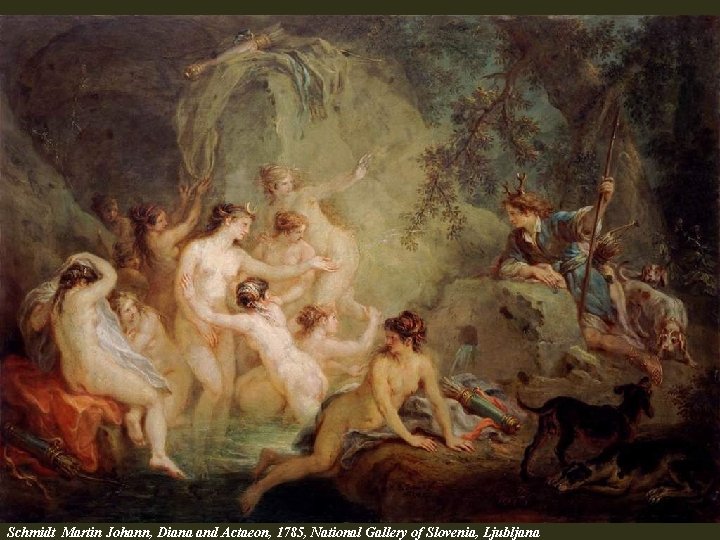
Schmidt Martin Johann, Diana and Actaeon, 1785, National Gallery of Slovenia, Ljubljana
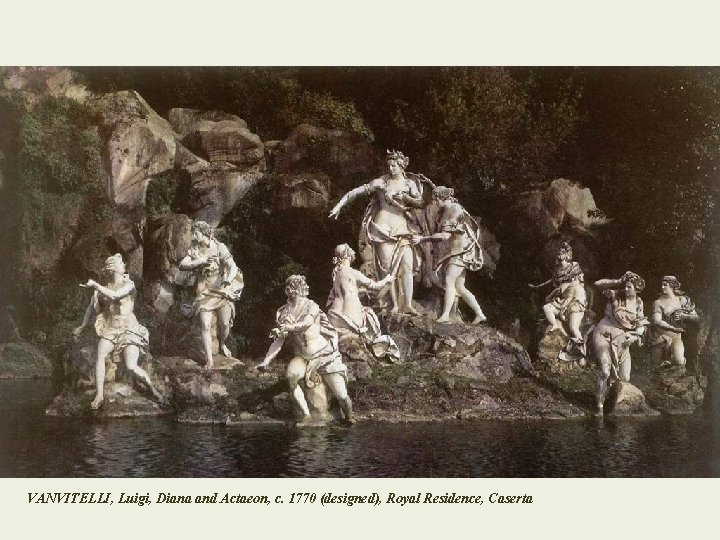
VANVITELLI, Luigi, Diana and Actaeon, c. 1770 (designed), Royal Residence, Caserta
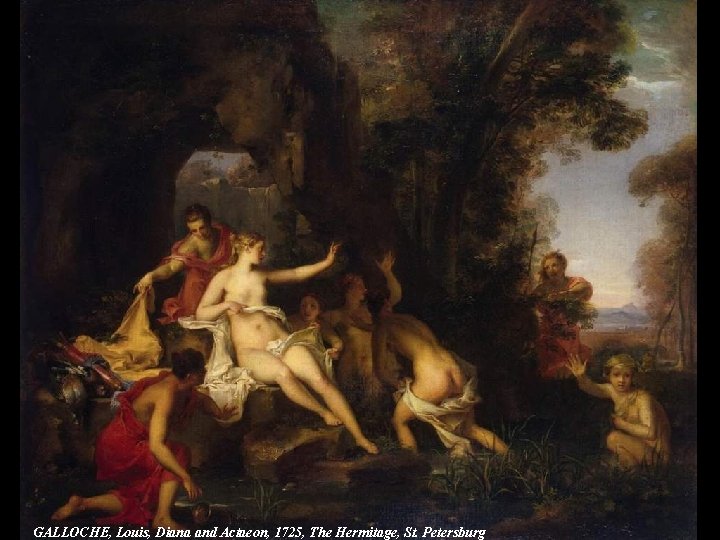
GALLOCHE, Louis, Diana and Actaeon, 1725, The Hermitage, St. Petersburg
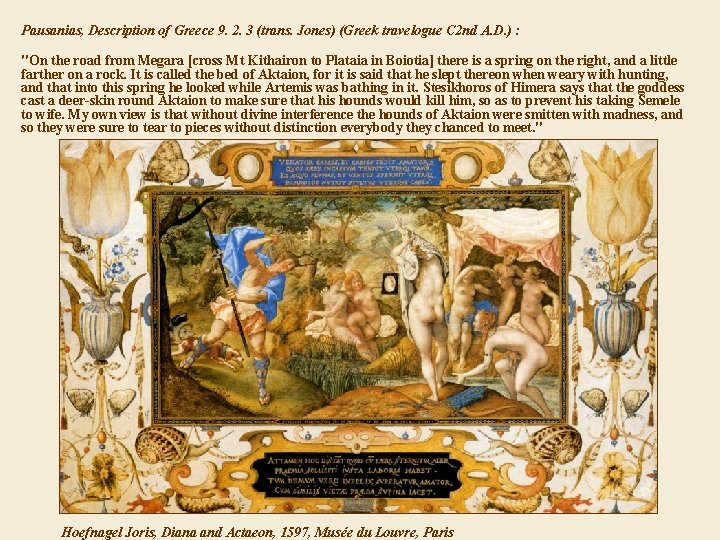
Pausanias, Description of Greece 9. 2. 3 (trans. Jones) (Greek travelogue C 2 nd A. D. ) : "On the road from Megara [cross Mt Kithairon to Plataia in Boiotia] there is a spring on the right, and a little farther on a rock. It is called the bed of Aktaion, for it is said that he slept thereon when weary with hunting, and that into this spring he looked while Artemis was bathing in it. Stesikhoros of Himera says that the goddess cast a deer-skin round Aktaion to make sure that his hounds would kill him, so as to prevent his taking Semele to wife. My own view is that without divine interference the hounds of Aktaion were smitten with madness, and so they were sure to tear to pieces without distinction everybody they chanced to meet. " Hoefnagel Joris, Diana and Actaeon, 1597, Musée du Louvre, Paris
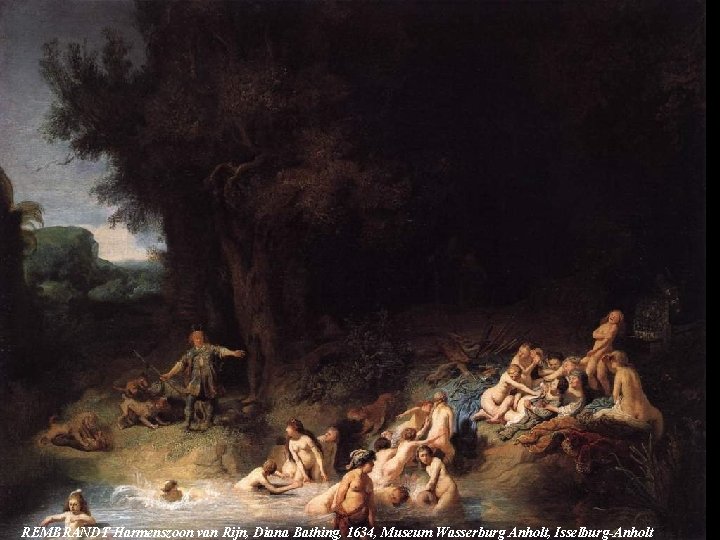
REMBRANDT Harmenszoon van Rijn, Diana Bathing, 1634, Museum Wasserburg Anholt, Isselburg-Anholt
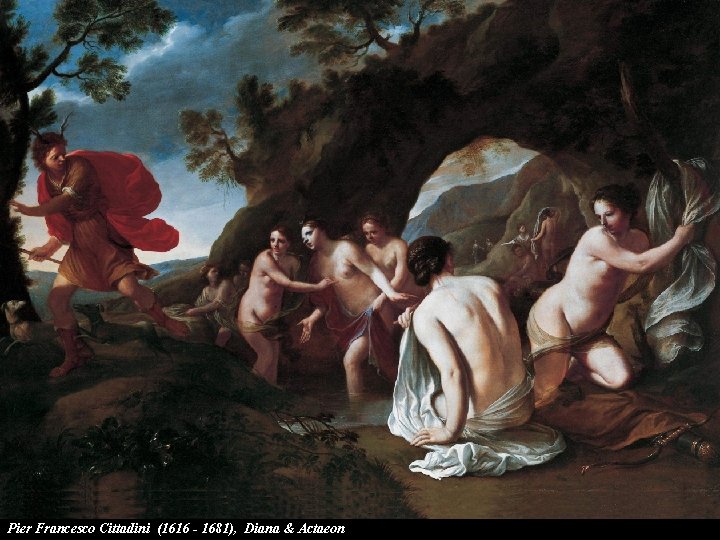
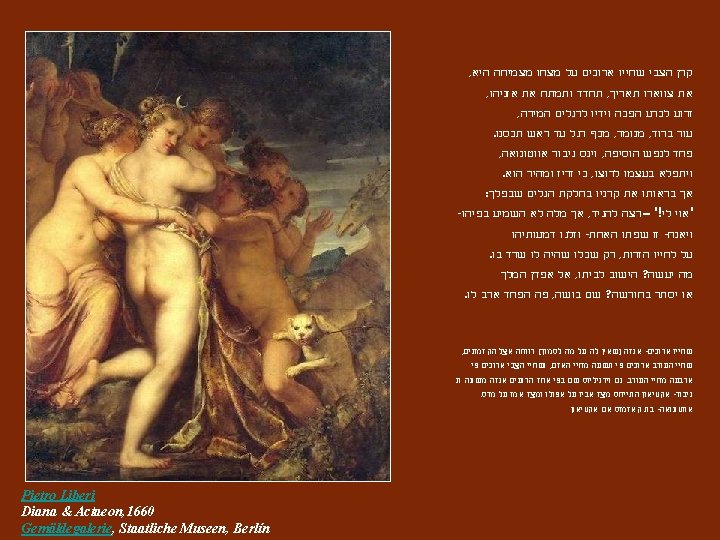
Pier Francesco Cittadini (1616 - 1681), Diana & Actaeon
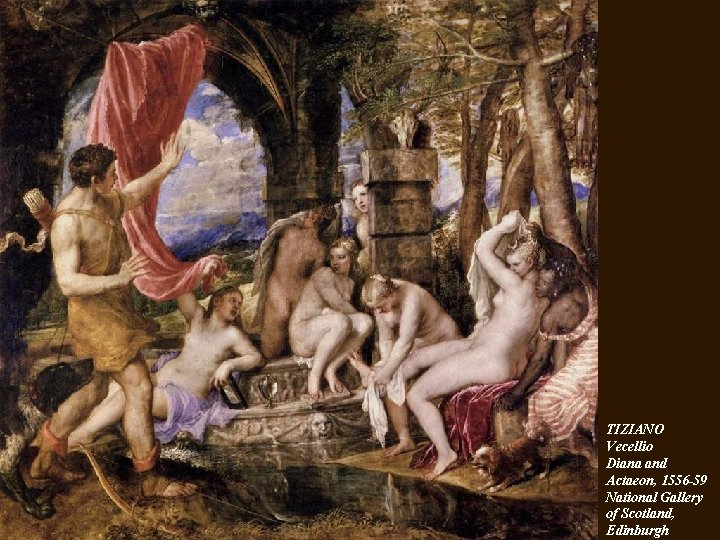
TIZIANO Vecellio Diana and Actaeon, 1556 -59 National Gallery of Scotland, Edinburgh
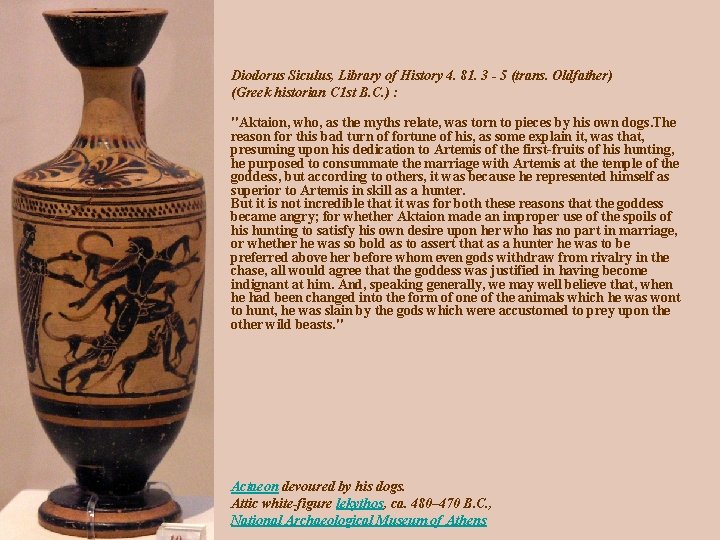
Diodorus Siculus, Library of History 4. 81. 3 - 5 (trans. Oldfather) (Greek historian C 1 st B. C. ) : "Aktaion, who, as the myths relate, was torn to pieces by his own dogs. The reason for this bad turn of fortune of his, as some explain it, was that, presuming upon his dedication to Artemis of the first-fruits of his hunting, he purposed to consummate the marriage with Artemis at the temple of the goddess, but according to others, it was because he represented himself as superior to Artemis in skill as a hunter. But it is not incredible that it was for both these reasons that the goddess became angry; for whether Aktaion made an improper use of the spoils of his hunting to satisfy his own desire upon her who has no part in marriage, or whether he was so bold as to assert that as a hunter he was to be preferred above her before whom even gods withdraw from rivalry in the chase, all would agree that the goddess was justified in having become indignant at him. And, speaking generally, we may well believe that, when he had been changed into the form of one of the animals which he was wont to hunt, he was slain by the gods which were accustomed to prey upon the other wild beasts. " Actaeon devoured by his dogs. Attic white-figure lekythos, ca. 480– 470 B. C. , National Archaeological Museum of Athens
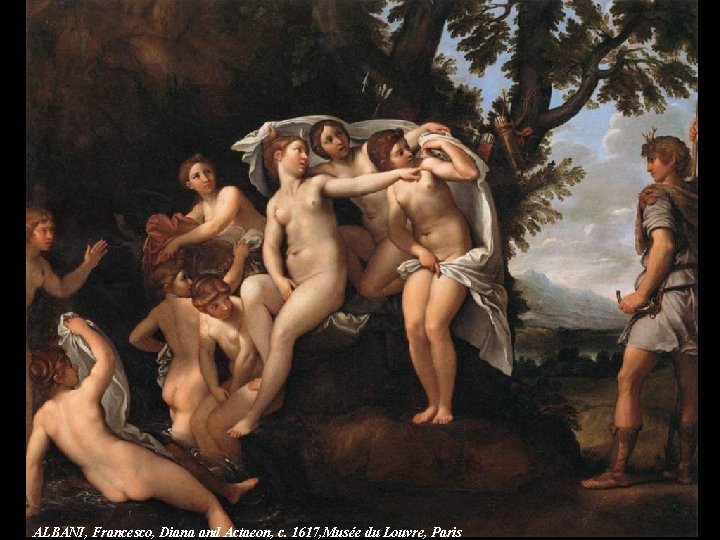
ALBANI, Francesco, Diana and Actaeon, c. 1617, Musée du Louvre, Paris
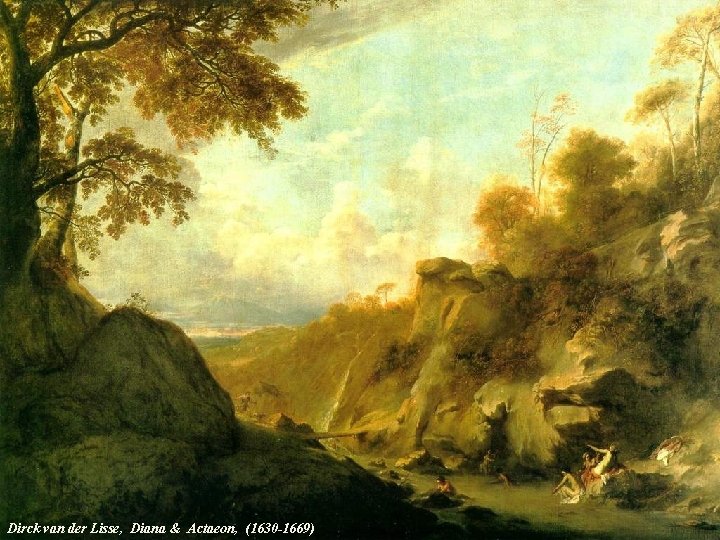
Dirck van der Lisse, Diana & Actaeon, (1630 -1669)
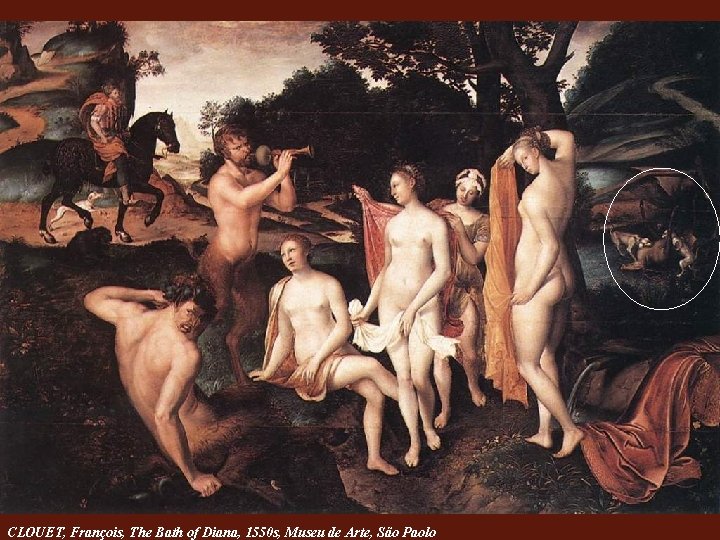
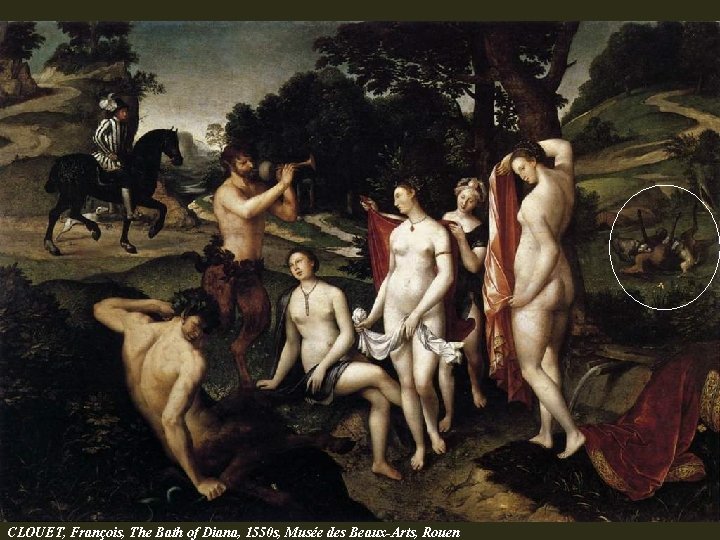
CLOUET, François, The Bath of Diana, 1550 s, Museu de Arte, São Paolo
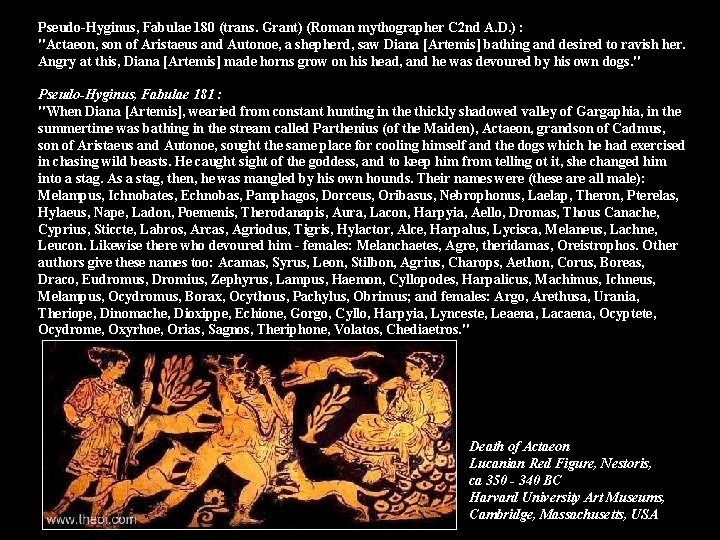
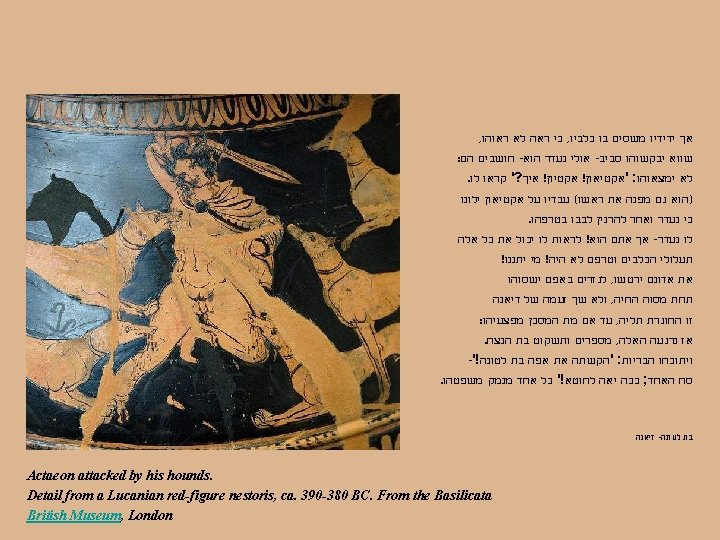
Pseudo-Hyginus, Fabulae 180 (trans. Grant) (Roman mythographer C 2 nd A. D. ) : "Actaeon, son of Aristaeus and Autonoe, a shepherd, saw Diana [Artemis] bathing and desired to ravish her. Angry at this, Diana [Artemis] made horns grow on his head, and he was devoured by his own dogs. " Pseudo-Hyginus, Fabulae 181 : "When Diana [Artemis], wearied from constant hunting in the thickly shadowed valley of Gargaphia, in the summertime was bathing in the stream called Parthenius (of the Maiden), Actaeon, grandson of Cadmus, son of Aristaeus and Autonoe, sought the same place for cooling himself and the dogs which he had exercised in chasing wild beasts. He caught sight of the goddess, and to keep him from telling ot it, she changed him into a stag. As a stag, then, he was mangled by his own hounds. Their names were (these are all male): Melampus, Ichnobates, Echnobas, Pamphagos, Dorceus, Oribasus, Nebrophonus, Laelap, Theron, Pterelas, Hylaeus, Nape, Ladon, Poemenis, Therodanapis, Aura, Lacon, Harpyia, Aello, Dromas, Thous Canache, Cyprius, Sticcte, Labros, Arcas, Agriodus, Tigris, Hylactor, Alce, Harpalus, Lycisca, Melaneus, Lachne, Leucon. Likewise there who devoured him - females: Melanchaetes, Agre, theridamas, Oreistrophos. Other authors give these names too: Acamas, Syrus, Leon, Stilbon, Agrius, Charops, Aethon, Corus, Boreas, Draco, Eudromus, Dromius, Zephyrus, Lampus, Haemon, Cyllopodes, Harpalicus, Machimus, Ichneus, Melampus, Ocydromus, Borax, Ocythous, Pachylus, Obrimus; and females: Argo, Arethusa, Urania, Theriope, Dinomache, Dioxippe, Echione, Gorgo, Cyllo, Harpyia, Lynceste, Leaena, Lacaena, Ocyptete, Ocydrome, Oxyrhoe, Orias, Sagnos, Theriphone, Volatos, Chediaetros. " Death of Actaeon Lucanian Red Figure, Nestoris, ca 350 - 340 BC Harvard University Art Museums, Cambridge, Massachusetts, USA
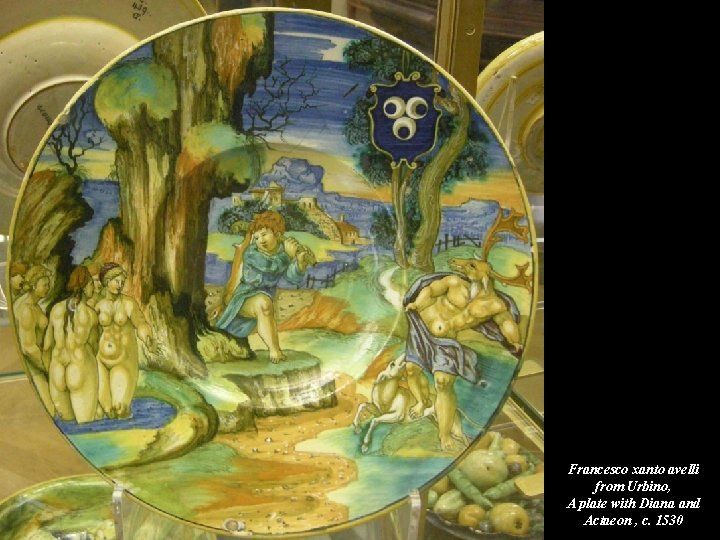
Francesco xanto avelli from Urbino, A plate with Diana and Actaeon , c. 1530
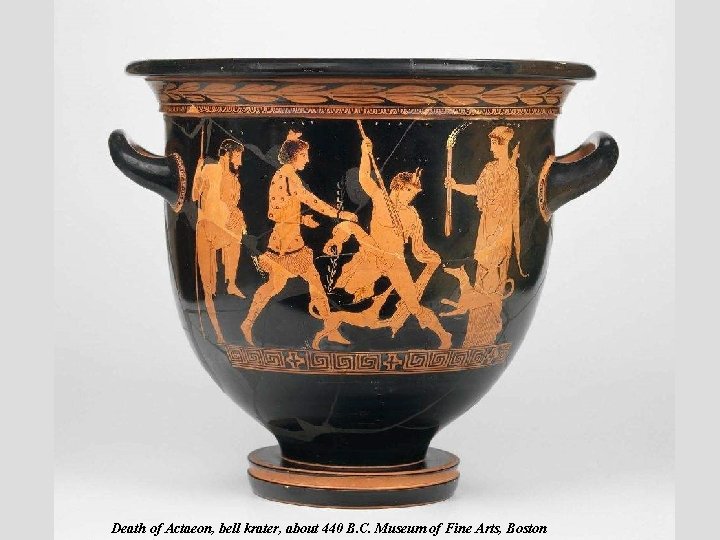
Death of Actaeon, bell krater, about 440 B. C. Museum of Fine Arts, Boston
CLOUET, François, The Bath of Diana, 1550 s, Musée des Beaux-Arts, Rouen
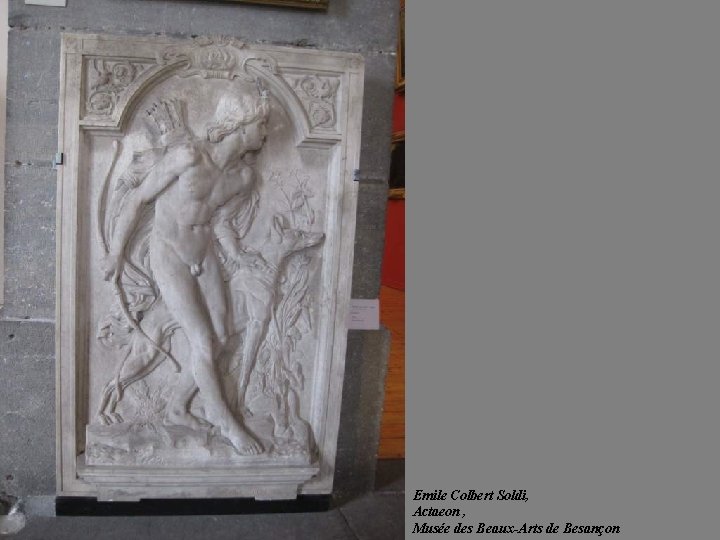
Emile Colbert Soldi, Actaeon , Musée des Beaux-Arts de Besançon
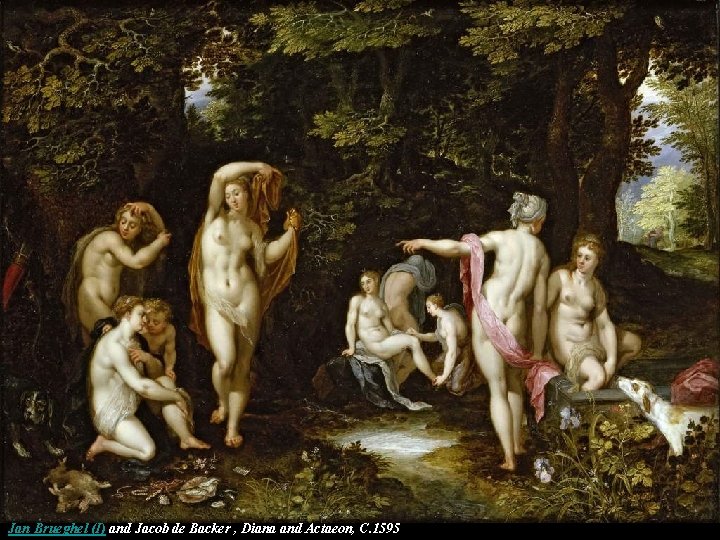
Jan Brueghel (I) and Jacob de Backer , Diana and Actaeon, C. 1595
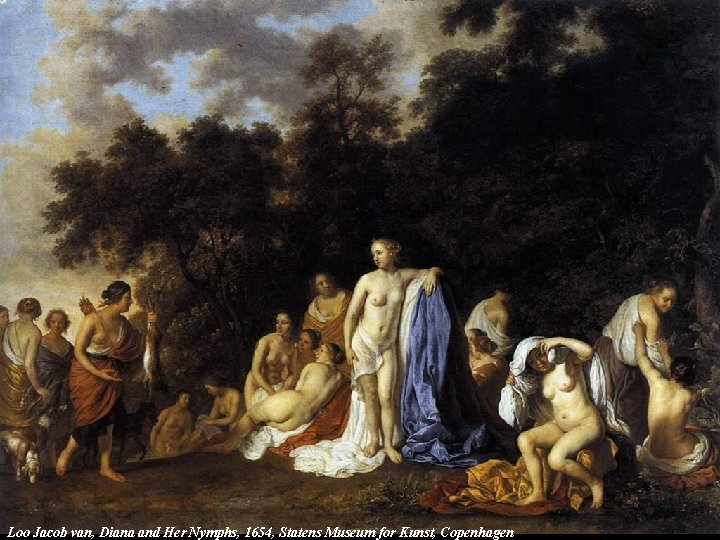
Loo Jacob van, Diana and Her Nymphs, 1654, Statens Museum for Kunst, Copenhagen
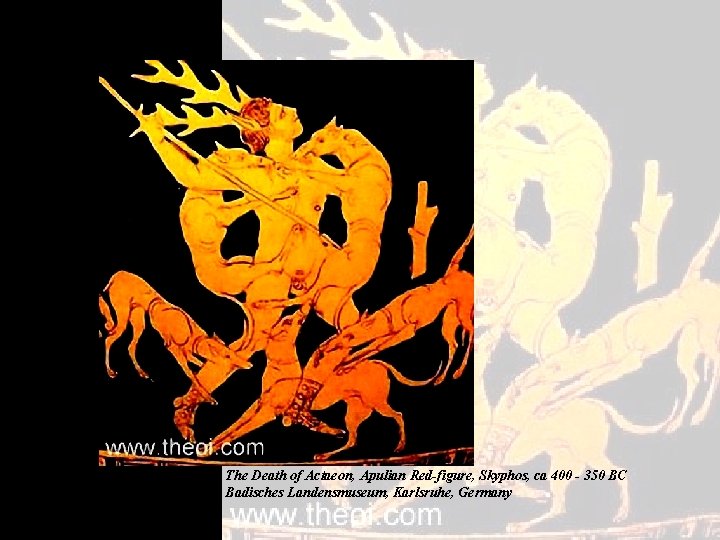
The Death of Actaeon, Apulian Red-figure, Skyphos, ca 400 - 350 BC Badisches Landensmuseum, Karlsruhe, Germany
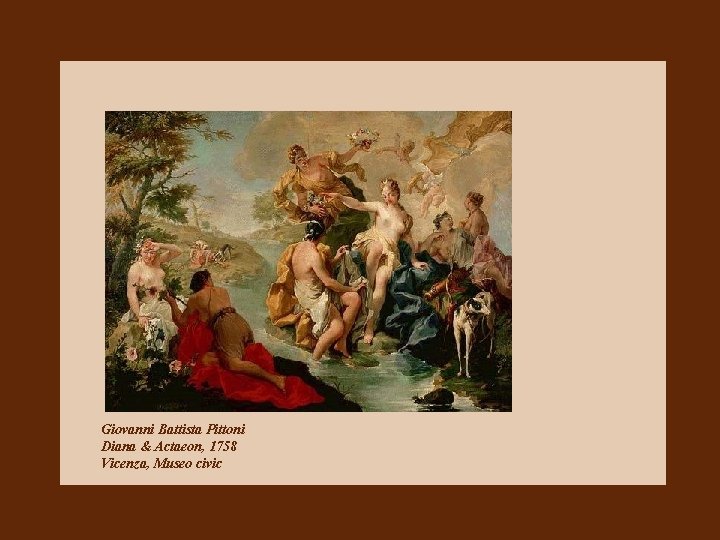
Giovanni Battista Pittoni Diana & Actaeon, 1758 Vicenza, Museo civic
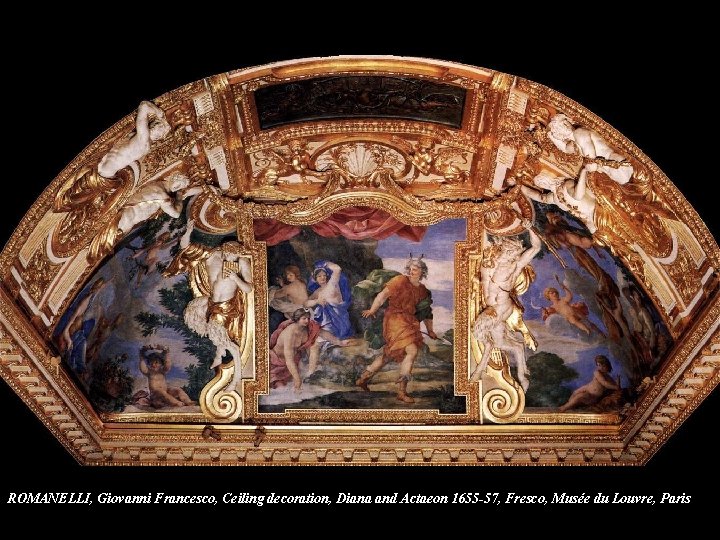
ROMANELLI, Giovanni Francesco, Ceiling decoration, Diana and Actaeon 1655 -57, Fresco, Musée du Louvre, Paris
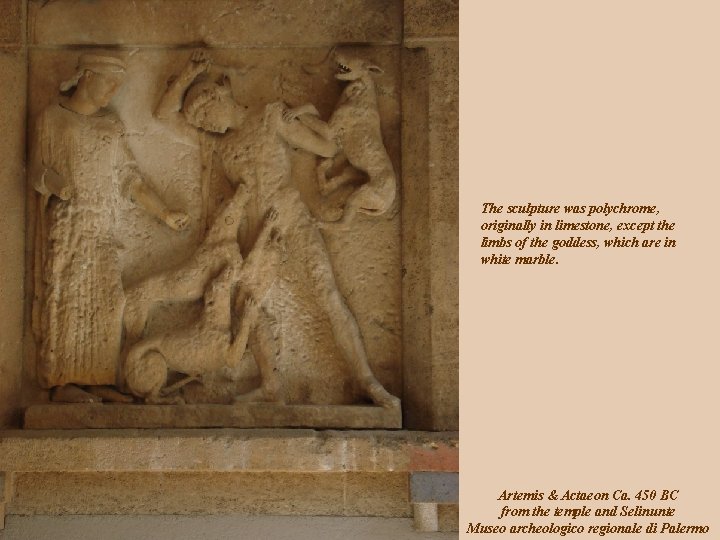
The sculpture was polychrome, originally in limestone, except the limbs of the goddess, which are in white marble. Artemis & Actaeon Ca. 450 BC from the temple and Selinunte Museo archeologico regionale di Palermo
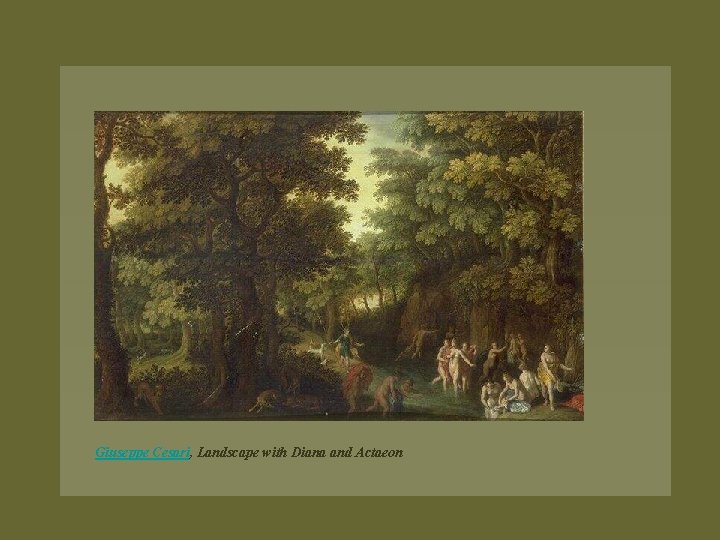
Giuseppe Cesari, Landscape with Diana and Actaeon
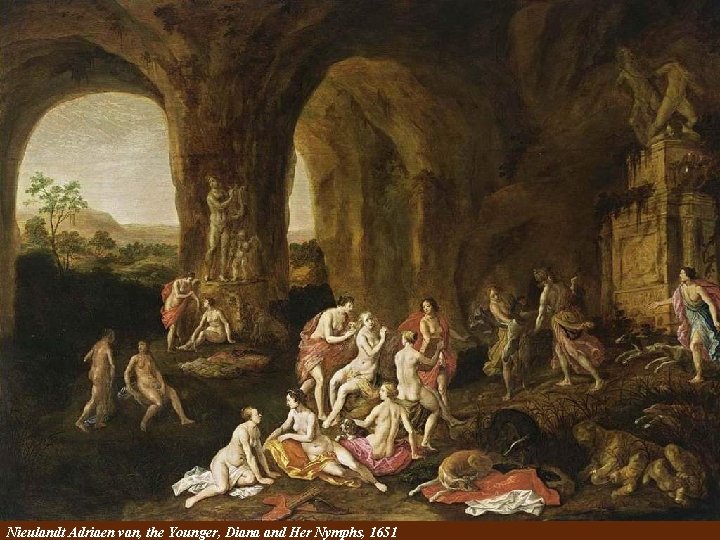
Nieulandt Adriaen van, the Younger, Diana and Her Nymphs, 1651
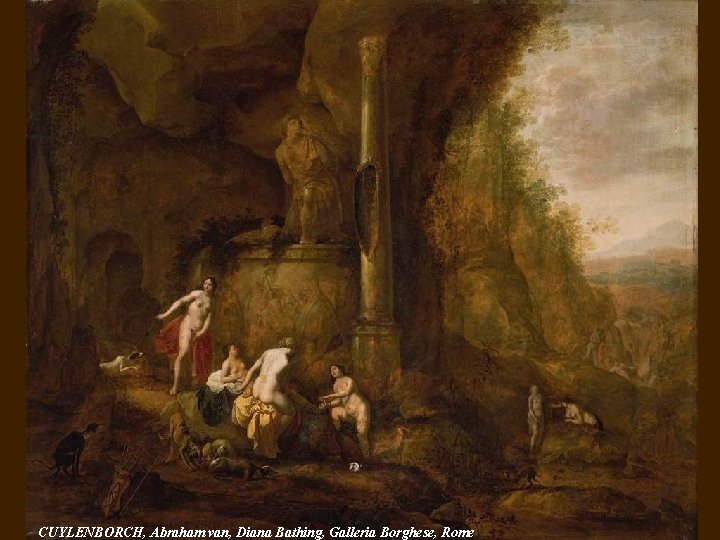
CUYLENBORCH, Abraham van, Diana Bathing, Galleria Borghese, Rome
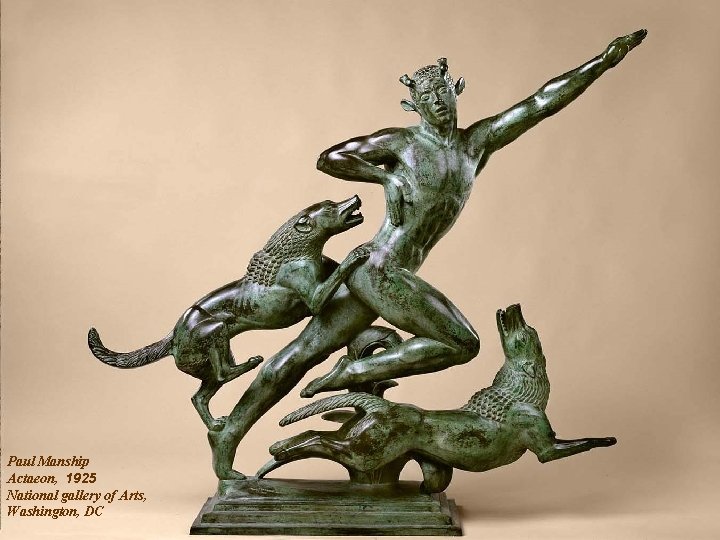
Paul Manship Actaeon, 1925 National gallery of Arts, Washington, DC
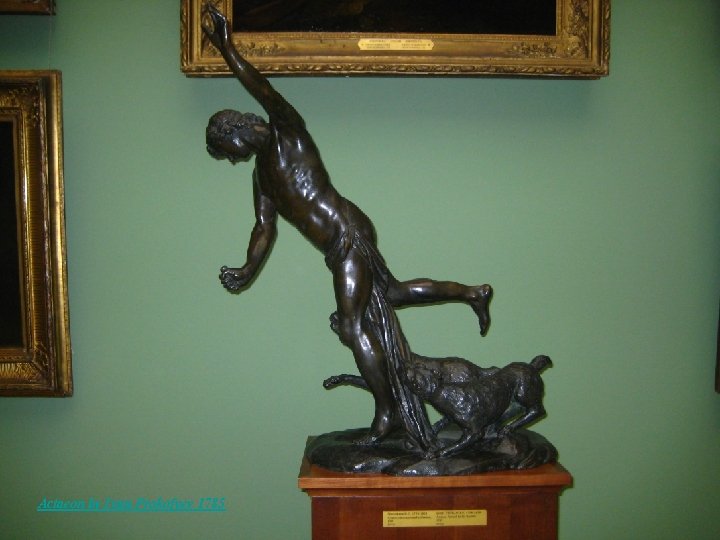
Actaeon by Ivan Prokofyev 1785
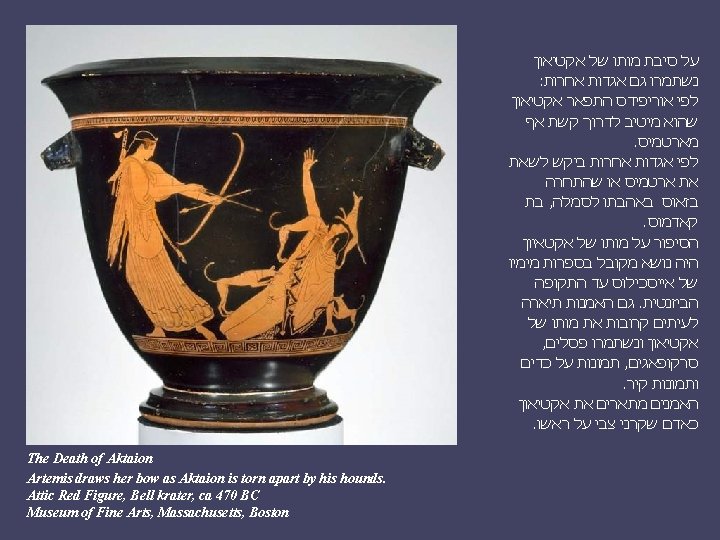
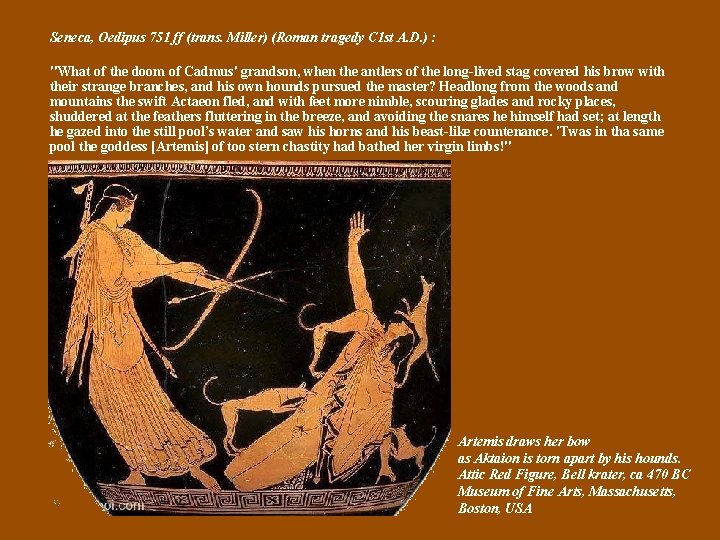
Seneca, Oedipus 751 ff (trans. Miller) (Roman tragedy C 1 st A. D. ) : "What of the doom of Cadmus' grandson, when the antlers of the long-lived stag covered his brow with their strange branches, and his own hounds pursued the master? Headlong from the woods and mountains the swift Actaeon fled, and with feet more nimble, scouring glades and rocky places, shuddered at the feathers fluttering in the breeze, and avoiding the snares he himself had set; at length he gazed into the still pool’s water and saw his horns and his beast-like countenance. 'Twas in tha same pool the goddess [Artemis] of too stern chastity had bathed her virgin limbs!" Artemis draws her bow as Aktaion is torn apart by his hounds. Attic Red Figure, Bell krater, ca 470 BC Museum of Fine Arts, Massachusetts, Boston, USA
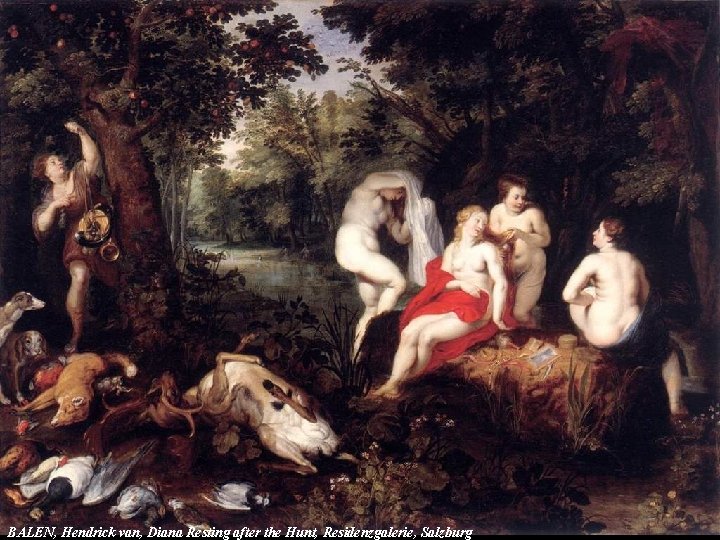
BALEN, Hendrick van, Diana Resting after the Hunt, Residenzgalerie, Salzburg
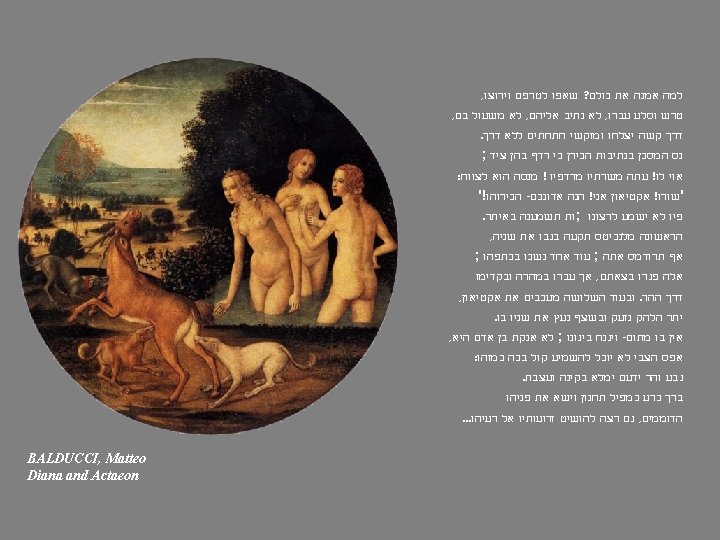
Ovid, Metamorphoses 3. 138 ff (trans. Melville) (Roman epic C 1 st B. C. to C 1 st A. D. ) : "In his prosperity a grandson first [the hunter Aktaion] was source of Cadmus’ sorrow, whose young brow sprouted outlandish antlers and the hounds, his hounds, were sated with their master’s blood. Though, if you ponder wisely, you will find the fault was fortune’s and no guilt that day, for what guilt can it be to lose one’s way? Upon a mountainside, whose woodland coverts were stained with many a kill of varied game, the shining noon had narrowed all the shade and midway at his zenith stood the sun. Then young Hyantius [Aktaion] was content; he called his comrades as they roamed the lonely woods: ‘Come friends, our nets are wet, our javelins drip with our quarries blood; today has brought success enough; tomorrow, when Aurora [Eos the Dawn] on saffron wheels leads on another day, we’ll start our work again; now Phoebus [Helios the Sun] shines half-way upon his journey and his rays crack the parched countryside. Take up your nets; here let us end the work in hand. ’ The men obeyed his words and rested from their toil. There was a valley clothed in hanging woods of pine and cypress, named Gargaphie, sacred to chaste Diana [Artemis], huntress queen. Deep in its farthest combe, framed by the woods, a cave lay hid, not fashioned by man’s art, but nature’s talent copied artistry, for in the living limestone she had carved a natural arch; and there a limpid spring flowed lightly babbling into a wide pool. Its waters girdled with a grassy sward. Here, tired after the hunt, the goddess loved her Nymphae to bathe her with the water’s balm. Reaching the cave, she gave her spear and quiver and bow unstrung to an attendant Nympha; others received her robes over their arms; two loosed her sandals; more expert than these Crocale tied the hair loose on her shoulders into a knot, her own hair falling free. Then Nephele and Hyale and Rhanis and Phiale and Psecas brought the water in brimming jars and poured it over her. And while Titania [Artemis] bathed there in the pool, her loved familiar pool, it chanced the grandson of Cadmus [Aktaion], the day’s hunt finished, idly wandering through unknown clearings of the forest, found the sacred grove - so fate guided him - and came upon the cool damp cave. At once, seeing a man, all naked as they were, the Nymphae, beating their breasts, filled the whole grove with sudden screams and clustered round Diana [Artemis] to clothe her body with their own. But she stood taller, a head taller than them all; and as the clouds are coloured when the sun glows late and low or like the crimson dawn, so deeply blushed Diana [Artemis], caught unclothed. Her troop pressed close about her, but she turned aside and looking backwards (would she had her arrows ready!) all she had, the water, she seized and flung it in the young man’s face, and as the avenging downpour drenched his hair she added words that warned of doom: ‘Now tell you saw me here naked without my clothes, if you can tell at all!’
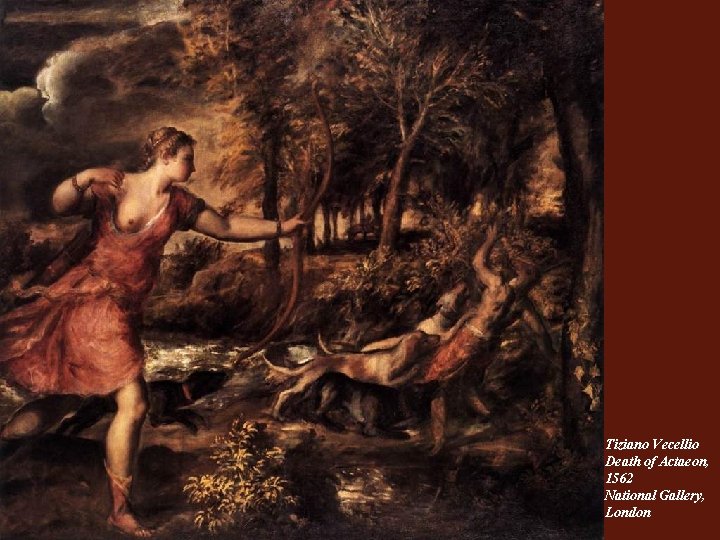
Tiziano Vecellio Death of Actaeon, 1562 National Gallery, London
With that one threat antlers she raised upon his dripping head, lengthened his neck, pointed his ears, transformed his hands to hooves, arms to long legs, and draped his body with a dappled hide; and last set terror in his heart. Autoreis [Aktaion] fled, royal Actaeon, and marvelled in his flight at his new leaping speed, but, when she saw his head antlers mirrored in a stream, he tries to say ‘Alas!’ - but no words came; he groaned - that was his voice; the tears rolled down on cheeks not his - all changed except his mind. What should he do? Go home, back to the palace, or stay in hiding in the forest? Shame forbade the first decision, fear the other. While thus he stood in doubt his hounds had seen him. Melampus (Blackfoot) and Ichnobates (Tracker) first gave tongue, wise Ichnobates Cnosius (Tracker a Cretan hound), Melampus (Blackfoot) of Spartan breed; swift as the wind the rest came rushing on: Dorceus (Glance), Pamphagos (Glutton), Oribasos (Ranger) (all from Arcady), fierce Nebrophonos (Rover), sturdy Theron (Stalker), moody Laelaps (Storm), Pterelas (Flight) unsurpassed for speed, Agre (Hunter) for scent, bold Hylaeus (Woodman) lately wounded by a boar, Nape (Dingle) a slender bitch sired by a wolf, Poemenis (Snatch) with two pups, gaunt Harpyia Sicyonius (Catch from Sicyon), and Ladon (Shepherd), once a guardian of her flock; Dromas (Spot), Canache (Gnasher), Tigris (Tigress), Sticte (Courser), Alce (Strong), dark-coated Asbolos (Sooty), Leucon (Blanche) with snowy hair, Lycisce (Wolf) and his nimble brother Cyprius (Cyprian), huge stalwart Lacon (Spartan), Aello (Tempest) never tired; Thoos (Clinch), his dark forehead crowned with a white star, Melaneus (Blackie); rough-coated Harpalos (Shag); a couple of hounds born of a Cretan sire and Spartan dam, Labros (Fury) and Argiodus (Whitetooth); Hylactor (Barker), noisy bitch; and many more too long to tell. The pack, hot in pursuit, sped on over fells and crags, by walls of rock, on daunting trails or none he fled where often he’d followed in pursuit, fled his own folk, for shame! He longed to shout ‘I am Actaeon, look, I am your master!’ Words failed his will; their baying filled the sky. Melanchaetes (Blackhair) bit first, a wound deep in his haunch; next Theridamas (Killer); Oresitrophus (Climber) fastened on his shoulder. These started late but cut across the hills and gained a lead. They held their master down till the whole pack, united, sank their teeth into his flesh. He gave a wailing scream, not human, yet a sound no stag could voice, and filled with anguished cries the mountainside he knew so well; then, suppliant on his knees, turned his head silently from side to side, like arms that turned and pleaded. But his friends with their glad usual shouts cheered on the pack. Not knowing what they did, and looked around to find Actaeon; each louder than the rest calling Actaeon, as though he were not there; and blamed his absence and his sloth that missed the excitement of the kill. Hearing his name, he turned his head. Would that he were indeed absent! But he was there. Would that he watched, not felt, the hounds' (his hounds') fierce savagery! Now they are all around him, tearing deep their master’s flesh, the stag that is no stag; and not until so many countless wounds had drained away his lifeblood, was the wrath, it’s said, of chaste Diana [Artemis] satisfied. As the tale spread views varied; some believed Diana’s violence unjust; some praised it, as proper to her chaste virginity. Both sides found reason for their point of view. "
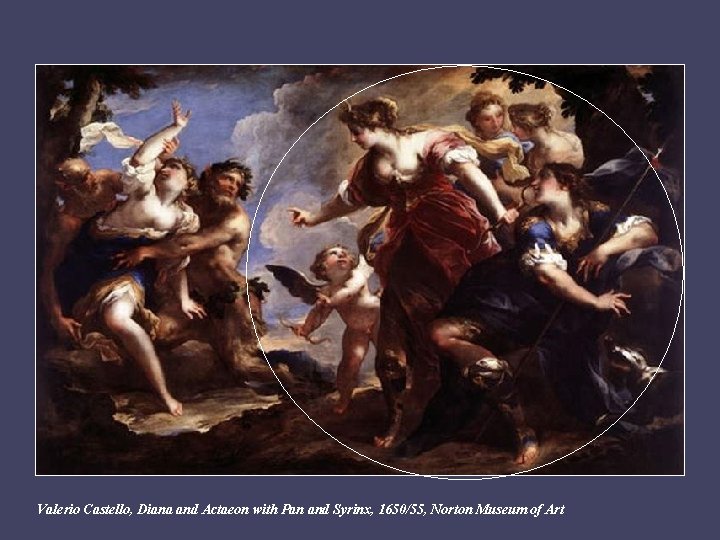
Valerio Castello, Diana and Actaeon with Pan and Syrinx, 1650/55, Norton Museum of Art
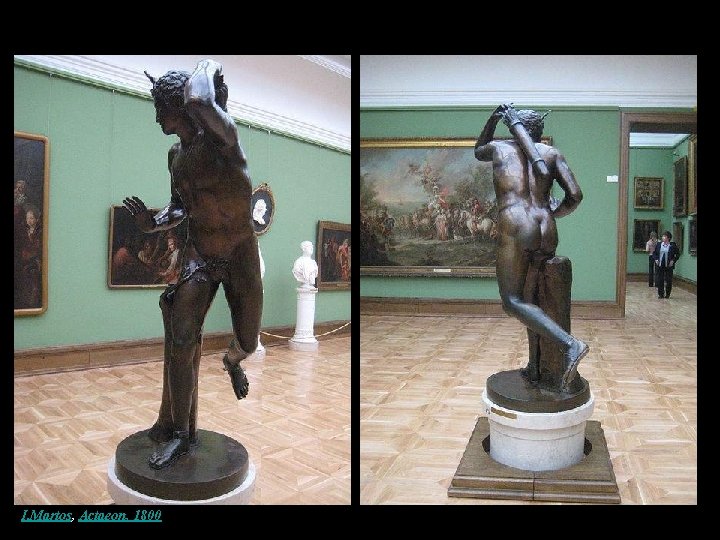
I. Martos, Actaeon, 1800
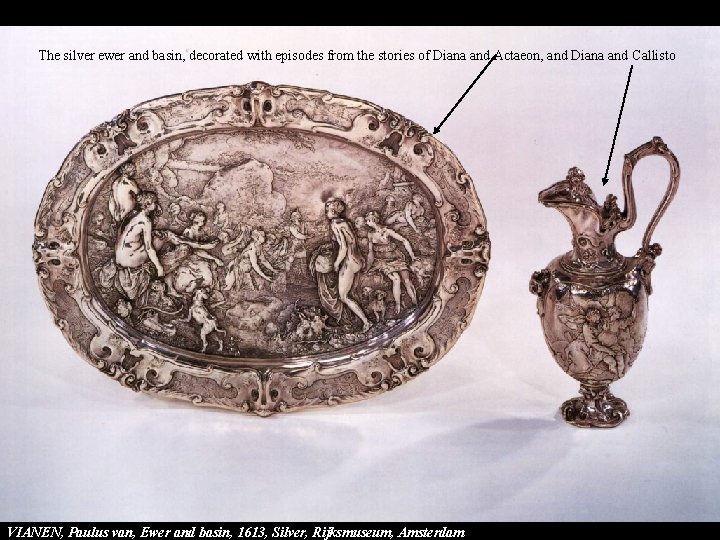
The silver ewer and basin, decorated with episodes from the stories of Diana and Actaeon, and Diana and Callisto VIANEN, Paulus van, Ewer and basin, 1613, Silver, Rijksmuseum, Amsterdam
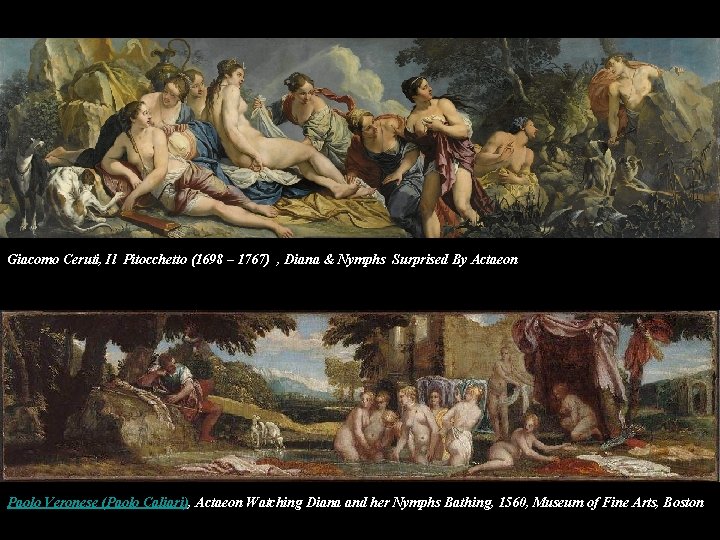
Giacomo Ceruti, Il Pitocchetto (1698 – 1767) , Diana & Nymphs Surprised By Actaeon Paolo Veronese (Paolo Caliari), Actaeon Watching Diana and her Nymphs Bathing, 1560, Museum of Fine Arts, Boston
Parallels in Akkadian and Ugarit poems In the standard version of the Epic of Gilgamesh (tablet vi) there is a parallel, in the series of examples Gilgamesh gives Ishtar of her mistreatment of her serial lovers: You loved the herdsman, shepherd and chief shepherd Who was always heaping up the glowing ashes for you, And cooked ewe-lambs for you every day. But you hit him and turned him into a wolf, His own herd-boys hunt him down And his dogs tear at his haunches. Actaeon, torn apart by dogs incited by Artemis, finds another Near Eastern parallel in the Ugaritic hero Aqht, torn apart by eagles incited by Anath who wanted his hunting bow. The virginal Artemis of classical times is not directly comparable to Ishtar of the many lovers, but the mytheme of Artemis shooting Orion, was linked to her punishment of Actaeon by T. C. W. Stinton; the Greek context of the mortal's reproach to the amorous goddess is translated to the episode of Anchises and Aphrodite Daphnis too was a herdsman loved by a goddess and punished by her
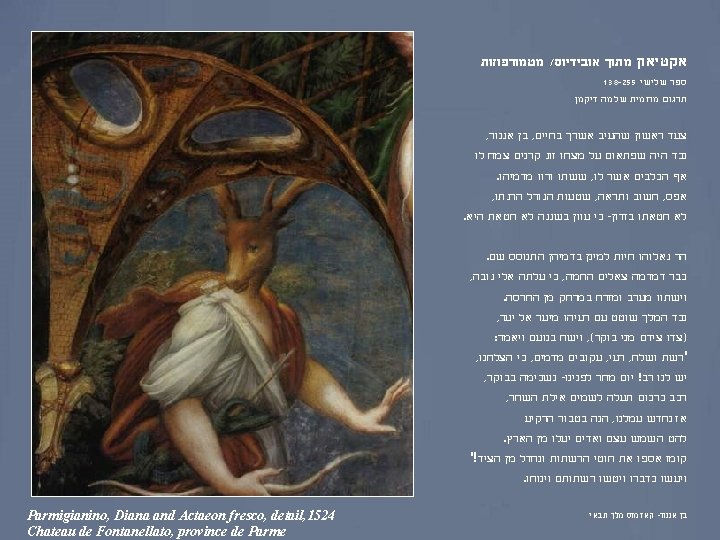
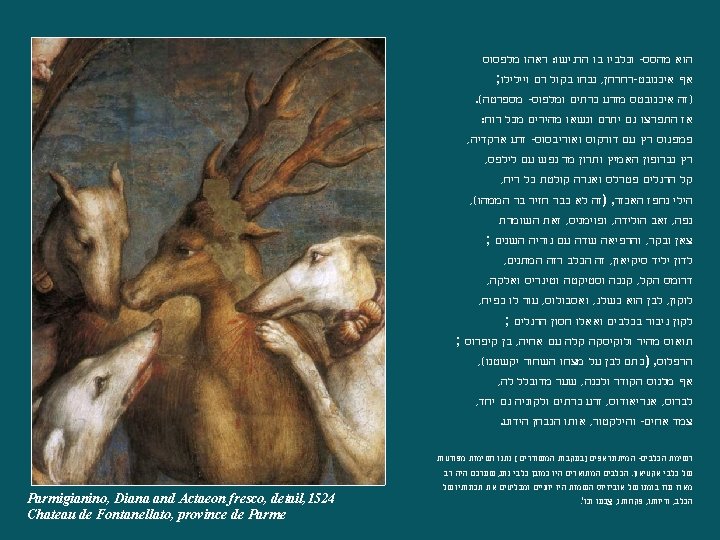
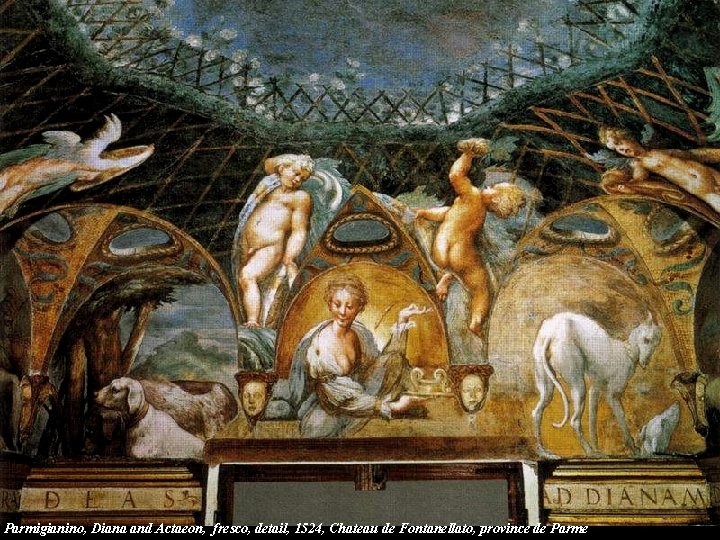
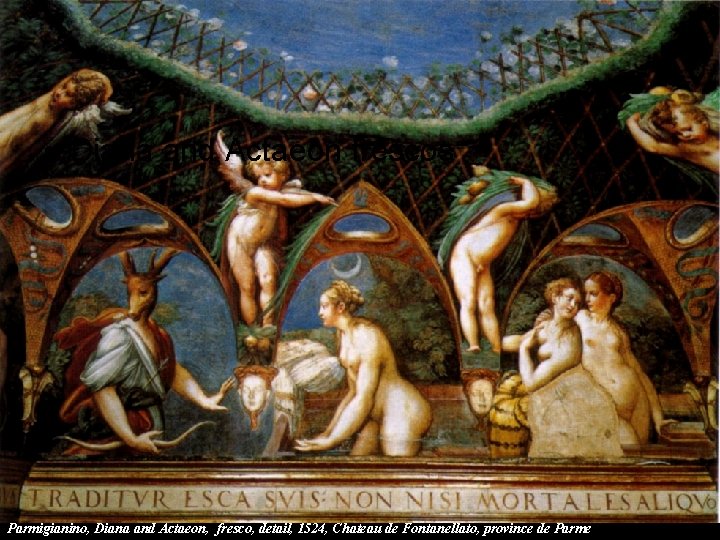
Parmigianino, Diana and Actaeon, fresco, detail, 1524, Chateau de Fontanellato, province de Parme
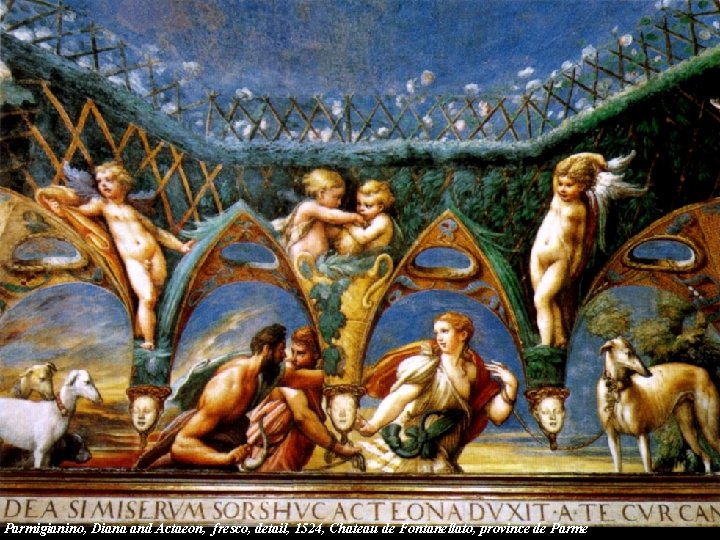
Parmigianino, Diana and Actaeon, fresco, detail, 1524, Chateau de Fontanellato, province de Parme
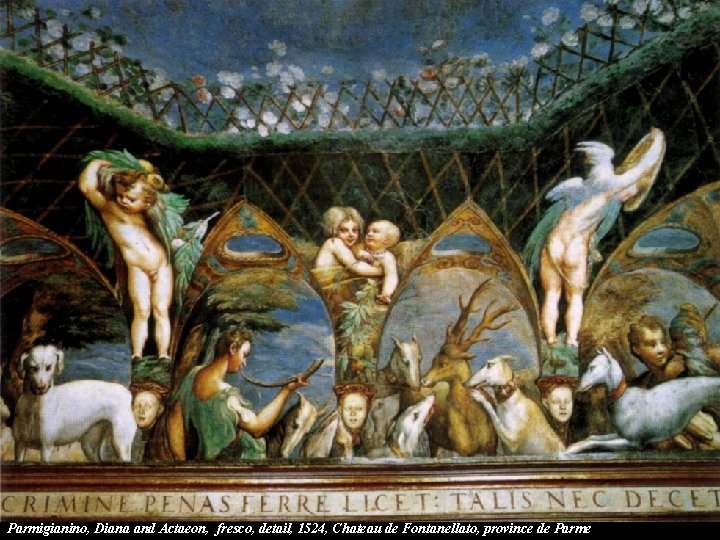
Parmigianino, Diana and Actaeon, fresco, detail, 1524, Chateau de Fontanellato, province de Parme
• Diana and Actaeon frescos Parmigianino, Diana and Actaeon, fresco, detail, 1524, Chateau de Fontanellato, province de Parme
: מקורות http: //en. wikipedia. org/wiki/Actaeon http: //commons. wikimedia. org/wiki/Category: Actaeon http: //www. artcyclopedia. com/Actaeon http: //www. wga. hu/index 1. html http: //www. theoi. com/Artemis Wrath. Aktaion http: //www. mlahanas. de/Greeks/Mythology/Actaeon. html אסף פלר : עריכה CESARI, Giuseppe Diana and Actaeon (detail), 1603 -06 Szépmûvészeti Múzeum, Budapest