
ACT Forensic Science Fact or Fiction FORENSIC SCIENCE
- Slides: 64
ACT: Forensic Science – Fact or Fiction? FORENSIC SCIENCE An Introduction By Richard Saferstein PRENTICE HALL © 2008 Pearson Education, Inc. Upper Saddle River, NJ 07458 1 -1
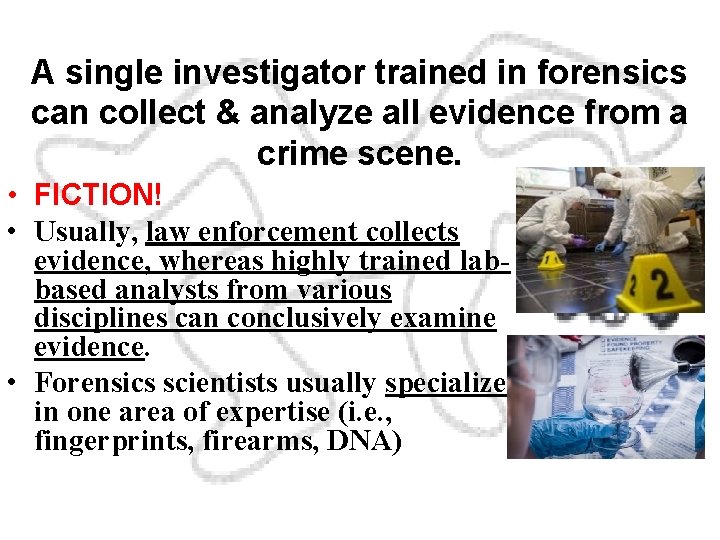
A single investigator trained in forensics can collect & analyze all evidence from a crime scene. • FICTION! • Usually, law enforcement collects evidence, whereas highly trained labbased analysts from various disciplines can conclusively examine evidence. • Forensics scientists usually specialize in one area of expertise (i. e. , fingerprints, firearms, DNA) FORENSIC SCIENCE An Introduction By Richard Saferstein PRENTICE HALL © 2008 Pearson Education, Inc. Upper Saddle River, NJ 07458 1 -2
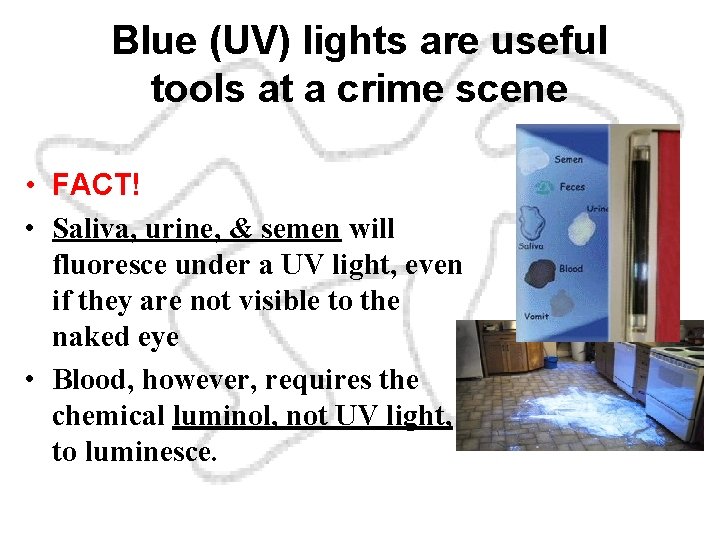
Blue (UV) lights are useful tools at a crime scene • FACT! • Saliva, urine, & semen will fluoresce under a UV light, even if they are not visible to the naked eye • Blood, however, requires the chemical luminol, not UV light, to luminesce. FORENSIC SCIENCE An Introduction By Richard Saferstein PRENTICE HALL © 2008 Pearson Education, Inc. Upper Saddle River, NJ 07458 1 -3
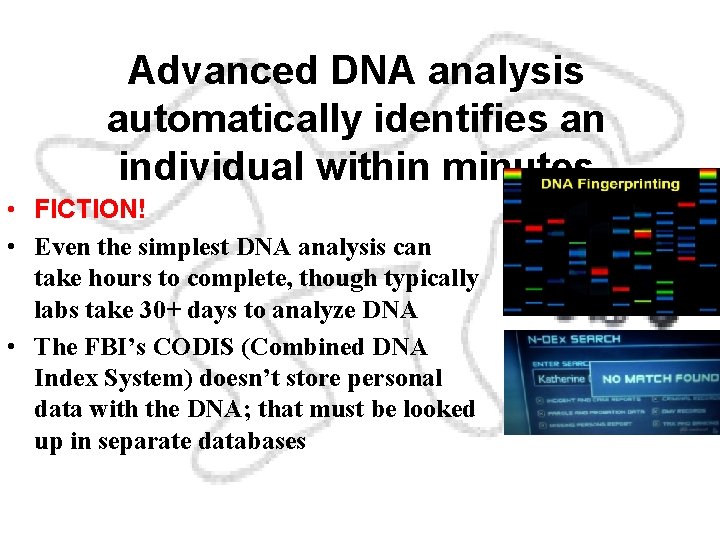
Advanced DNA analysis automatically identifies an individual within minutes • FICTION! • Even the simplest DNA analysis can take hours to complete, though typically labs take 30+ days to analyze DNA • The FBI’s CODIS (Combined DNA Index System) doesn’t store personal data with the DNA; that must be looked up in separate databases FORENSIC SCIENCE An Introduction By Richard Saferstein PRENTICE HALL © 2008 Pearson Education, Inc. Upper Saddle River, NJ 07458 1 -4
All fingerprint records are stored in AFIS (Automated Fingerprint Identification System). • FICTION! • Only individuals arrested of crimes and who apply for civil employment or licensing screens are stored in the FBI’s AFIS. • There are other AFIS systems at local, state, and federal levels that may have other records. • The system isn’t as “automated” as you may think! FORENSIC SCIENCE An Introduction By Richard Saferstein PRENTICE HALL © 2008 Pearson Education, Inc. Upper Saddle River, NJ 07458 1 -5
A trained crime scene investigator can usually identify an unknown powder by sight, smell, or taste • FICTION! • Analysts should NEVER directly smell or taste unknown substances due to danger of potential poisons! • Instead, they use field equipment to run presumptive tests. Only an empirical test can conclusively identify a substance. FORENSIC SCIENCE An Introduction By Richard Saferstein PRENTICE HALL © 2008 Pearson Education, Inc. Upper Saddle River, NJ 07458 1 -6
An IP address can determine who sent an email • FICTION! (mostly) • An Internet Protocol (IP) is like a phone number; it can track an email back to the router it came from, but it still takes good old fashioned detective work to put a suspect “at the keyboard. ” FORENSIC SCIENCE An Introduction By Richard Saferstein PRENTICE HALL © 2008 Pearson Education, Inc. Upper Saddle River, NJ 07458 1 -7
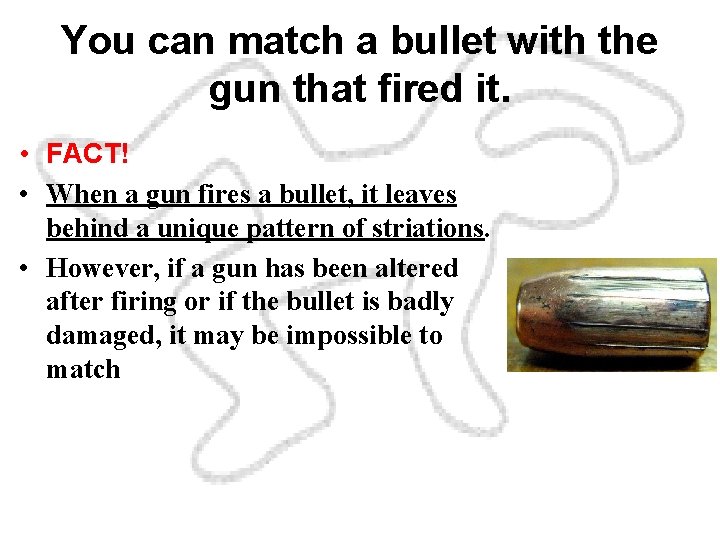
You can match a bullet with the gun that fired it. • FACT! • When a gun fires a bullet, it leaves behind a unique pattern of striations. • However, if a gun has been altered after firing or if the bullet is badly damaged, it may be impossible to match FORENSIC SCIENCE An Introduction By Richard Saferstein PRENTICE HALL © 2008 Pearson Education, Inc. Upper Saddle River, NJ 07458 1 -8
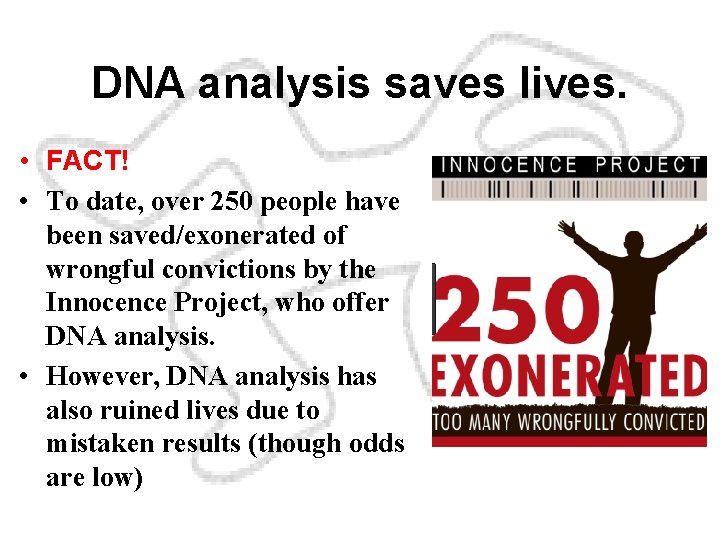
DNA analysis saves lives. • FACT! • To date, over 250 people have been saved/exonerated of wrongful convictions by the Innocence Project, who offer DNA analysis. • However, DNA analysis has also ruined lives due to mistaken results (though odds are low) FORENSIC SCIENCE An Introduction By Richard Saferstein PRENTICE HALL © 2008 Pearson Education, Inc. Upper Saddle River, NJ 07458 1 -9
All evidence that is collected at a crime scene is tested in a lab. • FICTION! • In a perfect world with an unlimited budget and man hours, all evidence WOULD be tested in a lab. • However, over 500, 000 cases in the U. S. are backlogged in crime labs! • One estimate indicates an additional 1, 900 full time employees would be needed to meet the number of 30 day turnaround requests submitted in a year. FORENSIC SCIENCE An Introduction By Richard Saferstein PRENTICE HALL © 2008 Pearson Education, Inc. Upper Saddle River, NJ 07458 1 -10
There is forensic evidence in every case • FICTION! • Some evidence is not suitable for analyses; environmental conditions or time could have destroyed or degraded it, certain tests are destructive & inconclusive, some evidence is difficult to find, crime scenes & evidence may be contaminated, evidence can be lost or stolen, etc. FORENSIC SCIENCE An Introduction By Richard Saferstein PRENTICE HALL © 2008 Pearson Education, Inc. Upper Saddle River, NJ 07458 1 -11
Teeth are trustworthy evidence. • FACT! • Dental records are used to identify 93% of remains! • Teeth are often well preserved for long periods of time and provide unique imprints useful in classifying remains FORENSIC SCIENCE An Introduction By Richard Saferstein PRENTICE HALL © 2008 Pearson Education, Inc. Upper Saddle River, NJ 07458 1 -12
Deleted computer files are gone forever. • FICTION! • Deleting a file on a computer simply hides it, and marks it as data waiting to be rewritten • Computer analysts have programs to copy and read this hidden “deleted” data FORENSIC SCIENCE An Introduction By Richard Saferstein PRENTICE HALL © 2008 Pearson Education, Inc. Upper Saddle River, NJ 07458 1 -13
Everything you do on the internet is tracked. • FACT! • Every site you visit, every key stroke you make, every click of the mouse, can be traced by a computer technician. • If they wanted to, the government can track the internet activity of anyone. FORENSIC SCIENCE An Introduction By Richard Saferstein PRENTICE HALL © 2008 Pearson Education, Inc. Upper Saddle River, NJ 07458 1 -14
Forensics not only helps people, but the Earth, too. • FACT! • Mismanagement of hazardous waste, largescale industrial pollution, and other serious eco-crimes can now be solved through the efforts of forensic scientists. • Wildlife forensic scientists also help to stop poaching, thus protecting biodiversity. FORENSIC SCIENCE An Introduction By Richard Saferstein PRENTICE HALL © 2008 Pearson Education, Inc. Upper Saddle River, NJ 07458 1 -15
Forensic Science dates back to the 1700 s. • FICTION! • One of the earliest accounts of forensic science used to solve a crime occurred in 44 B. C. , when Julius Caesar was murdered. • A physician named Antistius determined which Roman senators were responsible for the stabbing death of J. C. and were sentenced to death FORENSIC SCIENCE An Introduction By Richard Saferstein PRENTICE HALL © 2008 Pearson Education, Inc. Upper Saddle River, NJ 07458 1 -16
BONUS FACT! • The physician Antistius made his fateful announcement in the Roman forum, giving forensic (from the Latin forensis, “belonging to the forum”) science its name. FORENSIC SCIENCE An Introduction By Richard Saferstein PRENTICE HALL © 2008 Pearson Education, Inc. Upper Saddle River, NJ 07458 1 -17
ACT: Eyewitness Observations FORENSIC SCIENCE An Introduction By Richard Saferstein PRENTICE HALL © 2008 Pearson Education, Inc. Upper Saddle River, NJ 07458 1 -18
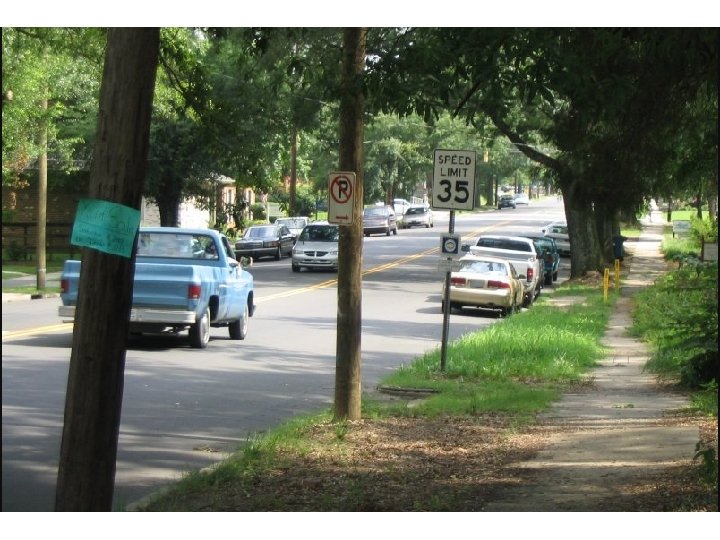
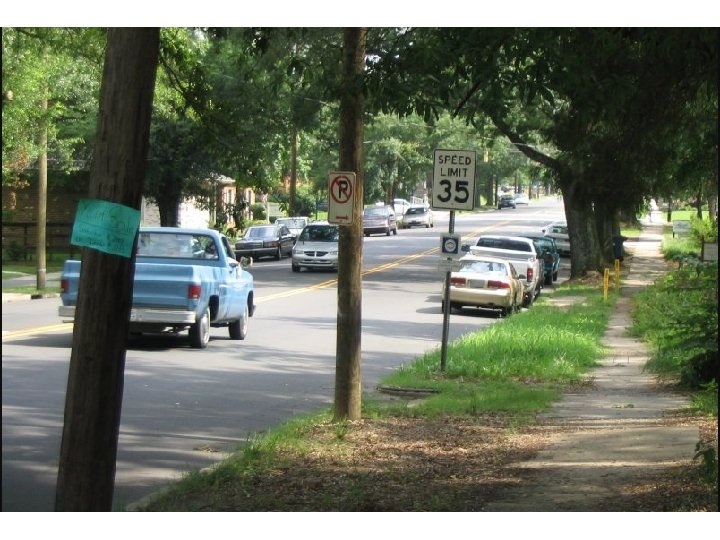
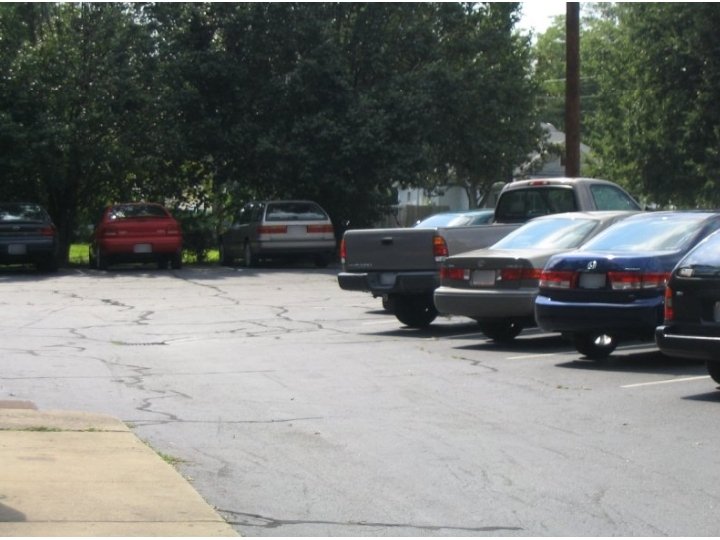
Eyewitness Observations • Often, investigators rely on eyewitness testimony to help them better understand a crime scene or catch a suspect. • On the next slide, you will have 30 seconds to examine a picture. Commit as many details to memory as possible (without writing them down or taking photos). Following the 30 seconds, you will be asked a series of questions regarding what you observed. FORENSIC SCIENCE An Introduction By Richard Saferstein PRENTICE HALL © 2008 Pearson Education, Inc. Upper Saddle River, NJ 07458 1 -19
FORENSIC SCIENCE An Introduction By Richard Saferstein PRENTICE HALL © 2008 Pearson Education, Inc. Upper Saddle River, NJ 07458 1 -20
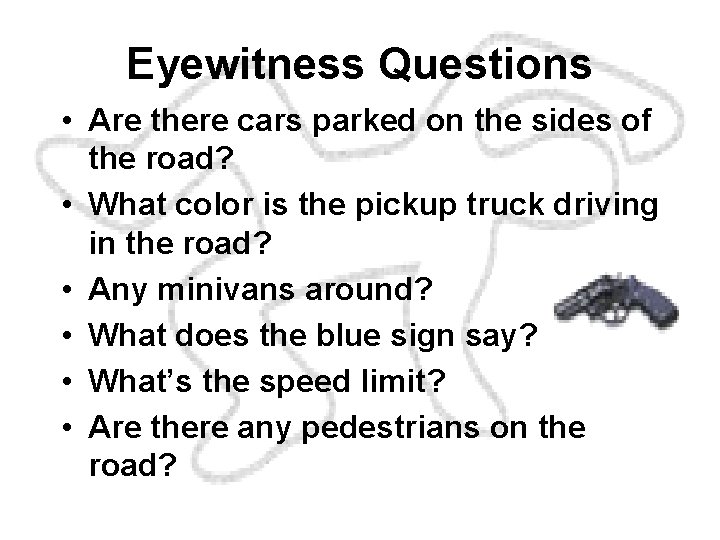
Eyewitness Questions • Are there cars parked on the sides of the road? • What color is the pickup truck driving in the road? • Any minivans around? • What does the blue sign say? • What’s the speed limit? • Are there any pedestrians on the road? FORENSIC SCIENCE An Introduction By Richard Saferstein PRENTICE HALL © 2008 Pearson Education, Inc. Upper Saddle River, NJ 07458 1 -21
FORENSIC SCIENCE An Introduction By Richard Saferstein PRENTICE HALL © 2008 Pearson Education, Inc. Upper Saddle River, NJ 07458 1 -22
How’d You Do? • As you discovered, you may have forgotten some details, or perhaps remembered other details incorrectly. Your own memory can sometimes fail you! FORENSIC SCIENCE An Introduction By Richard Saferstein PRENTICE HALL © 2008 Pearson Education, Inc. Upper Saddle River, NJ 07458 1 -23
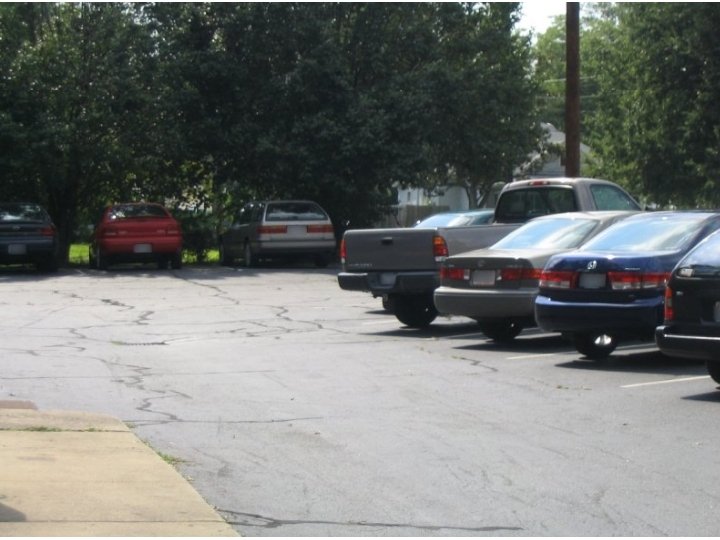
Multiple Witnesses • But, what about other people’s memory? In this next activity, different people will observe the same scene. Does it help to have several witnesses? • Select one person in your lab group to be an investigator and the rest will be eyewitnesses. • The investigator will go out in the hall for 30 seconds while the eyewitnesses observe a photo (no notes or photos FORENSIC SCIENCE An Introduction By Richard Saferstein PRENTICE HALL © 2008 Pearson Education, Inc. Upper Saddle River, NJ 07458 1 -24
FORENSIC SCIENCE An Introduction By Richard Saferstein PRENTICE HALL © 2008 Pearson Education, Inc. Upper Saddle River, NJ 07458 1 -25
• Investigators, ask your eyewitnesses questions about the scene they just observed. • From their accounts, create a sketch and detailed reconstruction of the scene. • Ready to see how well you did…. . ? FORENSIC SCIENCE An Introduction By Richard Saferstein PRENTICE HALL © 2008 Pearson Education, Inc. Upper Saddle River, NJ 07458 1 -26
FORENSIC SCIENCE An Introduction By Richard Saferstein PRENTICE HALL © 2008 Pearson Education, Inc. Upper Saddle River, NJ 07458 1 -27
• Compare the comments and observations of each eyewitness. How many details were mentioned correctly? • How many details were omitted? • How many statements conflicted with one another or the truth? In what way? • Is having multiple eyewitnesses better or worse than an individual eyewitness? Why? FORENSIC SCIENCE An Introduction By Richard Saferstein PRENTICE HALL © 2008 Pearson Education, Inc. Upper Saddle River, NJ 07458 1 -28
Ted. ED • Forensic Science: The problem with eyewitness testimony (20: 50 min) • https: //ed. ted. com/on/nkno. Ke 22#revi ew FORENSIC SCIENCE An Introduction By Richard Saferstein PRENTICE HALL © 2008 Pearson Education, Inc. Upper Saddle River, NJ 07458 1 -29
Discussion • If it is not entirely trustworthy, should eyewitness, testimonial evidence be allowed in criminal cases at all? Why or why not? What rules would prevent it from being misused to convict innocent people? • Discuss in lab groups & prepare a whiteboard to present to the class. FORENSIC SCIENCE An Introduction By Richard Saferstein PRENTICE HALL © 2008 Pearson Education, Inc. Upper Saddle River, NJ 07458 1 -30
FORENSIC SCIENCE An Introduction By Richard Saferstein PRENTICE HALL © 2008 Pearson Education, Inc. Upper Saddle River, NJ 07458 1 -31
Scientific Method and Deductive Reasoning for Forensic Science • OBSERVE a problem or questioned evidence and collect objective data. • Construct a HYPOTHESIS or possible solution to the problem based on observation, giving direction to the work plan. (*This step requires inductive reasoning, experience, and imagination!!) • EXAMINE, TEST, AND ANALYZE to support or refute the hypothesis. • Use DEDUCTIVE REASONING to make a determination as to the significance of the evidence. • PRENTICE HALL FORENSIC SCIENCE EVALUTE AND VERIFY all evidence. All possible © 2008 Pearson errors Education, Inc. An Introduction By Richard Saferstein Upper Saddle River, NJ 07458 1 -32
Deductive Reasoning • Have you ever played the board game Clue™? In the game, players gather information in order to determine the murderer, murder weapon, and crime scene. Actually, participants are not “guessing” when they play this game; they are using deductive reasoning. As players gather more information, they begin to put together the pieces of the mystery. • Police investigators follow a process similar to that used in Clue™. The investigators collect and evaluate evidence from a crime scene. All the information they gather is compiled and placed in the criminal case file. As new evidence become available, it is added to the file. • Police investigators rarely learn about events in the same sequence in which they took place during the crime. Usually the leads are acquired in random order. Once a large portion of information is known, the police experts must sit down and put the pieces together, like you would assemble a jigsaw puzzle. • Deductive investigators PRENTICE HALL FORENSIC SCIENCEreasoning is the thought process that police © 2008 Pearson Education, Inc. An Introduction 1 -33 use to Saferstein assemble the pieces of the criminal puzzle and reach Upper Saddle River, a NJ 07458 By Richard
Deadly Picnic Take-Aways Which woman/women had. . . Means (ability). Who was capable of producing and using the gun? - Rita – most likely - However, any of the women may have likely been able to get a gun. Opportunity (can be placed at scene). Who has an alibi for the killing and therefore did not have opportunity? – Peggy is deathly allergic to grapes (wine). – Lauren has large feet, the shoe prints found are too small to be hers. – Janice teaches aerobics on Friday night; hates yellow; nonsmoker HALL FORENSIC SCIENCE – Gail hates yellow; at aerobics on Friday; PRENTICE nonsmoker © 2008 Pearson Education, Inc. An Introduction 1 -34 By Richard Saferstein Upper Saddle River, NJ 07458
Which woman do you think killed Mr. Brooks? – ELAINE is the most likely suspect • She lives downtown • She is a size 4 and would likely have small feet (size 5) • She is Peggy’s roomate Elaine and Gavin Brooks had a date for a picnic on Friday night. They brought a sheet, food, and wine. Mr. Brooks most likely picked up Elaine and drove her to the picnic area in the country. Elaine was possibly jealous of Mr. Brooks’ relationship with her roommate and intended to get back at him by shooting him while on their date. After Elaine shot Mr. Brooks, she drove herself back to town and abandoned his car in a vacant parking lot. FORENSIC SCIENCE An Introduction By Richard Saferstein PRENTICE HALL © 2008 Pearson Education, Inc. Upper Saddle River, NJ 07458 1 -35
In order to prove guild in a court of law, you must prove: – Means (ability) and opportunity (can be placed at scene). • opportunity is most often disproved by an alibi. – You do not need to prove motive, but it can certainly help your case. How sure are you of your suspect’s guilt? Would you feel comfortable convicting any of the women in this case based on the evidence you had? Do you think the crime was premeditated? Why or why not? FORENSIC SCIENCE An Introduction By Richard Saferstein PRENTICE HALL © 2008 Pearson Education, Inc. Upper Saddle River, NJ 07458 1 -36
Understanding the Law • Homicide: the act of one human killing another – Murder: • First degree murder: the premeditated, unlawful, intentional killing of another person; and • Second degree murder: The intentional, unlawful killing of another person, but without any premeditation. – Manslaughter • Voluntary - the offender had no prior intent to kill and acted in "the moment", under circumstances that could cause a reasonable person to become emotionally or mentally disturbed. – Assisted suicide • Involuntary - is the homicide of a human being without intent, either expressed or implied – Constructive manslaughter - also referred to as "unlawful act" manslaughter. – Criminally negligent manslaughter - occurs where death results from serious negligence PRENTICE HALL FORENSIC SCIENCE © 2008 Pearson Education, Inc. An Introduction– Vehicular or intoxication manslaughter 1 -37 Upper Saddle River, NJ 07458 By Richard Saferstein
• Defenses to homicide – Not all homicides are crimes, or subject to criminal prosecution. Some are legally privileged, meaning that they are not criminal acts at all. Others may occur under circumstances that provide the defendant with a full or partial defense to criminal prosecution. Common defenses include: • Self-defense: or “stand your ground” defense (often includes the right to defend others) • Mental incapacity: in the United States, the death penalty cannot be applied to convicted murderers with intellectual disabilities. Instead, the individual is placed under the category of "insane". • Defense of infancy - Small children are not held criminally liable before the age of criminal responsibility. • Justifiable homicide or privilege: For example, a killing on the battlefield during war is normally lawful, PRENTICE HALL FORENSIC SCIENCE suspect in Inc. Pearson Education, An Introduction or a police officer may shoot a dangerous© 2008 By Richard Saferstein Upper Saddle River, NJ 07458 1 -38
Forensic Science Acronyms & Abbreviations FORENSIC SCIENCE An Introduction By Richard Saferstein PRENTICE HALL © 2008 Pearson Education, Inc. Upper Saddle River, NJ 07458 1 -39
• AFIS - Automated Fingerprint Identification System • ALS - Alternative Light Source • ATF - Alcohol, Tobacco, & Firearms • BAC - Blood Alcohol Content • BAU - Behavioral Analysis Unit FORENSIC SCIENCE An Introduction By Richard Saferstein PRENTICE HALL © 2008 Pearson Education, Inc. Upper Saddle River, NJ 07458 1 -40
• CODIS – Combined DNA Index System • CSI - Crime Scene Investigation • DEA - Drug Enforcement Agency • DOA - Dead On Arrival • FBI - Federal Bureau of Investigation • FDA – Food and Drug Administration FORENSIC SCIENCE An Introduction By Richard Saferstein PRENTICE HALL © 2008 Pearson Education, Inc. Upper Saddle River, NJ 07458 1 -41
• GSR - Gun Shot Residue • IBIS - Integrated Ballistics Identification System • LD 50 - Lethal Dose that kills 50% of sample • MO - modus operandi or Mode of Operation • NCIS – Naval Criminal Investigative Service FORENSIC SCIENCE An Introduction By Richard Saferstein PRENTICE HALL © 2008 Pearson Education, Inc. Upper Saddle River, NJ 07458 1 -42
• STR – Short Tandem Repeat • TOD - Time of Death • Un. Sub - Unidentified Subject • Vi. CAP – Violent Criminal Apprehension Program FORENSIC SCIENCE An Introduction By Richard Saferstein PRENTICE HALL © 2008 Pearson Education, Inc. Upper Saddle River, NJ 07458 1 -43
Introduction to Forensic Science and the Law FORENSIC SCIENCE An Introduction By Richard Saferstein PRENTICE HALL © 2008 Pearson Education, Inc. Upper Saddle River, NJ 07458 1 -44
I. Introduction: Definition and Source A. Definition: Forensic Science is the study and application of science to matters of the law (criminal and civil). B. Source –From the Latin word “forensis” which means forum. The Forum was a public gathering place during Roman times, where judicial activities and public business was conducted. FORENSIC SCIENCE An Introduction By Richard Saferstein PRENTICE HALL © 2008 Pearson Education, Inc. Upper Saddle River, NJ 07458 1 -45
II. History and Development Forensic Science Many believe Sir Arthur Conan Doyle had a considerable influence on popularizing scientific crime-detection methods through his fictional character, Sherlock Holmes. A. Alphonse Bertillon (1853 -1914), French Scientist: § 1879, devised first system of person ID using a series of body measurements B. Francis Galton (1822 -1911), British Scientist: § 1892, “father of fingerprinting, ” published the book “Finger Prints” which contained the 1 st statistical proof supporting the uniqueness of fingerprints. C. Leone Lattes (1887 -1954), Italian Scientist: § 1915, devised a procedure by which dried bloodstains could be grouped as A, B, AB or O D. Edmond Locard (1877 -1966), French Scientist: § 1910, formulated the Locard’s Exchange Principle – “Every Contact Leaves a Trace” FORENSIC SCIENCE An Introduction By Richard Saferstein PRENTICE HALL © 2008 Pearson Education, Inc. Upper Saddle River, NJ 07458 1 -46
Locard’s Exchange Principle • When a criminal comes in contact with an object or person, a cross-transfer of evidence occurs • The criminal either removes something from the crime scene or leaves something behind • Either way this exchange can link the criminal to the crime scene FORENSIC SCIENCE An Introduction By Richard Saferstein PRENTICE HALL © 2008 Pearson Education, Inc. Upper Saddle River, NJ 07458 1 -47
III. Organization of the Crime Lab A. General Information: 1. 1910 - First police crime lab was established in France by Edmond Locard 2. 1923 - First police crime lab in the U. S. opened in in Los Angeles, CA 3. 1932 - The first FBI crime lab opened in Quantico, VA FORENSIC SCIENCE An Introduction By Richard Saferstein PRENTICE HALL © 2008 Pearson Education, Inc. Upper Saddle River, NJ 07458 1 -48
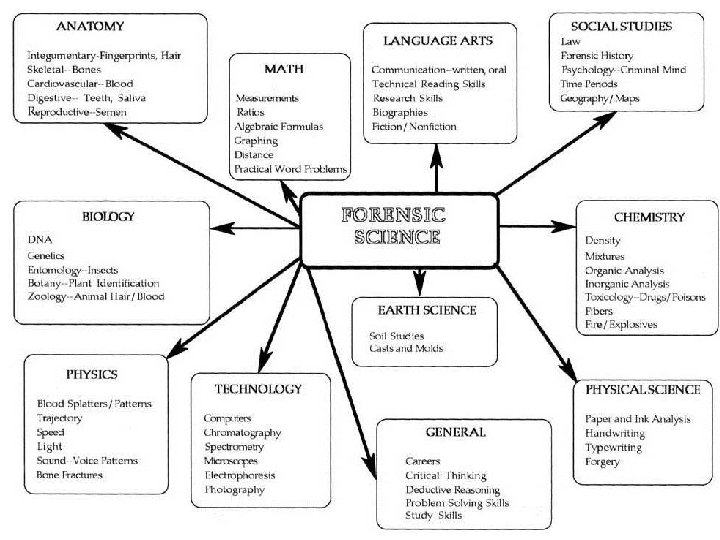
B. Services Provided by Full-Service Crime Labs 1. Physical Science Unit – use chemistry, physics, and geology techniques to compare and identify evidence from a crime scene. 2. Biology Unit – in charge of DNA profiling on dried blood stains and other body fluids. 3. Firearms Unit – examine all types of evidence that have to do with firearms. 4. Document Examination Unit – examine handwriting and typewriting on suspicious documents to determine the validity and source of the document. 5. Photography Unit – “record” (photos) physical evidence from a crime; analyze the photos. 6. Fingerprint Unit - process and examine latent fingerprints. 7. Toxicology Unit (optional) – examine body fluids and organs to determine the presence or absence of drugs and poisons in an individual's body. 8. Polygraph Unit (optional) – administer and interpret lie PRENTICE HALL FORENSIC SCIENCE detector tests © 2008 Pearson Education, Inc. An Introduction By Richard Saferstein Upper Saddle River, NJ 07458 1 -49
Other Forensic Science Fields • Forensic Anthropology – apply skeletal analysis and techniques in archaeology to solving criminal cases. • Forensic Psychiatry – determine whether or not an individual has the ability, mentally, to make specific decisions or to stand trial. • Forensic Odontology – identify victims based on dental evidence. • Forensics Engineering – work with failure analysis, accident reconstruction, and causes and origins of fires or explosions. • Digital Forensics – identify, collect, preserve and examine evidence from computers and other digital devices. • Wildlife Forensics – use scientific procedures to investigate wildlife-related crimes involving the exotic pet PRENTICE HALL FORENSIC SCIENCE © 2008 Pearson An Introduction trade, poaching, other illegal hunting activities, and. Education, even. Inc. Upper Saddle River, NJ 07458 By Richard Saferstein 1 -50
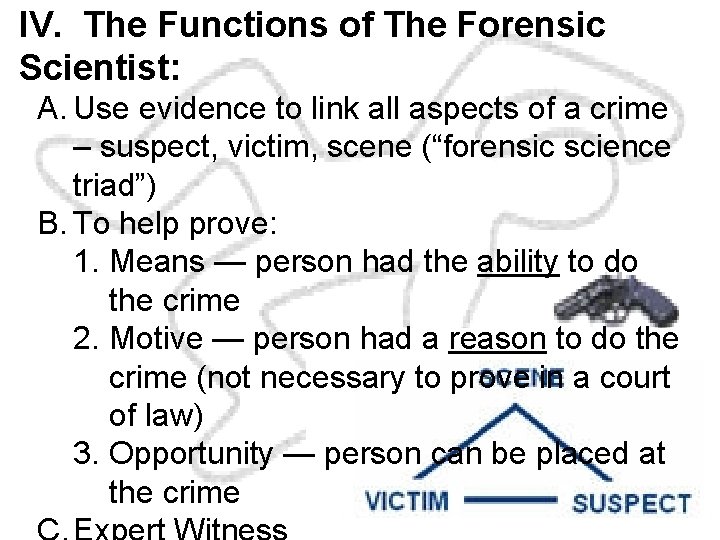
IV. The Functions of The Forensic Scientist: A. Use evidence to link all aspects of a crime – suspect, victim, scene (“forensic science triad”) B. To help prove: 1. Means — person had the ability to do the crime 2. Motive — person had a reason to do the crime (not necessary to prove in a court of law) 3. Opportunity — person can be placed at the crime FORENSIC SCIENCE An Introduction By Richard Saferstein PRENTICE HALL © 2008 Pearson Education, Inc. Upper Saddle River, NJ 07458 1 -51
V. Evidence A. Federal Rules of Evidence 1. 1923 Frye v. United States Case that established that scientific evidence must be "generally accepted" by the scientific community to be admissible in court ("Frye Standard“). 2. 1993 Daubert v. Dow Case in which the court suggested the trial judge assume the ultimate responsibility in judging the admissibility and reliability of scientific evidence. (Frye ruling no longer FORENSIC SCIENCE An Introduction By Richard Saferstein PRENTICE HALL © 2008 Pearson Education, Inc. Upper Saddle River, NJ 07458 1 -52
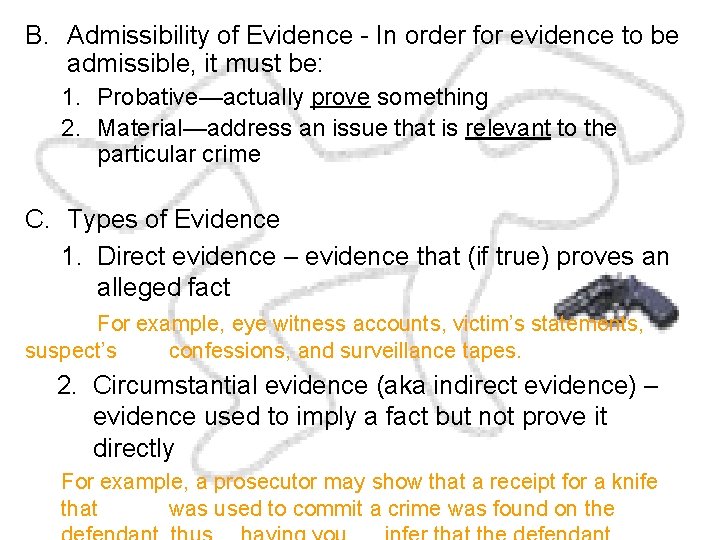
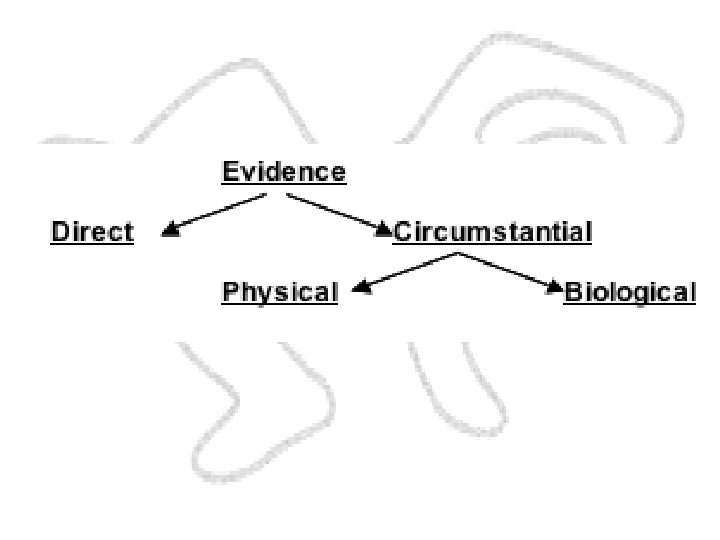
B. Admissibility of Evidence - In order for evidence to be admissible, it must be: 1. Probative—actually prove something 2. Material—address an issue that is relevant to the particular crime C. Types of Evidence 1. Direct evidence – evidence that (if true) proves an alleged fact For example, eye witness accounts, victim’s statements, suspect’s confessions, and surveillance tapes. 2. Circumstantial evidence (aka indirect evidence) – evidence used to imply a fact but not prove it directly For example, a prosecutor may show that a receipt for a knife PRENTICE HALL FORENSIC SCIENCE that was used to commit a crime was found on the © 2008 Pearson Education, Inc. An Introduction By Richard Saferstein Upper Saddle River, NJ 07458 1 -53
FORENSIC SCIENCE An Introduction By Richard Saferstein PRENTICE HALL © 2008 Pearson Education, Inc. Upper Saddle River, NJ 07458 1 -54
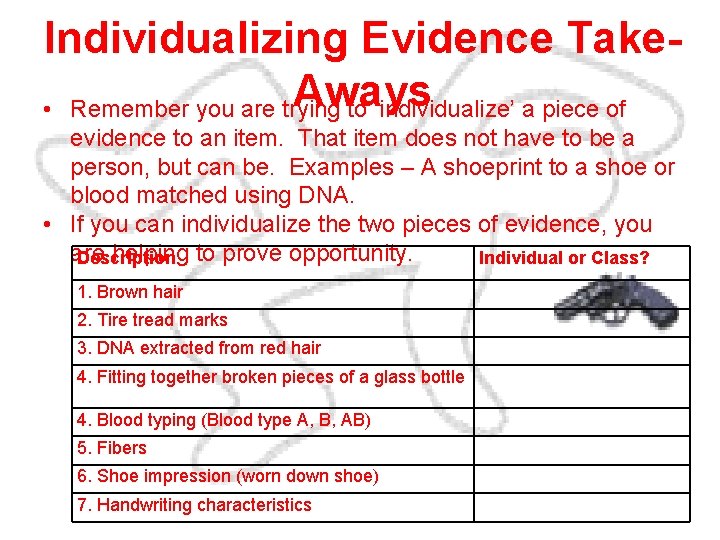
Individualizing Evidence Take. Aways • Remember you are trying to ‘individualize’ a piece of evidence to an item. That item does not have to be a person, but can be. Examples – A shoeprint to a shoe or blood matched using DNA. • If you can individualize the two pieces of evidence, you are helping to prove opportunity. Description Individual or Class? 1. Brown hair 2. Tire tread marks 3. DNA extracted from red hair 4. Fitting together broken pieces of a glass bottle 4. Blood typing (Blood type A, B, AB) 5. Fibers 6. Shoe impression (worn down shoe) 7. Handwriting characteristics FORENSIC SCIENCE An Introduction By Richard Saferstein PRENTICE HALL © 2008 Pearson Education, Inc. Upper Saddle River, NJ 07458 1 -55
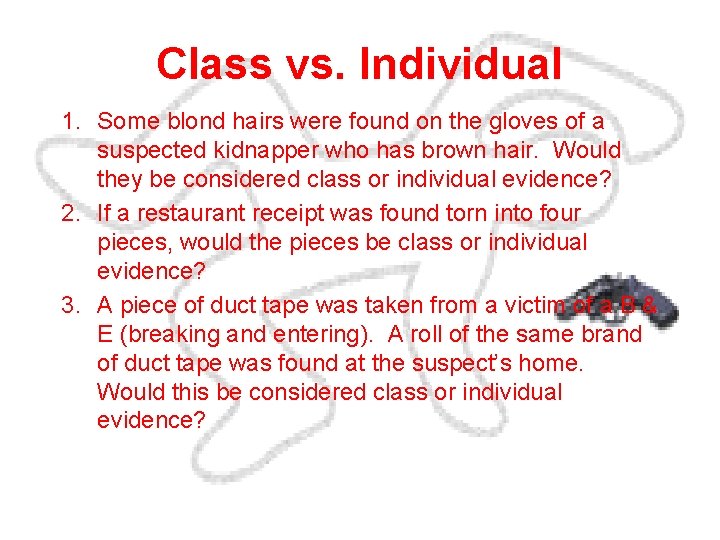
Class vs. Individual 1. Some blond hairs were found on the gloves of a suspected kidnapper who has brown hair. Would they be considered class or individual evidence? 2. If a restaurant receipt was found torn into four pieces, would the pieces be class or individual evidence? 3. A piece of duct tape was taken from a victim of a B & E (breaking and entering). A roll of the same brand of duct tape was found at the suspect’s home. Would this be considered class or individual evidence? FORENSIC SCIENCE An Introduction By Richard Saferstein PRENTICE HALL © 2008 Pearson Education, Inc. Upper Saddle River, NJ 07458 1 -56
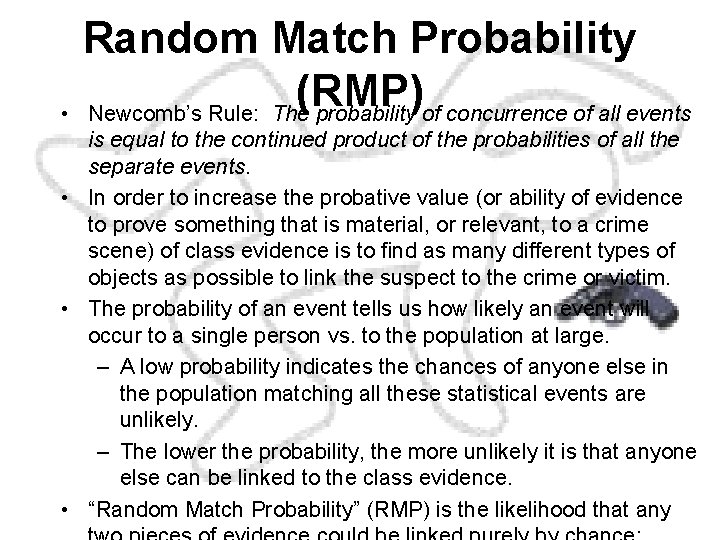
• Random Match Probability (RMP) Newcomb’s Rule: The probability of concurrence of all events is equal to the continued product of the probabilities of all the separate events. • In order to increase the probative value (or ability of evidence to prove something that is material, or relevant, to a crime scene) of class evidence is to find as many different types of objects as possible to link the suspect to the crime or victim. • The probability of an event tells us how likely an event will occur to a single person vs. to the population at large. – A low probability indicates the chances of anyone else in the population matching all these statistical events are unlikely. – The lower the probability, the more unlikely it is that anyone else can be linked to the class evidence. PRENTICE HALL FORENSIC SCIENCE • “Random Match Probability” (RMP) is the likelihood any © 2008 Pearsonthat Education, Inc. An Introduction By Richard Saferstein Upper Saddle River, NJ 07458 1 -57
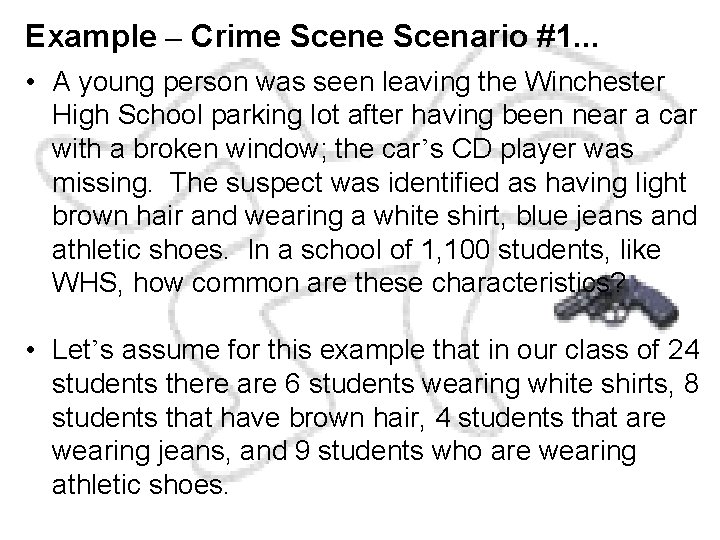
Example – Crime Scenario #1. . . • A young person was seen leaving the Winchester High School parking lot after having been near a car with a broken window; the car’s CD player was missing. The suspect was identified as having light brown hair and wearing a white shirt, blue jeans and athletic shoes. In a school of 1, 100 students, like WHS, how common are these characteristics? • Let’s assume for this example that in our class of 24 students there are 6 students wearing white shirts, 8 students that have brown hair, 4 students that are wearing jeans, and 9 students who are wearing athletic shoes. FORENSIC SCIENCE An Introduction By Richard Saferstein PRENTICE HALL © 2008 Pearson Education, Inc. Upper Saddle River, NJ 07458 1 -58
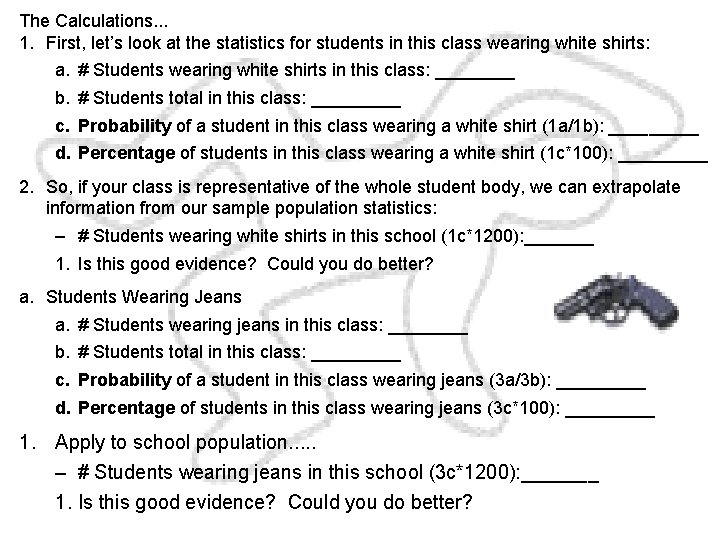
The Calculations. . . 1. First, let’s look at the statistics for students in this class wearing white shirts: a. b. c. d. # Students wearing white shirts in this class: ____ # Students total in this class: _____ Probability of a student in this class wearing a white shirt (1 a/1 b): _____ Percentage of students in this class wearing a white shirt (1 c*100): _____ 2. So, if your class is representative of the whole student body, we can extrapolate information from our sample population statistics: – # Students wearing white shirts in this school (1 c*1200): _______ 1. Is this good evidence? Could you do better? a. Students Wearing Jeans a. # Students wearing jeans in this class: ____ b. # Students total in this class: _____ c. Probability of a student in this class wearing jeans (3 a/3 b): _____ d. Percentage of students in this class wearing jeans (3 c*100): _____ 1. Apply to school population. . . – # Students wearing jeans in this school (3 c*1200): _______ 1. Is this good evidence? Could you do better? PRENTICE HALL FORENSIC SCIENCE An Introduction By Richard Saferstein © 2008 Pearson Education, Inc. Upper Saddle River, NJ 07458 1 -59
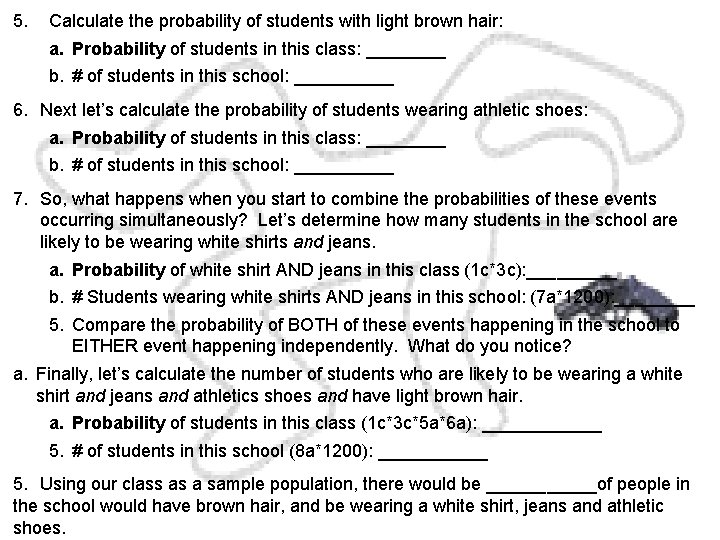
5. Calculate the probability of students with light brown hair: a. Probability of students in this class: ____ b. # of students in this school: _____ 6. Next let’s calculate the probability of students wearing athletic shoes: a. Probability of students in this class: ____ b. # of students in this school: _____ 7. So, what happens when you start to combine the probabilities of these events occurring simultaneously? Let’s determine how many students in the school are likely to be wearing white shirts and jeans. a. Probability of white shirt AND jeans in this class (1 c*3 c): _____ b. # Students wearing white shirts AND jeans in this school: (7 a*1200): ____ 5. Compare the probability of BOTH of these events happening in the school to EITHER event happening independently. What do you notice? a. Finally, let’s calculate the number of students who are likely to be wearing a white shirt and jeans and athletics shoes and have light brown hair. a. Probability of students in this class (1 c*3 c*5 a*6 a): ______ 5. # of students in this school (8 a*1200): ______ 5. Using our class as a sample population, there would be ______of people in HALL athletic FORENSIC SCIENCE the school would have brown hair, and be wearing a white shirt, PRENTICE jeans and © 2008 Pearson Education, Inc. An Introduction 1 -60 Upper Saddle River, NJ 07458 shoes. By Richard Saferstein
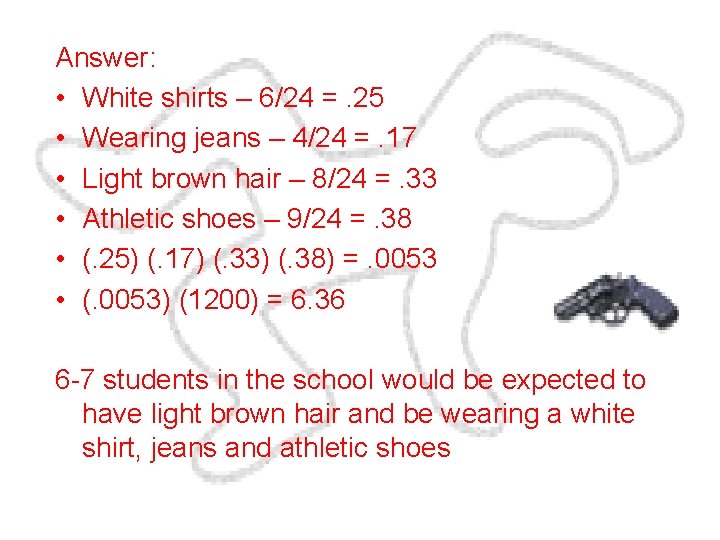
Answer: • White shirts – 6/24 =. 25 • Wearing jeans – 4/24 =. 17 • Light brown hair – 8/24 =. 33 • Athletic shoes – 9/24 =. 38 • (. 25) (. 17) (. 33) (. 38) =. 0053 • (. 0053) (1200) = 6. 36 6 -7 students in the school would be expected to have light brown hair and be wearing a white shirt, jeans and athletic shoes FORENSIC SCIENCE An Introduction By Richard Saferstein PRENTICE HALL © 2008 Pearson Education, Inc. Upper Saddle River, NJ 07458 1 -61
Class Survey • • Long blonde hair _____ Wearing shorts _____ Wearing a dark shirt _____ Brown hair _____ Button-down shirt _____ Jeans _____ Gym shoes _____ 5’ 10” _____ FORENSIC SCIENCE An Introduction By Richard Saferstein PRENTICE HALL © 2008 Pearson Education, Inc. Upper Saddle River, NJ 07458 1 -62
References • • These notes are based on the textbook "Criminalistics: An Introduction to Forensic Science" seventh edition by Richard Saperstein (ed. Prentice Hall, 2001 pp. 1 -22) http: //www. lab. fws. gov/csi_evidence. php (class vs. individual evidence) http: //ezinearticles. com/? Crime-Scene-Forensics---Direct-vs. Circumstantial-Evidence&id=947412 (direct vs. circumstantial evidence) http: //en. wikipedia. org/wiki/Circumstantial_evidence http: //www. probablecause. org/directevidence. html FORENSIC SCIENCE An Introduction By Richard Saferstein PRENTICE HALL © 2008 Pearson Education, Inc. Upper Saddle River, NJ 07458 1 -63
• • • • Quotes to use for ppt or website Quotes for Power. Points or website: ‘You see, but you do not observe. The distinction is clear. ’ Sherlock Holmes Quote -A Scandal in Bohemia “The world is full of obvious things which nobody by any chance ever observes. ” Sherlock Holmes Quote -The Hound of the Baskervilles ‘Eliminate all other factors, and the one which remains must be the truth. ’ Sherlock Holmes Quote -The Sign of Four Chapter 1: “The Science of Deduction” FORENSIC SCIENCE An Introduction By Richard Saferstein PRENTICE HALL © 2008 Pearson Education, Inc. Upper Saddle River, NJ 07458 1 -64