
ACSI American Customer Satisfaction Index TM Citizen Satisfaction
- Slides: 29
ACSI American Customer Satisfaction Index TM Citizen Satisfaction with the U. S. Federal Government: A Review of 2011 Results from ACSI Forrest V. Morgeson III, Ph. D. American Customer Satisfaction Index (ACSI) Washington, D. C. , January 19, 2012 1
Snapshot of ACSI • Established in 1994, ACSI is the only standardized measure of customer satisfaction in the U. S. economy, covering more than 225 companies in 45 industries and 10 economic sectors; companies measured account for roughly one-third of the total U. S. GDP • A quarterly measure of the national economy’s health; complementary to measures such as inflation and unemployment • 100+ departments, agencies, programs and websites of the U. S. Federal Government measured on an annual basis • Results from all surveys are published quarterly in various media and on the ACSI website, www. theacsi. org 2 © NQRC
ACSI and Citizen Satisfaction • ACSI measured portions of the Federal government as early as 1994 – Internal Revenue Service measured as part of the private sector study back to 1994 – Measurement of core Local Government services (police, waste disposal) also began in 1994 • In 1999, ACSI was chosen as the “gold standard” measure of citizen satisfaction by the U. S. Federal government – ACSI measured 30 “high impact” government agencies, reflecting the vast majority of citizen interactions with government, in 1999 and 2000 • Although now relying on optional agency buy-in, participation in the ACSI study has grown significantly 3 © NQRC
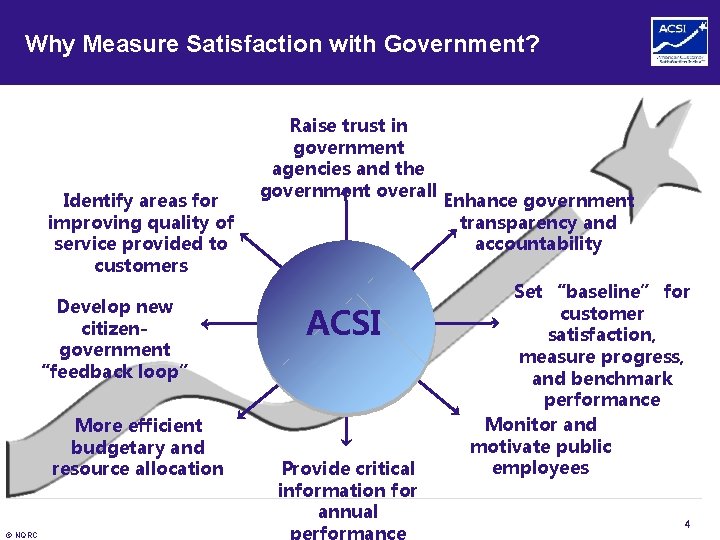
Why Measure Satisfaction with Government? Identify areas for improving quality of service provided to customers Develop new citizengovernment “feedback loop” More efficient budgetary and resource allocation © NQRC Raise trust in government agencies and the government overall ACSI Provide critical information for annual performance Enhance government transparency and accountability Set “baseline” for customer satisfaction, measure progress, and benchmark performance Monitor and motivate public employees 4
ACSI Methodology 5 © NQRC
ACSI Methodology • In the ACSI Model, Customer Satisfaction (ACSI) is embedded in a system of “cause-and-effect” relationships • The variables in the ACSI Model are measured using multiple indicators, increasing their precision and reliability • The central objective of the model is to explain what influences ACSI, and what is influenced by it 6 © NQRC
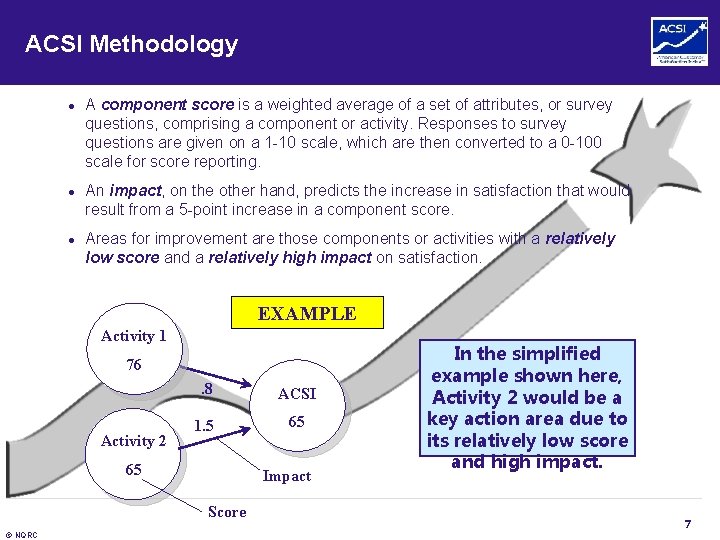
ACSI Methodology ● A component score is a weighted average of a set of attributes, or survey questions, comprising a component or activity. Responses to survey questions are given on a 1 -10 scale, which are then converted to a 0 -100 scale for score reporting. ● An impact, on the other hand, predicts the increase in satisfaction that would result from a 5 -point increase in a component score. ● Areas for improvement are those components or activities with a relatively low score and a relatively high impact on satisfaction. EXAMPLE Activity 1 76 Activity 2 . 8 ACSI 1. 5 65 65 Impact Score © NQRC In the simplified example shown here, Activity 2 would be a key action area due to its relatively low score and high impact. 7
2011 ACSI Overall Results U. S. Federal Government 8 © NQRC
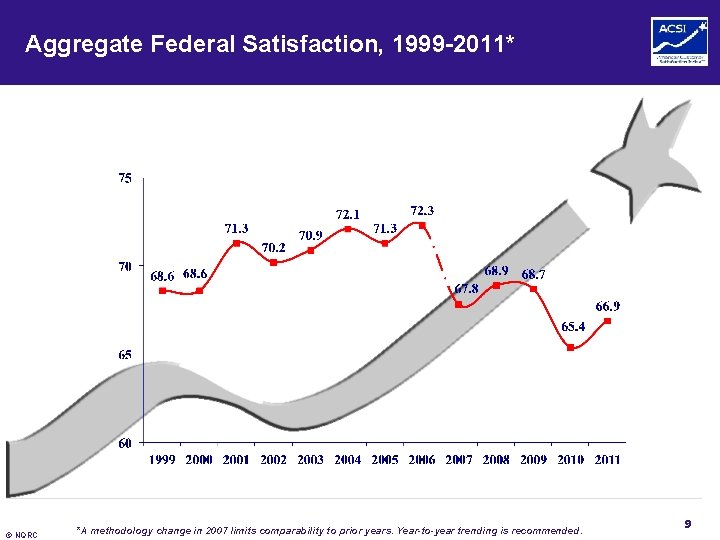
Aggregate Federal Satisfaction, 1999 -2011* © NQRC *A methodology change in 2007 limits comparability to prior years. Year-to-year trending is recommended. 9
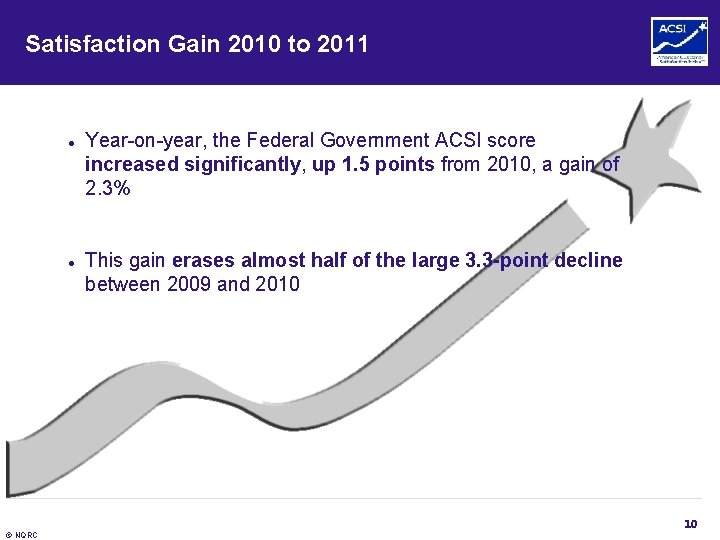
Satisfaction Gain 2010 to 2011 ● ● Year-on-year, the Federal Government ACSI score increased significantly, up 1. 5 points from 2010, a gain of 2. 3% This gain erases almost half of the large 3. 3 -point decline between 2009 and 2010 10 © NQRC
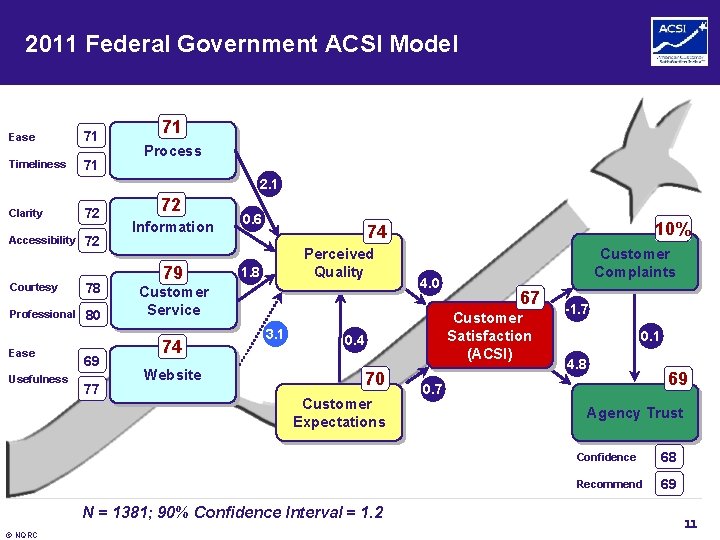
2011 Federal Government ACSI Model Ease 71 Timeliness 71 71 Process 2. 1 Clarity 72 Accessibility 72 Courtesy 78 Professional 80 Ease Usefulness 69 77 72 Information 79 0. 6 Perceived Quality 1. 8 Customer Service 74 Website 3. 1 4. 0 Customer Complaints 67 Customer Satisfaction (ACSI) 0. 4 70 Customer Expectations N = 1381; 90% Confidence Interval = 1. 2 © NQRC 10% 74 -1. 7 0. 1 4. 8 69 0. 7 Agency Trust Confidence 68 Recommend 69 11
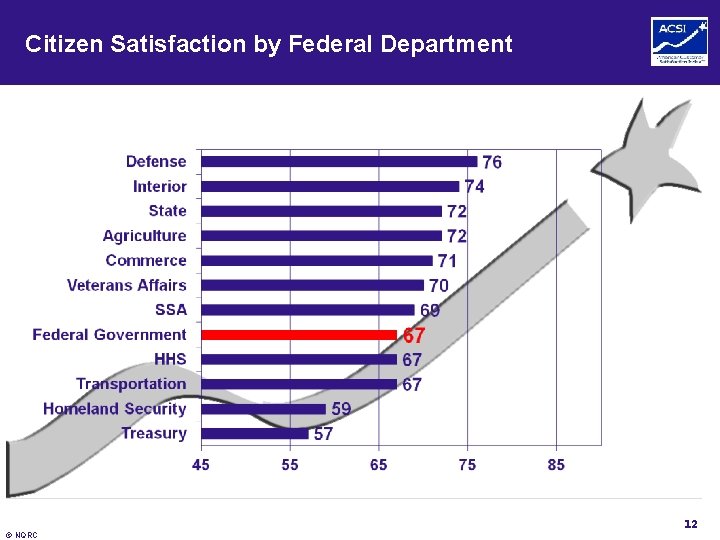
Citizen Satisfaction by Federal Department 12 © NQRC
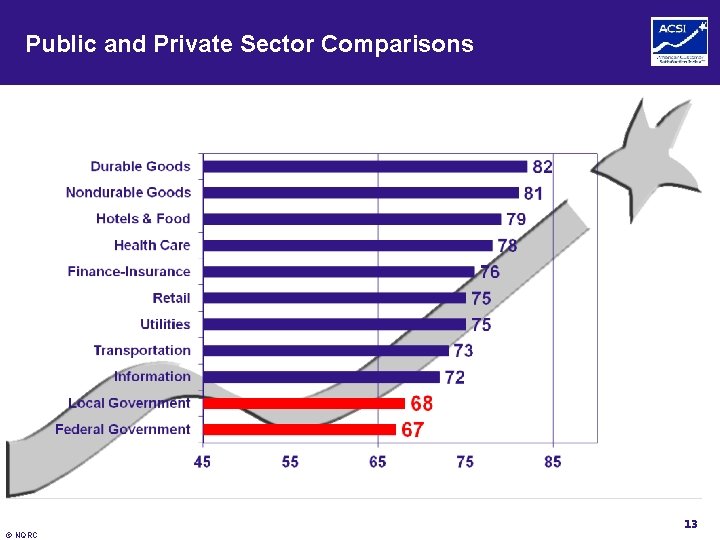
Public and Private Sector Comparisons 13 © NQRC
Complaint Behavior and Citizen Satisfaction 14 © NQRC
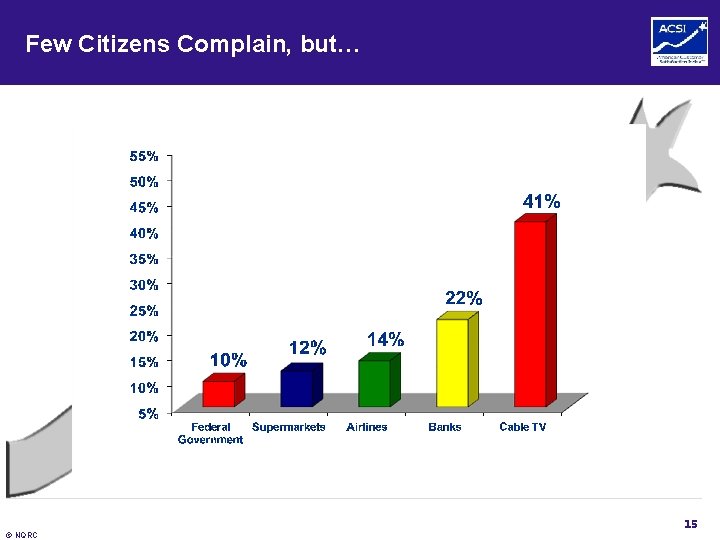
Few Citizens Complain, but… 15 © NQRC
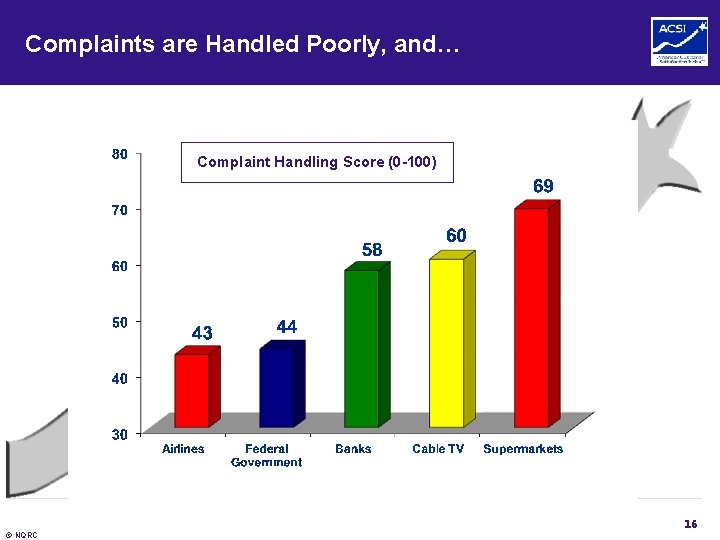
Complaints are Handled Poorly, and… Complaint Handling Score (0 -100) 16 © NQRC
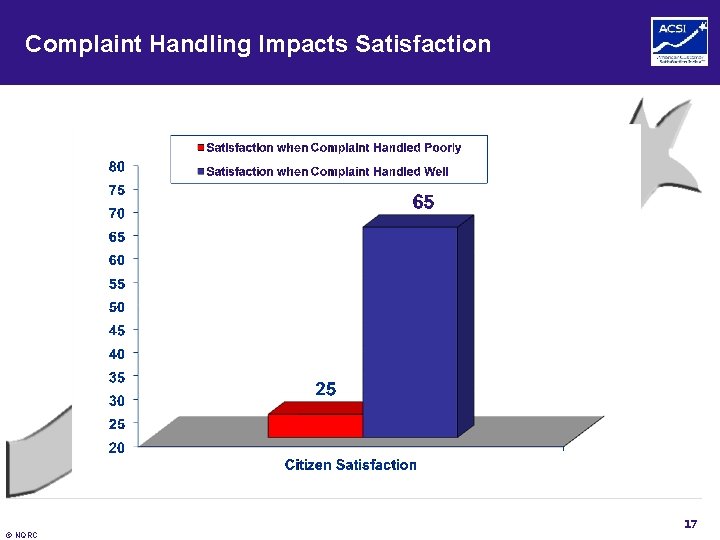
Complaint Handling Impacts Satisfaction 17 © NQRC
Contact Channel, Satisfaction and Agency Trust 18 © NQRC
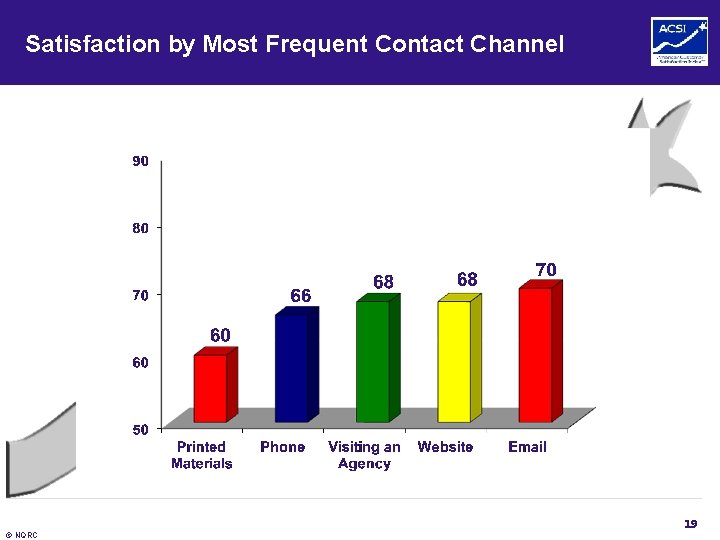
Satisfaction by Most Frequent Contact Channel 19 © NQRC
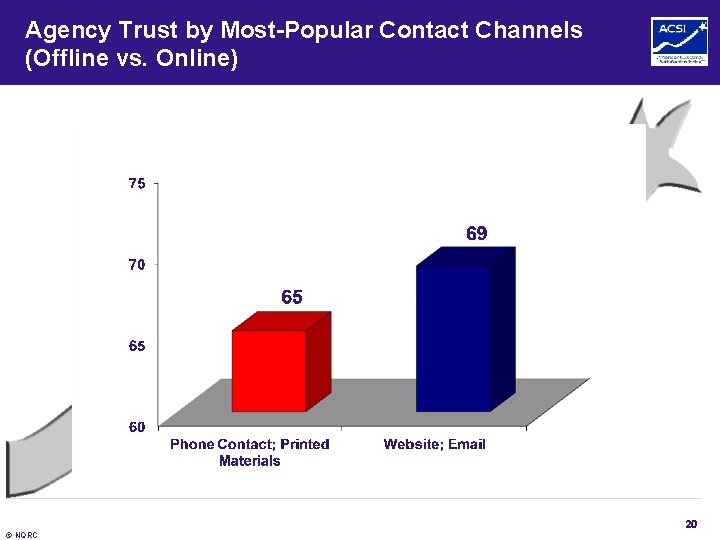
Agency Trust by Most-Popular Contact Channels (Offline vs. Online) 20 © NQRC
Demographics and Citizen Satisfaction 21 © NQRC
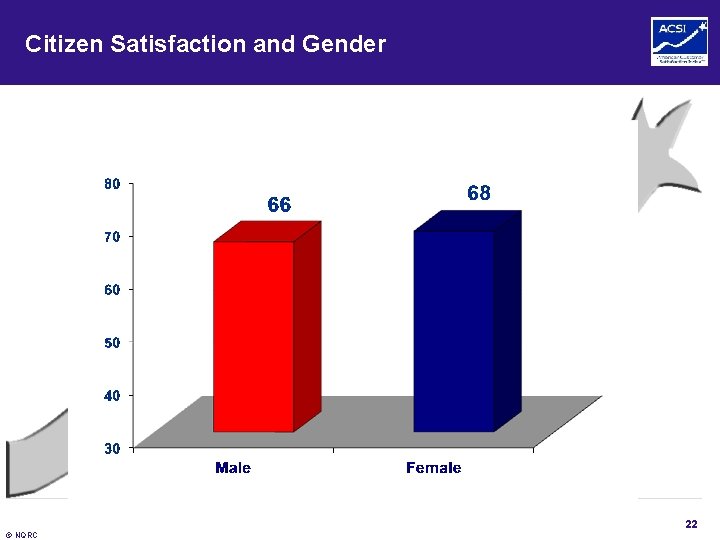
Citizen Satisfaction and Gender 22 © NQRC
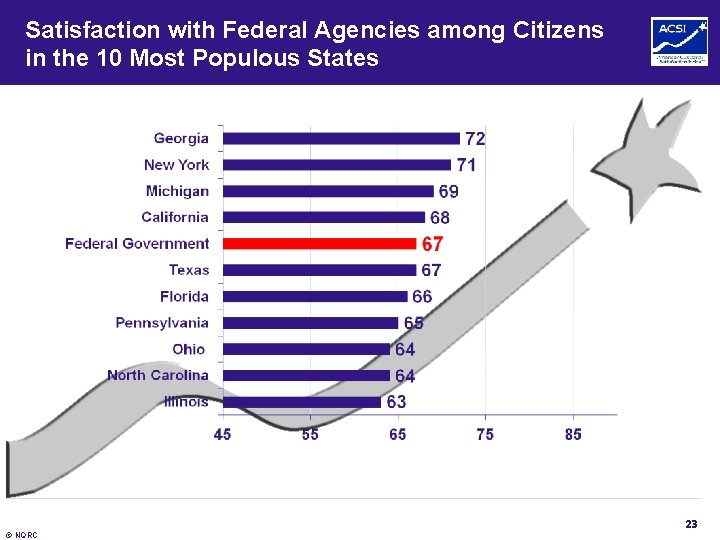
Satisfaction with Federal Agencies among Citizens in the 10 Most Populous States 23 © NQRC
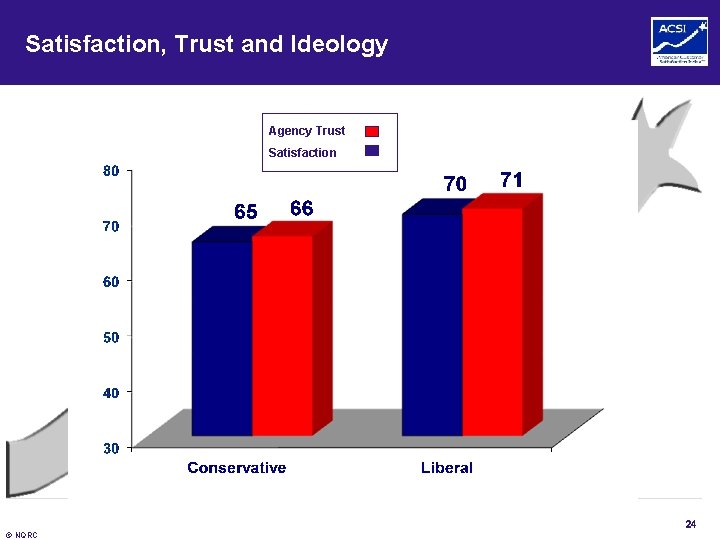
Satisfaction, Trust and Ideology Agency Trust Satisfaction 24 © NQRC
Agency Trust and Diffuse Trust with the Federal Government 25 © NQRC
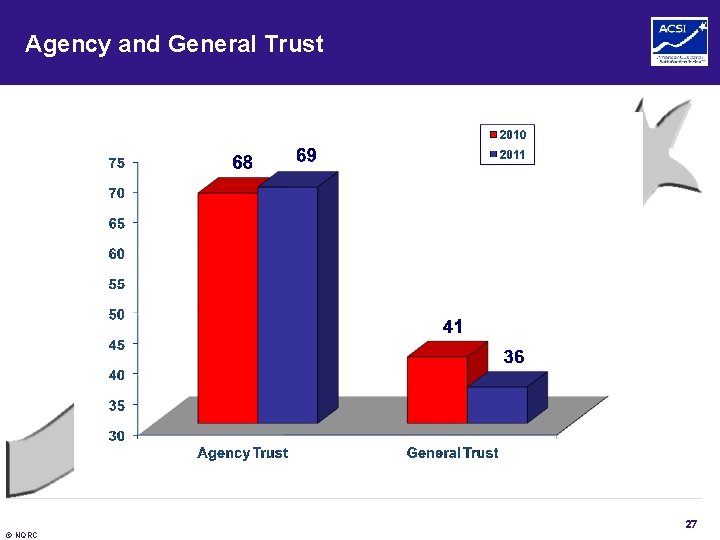
Agency and Diffuse Trust ● ● ● ACSI measures both agency trust (confidence in the agency experienced), and generalized trust (trust in the Federal government as a whole) Similar to the results found in other studies, trust in Washington D. C. scores far lower than trust in individual agencies experienced This year, trust in Washington D. C. has dropped significantly, while trust in the performance of particular agencies has increased slightly 26 © NQRC
Agency and General Trust 27 © NQRC
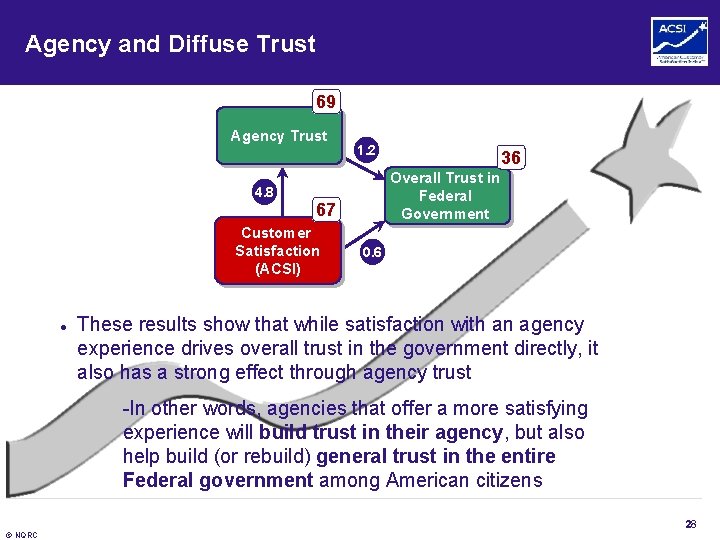
Agency and Diffuse Trust 69 Agency Trust 4. 8 36 Overall Trust in Federal Government 67 Customer Satisfaction (ACSI) ● 1. 2 0. 6 These results show that while satisfaction with an agency experience drives overall trust in the government directly, it also has a strong effect through agency trust -In other words, agencies that offer a more satisfying experience will build trust in their agency, but also help build (or rebuild) general trust in the entire Federal government among American citizens 28 © NQRC
ACSI • For more information, visit the ACSI website at: www. theacsi. org 29 © NQRC