
across 319 Monitoring Sites Brian E Haggard Director
across 319 Monitoring Sites Brian E. Haggard Director, Arkansas Water Resources Center Funding provided by ANRC
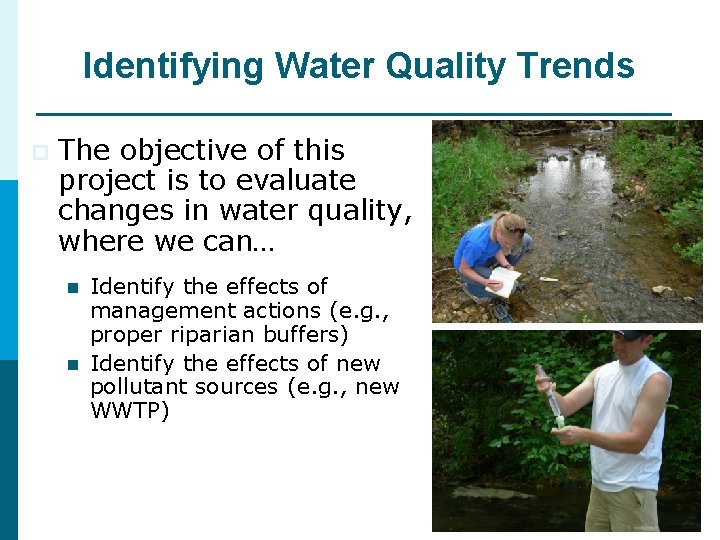
Identifying Water Quality Trends p The objective of this project is to evaluate changes in water quality, where we can… n n Identify the effects of management actions (e. g. , proper riparian buffers) Identify the effects of new pollutant sources (e. g. , new WWTP)
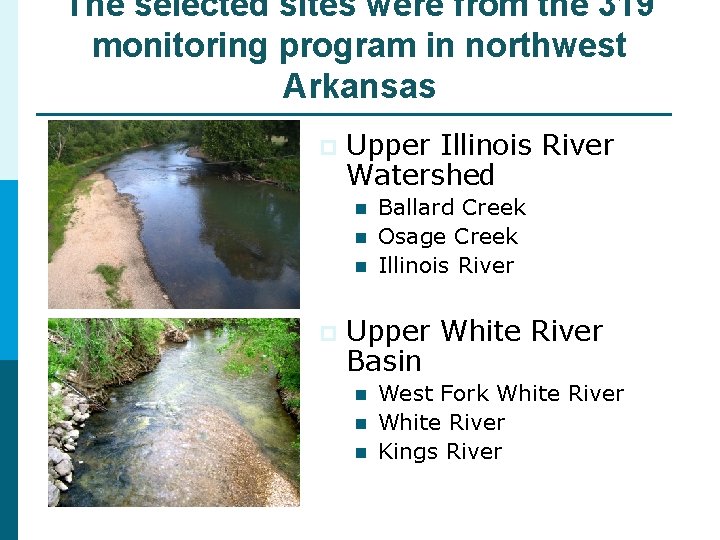
The selected sites were from the 319 monitoring program in northwest Arkansas p Upper Illinois River Watershed n n n p Ballard Creek Osage Creek Illinois River Upper White River Basin n West Fork White River Kings River
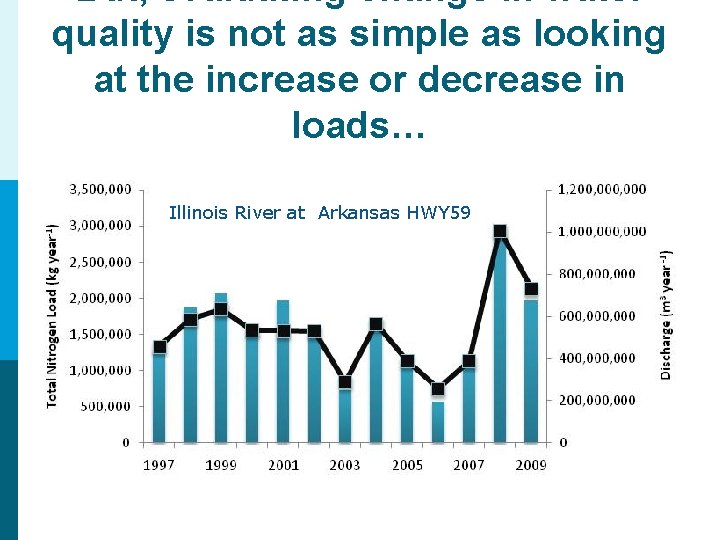
But, evaluating change in water quality is not as simple as looking at the increase or decrease in loads… Illinois River at Arkansas HWY 59
precipitation and runoff patterns over time… You need to remove the influence of stream discharge on loads to identify true trends in water quality.
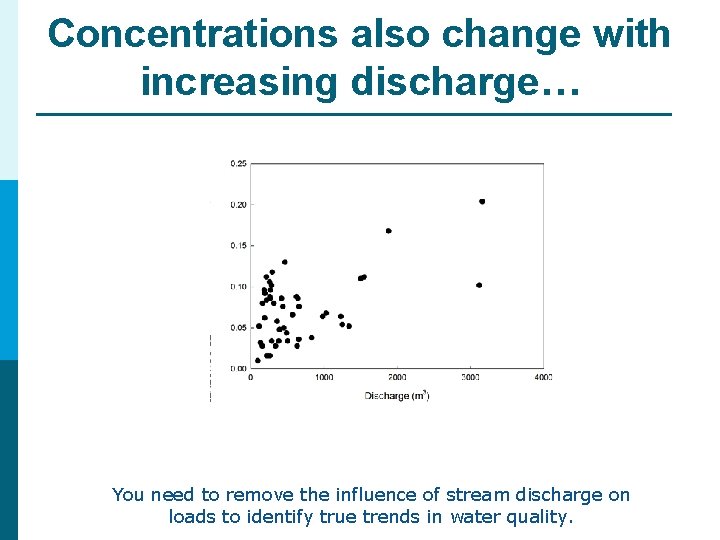
Concentrations also change with increasing discharge… You need to remove the influence of stream discharge on loads to identify true trends in water quality.
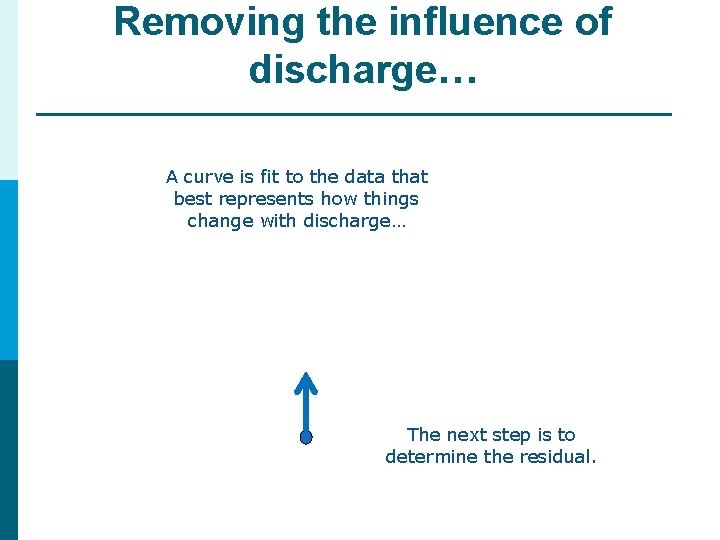
Removing the influence of discharge… A curve is fit to the data that best represents how things change with discharge… The next step is to determine the residual.
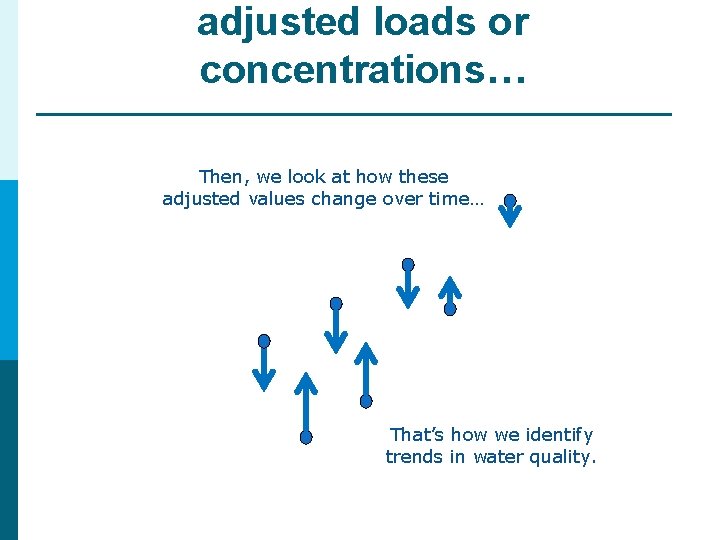
adjusted loads or concentrations… Then, we look at how these adjusted values change over time… That’s how we identify trends in water quality.
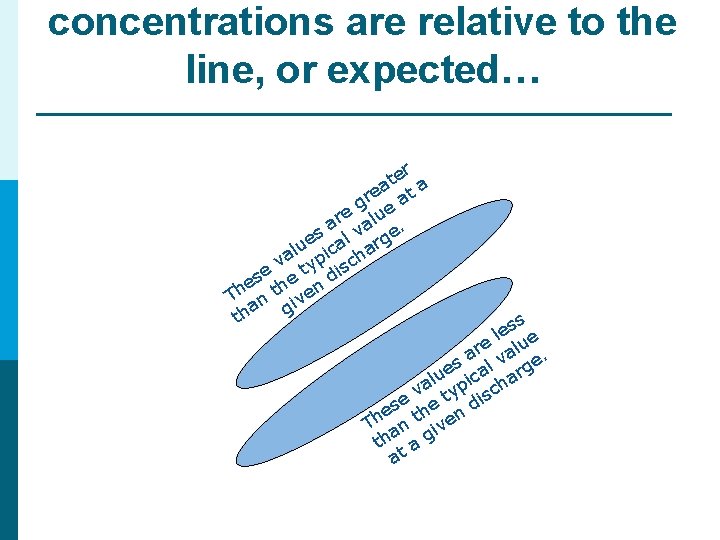
concentrations are relative to the line, or expected… er t ea at a r g e e ar valu e. s l e u ica arg l va typ isch d se he e n Th n t ive a g th s s e lue r a va e. s e cal arg u l i va typ isch se he n d e Th an t ive th a g at
The residuals are plotted over time to determine if flow-adjusted values are increasing or decreasing over time…
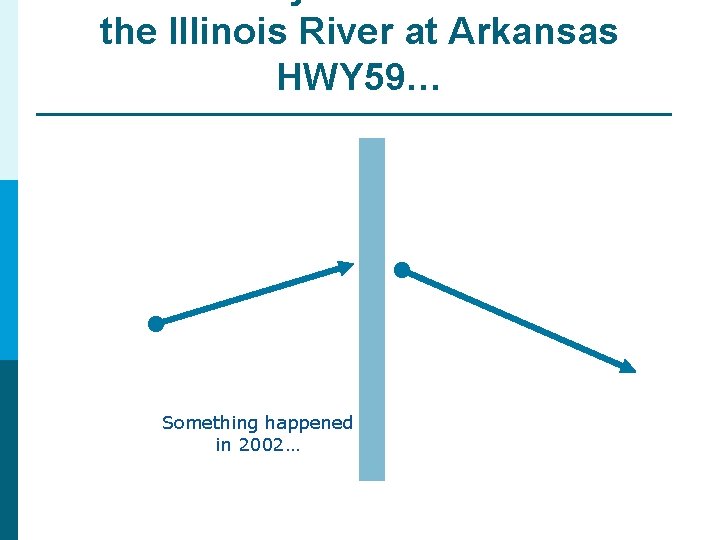
the Illinois River at Arkansas HWY 59… Something happened in 2002…
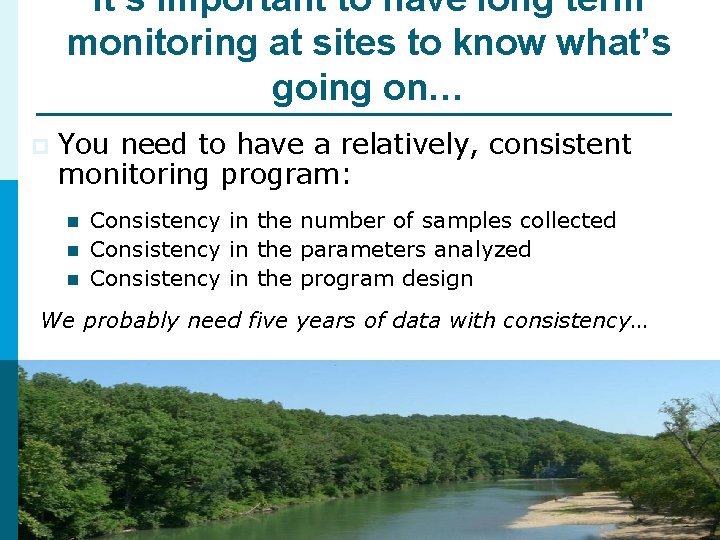
It’s important to have long term monitoring at sites to know what’s going on… p You need to have a relatively, consistent monitoring program: n n n Consistency in the number of samples collected Consistency in the parameters analyzed Consistency in the program design We probably need five years of data with consistency…
Where we are now: p Project extension was granted so that we could include data from 2009. p To date, all databases have been compiled, including sampling date, constituent concentration and respective discharge measurements. p Next, we will flow-adjust concentrations and then look at trends over time…
Take Home Message: Loads are extremely dependent on the variations in discharge, and you need to be remove the effects of discharge to evaluate changes in water quality. Questions?
- Slides: 14