
ACQUISITION OF SKILL Objectives WHAT What are skills
ACQUISITION OF SKILL Objectives WHAT: What are skills? , how can they be acquired and developed. What is feedback and what are the different types? HOW: Looking at how we learn skills, best method for you? WHY? : ? ? ?
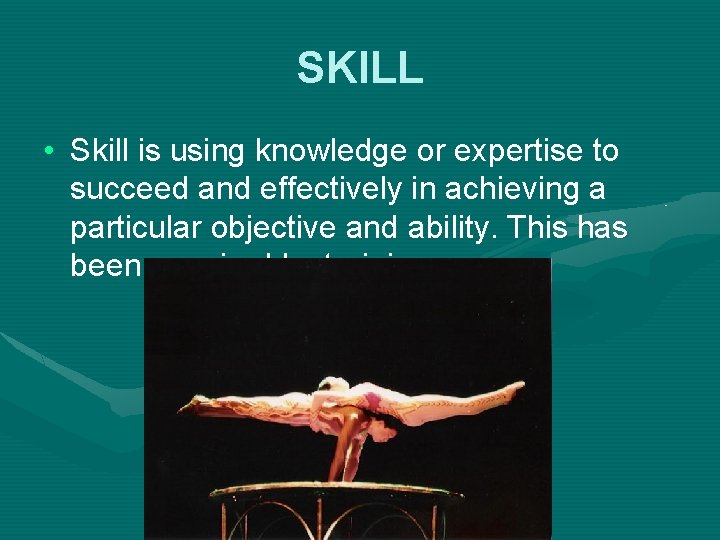
SKILL • Skill is using knowledge or expertise to succeed and effectively in achieving a particular objective and ability. This has been acquired by training.
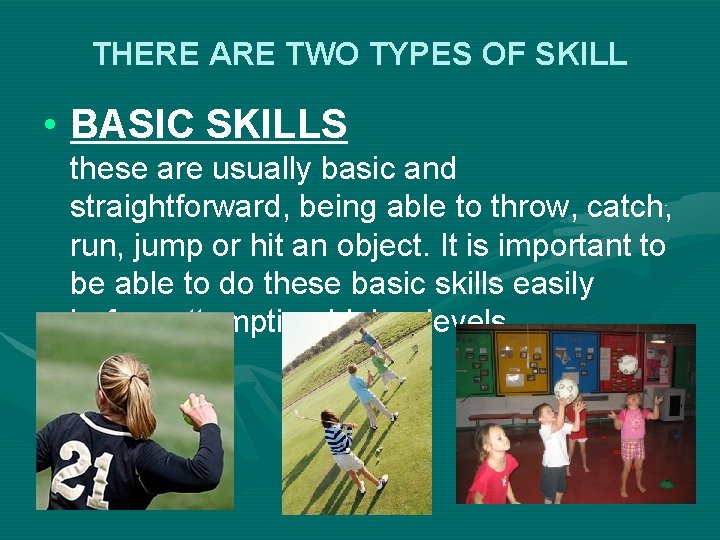
THERE ARE TWO TYPES OF SKILL • BASIC SKILLS these are usually basic and straightforward, being able to throw, catch, run, jump or hit an object. It is important to be able to do these basic skills easily before attempting higher levels.

• COMPLEX SKILLS Skills which take a long time to learn as they involve high levels of co-ordination and control. • Higher level skills will also be very sport specific as different sports have skills unique to them.

Types of Skill There are 2 types of skills: 1. OPEN SKILLS : These happen in situations that are constantly changing such as an invasion game. Here the game around the player is constantly changing and skills may have to adapted to meet the situation.

• CLOSED SKILLS : These happen in situations which are constant and unchanging so they are not affected by the sporting environment. Example – a gymnastic routine.
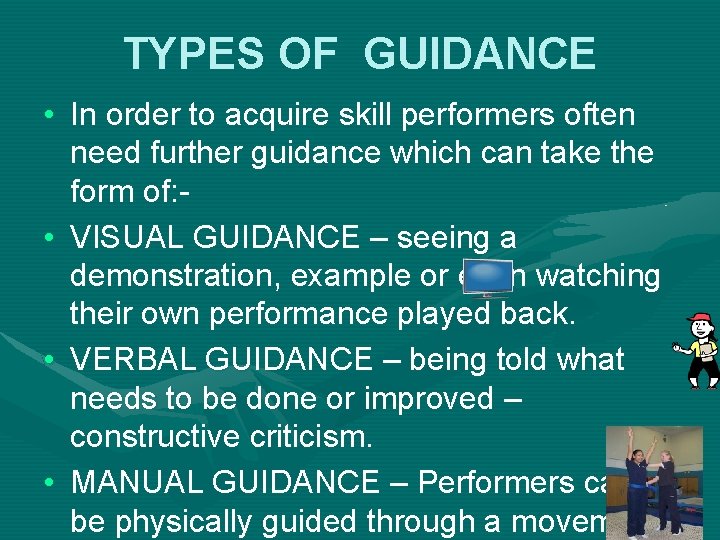
TYPES OF GUIDANCE • In order to acquire skill performers often need further guidance which can take the form of: • VISUAL GUIDANCE – seeing a demonstration, example or even watching their own performance played back. • VERBAL GUIDANCE – being told what needs to be done or improved – constructive criticism. • MANUAL GUIDANCE – Performers can be physically guided through a movement
FEEDBACK • A performer finds out how good their performance was through knowledge of results and also knowledge of performance. The most common ways are: • INTRINSIC • This is felt or sensed by the performer when actually performing. • EXTRINSIC • This comes from sources other than the performer themselves i. e. sounds or things they can see.
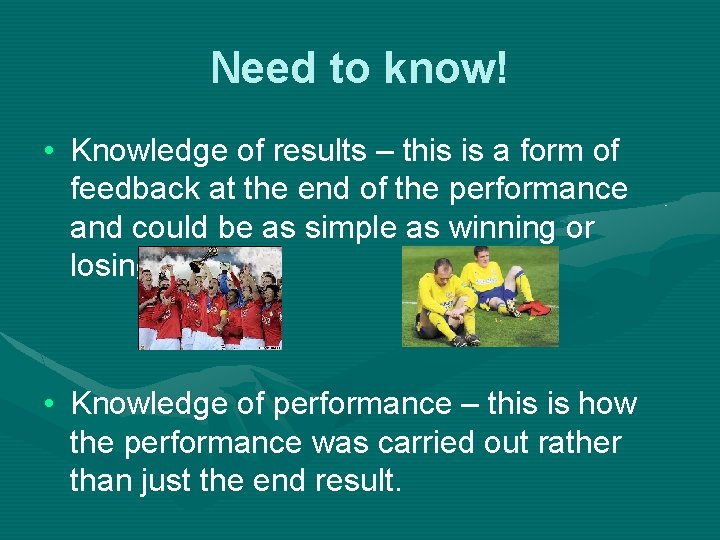
Need to know! • Knowledge of results – this is a form of feedback at the end of the performance and could be as simple as winning or losing. • Knowledge of performance – this is how the performance was carried out rather than just the end result.

Types of practice. • These are ways the performer tries to gain skills which they have identified that they need : • WHOLE – a complete performance is carried out with all aspects of the performance covered. • PART – only specific aspects of the performance are practiced, such as a
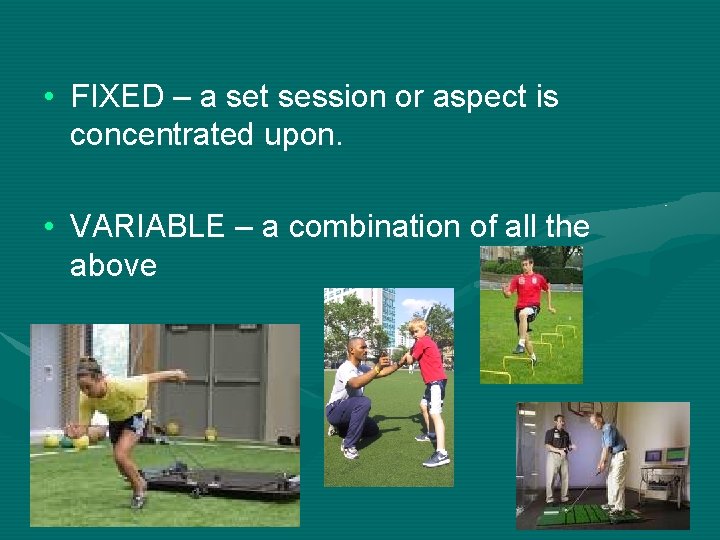
• FIXED – a set session or aspect is concentrated upon. • VARIABLE – a combination of all the above
- Slides: 11