
ACQUISITION ANALYSIS OF CUSTOMISED POSTURAL SUPPORT SYSTEMS Posture
- Slides: 28
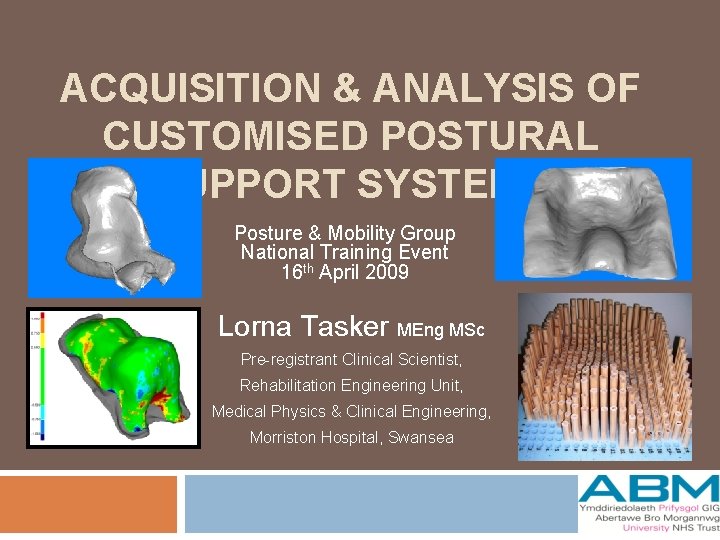
ACQUISITION & ANALYSIS OF CUSTOMISED POSTURAL SUPPORT SYSTEMS Posture & Mobility Group National Training Event 16 th April 2009 Lorna Tasker MEng MSc Pre-registrant Clinical Scientist, Rehabilitation Engineering Unit, Medical Physics & Clinical Engineering, Morriston Hospital, Swansea
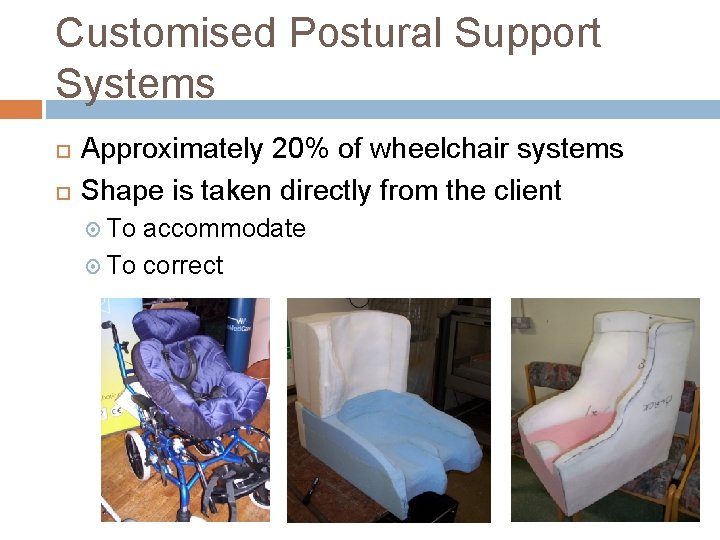
Customised Postural Support Systems Approximately 20% of wheelchair systems Shape is taken directly from the client To accommodate To correct
Problem Insufficient knowledge and scientific evaluation of these postural support shapes Shape information is not retained No comparable measurement or outcome data Customised seating systems are: Expensive Labour-intensive Require highly skilled professionals Not reproducible
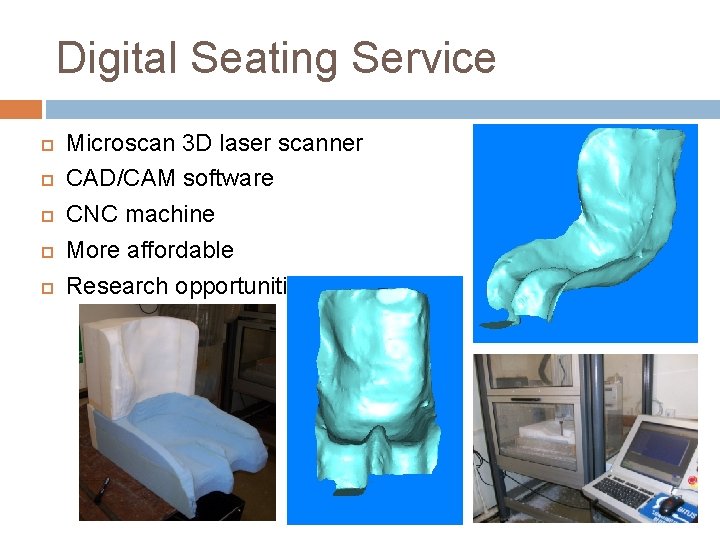
Digital Seating Service Microscan 3 D laser scanner CAD/CAM software CNC machine More affordable Research opportunities
Aims Develop a technique for 3 D shape data collection and analysis of custom seating systems Understanding of human shape of individuals with complex disabilities To influence fabrication techniques Investigate two laser scanners Research question: Can 50% of customised support systems be represented (and manufactured) using standardised geometric shapes that are within ± 10 mm from the actual shape?
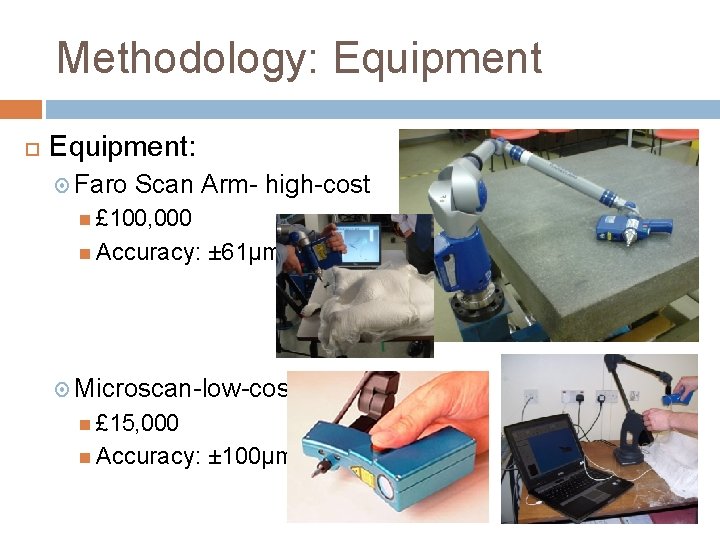
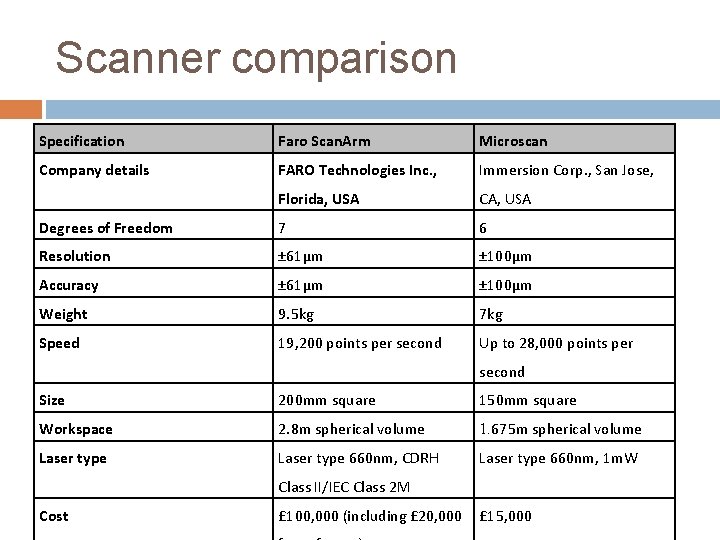
Methodology: Equipment: Faro Scan Arm- high-cost £ 100, 000 Accuracy: ± 61µm Microscan-low-cost £ 15, 000 Accuracy: ± 100µm
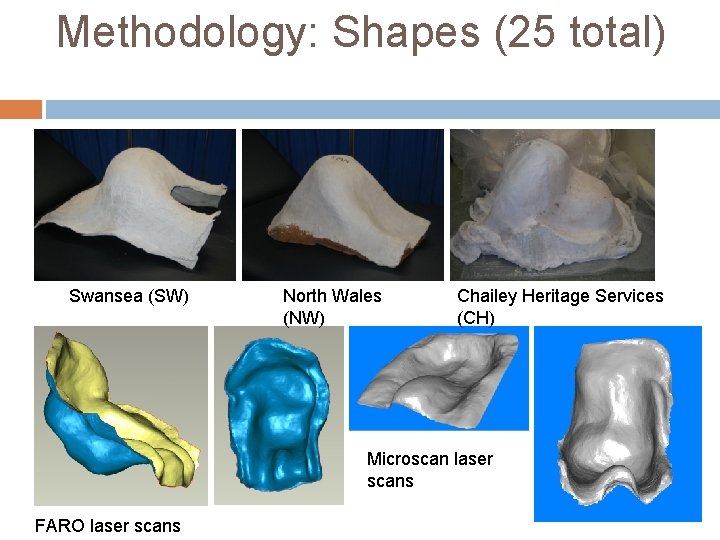
Methodology: Shapes (25 total) Swansea (SW) North Wales (NW) Chailey Heritage Services (CH) Microscan laser scans FARO laser scans
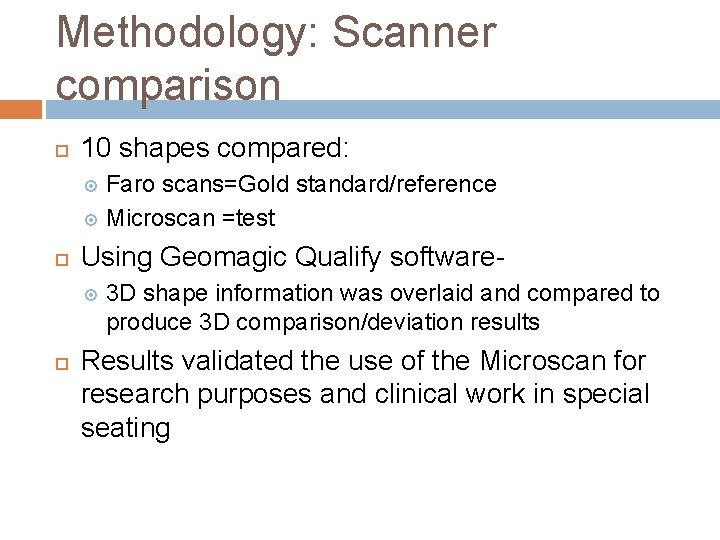
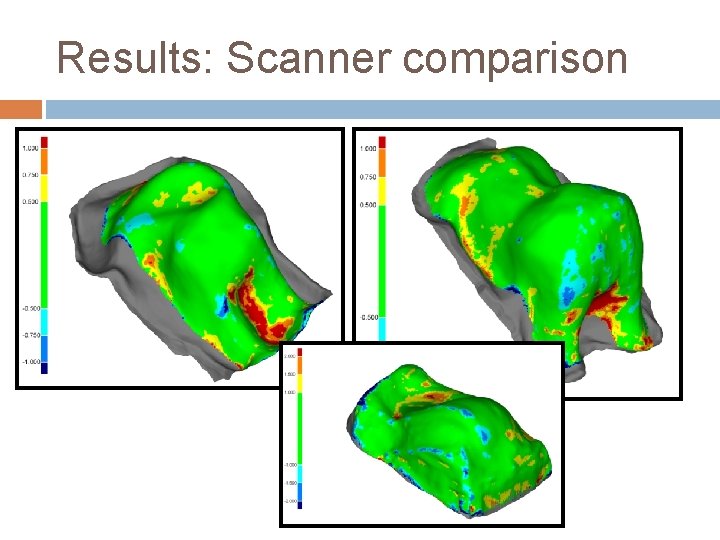
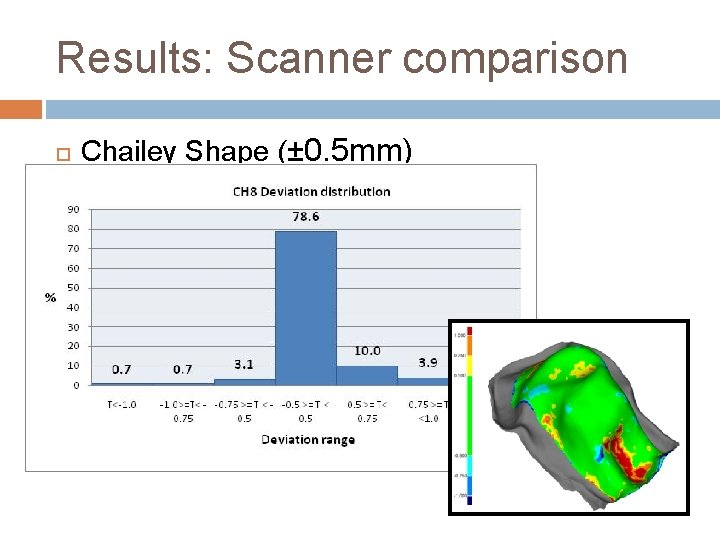
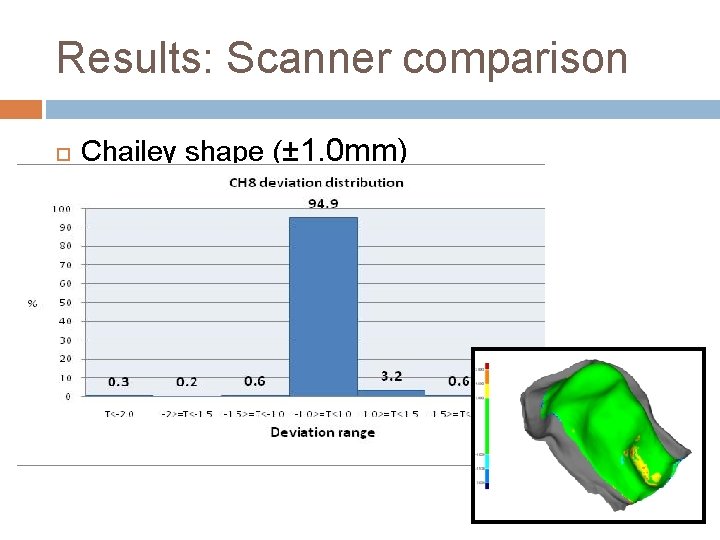
Methodology: Scanner comparison 10 shapes compared: Faro scans=Gold standard/reference Microscan =test Using Geomagic Qualify software 3 D shape information was overlaid and compared to produce 3 D comparison/deviation results Results validated the use of the Microscan for research purposes and clinical work in special seating
Results: Scanner comparison
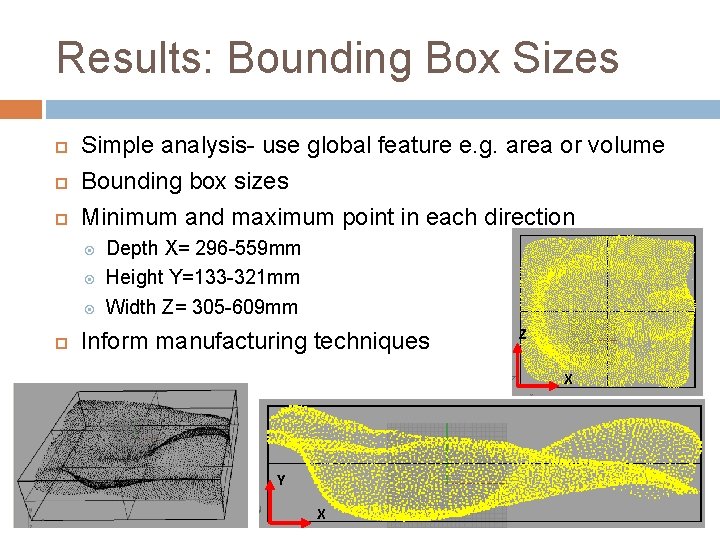
Results: Bounding Box Sizes Simple analysis- use global feature e. g. area or volume Bounding box sizes Minimum and maximum point in each direction Depth X= 296 -559 mm Height Y=133 -321 mm Width Z= 305 -609 mm Inform manufacturing techniques Z X Y X
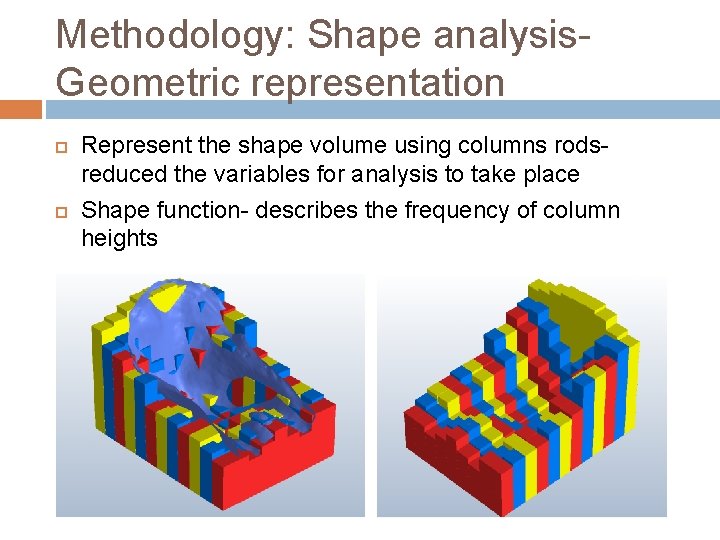
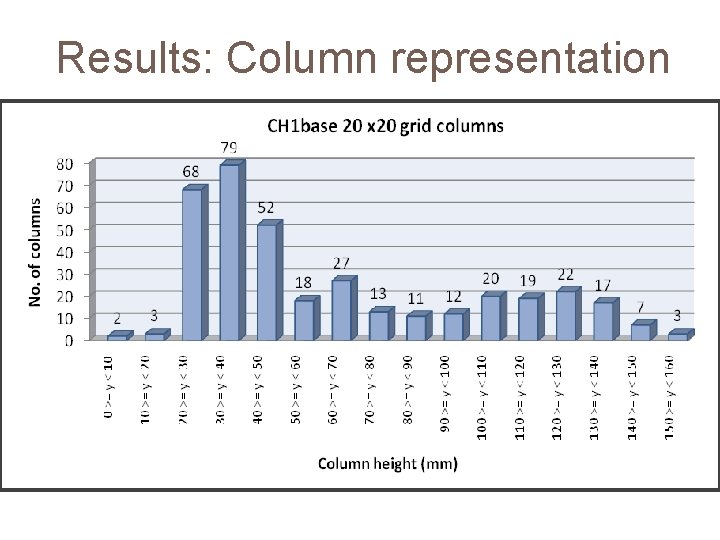
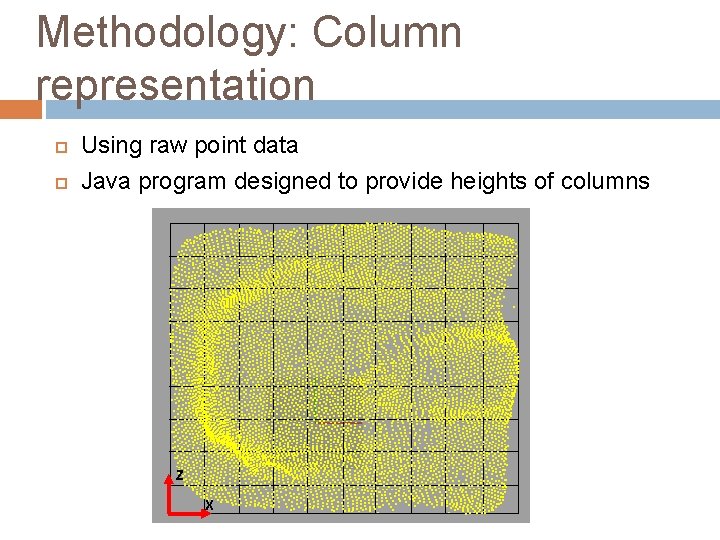
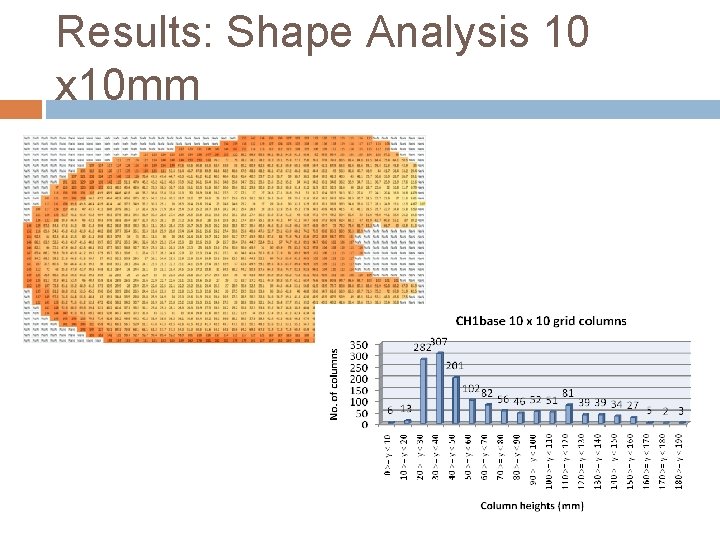
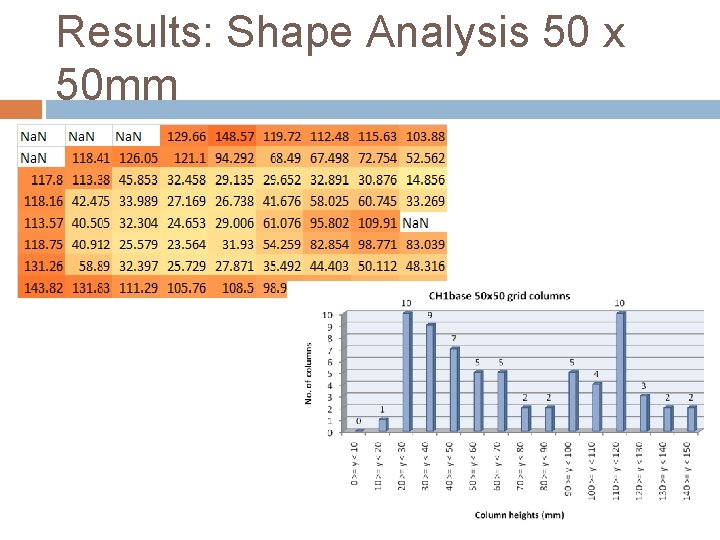
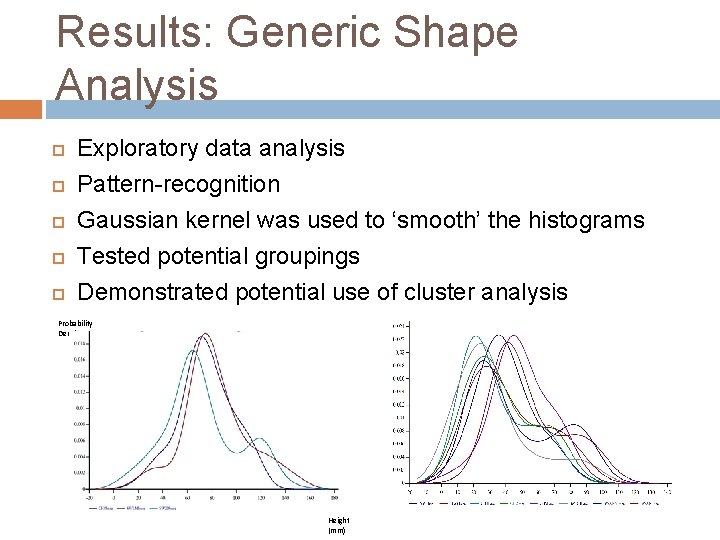
Methodology: Shape analysis. Geometric representation Represent the shape volume using columns rodsreduced the variables for analysis to take place Shape function- describes the frequency of column heights
Results: Column representation
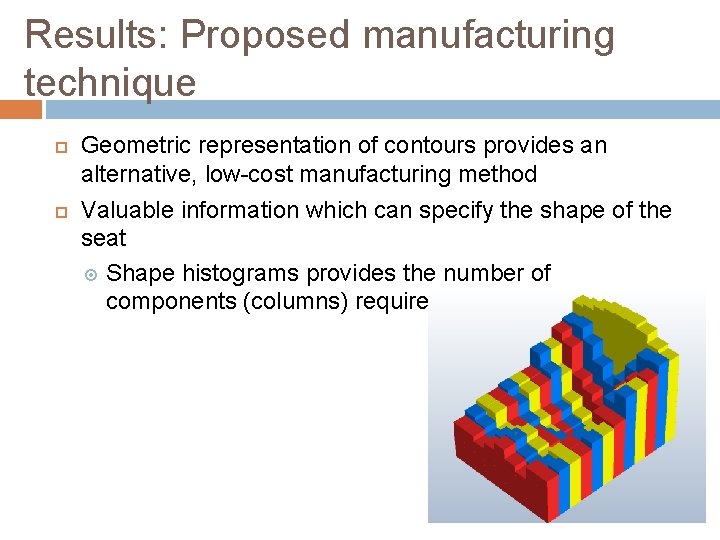
Results: Proposed manufacturing technique Geometric representation of contours provides an alternative, low-cost manufacturing method Valuable information which can specify the shape of the seat Shape histograms provides the number of components (columns) required
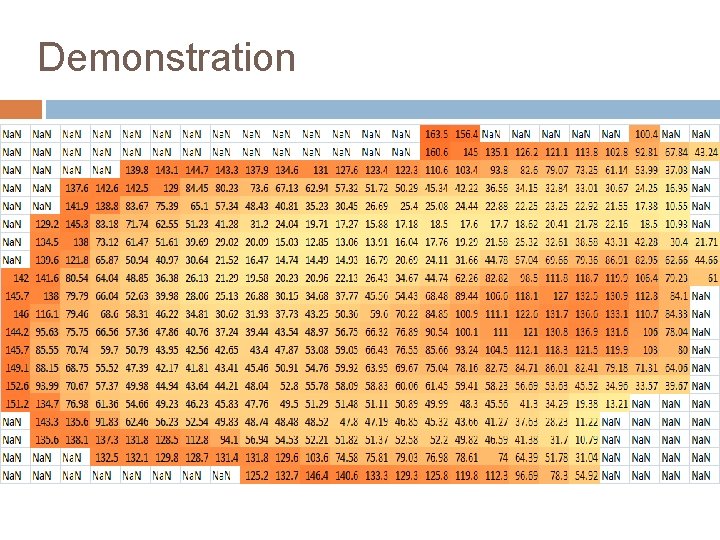
Demonstration
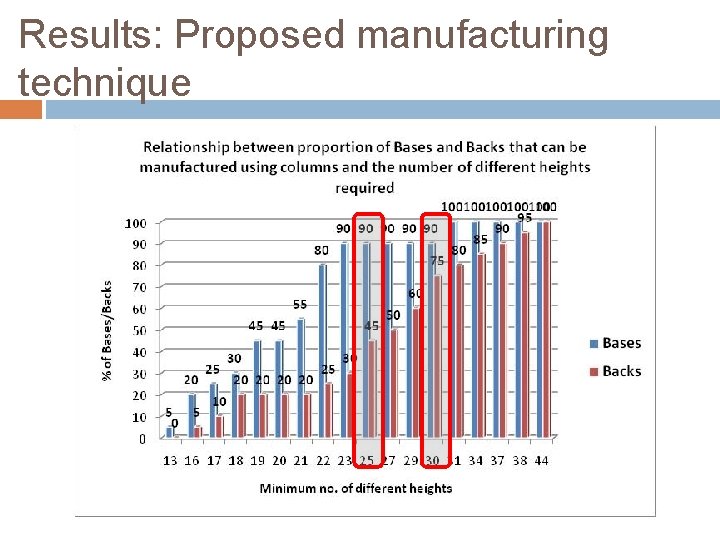
Results: Proposed manufacturing technique
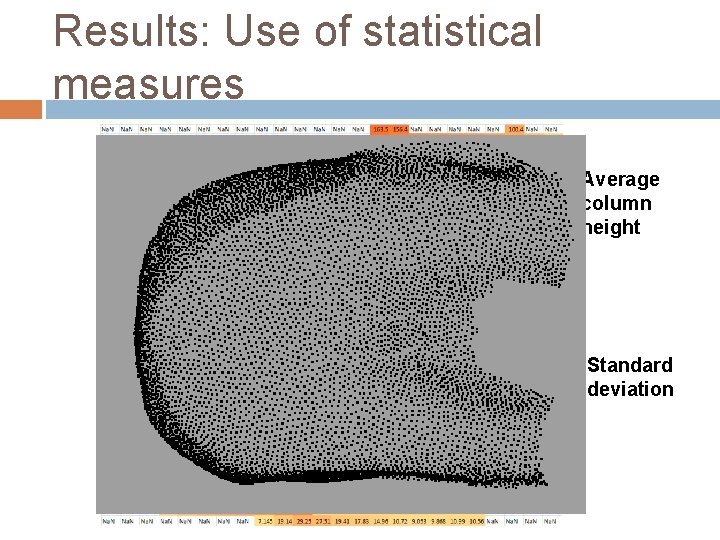
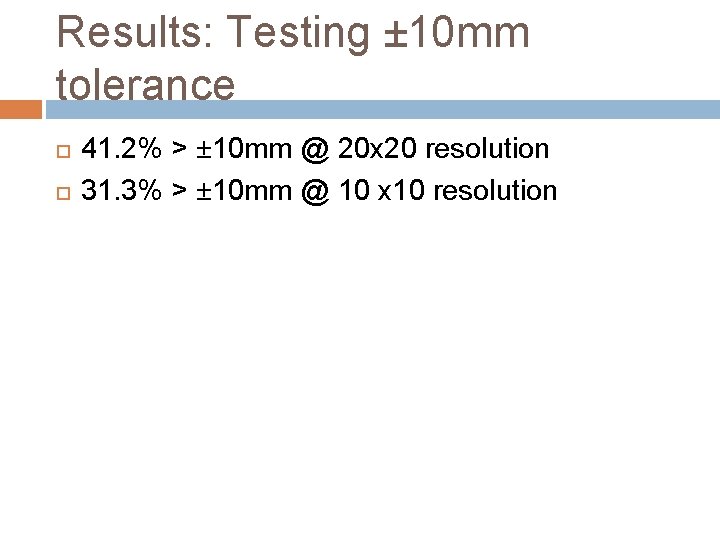
Results: Proposed manufacturing technique Data confirms that > 50% of customised support systems can be represented (and manufactured) using standardised geometric shapes Areas which exceed ± 10 mm tolerance Statistical measures used to highlight these areas
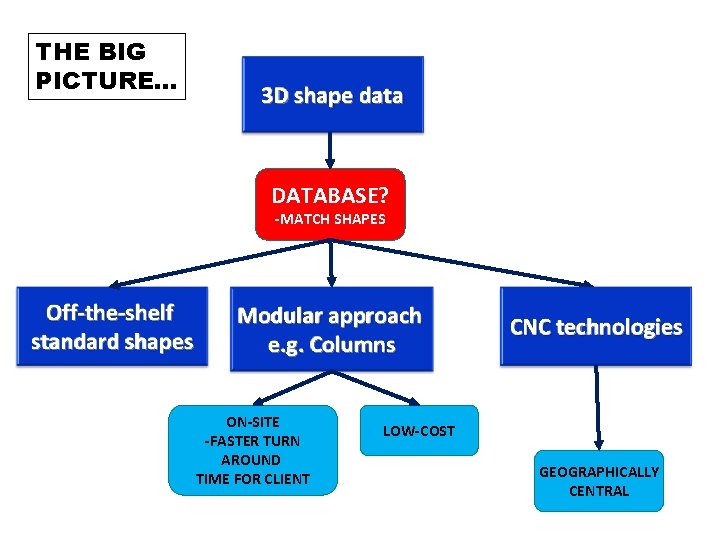
THE BIG PICTURE. . . 3 D shape data DATABASE? -MATCH SHAPES Off-the-shelf standard shapes Modular approach e. g. Columns ON-SITE -FASTER TURN AROUND TIME FOR CLIENT CNC technologies LOW-COST GEOGRAPHICALLY CENTRAL
Summary Developed shape acquisition and analysis processes to advance the knowledge of individuals’ shapes with complex disabilities Results confirmed the use of the lower cost laser scanner Routine shape capturing method of clinical workeliminate plaster casting Potential manufacturing technique explored by the definition and use of geometric shapes
Thank you Acknowledgements: Acknowledgements q. Posture & Mobility Group (PMG) for funding q. Nigel Shapcott, Head of Rehabilitation Engineering, Swansea q. Staff at Rehab Engineering, Swansea q. National Leadership and Innovation Agency For Healthcare (NLIAH) and Welsh Assembly Government for funding my postgraduate degree q. Digital Design Partnership for 3 D scanning/comparison services q. Paul Marl (North Wales Rehabilitation Engineering Unit) and Dr Donna Cowan (Chailey Clinical Services, East Sussex) for supplying plaster casts. q. ALAS (Artificial Limb and Appliance Service), Cardiff
Methodology: Column representation Using raw point data Java program designed to provide heights of columns Z X
Results: Shape Analysis 10 x 10 mm
Results: Shape Analysis 50 x 50 mm
Scanner comparison Specification Faro Scan. Arm Microscan Company details FARO Technologies Inc. , Immersion Corp. , San Jose, Florida, USA CA, USA Degrees of Freedom 7 6 Resolution ± 61µm ± 100µm Accuracy ± 61µm ± 100µm Weight 9. 5 kg 7 kg Speed 19, 200 points per second Up to 28, 000 points per second Size 200 mm square 150 mm square Workspace 2. 8 m spherical volume 1. 675 m spherical volume Laser type 660 nm, CDRH Laser type 660 nm, 1 m. W Class II/IEC Class 2 M Cost £ 100, 000 (including £ 20, 000 £ 15, 000
Results: Use of statistical measures Average column height Standard deviation
Results: Scanner comparison Chailey Shape (± 0. 5 mm)
Results: Scanner comparison Chailey shape (± 1. 0 mm)
Results: Testing ± 10 mm tolerance 41. 2% > ± 10 mm @ 20 x 20 resolution 31. 3% > ± 10 mm @ 10 x 10 resolution
Results: Generic Shape Analysis Exploratory data analysis Pattern-recognition Gaussian kernel was used to ‘smooth’ the histograms Tested potential groupings Demonstrated potential use of cluster analysis Probability Density Height (mm)