
ACPA PIPE CLASS SOILS PRESENTATION By Colin A
ACPA PIPE CLASS SOILS PRESENTATION By: Colin A. Franco, P. E. Associate Chief Engineer RIDOT Orlando, Florida March 3 -5, 2015
Soils Presentation Outline SOILS FOR PIPE INSTALLATION: I I. Description of Soil Rocks A. Definition of Soils B. Formation of Soils II. Sampling of Soils A. Field i. Test Pits ii. Soil Augers iii. Boring B. Lab I. Quartering II. Splitting III. Testing of Soils A. Lab B. Field IV. Classification of Soils A. UCS B. AASHTO V. Soil Improvement by Compaction A. Compaction – Definition i. Proctor Test B. Effects of Compaction on: i. Moisture ii. Shear Strength iii. CBR strength VI. CBR Test for Bearing Strength
Soils - Definition • Soil is the entire unconsolidated earthen material that overlies and excludes bedrock. • It is composed of loosely-bound mineral grains of various sizes and shapes. • Due to its nature of being loosely bound, it contains many voids of varying sizes. • These voids may contain air, water, organic matter, or different combinations of these materials.
Soils – Formation From Rock • • • Soil forms when rocks that are exposed to the atmosphere disintegrate and decompose, either by mechanical action (wind, water, ice, and vegetation), chemical action, or both. The resulting material may remain where it is formed or it may be transported by water, glaciers, wind, or gravity and deposited at a distance from the parent rock. Geologists classify rocks into three basic groups: • • • Igneous (formed by cooling from a molten state). Sedimentary (formed by the accumulation and cementation of existing particles and remains of plants and animals). Metamorphic (formed from existing rocks subjected to heat and pressure).
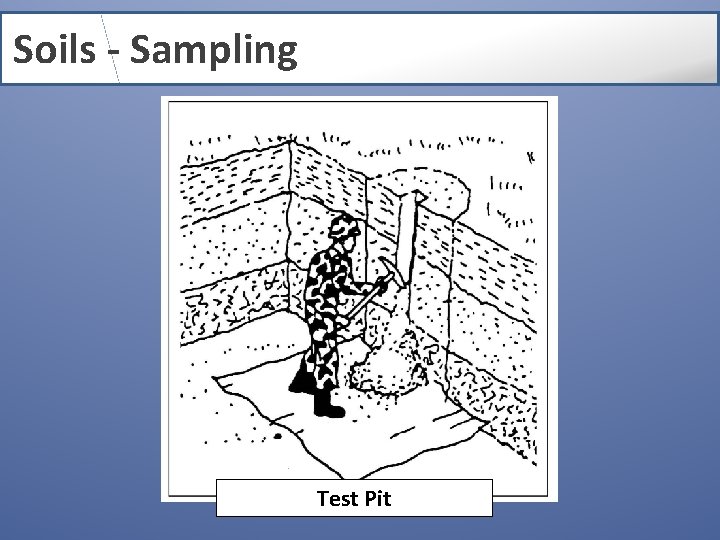
Soils - Sampling Test Pit
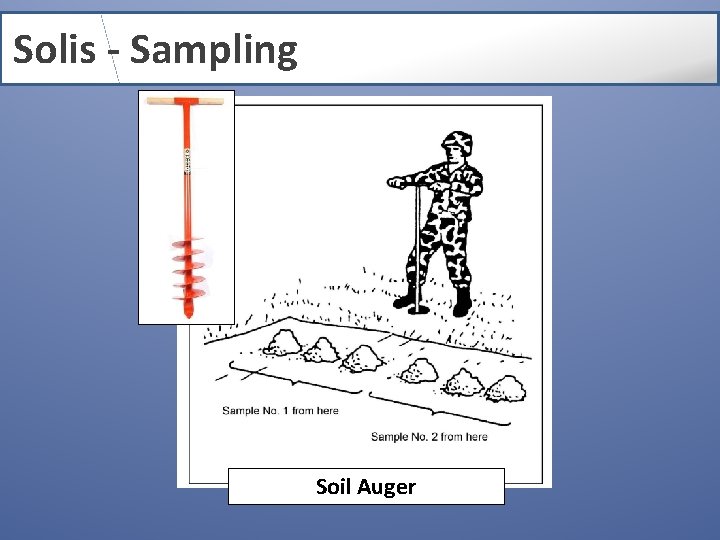
Solis - Sampling Soil Auger
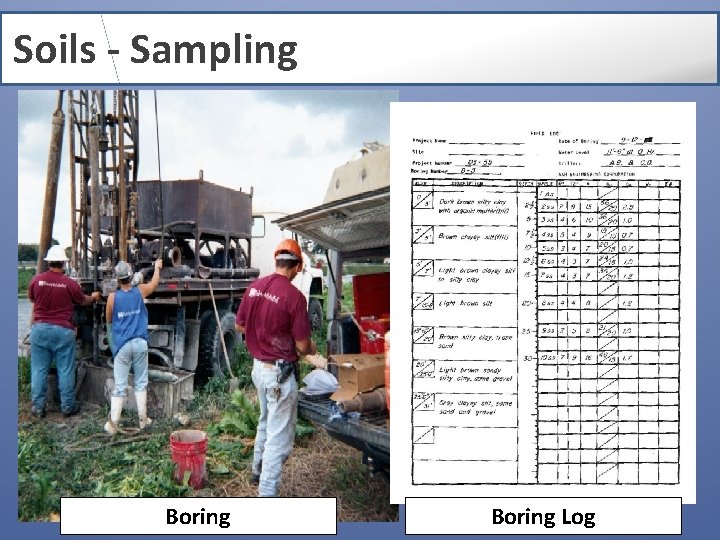
Soils - Sampling Boring Log
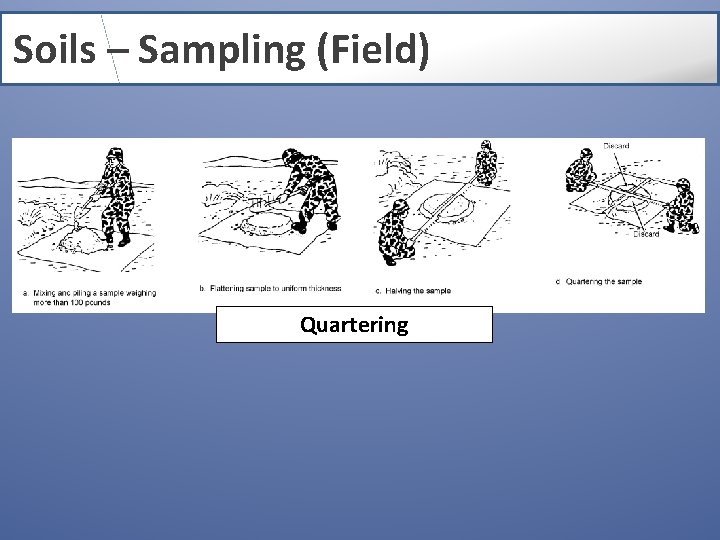
Soils – Sampling (Field) Quartering
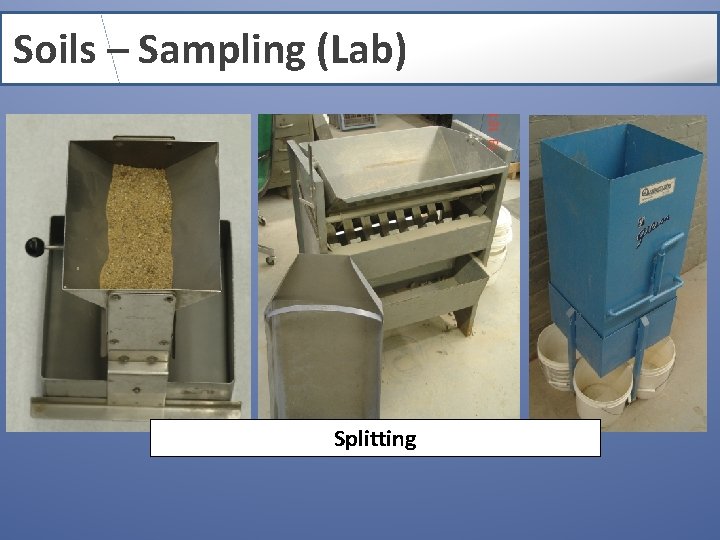
Soils – Sampling (Lab) Splitting
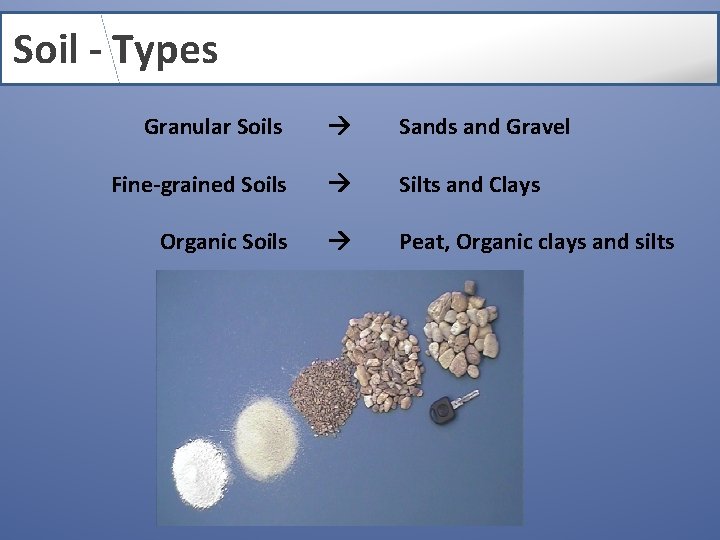
Soil - Types Granular Soils Sands and Gravel Fine-grained Soils Silts and Clays Organic Soils Peat, Organic clays and silts
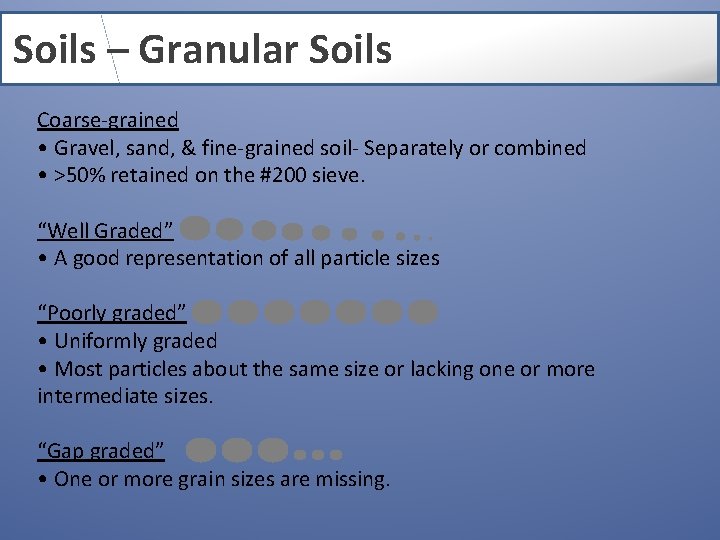
Soils – Granular Soils Coarse-grained • Gravel, sand, & fine-grained soil- Separately or combined • >50% retained on the #200 sieve. “Well Graded” • A good representation of all particle sizes “Poorly graded” • Uniformly graded • Most particles about the same size or lacking one or more intermediate sizes. “Gap graded” • One or more grain sizes are missing.
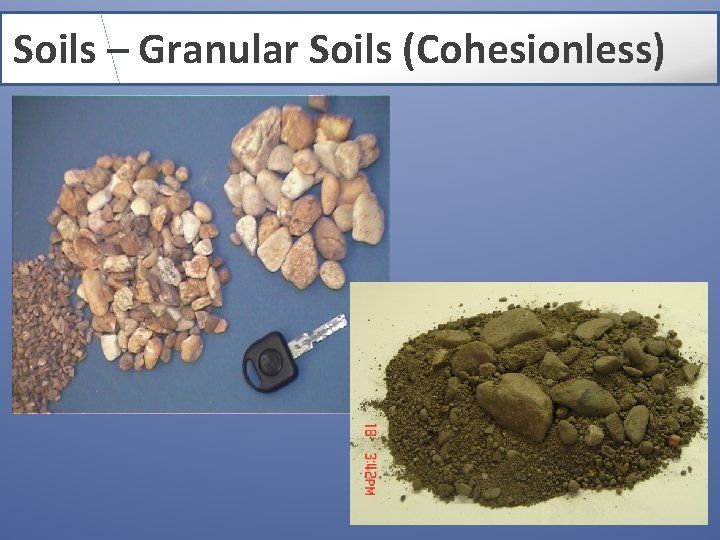
Soils – Granular Soils (Cohesionless)
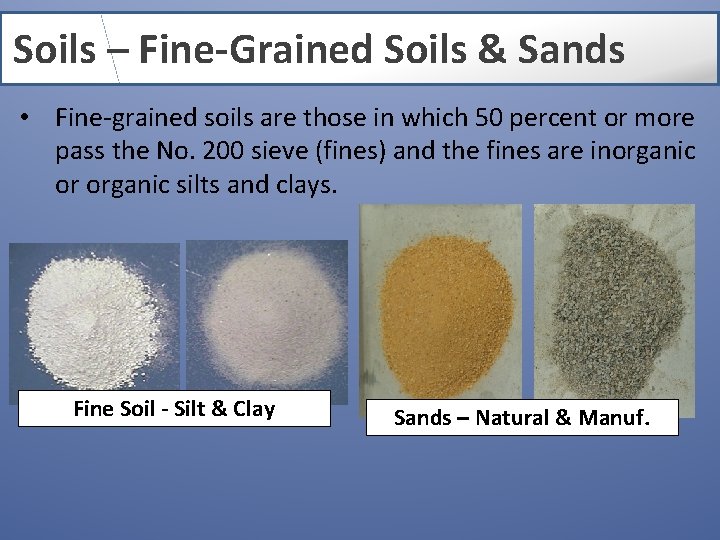
Soils – Fine-Grained Soils & Sands • Fine-grained soils are those in which 50 percent or more pass the No. 200 sieve (fines) and the fines are inorganic or organic silts and clays. Fine Soil - Silt & Clay Sands – Natural & Manuf.
Soils – Organic Soils • Soils that contain significant amounts of muck. (Example: Organic Silt) • Muck • Deposits of a saturated or unsaturated mixture of soils and organic matter not suitable for foundation material regardless of moisture content. • Organic Matter • The more or less decomposed material of soil derived from organic sources, usually from plant remains. The term "organic matter" covers such material in all stages of decay. (Example: Peat)
Soils – Physical Properties • A soil’s physical properties help determine the engineering characteristics. The following properties are the basis for the soil-classification system used in engineering identification of soil types. The discussion of the physical properties of soil focuses on the soil particles themselves. The terms particle and grain are used interchangeably. 1) 2) 3) 4) 5) 6) 7) 8) 9) Grain size. Particle shape. Sieve Analysis. Density. Specific gravity. Moisture. Consistency. Organic soil. Plasticity characteristics of fine-grained soil components include the liquid limit (LL) and the plastic limit (PL).
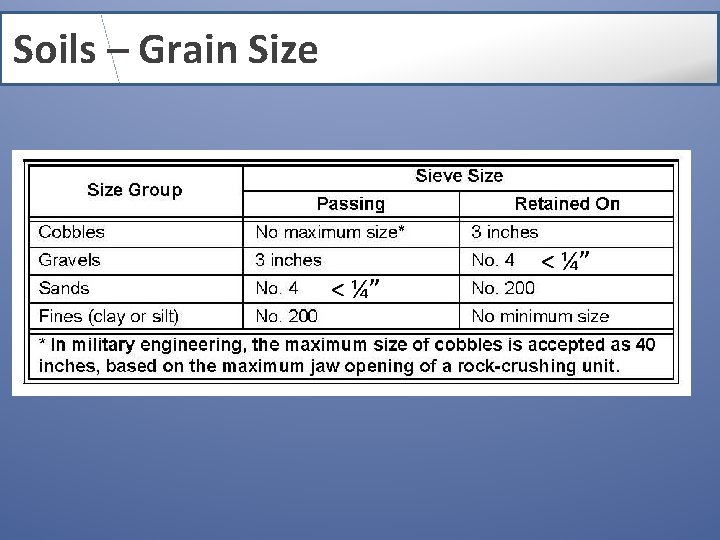
Soils – Grain Size < ¼”
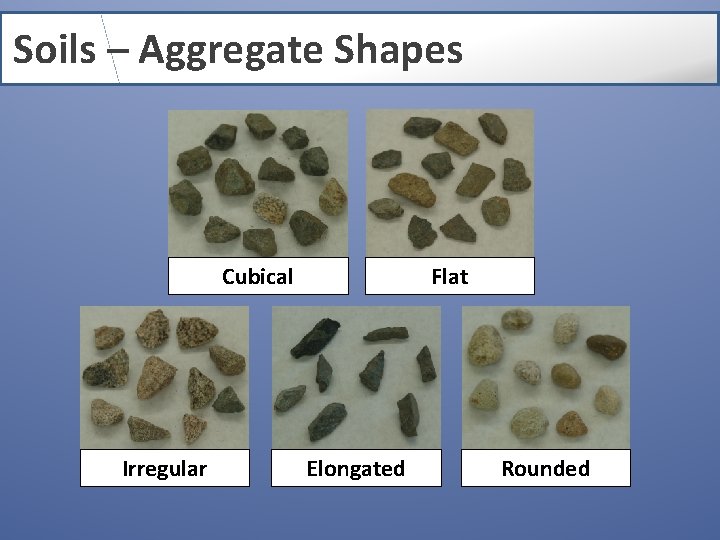
Soils – Aggregate Shapes Cubical Irregular Flat Elongated Rounded
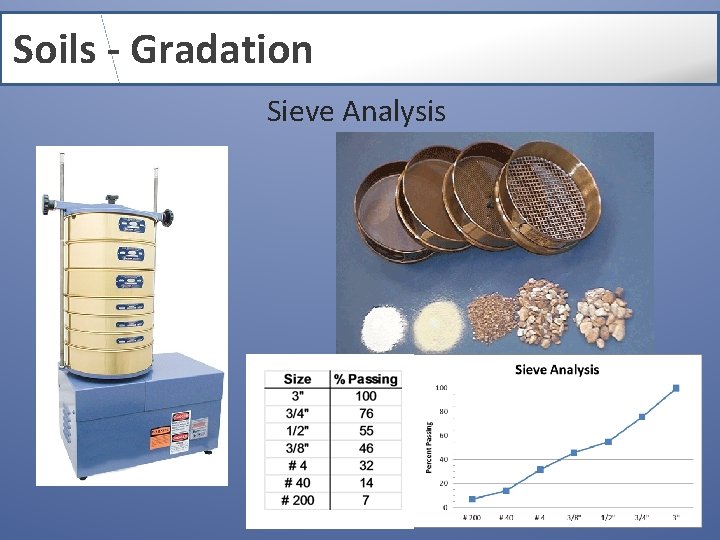
Soils - Gradation Sieve Analysis
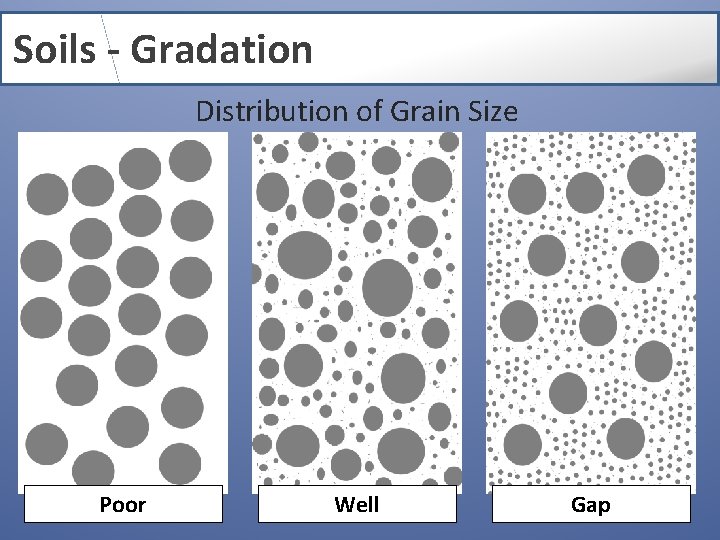
Soils - Gradation Distribution of Grain Size Poor Well Gap
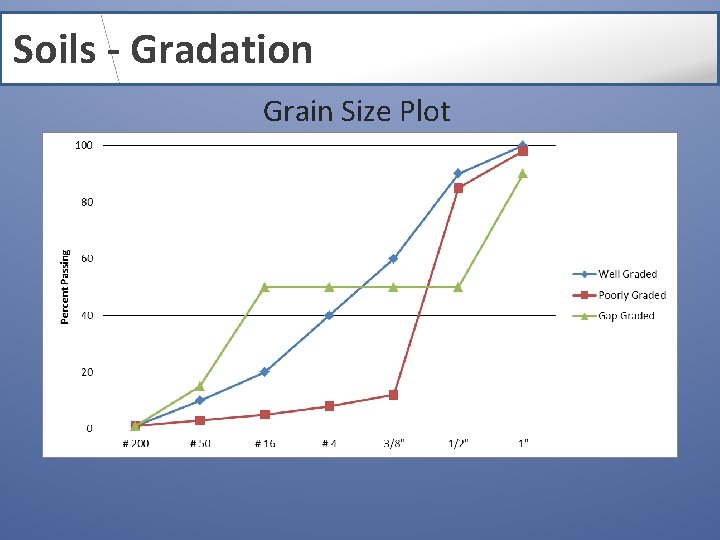
Soils - Gradation Grain Size Plot
Soils – Lab Test Plasticity • Plasticity is a soil’s ability to deform without cracking or breaking. • A plasticity index (PI) is used to determine whether soil is cohesive. • Soil is considered cohesive if its PI is greater than 5. • Gravels, sands, and most silts are not cohesive and are called cohesionless soils. • In engineering practice, soil plasticity is determined by observing the different physical states that a plastic soil passes through as the moisture conditions change.
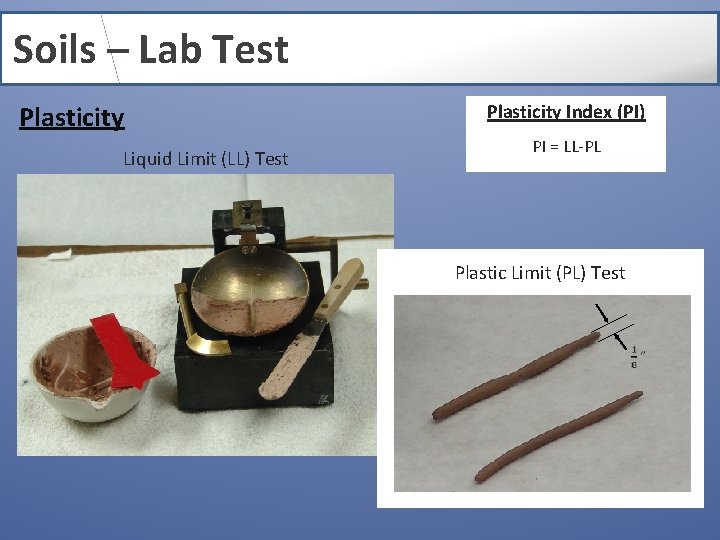
Soils – Lab Test Plasticity Liquid Limit (LL) Test Plasticity Index (PI) PI = LL-PL Plastic Limit (PL) Test
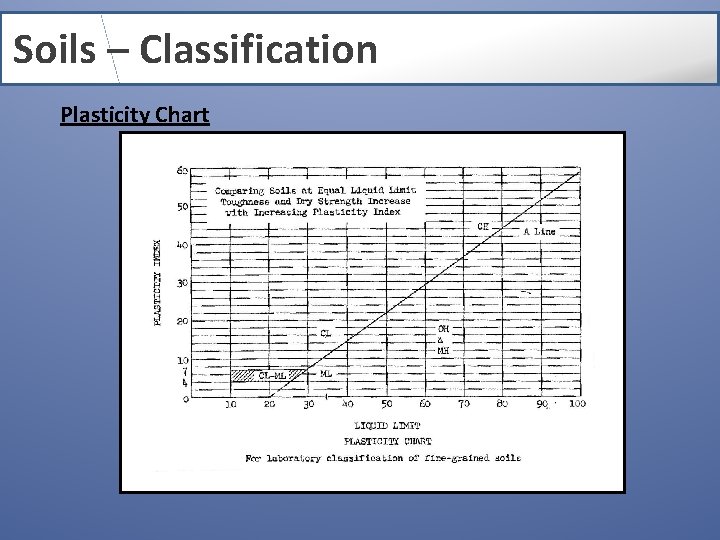
Soils – Classification Plasticity Chart
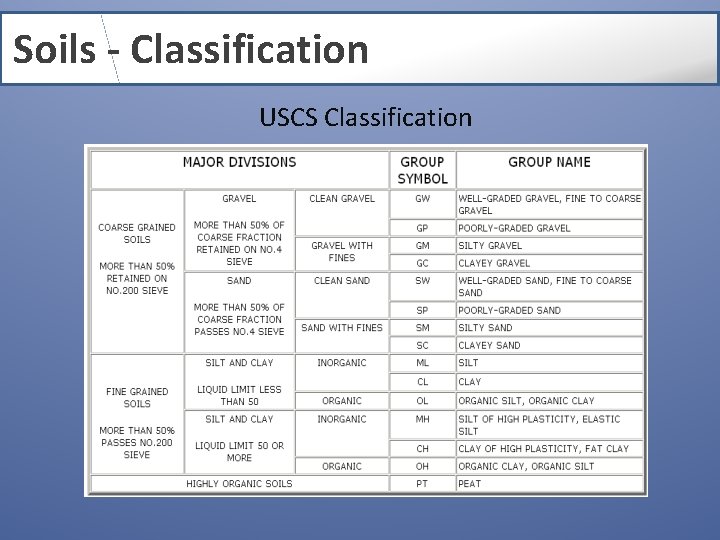
Soils - Classification USCS Classification
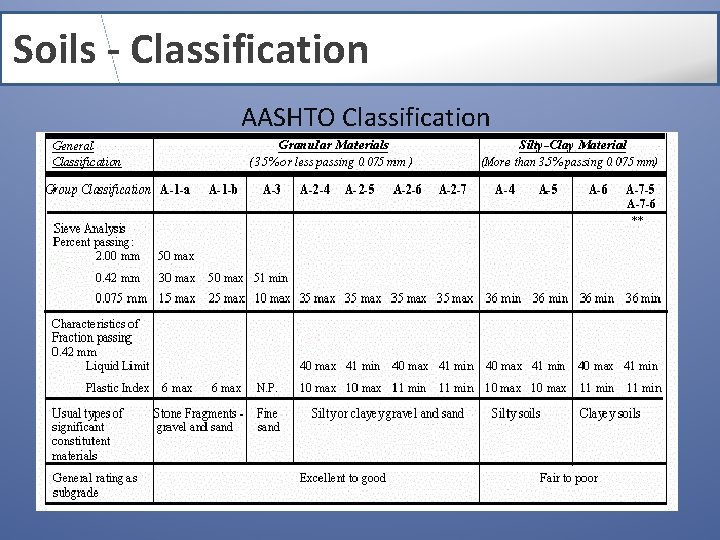
Soils - Classification AASHTO Classification
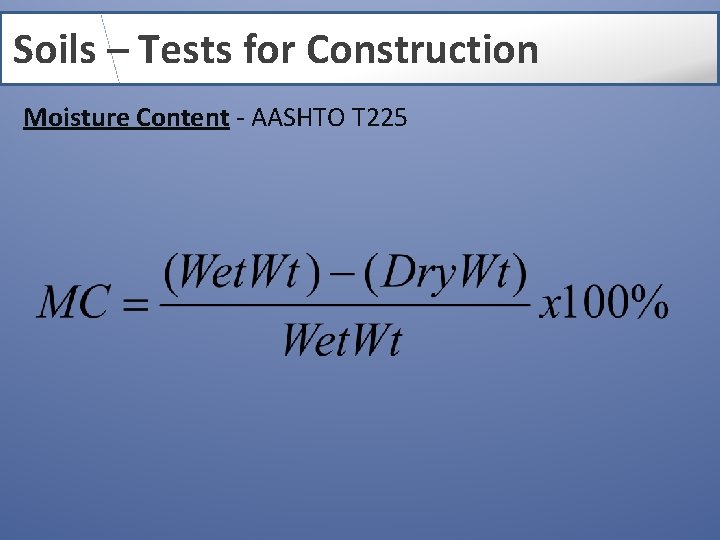
Soils – Tests for Construction Moisture Content - AASHTO T 225
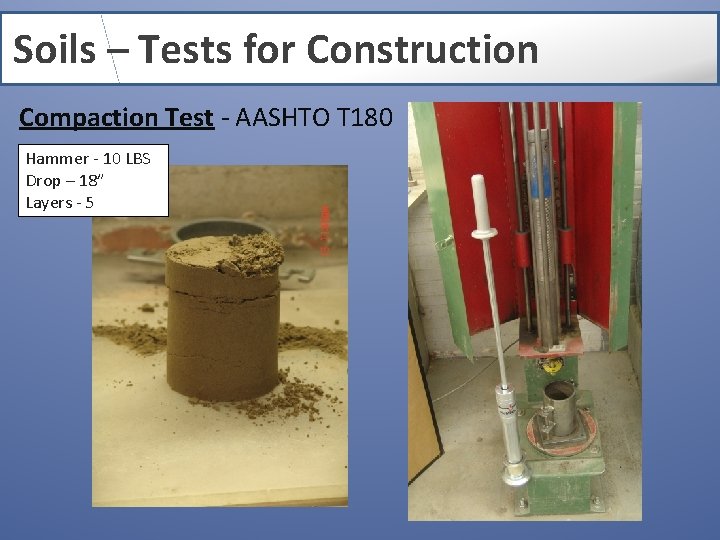
Soils – Tests for Construction Compaction Test - AASHTO T 180 Hammer - 10 LBS Drop – 18” Layers - 5
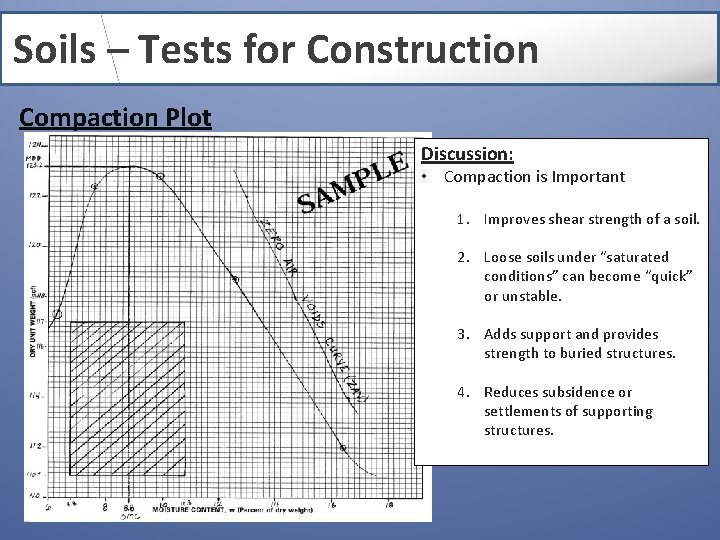
Soils – Tests for Construction Compaction Plot Discussion: • Compaction is Important 1. Improves shear strength of a soil. 2. Loose soils under “saturated conditions” can become “quick” or unstable. 3. Adds support and provides strength to buried structures. 4. Reduces subsidence or settlements of supporting structures.
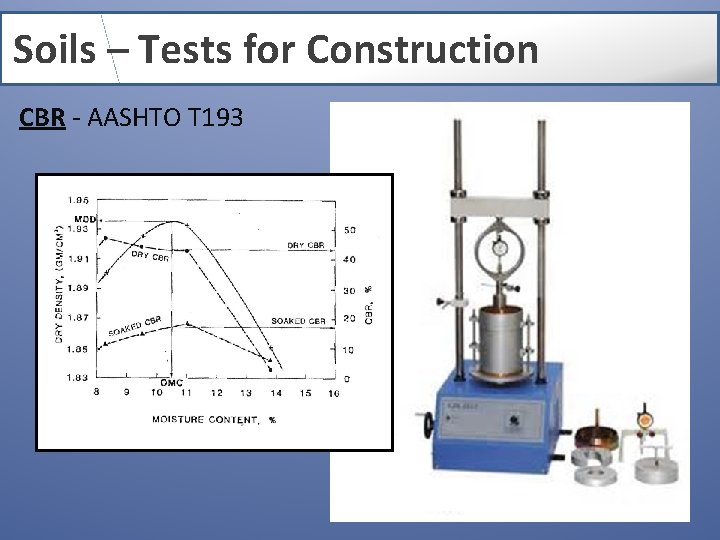
Soils – Tests for Construction CBR - AASHTO T 193
Soils – Field Testing • • • Visual Examination Separate Gravel Odor Test Sedimentation Test Bite/Grit Test Feel Test • Roll/Thread Test • Wet Shaking Test • Breaking/Dry-Strength Test • Ribbon Test • Shine Test
Soils Presentation - Practicals for Soils I. III. Color of Soils A. Tan / Red / Grey Soil Types A. Types: i. Gravel ii. Sand iii. Silt iv. Clay v. Organic B. Particle Shapes: i. Round ii. Cubical iii. Irregular iv. Flat v. Elongated Gradation A. Show “Sand” paper of different sand – clay sizes B. Show sample of “Bottles” with different sizes. <Gravels Clays> IV. Demonstrate Clays A. 1/8” dia. Thread – Roll threads of clays into 1/8” (damp) pass #40 B. Feel between fingers – Slippery feel of the clay ½ (damp) C. Wet Shake – Hand pat of clay 2” dia. X ½” (dry) V. Demonstrate Silt A. 1/8” dia. Thread – Inability to roll silt to 1/8” thread. (Pass #40) B. Feel between fingers – Gritty feel and bite C. Wet Shake – Dilatency of moist silt in hand/tap (Pass #40) VI. Stokes Experiment A. Silt and Clay settling in water B. Settling in layers depending on grain size VII. Ribbon Test (½” – ¾” dia. ) X (3” – 5”) A. Finger squeeze ribbon to elongate. If: i. 8” – 10” CH ii. 3” – 8” CL
- Slides: 31