
ACOS 1 Describe characteristics common to living things
ACOS 1 Describe characteristics common to living things, including growth and development, reproduction, cellular organization, use of energy, exchange of gases, and response to the environment.

• Biotic factors are any living component that affects another organism. • Biotic factors include all plants, animals, bacteria, and viruses.
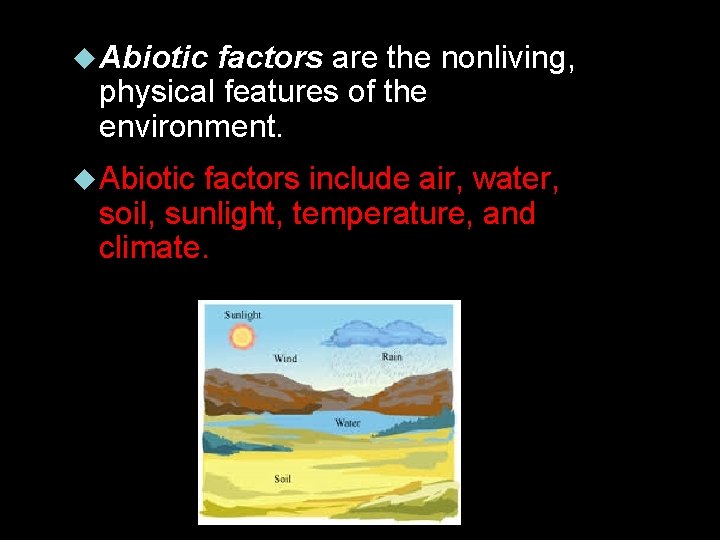
Abiotic factors are the nonliving, physical features of the environment. Abiotic factors include air, water, soil, sunlight, temperature, and climate.
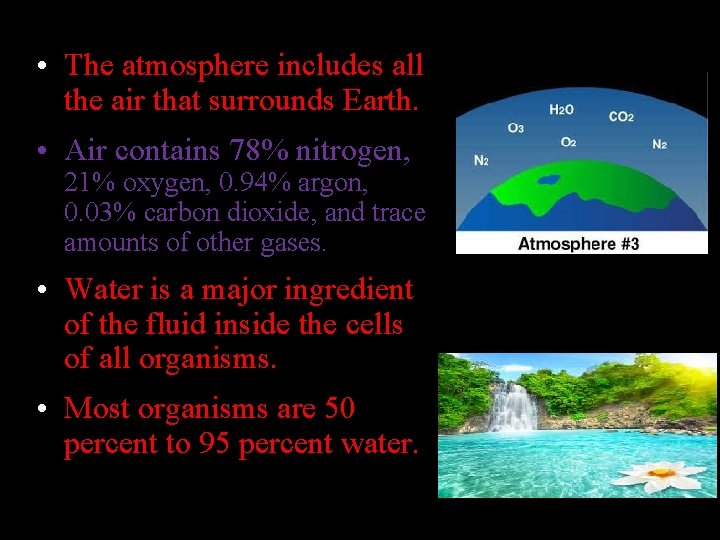
• The atmosphere includes all the air that surrounds Earth. • Air contains 78% nitrogen, 21% oxygen, 0. 94% argon, 0. 03% carbon dioxide, and trace amounts of other gases. • Water is a major ingredient of the fluid inside the cells of all organisms. • Most organisms are 50 percent to 95 percent water.
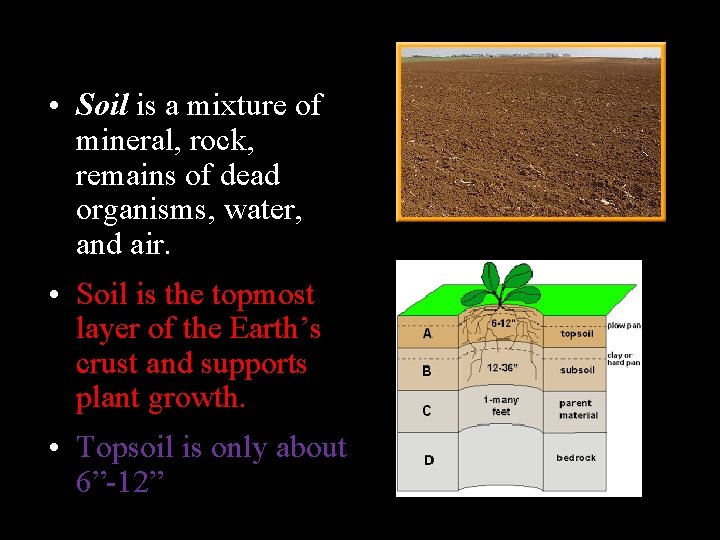
• Soil is a mixture of mineral, rock, remains of dead organisms, water, and air. • Soil is the topmost layer of the Earth’s crust and supports plant growth. • Topsoil is only about 6”-12”
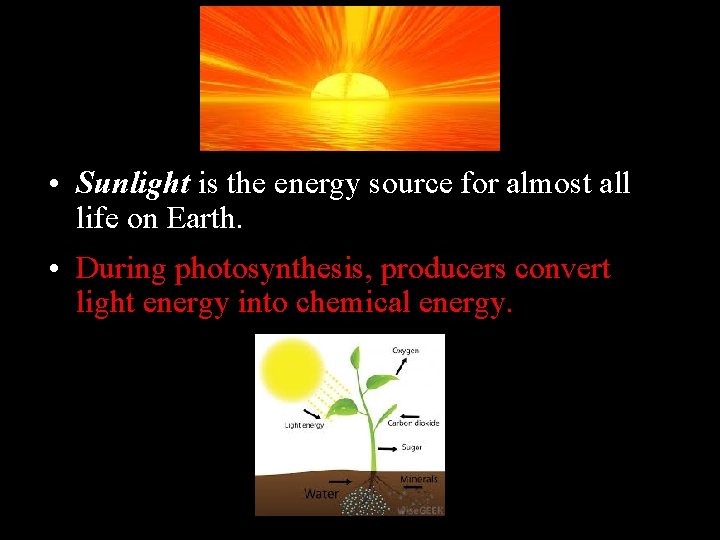
• Sunlight is the energy source for almost all life on Earth. • During photosynthesis, producers convert light energy into chemical energy.

• Most organisms can survive only if their body temperatures stay within the range of 0°C to 50°C. • That’s about 32 to 122 degrees F • Water freezes at 0°C and boils at 100°C. • 100°C=212°F
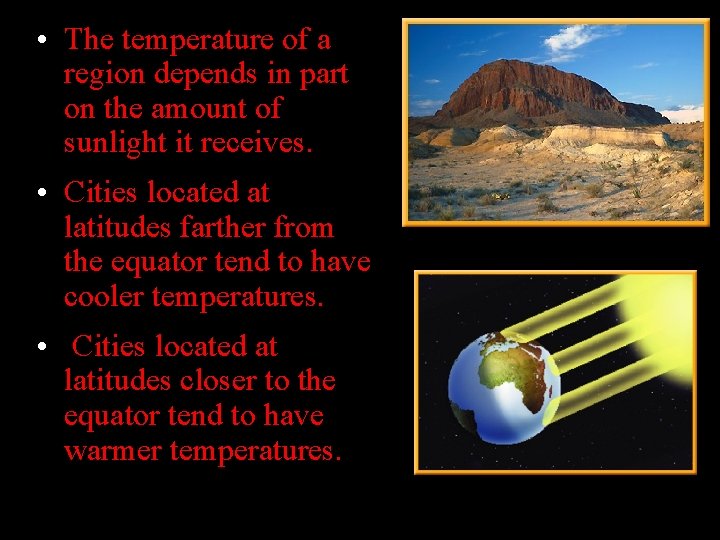
• The temperature of a region depends in part on the amount of sunlight it receives. • Cities located at latitudes farther from the equator tend to have cooler temperatures. • Cities located at latitudes closer to the equator tend to have warmer temperatures.
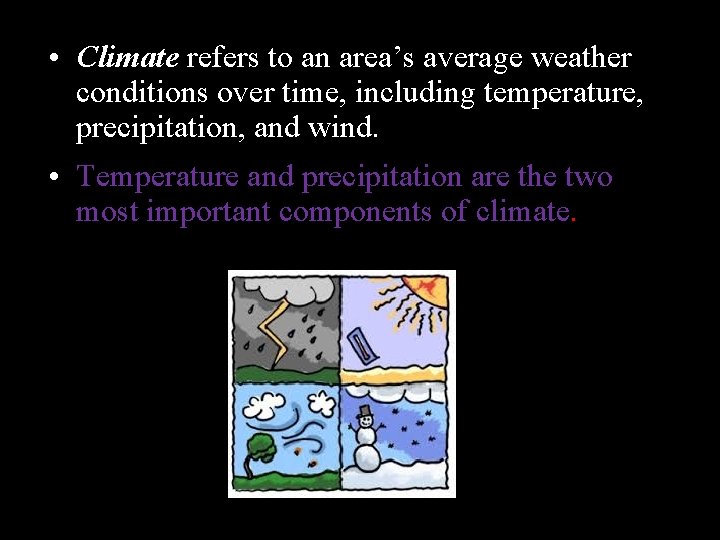
• Climate refers to an area’s average weather conditions over time, including temperature, precipitation, and wind. • Temperature and precipitation are the two most important components of climate.
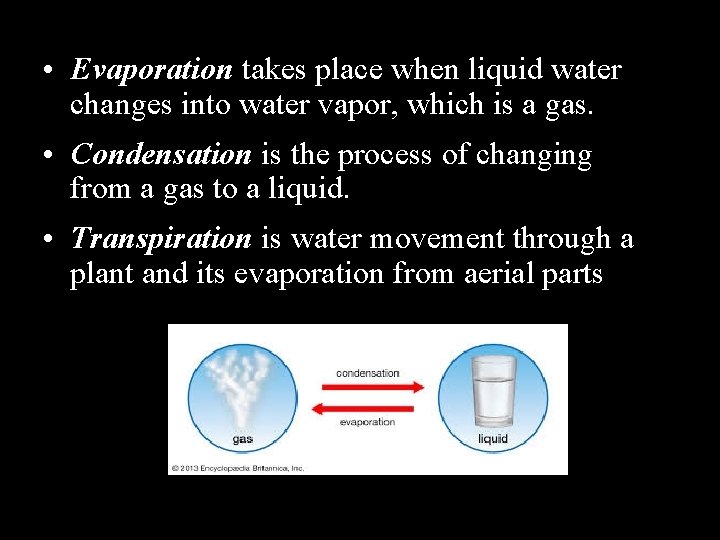
• Evaporation takes place when liquid water changes into water vapor, which is a gas. • Condensation is the process of changing from a gas to a liquid. • Transpiration is water movement through a plant and its evaporation from aerial parts
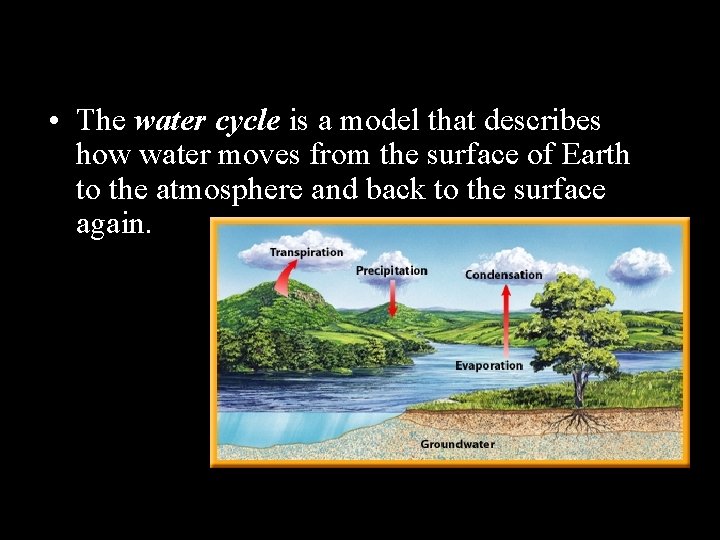
• The water cycle is a model that describes how water moves from the surface of Earth to the atmosphere and back to the surface again.
- Slides: 11