
ACORN WORKSHOP Cliff Sadof Bob ONeil and Farah
ACORN WORKSHOP Cliff Sadof, Bob O’Neil and Farah Heraux Purdue University Department of Entomology w o r k s h o p Rob Wiedenmann Illinois Natural History Survey Spring 2003 A C O R N
Schedule 0: 00 Introduction to Workshop/ Biological Control 0: 15 Know the Natural Enemies 1: 30 Break/Demonstrations 2: 00 Why Plant Flowers? 2: 15 Alternative Pesticides 2: 30 Using ACORN to Implement Biological Control in Your Landscape 2: 45 Discover Biological Control at Home 3: 00 Workshop Ends Schedule
ACORN objectives AC OR N obje ctive s n Reduce pesticide usage. n Design gardens to minimize pest problems. n Use tactics that enhance and don’t disrupt pest control. n Learn by doing.
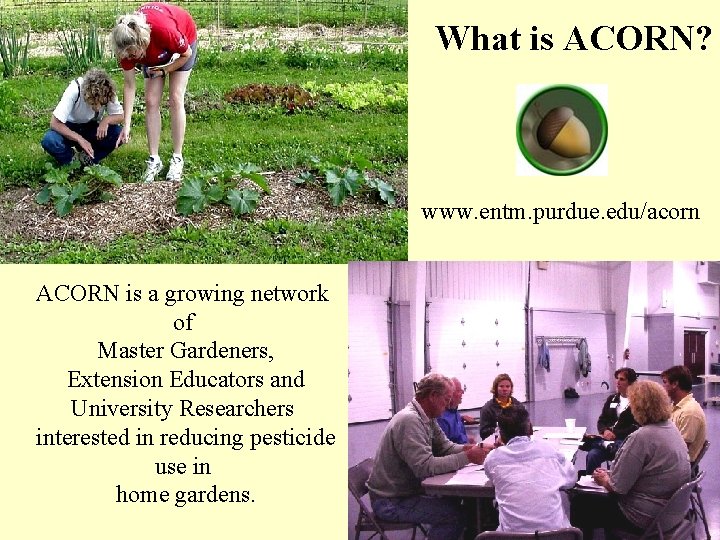
What is ACORN? W h a t i s A C O R N ? www. entm. purdue. edu/acorn ACORN is a growing network of Master Gardeners, Extension Educators and University Researchers interested in reducing pesticide use in home gardens.
Why should we look at alternatives to pesticides? n Per acre pesticide use in home gardens exceeds that of many major agricultural commodities. n Application, storage and disposal issues challenge many home gardeners. Why should we look at alternatives to pesticides?
Section 1 Outline §What Is Biological Control? § Know the Natural Enemies § § § Predators Parasites Pathogens Section 1 outline
What is biological control? The use of living organisms to control pest insects, weeds or diseases. Typically involves some human activity. What is biological control?
What Are Natural Enemies? Natural enemies are living organisms that: § Kill pests § Decrease pest reproductive potential § Compete with pest organisms for use of your plants. What are natural enemies?
Biological control How Is It Implemented? § Use what you have (Conservation). § Add what you need (Augmentation). Who kills Pests? § Predators § Parasites § Pathogens Biological control
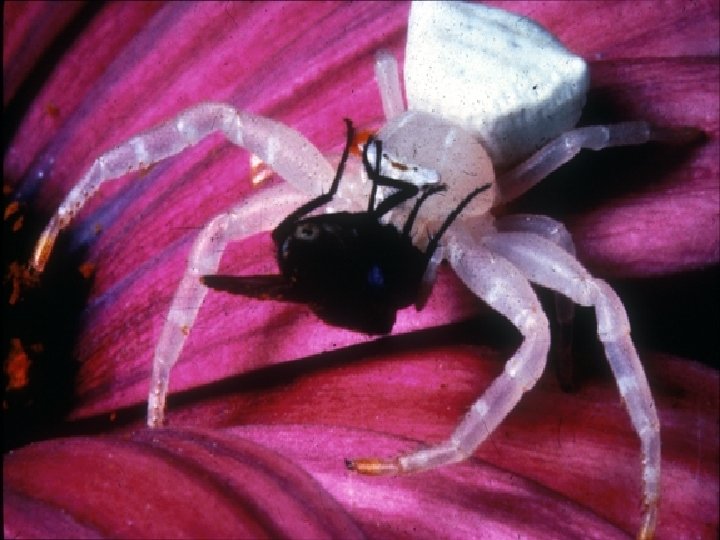
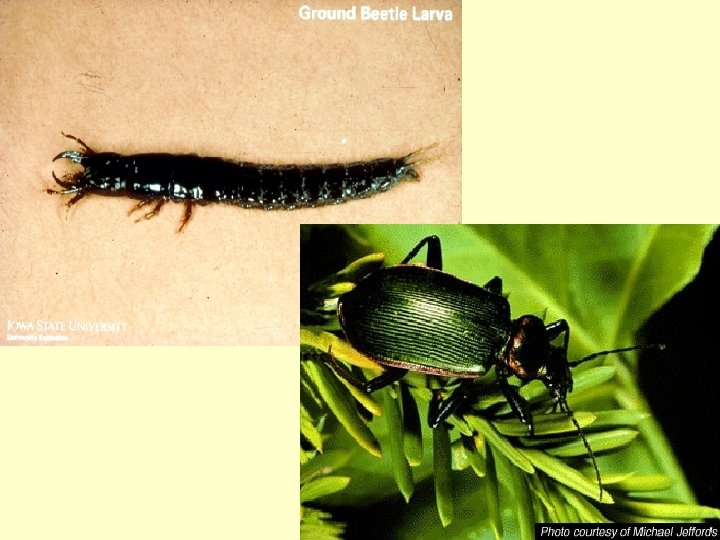
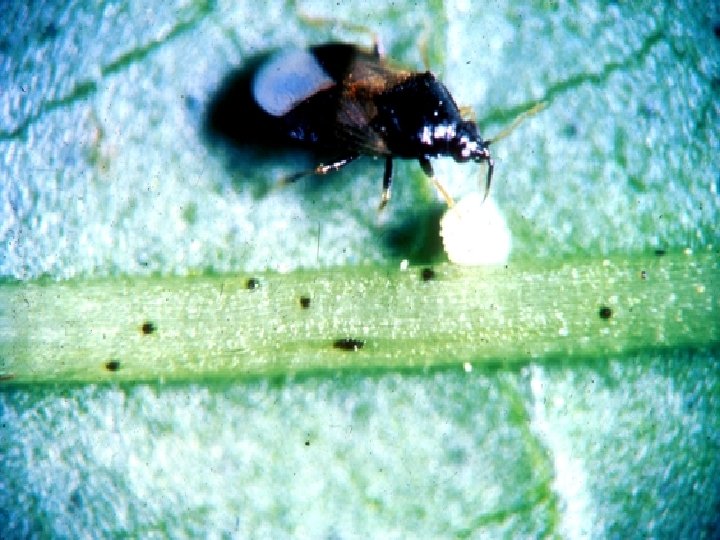
Predators Adults and immature stages kill and consume many prey. n Generally larger and faster than prey. n 200, 000 species! n Males, females, immatures and adults may be predatory. n Remove the evidence. n Predators

Praying mantis
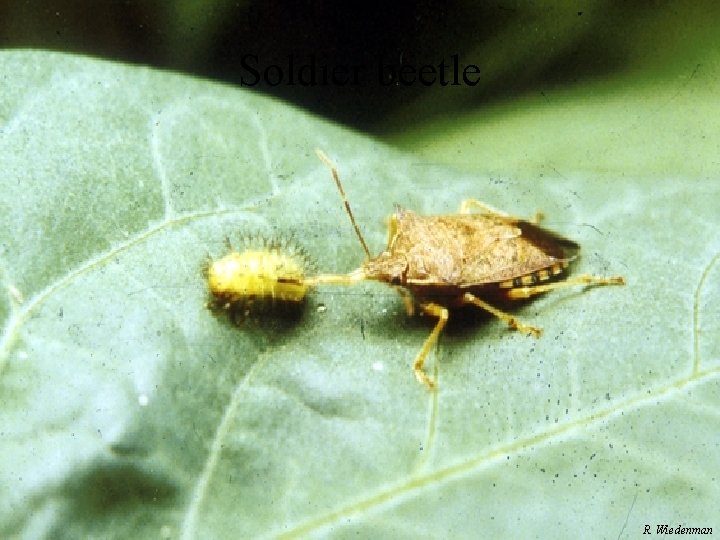
Soldier beetle R. Wiedenman
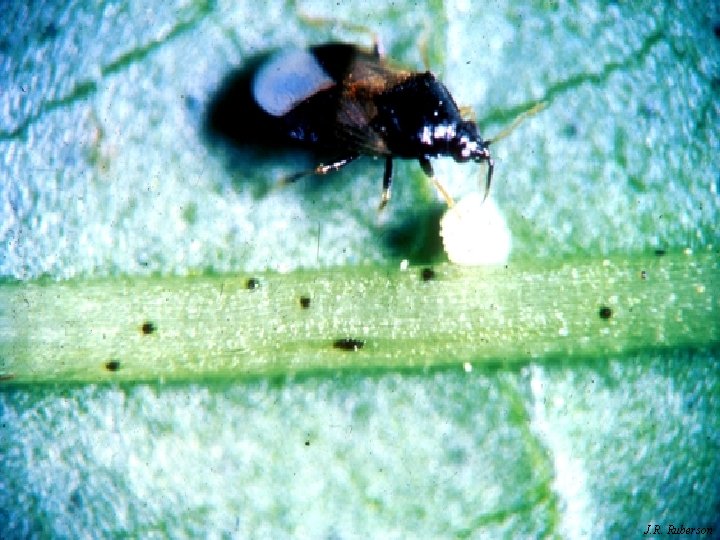
Minute pirate bug J. R. Ruberson
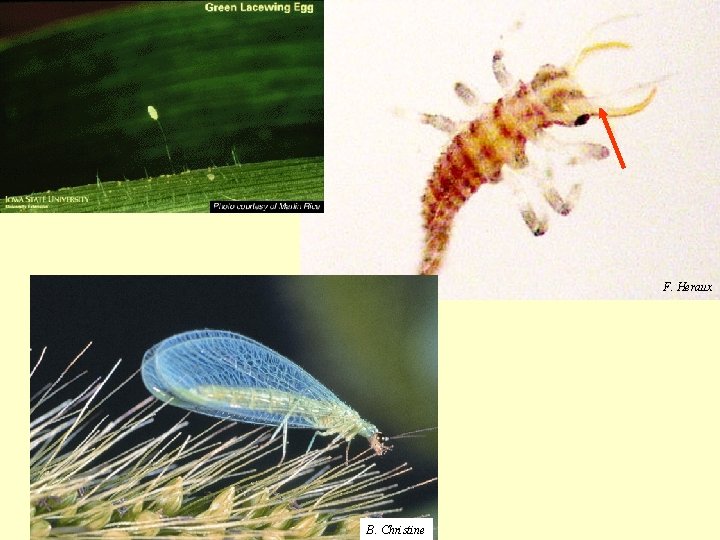
Lacewing F. Heraux B. Christine
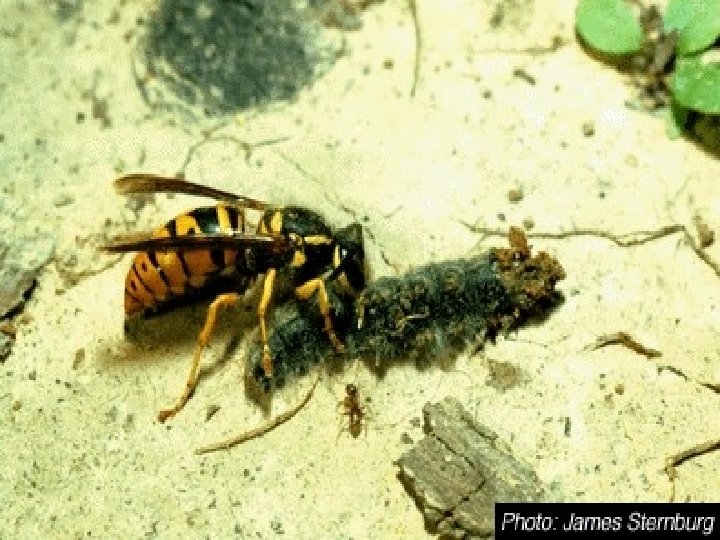
Yellow jacket wasp
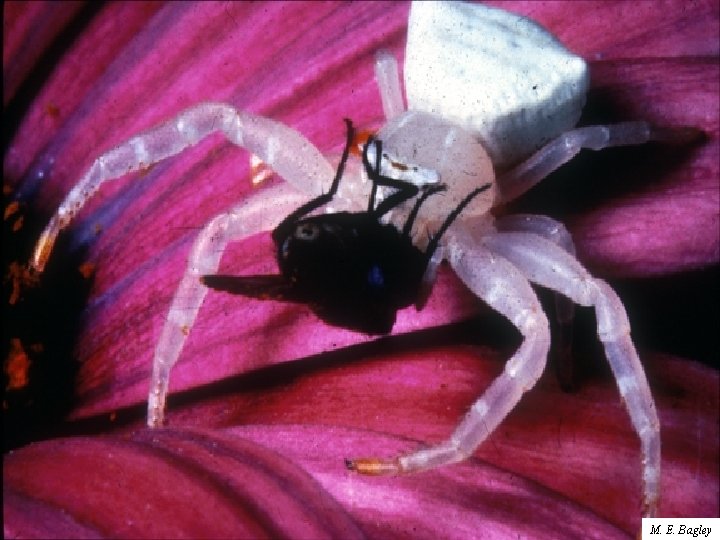
Spider M. E. Bagley
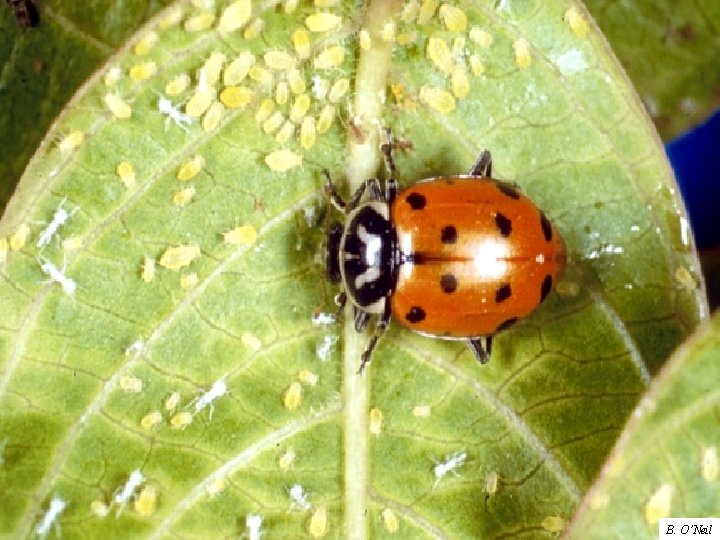
Lady beetle adult B. O’Neil
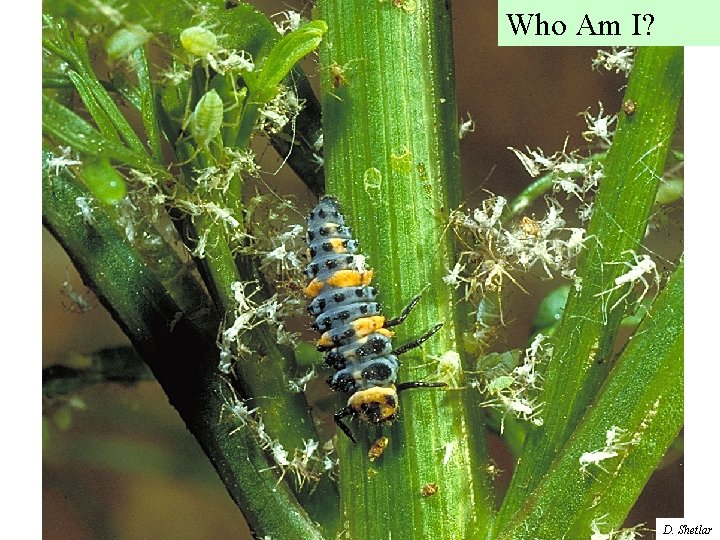
Who Am I? Lady beetle larva D. Shetlar
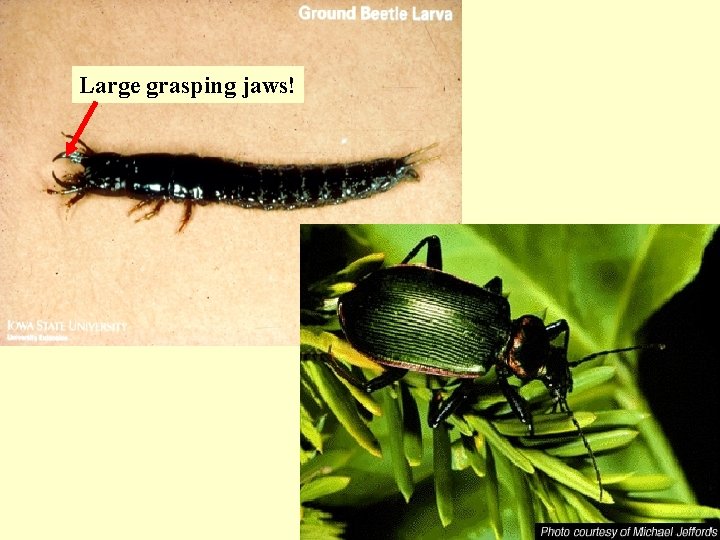
Large grasping jaws! Ground beetle
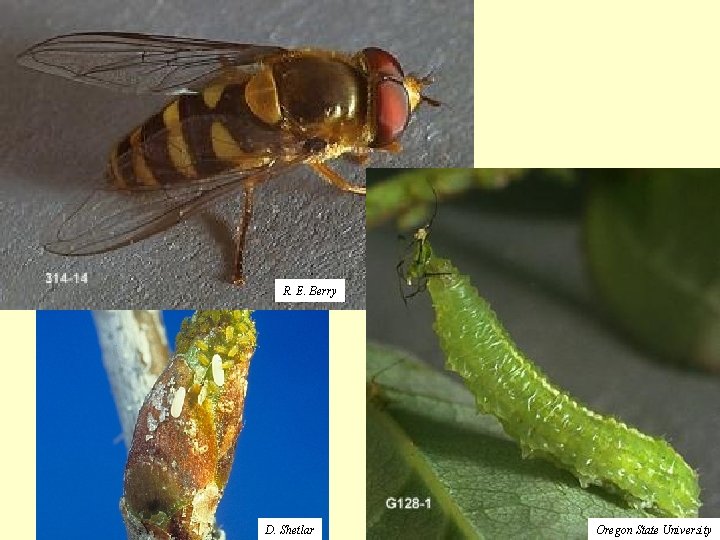
Hover fly R. E. Berry D. Shetlar Oregon State University
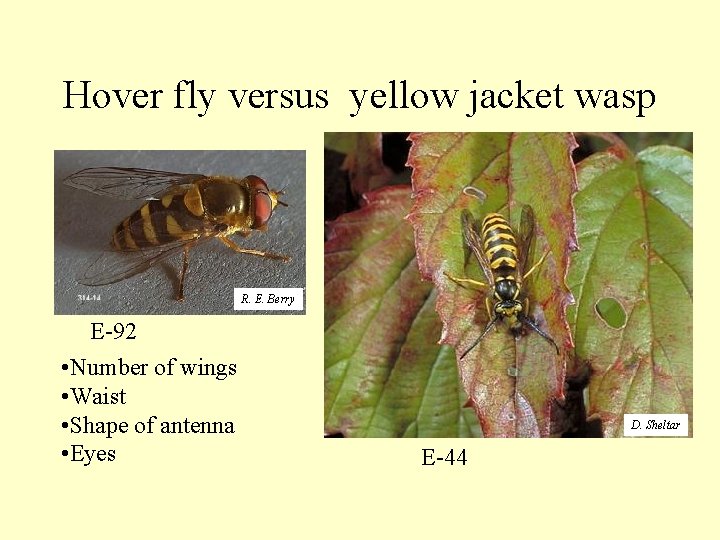
Hover fly versus yellow jacket wasp R. E. Berry E-92 • Number of wings • Waist • Shape of antenna • Eyes D. Sheltar E-44
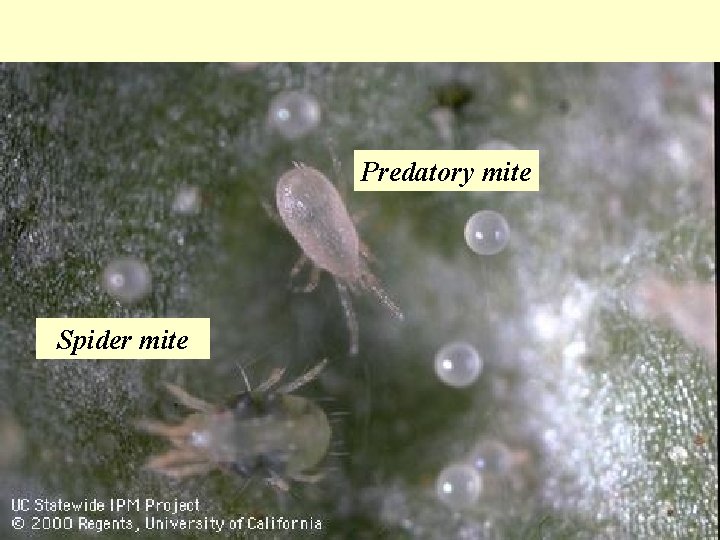
Predatory mites versus spider mite Predatory mite Spider mite
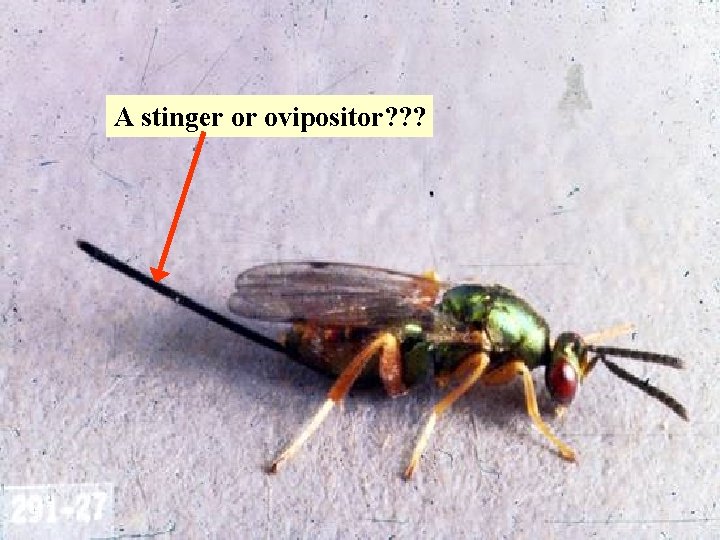
A parasite A stinger or ovipositor? ? ?
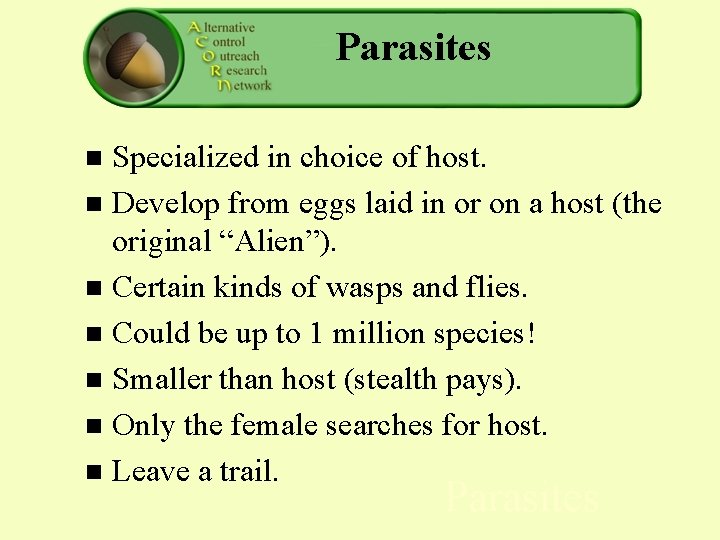
Parasites Specialized in choice of host. n Develop from eggs laid in or on a host (the original “Alien”). n Certain kinds of wasps and flies. n Could be up to 1 million species! n Smaller than host (stealth pays). n Only the female searches for host. n Leave a trail. n Parasites
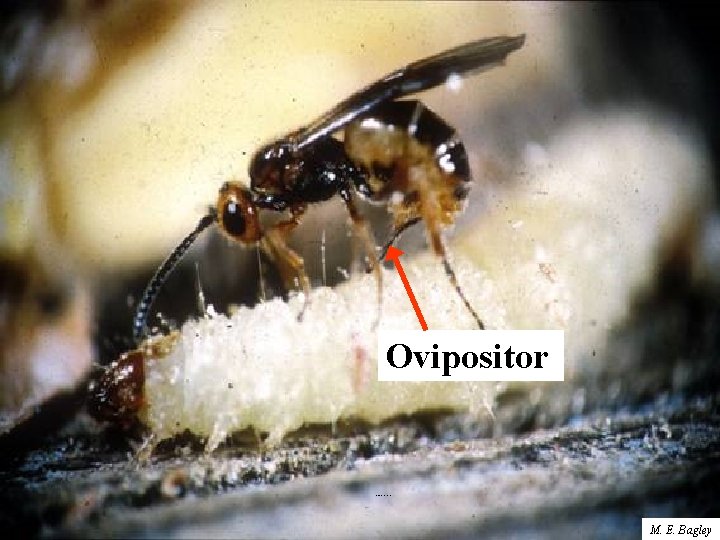
Ovipositor A parasite in action M. E. Bagley
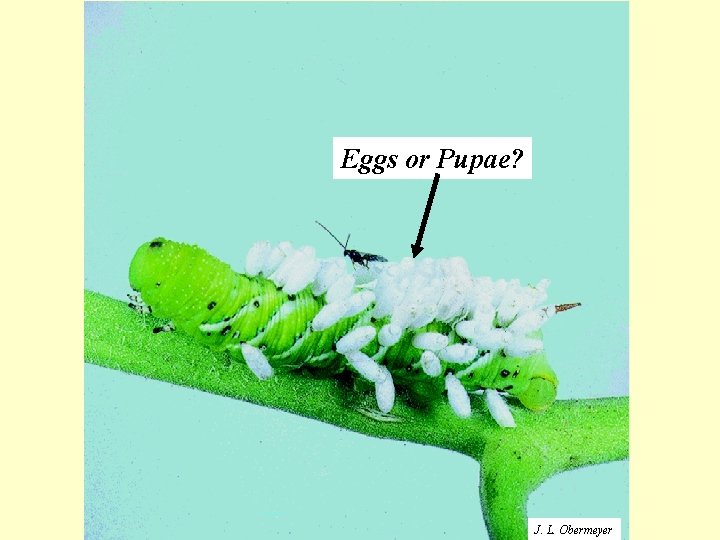
Eggs Pupae? Eggsoror Pupae? ? ? A parasitized tomato hornworm J. L. Obermeyer
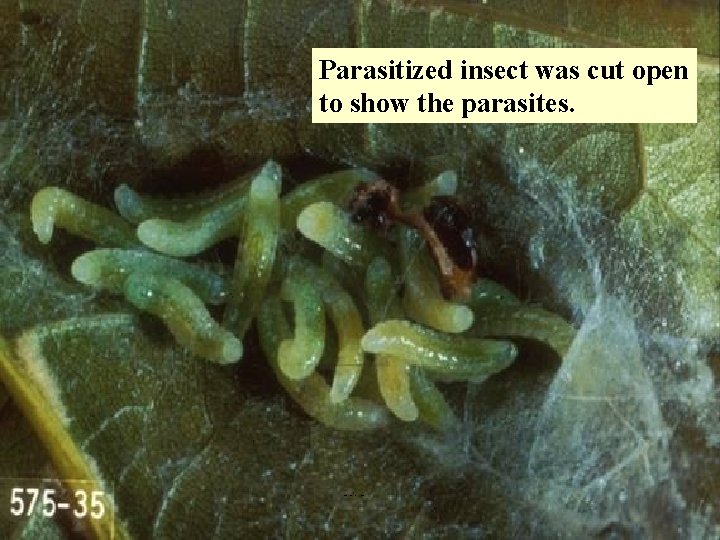
Parasitized insect was cut open to show the parasites. Parasitized insect cut open
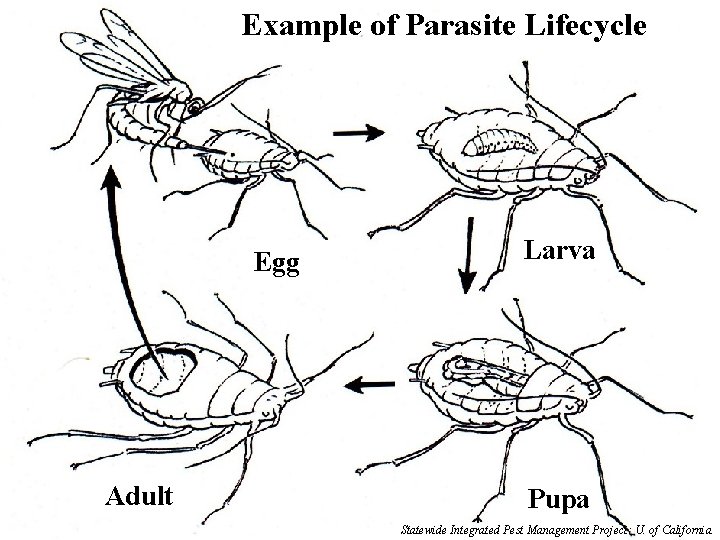
Example of Parasite Lifecycle Parasite lifecycle Egg Adult Larva Pupa Statewide Integrated Pest Management Project: U. of California
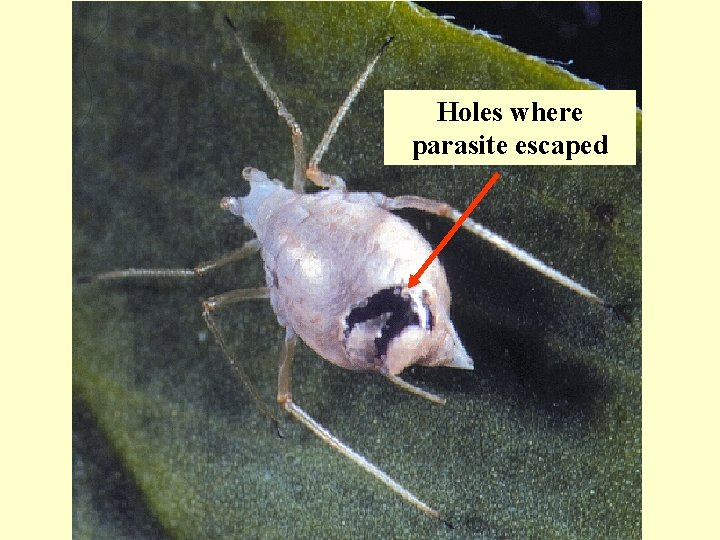
Aphid mummy Holes where parasite escaped
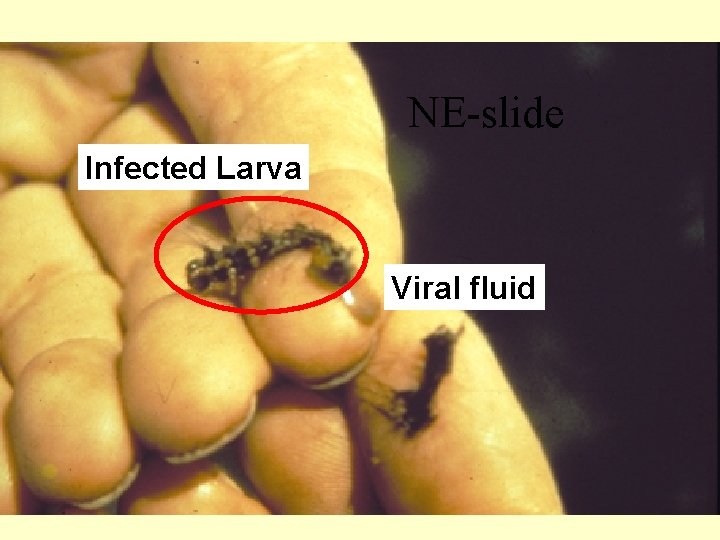
Pathogens n Kill, reduce reproduction, slow growth, shorten life of pest. n May take several days to provide control. n Usually very specific. n Leave a trail. Pathogens
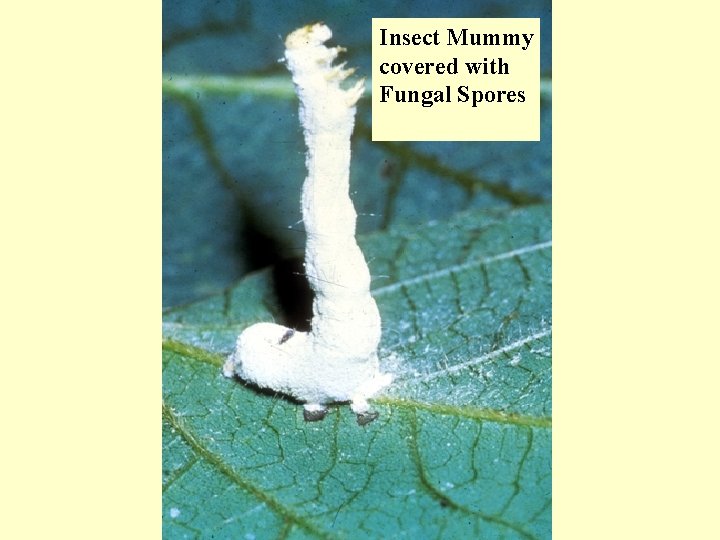
Insect Pathogens n Fungi, example: Beauvaria bassiana n Bacteria, example: Bt. n Nematodes n Viruses and protozoans Insect pathogens
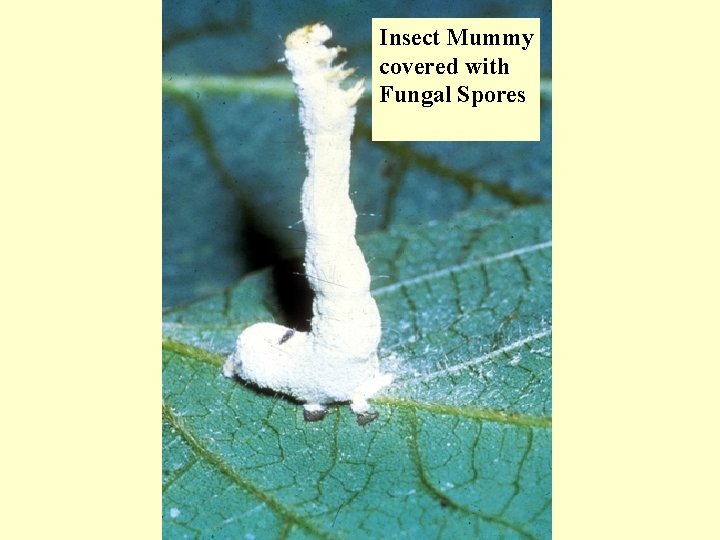
Insect Mummy covered with Fungal Spores Insect covered with fungal spores
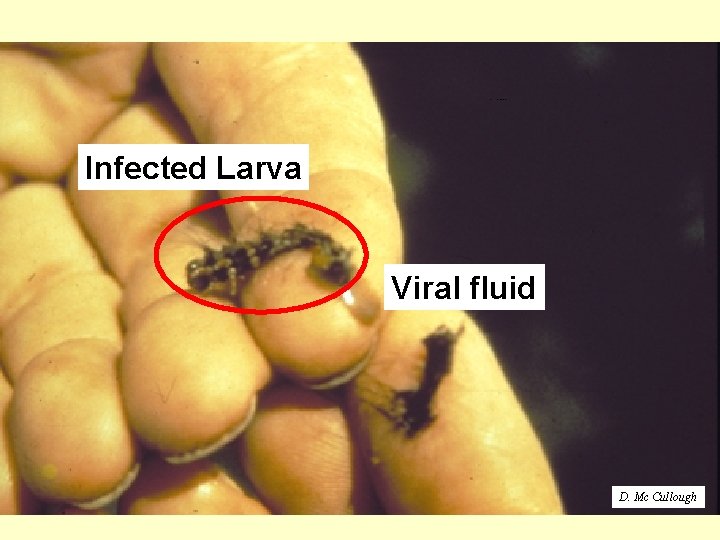
Virus infected larva Infected Larva Viral fluid D. Mc Cullough
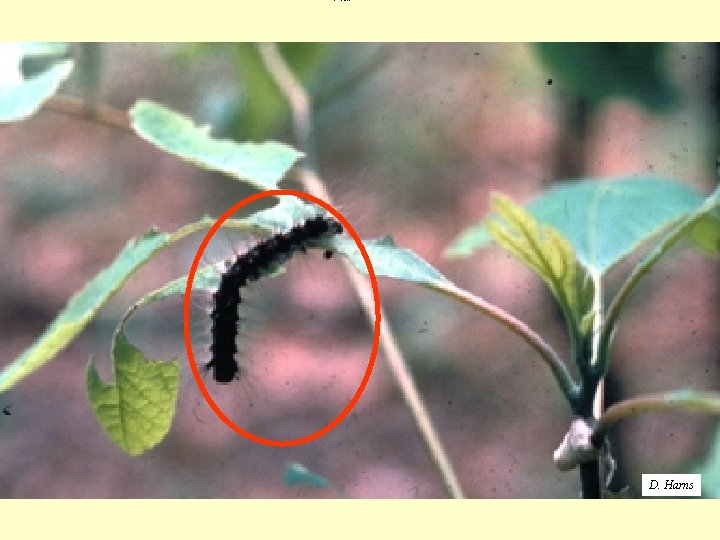
Virus infected larva D. Harns
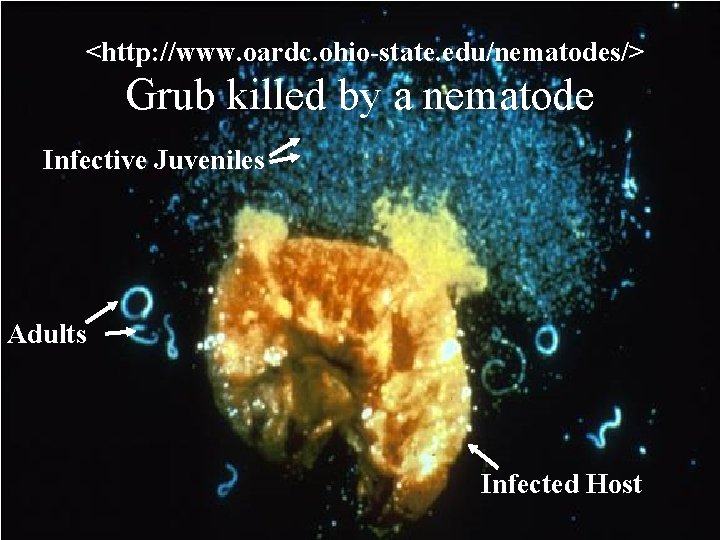
<http: //www. oardc. ohio-state. edu/nematodes/> Grub killed by a nematode Infective Juveniles Adults Infected Host
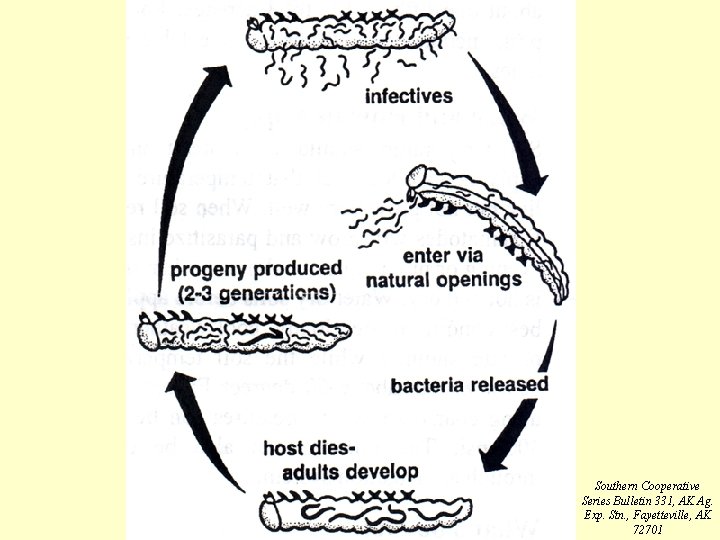
Lifecycle of a parasitic nematode Southern Cooperative Series Bulletin 331, AK Ag. Exp. Stn. , Fayetteville, AK 72701
Know the Natural Enemies Take-home points § Predators: bigger, fewer, faster, big mouthparts. § Parasites: small size, not easily seen by gardeners. - many flies and wasps. § Pathogens: cause disease in insects, not harmful to other organisms. Know the natural enemies
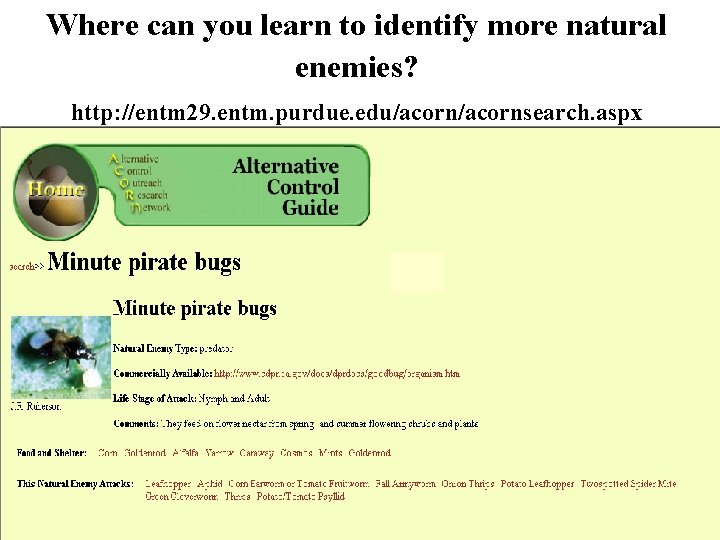
Where can you learn to identify more natural enemies? http: //entm 29. entm. purdue. edu/acornsearch. aspx Where can you learn to identify more natural enemies?
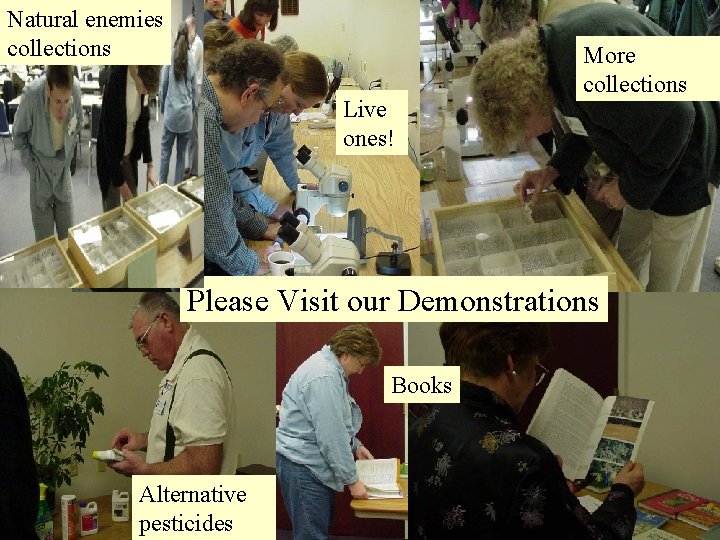
Natural enemies collections Break Live More collections ones! Please Visit our Demonstrations Books Alternative pesticides
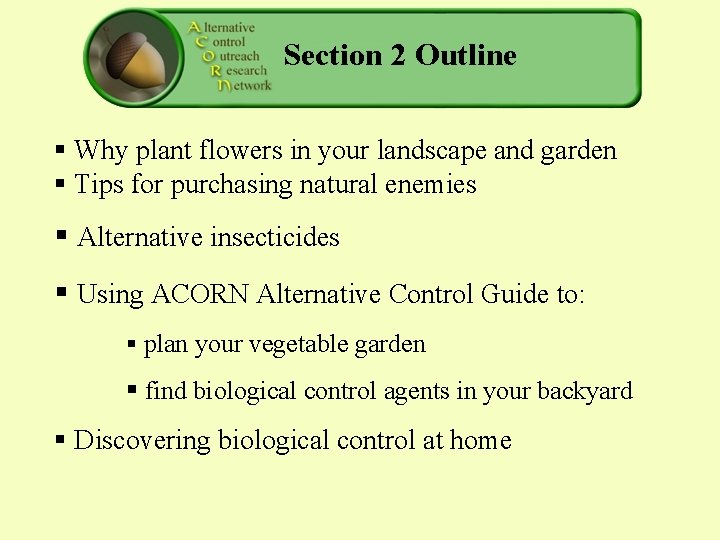
Section 2 Outline § Why plant flowers in your landscape and garden § Tips for purchasing natural enemies § Alternative insecticides Section 2 outline § Using ACORN Alternative Control Guide to: § plan your vegetable garden § find biological control agents in your backyard § Discovering biological control at home
Why Plant Flowers? n To attract natural enemies. n To provide shelter/shade. n To produce pollen and nectar. Why plant flowers?
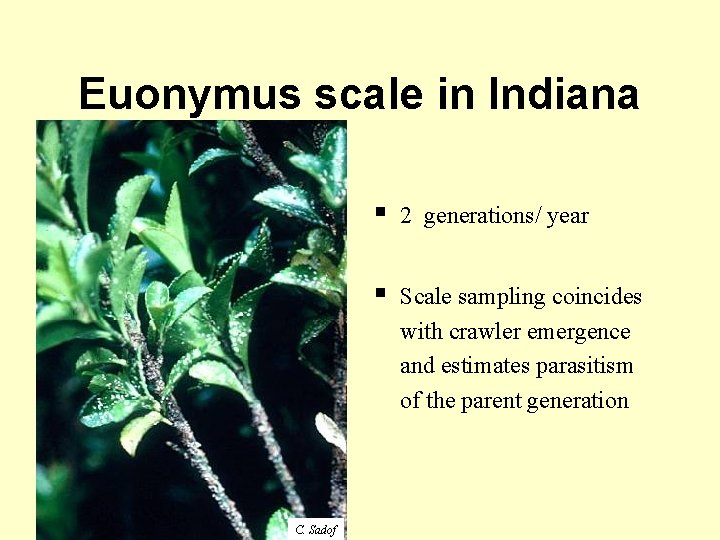
Euonymus scale in Indiana C. Sadof § 2 generations/ year § Scale sampling coincides with crawler emergence and estimates parasitism of the parent generation
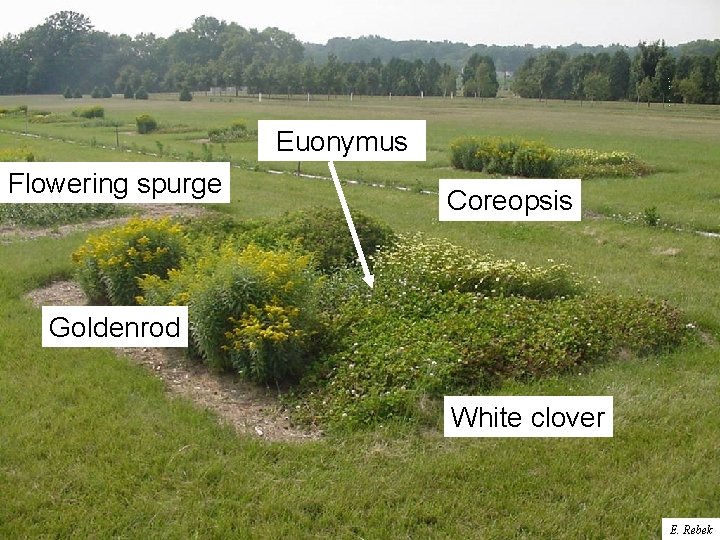
R e s e a r c h p l o t Euonymus Flowering spurge Coreopsis Goldenrod White clover E. Rebek
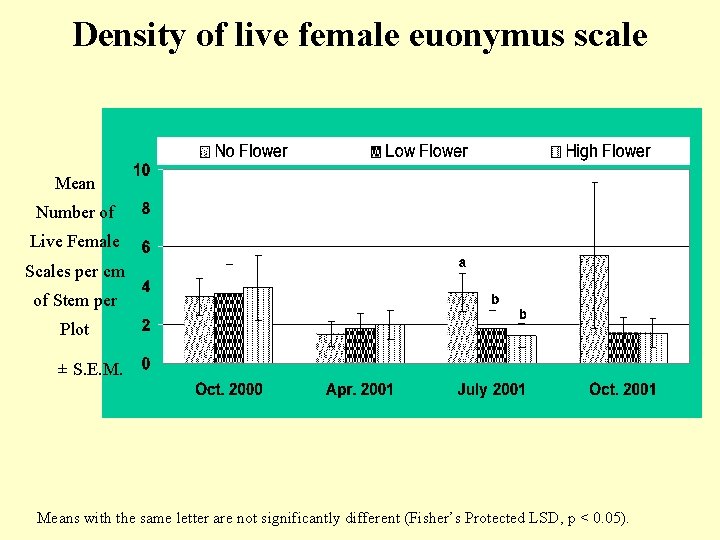
Density of live female euonymus scale Mean Number of Live Female Scales per cm of Stem per Plot ± S. E. M. Means with the same letter are not significantly different (Fisher’s Protected LSD, p < 0. 05).
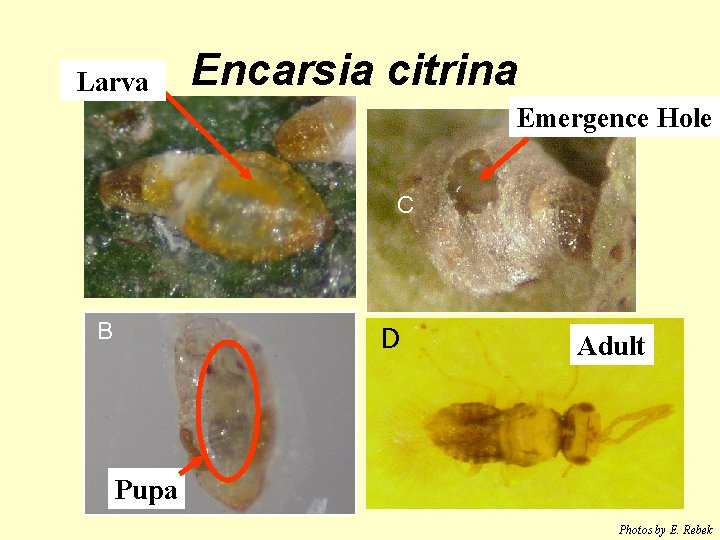
Larva Encarsia citrina A Emergence Hole C B D Adult Pupa Photos by E. Rebek
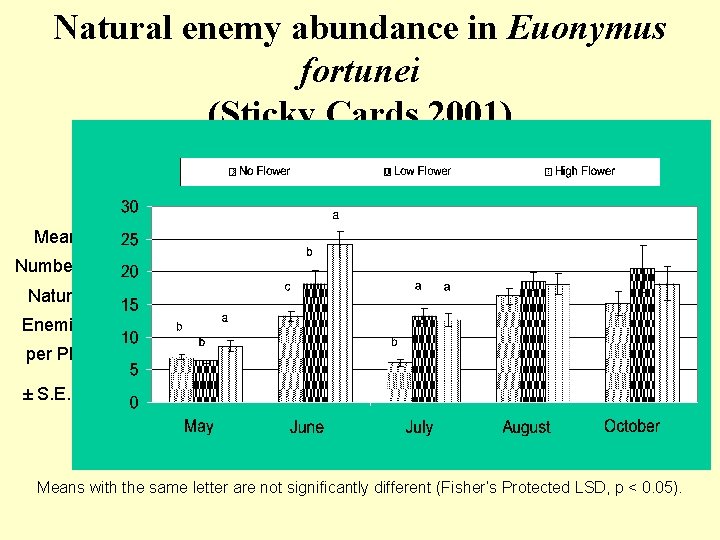
Natural enemy abundance in Euonymus fortunei (Sticky Cards 2001) Mean Number of Natural Enemies per Plot ± S. E. M. Means with the same letter are not significantly different (Fisher’s Protected LSD, p < 0. 05).
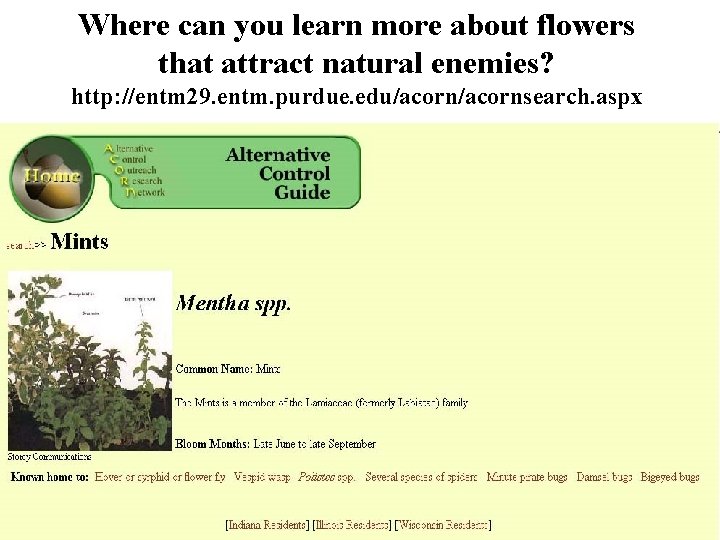
Where can you learn more about flowers that attract natural enemies? http: //entm 29. entm. purdue. edu/acornsearch. aspx Where can you learn more about flowers that attract natural enemies?
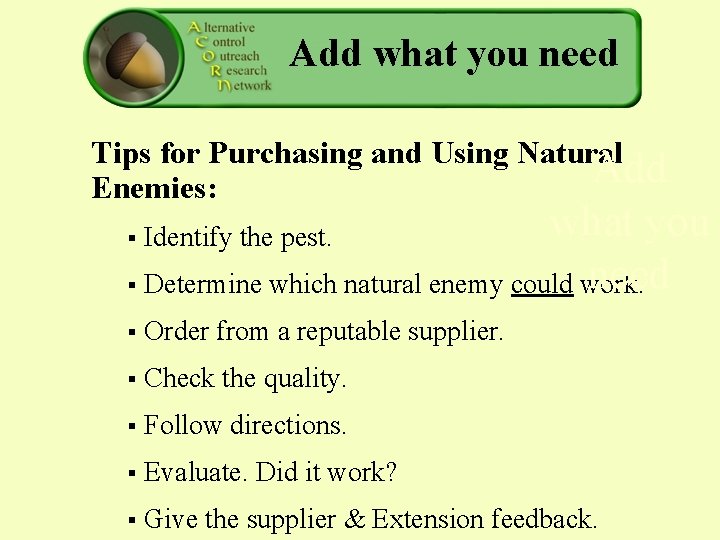
Add what you need Tips for Purchasing and Using Natural Add Enemies: what you need § Determine which natural enemy could work. § Identify the pest. § Order from a reputable supplier. § Check the quality. § Follow directions. § Evaluate. Did it work? § Give the supplier & Extension feedback.
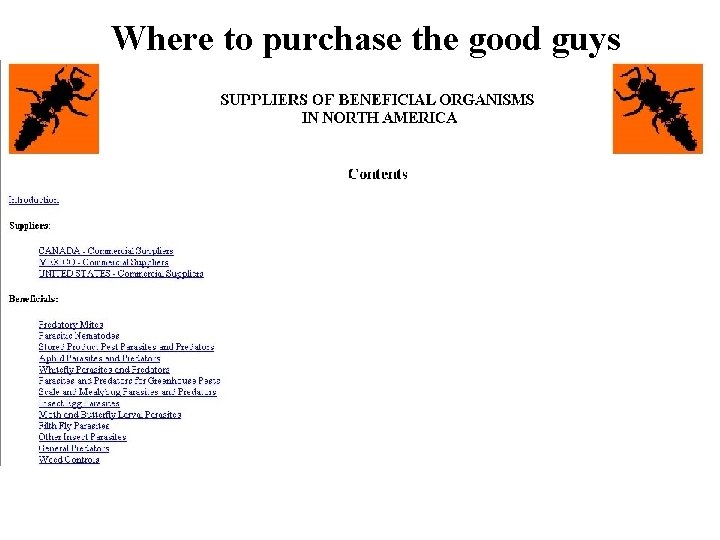
Where to purchase the good guys
Some pesticides kill more pests than natural enemies Use pesticides that are compatible with biological control: Microbials n Botanicals n Insect growth regulators n Others n Some pesticides kill more pests than natural enemies
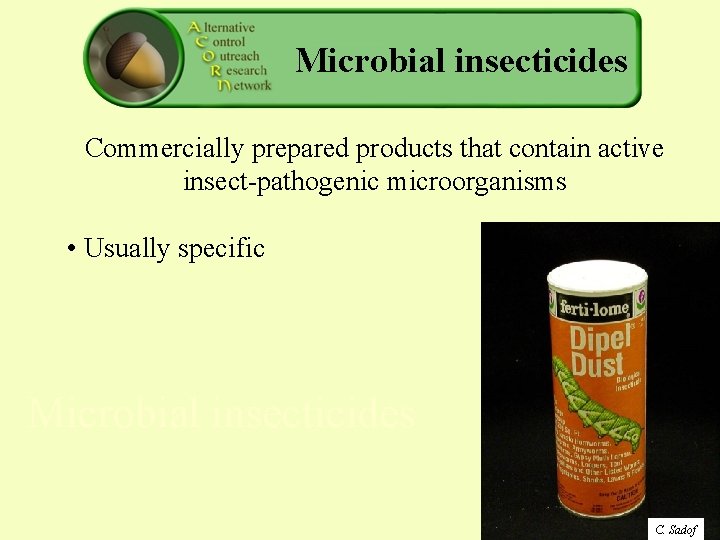
Microbial insecticides Commercially prepared products that contain active insect-pathogenic microorganisms • Usually specific Microbial insecticides C. Sadof
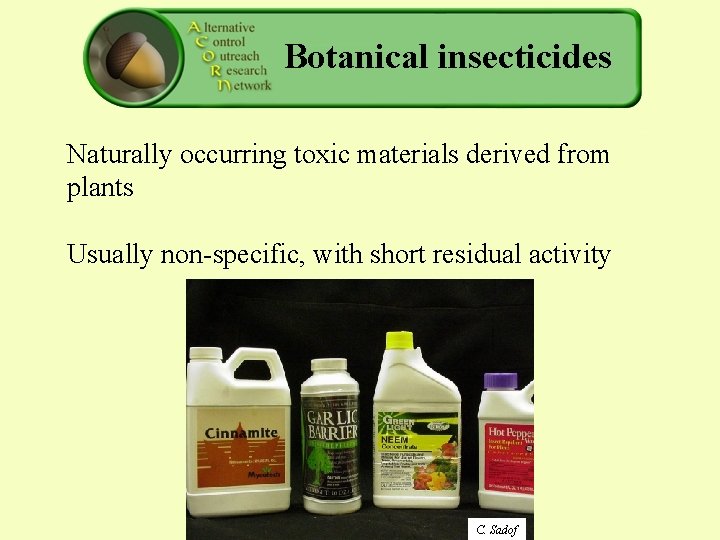
Botanical insecticides Naturally occurring toxic materials derived from plants Usually non-specific, with short residual activity C. Sadof
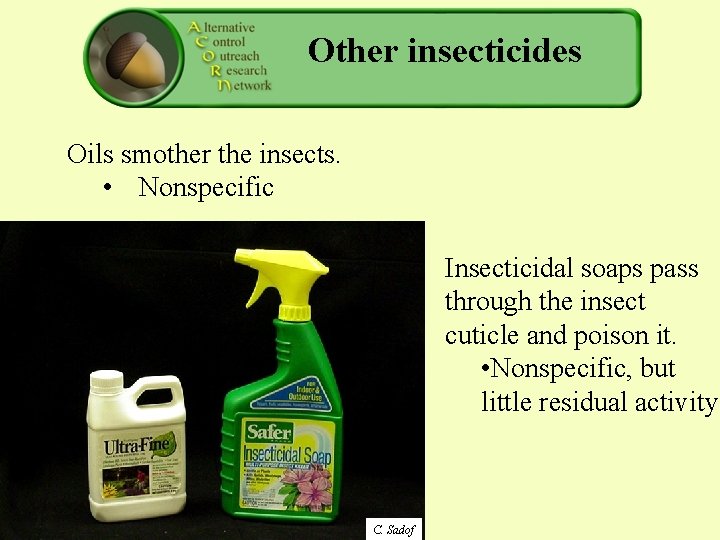
Other insecticides Oils smother the insects. • Nonspecific Other insecticides Insecticidal soaps pass through the insect cuticle and poison it. • Nonspecific, but little residual activity. C. Sadof
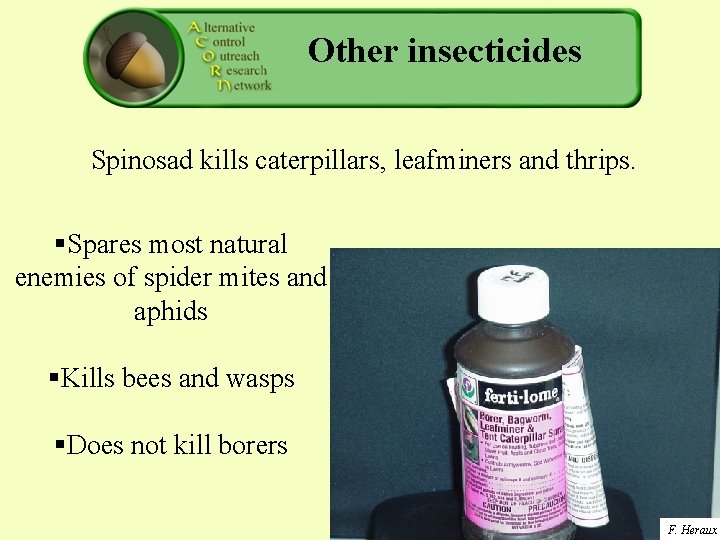
Other insecticides Spinosad kills caterpillars, leafminers and thrips. §Spares most natural enemies of spider mites and aphids §Kills bees and wasps §Does not kill borers F. Heraux
Using ACORN Alternative Control Guide Use the ACG to: n Identify pest and their natural enemies (NE) on your landscape and garden plants. n Find alternative control tactics you can try. n Plan your vegetable garden. n Find flowers to feed and protect NE in your garden. Using ACORN Alternative Control Guide (ACG)
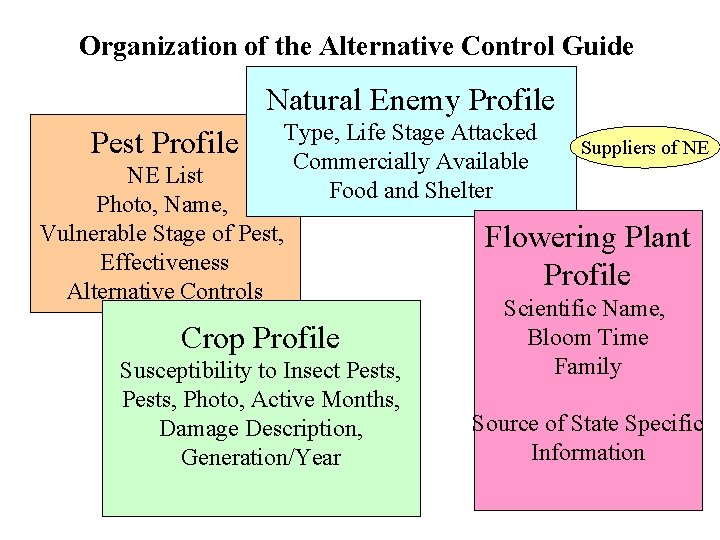
Organization of the Alternative Control Guide Natural Enemy Profile Pest Profile NE List Photo, Name, Vulnerable Stage of Pest, Effectiveness Alternative Controls Type, Life Stage Attacked Commercially Available Food and Shelter Crop Profile Susceptibility to Insect Pests, Photo, Active Months, Damage Description, Generation/Year Organization of the Alternative Control Guide Suppliers of NE Flowering Plant Profile Scientific Name, Bloom Time Family Source of State Specific Information
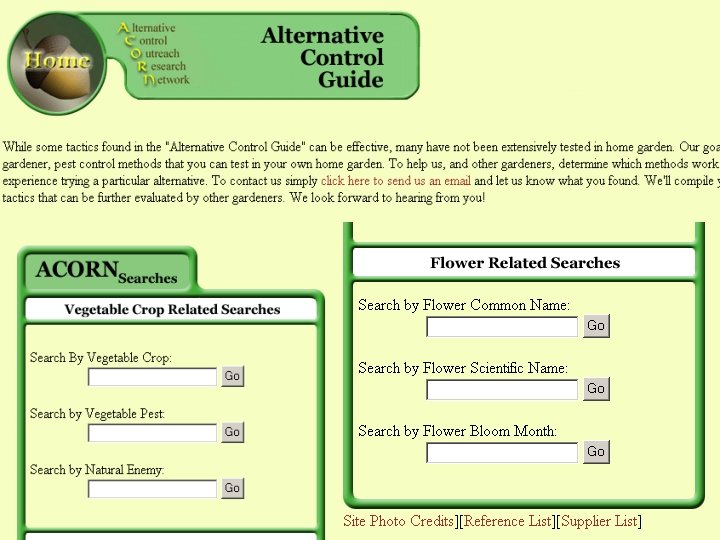
ACG- Search page
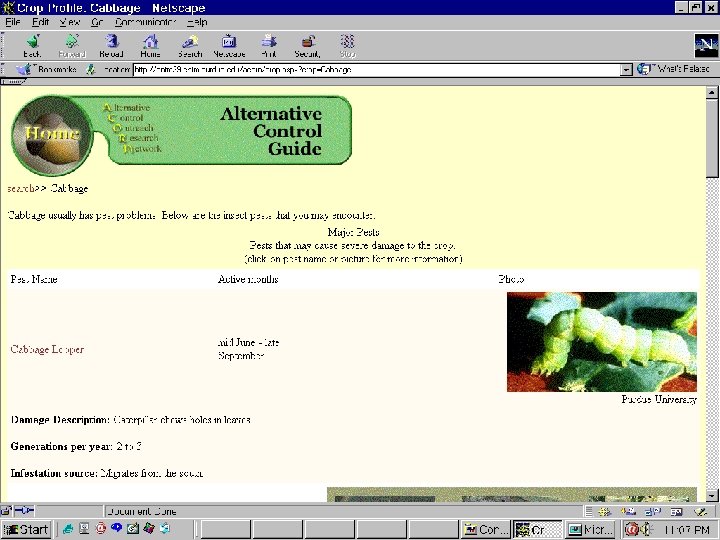
ACG- Vegetable page with lists of potential pests
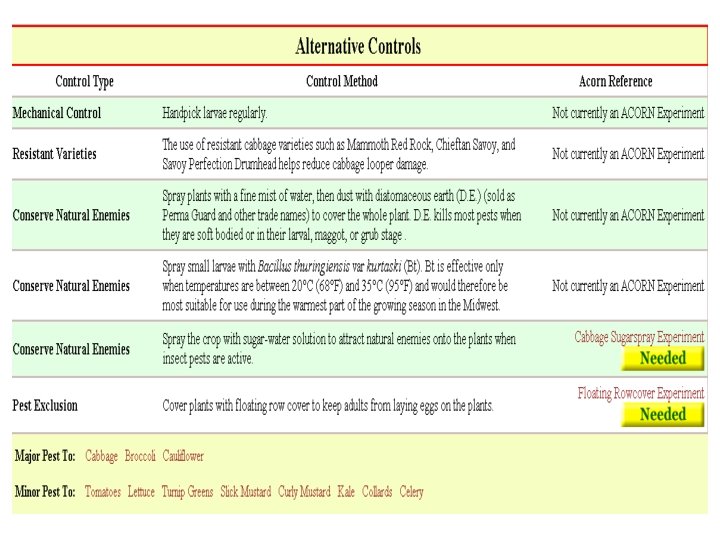
ACG- Alternative controls
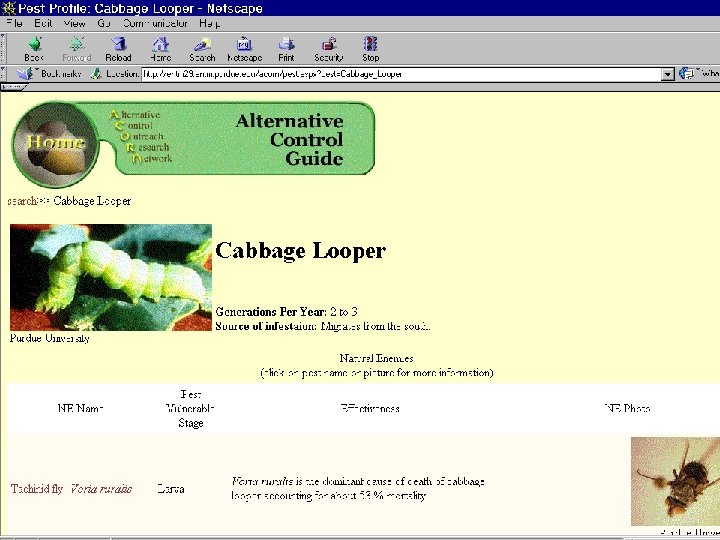
ACG- A pest
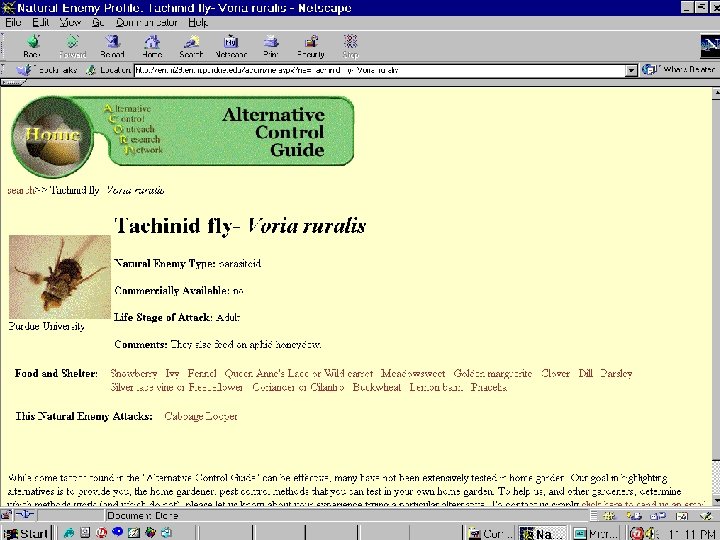
ACG- A natural enemy
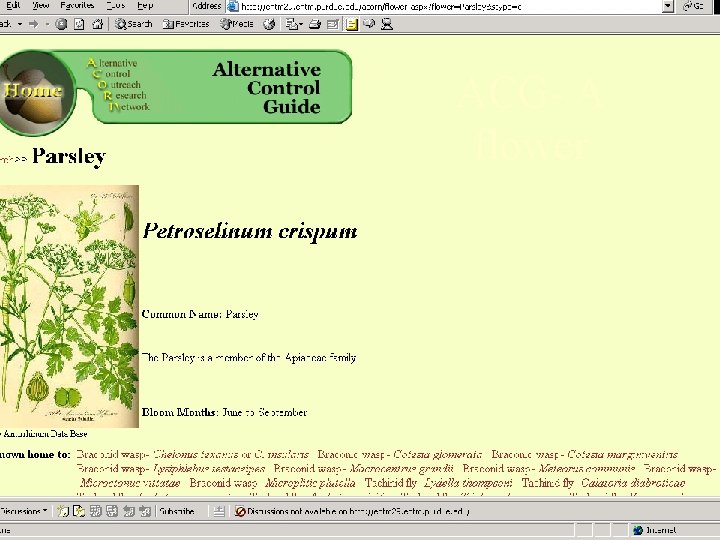
ACG- A flower
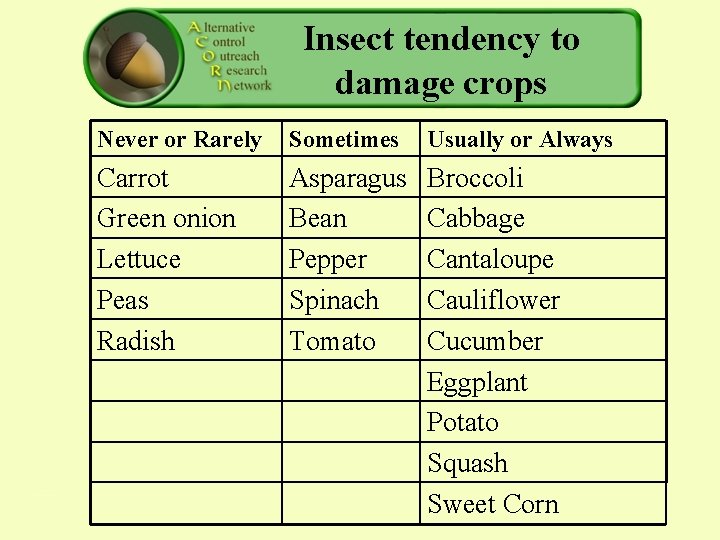
Insect tendency to damage crops Never or Rarely Sometimes Usually or Always Carrot Green onion Lettuce Peas Radish Asparagus Bean Pepper Spinach Tomato Broccoli Cabbage Cantaloupe Cauliflower Cucumber Eggplant Potato Squash Sweet Corn
Discover Biological Control at Home § Be an insect detective, find NE at home. § Need help identifying the NE? Use the ACORN Alternative Control Guide (ACG): - Picture - Hints about location (e. g. , food and shelter) § Monthly reminder via email. Discover biological control at home
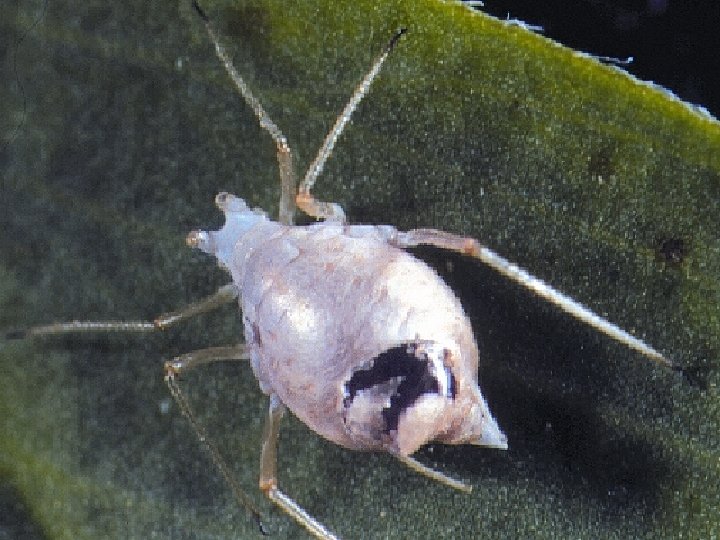
NE-slide
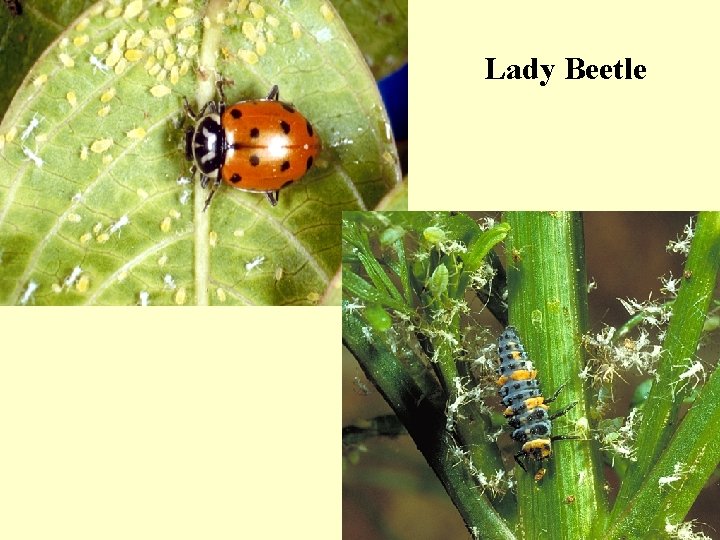
Lady Beetle NE-slide
NE-slide

NE-slide
NEslide
NE-slide
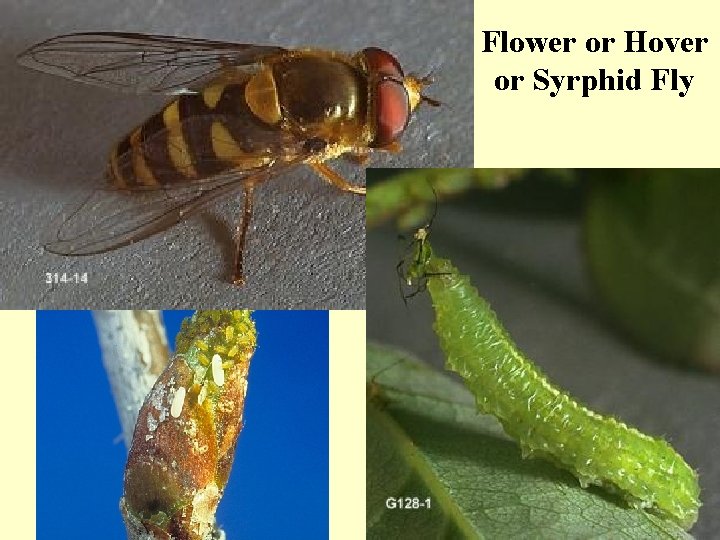
Flower or Hover or Syrphid Fly NE-slide
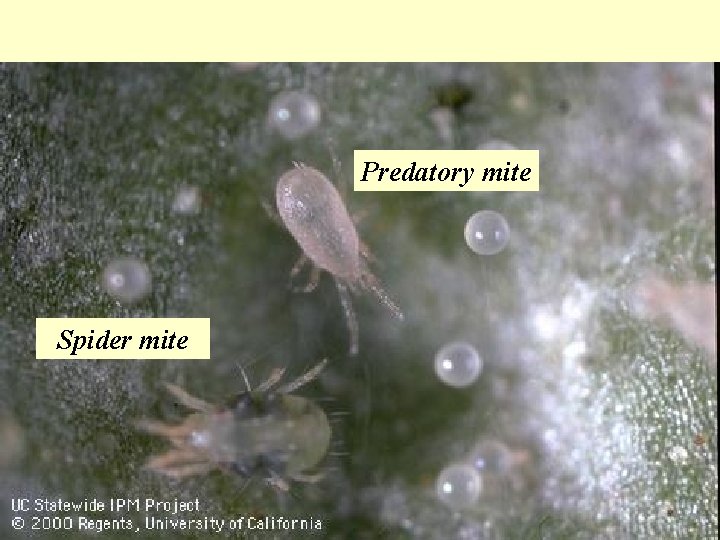
NE-slide Predatory mite Spider mite
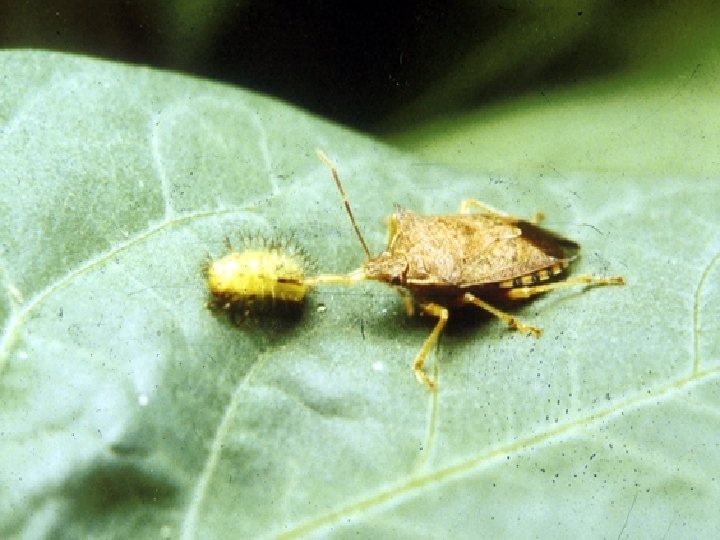
NE-slide
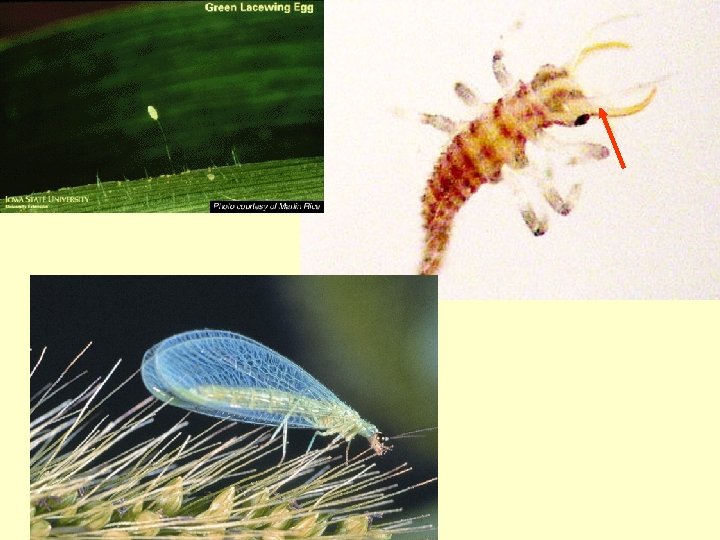
NE-slide
NEslide Eggs or Pupae? ? ?
Insect Mummy covered with Fungal Spores NE-slide
NE-slide Infected Larva Viral fluid

The End To contact us: Visit our web site at www. entm. purdue. edu/acorn or Email: cliff_sadof@entm. purdue. edu
- Slides: 78